
Premium Books
Showing 2451–2500 of 3787 results

The Deerslayer by James Fenimore Cooper
A restless white youth raised by Indians, Natty Bumppo is called Deerslayer for the daring that sets him apart from his peers. But he has yet to meet the test of human conflict. In a tale of violent action and superbly sustained suspense, the harsh realities of tribal warfare force him to kill his first foe, then face torture at the stake. Still yet another kind of initiation awaits him when he discovers not only the ruthlessness of “civilized” men, but also the special danger of a woman’s will.
The Desert Mounted Corps by R.M.P. Preston
It gives me great pleasure to write a few words of introduction to Lieut.-Col. Preston’s History of the Desert Mounted Corps, which I had the honour to command. In writing this History Lieut.-Col. Preston has done a service to his country which I am sure will be fully appreciated, particularly, perhaps, by those who served in the Corps, and who feel that the part they played in the Great War is but little known to the general public. -Introduction

The Deserted Woman by Honoré de Balzac
In the early spring of 1822, the Paris doctors sent to Lower Normandy a young man just recovering from an inflammatory complaint, brought on by overstudy, or perhaps by excess of some other kind. His convale-scence demanded complete rest, a light diet, bracing air, and freedom from excitement of every kind, and the fat lands of Bessin seemed to offer all these conditions of recovery. To Bayeux, a picturesque place about six miles from the sea, the patient therefore betook himself, and was received with the cordiality characteristic of relatives who lead very retired lives, and regard a new arrival as a godsend.
The Devil Doctor by Sax Rohmer
“What—a woman or something?”
“Some affair of that sort. He’s such a reticent beggar, I really know very little about it.”
I placed a whisky and soda before the Rev. J. D. Eltham, also sliding the tobacco jar nearer to his hand. The refined and sensitive face of the clergyman offered no indication to the truculent character of the man. His scanty fair hair, already grey over the temples, was silken and soft-looking: in appearance he was indeed a typical English churchman; but in China he had been known as “the fighting missionary,” and had fully deserved the title. In fact, this peaceful-looking gentleman had directly brought about the Boxer Risings!
“You know,” he said in his clerical voice, but meanwhile stuffing tobacco into an old pipe with fierce energy, “I have often wondered, Petrie—I have never left off wondering—”
The Devil in Iron by Robert E. Howard
The fisherman loosened his knife in its scabbard. The gesture was instinctive, for what he feared was nothing a knife could slay, not even the saw-edged crescent blade of the Yuetshi that could disembowel a man with an upward stroke. Neither man nor beast threatened him in the solitude which brooded over the castellated isle of Xapur.
He had climbed the cliffs, passed through the jungle that bordered them, and now stood surrounded by evidences of a vanished state. Broken columns glimmered among the trees, the straggling lines of crumbling walls meandered off into the shadows, and under his feet were broad paves, cracked and bowed by roots growing beneath.

The Devil’s Dictionary by Ambrose Bierce
“The Devil’s Dictionary was begun in a weekly paper in 1881, and was continued in a desultory way at long intervals until 1906. In that year a large part of it was published in covers with the title The Cynic’s Word Book, a name which the author had not the power to reject or happiness to approve.” -Preface by Ambrose Bierce

The Devil’s Pool by George Sand
The Devil’s Pool,George Sand,Romance,prabhat books,low price books,prabhat books on kindle

The Dhammapada by Author: Unknown Translator: F. Max Muller
One of the best-known and best-loved works of Buddhist literature, the Dhammapada forms part of the oldest surviving body of Buddhist writings, and is traditionally regarded as the authentic teachings of the Buddha himself, spoken by him in his lifetime, and memorized and handed on by his followers after his death.
The Diamond Fairy Book by Various
There were the four Kings: the King of the North, the region of perpetual snow; the King of the South, where the sun shines all the year round; the King of the East, from whence the cold winds blow; and the King of the West, where the gentle zephyrs breathe upon the flowers, and coax them to open their petals while the rest of the world is still sleeping.

The Diamond Lens by Fitz-James O’Brien
FROM a very early period of my life the entire bent of my inclinations had been toward microscopic investigations. When I was not more than ten years old, a distant relative of our family, hoping to astonish my inexperience, constructed a simple microscope for me by drilling in a disk of copper a small hole in which a drop of pure water was sustained by capillary attraction. This very primitive apparatus, magnifying some fifty diameters, presented, it is true, only indistinct and imperfect forms, but still sufficiently wonderful to work up my imagination to a preternatural state of excitement.

The Diary of a Girl in France in 1821 by Mary Browne
The Diary of a Girl in France in 1821′ by Mary Browne is a collection of diary notes written and accompanied by beautiful illustrations by a young girl in France. The work do not consists any classic matured style of writing, but helps put across what a common girl child at that time in France was perceiving from the world around her.
The Diary of a Nobody by George Grossmith and Weedon Grossmith
The spoof diary of a lower-middle-class London clerk, The Diary of a Nobody was first serialized in the legendary magazine of humour and satire, Punch, in 1888-89. It was published as a book in 1892 and has never been out of print since. This comic masterpiece—which details the doings of the ridiculously pompous and accident-prone Charles Pooter, his wife Carrie and their troublesome son Lupin—has been a source of delight to generations of readers and inspired many celebrated writers.
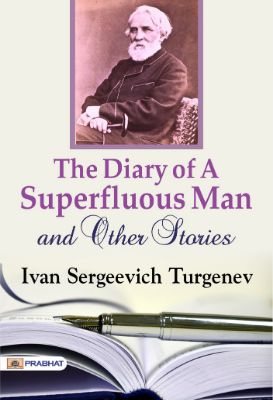
The Diary of a Superfluous Man, and Other Stories by Ivan Sergeevich Turgenev
“In ‘The Diary of a Superfluous Man,'” says one well-known Russian critic, “we have to deal with the end of the pathological process upon the body of Russian society. In Turgénieff’s productions which followed it we have to deal with a crisis in Russian life, with the growth of a new order of things. Apart from the fundamental profundity of its tendency, the ‘Diary’ is extremely noteworthy for its artistic workmanship. In spite of a certain monotony of tone in its exposition, it produces a very strong impression by its abundance of poetical beauties, which are perfectly suited to the melancholy mood of the whole story… In creating his ‘Superfluous Man’ the author, evidently, aimed at making as powerful an impression as possible, and therefore employed the most brilliant pigments in depicting Tchulkatúrin. He attained his object. Russian society started back in horror at this portrait of itself, which was somewhat distorted yet a good likeness, and in its strong excitement vigorously repelled all community with the sickly figure of Tchulkatúrin. This horror showed that the time was ripe in Russian society for a different order of things, that it was tired of inertness and was seeking a wider field of activity in which it might freely develop its real forces.”

The Diary of Samuel Pepys by Samuel Pepys
Although the Diary of Samuel Pepys has been in the hands of the public for nearly seventy years, it has not hitherto appeared in its entirety. In the original edition of 1825 scarcely half of the manuscript was printed. Lord Braybrooke added some passages as the various editions were published, but in the preface to his last edition he wrote: “there appeared indeed no necessity to amplify or in any way to alter the text of the Diary beyond the correction of a few verbal errors and corrupt passages hitherto overlooked.”
The public knew nothing as to what was left unprinted, and there was therefore a general feeling of gratification when it was announced some eighteen years ago that a new edition was to be published by the Rev. Mynors Bright, with the addition of new matter equal to a third of the whole. It was understood that at last the Diary was to appear in its entirety, but there was a passage in Mr. Bright’s preface which suggested a doubt respecting the necessary completeness. He wrote: “It would have been tedious to the reader if I had copied from the Diary the account of his daily work at the office.”
As a matter of fact, Mr. Bright left roughly speaking about one-fifth of the whole Diary still unprinted, although he transcribed the whole, and bequeathed his transcript to Magdalene College.

The Diplomatists of Europe by M. Capefigue
The Austrian government, which is composed of old hereditary states and conquests of a later date, a sort of chequer-work of provincial privileges and immunities, may be said to be the creation of a statesman, who must be placed in a superior rank to all others.
It is not only under the aspect of a long and brilliant diplomatic career that we must regard the life of Prince Metternich, we must also look upon him as the head of the executive organisation, which includes so many various interests, and such a diversity of national characters and feelings, under the government of one sceptre.’ -an excerpt
The present volume is a collection of the author’s previously published articles in various newspapers, journals and magazines, which he had written about eminent diplomatic personalities in Europe – from Prince Metternich to Duke of Wellington.

The Disappearance of Kimball Webb by Rowland Wright
Kimball Webb had nothing of the sort. He was a bit distinguished looking, but that was because he was a New Englander by birth, and a playwright by profession and had won the D. S. C. in the late war. Now, though a lame knee interfered slightly with his outdoor pursuits, his mind was alert and eager to return to work and his brain was fairly bursting with new ideas for his plays. First, however, he must needs attend to a certain business of getting married. A delightful business it seemed to Webb, for Elsie Powell was as lovely and desirable in the flesh as she had looked to him when seen in his troubled dreams in far off France.

The Disappearance of Lady Frances Carfax by Arthur Conan Doyle
The Disappearance of Lady Frances Carfax’ is one of the stories among 56 Sherlock Holmes adventure by Arthur Conan Doyle.
The Discipline of War by John Hasloch Potter
The war has introduced into countless lives new conditions, and has strangely modified, or emphasised, those already existing. These Addresses, prepared under much stress of other work, are intended to supply, in very simple fashion, hints for conduct and points for thought along the lines of our fresh or deepened responsibilities. An Appendix gives a suggested subject and a passage of Scripture for each day during Lent. May God the Holy Ghost, without Whom man’s best labours are in vain, bless this little book to its purpose. Please say a prayer for the writer, who, as much as any, needs grace that he may try to practise what he preaches.

The Discovery of the Future by H. G. Wells
Writtten by H. G. Wells, ‘The Discovery of the Future’ was first published in the year 1913. It is a philosophical lecture-essay by the renowned author and social philosopher.
The Divine Comedy by Dante Alighieri
The Divine Comedy, Volume 1, Hell,Dante Alighieri,Classics,prabhat books,low price books,prabhat books on kindle
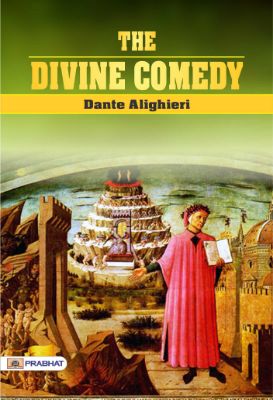
The Divine Comedy by Dante, Illustrated, Paradise, Complete by Dante Alighieri
A long epic descriptive poem by the famous Italian scholar, critic and writer dante Aligheri, ‘The Divine Comedy by Dante, Illustrated, Paradise, Complete’ was composed in early 1300s.
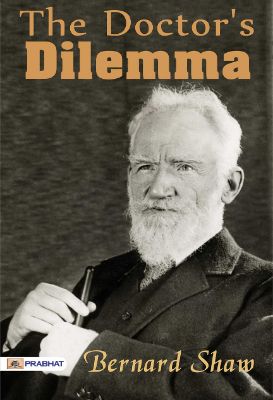
The Doctor’s Dilemma by Bernard Shaw
The renowned dramatist George Bernard Shaw’s play ‘The Doctor’s Dilemma’ is a problem play about the moral dilemmas created by limited medical resources, and the conflicts between the demands of private medicine as a business and a vocation around the Europe in the early twentieth century. This play was first staged in the year 1906.

The Dogs and the Fleas by Frederic Scrimshaw
Henry Ward Beecher, in a sermon shortly before his death, said America was going through a period of disgrace. This was true; for there had come to pass, what the prophetic Lincoln had foretold, that, as the result of the war, monopolies had been enthroned, that had filled the land with corruption and imperilled the liberties of the people.
To-day the period of disgrace is worse than then, for the corrupt tree which was then bearing so luxuriant a crop has had several years more in which to develop its fruit-bearing capacity.

The Doings of Raffles Haw by Arthur Conan Doyle
“I’m afraid that he won’t come,” said Laura McIntyre, in a disconsolate voice.
“Why not?”
“Oh, look at the weather; it is something too awful.”
As she spoke a whirl of snow beat with a muffled patter against the cosy red-curtained window, while a long blast of wind shrieked and whistled through the branches of the great white-limbed elms which skirted the garden.
The Dolls on Dress Parade by Effa E. Preston
First published in the year 1922, Effa E. Preston’s play ‘The Dolls on Dress Parade’ is a children’s play focusing on a child’s visit to a shop to purchase doll.

The Dolphin in History by John C. Lilly and Ashley Montagu
Recently the dolphin has become the focus of much scientific interest and investigation which have led to flattering pronouncements about its remarkable intelligence, amiability, and astonishing friendliness towards man. It was in consequence of such activities that a symposium was held at the William Andrews Clark Memorial Library to consider the background to contemporary studies of the dolphin. The presentations of Dr. Ashley Montagu and Dr. John C. Lilly were received so favorably that it was decided to make them more widely available in the present form.

The Dore Lectures on Mental Science by Thomas Troward
A series of lectures given at the Dore Gallery, Bond Street, London in 1909. Self help subjects such as the creative power of thought, and affirmations, mixed in with some Christian teachings.

The Drama of Love and Death by Edward Carpenter
Love and Death move through this world of ours like things apart—underrunning it truly, and everywhere present, yet seeming to belong to some other mode of existence. When Death comes, breaking into the circle of our friends, words fail us, our mental machinery ceases to operate, all our little stores of wit and wisdom, our maxims, our mottoes, accumulated from daily experience, evaporate and are of no avail. These things do not seem to touch or illuminate in any effective way the strange vast Presence whose wings darken the world for us. And with Love, though in an opposite sense, it is the same. Words are of no use, all our philosophy fails—whether to account for the pain, or to fortify against the glamour, or to describe the glory of the experience.
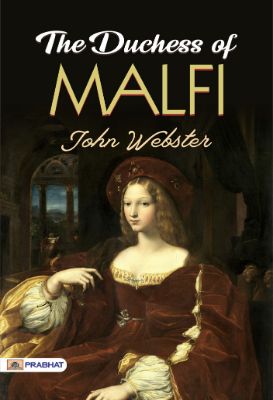
The Duchess of Malfi by John Webster
“The Duchess of Malfi” was published in 1623, but the date of writing may have been as early as 1611. It is based on a story in Painter’s “Palace of Pleasure,” translated from the Italian novelist, Bandello; and it is entirely possible that it has a foundation in fact. In any case, it portrays with a terrible vividness one side of the court life of the Italian Renaissance; and its picture of the fierce quest of pleasure, the recklessness of crime, and the worldliness of the great princes of the Church finds only too ready corroboration in the annals of the time.

The Duke in the Suburbs by Edgar Wallace
The author, who is merely an inventor of stories, may at little cost impress his readers with the scope of his general knowledge. For he may place the scene of his story in Milan at the Court of the Visconti and throw back the action half a thousand years, drawing across his stage splendid figures slimly silked or sombrely satined, and fill their mouths with such awsome oaths as “By Bacchus!” or “Sapristi!” and the like. He may also, does the fine fancy seize him, take for his villain no less a personage than Monseigneur, for hero a Florentine Count, as bright lady of the piece, a swooning flower of the Renaissance, all pink and white, with a bodice of plum velvet cut square at the breast, and showing the milk-white purity of her strong young throat.
It is indeed a more difficult matter when one is less of an inventor, than a painstaking recorder of facts.
hen our characters are conventionally attired in trousers of the latest fashion, and ransacking mythology the oath-makers can accept no god worthier of witness than High Jove.
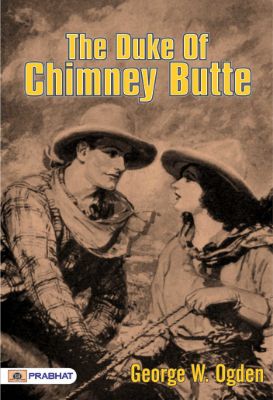
The Duke of Chimney Butte by George W. Ogden
The present book ‘The Duke of Chimney Butte’ was written by famous author George W. Ogden. It was first published in the year 1920 and resembles the trend of wetern fiction style.

The Dunwich Horror by H. P. Lovecraft
First published in the year 1929, H. P. Lovecraft’s book ‘The Dunwich Horror’ is a weird horror story. It published by the Weird Tales : The Unique Magazine.

The Duty of American Women to Their Country by Catharine Esther Beecher
This book is dedicated to the American women’s army, which have been contributing to the warfare as bravely and strongly as that of men.
“My countrywomen, you often hear it said that intelligence and virtue are indispensable to the safety of a democratic government like ours, where the people hold all the power. You hear it said, too, that our country is in great peril from the want of this intelligence and virtue. But these words make a faint impression, and it is the object of what follows to convey these truths more vividly to your minds.” -an excerpt from the book

The Dyer’s Guide by Thomas Packer
To insist on the utility of the present Manual is, assuredly, superfluous. The favourable reception of the first edition, sometime since out of print, has stimulated the author to revise the work throughout, and to render it more deserving the public approbation. The Appendix to the first edition now forms a part of the Introductory Chapter, to which it naturally belongs; to the whole have been added such improvements as the present advanced state of knowledge, and particularly chemical knowledge, has rendered absolutely necessary; and which thepractical dyer will find of considerable importance and much utility.
The following letter from the late SIR HUMPHRY DAVY, the first chemist of the age, appeared in the Preface to the first edition; it is here again reprinted as some proof of the sufficiency of that learned man’s judgment, at least concerning the chemical theory of the art of dyeing.

The Dynasts: An Epic-Drama of the War with Napoleon by Thomas Hardy
“In respect of such plays of poesy and dream a practicable compromise may conceivably result, taking the shape of a monotonic delivery of speeches, with dreamy conventional gestures, something in the manner traditionally maintained by the old Christmas mummers, the curiously hypnotizing impressiveness of whose automatic style—that of persons who spoke by no will of their own—may be remembered by all who ever experienced it. Gauzes or screens to blur outlines might still further shut off the actual, as has, indeed, already been done in exceptional cases. But with this branch of the subject we are not concerned here.” -Preface by Thomas Hardy

The Early History of the Airplane by Orville Wright and Wilbur Wright
A historical book on how Wright Brothers invented aeroplanes. An intersting book by the famous Wright Brothers themselves. Wright Brothers are known as the pioneers of Aeronautical history of the world.


The Earth Trembled by Edward Payson Roe
At the beginning of the Civil War there was a fine old residence on Meeting Street in Charleston, South Carolina, inhabited by a family almost as old as the State. Its inheritor and owner, Orville Burgoyne, was a widower. He had been much saddened in temperament since the death of the wife, and had withdrawn as far as possible from public affairs. His library and the past had secured a stronger hold upon his interest and his thoughts than anything in the present, with one exception, his idolized and only child, Mary, named for her deceased mother. Any book would be laid aside when she entered; all gloom banished from his eyes when she coaxed and caressed him.

The Earth’s Beginning by Robert S. Ball
Since these lectures were delivered in the Royal Institution of Great Britain there has been much advance in our knowledge of astronomy. The simultaneous advance in other sciences allied with astronomy has been, perhaps, even more remarkable. I am glad to avail myself of the opportunity afforded by a new issue of “The Earth’s Beginning” to draw attention to certain recent developments of science which relate in a very striking way to the subject of this volume, namely, the famous Nebular Theory of the origin of the solar system. It appears to me that these recent developments tend to reduce greatly, even if they do not altogether remove, the chief outstanding difficulty which has hitherto retarded the acceptance of the Nebular Theory.

The Earthly Paradise: A Poem (Part II) by William Morris
O Love, this morn when the sweet nightingale
Had so long finished all he had to say,
That thou hadst slept, and sleep had told his tale;
And midst a peaceful dream had stolen away
In fragrant dawning of the first of May,
Didst thou see aught? didst thou hear voices sing
Ere to the risen sun the bells ‘gan ring?

The Edinburgh Lectures On Mental Science by Troward, Thomas
The Unity of The Spirit – Subjective and Objective Mind – Further Considerations Regarding Subjective and Objective Mind – The Law of Growth – Receptivity – Reciprocal Action of The Universal and Individual Minds – Causes and Conditions – Intuition – Healing – The Will – In Touch With Subconscious Mind – The Body – The Soul – The Spirit – Entering Into The Spirit of It – Individuality – The New Thought and The New Order – The Life of The Spirit – Alpha and Omega – The Creative Power of Thought – The Great Affirmative – Christ The Fulfilling of The Law – The Story of Eden – The Worship of Ishi – The Shepherd and The Stone – Salvation Is of The Jews
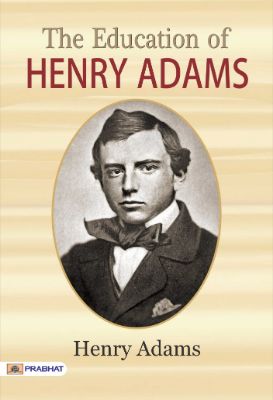
The Education of Henry Adams by Henry Adams
One of the few masterpieces to issue directly from a raging inferiority complex.

The Efficiency Expert by Edgar Rice Burroughs
Famous American writer Edgar Rice Burroughs’s present fictional novel ‘The Efficiency Expert’ was first published in the year 1921. Set in the contemporary America, this novel follows the adventures of Jimmy Torrance as he attempts to make a career for himself in 1921 Chicago.
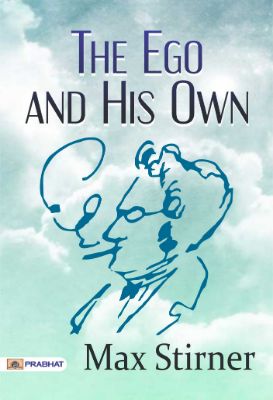
The Ego and His Own by Max Stirner
Stirner’s The Ego and its Own is striking in both style and content, attacking Feuerbach, Moses Hess and others to sound the death-knell of Left Hegelianism. The work also constitutes an enduring critique of liberalism and socialism from the perspective of an extreme eccentric individualism. Stirner has latterly been portrayed variously as a precursor of Nietzsche, a forerunner of existentialism, an individualist anarchist, and as manifestly insane. This edition includes an Introduction placing Stirner in his historical context.

The Elements of Agriculture by George E. Waring
This book is presented to you, not as a work of science, nor as a dry, chemical treatise, but as a plain statement of the more simple operations by which nature produces many results, so common to our observation, that we are thoughtless of their origin. On these results depend the existence of man and the lower animals. No man should be ignorant of their production.
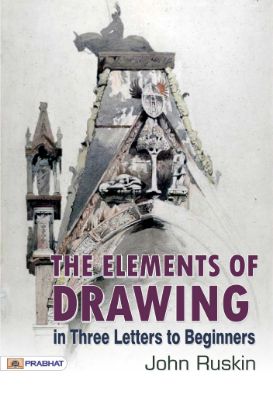
The Elements of Drawing, in Three Letters to Beginners by John Ruskin
The present book ‘The Elements of Drawing, in Three Letters to Beginners’ is a 1857 art manual by famous English artist and writer John Ruskin to instruct and guide young and aspiring artists on the techniques of drawing.

The Elements of Style by William Strunk
The Elements of Style is a prescriptive American English writing style guide in numerous editions, originally composed by William Strunk Jr. in 1918. It comprises elementary rules of usage, elementary principles of composition, a few matters of form, a list of words and expressions commonly misused, and a list of words often misspelled.
The Elephant Man and Other Reminiscences by Frederick Treves
When I first became aware of this phenomenon the exhibition was closed, but a well-informed boy sought the proprietor in a public house and I was granted a private view on payment of a shilling.
The Eleven Comedies by Aristophanes
Aristophanes, son of Philippus, of the deme Kydathenaion, was a comic playwright of ancient Athens. Eleven of his forty plays survive virtually complete. These, together with fragments of some of his other plays, provide the only real examples of a genre of comic drama known as Old Comedy, and are used to define it.

The Eliminator; or, Skeleton Keys to Sacerdotal Secrets by Richard B. Westbrook
“Many things in this book will greatly shock, and even give heartfelt pain to, numerous persons whom I greatly respect. I have a large share of the love of approbation, and naturally desire the good opinion of those with whom I have been associated in a long life. There is no pleasure in the fact that I have to stand quite alone in the eyes of nearly all Christendom. There is no satisfaction in being deemed a disturber of the peace of the great majority of those “professing and calling themselves Christians.” But, at the same time, I must not be indifferent in matters where I believe truth is concerned.” -Preface