
Premium Books
Showing 2351–2400 of 3787 results

The Celestial Omnibus and other Stories by E. M. Forster
Eustace’s career—if career it can be called—certainly dates from that afternoon in the chestnut woods above Ravello. I confess at once that I am a plain, simple man, with no pretensions to literary style. Still, I do flatter myself that I can tell a story without exaggerating, and I have therefore decided to give an unbiassed account of the extraordinary events of eight years ago.
The Charing Cross Mystery by J. S. Fletcher
Hetherwick had dined that evening with friends who lived in Cadogan Gardens, and had stayed so late in conversation with his host that midnight had come before he left and set out for his bachelor chambers in the Temple; it was, indeed, by the fraction of a second that he caught the last east-bound train at Sloane Square.

The Charterhouse of Parma by Stendhal
The Charterhouse of Parma is a compelling novel of passion and daring, of prisons and heroic escape, of political chicanery and sublime personal courage. Set at the beginning of the nineteenth century, amidst the golden landscapes of northern Italy, it traces the joyous but ill-starred amorous exploits of a handsome young aristocrat called Fabrice del Dongo, and of his incomparable aunt Gina, her suitor Prime Minister Mosca, and Clélia, a heroine of ethereal beauty and earthly passion.

The Chemical History of a Candle by Michael Faraday
From the primitive pine-torch to the paraffin candle, how wide an interval! between them how vast a contrast! The means adopted by man to illuminate his home at night, stamp at once his position in the scale of civilisation. The fluid bitumen of the far East, blazing in rude vessels of baked earth; the Etruscan lamp, exquisite in form, yet ill adapted to its office; the whale, seal, or bear fat, filling the hut of the Esquimaux or Lap with odour rather than light; the huge wax candle on the glittering altar, the range of gas lamps in our streets,—all have their stories to tell. All, if they could speak (and, after their own manner, they can), might warm our hearts in telling, how they have ministered to man’s comfort, love of home, toil, and devotion. -Preface

The Cherry Orchard by Anton Chekhov
A room which is still called the nursery. One of the doors leads into ANYA’S room. It is close on sunrise. It is May. The cherry-trees are in flower but it is chilly in the garden. There is an early frost. The windows of the room are shut. DUNYASHA comes in with a candle, and LOPAKHIN with a book in his hand.
LOPAKHIN. The train’s arrived, thank God. What’s the time?
DUNYASHA. It will soon be two. [Blows out candle] It is light already.
LOPAKHIN. How much was the train late? Two hours at least. [Yawns and stretches himself] I have made a rotten mess of it! I came here on purpose to meet them at the station, and then overslept myself . . . in my chair. It’s a pity. I wish you’d wakened me.
DUNYASHA. I thought you’d gone away. [Listening] I think I hear them coming.
The Chessmen of Mars by Edgar Rice Burroughs
MY father, Andrey Petrovitch Grinyov, had in his youth served under Count Miinnich and retired with the rank of first Major in 17—. From that time onwards he lived on his estate in the province of Simbirsk, where he married Avdotya Vassilyevna U., daughter of a poor landowner of the district. There had been nine of us. All my brothers and sisters died in infancy. Through the kindness of Prince B., our near relative, who was a major of the Guards, I was registered as sergeant in the Semyonovsky regiment. I was supposed to be on leave until I had completed my studies. Our bringing-up in those days was very different from what it is now. At tlie age of five I was entrusted to the groom Savelyitch, who was told off to look after me, as a reward for the sobriety of his behaviour. Under his supervision I had learned, by the age of twelve, to read and write Russian, and could judge very soundly the points of a borzoi dog. At that time my father hired for me a Frenchman, Monsieur Beaupre, who was fetched from Moscow together with the yearly supply of wine and olive oil. Savelyitch very much disliked his coming.
‘The child, thank heaven, has his face washed and his hair combed, and his food given him,’ he grumbled to himself. ‘Much good it is to spend money on the Frenchman, as though there weren’t enough servants on the estate!’
The Chicago Massacre of 1812 by Joseph Kirkland
THE morning of Fort Dearborn’s fatal day dawned bright and clear over Lake Michigan and the sandy flat. The “reveille” doubtless was sounded before sun-rise; and one can imagine the rattle of the drum and scream of the fife as they broke the dewy stillness and floated away, over the sand-spit and out on the lake; across the river to the Kinzie house and its outbuilding, the Ouillemette house; and up stream to the Indian encampments, large, dark and lowering. Quite possibly the tune then prescribed was the same as that now used for the drum-fife reveille, together with the words that have attached themselves to it of late years:
The Child and Childhood in Folk-Thought by Alexander Francis Chamberlain
The Child and Childhood in Folk Thought (the Child in Primative Culture) by Alexander Francis.
The Child In India by Clifford Manshardt
I have distinguished these two aspects of the work, only, as it were, to join them again, in emphasising that the best
work is done by those who are moved to action by both. The Society for the Protection of Children in Western
India has kept both objects equally clearly in view, to profit society by preventing the wastage of its children, and
to cleanse society by righting a grievous wrong. As the Knight of old in the days of chivalry considered no reward
for his success in a difficult enterprise more meet than to be entrusted with one even more difficult, so I feel sure,
in congratulating the Society for the Protection of Children in Western India on its coming of age, that it will desire
no better wish from me than that its successful labours in the past may be but the prelude to even more laborious and
even more successful days in the future.
The Child of the Cavern by Jules Verne
Covering a time span of over ten years, this novel follows the fortunes of the mining neighborhood of Aberfoyle close to Stirling, Scotland. Receiving a letter from an ancient colleague, mining engineer James Starr units off for the historic Aberfoyle mine and from the outset, mysterious and unexplained happenings begin to appear round the principal characters.
The Child’s Book of American Biography by Mary Stoyell Stimpson
This book is a collection of Biographical sketches of legendary American men and women such as George Washington, Benjamin Franklin, Henry David Thoreau, Thomas Alva edition this classic Book is readable and informative too.
The Children of Odin: The Book of Northern Myths by Padraic Colum
First published in the year 1920, ‘The Children of Odin: The Book of Northern Myths’ is Padraic Colum’s famous retelling of norse myths and tales.
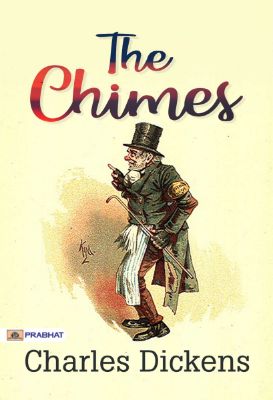
The Chimes by Charles Dickens
There are not many people—and as it is desirable that a story-teller and a story-reader should establish a mutual understanding as soon as possible, I beg it to be noticed that I confine this observation neither to young people nor to little people, but extend it to all conditions of people: little and big, young and old: yet growing up, or already growing down again—there are not, I say, many people who would care to sleep in a church. I don’t mean at sermon-time in warm weather (when the thing has actually been done, once or twice), but in the night, and alone. A great multitude of persons will be violently astonished, I know, by this position, in the broad bold Day. But it applies to Night. It must be argued by night, and I will undertake to maintain it successfully on any gusty winter’s night appointed for the purpose, with any one opponent chosen from the rest, who will meet me singly in an old churchyard, before an old church-door; and will previously empower me to lock him in, if needful to his satisfaction, until morning.

The Chinese Coat by Jennette Lee
We believe this work is culturally important, and despite the imperfections, have elected to bring it back into print as part of our continuing commitment to the preservation of printed works worldwide. We appreciate your understanding of the imperfections in the preservation process, and hope you enjoy this valuable book.

The Chinese Kitten by Edna Adelaide Brown
“I think,” said Lucy Merrill in a whisper to her sister Dora, “that Uncle Dan has a surprise for us.”
Dora was industriously setting the table for supper. Lucy, at the kitchen dresser, was peeling peaches. Lucy had on a big apron belonging to her mother, and it covered both her and the stool on which she sat. Dora wore a pink apron over her checked pink-and-white dress, and Dora’s apron was just like the big one, only the right size.
The Choice by Edith Wharton
“Stilling, that night after dinner, had surpassed himself. He always did, Wrayford reflected, when the small fry from Highfield came to dine. He, Cobham Stilling, who had to find his bearings and keep to his level in the big heedless ironic world of New York, dilated and grew vast in the congenial medium of Highfield. The Red House was the biggest house of the Highfield summer colony, and Cobham Stilling was its biggest man. No one else within a radius of a hundred miles (on a conservative estimate) had as many horses, as many greenhouses, as many servants, and assuredly no one else had three motors and a motor-boat for the lake.” -an excerpt

The Choir Invisible by James Lane Allen
“High overhead ridges of many-peaked cloud—the gleaming, wandering Alps of the blue ether; outstretched far below, the warming bosom of the earth, throbbing with the hope of maternity. Two spirits abroad in the air, encountering each other and passing into one: the spirit of scentless spring left by melting snows and the spirit of scented summer born with the earliest buds. The road through the forest one of those wagon-tracks that were being opened from the clearings of the settlers, and that wound along beneath trees of which those now seen in Kentucky are the unworthy survivors[…]” -an excerpt
The Christian: A Story by Sir Hall Caine
“On the morning of the 9th of May, 18—, three persons important to this story stood among the passengers on the deck of the Isle of Man steamship Tynwald as she lay by the pier at Douglas getting up steam for the passage to Liverpool. One of these was an old clergyman of seventy, with a sweet, mellow, childlike face; another was a young man of thirty, also a clergyman; the third was a girl of twenty.” -an excerpt
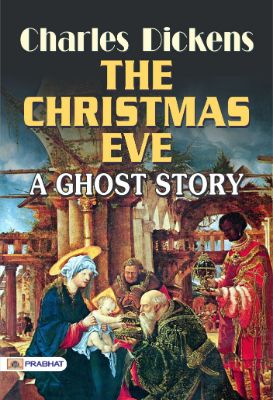
The Christmas Eve: A Ghost Story by Charles Dickens
The mention of Marley’s funeral brings me back to the starting point of my story. There is no doubt that Marley was dead. That must be considered keenly, otherwise nothing wonderful can happen in the story that I will just tell you. If we were not completely convinced that Hamlet’s father was dead before the play began, there would be nothing strange in his nightly walk in the sharp east wind on the walls of his own castle. No more than any other middle-aged gentleman who, after sunset, quickly decides to take a walk in a breezy spot, for example, St. Paul’s Cemetery, merely to astonish his weak son.
—From this Book
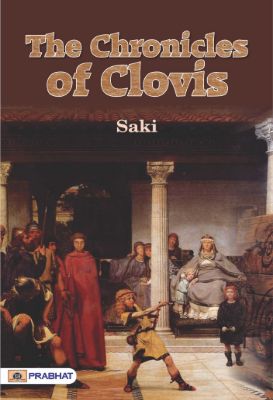
The Chronicles of Clovis by Saki
The present book ‘The Chronicles of Clovis’ was written by the famous English author HH Munro who is best known by his pen name Saki. It consists various stories of humour and witt. It was first published in the year 1919.

The Chronology of Ancient Kingdoms Amended by Sir Isaac Newton
First published in the year 1728, the present book, ‘The Chronology of Ancient Kingdoms Amended’ by Sir Isaac Newton, is an approximately 87,000-word composition. The work represents one of Newton’s forays into the topic of chronology, detailing the rise and history of various ancient kingdoms throughout antiquity.
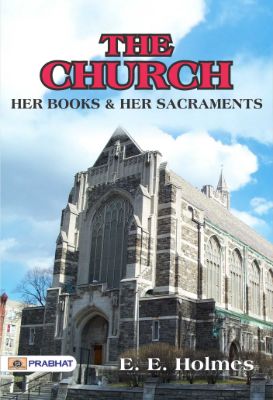
The Church: Her Books and Her Sacraments by E. E. Holmes
“These Lectures were originally delivered as the Boyle Lectures for 1910, and were afterwards repeated in a more popular form at All Saints, Margaret Street. They are now written from notes taken at their delivery at All Saints, and the writer’s thanks are due to the kindness of those who lent him the notes. Some explanation of their elementary character seems called for.” -Introduction

The Circular Staircase by Mary Roberts Rinehart
This is the story of how a middle-aged spinster lost her mind, deserted her domestic gods in the city, took a furnished house for the summer out of town, and found herself involved in one of those mysterious crimes that keep our newspapers and detective agencies happy and prosperous. For twenty years I had been perfectly comfortable; for twenty years I had had the window-boxes filled in the spring, the carpets lifted, the awnings put up and the furniture covered with brown linen; for as many summers I had said good-by to my friends, and, after watching their perspiring hegira, had settled down to a delicious quiet in town, where the mail comes three times a day, and the water supply does not depend on a tank on the roof.
And then—the madness seized me. When I look back over the months I spent at Sunnyside, I wonder that I survived at all. As it is, I show the wear and tear of my harrowing experiences. I have turned very gray—Liddy reminded me of it, only yesterday, by saying that a little bluing in the rinse-water would make my hair silvery, instead of a yellowish white. I hate to be reminded of unpleasant things and I snapped her off.

The Circus, and Other Essays and Fugitive Pieces by Joyce Kilmer
There are, however, some facts in explanation of the appearance of this volume at this time which require to be set down. And a number of circumstances in relation to the material here collected may be told, I think, to general interest. With these matters I am probably as familiar as anyone, and so have the great privilege of undertaking to record them.
The ten highly humorous and altogether charming essays which form the first part of this volume have led a rather queer life so far—though I think their existence will be a very happy one from now on. First, they were not “essays” at the time of their birth. They came into the world as “articles.” So they were spoken of by the young journalist who at various times and with very little to do about the matter wrote them in the course of a bewildering variety of other activities. Or, to be still more frank, he was perhaps more apt to refer to them, when he did refer to them at all, as “Sunday stories,” done as a part of his job with the New York Times Sunday Magazine. What they were called, however, is neither here nor there. The thing is that they are here.
—from this book

The City of God, Volume I by Bishop of Hippo Saint Augustine
“The glorious city of God is my theme in this work, which you, my dearest son Marcellinus, suggested, and which is due to you by my promise. I have undertaken its defence against those who prefer their own gods to the Founder of this city,—a city surpassingly glorious, whether we view it as it still lives by faith in this fleeting course of time, and sojourns as a stranger in the midst of the ungodly, or as it shall dwell in the fixed stability of its eternal seat, which it now with patience waits for, expecting until “righteousness shall return unto judgment,” and it obtain, by virtue of its excellence, final victory and perfect peace. A great work this, and an arduous; but God is my helper.” -an excerpt
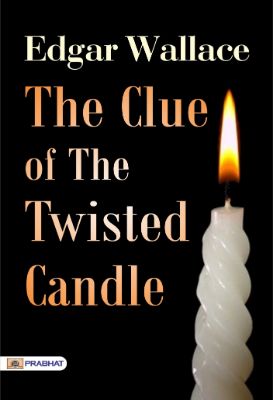
The Clue of the Twisted Candle by Edgar Wallace
The 4.15 from Victoria to Lewes had been held up at Three Bridges in consequence of a derailment and, though John Lexman was fortunate enough to catch a belated connection to Beston Tracey, the wagonette which was the sole communication between the village and the outside world had gone.
“If you can wait half an hour, Mr. Lexman,” said the station-master, “I will telephone up to the village and get Briggs to come down for you.”
John Lexman looked out upon the dripping landscape and shrugged his shoulders.
“I’ll walk,” he said shortly and, leaving his bag in the station-master’s care and buttoning his mackintosh to his chin, he stepped forth resolutely into the rain to negotiate the two miles which separated the tiny railway station from Little Tracey.

The Cock-House at Fellsgarth by Talbot Baines Reed
First-night at Fellsgarth was always a festive occasion. The holidays were over, and school had not yet begun. All day long, from remote quarters, fellows had been converging on the dear old place; and here they were at last, shoulder to shoulder, delighted to find themselves back in the old haunts. The glorious memories of the summer holidays were common property. So was not a little of the pocket-money. So, by rule immemorial, were the contents of the hampers. And so, as they discovered to their cost, were the luckless new boys who had to-day tumbled for the first time headlong into the whirlpool of public school life.
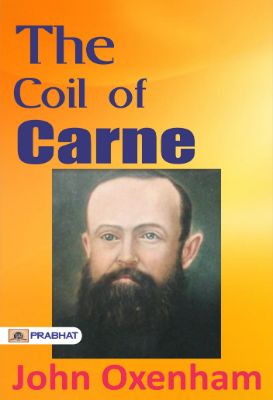
The Coil of Carne by John Oxenham
If by any chance you should ever sail on a low ebb-tide along a certain western coast, you will, if you are of a receptive humour and new to the district, receive a somewhat startling impression of the dignity of the absolutely flat.

The Collected Works of William Hazlitt by William Hazlitt
Man is the only animal that laughs and weeps; for he is the only animal that is struck with the difference between what things are, and what they ought to be. We weep at what thwarts or exceeds our desires in serious matters: we laugh at what only disappoints our expectations in trifles. We shed tears from sympathy with real and necessary distress; as we burst into laughter from want of sympathy with that which is unreasonable and unnecessary, the absurdity of which provokes our spleen or mirth, rather than any serious reflections on it.

The college student and his problems by Canfield, James Hulme,
Between the covers of this book, my dear young fellow, you and I are to talk together about your college life and work, possibly much as your father and I talked together not so very many years ago.

The Comedy of Errors by William Shakespeare
Duke. Merchant of Syracusa, plead no more;
I am not partial to infringe our laws:
The enmity and discord which of late
Sprung from the rancorous outrage of your duke
To merchants, our well-dealing countrymen,
Who, wanting guilders to redeem their lives,
Have seal’d his rigorous statutes with their bloods,
Excludes all pity from our threatening looks.
For, since the mortal and intestine jars
’Twixt thy seditious countrymen and us,
It hath in solemn synods been decreed,
Both by the Syracusians and ourselves,
To admit no traffic to our adverse towns:
The Coming of Bill by P. G. Wodehouse
The Coming of Bill is the nearest Wodehouse ever came to a serious novel, although the influence of the musical comedies he was writing at the time is never far away. Bill is the child of Ruth, a spoilt heiress, and Kirk, an impecunious artist of perfect physique. Their marriage has been arranged by Ruth’s aunt, a believer in eugenics who then takes charge of the baby. The story, set entirely in New York and Connecticut, concerns the young couple’s campaign to retrieve their child from the overbearing Mrs Porter and establish a normal family life. They are eventually successful, but only after a series of comic mishaps in a story which features a galaxyof vintage Wodehouse characters, including the bossy aunt, a tetchy millionaire, a good-natured ex-boxer and an orotund English butler.

The Coming of the Fairies by Arthur Conan Doyle
The renowned British author of the famous Sherlock Holmes series, Sir Arthur Conan Doyle, apart from his brilliant fiction works, is known for his belief in spritual and supernatural concepts. Once, when he was convinced by a set of photographs that seemingly captured two young girls playing with a group of tiny, translucent fairies. To demonstrate his unshakable belief in the spirit world he published ‘The Coming of the Fairies’ in 1922. It recounts the story of the photos, their supposed provenance, and the startling implications of their existence.
The Commercial Restraints of Ireland by John Hely Hutchinson
This is a pre-1923 historical reproduction that was curated for quality. Quality assurance was conducted on each of these books in an attempt to remove books with imperfections introduced by the digitization process. We believe this work is culturally important and have elected to bring the book back into print as part of our continuing commitment to the preservation of printed works worldwide and hope you enjoy this valuable book.
The Companions of Jehu by Alexandre Dumas
Alexandre Dumas, born Dumas Davy de la Pailleterie (1802-1870) is one of the most widely read French novelists. Known for his historical adventure tales, many of his novels have been adapted for stage and screen.

The Complete Poems by Emily Dickinson
A powerful collection of verses by one of America’s greatest poets. These beautiful, profound meditations on nature, spirit, faith, and love were created by the brilliant imagination of one of our most original poets.

The Complete Poetical Works of Edgar Allan Poe by Edgar Allan Poe
A long collection of poems written by the renowned British gothic stories writer Edgar Ellan Poe. This collection is one unique volume of Poe’s poetical works which was not his main domain of writing.

The Complete Works of Count Tolstóy Volume XII by Leo Tolstoy
A Turtle asked an Eagle to teach her how to fly. The Eagle advised her not to try, as she was not fit for it; but she insisted. The Eagle took her in his claws, raised her up, and dropped her: she fell on stones and broke to pieces.

The Complete works of Emile Zola by Émile Zola
A longish volume of translations of all works of French novelist, playwright, journalist, the best-known practitioner of the literary school of naturalism, and an important contributor to the development of theatrical naturalism – Emile Zola.

The Complete Works of Galsworthy by John Galsworthy
A longish compendium of all works of renowned English novelist and playwright John Galsworthy. This collection is uniquely compiled and published by Project Gutenberg.
The Complete Works of Jane Austen by Jane Austen
This compandium is a unique and thick volume of all works of the celebrated English novelist Jane Austen, initiated by Project Gutenberg. Read this volume if you are a Jane Austen fan or are simply interested in reading one of the most acclaimed authors of the Victorian era.

The Complete Works of P.B. Shelley by Percy Bysshe Shelley
One of the major English Romantic poets and is widely considered to be among the finest lyric poets in the English language.

The Complete Works of Rudyard Kipling by Rudyard Kipling
Rudyard Kipling was an English journalist, short-story writer, poet, and novelist. He was born in India, which inspired much of his work. Kipling’s works of fiction include The Jungle Book, Kim, and many short stories, including “The Man Who Would Be King”

The Complete Works of William Shakespeare by William Shakespeare
A compandium of works of the dramatist and playright of all times, William Shakespeare.
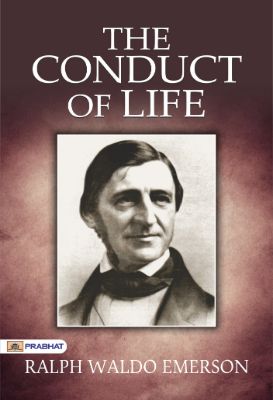
The Conduct of Life by Ralph Waldo Emerson
The Conduct of Life – By Ralph Waldo Emerson. Ralph Waldo Emerson (May 25, 1803 – April 27, 1882), known professionally as Waldo Emerson, was an American essayist, lecturer, and poet who led the Transcendentalist movement of the mid-19th century. He was seen as a champion of individualism and a prescient critic of the countervailing pressures of society, and he disseminated his thoughts through dozens of published essays and more than 1,500 public lectures across the United States. It chanced during one winter, a few years ago, that our cities were bent on discussing the theory of the Age. By an odd coincidence, four or five noted men were each reading a discourse to the citizens of Boston or New York, on the Spirit of the Times. It so happened that the subject had the same prominence in some remarkable pamphlets and journals issued in London in the same season. To me, however, the question of the times resolved itself into a practical question of the conduct of life. How shall I live? We are incompetent to solve the times. Our geometry cannot span the huge orbits of the prevailing ideas, behold their return, and reconcile their opposition. We can only obey our own polarity. ‘Tis fine for us to speculate and elect our course, if we must accept an irresistible dictation.
The Confession: A Novel by Maksim Gorky
Russia’s changes were Gorky’s changes. He first flung his type of hero, the people from the lowest of the low—water-rats, tramps, petty thieves—into a discouraged, disappointed and hopeless Russia. It was a Russia that had almost decided that there were no more people, that they were without courage, that the misery and degradation in which they lived was there because of their own inefficiency, their lack of idealism, their incapacity to grasp an idea and to strike and fight for it.

The Confessions of Al Ghazzali by Mohammed Al-Ghazzali
I then examined what knowledge I possessed, and discovered that in none of it, with the exception of sense-perceptions and necessary principles, did I enjoy that degree of certitude which I have just described. I then sadly reflected as follows: “We cannot hope to find truth except in matters which carry their evidence in themselves—that is to say, in sense-perceptions and necessary principles; we must therefore establish these on a firm basis. Is my absolute confidence in sense-perceptions and on the infallibility of necessary principles analogous to the confidence which I formerly possessed in matters believed on the authority of others?
The Confessions of Arsène Lupin by Maurice Leblanc
First published in the year 1913, the present book ‘The Confessions of Arsène Lupin’ is written by the famous French novelist and short story writer Maurice Leblanc. This book consists of ten adventures of the author’s famously created fictional character of Arsene Lupin, a gentleman, thief and detective.

The Confessions of Jean Jacques Rousseau — Complete by Jean-Jacques Rousseau
First published between 1782-89, famous social philosopher and writer Jean-Jacques Rousseau’s ‘The Confessions of Jean Jacques Rousseau — Complete’ covers the first fifty three years of the author’s life. In this book, Rousseau provides an account of the experiences that shaped his personality and ideas.
The Confessions of Saint Augustine by Saint Augustine
Consisting of 13 books, originally written by St. Augustine of Hippo, in Latin between AD 397 and AD 398. The work outlines Augustine’s sinful youth and his conversion to Christianity. It is widely seen as the first Western autobiography ever written. It is not a complete autobiography, as it was written in his early 40s, and he lived long afterwards. It does, nonetheless, provide an unbroken record of his development of thought and is the most complete record of any single person from the 4th and 5th centuries. It is a significant theological work, featuring spiritual meditations and insights.