
Premium Books
Showing 2301–2350 of 3787 results
The Book of Good Manners; a Guide to Polite Usage for All Social Functions by Walter Cox Green
The book of Good Manners is a complete and authentic authority on every single phase of social usage as practiced in America. The author has compiled the matter in dictionary form in order to give the reader the desired information as briefly and clearly as possible, and with the least possible effort in searching through the pages.

The Book of Life by Upton Sinclair
The writer of this book has been in this world some forty-two years. That may not seem long to some, but it is long enough to have made many painful mistakes, and to have learned much from them. Looking about him, he sees others making these same mistakes, suffering for lack of that same knowledge which he has so painfully acquired. This being the case, it seems a friendly act to offer his knowledge, minus the blunders and the pain.

The Book of Princes and Princesses by Mrs. Lang
All the stories about Princes and Princesses in this book are true stories, and were written by Mrs. Lang, out of old books of history. There are some children who make life difficult by saying, first that stories about fairies are true, and that they like fairies; and next that they do not like true stories about real people, who lived long ago. I am quite ready to grant that there really are such things as fairies, because, though I never saw a fairy, any more than I have seen the little animals which lecturers call molecules and ions, still I have seen people who have seen fairies—truthful people. Now I never knew a lecturer who ventured to say that he had seen an ion or a molecule. It is well known, and written in a true book, that the godmother of Joan of Arc had seen fairies, and nobody can suppose that such a good woman would tell her godchild what was not true—for example, that the squire of the parish was in love with a fairy and used to meet her in the moonlight beneath a beautiful tree. In fact, if we did not believe in fairy stories, who would care to read them? Yet only too many children dislike to read true stories, because the people in them were real, and the things actually happened.

The Book of Snobs by William Thackeray
“We have all read a statement—we have all, I say, been favoured by perusing a remark, that when the times and necessities of the world call for a Man, that individual is found. Thus at the French Revolution, when it was requisite to administer a corrective dose to the nation, Robespierre was found; a most foul and nauseous dose indeed, and swallowed eagerly by the patient, greatly to the latter’s ultimate advantage: thus, when it became necessary to kick John Bull out of America, Mr. Washington stepped forward, and performed that job to satisfaction: thus, when the Earl of Aldborough was unwell, Professor Holloway appeared with his pills, and cured his lordship, as per advertisement, &c. &c.. Numberless instances might be adduced to show that when a nation is in great want, the relief is at hand; just as in the Pantomime where when CLOWN wants anything—a warming-pan, a pump-handle, a goose, or a lady’s tippet—a fellow comes sauntering out from behind the side-scenes with the very article in question.” -Preface

The Book of Sports: by William Martin
The prime object of this book is to induce and to teach boys and girls to spend their hours out of school in such a manner, as to gain innocent enjoyment while they promote their own health and bodily strength. The Author has never lost sight of this object, considering it to be what properly belongs to a Book of Sports.
The Book of War: The Military Classic of the Far East by Sun Tzu
The Book of War: The Military Classic of the Far East,Sun Tzu,Classics,prabhat books,low price books,prabhat books on kindle
The Book of Wonder by Lord Dunsany
Come with me, ladies and gentlemen who are in any wise weary of London: come with me: and those that tire at all of the world we know: for we have new worlds here.

The Boss of the Lazy Y by Charles Alden Seltzer
First published in the year 1915, the present book ‘The Boss of the Lazy Y’ was written by one of twentieth century’s most prolific authors Charles Alden Seltzer. The protagonist of the novel – Calumet Marston, daredevil, returns to his father’s ranch to find it is being run by a young woman who remains in charge until he accepts sundry conditions.

The Bostonians by Henry James
“Olive will come down in about ten minutes; she told me to tell you that. About ten; that is exactly like Olive. Neither five nor fifteen, and yet not ten exactly, but either nine or eleven. She didn’t tell me to say she was glad to see you, because she doesn’t know whether she is or not, and she wouldn’t for the world expose herself to telling a fib. She is very honest, is Olive Chancellor; she is full of rectitude. Nobody tells fibs in Boston; I don’t know what to make of them all. Well, I am very glad to see you, at any rate.”

The Box-Car Children by Gertrude Chandler Warner
Written by American first-grade school teacher Gertrude Chandler Warner, ‘The Box-Car Children’ is a famous children’s fictional series. It was first published in early 1900s.

The Boy and His Gang by J. Adams Puffer
Sixty-six boys who were members of gangs are responsible for this book. They told me the stories of their gang life and I wrote them out in the form illustrated in Chapter II. I showed these stories to President G. Stanley Hall, who asked me to present them in the Pedagogical Seminary, where an article appeared in June, 1905. These original stories of Boys’ Gangs and Boy Leaders later became the basis for a series of lectures on Boy Problems. In revising my material for book publication, many interesting criticisms by parents, teachers, and social workers, in various sections of the country have been consciously or unconsciously incorporated into it. I have found a wide interest in and demand for such a book as this—bearing upon the group psychology of boyhood—and a lamentable scarcity of readable literature on the subject.

The Boy Inventors’ Flying Ship by Richard Bonner
The Boy Inventors’ Flying Ship’ is an adventure novel by Richard Bonner from early twentieth century. It was first published in the year 1913.

The Boy Inventors’ Radio Telephone by Richard Bonner
That’s it, Jack. Let her out!”
“Suffering speed laws of Squantum, but she can travel!” exclaimed Dick Donovan, redheaded and voluble.
“I tell you, electricity is the thing. Beats gasoline a million ways,” chimed in Tom Jesson. Tom sat beside his cousin, Jack Chadwick, on the driver’s seat of a curious-looking automobile which was whizzing down the smooth, broad, green-bordered road that led to Nestorville, the small town outside Boston where the Boy Inventors made their home.
The Boy Scouts Book of Campfire Stories by Various
The campfire for ages has been the place of council and friendship and story-telling. The mystic glow of the fire quickens the mind, warms the heart, awakens memories of happy, glowing tales that fairly leap to the lips. The Boy Scouts of America has incorporated the “campfire” in its program for council and friendship and story-telling. In one volume, the Boy Scouts Book of Campfire Stories makes available to scoutmasters and other leaders a goodly number of stories worthy of their attention, and when well told likely to arrest and hold the interest of boys in their early teens, when “stirs the blood—to bubble in the veins.”

The Boy Travellers in the Far East Part Third by Thomas Wallace Knox
This volume completes the series of “The Boy Travellers in the Far East.” It attempts to describe Ceylon and India, together with Borneo, the Philippine Islands, and Burmah, in the same manner that the preceding volumes gave an account of Japan, China, Siam, Java, Cochin-China, Cambodia, and the Malay Archipelago.
Frank and Fred have continued their journey under the guidance of Doctor Bronson, and the plan of their travels is identical with that previously followed. The words of the last preface may be repeated in this: “The incidents of the narrative were mainly the experiences of the author at a recent date; and the descriptions of countries, cities, temples, people, manners, and customs are nearly all from his personal observations and notes. He has endeavored to give a faithful account of Ceylon, India, Burmah, and the Philippine Islands as they appear to-day, and trusts that the only fiction of the book is in the names of the individuals who tell the story.”

The Boy Travellers in the Far East, Part Fifth by Thomas Wallace Knox
The method followed in the preparation of the preceding volumes of the series of the Boy Travellers has been observed in the present book, as far as it was possible to do so. Though the author has visited several parts of Africa, he has never made a journey to the Equatorial Regions of the Dark Continent; consequently he has been placed under greater obligations to other writers than in his preceding works, and the personal experiences of Frank and Fred in Central Africa were not those of the compiler of the narrative. But he has endeavored to maintain the vividness of the story by the introduction of incidents drawn from many books of African travel and exploration; he has sought to confine fiction to the narrowest bounds, and to construct an account of travel and adventure that should be true in every respect save in the individual characters portrayed.

The Boy Travellers in The Russian Empire by Thomas Wallace Knox
In preparing this volume for the press, the author has followed very closely the plan adopted for “The Boy Travellers in the Far East,” and also for his more recent work, “The Boy Travellers in South America.”

The Boy’s Book of New Inventions by Harry E. Maule
“IN THE preparation of this book the author has tried to give an interesting account of the invention and workings of a few of the machines and mechanical processes that are making the history of our time more wonderful and more dramatic than that of any other age since the world began. For heroic devotion to science in the face of danger and the scorn of their fellowmen, there is no class who have made a better record than inventors. Most inventions, too, are far more than scientific calculation, and it is the human story of the various factors in this great age of invention that is here set forth for boy readers.” -Preface

The Boyhood of Great Inventors by A. Fraser Robertson
A. Fraser Robertson’s book ‘The Boyhood of Great Inventors’ was first published in the year 1904. This book gives a biographical account of these great inventors’ boyhood.
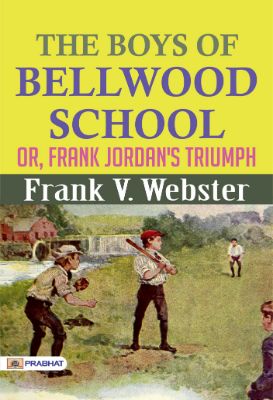
The Boys of Bellwood School; Or, Frank Jordan’s Triumph by Frank V. Webster
“Where did you get that stickpin, Frank?”
“Bought it at Mace’s jewelry store.”
“You are getting extravagant.”
“I hardly think so, aunt, and I don’t believe you would think so, either, if you knew all the circumstances.”
“Circumstances do not alter cases when a boy is a spendthrift.”
“I won’t argue with you, aunt. You have your ideas and I have mine. Of course, I bought the stickpin, but it was with money I had earned.”
The aunt sniffed in a vague way. The boy left the house, looking irritated and unhappy.

The Brain and the Voice in Speech and Song by F. W. Mott
The contents of this little book formed the subject of three lectures delivered at the Royal Institution “On the Mechanism of the Human Voice” and three London University lectures at King’s College on “The Brain in relation to Speech and Song.” I have endeavoured to place this subject before my readers in as simple language as scientific accuracy and requirements permit.

The Brain by Alexander Blade
The engineer’s smile broadened into a friendly grin: “No, we’re not anywhere near Washington. But in a couple of minutes you’ll see Cephalon and that’s as far as we go. One professor and 15 tons of termites to be flown from Wallabawalla Mission station, Northern Territory, Australia, to Cephalon, Arizona, U.S.A., one way direct. Those are our instructions. Say, this is the queerest cargo I’ve ever flown, doctor, if you don’t mind my saying so.”
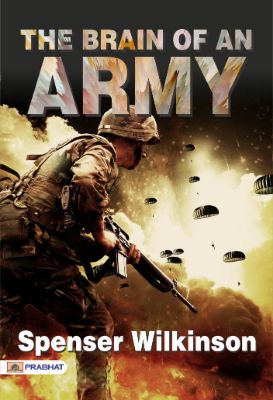
The Brain of an Army by Spenser Wilkinson
Six years ago a Royal Commission, under the presidency of Lord Hartington, was known to be inquiring into the administration of the national defence. There was much talk in the newspapers about the Prussian staff, and many were the advocates of its imitation in this country. Very few of those who took part in the discussions seemed to know what the Prussian staff was, and I thought it might be useful to the Royal Commission and to the public to have a true account of that institution, written in plain English, so that any one could understand it. The essay was published on the 11th of February, 1890, the day on which the Report of Lord Hartington’s Commission was signed.

The Brain, A Decoded Enigma by Dorin Teodor Moisa
As any scientific theory, it is a symbolic model. Any symbolic model is based on a limited number of basic terms and a limited number of basic relations between the basic terms.
For the basic terms and only for them, there are accepted descriptive definitions. All the others terms are generated by the model, together with their normal definitions. These definitions are generated by the model by logical and mathematical procedures.
These are the basic characteristics of any scientific theory and so, I follow the procedures described above, to make a theory on the basic hardware functions of the brain.
This theory is in a total opposition with all the actual sciences associated with the functions of the brain. The present sciences, associated with the functions of the brain, are not based on a single fundamental model. In this way, as my theory will be accepted, all what it was already written in the actual sciences associated with the functions of the brain, have to be re-written or forgotten.
The Breaking Point by Mary Roberts Rinehart
A Broadway three-act drama written by American mystery novelist Mary Roberts Rinehart, ‘The Breaking Point’. It was first produced by Wagenhals and Collin Kemper and staged by Kemper in the year 1923.
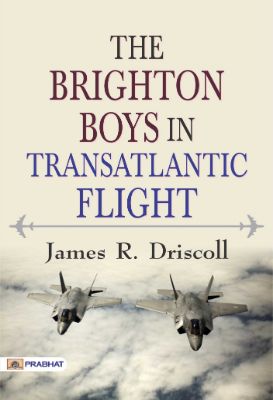
The Brighton Boys In Transatlantic Flight by James R Driscoll
The present book ‘The Brighton Boys In Transatlantic Flight’ is a part of adventure series written by James R Driscoll. It was first published in the year 1920. This book consists of several ficticious adventures of the Brighton Boys.

The Brothers Karamazov by Fyodor Dostoyevsky
The Brothers Karamazov’ is a passionate philosophical novel set in 19th-century Russia, that enters deeply into the ethical debates of God, free will, and morality. It is a spiritual drama of moral struggles concerning faith, doubt, judgment, and reason, set against a modernizing Russia, with a plot which revolves around the subject of patricide. Dostoyevsky composed much of the novel in Staraya Russa, which inspired the main setting.
The Brown Fairy Book by Andrew Lang
A collection of several short fairy tales by the noted Scottish poet, novelist, literary critic, and anthropologist Andrew Lang. These tales are first English translations of fairy tales from many different languages. This volume was published in a colour-coded manner with brown at the background of each of the pages. He published around 25 such volumes with different colour codes for each. These volumes got immensely popular at that pont of time.
The Brown Owl by Ford Madox Ford
“Once upon a time, a long while ago—in fact long before Egypt had risen to power and before Rome or Greece had ever been heard of—and that was some time before you were born, you know—there was a king who reigned over a very large and powerful kingdom.
“Now this king was rather old, he had founded his kingdom himself, and he had reigned over it nine hundred and ninety-nine and a half years already. As I have said before, it was a very large kingdom, for it contained, among other things, the whole of the western half of the world. The rest of the world was divided into smaller kingdoms, and each kingdom was ruled over by separate princes, who, however, were none of them so old as Intafernes, as he was called.” -an excerpt

The Burden of ISIS by James Teackle Dennis
The object of the editors of this series is a very definite one. They desire above all things that, in their humble way, these books shall be the ambassadors of good-will and understanding between East and West, the old world of Thought, and the new of Action. In this endeavour, and in their own sphere, they are but followers of the highest example in the land. They are confident that a deeper knowledge of the great ideals and lofty philosophy of Oriental thought may help to a revival of that true spirit of Charity which neither despises nor fears the nations of another creed and colour.

The Burgess Animal Book for Children by Thornton W. Burgess
The cordial reception given the Burgess Bird Book for Children, together with numerous letters to the author asking for information on the habits and characteristics of many of the mammals of America, led to the preparation of this volume. It is offered merely as an introduction to the four-footed friends, little and big, which form so important a part of the wild life of the United States and Canada.
There has been no attempt to describe or classify sub-species. That is for the scientist and student with specific interests. The purpose of this book is to acquaint the reader with the larger groups—orders, families, and divisions of the latter, so that typical representatives may be recognized and their habits understood.

The Business of Life by Robert W. Chambers
First published in the year 1913, the present book ‘The Business of Life’ is a collection of short stories by famous author Robert W. Chambers. The colection consists of around twenty amazing fiction short stories.

The Business, As Usual by Jack Sharkey
“In 1962, the United States Air Force found itself possessed of a formidable tool of battle, a radar resistant airplane. While this was the occasion for much rejoicing among the Defense Department members who were cleared for Top Secret, this national-defense solution merely posed a greater problem: What should we do with it?” -an excerpt
The Cabman’s Story by Arthur Conan Doyle
A suspense short story written by the world famous English author Sir Arthur Conan Doyle, ‘The Cabman’s Story’ is a story of what all mysterious things did a cab driver in London saw.

The Call of the Canyon by Zane Grey
The Call of the Canyon’ is one of Zane Grey’s most powerful novels. It is filled to the brim with adventure and romance. In the novel, Grey draws a sharp contrast between the decadent decline his protagonist sees in the cities of the East Coast and the hardworking pioneers forging new opportunities in the West.
The Call of the Wild by Jack London
The Call of the Wild’ is an adventure novel by Jack London. Published in 1903, it was set in Yukon, Canada during the 1890s Klondike Gold Rush, when strong sled dogs were in high demand. The central character of the novel is a dog named Buck. The story opens at a ranch in Santa Clara Valley, California, when Buck is stolen from his home and sold into service as a sled dog in Alaska. He becomes progressively feral in the harsh environment, where he is forced to fight to survive and dominate other dogs. By the end, he sheds the veneer of civilization, and relies on primordial instinct and learned experience to emerge as a leader in the wild.

The Camp Fire Girls at Driftwood Heights by Margaret Love Sanderson
For a brief instant following her spoken pledge, an eloquent silence reigned over the circle of picturesque figures seated about the brightly-blazing camp fire. Then a storm of acclamation rent the still night air, echoing and re-echoing among the giant oaks that hemmed in the company of ardent fire-worshippers. To hear Ruth Garnier repeat the desire of the Torch Bearer was indeed sufficient reason for applause on the part of her comrades of school and Camp Fire. No one of them was more honestly deserving of that honor than sunny, self-reliant Ruth. It was the highest to which she could attain as a Camp Fire Girl until the passing of years should render her eligible to the post of Guardian.

The Camp Fire Girls at School; Or, The Wohelo Weavers by Hildegard G. Frey
It was a crisp evening in October and the Winnebagos were having their Work Meeting at the Bradford house, as the guests of Dorothy Bradford, or “Hinpoha,” as she was known in the Winnebago circle. Here were all the girls we left standing on the boat dock at Loon Lake, looking just the same as when we saw them last, a trifle less sunburned perhaps, but just as full of life and spirit. Scissors, needles and crochet hooks flew fast as the seven girls and their Guardian sat around the cheerful wood fire in the library. Sahwah was tatting, Gladys and Migwan were embroidering, and Miss Kent, familiarly known as “Nyoda,” the Guardian of the Winnebago group, was “mending her hole-proof hose,” as she laughingly expressed it. The three more quiet girls in the circle, Nakwisi the Star Maiden, Chapa the Chipmunk, and Medmangi the Medicine Man Girl, were working out their various symbols in crochet patterns. Hinpoha was down on the floor popping corn over the glowing logs and turning over a row of apples which had been set before the fireplace to warm. The firelight streaming over her red curls made them shine like burning embers, until it seemed as if some of the fire had escaped from the grate and was playing around her face. Every few minutes she reached out her hand and dealt a gentle slap on the nose of “Mr. Bob,” a young cocker spaniel attached to the house of Bradford, who persistently tried to take the apples in his mouth. Nyoda finally came to the rescue and diverted his attention by giving him her darning egg to chew. The room was filled with the light-hearted chatter of the girls. Sahwah was relating with many giggles, how she had gotten into a scrape at school.
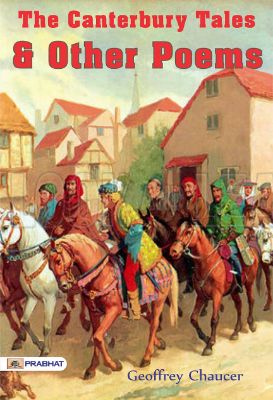
The Canterbury Tales, and Other Poems by Geoffrey Chaucer
The Canterbury Tales’ is a collection of 24 stories written by Geoffrey Chaucer. In 1386, Chaucer became Controller of Customs and Justice of Peace and, three years later, Clerk of the King’s work. It was during these years that Chaucer began working on his most famous text, ‘The Canterbury Tales’. The tales are presented as part of a story-telling contest by a group of pilgrims as they travel together on a journey from London to Canterbury to visit the shrine of Saint Thomas Becket. The prize for this contest is a free meal at the Tabard Inn at Southwark on their return.

The Captain of the Polestar, and Other Tales by Arthur Conan Doyle
Although Sir Arthur Conan Doyle is best known as the creator of the brilliant fictional detective Sherlock Holmes, the author tried his hand at a number of different genres before perfecting the detective story. ‘The Captain of the Polestar’ showcases a different, but equally engrossing, side of the author’s undeniable talent for fiction.
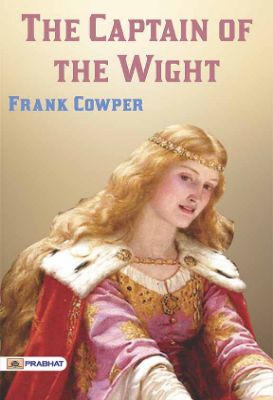
The Captain of the Wight by Frank Cowper
A fictional story of Edward Woodville, Captain of the Wight. ‘The Captain of the Wight’ is the story of how he came to lead 440 Isle of Wight men to their deaths in Brittany. The first part of the book is fiction, the second part is a set of translated letters which outlined the campaign and the great rousing poem written by an island historian on the whole event, and finally the third part is the original medieval report on which the book is based, to verify the facts.
The Captain’s Daughter by Alexsander Pushkin
Shea had just beaten me at chess, as usual, and, also as usual, I had gleaned what questionable satisfaction I might by twitting him with this indication of failing mentality by calling his attention for the nth time to that theory, propounded by certain scientists, which is based upon the assertion that phenomenal chess players are always found to be from the ranks of children under twelve, adults over seventy-two or the mentally defective—a theory that is lightly ignored upon those rare occasions that I win. Shea had gone to bed and I should have followed suit, for we are always in the saddle here before sunrise; but instead I sat there before the chess table in the library, idly blowing smoke at the dishonored head of my defeated king.
While thus profitably employed I heard the east door of the living-room open and someone enter. I thought it was Shea returning to speak with me on some matter of tomorrow’s work; but when I raised my eyes to the doorway that connects the two rooms I saw framed there the figure of a bronzed giant, his otherwise naked body trapped with a jewel-encrusted harness from which there hung at one side an ornate short-sword and at the other a pistol of strange pattern. The black hair, the steel-gray eyes, brave and smiling, the noble features—I recognized them at once, and leaping to my feet I advanced with outstretched hand.
The Captive by Marcel Proust
Valentin Louis Georges Eugène Marcel Proust was a French novelist, critic, and essayist best known for his monumental novel À la recherche du temps perdu, published in seven parts between 1913 and 1927.

The Carolinian by Rafael Sabatini
Excitement and anticipation are rife in the New World – it is a land offering new beginnings and new opportunities. Yet it is also a land of intrigue, deception and deadly opposition. Centred on the rich and fertile soils of Carolina at the time of the American War of Independence, ‘The Carolinian ‘charts the interwoven stories of a host of characters.

The Cartels Jungle by Irving E. Cox
“Lots of guys think they’ll make it. I did once myself. Look at me now. I’m no good in the ships any more, so they bust me back to port hand. It’s too damn easy to throw your credits away in the crumb-joints.”
The Cask of Amontillado by Edgar Allan Poe
First published in the year 1846, the present book ‘The Cask of Amontillado’ by Edgar Allan Poe is set in an unnamed Italian city at carnival time in an unspecified year, and is about a man taking fatal revenge on a friend whom, he believes, has insulted him.
The Castle of Otranto by Horace Walpole
The Castle of Otranto’ is a gothic novel by Horace Walpole. It was first published in the year 1764. It is generally regarded as the first gothic novel, initiating a literary genre which would become extremely popular in the later 18th and early 19th century, with authors such as Charles Maturin, Ann Radcliffe, Bram Stoker, Edgar Allan Poe and Daphne du Maurier.
The Categories by Aristotle
The Categories’ is one of Aristotle’s most discussed and revised notions. It places every object of human apprehension under one of ten categories known to medieval writers as predicaments. Aristotle intended them to enumerate everything that can be expressed without composition or structure, thus anything that can be either the subject or the predicate of a proposition.

The Cathedrals of Great Britain: Their History and Architecture by P. H. Ditchfield
In this volume I have attempted to give an architectural description of all the cathedral churches of England, Wales, and Scotland, together with a brief history of each see. In order to include any adequate account of each church and bishopric in one volume of portable size, which may be of use to visitors in their travels, much compression has been necessary, but it is hoped that nothing of importance has been omitted which might be useful to those who would read aright the architectural history of our great churches. On account of their immense importance in the history of Gothic art, it has been thought well to include in this volume some account of the churches of Westminster and Beverley. At the close of each history of a cathedral will be found a record of the principal building dates and dimensions, and also a brief account of the chief places and churches of interest in the city or neighbourhood which it is advisable to visit.
The Cave Girl by Edgar Rice Burroughs
The dim shadow of the thing was but a blur against the dim shadows of the wood behind it.
The young man could distinguish no outline that might mark the presence as either brute or human.
He could see no eyes, yet he knew that somewhere from out of that noiseless mass stealthy eyes were fixed upon him.
This was the fourth time that the thing had crept out from the wood as darkness was settling—the fourth time during those three horrible weeks since he had been cast upon that lonely shore that he had watched, terror-stricken, while night engulfed the shadowy form that lurked at the forest’s edge.
It had never attacked him, but to his distorted imagination it seemed to slink closer and closer as night fell—waiting, always waiting for the moment that it might find him unprepared.