
Premium Books
Showing 2401–2450 of 3787 results
The Confessions of St. Augustine by Bishop of Hippo Saint Augustine No cover available
Great art Thou, O Lord, and greatly to be praised; great is Thy power, and Thy wisdom infinite. And Thee would man praise; man, but a particle of Thy creation; man, that bears about him his mortality, the witness of his sin, the witness that Thou resistest the proud: yet would man praise Thee; he, but a particle of Thy creation. Thou awakest us to delight in Thy praise; for Thou madest us for Thyself, and our heart is restless, until it repose in Thee. Grant me, Lord, to know and understand which is first, to call on Thee or to praise Thee? and, again, to know Thee or to call on Thee? for who can call on Thee, not knowing Thee? for he that knoweth Thee not, may call on Thee as other than Thou art. Or, is it rather, that we call on Thee that we may know Thee? but how shall they call on Him in whom they have not believed? or how shall they believe without a preacher? and they that seek the Lord shall praise Him: for they that seek shall find Him, and they that find shall praise Him. I will seek Thee, Lord, by calling on Thee; and will call on Thee, believing in Thee; for to us hast Thou been preached. My faith, Lord, shall call on Thee, which Thou hast given me, wherewith Thou hast inspired me, through the Incarnation of Thy Son, through the ministry of the Preacher.

The Confidence-Man: His Masquerade by Herman Melville
First published in the year 1857, the present book ‘The Confidence-Man: His Masquerade’ is a work of satire by American writer Herman Melville. The novel portrays a Canterbury Tales–style group of steamboat passengers whose interlocking stories are told as they travel down the Mississippi River toward New Orleans.
The Conquest of Bread by Kniaz Petr Alekseevich Kropotkin
First published in the year 1892, the present book ‘The Conquest of Bread’ by kniaz Petr Alekseevich Kropotkin is a revolutionary idyl, a beautiful outline sketch of a future society based on liberty, equality and fraternity.
The Consolation of Philosophy by Boethius
The book called ‘The Consolation of Philosophy’ was throughout the Middle Ages, and down to the beginnings of the modern epoch in the sixteenth century, the scholar’s familiar companion. Few books have exercised a wider influence in their time. It has been translated into every European tongue, and into English nearly a dozen times, from King Alfred’s paraphrase to the translations of Lord Preston, Causton, Ridpath, and Duncan, in the eighteenth century. The belief that what once pleased so widely must still have some charm is my excuse for attempting the present translation. The great work of Boethius, with its alternate prose and verse, skilfully fitted together like dialogue and chorus in a Greek play, is unique in literature, and has a pathetic interest from the time and circumstances of its composition. It ought not to be forgotten. Those who can go to the original will find their reward. There may be room also for a new translation in English after an interval of close on a hundred years.
The Contest in America by John Stuart Mill
The cloud which for the space of a month hung gloomily over the civilized world, black with far worse evils than those of simple war, has passed from over our heads without bursting. The fear has not been realized, that the only two first-rate Powers who are also free nations would take to tearing each other in pieces, both the one and the other in a bad and odious cause. For while, on the American side, the war would have been one of reckless persistency in wrong, on ours it would have been a war in alliance with, and, to practical purposes, in defence and propagation of, slavery. We had, indeed, been wronged. We had suffered an indignity, and something more than an indignity, which, not to have resented, would have been to invite a constant succession of insults and injuries from the same and from every other quarter. We could have acted no otherwise than we have done: yet it is impossible to think, without something like a shudder, from what we have escaped. We, the emancipators of the slave—who have wearied every Court and Government in Europe and America with our protests and remonstrances, until we goaded them into at least ostensibly coöperating with us to prevent the enslaving of the negro—we, who for the last half century have spent annual sums, equal to the revenue of a small kingdom, in blockading the African coast, for a cause in which we not only had no interest, but which was contrary to our pecuniary interest, and which many believed would ruin, as many among us still, though erroneously, believe that it has ruined, our colonies,—we should have lent a hand to setting up, in one of the most commanding positions of the world, a powerful republic, devoted not only to slavery, but to pro-slavery propagandism—should have helped to give a place in the community of nations to a conspiracy of slave-owners, who have broken their connection with the American Federation on the sole ground, ostentatiously proclaimed, that they thought an attempt would be made to restrain, not slavery itself, but their purpose of spreading slavery wherever migration or force could carry it.
The Corsair by Lord Byron
MY DEAR MOORE,
I DEDICATE to you the last production with which I shall trespass on public patience, and your indulgence, for some years; and I own that I feel anxious to avail myself of this latest and only opportunity of adorning my pages with a name, consecrated by unshaken public principle, and the most undoubted and various talents. While Ireland ranks you among the firmest of her patriots—while you stand alone the first of her bards in her estimation, and Britain repeats and ratifies the decree—permit one, whose only regret, since our first acquaintance, has been the years he had lost before it commenced, to add the humble but sincere suffrage of friendship, to the voice of more than one nation. It will at least prove to you, that I have neither forgotten the gratification derived from your society, nor abandoned the prospect of its renewal, whenever your leisure or inclination allows you to atone to your friends for too long an absence. It is said among those friends, I trust truly, that you are engaged in the composition of a poem whose scene will be laid in the East; none can do those scenes so much justice. The wrongs of your own country, the magnificent and fiery spirit of her sons, the beauty and feeling of her daughters, may there be found; and Collins, when he denominated his Oriental, his Irish Eclogues, was not aware how true, at least, was a part of his parallel. Your imagination will create a warmer sun, and less clouded sky; but wildness, tenderness, and originality are part of your national claim of oriental descent, to which you have already thus far proved your title more clearly than the most zealous of your country’s antiquarians.
The Corsican Brothers by Alexandre Dumas
In the beginning of March, 1841, I was travelling in Corsica.
Nothing is more picturesque and more easy to accomplish than a journey in Corsica. You can embark at Toulon, in twenty hours you will be in Ajaccio, and then in twenty-four hours more you are at Bastia.
Once there you can hire or purchase a horse. If you wish to hire a horse you can do so for five francs a-day; if you purchase one you can have a good animal for one hundred and fifty francs. And don’t sneer at the moderate price, for the horse hired or purchased will perform as great feats as the famous Gascon horse which leaped over the Pont Neuf, which neither Prospero nor Nautilus, the heroes of Chantilly and the Champ de Mars could do. He will traverse roads which Balmat himself could not cross without crampons, and will go over bridges upon which Auriol would need a balancing pole.
As for the traveller, all he has to do is to give the horse his head and let him go as he pleases; he does not mind the danger. We may add that with this horse, which can go anywhere, the traveller can accomplish his fifteen leagues a day without stopping to bait.
From time to time, while the tourist may be halting to examine some ancient castle, built by some old baron or legendary hero, or to sketch a tower built ages ago by the Genoese, the horse will be contented to graze by the road side, or to pluck the mosses from the rocks in the vicinity.
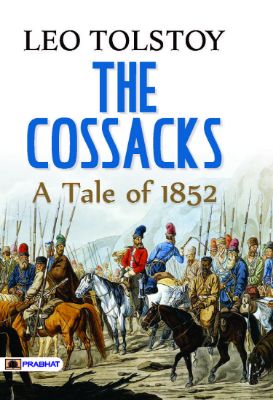
THE COSSACKS by LEO TOLSTOY
A short novel by famous Russian writer Leo Tolstoy, ‘The Cossacks’ was first published in parts in a literary magazine The Russian Messenger. The novel is believed to be written by the uathor to pay his debts after having lost badly in cards.

The Cost of Living by Margaret Weston Kendall
The ever-mounting cost of living is to-day a cause of almost universal evil apprehension. Is it not possible that evil apprehension may be the cause of the high cost of living? The suggestion merits an inquiry. For apprehen- sion may be sanely treated and wisely turned to good.

The Count of Monte Cristo by Alexandre Dumas
One of the greatest tales of revenge of all time.

The Country Doctor by Honoré de Balzac
Eugenie Grandet, does Balzac seem to have taken a greater interest than in The Country Doctor; and the fact of this interest, together with the merit and intensity of the book in each case, is, let it be repeated, a valid argument against those who would have it that there was something essentially sinister both in his genius and in his character.

The Country of the Pointed Firs by Sarah Orne Jewett
SARAH ORNE JEWETT (1849-1909) was born and died in South Berwick, Maine. Her father was the region’s most distinguished doctor and, as a child, Jewett often accompanied him on his round of patient visits. She began writing poetry at an early age and when she was only 19 her short story “Mr. Bruce” was accepted by the Atlantic Monthly. Her association with that magazine continued, and William Dean Howells, who was editor at that time, encouraged her to publish her first book, Deephaven (1877), a collection of sketches published earlier in the Atlantic Monthly. Through her friendship with Howells, Jewett became acquainted with Boston’s literary elite, including Annie Fields, with whom she developed one of the most intimate and lasting relationships of her life.
The Creative Process in the Individual by T. Troward
First published in the year 1910, the present book ‘The Creative Process in the Individual’ by one of the `fathers of new thought’ – T. Troward, the author has “endeavored to set before the reader the conception of a sequence of creative action commencing with the formation of the globe and culminating in a vista of infinite possibilities attainable by every one who follows up the right line for their unfoldment.” -Foreword

The Creed of Buddha by Edmond Holmes
Edmond Holmes, a Pantheist, reviews Buddhist theology and critiques Western conceptions (or misconceptions) of fundamental concepts such as Nirvana. In this book Holmes attempts to get back to the core of what Buddha taught, not necessarily what is considered orthodox. His interpretation is thought-provoking.
The Crescent Moon by Francis Brett Young
When I stepped on to the platform at Nairobi I hadn’t the very least idea of what I was in for. The train for which we were waiting was due from Kisumu, bringing with it a number of Indian sepoys, captured at Tanga and Jasin, whom the Belgian advance on Taborah had freed. It was my job to see them into the ambulances and send them off to hospital. But when I got to the station I found the platform swarming with clerical hats and women who looked religious, all of whom couldn’t very well have been swept into this degree of congregation for the sake of an odd sepoy’s soul. These mean and ill-dressed people kept up a chatter like starlings under the station roof. It was a hot day in November, and the rains were due. Even six thousand feet of altitude won’t stimulate you then. It had all the atmosphere of a sticky school treat in August at home. . . . Baptists on an August Bank Holiday. That was how it struck me.

The Crescent Moon by Rabindranath Tagore
In The Crescent Moon, Rabindranath Tagore brings alive the world of a child–in some poems he describes the simple joys of children at play, while in others, he feels the bonds of affection between mother and child, and in yet others, he expresses wonder at the earthly beauty all around us. Also included here are some of his most thought-provoking stories with themes that are relevant for children. In ‘The Kabuliwalla’ little Minnie becomes friendly with a burly Afghan man, but will she remember him when he returns after many years? ‘The Parrot’s Tale’ is an allegory about the perils of the modern system of education, and ‘The Kingdom of Cards’, set in a fantasy land of cards, is a powerful statement against the stifling of freedom of any kind.
The Cricket on the Hearth by Charles Dickens
The kettle began it! Don’t tell me what Mrs. Peerybingle said. I know better. Mrs. Peerybingle may leave it on record to the end of time that she couldn’t say which of them began it; but, I say the kettle did. I ought to know, I hope! The kettle began it, full five minutes by the little waxy-faced Dutch clock in the corner, before the Cricket uttered a chirp.
As if the clock hadn’t finished striking, and the convulsive little Haymaker at the top of it, jerking away right and left with a scythe in front of a Moorish Palace, hadn’t mowed down half an acre of imaginary grass before the Cricket joined in at all!
Why, I am not naturally positive. Every one knows that. I wouldn’t set my own opinion against the opinion of Mrs. Peerybingle, unless I were quite sure, on any account whatever. Nothing should induce me. But, this is a question of fact. And the fact is, that the kettle began it, at least five minutes before the Cricket gave any sign of being in existence. Contradict me, and I’ll say ten.

The Crime of the Congo by Arthur Conan Doyle
First published in the year 1909, ‘The Crime of the Congo’ is an attempt to expose the situation of human rights’ violation in Congo at hands of Leopold II of Belgium. This book by Sir Arthur Conan Doyle was well received and much appreciated by the critics.

The Crimson Fairy Book by Andrew Lang
A collection of several short fairy tales by the noted Scottish poet, novelist, literary critic, and anthropologist Andrew Lang. These tales are first English translations of fairy tales from many different languages. This volume was published in a colour-coded manner with crimson at the background of each of the pages. He published around 25 such volumes with different colour codes for each. These volumes got immensely popular at that pont of time.
The Crimson Tide: A Novel by Robert W. Chambers
An American ambulance going south stopped on the snowy road; the driver, an American named Estridge, got out; his companion, a young woman in furs, remained in her seat.
Estridge, with the din of the barrage in his ears, went forward to show his papers to the soldiers who had stopped him on the snowy forest road.
His papers identified him and the young woman; and further they revealed the fact that the ambulance contained only a trunk and some hand luggage; and called upon all in authority to permit John Henry Estridge and Miss Palla Dumont to continue without hindrance the journey therein described.

The Critique of Pure Reason by Immanuel Kant
Originally written in German, ‘The Critique of Pure Reason’ is a longish essay by renowned social scientist and philosopher Immanuel Kant. It is considered one of the most influential works in the history of philosophy.

The Crock of Gold by James Stephens
IN the centre of the pine wood called Coilla Doraca there lived not long ago two Philosophers. They were wiser than anything else in the world except the Salmon who lies in the pool of Glyn Cagny into which the nuts of knowledge fall from the hazel bush on its bank. He, of course, is the most profound of living creatures, but the two Philosophers are next to him in wisdom. Their faces looked as though they were made of parchment, there was ink under their nails, and every difficulty that was submitted to them, even by women, they were able to instantly resolve. The Grey Woman of Dun Gortin and the Thin Woman of Inis Magrath asked them the three questions which nobody had ever been able to answer, and they were able to answer them. That was how they obtained the enmity of these two women which is more valuable than the friendship of angels. The Grey Woman and the Thin Woman were so incensed at being answered that they married the two Philosophers in order to be able to pinch them in bed, but the skins of the Philosophers were so thick that they did not know they were being pinched. They repaid the fury of the women with such tender affection that these vicious creatures almost expired of chagrin, and once, in a very ecstacy of exasperation, after having been kissed by their husbands, they uttered the fourteen hundred maledictions which comprised their wisdom, and these were learned by the Philosophers who thus became even wiser than before.
The Crow by Edgar Allan Poe
A narrative poem by noted American gothic stories writer Edgar Allan Poe, ‘The Crow’ was first published in the year 1845. The poem is about a talking crow’s mysterious visit to a distraught lover, tracing the man’s slow fall into madness.

The Crow’s Nest by Clarence Day
First published in the year 1921, the present book ‘The Crow’s Nest’ is a collection of literary essays by American author and cartoonist Clarence Day, who is best known for his 1935 work ‘Life With Father’. Present collection received a favorable review in The Nation magazine by the prominent U.S. academician of that time – Carl Van Doren.

The Cruise of the “Janet Nichol” Among the South Sea Islands: A Diary by Stevenson
First published in 1914, ‘The Cruise of the “Janet Nichol” Among the South Sea Islands: A Diary’ is a book published by the wife of the famous English writer Robert Louis Stevenson. “For many reasons “The Cruise of the Janet Nichol” has been pruned rather severely. It was, originally, only intended to be a collection of hints to help my husband’s memory where his own diary had fallen in arrears; consequently, it frequently happened that incidents given in my diary were re-written (to their great betterment), amplified, and used in his.” -Preface
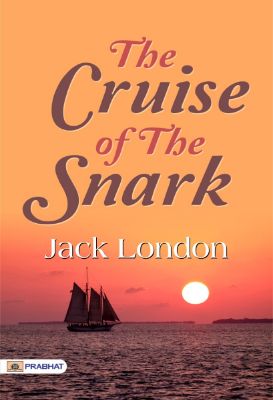
The Cruise of the Snark by Jack London
IT began in the swimming pool at Glen Ellen. Between swims it was our wont to come out and lie in the sand and let our skins breathe the warm air and soak in the sunshine. Roscoe was a yachtsman. I had followed the sea a bit. It was inevitable that we should talk about boats. We talked about small boats, and the seaworthiness of small boats. We instanced Captain Slocum and his three years’ voyage around the world in the Spray.
We asserted that we were not afraid to go around the world in a small boat, say forty feet long. We asserted furthermore that we would like to do it. We asserted finally that there was nothing in this world we’d like better than a chance to do it.
“Let us do it,” we said . . . in fun.
Then I asked Charmian privily if she’d really care to do it, and she said that it was too good to be true.
The next time we breathed our skins in the sand by the swimming pool I said to Roscoe, “Let us do it.”
I was in earnest, and so was he, for he said:
“When shall we start?”

The Crux: A Novel by Charlotte Perkins Gilman
Charlotte Perkins Gilman’s novel The Crux is an important early feminist work that brings to the fore complicated issues of gender, citizenship, eugenics, and frontier nationalism. First published serially in the feminist journal The Forerunner in 1910, The Crux tells the story of a group of New England women who move west to start a boardinghouse for men in Colorado.
The Crystal Crypt by Philip K. Dick
Philip K. Dick’s ‘The Crystal Crypt’ is a short science fiction story. This story was first published in the year 1954 in a magazine named the Planet Stories.

The Crystal Palace and Other Legends by Marie H. Frary and Charles Maurice Stebbins
Legends have a fascination for all classes of people, but they possess a peculiar charm for children. They constitute, in fact, a form of literature particularly fitting to the mental world of the child. In them fact and fancy are happily blended. Around the bare facts of recorded or unrecorded history, are woven the poetic ideals of a romantic people.
Nothing could be more worth a child’s reading than a story of the past that conveys not only an idea of the everyday life of real people, but represents them also as striving after ideals in various forms of beauty.
The Custom of the Country by Edith Wharton
First published in the year 1913, the present novel ‘The Custom of the Country’ by Edith Wharton tells the story of Undine Spragg, a Midwestern girl who attempts to ascend in New York City society.
The Cynic’s Word Book by Ambrose Bierce
First published in the year 1906, American Civil War soldier, journalist, and short story writer Ambrose Bierce’s ‘The Cynic’s Word Book’ is a satirical dictionary. This book consists of common words followed by extremely funny and witty definitions that can be read as a critical social commentary.
The Daffodil Mystery by Edgar Wallace
“I am afraid I don’t understand you, Mr. Lyne.”
Odette Rider looked gravely at the young man who lolled against his open desk. Her clear skin was tinted with the faintest pink, and there was in the sober depths of those grey eyes of hers a light which would have warned a man less satisfied with his own genius and power of persuasion than Thornton Lyne.
He was not looking at her face. His eyes were running approvingly over her perfect figure, noting the straightness of the back, the fine poise of the head, the shapeliness of the slender hands.

The Damnation of Theron Ware by Harold Frederic
First published in the year 1896, the present novel ‘The Damnation of Theron Ware’ by American author Harold Frederic reveals a great deal about late 19th century provincial America, religious life, and the depressed state of intellectual and artistic culture in small towns.
The Damned by Algernon Blackwood
“I’m over forty, Frances, and rather set in my ways,” I said good-naturedly, ready to yield if she insisted that our going together on the visit involved her happiness. “My work is rather heavy just now too, as you know. The question is, could I work there—with a lot of unassorted people in the house?”
“Mabel doesn’t mention any other people, Bill,” was my sister’s rejoinder. “I gather she’s alone—as well as lonely.”

The Damned Thing by Ambrose Bierce
First published in the year 1893, famous American writer, journalist Ambrose Bierce’s ‘The Damned Thing’ is a horror short story. This story is written in four parts with separate subtitles (that are comical) to each. These subtitles adds a synical impact to the gothic imagery created inside the story.

The Danish History, Books I-IX by Grammaticus Saxo
The Danish History, Books I-IX’ is the history of Germany in nine long volumes by renowned Danish historian Grammaticus Saxo. It will serve as an essential reading for those interested in studying the cultural, war, geographical and political history of Germany.
The Daring Twins by L. Frank Baum
An adventurous story by one of the ever-famous children’s authors – L. Frank Baum, who also wrote the very popular series of Oz ‘The Wizard of Oz’. He wrote ‘The Daring Twins’ under his own name, instead of multiple of his pseudonyms.

The Dark Star by Robert W. Chambers
“Not the dark companion of Sirius, brightest of all stars—not our own chill and spectral planet rushing toward Vega in the constellation of Lyra—presided at the birth of millions born to corroborate a bloody horoscope.
“But a Dark Star, speeding unseen through space, known to the ancients, by them called Erlik, after the Prince of Darkness, ruled at the birth of those myriad souls destined to be engulfed in the earthquake of the ages, or flung by it out of the ordered pathway of their lives into strange byways, stranger highways—into deeps and deserts never dreamed of.” -an excerpt
The Dates of Variously-shaped Shields, with Coincident Dates and Examples by George Grazebrook
In venturing to place before the public this little work—which takes up a line of enquiry never before attempted,—I would solicit criticism, not of that slashing condemnatory kind which destroys a statement without pointing out its correction;—that would only break my head, and make no one the wiser!—but I hope that antiquaries who have more knowledge than I, may, when pointing out errors, also explain what such statements ought to be, and give exact references in proof.
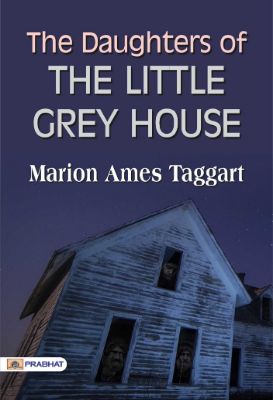
The Daughters of the Little Grey House by Marion Ames Taggart
“How do you know when you’re a young lady?” asked Roberta Grey.
She was sitting before the ancient mahogany dressing-table in her—and Wythie’s—room, unblushingly regarding herself in the mirror, while the fingers of both hands, supporting her brilliant face, experimented with changes in it by pushing up the delicate eyebrows into quite a celestial angle.

The Dawn of Tomorrow by Frances Hodgson Burnett
A wealthy London business man takes a room in a poor part of the city. He is depressed and has decided to take his life by going the next day to purchase a hand gun he had seen in a pawnshop window
The Day of Small Things by Anne Manning
“I think I have been laid up nearly two years on this sofa, Phillis?” said I.
“Two years, come the 6th of October,” said Phillis.
“And, during that time, what mercies I have received! what alleviations, what blessings!”
“What sea-kale and early spare-o’-grass! what baskets of grapes and pottles of strawberries!” said Phillis.
“What songs in the night, what in-pourings of strength!” said I.
“So many pheasants, too, and partridges!” said Phillis. “Teal, woodcocks, and wild ducks!”
“David might well say, the Lord maketh our bed in our sickness, Phillis,” said I.
“Such a pretty bed as it is, too!” said Phillis. “So white, sweet, and clean! Russia sheets and Marseilles quilt, bleached on a heath common, close by a sweetbriar hedge!”
“Not only that—” said I.
“Not only that,” said Phillis, “but such pretty daisy-fringe to the curtains, and a clean tarletan blind to the window.”
“Such a lovely view from the window!” said I.
The Day’s Work – Volume 1 by Rudyard Kipling
First published in the year 1898, the present book ‘The Day’s Work – Volume 1’ is a collection of short stories by the famous writer Rudyard Kipling. The book contains 13 short stories, which were mainly written between 1893 and 1896 while Kipling was living in Vermont. Four of the stories contained in this book include anthropomorphic characters.

The Days of Auld Lang Syne by Ian Maclaren
“Farms were held on lease in Drumtochty, and according to a good old custom descended from father to son, so that some of the farmers’ forbears had been tenants as long as Lord Kilspindie’s ancestors had been owners. If a family died out, then a successor from foreign parts had to be introduced, and it was in this way Milton made his appearance and scandalised the Glen with a new religion.” -an excerpt

The Dead Secret: A Novel by Wilkie Collins
These words were spoken in the kitchen of a large country-house situated on the west coast of Cornwall. The speakers were two of the men-servants composing the establishment of Captain Treverton, an officer in the navy, and the eldest male representative of an old Cornish family. Both the servants communicated with each other restrainedly, in whispers—sitting close together, and looking round expectantly toward the door whenever the talk flagged between them.
—from this book

The Dealings of Captain Sharkey, and Other Tales of Pirates by Arthur Conan Doyle
A collection of various short stories by the British writer Sir Arthur Conan Doyle. This collection includes his crime, detective and other thriller genre stories.
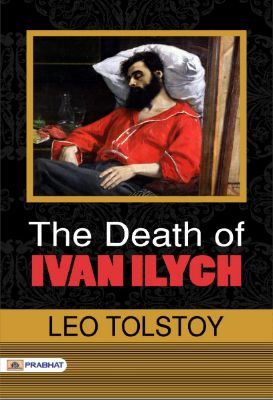
The Death of Ivan Ilych by Leo Tolstoy
During an interval in the Melvinski trial in the large building of the Law Courts the members and public prosecutor met in Ivan Egorovich Shebek’s private room, where the conversation turned on the celebrated Krasovski case. Fedor Vasilievich warmly maintained that it was not subject to their jurisdiction, Ivan Egorovich maintained the contrary, while Peter Ivanovich, not having entered into the discussion at the start, took no part in it but looked through the *Gazette* which had just been handed in.
“Gentlemen,” he said, “Ivan Ilych has died!”
“You don’t say so!”

The Death of the Lion by Henry James
I had simply, I suppose, a change of heart, and it must have begun when I received my manuscript back from Mr. Pinhorn. Mr. Pinhorn was my “chief,” as he was called in the office: he had the high mission of bringing the paper up. This was a weekly periodical, which had been supposed to be almost past redemption when he took hold of it. It was Mr. Deedy who had let the thing down so dreadfully: he was never mentioned in the office now save in connexion with that misdemeanour. Young as I was I had been in a manner taken over from Mr. Deedy, who had been owner as well as editor; forming part of a promiscuous lot, mainly plant and office-furniture, which poor Mrs. Deedy, in her bereavement and depression, parted with at a rough valuation. I could account for my continuity but on the supposition that I had been cheap. I rather resented the practice of fathering all flatness on my late protector, who was in his unhonoured grave; but as I had my way to make I found matter enough for complacency in being on a “staff.” At the same time I was aware of my exposure to suspicion as a product of the old lowering system. This made me feel I was doubly bound to have ideas, and had doubtless been at the bottom of my proposing to Mr. Pinhorn that I should lay my lean hands on Neil Paraday. I remember how he looked at me—quite, to begin with, as if he had never heard of this celebrity, who indeed at that moment was by no means in the centre of the heavens; and even when I had knowingly explained he expressed but little confidence in the demand for any such stuff. When I had reminded him that the great principle on which we were supposed to work was just to create the demand we required, he considered a moment and then returned: “I see—you want to write him up.”

The Declaration of Independence of the United States of America by Thomas Jefferson
An official document signed by 56 dignitaries to announce or declare America’s freedom or separation from English colonial rule. An important document, this book will interest students of political science and other feilds of social sciences.

The Decoration of Houses by Ogden Codman and Edith Wharton
First published in the year 1897, ‘The Decoration of Houses’ is a joint effort of renowned writer Edith Wharton and his friend Ogden Codman. This book guides the readers about ways in which one can design the aesthetics of their dream house.