
Premium Books
Showing 2501–2550 of 3787 results
The Elves of Mount Fern by Katherine Creighton
The Elves are the dearest and most mischievous little people in all the wide world.
They live in Elfland, and Elfland can be found in every corner of the globe. They take up their abode on wooded hillsides, beside murmuring streams, or in deep, leafy forests. In the dead of night, when all the world is still, they steal forth from their dwellings and start on their merry midnight rounds. They dance in the moonlight on soft dewy lawns under wide-spreading trees. They visit their neighbors and friends among elves, and their neighbors and friends among men.
The Enchanted April by Elizabeth von Arnim
A 1922 women’s adventure and travel novel by British-American novelist Elizabeth von Arnim. It is said to be the author’s lightest and most refreshing novel. The novel follows four dissimilar women in 1920s England who leave their rainy, grey environments to go on holiday in Italy. Mrs Arbuthnot and Mrs Wilkins, who belong to the same ladies’ club but have never spoken, become acquainted after reading a newspaper advertisement for a small medieval castle on the Mediterranean to be let furnished for April. They find some common ground in that both are struggling to make the best of unhappy marriages. The four women come together at the castle and find rejuvenation in the tranquil beauty of their surroundings, rediscovering hope and love.
The Enchiridion by Epictetus
The Enchiridion’ is a short manual of Stoic ethical advice compiled by Arrian, a 2nd-century disciple of the Greek philosopher Epictetus.
The English at the North Pole by Jules Verne
“Yes,” said the quartermaster, “and it is furnished with a steel cutter as sharp as a razor and capable of cutting a three-decker in two if the Forward were thrown across her at top speed.”

The English Lakes by W. T. Palmer
The present book, it must be understood, treats the English Lakes rather apart from various other elements comprised in what is known as the Lake District. There is so much to say of the waters and their immediate surroundings that no space has remained to describe mountain, pass, and tarn in the manner their beauties merit. Other limits to the book are due to the writer’s promiscuity of taste. I am interested in most things—antiquities, fauna, flora, sports, geology, entomology, and the like; but in not one of these subjects have I that erudite knowledge which might render my work of profit. This book is written to interest those who love out-of-doors without claiming any particular study there. Of the paintings—I can only commend them to notice. In my humblest manner I assert that only an artist who feels the beauty of his environment thoroughly could produce work so stamped with the innate character of our Lakeland.
The Enormous Room by Horace Leonard Gold
First published in the year 1953, the present book ‘The Enormous Room’ is co-written by Horace Leonard Gold and Robert Wilson Krepps. This science fiction story was first serialized in a magazine named the Amazing stories.

The Esperanto Teacher: A Simple Course for Non-Grammarians by Helen Fryer
This little book has been prepared in the hope of helping those who, having forgotten the lessons in grammar which they received at school, find some difficulty in learning Esperanto from the existing textbooks. It is hoped it will be found useful not only for solitary students, but also for class work.
—from this book

The Essays or Counsels, Civil and Moral by Francis Bacon
First published in the year 1597, renowned philosopher, social thinker and writer Francis Bacon’s present book ‘The Essays or Counsels, Civil and Moral’ is a compandium of his various essays that are written in wide range of styles, from the plain and unadorned to the epigrammatic.

The Essence of Buddhism by E. Haldeman-Julius
The present compilation is aimed at turning Buddhism to account as a moral force by bringing together a selection of its beautiful sentiments, and lofty maxims, and particularly including some of those which inculcate mercy to the lower animals.
The Ethics by Benedictus de Spinoza
Ethica. English’ is a philosophical treatise written by Benedictus de Spinoza. It was first published in 1677. The book is perhaps the most ambitious attempt to apply the method of Euclid in philosophy. Spinoza puts forward a small number of definitions and axioms from which he attempts to derive hundreds of propositions and corollaries.
The Everlasting Man by G. K. Chesterton
There are two ways of getting home; and one of them is to stay there. The other is to walk round the whole world till we come back to the same place; and I tried to trace such a journey in a story I once wrote. It is, however, a relief to turn from that topic to another story that I never wrote.

The Every-day Life of Abraham Lincoln by Francis F. Browne
This book brings Lincoln the man, not Lincoln the tradition, very near to us. The great events of Lincoln’s life, and impressions of his character, are given in the actual words of those who knew him – his friends, his neighbors and daily associates – rather than condensed and remolded into other forms.
The Evil Eye, Thanatology, and Other Essays by Roswell Park
This ever offers a standing invitation and an enduring fascination for those who will but raise their eyes from the fertile and arable soil in which they concentrate their most arduous labors. Too close confinement in this field may result in greater commercial yield, but the fragrance of the clover detracts not at all from the value of the hay, nor do borderland studies result otherwise than in enlargement of the boundaries of one’s storm center of work.

The Evolution of Culture, and Other Essays by Augustus Henry Lane-Fox Pitt-Rivers
It was about the middle of last century that an officer in Her Majesty’s Army began to apply the lessons which he had learnt in the course of some of his professional experimental work to studies pursued by him as a hobby in a far wider field of science. The story of the famous ethnographical collection of Colonel Lane Fox is well known, and I need but briefly refer to it. During his investigations, conducted with a view to ascertaining the best methods whereby the service firearms might be improved, at a time when the old Tower musket was being finally discarded, he was forcibly struck by the extremely gradual changes whereby improvements were effected. From this book

The Evolution of Modern Medicine by William Osler
On this foundation Yale College was requested and directed to establish an annual course of lectures designed to illustrate the presence and providence, the wisdom and goodness of God, as manifested in the natural and moral world. These were to be designated as the Mrs. Hepsa Ely Silliman Memorial Lectures. It was the belief of the testator that any orderly presentation of the facts of nature or history contributed to the end of this foundation more effectively than any attempt to emphasize the elements of doctrine or of creed; and he therefore provided that lectures on dogmatic or polemical theology should be excluded from the scope of this foundation, and that the subjects should be selected rather from the domains of natural science and history, giving special prominence to astronomy, chemistry, geology and anatomy.
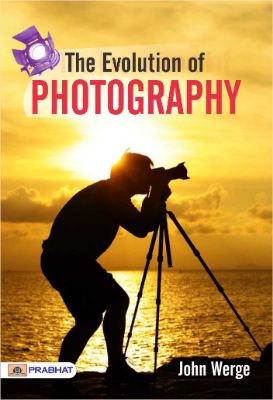
The Evolution of Photography by John Werge
The present book titled ‘The Evolution of Photography’ was written by famous historian and photographer John Werge. It was first published in the year 1890. This book would interest the photography enthusiasts and those who are interested in reading the history and evolution of the technology of capturing any thing in a frame.
The Exhibition Drama by George M. Baker
In the preparation of “The Exhibition Drama,” the author has endeavored to present as great a variety as in the previous volumes of this series, and to comply, as far as possible, with the requests of numerous correspondents. Thus “Enlisted for the War” was written in response to a demand for something, based on the late civil war, which should meet the requirements of various Posts of the G. A. R. The musical allegories, “The Visions of Freedom,” and “The Tournament of Idylcourt,” were prepared for the graduating-class in a Boston grammar-school, and are of the same general character as those previously issued. The Christmas entertainment, and the dramatization of Dickens’s “Christmas Carol,” have both been successfully performed at sabbath-school entertainments. These, as well as the allegories, are plentifully supplied with tableaux, easily represented, and are adapted to the wants of many occasional exhibitions.

The Exploits of Brigadier Gerard by Arthur Conan Doyle
The Exploits of Brigadier Gerard’ is one of the stories in Arthur Conan Doyle’s famous Gerard series. It was published in the year 1896.

The Explorer by W Somerset Maugham
“The sea was very calm. There was no ship in sight, and the sea-gulls were motionless upon its even greyness. The sky was dark with lowering clouds, but there was no wind. The line of the horizon was clear and delicate. The shingly beach, no less deserted, was thick with tangled seaweed, and the innumerable shells crumbled under the feet that trod them. The breakwaters, which sought to prevent the unceasing encroachment of the waves, were rotten with age and green with the sea-slime. It was a desolate scene, but there was a restfulness in its melancholy; and the great silence, the suave monotony of colour, might have given peace to a heart that was troubled. They could not assuage the torment of the woman who stood alone upon that spot. She did not stir; and, though her gaze was steadfast, she saw nothing. Nature has neither love nor hate, and with indifference smiles upon the light at heart and to the heavy brings a deeper sorrow. It is a great irony that the old Greek, so wise and prudent, who fancied that the gods lived utterly apart from human passions, divinely unconscious in their high palaces of the grief and joy, the hope and despair, of the turbulent crowd of men, should have gone down to posterity as the apostle of brutish pleasure.” -an excerpt
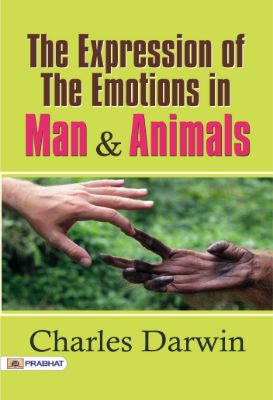
The Expression of the Emotions in Man and Animals by Charles Darwin
First published in the year 1872, worldwide famous geneologist and philosophical revolutionary Charles Darwin’s ‘The Expression of the Emotions in Man and Animals’ is about genetically determined aspects of behaviour.
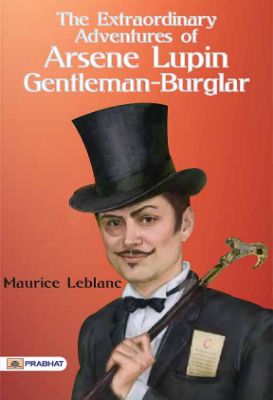
The Extraordinary Adventures of Arsene Lupin, Gentleman-Burglar by Maurice Leblanc
The Extraordinary Adventures of Arsene Lupin, Gentleman-Burglar’ is the first collection of stories by Maurice Leblanc recounting the adventures of Arsène Lupin. Containing the first eight stories depicting the character, each was first published in the French magazine ‘Je sais tout’. The seventh features fictional English detective ‘Sherlock Holmes’, as does the second collection of stories, ‘Arsene Lupin vs. Herlock Sholmes’.
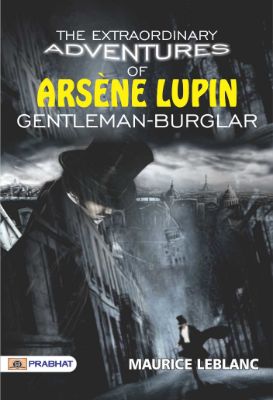
THE EXTRAORDINARY ADVENTURES of ARSÈNE LUPIN, GENTLEMAN-BURGLAR by Maurice Leblanc
First pub;lished in the year 1907, the present book ‘THE EXTRAORDINARY ADVENTURES of ARSÈNE LUPIN, GENTLEMAN-BURGLAR’ is written by French writer Maurice Leblanc. It is a classic crime fiction type work. This book consists many crime fictional stories.
The Eyes Have It by Philip K. Dick
“It was quite by accident I discovered this incredible invasion of Earth by lifeforms from another planet. As yet, I haven’t done anything about it; I can’t think of anything to do. I wrote to the Government, and they sent back a pamphlet on the repair and maintenance of frame houses. Anyhow, the whole thing is known; I’m not the first to discover it. Maybe it’s even under control.” -an excerpt
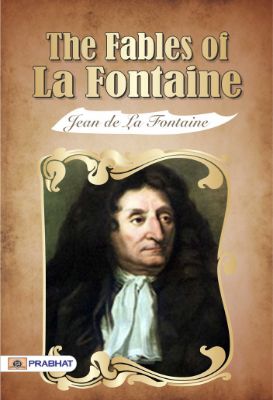
The Fables of La Fontaine by Jean de La Fontaine
First published in the year 1886, the present book titled ‘The Fables of La Fontaine’ is a collection of Jean de La Fontaine’s stories accompanied by his short bio and a few essays about him.
The Face of the Earth as Seen from the Air by Willis T. Lee
Scarcely a generation has passed during the evolution of the airplane from a ridiculous dream to a practical factor in the work of the world. Men who once read with derision, or only passive interest at best, of the experiments of Langley, Chanute, and the Wrights have seen the airplane developed suddenly into an indispensable instrument of war and an agency of demonstrated value and of such diversity of application that its future is hard to estimate.

The Fair Maid of Perth; Or, St. Valentine’s Day by Walter Scott
A historical drama novel by famous writer Sir Walter Scott, ‘The Fair Maid of Perth; Or, St. Valentine’s Day’ was first published in the year 1828. Set in Perth, the novel is inspired by the story of the Battle of the North Inch.
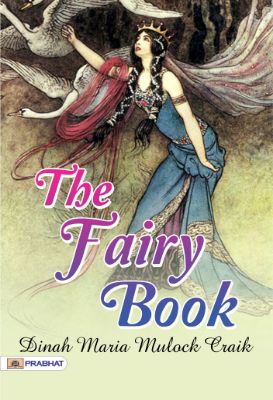
The Fairy Book by Dinah Maria Mulock Craik
This is meant to be the best collection attainable of that delight of all children, and of many grown people who retain the child-heart still—the old-fashioned, time-honored classic Fairy-tale. It has been compiled from all sources—far-off and familiar; when familiar, the stories have been traced with care to their original form, which, if foreign, has been retranslated, condensed, and in any other needful way made suitable for modern British children. Perrault, Madame d’Aulnois, and Grimm have thus been laid under contribution. Where it was not possible to get at the original of a tale, its various versions have been collated, compared, and combined; and in some instances, when this proved still unsatisfactory, the whole story has been written afresh. The few English fairy tales extant, such as Jack the Gian Killer, Tom Thumb, etc., whose authorship is lost in obscurity, but whose charming Saxon simplicity of style, and intense realism of narration, make for them an ever-green immortality—these have been left intact, for no later touch would improve them. All modern stories have been excluded.
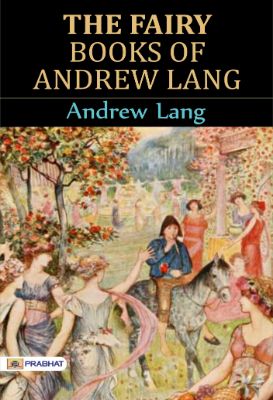
The Fairy Books of Andrew Lang by Andrew Lang
First published in the year 1984, famous writer H. C. Andersen’s book ‘Andersen’s Fairy Tales’ is a collection of fairy tales and magical stories.

The Fairy-Land of Science by Buckley, Arabella B.
Many of the earliest books, particularly those dating back to the 1900s and before, are now extremely scarce and increasingly expensive. We are republishing these classic works in affordable, high quality, modern editions, using the original text and artwork.
The Faithless Parrot by Charles H. Bennett
There once lived happily together, in a fine house, a tortoise-shell Cat and a pretty white Dog: the Cat’s name was Tittums; the Dog’s, Fido. In course of time the pretty Dog fell in love with the Cat, and only waited for a good chance to disclose his affections. This came one day, when Tittums had put her paws on the fender, dropped her head a little on one side, half closed her eyes, and seemed thinking of nothing at all.
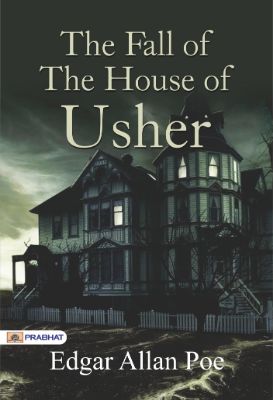
The Fall of the House of Usher by Edgar Allan Poe
The horrors of the Spanish Inquisition, with its dungeon of death, and the overhanging gloom on the House of Usher demonstrate unforgettably the unique imagination of Edgar Allan Poe.

The Family by Lewis Bookwalter
This book will be an inspiration to fathers, mothers, and children, the married and unmarried, because God’s ideal of family life is held up. It is suggestive rather than exhaustive. It is plain on delicate points of the subject. The author, by nature and grace, by the home from which he came, by knowing how to rule well his own house, by his experience and success as a public teacher, is fitted to Speak on this too much neglected subject, and deserves a large hearing. The added words by the father of the author, the promoter of these lectures to the students Of the Seminary, are from a man Of prayer, piety, symmetry, and experience.

The Fashionable World Displayed by John Owen
I HAVE often been surprised, that among the many descriptions which ingenious writers have given of places and people comparatively insignificant, no complete and systematic account has yet been written of the Fashionable World. It is true, that our poets and caricaturists have honoured this people with a great share of their notice, and many particulars, not a little edifying, have been made known, through the medium of their admirable publications. It is also true, that our prose-writers have occasionally cast a very pertinent glance over this fairy ground. Some of these latter have even gone so far, as to write absolute treatises upon certain parts of the Fashionable character. Mrs. More, for example, has delineated the religion, and Lord Chesterfield the morals, of this singular people with the greatest exactness and precision. Nor would it be just to overlook the very acceptable labours of those writers who, in their Court-calendars and Court-almanacks, bring us acquainted, from time to time, with the modes of dress which prevail in the Fashionable World, and the names of its most distinguished inhabitants. But after all that has been done, towards exhibiting the manners, and unfolding the character, of this splendid community, much remains to be done: for though certain details have been well enough handled, yet I repeat, that a complete and systematic account of the Fashionable World, is still a desideratum in Cosmography.
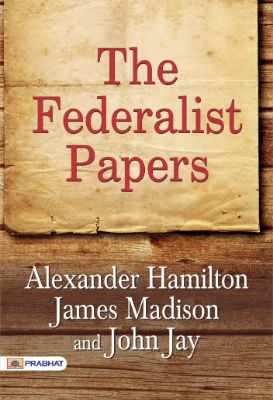
The Federalist Papers by Alexander Hamilton, James Madison, and John Jay
The Federalist Papers’ is a collection of 85 articles and essays written by Alexander Hamilton, James Madison, and John Jay to promote the ratification of the United States Constitution. Seventy-seven were published serially in The Independent Journal and The New York Packet between October 1787 and August 1788.

The Fiction Factory by William Wallace Cook
For two years previous to this (to him) momentous event he had hearkened earnestly to the counsel that “literature is a good stick but a poor crutch,” and had cleaved to a position as paymaster for a firm of contractors solely because of the pay envelope that insured food and raiment. Spare hours alone were spent in his Fiction Factory. In the summer of 1893, however, when his evening and Sunday work brought returns that dwarfed his salary as paymaster, he had a heart to heart talk with Mrs. John Milton Edwards, and, as a result, the paymaster-crutch was dropped by the wayside. This came to pass not without many fears and anxieties, and later there arrived gray days when the literary pace became unsteady and John Milton turned wistful eyes backward in the direction of his discarded crutch. But he never returned to pick it up.
—from this book

The Fiddlers by Arthur Mee
A book written by American writer, journalist and educator Arthur Mee in early 20th century, ‘The Fiddlers’ questions people’s consciousness on many major issues that were of concern in America at that point of time. These are short and long notes and articles written by the author on each of those issues and, asked the general public to awaken their morality and stop fiddling for basic necessities.

The Field Book by W. H. Maxwell
The present compendium by WH Maxwell records the history of the field intoxication of the British richmen and people of repute during 19th century in London.

The Field of Ice by Jules Verne
It was a bold project of Hatteras to push his way to the North Pole, and gain for his country the honour and glory of its discovery. But he had done all that lay in human power now, and, after having struggled for nine months against currents and tempests, shattering icebergs and breaking through almost insurmountable barriers, amid the cold of an unprecedented winter, after having outdistanced all his predecessors and accomplished half his task, he suddenly saw all his hopes blasted.

The Fifth Queen: and How She Came to Court by Ford Madox Ford
First published in the year 1906, the present historical novel ‘The Fifth Queen: and How She Came to Court’ was written by Ford Madox Ford as a part of his historical trilogy ‘The Fifth Queen’. This trilogy presents a highly fictionalised account of Katharine Howard’s arrival at the Court of Henry VIII, her eventual marriage to the king, and her death.

The Fighting Retreat To Paris by Roger Ingpen
By the middle of the third week of the war, the British Expeditionary Force—three army corps and a cavalry division—had been mobilised and sent across the Channel to France. Sir John French’s force was the largest army that England had ever sent into the field at the outset of a campaign. Its mobilisation, concentration, and transport across the narrow seas had been carried out with silent efficiency. England waited confidently and patiently for the tidings of its entry into the battle line.’ -an excerpt
The present book serves as an essential document to study the Britain-France scene in the history of World War I.
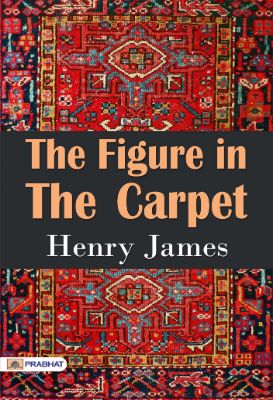
The Figure in the Carpet by Henry James
First published in the year 1896, the present short novella ‘The Figure in the Carpet’ by American writer Henry James is told in the first person. The narrator, whose name is never revealed, meets his favorite author and becomes obsessed with discovering the secret meaning or intention within all the author’s works.
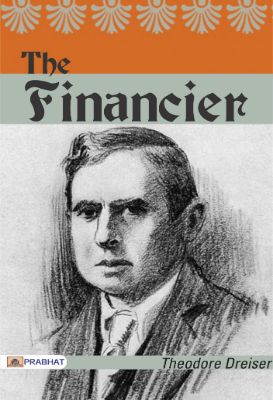
The Financier by Theodore Dreiser
First published in the year 1912, the present fictional novel ‘The Financier’ by Theodore Dreiser is the first volume of the Trilogy of Desire, which includes ‘The Titan’ (1914) and ‘The Stoic’ (1947). Set in Philadelphia, the novel is about Frank Cowperwood, whose father is a banker, makes his first money passing by an auction sale, he successfully bids for seven cases of Castile soap, which he sells to a grocer the same day with a profit of over 70 percent.
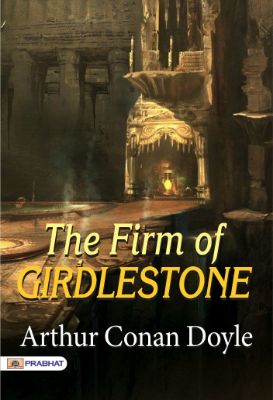
The Firm of Girdlestone by Arthur Conan Doyle
The Firm of Girdlestone’ is a novel by British author Sir Arthur Conan Doyle. It was first published in 1890.

The First Book of Adam and Eve by Rutherford Hayes Platt
“This book is a written history of what happened in the days of Adam and Eve after they were cast out of the garden. Although considered to be pseudepigraphic by some, it carries significant meaning and insight into events of that time. It is doubtful that these writings could have survived all the many centuries if there were no substance to them.” -Prologue
The First Duke and Duchess of Newcastle-upon-Tyne by Thomas Longueville
THE compiler of these pages does not labour under the delusion that he has written a book. All that he has attempted has been, as it were, to invite his reader to an arm-chair in his study, and to place in the reader’s hands a succession of open volumes and copies of manuscripts containing passages which throw more or less light upon the lives of the first Duke and Duchess of Newcastle. Occasionally he has ventured to make a few remarks, either of introduction or of retrospection, concerning the evidence thus brought before his guest, remarks which may easily be skipped at will.
The First Little Pet Book with Ten Short Stories in Words of Three and Four Letters by Frances Elizabeth Barrow
Many and many a time mothers have come to the author with the piteous plaint: “O Aunt Fanny! we are perfectly worn out with your ‘Nightcaps,’ ‘Mittens,’ and ‘Socks;’ we have read them to our little children, who have not yet conquered the compound mysteries of the alphabet, until we know them by heart; do, do write some books in words of one syllable, which they can read for themselves.”
The First Men on the Moon by H. G. Wells
Famous writer H. G. Wells’ romantic science fictional novel ‘The First Men in the Moon’ was first published in the year 1901. It tells the story of a journey to the moon undertaken by the two protagonists, a businessman narrator, Mr. Bedford, and an eccentric scientist, Mr. Cavor. Bedford and Cavor discover that the moon is inhabited by a sophisticated extraterrestrial civilization of insect-like creatures they call “Selenites”.
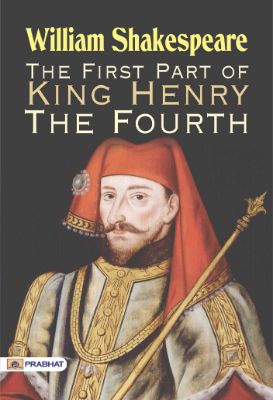
The First Part of King Henry the Fourth by William Shakespeare
Should the education of a prince take place in the court or in the tavern? Is Prince Henry wasting his time with Falstaff and his Eastcheap cronies? and can King Henry IV keep the throne when he has lost the support of the barons who put him there? It is an excellent resource for the classroom, amateur stage, actors, drama coaches, etc. All of the lines in this play are Shakespeare’s original lines. The entire play runs about 45 minutes on the stage.
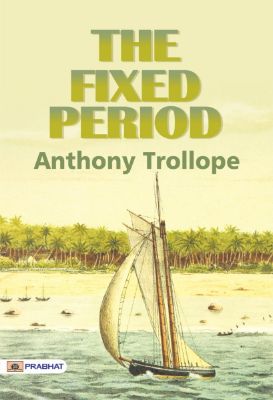
The Fixed Period by Anthony Trollope
It may be doubted whether a brighter, more prosperous, and specially a more orderly colony than Britannula was ever settled by British colonists. But it had its period of separation from the mother country, though never of rebellion,—like its elder sister New Zealand. Indeed, in that respect it simply followed the lead given her by the Australias, which, when they set up for themselves, did so with the full co-operation of England. There was, no doubt, a special cause with us which did not exist in Australia, and which was only, in part, understood by the British Government when we Britannulists were allowed to stand by ourselves. The great doctrine of a “Fixed Period” was received by them at first with ridicule, and then with dismay; but it was undoubtedly the strong faith which we of Britannula had in that doctrine which induced our separation. Nothing could have been more successful than our efforts to live alone during the thirty years that we remained our own masters. We repudiated no debt,—as have done some of our neighbours; and no attempts have been made towards communism,—as has been the case with others. We have been laborious, contented, and prosperous; and if we have been reabsorbed by the mother country, in accordance with what I cannot but call the pusillanimous conduct of certain of our elder Britannulists, it has not been from any failure on the part of the island, but from the opposition with which the Fixed Period has been regarded.