
Classic Books
Showing 2801–2850 of 4246 results

The Cruise of the “Janet Nichol” Among the South Sea Islands: A Diary by Stevenson
First published in 1914, ‘The Cruise of the “Janet Nichol” Among the South Sea Islands: A Diary’ is a book published by the wife of the famous English writer Robert Louis Stevenson. “For many reasons “The Cruise of the Janet Nichol” has been pruned rather severely. It was, originally, only intended to be a collection of hints to help my husband’s memory where his own diary had fallen in arrears; consequently, it frequently happened that incidents given in my diary were re-written (to their great betterment), amplified, and used in his.” -Preface
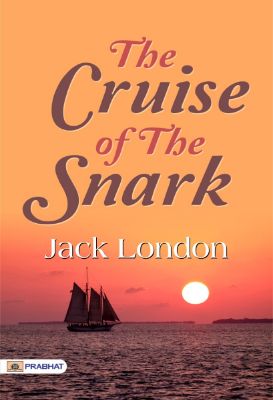
The Cruise of the Snark by Jack London
IT began in the swimming pool at Glen Ellen. Between swims it was our wont to come out and lie in the sand and let our skins breathe the warm air and soak in the sunshine. Roscoe was a yachtsman. I had followed the sea a bit. It was inevitable that we should talk about boats. We talked about small boats, and the seaworthiness of small boats. We instanced Captain Slocum and his three years’ voyage around the world in the Spray.
We asserted that we were not afraid to go around the world in a small boat, say forty feet long. We asserted furthermore that we would like to do it. We asserted finally that there was nothing in this world we’d like better than a chance to do it.
“Let us do it,” we said . . . in fun.
Then I asked Charmian privily if she’d really care to do it, and she said that it was too good to be true.
The next time we breathed our skins in the sand by the swimming pool I said to Roscoe, “Let us do it.”
I was in earnest, and so was he, for he said:
“When shall we start?”

The Crusade by Chitra Mudgal
She stopped. Standing close to the broad edging of the flower beds, she bent over like a bow…
Whenever she comes to Rangoli and sees the rare specimens of cacti peeping out from between the arrangement of rocks placed by the main entrance, she is transfixed. In fact she is tempted to pilfer one, hide it in her purse quickly before the doorman, standing there rigidly like a mannequin in a shop window, catches her.
—from this book

The Crux: A Novel by Charlotte Perkins Gilman
Charlotte Perkins Gilman’s novel The Crux is an important early feminist work that brings to the fore complicated issues of gender, citizenship, eugenics, and frontier nationalism. First published serially in the feminist journal The Forerunner in 1910, The Crux tells the story of a group of New England women who move west to start a boardinghouse for men in Colorado.

The Crystal Crypt by Philip K. Dick
Philip K. Dick’s ‘The Crystal Crypt’ is a short science fiction story. This story was first published in the year 1954 in a magazine named the Planet Stories.

The Crystal Palace and Other Legends by Marie H. Frary and Charles Maurice Stebbins
Legends have a fascination for all classes of people, but they possess a peculiar charm for children. They constitute, in fact, a form of literature particularly fitting to the mental world of the child. In them fact and fancy are happily blended. Around the bare facts of recorded or unrecorded history, are woven the poetic ideals of a romantic people.
Nothing could be more worth a child’s reading than a story of the past that conveys not only an idea of the everyday life of real people, but represents them also as striving after ideals in various forms of beauty.
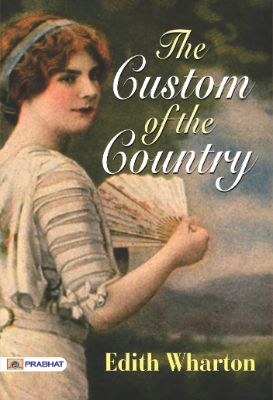
The Custom of the Country by Edith Wharton
First published in the year 1913, the present novel ‘The Custom of the Country’ by Edith Wharton tells the story of Undine Spragg, a Midwestern girl who attempts to ascend in New York City society.

The Cynic’s Word Book by Ambrose Bierce
First published in the year 1906, American Civil War soldier, journalist, and short story writer Ambrose Bierce’s ‘The Cynic’s Word Book’ is a satirical dictionary. This book consists of common words followed by extremely funny and witty definitions that can be read as a critical social commentary.

The Daffodil Mystery by Edgar Wallace
“I am afraid I don’t understand you, Mr. Lyne.”
Odette Rider looked gravely at the young man who lolled against his open desk. Her clear skin was tinted with the faintest pink, and there was in the sober depths of those grey eyes of hers a light which would have warned a man less satisfied with his own genius and power of persuasion than Thornton Lyne.
He was not looking at her face. His eyes were running approvingly over her perfect figure, noting the straightness of the back, the fine poise of the head, the shapeliness of the slender hands.

The Damnation of Theron Ware by Harold Frederic
First published in the year 1896, the present novel ‘The Damnation of Theron Ware’ by American author Harold Frederic reveals a great deal about late 19th century provincial America, religious life, and the depressed state of intellectual and artistic culture in small towns.

The Damned by Algernon Blackwood
“I’m over forty, Frances, and rather set in my ways,” I said good-naturedly, ready to yield if she insisted that our going together on the visit involved her happiness. “My work is rather heavy just now too, as you know. The question is, could I work there—with a lot of unassorted people in the house?”
“Mabel doesn’t mention any other people, Bill,” was my sister’s rejoinder. “I gather she’s alone—as well as lonely.”

The Damned Thing by Ambrose Bierce
First published in the year 1893, famous American writer, journalist Ambrose Bierce’s ‘The Damned Thing’ is a horror short story. This story is written in four parts with separate subtitles (that are comical) to each. These subtitles adds a synical impact to the gothic imagery created inside the story.

The Danish History, Books I-IX by Grammaticus Saxo
The Danish History, Books I-IX’ is the history of Germany in nine long volumes by renowned Danish historian Grammaticus Saxo. It will serve as an essential reading for those interested in studying the cultural, war, geographical and political history of Germany.
The Daring Twins by L. Frank Baum
An adventurous story by one of the ever-famous children’s authors – L. Frank Baum, who also wrote the very popular series of Oz ‘The Wizard of Oz’. He wrote ‘The Daring Twins’ under his own name, instead of multiple of his pseudonyms.

The Dark Star by Robert W. Chambers
“Not the dark companion of Sirius, brightest of all stars—not our own chill and spectral planet rushing toward Vega in the constellation of Lyra—presided at the birth of millions born to corroborate a bloody horoscope.
“But a Dark Star, speeding unseen through space, known to the ancients, by them called Erlik, after the Prince of Darkness, ruled at the birth of those myriad souls destined to be engulfed in the earthquake of the ages, or flung by it out of the ordered pathway of their lives into strange byways, stranger highways—into deeps and deserts never dreamed of.” -an excerpt

The Darkness Is Vanishing by Ramesh Pokhriyal ‘Nishank’
Poems of Ramesh Pokhriyal
“Nishank’ are the innate passionate ramifications and poetical mystification to the readers, which might include hymns singing and religious instructions, but what cannot be missed is the sentimental piety of the poems that he offers in this collection. As a poet, Nishank surveys the possibilities, compares them to the actualities, facts, theories, the alternatives and the ideal, and weighs them together. Hence, they are both insightful and foresighted to make a sense of worth of life. Amazing is the fact, that these poems are not complex but simple and pliable and the doctrines and practices endorsed in them are not something new and recent but in tandem with the established norms.
The poems in The Darkness is Vanishing stir the spirit or make our hearts dance and come over us like a mystical suppleness in a mood that is enchanting enough to pacify the distressed feelings refreshingly and absorb within a sense of truth, clarity and refinement.
Nishank conjures the image of common place, every day and affable life of socially intellectual and passionate men who dance, croon, and fall but rise, shortly devastated but soon resilient. His poems are popularly and peculiarly contemplative.
Hidden behind his voice
Is every man,
Let the doors of the heart open
If you want to understand
His character
Let them speak something.
***
The ardour for the humankind
may pulsate
In every throb of my heart
Let there be a beautiful person
within me.
Only desire to fulfill in this life
To die for the country
And my life Be the emblem for humanity.
***
Like wheezing wheat
Like worms clothing
Similarly jealousy man
Termites the termite
Similarly jealousy
Makes hollow the preposterous.
***
To erase the darkness
Who themselves
Burn like torches
Even in the adverse torrents
They never douse.
***
Happiness
Is always in the present
Not in the future,
It is present
In some depths of the mind.
—from this collection

The Dates of Variously-shaped Shields, with Coincident Dates and Examples by George Grazebrook
In venturing to place before the public this little work—which takes up a line of enquiry never before attempted,—I would solicit criticism, not of that slashing condemnatory kind which destroys a statement without pointing out its correction;—that would only break my head, and make no one the wiser!—but I hope that antiquaries who have more knowledge than I, may, when pointing out errors, also explain what such statements ought to be, and give exact references in proof.

The Daughters of the Little Grey House by Marion Ames Taggart
“How do you know when you’re a young lady?” asked Roberta Grey.
She was sitting before the ancient mahogany dressing-table in her—and Wythie’s—room, unblushingly regarding herself in the mirror, while the fingers of both hands, supporting her brilliant face, experimented with changes in it by pushing up the delicate eyebrows into quite a celestial angle.

The Dawn At Dusk by Sandeep Nayyar
A gripping tale of love, betrayal, and vengeance, steeped in the magical realism of post-Vedic India. Shatvari is a beautiful young Brahmin girl, practitioner of classical music and firm believer in the holy Vedas and its spiritual philosophies. The king of the Yaduvanshis and his scheming priests twist that faith to turn her into a bloodthirsty Chandaal warrior. Exploited and shattered, Shatvari hunts a magical Yantra and the spiritual powers it contains. But in her single-minded pursuit of revenge, she falls victim to the curse lurking within the very same miraculous powers. Elsewhere, the young Nishaad King Neel, courtesans Amodini and Vaishali, and the Yaduvanshis’ nemeses the Raghuvanshis, gear up to enter the fray as well. What heavenly powers lie within the Yantra, and what curse stays the hands of those who would unleash them? Can Shatvari survive that curse and harness those powers? Will the Yaduvanshis’ other enemies help Shatvari seek her vengeance? Or will the story end in all-out war?

The Dawn of Tomorrow by Frances Hodgson Burnett
A wealthy London business man takes a room in a poor part of the city. He is depressed and has decided to take his life by going the next day to purchase a hand gun he had seen in a pawnshop window

The Day of Small Things by Anne Manning
“I think I have been laid up nearly two years on this sofa, Phillis?” said I.
“Two years, come the 6th of October,” said Phillis.
“And, during that time, what mercies I have received! what alleviations, what blessings!”
“What sea-kale and early spare-o’-grass! what baskets of grapes and pottles of strawberries!” said Phillis.
“What songs in the night, what in-pourings of strength!” said I.
“So many pheasants, too, and partridges!” said Phillis. “Teal, woodcocks, and wild ducks!”
“David might well say, the Lord maketh our bed in our sickness, Phillis,” said I.
“Such a pretty bed as it is, too!” said Phillis. “So white, sweet, and clean! Russia sheets and Marseilles quilt, bleached on a heath common, close by a sweetbriar hedge!”
“Not only that—” said I.
“Not only that,” said Phillis, “but such pretty daisy-fringe to the curtains, and a clean tarletan blind to the window.”
“Such a lovely view from the window!” said I.
The Day’s Work – Volume 1 by Rudyard Kipling
First published in the year 1898, the present book ‘The Day’s Work – Volume 1’ is a collection of short stories by the famous writer Rudyard Kipling. The book contains 13 short stories, which were mainly written between 1893 and 1896 while Kipling was living in Vermont. Four of the stories contained in this book include anthropomorphic characters.

The Days of Auld Lang Syne by Ian Maclaren
“Farms were held on lease in Drumtochty, and according to a good old custom descended from father to son, so that some of the farmers’ forbears had been tenants as long as Lord Kilspindie’s ancestors had been owners. If a family died out, then a successor from foreign parts had to be introduced, and it was in this way Milton made his appearance and scandalised the Glen with a new religion.” -an excerpt

The Dead Secret: A Novel by Wilkie Collins
These words were spoken in the kitchen of a large country-house situated on the west coast of Cornwall. The speakers were two of the men-servants composing the establishment of Captain Treverton, an officer in the navy, and the eldest male representative of an old Cornish family. Both the servants communicated with each other restrainedly, in whispers—sitting close together, and looking round expectantly toward the door whenever the talk flagged between them.
—from this book

The Dealings of Captain Sharkey, and Other Tales of Pirates by Arthur Conan Doyle
A collection of various short stories by the British writer Sir Arthur Conan Doyle. This collection includes his crime, detective and other thriller genre stories.

The Death of Ivan Ilych by Leo Tolstoy
During an interval in the Melvinski trial in the large building of the Law Courts the members and public prosecutor met in Ivan Egorovich Shebek’s private room, where the conversation turned on the celebrated Krasovski case. Fedor Vasilievich warmly maintained that it was not subject to their jurisdiction, Ivan Egorovich maintained the contrary, while Peter Ivanovich, not having entered into the discussion at the start, took no part in it but looked through the *Gazette* which had just been handed in.
“Gentlemen,” he said, “Ivan Ilych has died!”
“You don’t say so!”

The Death of the Lion by Henry James
I had simply, I suppose, a change of heart, and it must have begun when I received my manuscript back from Mr. Pinhorn. Mr. Pinhorn was my “chief,” as he was called in the office: he had the high mission of bringing the paper up. This was a weekly periodical, which had been supposed to be almost past redemption when he took hold of it. It was Mr. Deedy who had let the thing down so dreadfully: he was never mentioned in the office now save in connexion with that misdemeanour. Young as I was I had been in a manner taken over from Mr. Deedy, who had been owner as well as editor; forming part of a promiscuous lot, mainly plant and office-furniture, which poor Mrs. Deedy, in her bereavement and depression, parted with at a rough valuation. I could account for my continuity but on the supposition that I had been cheap. I rather resented the practice of fathering all flatness on my late protector, who was in his unhonoured grave; but as I had my way to make I found matter enough for complacency in being on a “staff.” At the same time I was aware of my exposure to suspicion as a product of the old lowering system. This made me feel I was doubly bound to have ideas, and had doubtless been at the bottom of my proposing to Mr. Pinhorn that I should lay my lean hands on Neil Paraday. I remember how he looked at me—quite, to begin with, as if he had never heard of this celebrity, who indeed at that moment was by no means in the centre of the heavens; and even when I had knowingly explained he expressed but little confidence in the demand for any such stuff. When I had reminded him that the great principle on which we were supposed to work was just to create the demand we required, he considered a moment and then returned: “I see—you want to write him up.”

The Declaration of Independence of the United States of America by Thomas Jefferson
An official document signed by 56 dignitaries to announce or declare America’s freedom or separation from English colonial rule. An important document, this book will interest students of political science and other feilds of social sciences.

The Decoration of Houses by Ogden Codman and Edith Wharton
First published in the year 1897, ‘The Decoration of Houses’ is a joint effort of renowned writer Edith Wharton and his friend Ogden Codman. This book guides the readers about ways in which one can design the aesthetics of their dream house.

The Deerslayer by James Fenimore Cooper
A restless white youth raised by Indians, Natty Bumppo is called Deerslayer for the daring that sets him apart from his peers. But he has yet to meet the test of human conflict. In a tale of violent action and superbly sustained suspense, the harsh realities of tribal warfare force him to kill his first foe, then face torture at the stake. Still yet another kind of initiation awaits him when he discovers not only the ruthlessness of “civilized” men, but also the special danger of a woman’s will.
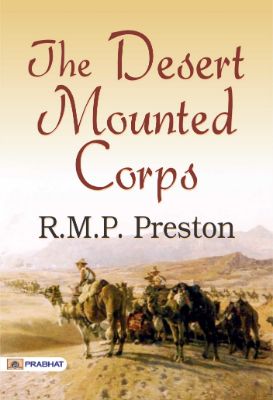
The Desert Mounted Corps by R.M.P. Preston
It gives me great pleasure to write a few words of introduction to Lieut.-Col. Preston’s History of the Desert Mounted Corps, which I had the honour to command. In writing this History Lieut.-Col. Preston has done a service to his country which I am sure will be fully appreciated, particularly, perhaps, by those who served in the Corps, and who feel that the part they played in the Great War is but little known to the general public. -Introduction

The Deserted Woman by Honoré de Balzac
In the early spring of 1822, the Paris doctors sent to Lower Normandy a young man just recovering from an inflammatory complaint, brought on by overstudy, or perhaps by excess of some other kind. His convale-scence demanded complete rest, a light diet, bracing air, and freedom from excitement of every kind, and the fat lands of Bessin seemed to offer all these conditions of recovery. To Bayeux, a picturesque place about six miles from the sea, the patient therefore betook himself, and was received with the cordiality characteristic of relatives who lead very retired lives, and regard a new arrival as a godsend.
The Devil Doctor by Sax Rohmer
“What—a woman or something?”
“Some affair of that sort. He’s such a reticent beggar, I really know very little about it.”
I placed a whisky and soda before the Rev. J. D. Eltham, also sliding the tobacco jar nearer to his hand. The refined and sensitive face of the clergyman offered no indication to the truculent character of the man. His scanty fair hair, already grey over the temples, was silken and soft-looking: in appearance he was indeed a typical English churchman; but in China he had been known as “the fighting missionary,” and had fully deserved the title. In fact, this peaceful-looking gentleman had directly brought about the Boxer Risings!
“You know,” he said in his clerical voice, but meanwhile stuffing tobacco into an old pipe with fierce energy, “I have often wondered, Petrie—I have never left off wondering—”
The Devil in Iron by Robert E. Howard
The fisherman loosened his knife in its scabbard. The gesture was instinctive, for what he feared was nothing a knife could slay, not even the saw-edged crescent blade of the Yuetshi that could disembowel a man with an upward stroke. Neither man nor beast threatened him in the solitude which brooded over the castellated isle of Xapur.
He had climbed the cliffs, passed through the jungle that bordered them, and now stood surrounded by evidences of a vanished state. Broken columns glimmered among the trees, the straggling lines of crumbling walls meandered off into the shadows, and under his feet were broad paves, cracked and bowed by roots growing beneath.

The Devil’s Dictionary by Ambrose Bierce
“The Devil’s Dictionary was begun in a weekly paper in 1881, and was continued in a desultory way at long intervals until 1906. In that year a large part of it was published in covers with the title The Cynic’s Word Book, a name which the author had not the power to reject or happiness to approve.” -Preface by Ambrose Bierce

The Devil’s Pool by George Sand
The Devil’s Pool,George Sand,Romance,prabhat books,low price books,prabhat books on kindle

The Dhammapada by Author: Unknown Translator: F. Max Muller
One of the best-known and best-loved works of Buddhist literature, the Dhammapada forms part of the oldest surviving body of Buddhist writings, and is traditionally regarded as the authentic teachings of the Buddha himself, spoken by him in his lifetime, and memorized and handed on by his followers after his death.
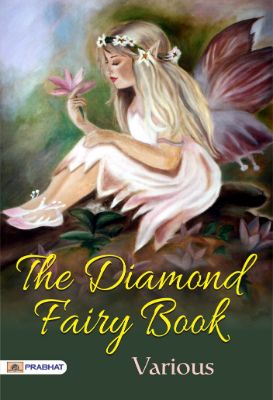
The Diamond Fairy Book by Various
There were the four Kings: the King of the North, the region of perpetual snow; the King of the South, where the sun shines all the year round; the King of the East, from whence the cold winds blow; and the King of the West, where the gentle zephyrs breathe upon the flowers, and coax them to open their petals while the rest of the world is still sleeping.

The Diamond Lens by Fitz-James O’Brien
FROM a very early period of my life the entire bent of my inclinations had been toward microscopic investigations. When I was not more than ten years old, a distant relative of our family, hoping to astonish my inexperience, constructed a simple microscope for me by drilling in a disk of copper a small hole in which a drop of pure water was sustained by capillary attraction. This very primitive apparatus, magnifying some fifty diameters, presented, it is true, only indistinct and imperfect forms, but still sufficiently wonderful to work up my imagination to a preternatural state of excitement.

The Diary of a Girl in France in 1821 by Mary Browne
The Diary of a Girl in France in 1821′ by Mary Browne is a collection of diary notes written and accompanied by beautiful illustrations by a young girl in France. The work do not consists any classic matured style of writing, but helps put across what a common girl child at that time in France was perceiving from the world around her.
The Diary of a Nobody by George Grossmith and Weedon Grossmith
The spoof diary of a lower-middle-class London clerk, The Diary of a Nobody was first serialized in the legendary magazine of humour and satire, Punch, in 1888-89. It was published as a book in 1892 and has never been out of print since. This comic masterpiece—which details the doings of the ridiculously pompous and accident-prone Charles Pooter, his wife Carrie and their troublesome son Lupin—has been a source of delight to generations of readers and inspired many celebrated writers.

The Diary of a Superfluous Man, and Other Stories by Ivan Sergeevich Turgenev
“In ‘The Diary of a Superfluous Man,'” says one well-known Russian critic, “we have to deal with the end of the pathological process upon the body of Russian society. In Turgénieff’s productions which followed it we have to deal with a crisis in Russian life, with the growth of a new order of things. Apart from the fundamental profundity of its tendency, the ‘Diary’ is extremely noteworthy for its artistic workmanship. In spite of a certain monotony of tone in its exposition, it produces a very strong impression by its abundance of poetical beauties, which are perfectly suited to the melancholy mood of the whole story… In creating his ‘Superfluous Man’ the author, evidently, aimed at making as powerful an impression as possible, and therefore employed the most brilliant pigments in depicting Tchulkatúrin. He attained his object. Russian society started back in horror at this portrait of itself, which was somewhat distorted yet a good likeness, and in its strong excitement vigorously repelled all community with the sickly figure of Tchulkatúrin. This horror showed that the time was ripe in Russian society for a different order of things, that it was tired of inertness and was seeking a wider field of activity in which it might freely develop its real forces.”

The Diary of a Young Girl (Class X) by Anne Frank
Discovered in the attic in which she spent the last years of her life, Anne Frank’s remarkable diary has since become a world classic—a powerful reminder of the horrors of war and an eloquent testament to the human spirit. The Diary is many things at one and the same time. It is an amusing, enlightening, and often moving account of the process of adolescence, as Anne describes her thoughts and feelings about herself and the people around her, the world at large, and life in general. It is an accurate record of the way a young girl grows up and matures, in the very special circumstances in which Anne found herself throughout the two years during which she was in hiding. And it is also a vividly terrifying description of what it was like to be a Jew — and in hiding — at a time when the Nazis sought to kill all the Jews of Europe.

The Diary of Samuel Pepys by Samuel Pepys
Although the Diary of Samuel Pepys has been in the hands of the public for nearly seventy years, it has not hitherto appeared in its entirety. In the original edition of 1825 scarcely half of the manuscript was printed. Lord Braybrooke added some passages as the various editions were published, but in the preface to his last edition he wrote: “there appeared indeed no necessity to amplify or in any way to alter the text of the Diary beyond the correction of a few verbal errors and corrupt passages hitherto overlooked.”
The public knew nothing as to what was left unprinted, and there was therefore a general feeling of gratification when it was announced some eighteen years ago that a new edition was to be published by the Rev. Mynors Bright, with the addition of new matter equal to a third of the whole. It was understood that at last the Diary was to appear in its entirety, but there was a passage in Mr. Bright’s preface which suggested a doubt respecting the necessary completeness. He wrote: “It would have been tedious to the reader if I had copied from the Diary the account of his daily work at the office.”
As a matter of fact, Mr. Bright left roughly speaking about one-fifth of the whole Diary still unprinted, although he transcribed the whole, and bequeathed his transcript to Magdalene College.

The Diplomatists of Europe by M. Capefigue
The Austrian government, which is composed of old hereditary states and conquests of a later date, a sort of chequer-work of provincial privileges and immunities, may be said to be the creation of a statesman, who must be placed in a superior rank to all others.
It is not only under the aspect of a long and brilliant diplomatic career that we must regard the life of Prince Metternich, we must also look upon him as the head of the executive organisation, which includes so many various interests, and such a diversity of national characters and feelings, under the government of one sceptre.’ -an excerpt
The present volume is a collection of the author’s previously published articles in various newspapers, journals and magazines, which he had written about eminent diplomatic personalities in Europe – from Prince Metternich to Duke of Wellington.

The Disappearance of Kimball Webb by Rowland Wright
Kimball Webb had nothing of the sort. He was a bit distinguished looking, but that was because he was a New Englander by birth, and a playwright by profession and had won the D. S. C. in the late war. Now, though a lame knee interfered slightly with his outdoor pursuits, his mind was alert and eager to return to work and his brain was fairly bursting with new ideas for his plays. First, however, he must needs attend to a certain business of getting married. A delightful business it seemed to Webb, for Elsie Powell was as lovely and desirable in the flesh as she had looked to him when seen in his troubled dreams in far off France.

The Disappearance of Lady Frances Carfax by Arthur Conan Doyle
The Disappearance of Lady Frances Carfax’ is one of the stories among 56 Sherlock Holmes adventure by Arthur Conan Doyle.

The Discipline of War by John Hasloch Potter
The war has introduced into countless lives new conditions, and has strangely modified, or emphasised, those already existing. These Addresses, prepared under much stress of other work, are intended to supply, in very simple fashion, hints for conduct and points for thought along the lines of our fresh or deepened responsibilities. An Appendix gives a suggested subject and a passage of Scripture for each day during Lent. May God the Holy Ghost, without Whom man’s best labours are in vain, bless this little book to its purpose. Please say a prayer for the writer, who, as much as any, needs grace that he may try to practise what he preaches.

The Discovery of the Future by H. G. Wells
Writtten by H. G. Wells, ‘The Discovery of the Future’ was first published in the year 1913. It is a philosophical lecture-essay by the renowned author and social philosopher.
The Divine Comedy by Dante Alighieri
The Divine Comedy, Volume 1, Hell,Dante Alighieri,Classics,prabhat books,low price books,prabhat books on kindle