
Classic Books
Showing 2751–2800 of 4246 results
The Clue of the Twisted Candle by Edgar Wallace
The 4.15 from Victoria to Lewes had been held up at Three Bridges in consequence of a derailment and, though John Lexman was fortunate enough to catch a belated connection to Beston Tracey, the wagonette which was the sole communication between the village and the outside world had gone.
“If you can wait half an hour, Mr. Lexman,” said the station-master, “I will telephone up to the village and get Briggs to come down for you.”
John Lexman looked out upon the dripping landscape and shrugged his shoulders.
“I’ll walk,” he said shortly and, leaving his bag in the station-master’s care and buttoning his mackintosh to his chin, he stepped forth resolutely into the rain to negotiate the two miles which separated the tiny railway station from Little Tracey.

The Cock-House at Fellsgarth by Talbot Baines Reed
First-night at Fellsgarth was always a festive occasion. The holidays were over, and school had not yet begun. All day long, from remote quarters, fellows had been converging on the dear old place; and here they were at last, shoulder to shoulder, delighted to find themselves back in the old haunts. The glorious memories of the summer holidays were common property. So was not a little of the pocket-money. So, by rule immemorial, were the contents of the hampers. And so, as they discovered to their cost, were the luckless new boys who had to-day tumbled for the first time headlong into the whirlpool of public school life.
The Coil of Carne by John Oxenham
If by any chance you should ever sail on a low ebb-tide along a certain western coast, you will, if you are of a receptive humour and new to the district, receive a somewhat startling impression of the dignity of the absolutely flat.

The Collected Works of William Hazlitt by William Hazlitt
Man is the only animal that laughs and weeps; for he is the only animal that is struck with the difference between what things are, and what they ought to be. We weep at what thwarts or exceeds our desires in serious matters: we laugh at what only disappoints our expectations in trifles. We shed tears from sympathy with real and necessary distress; as we burst into laughter from want of sympathy with that which is unreasonable and unnecessary, the absurdity of which provokes our spleen or mirth, rather than any serious reflections on it.
The college student and his problems by Canfield, James Hulme,
Between the covers of this book, my dear young fellow, you and I are to talk together about your college life and work, possibly much as your father and I talked together not so very many years ago.
The Comedy of Errors by William Shakespeare
Duke. Merchant of Syracusa, plead no more;
I am not partial to infringe our laws:
The enmity and discord which of late
Sprung from the rancorous outrage of your duke
To merchants, our well-dealing countrymen,
Who, wanting guilders to redeem their lives,
Have seal’d his rigorous statutes with their bloods,
Excludes all pity from our threatening looks.
For, since the mortal and intestine jars
’Twixt thy seditious countrymen and us,
It hath in solemn synods been decreed,
Both by the Syracusians and ourselves,
To admit no traffic to our adverse towns:
The Coming of Bill by P. G. Wodehouse
The Coming of Bill is the nearest Wodehouse ever came to a serious novel, although the influence of the musical comedies he was writing at the time is never far away. Bill is the child of Ruth, a spoilt heiress, and Kirk, an impecunious artist of perfect physique. Their marriage has been arranged by Ruth’s aunt, a believer in eugenics who then takes charge of the baby. The story, set entirely in New York and Connecticut, concerns the young couple’s campaign to retrieve their child from the overbearing Mrs Porter and establish a normal family life. They are eventually successful, but only after a series of comic mishaps in a story which features a galaxyof vintage Wodehouse characters, including the bossy aunt, a tetchy millionaire, a good-natured ex-boxer and an orotund English butler.

The Coming of the Fairies by Arthur Conan Doyle
The renowned British author of the famous Sherlock Holmes series, Sir Arthur Conan Doyle, apart from his brilliant fiction works, is known for his belief in spritual and supernatural concepts. Once, when he was convinced by a set of photographs that seemingly captured two young girls playing with a group of tiny, translucent fairies. To demonstrate his unshakable belief in the spirit world he published ‘The Coming of the Fairies’ in 1922. It recounts the story of the photos, their supposed provenance, and the startling implications of their existence.
The Commercial Restraints of Ireland by John Hely Hutchinson
This is a pre-1923 historical reproduction that was curated for quality. Quality assurance was conducted on each of these books in an attempt to remove books with imperfections introduced by the digitization process. We believe this work is culturally important and have elected to bring the book back into print as part of our continuing commitment to the preservation of printed works worldwide and hope you enjoy this valuable book.
The Commonwealth Games by Vijaya Khandurie
Every Commonwealth Games – from 1930 till 2006 – contain all the relevant facts and figures which are as per the records given by the Commonwealth Games Federation. Some additional information is included like ‘Multi-Medalists’ and ‘New Records’ in each edition of the Games. A brief description about 2010 Delhi Games is also incorporated along with the ‘Commonwealth Records’.
The Companions of Jehu by Alexandre Dumas
Alexandre Dumas, born Dumas Davy de la Pailleterie (1802-1870) is one of the most widely read French novelists. Known for his historical adventure tales, many of his novels have been adapted for stage and screen.
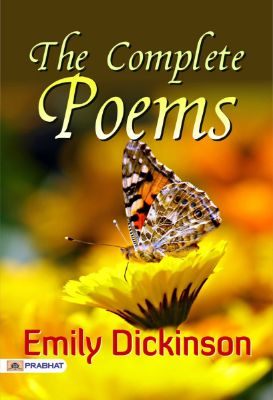
The Complete Poems by Emily Dickinson
A powerful collection of verses by one of America’s greatest poets. These beautiful, profound meditations on nature, spirit, faith, and love were created by the brilliant imagination of one of our most original poets.
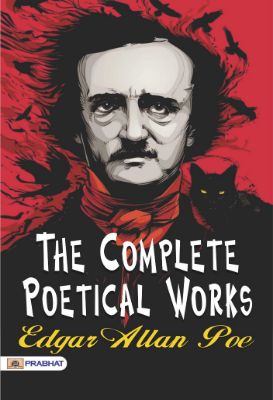
The Complete Poetical Works of Edgar Allan Poe by Edgar Allan Poe
A long collection of poems written by the renowned British gothic stories writer Edgar Ellan Poe. This collection is one unique volume of Poe’s poetical works which was not his main domain of writing.

The Complete Works of Count Tolstóy Volume XII by Leo Tolstoy
A Turtle asked an Eagle to teach her how to fly. The Eagle advised her not to try, as she was not fit for it; but she insisted. The Eagle took her in his claws, raised her up, and dropped her: she fell on stones and broke to pieces.

The Complete works of Emile Zola by Émile Zola
A longish volume of translations of all works of French novelist, playwright, journalist, the best-known practitioner of the literary school of naturalism, and an important contributor to the development of theatrical naturalism – Emile Zola.

The Complete Works of Galsworthy by John Galsworthy
A longish compendium of all works of renowned English novelist and playwright John Galsworthy. This collection is uniquely compiled and published by Project Gutenberg.
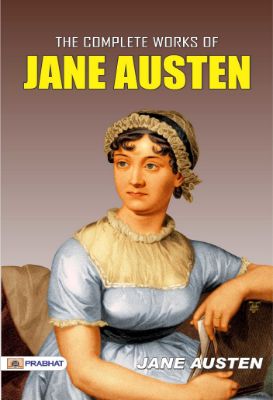
The Complete Works of Jane Austen by Jane Austen
This compandium is a unique and thick volume of all works of the celebrated English novelist Jane Austen, initiated by Project Gutenberg. Read this volume if you are a Jane Austen fan or are simply interested in reading one of the most acclaimed authors of the Victorian era.

The Complete Works of P.B. Shelley by Percy Bysshe Shelley
One of the major English Romantic poets and is widely considered to be among the finest lyric poets in the English language.

The Complete Works of Rudyard Kipling by Rudyard Kipling
Rudyard Kipling was an English journalist, short-story writer, poet, and novelist. He was born in India, which inspired much of his work. Kipling’s works of fiction include The Jungle Book, Kim, and many short stories, including “The Man Who Would Be King”

The Complete Works of William Shakespeare by William Shakespeare
A compandium of works of the dramatist and playright of all times, William Shakespeare.
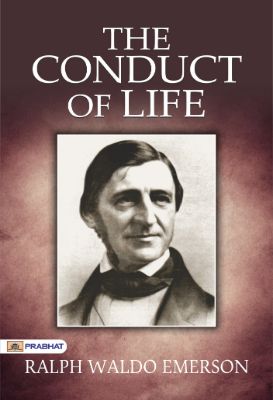
The Conduct of Life by Ralph Waldo Emerson
The Conduct of Life – By Ralph Waldo Emerson. Ralph Waldo Emerson (May 25, 1803 – April 27, 1882), known professionally as Waldo Emerson, was an American essayist, lecturer, and poet who led the Transcendentalist movement of the mid-19th century. He was seen as a champion of individualism and a prescient critic of the countervailing pressures of society, and he disseminated his thoughts through dozens of published essays and more than 1,500 public lectures across the United States. It chanced during one winter, a few years ago, that our cities were bent on discussing the theory of the Age. By an odd coincidence, four or five noted men were each reading a discourse to the citizens of Boston or New York, on the Spirit of the Times. It so happened that the subject had the same prominence in some remarkable pamphlets and journals issued in London in the same season. To me, however, the question of the times resolved itself into a practical question of the conduct of life. How shall I live? We are incompetent to solve the times. Our geometry cannot span the huge orbits of the prevailing ideas, behold their return, and reconcile their opposition. We can only obey our own polarity. ‘Tis fine for us to speculate and elect our course, if we must accept an irresistible dictation.
The Confession: A Novel by Maksim Gorky
Russia’s changes were Gorky’s changes. He first flung his type of hero, the people from the lowest of the low—water-rats, tramps, petty thieves—into a discouraged, disappointed and hopeless Russia. It was a Russia that had almost decided that there were no more people, that they were without courage, that the misery and degradation in which they lived was there because of their own inefficiency, their lack of idealism, their incapacity to grasp an idea and to strike and fight for it.
The Confessions of Al Ghazzali by Mohammed Al-Ghazzali
I then examined what knowledge I possessed, and discovered that in none of it, with the exception of sense-perceptions and necessary principles, did I enjoy that degree of certitude which I have just described. I then sadly reflected as follows: “We cannot hope to find truth except in matters which carry their evidence in themselves—that is to say, in sense-perceptions and necessary principles; we must therefore establish these on a firm basis. Is my absolute confidence in sense-perceptions and on the infallibility of necessary principles analogous to the confidence which I formerly possessed in matters believed on the authority of others?
The Confessions of Arsène Lupin by Maurice Leblanc
First published in the year 1913, the present book ‘The Confessions of Arsène Lupin’ is written by the famous French novelist and short story writer Maurice Leblanc. This book consists of ten adventures of the author’s famously created fictional character of Arsene Lupin, a gentleman, thief and detective.

The Confessions of Jean Jacques Rousseau — Complete by Jean-Jacques Rousseau
First published between 1782-89, famous social philosopher and writer Jean-Jacques Rousseau’s ‘The Confessions of Jean Jacques Rousseau — Complete’ covers the first fifty three years of the author’s life. In this book, Rousseau provides an account of the experiences that shaped his personality and ideas.
The Confessions of Saint Augustine by Saint Augustine
Consisting of 13 books, originally written by St. Augustine of Hippo, in Latin between AD 397 and AD 398. The work outlines Augustine’s sinful youth and his conversion to Christianity. It is widely seen as the first Western autobiography ever written. It is not a complete autobiography, as it was written in his early 40s, and he lived long afterwards. It does, nonetheless, provide an unbroken record of his development of thought and is the most complete record of any single person from the 4th and 5th centuries. It is a significant theological work, featuring spiritual meditations and insights.
The Confessions of St. Augustine by Bishop of Hippo Saint Augustine No cover available
Great art Thou, O Lord, and greatly to be praised; great is Thy power, and Thy wisdom infinite. And Thee would man praise; man, but a particle of Thy creation; man, that bears about him his mortality, the witness of his sin, the witness that Thou resistest the proud: yet would man praise Thee; he, but a particle of Thy creation. Thou awakest us to delight in Thy praise; for Thou madest us for Thyself, and our heart is restless, until it repose in Thee. Grant me, Lord, to know and understand which is first, to call on Thee or to praise Thee? and, again, to know Thee or to call on Thee? for who can call on Thee, not knowing Thee? for he that knoweth Thee not, may call on Thee as other than Thou art. Or, is it rather, that we call on Thee that we may know Thee? but how shall they call on Him in whom they have not believed? or how shall they believe without a preacher? and they that seek the Lord shall praise Him: for they that seek shall find Him, and they that find shall praise Him. I will seek Thee, Lord, by calling on Thee; and will call on Thee, believing in Thee; for to us hast Thou been preached. My faith, Lord, shall call on Thee, which Thou hast given me, wherewith Thou hast inspired me, through the Incarnation of Thy Son, through the ministry of the Preacher.

The Confidence-Man: His Masquerade by Herman Melville
First published in the year 1857, the present book ‘The Confidence-Man: His Masquerade’ is a work of satire by American writer Herman Melville. The novel portrays a Canterbury Tales–style group of steamboat passengers whose interlocking stories are told as they travel down the Mississippi River toward New Orleans.
The Conquest of Bread by Kniaz Petr Alekseevich Kropotkin
First published in the year 1892, the present book ‘The Conquest of Bread’ by kniaz Petr Alekseevich Kropotkin is a revolutionary idyl, a beautiful outline sketch of a future society based on liberty, equality and fraternity.
The Consolation of Philosophy by Boethius
The book called ‘The Consolation of Philosophy’ was throughout the Middle Ages, and down to the beginnings of the modern epoch in the sixteenth century, the scholar’s familiar companion. Few books have exercised a wider influence in their time. It has been translated into every European tongue, and into English nearly a dozen times, from King Alfred’s paraphrase to the translations of Lord Preston, Causton, Ridpath, and Duncan, in the eighteenth century. The belief that what once pleased so widely must still have some charm is my excuse for attempting the present translation. The great work of Boethius, with its alternate prose and verse, skilfully fitted together like dialogue and chorus in a Greek play, is unique in literature, and has a pathetic interest from the time and circumstances of its composition. It ought not to be forgotten. Those who can go to the original will find their reward. There may be room also for a new translation in English after an interval of close on a hundred years.
The Contest in America by John Stuart Mill
The cloud which for the space of a month hung gloomily over the civilized world, black with far worse evils than those of simple war, has passed from over our heads without bursting. The fear has not been realized, that the only two first-rate Powers who are also free nations would take to tearing each other in pieces, both the one and the other in a bad and odious cause. For while, on the American side, the war would have been one of reckless persistency in wrong, on ours it would have been a war in alliance with, and, to practical purposes, in defence and propagation of, slavery. We had, indeed, been wronged. We had suffered an indignity, and something more than an indignity, which, not to have resented, would have been to invite a constant succession of insults and injuries from the same and from every other quarter. We could have acted no otherwise than we have done: yet it is impossible to think, without something like a shudder, from what we have escaped. We, the emancipators of the slave—who have wearied every Court and Government in Europe and America with our protests and remonstrances, until we goaded them into at least ostensibly coöperating with us to prevent the enslaving of the negro—we, who for the last half century have spent annual sums, equal to the revenue of a small kingdom, in blockading the African coast, for a cause in which we not only had no interest, but which was contrary to our pecuniary interest, and which many believed would ruin, as many among us still, though erroneously, believe that it has ruined, our colonies,—we should have lent a hand to setting up, in one of the most commanding positions of the world, a powerful republic, devoted not only to slavery, but to pro-slavery propagandism—should have helped to give a place in the community of nations to a conspiracy of slave-owners, who have broken their connection with the American Federation on the sole ground, ostentatiously proclaimed, that they thought an attempt would be made to restrain, not slavery itself, but their purpose of spreading slavery wherever migration or force could carry it.
The Corsair by Lord Byron
MY DEAR MOORE,
I DEDICATE to you the last production with which I shall trespass on public patience, and your indulgence, for some years; and I own that I feel anxious to avail myself of this latest and only opportunity of adorning my pages with a name, consecrated by unshaken public principle, and the most undoubted and various talents. While Ireland ranks you among the firmest of her patriots—while you stand alone the first of her bards in her estimation, and Britain repeats and ratifies the decree—permit one, whose only regret, since our first acquaintance, has been the years he had lost before it commenced, to add the humble but sincere suffrage of friendship, to the voice of more than one nation. It will at least prove to you, that I have neither forgotten the gratification derived from your society, nor abandoned the prospect of its renewal, whenever your leisure or inclination allows you to atone to your friends for too long an absence. It is said among those friends, I trust truly, that you are engaged in the composition of a poem whose scene will be laid in the East; none can do those scenes so much justice. The wrongs of your own country, the magnificent and fiery spirit of her sons, the beauty and feeling of her daughters, may there be found; and Collins, when he denominated his Oriental, his Irish Eclogues, was not aware how true, at least, was a part of his parallel. Your imagination will create a warmer sun, and less clouded sky; but wildness, tenderness, and originality are part of your national claim of oriental descent, to which you have already thus far proved your title more clearly than the most zealous of your country’s antiquarians.
The Corsican Brothers by Alexandre Dumas
In the beginning of March, 1841, I was travelling in Corsica.
Nothing is more picturesque and more easy to accomplish than a journey in Corsica. You can embark at Toulon, in twenty hours you will be in Ajaccio, and then in twenty-four hours more you are at Bastia.
Once there you can hire or purchase a horse. If you wish to hire a horse you can do so for five francs a-day; if you purchase one you can have a good animal for one hundred and fifty francs. And don’t sneer at the moderate price, for the horse hired or purchased will perform as great feats as the famous Gascon horse which leaped over the Pont Neuf, which neither Prospero nor Nautilus, the heroes of Chantilly and the Champ de Mars could do. He will traverse roads which Balmat himself could not cross without crampons, and will go over bridges upon which Auriol would need a balancing pole.
As for the traveller, all he has to do is to give the horse his head and let him go as he pleases; he does not mind the danger. We may add that with this horse, which can go anywhere, the traveller can accomplish his fifteen leagues a day without stopping to bait.
From time to time, while the tourist may be halting to examine some ancient castle, built by some old baron or legendary hero, or to sketch a tower built ages ago by the Genoese, the horse will be contented to graze by the road side, or to pluck the mosses from the rocks in the vicinity.
THE COSSACKS by LEO TOLSTOY
A short novel by famous Russian writer Leo Tolstoy, ‘The Cossacks’ was first published in parts in a literary magazine The Russian Messenger. The novel is believed to be written by the uathor to pay his debts after having lost badly in cards.

The Cost of Living by Margaret Weston Kendall
The ever-mounting cost of living is to-day a cause of almost universal evil apprehension. Is it not possible that evil apprehension may be the cause of the high cost of living? The suggestion merits an inquiry. For apprehen- sion may be sanely treated and wisely turned to good.
The Count of Monte Cristo by Alexandre Dumas
One of the greatest tales of revenge of all time.

The Country Doctor by Honoré de Balzac
Eugenie Grandet, does Balzac seem to have taken a greater interest than in The Country Doctor; and the fact of this interest, together with the merit and intensity of the book in each case, is, let it be repeated, a valid argument against those who would have it that there was something essentially sinister both in his genius and in his character.

The Country of the Pointed Firs by Sarah Orne Jewett
SARAH ORNE JEWETT (1849-1909) was born and died in South Berwick, Maine. Her father was the region’s most distinguished doctor and, as a child, Jewett often accompanied him on his round of patient visits. She began writing poetry at an early age and when she was only 19 her short story “Mr. Bruce” was accepted by the Atlantic Monthly. Her association with that magazine continued, and William Dean Howells, who was editor at that time, encouraged her to publish her first book, Deephaven (1877), a collection of sketches published earlier in the Atlantic Monthly. Through her friendship with Howells, Jewett became acquainted with Boston’s literary elite, including Annie Fields, with whom she developed one of the most intimate and lasting relationships of her life.
The Creative Process in the Individual by T. Troward
First published in the year 1910, the present book ‘The Creative Process in the Individual’ by one of the `fathers of new thought’ – T. Troward, the author has “endeavored to set before the reader the conception of a sequence of creative action commencing with the formation of the globe and culminating in a vista of infinite possibilities attainable by every one who follows up the right line for their unfoldment.” -Foreword

The Creed of Buddha by Edmond Holmes
Edmond Holmes, a Pantheist, reviews Buddhist theology and critiques Western conceptions (or misconceptions) of fundamental concepts such as Nirvana. In this book Holmes attempts to get back to the core of what Buddha taught, not necessarily what is considered orthodox. His interpretation is thought-provoking.
The Crescent Moon by Francis Brett Young
When I stepped on to the platform at Nairobi I hadn’t the very least idea of what I was in for. The train for which we were waiting was due from Kisumu, bringing with it a number of Indian sepoys, captured at Tanga and Jasin, whom the Belgian advance on Taborah had freed. It was my job to see them into the ambulances and send them off to hospital. But when I got to the station I found the platform swarming with clerical hats and women who looked religious, all of whom couldn’t very well have been swept into this degree of congregation for the sake of an odd sepoy’s soul. These mean and ill-dressed people kept up a chatter like starlings under the station roof. It was a hot day in November, and the rains were due. Even six thousand feet of altitude won’t stimulate you then. It had all the atmosphere of a sticky school treat in August at home. . . . Baptists on an August Bank Holiday. That was how it struck me.

The Crescent Moon by Rabindranath Tagore
In The Crescent Moon, Rabindranath Tagore brings alive the world of a child–in some poems he describes the simple joys of children at play, while in others, he feels the bonds of affection between mother and child, and in yet others, he expresses wonder at the earthly beauty all around us. Also included here are some of his most thought-provoking stories with themes that are relevant for children. In ‘The Kabuliwalla’ little Minnie becomes friendly with a burly Afghan man, but will she remember him when he returns after many years? ‘The Parrot’s Tale’ is an allegory about the perils of the modern system of education, and ‘The Kingdom of Cards’, set in a fantasy land of cards, is a powerful statement against the stifling of freedom of any kind.
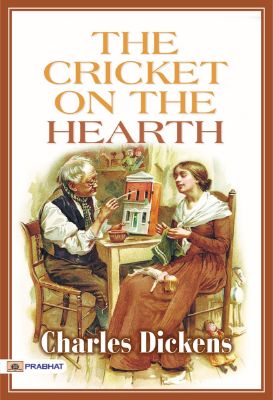
The Cricket on the Hearth by Charles Dickens
The kettle began it! Don’t tell me what Mrs. Peerybingle said. I know better. Mrs. Peerybingle may leave it on record to the end of time that she couldn’t say which of them began it; but, I say the kettle did. I ought to know, I hope! The kettle began it, full five minutes by the little waxy-faced Dutch clock in the corner, before the Cricket uttered a chirp.
As if the clock hadn’t finished striking, and the convulsive little Haymaker at the top of it, jerking away right and left with a scythe in front of a Moorish Palace, hadn’t mowed down half an acre of imaginary grass before the Cricket joined in at all!
Why, I am not naturally positive. Every one knows that. I wouldn’t set my own opinion against the opinion of Mrs. Peerybingle, unless I were quite sure, on any account whatever. Nothing should induce me. But, this is a question of fact. And the fact is, that the kettle began it, at least five minutes before the Cricket gave any sign of being in existence. Contradict me, and I’ll say ten.
The Crime of the Congo by Arthur Conan Doyle
First published in the year 1909, ‘The Crime of the Congo’ is an attempt to expose the situation of human rights’ violation in Congo at hands of Leopold II of Belgium. This book by Sir Arthur Conan Doyle was well received and much appreciated by the critics.
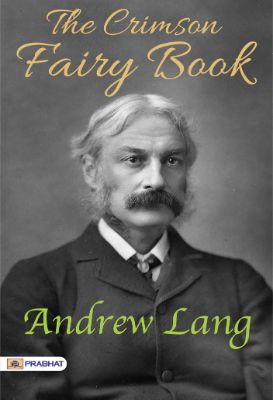
The Crimson Fairy Book by Andrew Lang
A collection of several short fairy tales by the noted Scottish poet, novelist, literary critic, and anthropologist Andrew Lang. These tales are first English translations of fairy tales from many different languages. This volume was published in a colour-coded manner with crimson at the background of each of the pages. He published around 25 such volumes with different colour codes for each. These volumes got immensely popular at that pont of time.
The Crimson Tide: A Novel by Robert W. Chambers
An American ambulance going south stopped on the snowy road; the driver, an American named Estridge, got out; his companion, a young woman in furs, remained in her seat.
Estridge, with the din of the barrage in his ears, went forward to show his papers to the soldiers who had stopped him on the snowy forest road.
His papers identified him and the young woman; and further they revealed the fact that the ambulance contained only a trunk and some hand luggage; and called upon all in authority to permit John Henry Estridge and Miss Palla Dumont to continue without hindrance the journey therein described.

The Critique of Pure Reason by Immanuel Kant
Originally written in German, ‘The Critique of Pure Reason’ is a longish essay by renowned social scientist and philosopher Immanuel Kant. It is considered one of the most influential works in the history of philosophy.

The Crock of Gold by James Stephens
IN the centre of the pine wood called Coilla Doraca there lived not long ago two Philosophers. They were wiser than anything else in the world except the Salmon who lies in the pool of Glyn Cagny into which the nuts of knowledge fall from the hazel bush on its bank. He, of course, is the most profound of living creatures, but the two Philosophers are next to him in wisdom. Their faces looked as though they were made of parchment, there was ink under their nails, and every difficulty that was submitted to them, even by women, they were able to instantly resolve. The Grey Woman of Dun Gortin and the Thin Woman of Inis Magrath asked them the three questions which nobody had ever been able to answer, and they were able to answer them. That was how they obtained the enmity of these two women which is more valuable than the friendship of angels. The Grey Woman and the Thin Woman were so incensed at being answered that they married the two Philosophers in order to be able to pinch them in bed, but the skins of the Philosophers were so thick that they did not know they were being pinched. They repaid the fury of the women with such tender affection that these vicious creatures almost expired of chagrin, and once, in a very ecstacy of exasperation, after having been kissed by their husbands, they uttered the fourteen hundred maledictions which comprised their wisdom, and these were learned by the Philosophers who thus became even wiser than before.
The Crow by Edgar Allan Poe
A narrative poem by noted American gothic stories writer Edgar Allan Poe, ‘The Crow’ was first published in the year 1845. The poem is about a talking crow’s mysterious visit to a distraught lover, tracing the man’s slow fall into madness.

The Crow’s Nest by Clarence Day
First published in the year 1921, the present book ‘The Crow’s Nest’ is a collection of literary essays by American author and cartoonist Clarence Day, who is best known for his 1935 work ‘Life With Father’. Present collection received a favorable review in The Nation magazine by the prominent U.S. academician of that time – Carl Van Doren.