
Classic Books
Showing 2901–2950 of 4246 results

The Explorer by W Somerset Maugham
“The sea was very calm. There was no ship in sight, and the sea-gulls were motionless upon its even greyness. The sky was dark with lowering clouds, but there was no wind. The line of the horizon was clear and delicate. The shingly beach, no less deserted, was thick with tangled seaweed, and the innumerable shells crumbled under the feet that trod them. The breakwaters, which sought to prevent the unceasing encroachment of the waves, were rotten with age and green with the sea-slime. It was a desolate scene, but there was a restfulness in its melancholy; and the great silence, the suave monotony of colour, might have given peace to a heart that was troubled. They could not assuage the torment of the woman who stood alone upon that spot. She did not stir; and, though her gaze was steadfast, she saw nothing. Nature has neither love nor hate, and with indifference smiles upon the light at heart and to the heavy brings a deeper sorrow. It is a great irony that the old Greek, so wise and prudent, who fancied that the gods lived utterly apart from human passions, divinely unconscious in their high palaces of the grief and joy, the hope and despair, of the turbulent crowd of men, should have gone down to posterity as the apostle of brutish pleasure.” -an excerpt

The Expression of the Emotions in Man and Animals by Charles Darwin
First published in the year 1872, worldwide famous geneologist and philosophical revolutionary Charles Darwin’s ‘The Expression of the Emotions in Man and Animals’ is about genetically determined aspects of behaviour.
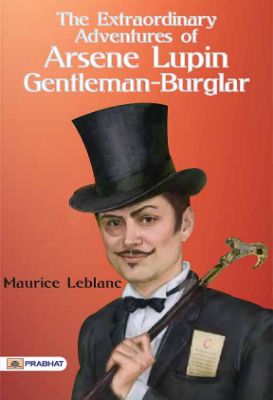
The Extraordinary Adventures of Arsene Lupin, Gentleman-Burglar by Maurice Leblanc
The Extraordinary Adventures of Arsene Lupin, Gentleman-Burglar’ is the first collection of stories by Maurice Leblanc recounting the adventures of Arsène Lupin. Containing the first eight stories depicting the character, each was first published in the French magazine ‘Je sais tout’. The seventh features fictional English detective ‘Sherlock Holmes’, as does the second collection of stories, ‘Arsene Lupin vs. Herlock Sholmes’.
THE EXTRAORDINARY ADVENTURES of ARSÈNE LUPIN, GENTLEMAN-BURGLAR by Maurice Leblanc
First pub;lished in the year 1907, the present book ‘THE EXTRAORDINARY ADVENTURES of ARSÈNE LUPIN, GENTLEMAN-BURGLAR’ is written by French writer Maurice Leblanc. It is a classic crime fiction type work. This book consists many crime fictional stories.
The Eyes Have It by Philip K. Dick
“It was quite by accident I discovered this incredible invasion of Earth by lifeforms from another planet. As yet, I haven’t done anything about it; I can’t think of anything to do. I wrote to the Government, and they sent back a pamphlet on the repair and maintenance of frame houses. Anyhow, the whole thing is known; I’m not the first to discover it. Maybe it’s even under control.” -an excerpt

The Fables of La Fontaine by Jean de La Fontaine
First published in the year 1886, the present book titled ‘The Fables of La Fontaine’ is a collection of Jean de La Fontaine’s stories accompanied by his short bio and a few essays about him.

The Face of the Earth as Seen from the Air by Willis T. Lee
Scarcely a generation has passed during the evolution of the airplane from a ridiculous dream to a practical factor in the work of the world. Men who once read with derision, or only passive interest at best, of the experiments of Langley, Chanute, and the Wrights have seen the airplane developed suddenly into an indispensable instrument of war and an agency of demonstrated value and of such diversity of application that its future is hard to estimate.

The Fair Maid of Perth; Or, St. Valentine’s Day by Walter Scott
A historical drama novel by famous writer Sir Walter Scott, ‘The Fair Maid of Perth; Or, St. Valentine’s Day’ was first published in the year 1828. Set in Perth, the novel is inspired by the story of the Battle of the North Inch.
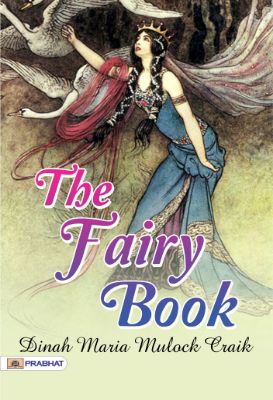
The Fairy Book by Dinah Maria Mulock Craik
This is meant to be the best collection attainable of that delight of all children, and of many grown people who retain the child-heart still—the old-fashioned, time-honored classic Fairy-tale. It has been compiled from all sources—far-off and familiar; when familiar, the stories have been traced with care to their original form, which, if foreign, has been retranslated, condensed, and in any other needful way made suitable for modern British children. Perrault, Madame d’Aulnois, and Grimm have thus been laid under contribution. Where it was not possible to get at the original of a tale, its various versions have been collated, compared, and combined; and in some instances, when this proved still unsatisfactory, the whole story has been written afresh. The few English fairy tales extant, such as Jack the Gian Killer, Tom Thumb, etc., whose authorship is lost in obscurity, but whose charming Saxon simplicity of style, and intense realism of narration, make for them an ever-green immortality—these have been left intact, for no later touch would improve them. All modern stories have been excluded.
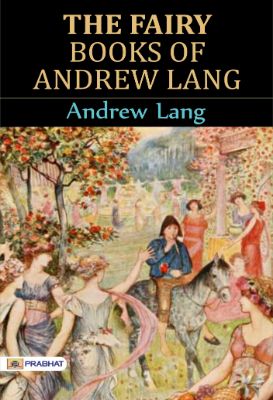
The Fairy Books of Andrew Lang by Andrew Lang
First published in the year 1984, famous writer H. C. Andersen’s book ‘Andersen’s Fairy Tales’ is a collection of fairy tales and magical stories.

The Fairy-Land of Science by Buckley, Arabella B.
Many of the earliest books, particularly those dating back to the 1900s and before, are now extremely scarce and increasingly expensive. We are republishing these classic works in affordable, high quality, modern editions, using the original text and artwork.

The Faithless Parrot by Charles H. Bennett
There once lived happily together, in a fine house, a tortoise-shell Cat and a pretty white Dog: the Cat’s name was Tittums; the Dog’s, Fido. In course of time the pretty Dog fell in love with the Cat, and only waited for a good chance to disclose his affections. This came one day, when Tittums had put her paws on the fender, dropped her head a little on one side, half closed her eyes, and seemed thinking of nothing at all.
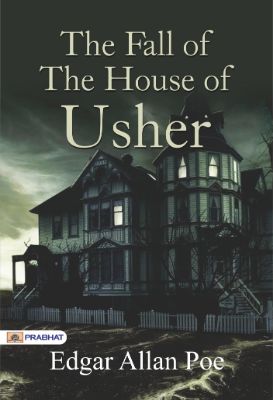
The Fall of the House of Usher by Edgar Allan Poe
The horrors of the Spanish Inquisition, with its dungeon of death, and the overhanging gloom on the House of Usher demonstrate unforgettably the unique imagination of Edgar Allan Poe.

The Family by Lewis Bookwalter
This book will be an inspiration to fathers, mothers, and children, the married and unmarried, because God’s ideal of family life is held up. It is suggestive rather than exhaustive. It is plain on delicate points of the subject. The author, by nature and grace, by the home from which he came, by knowing how to rule well his own house, by his experience and success as a public teacher, is fitted to Speak on this too much neglected subject, and deserves a large hearing. The added words by the father of the author, the promoter of these lectures to the students Of the Seminary, are from a man Of prayer, piety, symmetry, and experience.

The Fashionable World Displayed by John Owen
I HAVE often been surprised, that among the many descriptions which ingenious writers have given of places and people comparatively insignificant, no complete and systematic account has yet been written of the Fashionable World. It is true, that our poets and caricaturists have honoured this people with a great share of their notice, and many particulars, not a little edifying, have been made known, through the medium of their admirable publications. It is also true, that our prose-writers have occasionally cast a very pertinent glance over this fairy ground. Some of these latter have even gone so far, as to write absolute treatises upon certain parts of the Fashionable character. Mrs. More, for example, has delineated the religion, and Lord Chesterfield the morals, of this singular people with the greatest exactness and precision. Nor would it be just to overlook the very acceptable labours of those writers who, in their Court-calendars and Court-almanacks, bring us acquainted, from time to time, with the modes of dress which prevail in the Fashionable World, and the names of its most distinguished inhabitants. But after all that has been done, towards exhibiting the manners, and unfolding the character, of this splendid community, much remains to be done: for though certain details have been well enough handled, yet I repeat, that a complete and systematic account of the Fashionable World, is still a desideratum in Cosmography.

The Federalist Papers by Alexander Hamilton, James Madison, and John Jay
The Federalist Papers’ is a collection of 85 articles and essays written by Alexander Hamilton, James Madison, and John Jay to promote the ratification of the United States Constitution. Seventy-seven were published serially in The Independent Journal and The New York Packet between October 1787 and August 1788.

The Fiction Factory by William Wallace Cook
For two years previous to this (to him) momentous event he had hearkened earnestly to the counsel that “literature is a good stick but a poor crutch,” and had cleaved to a position as paymaster for a firm of contractors solely because of the pay envelope that insured food and raiment. Spare hours alone were spent in his Fiction Factory. In the summer of 1893, however, when his evening and Sunday work brought returns that dwarfed his salary as paymaster, he had a heart to heart talk with Mrs. John Milton Edwards, and, as a result, the paymaster-crutch was dropped by the wayside. This came to pass not without many fears and anxieties, and later there arrived gray days when the literary pace became unsteady and John Milton turned wistful eyes backward in the direction of his discarded crutch. But he never returned to pick it up.
—from this book

The Fiddlers by Arthur Mee
A book written by American writer, journalist and educator Arthur Mee in early 20th century, ‘The Fiddlers’ questions people’s consciousness on many major issues that were of concern in America at that point of time. These are short and long notes and articles written by the author on each of those issues and, asked the general public to awaken their morality and stop fiddling for basic necessities.

The Field Book by W. H. Maxwell
The present compendium by WH Maxwell records the history of the field intoxication of the British richmen and people of repute during 19th century in London.

The Field of Ice by Jules Verne
It was a bold project of Hatteras to push his way to the North Pole, and gain for his country the honour and glory of its discovery. But he had done all that lay in human power now, and, after having struggled for nine months against currents and tempests, shattering icebergs and breaking through almost insurmountable barriers, amid the cold of an unprecedented winter, after having outdistanced all his predecessors and accomplished half his task, he suddenly saw all his hopes blasted.

The Fifth Queen: and How She Came to Court by Ford Madox Ford
First published in the year 1906, the present historical novel ‘The Fifth Queen: and How She Came to Court’ was written by Ford Madox Ford as a part of his historical trilogy ‘The Fifth Queen’. This trilogy presents a highly fictionalised account of Katharine Howard’s arrival at the Court of Henry VIII, her eventual marriage to the king, and her death.

The Fighting Retreat To Paris by Roger Ingpen
By the middle of the third week of the war, the British Expeditionary Force—three army corps and a cavalry division—had been mobilised and sent across the Channel to France. Sir John French’s force was the largest army that England had ever sent into the field at the outset of a campaign. Its mobilisation, concentration, and transport across the narrow seas had been carried out with silent efficiency. England waited confidently and patiently for the tidings of its entry into the battle line.’ -an excerpt
The present book serves as an essential document to study the Britain-France scene in the history of World War I.
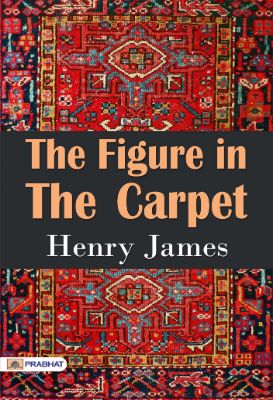
The Figure in the Carpet by Henry James
First published in the year 1896, the present short novella ‘The Figure in the Carpet’ by American writer Henry James is told in the first person. The narrator, whose name is never revealed, meets his favorite author and becomes obsessed with discovering the secret meaning or intention within all the author’s works.
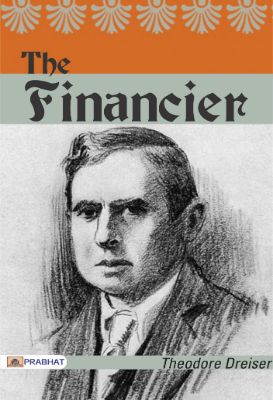
The Financier by Theodore Dreiser
First published in the year 1912, the present fictional novel ‘The Financier’ by Theodore Dreiser is the first volume of the Trilogy of Desire, which includes ‘The Titan’ (1914) and ‘The Stoic’ (1947). Set in Philadelphia, the novel is about Frank Cowperwood, whose father is a banker, makes his first money passing by an auction sale, he successfully bids for seven cases of Castile soap, which he sells to a grocer the same day with a profit of over 70 percent.
The Firm of Girdlestone by Arthur Conan Doyle
The Firm of Girdlestone’ is a novel by British author Sir Arthur Conan Doyle. It was first published in 1890.

The First Book of Adam and Eve by Rutherford Hayes Platt
“This book is a written history of what happened in the days of Adam and Eve after they were cast out of the garden. Although considered to be pseudepigraphic by some, it carries significant meaning and insight into events of that time. It is doubtful that these writings could have survived all the many centuries if there were no substance to them.” -Prologue

The First Duke and Duchess of Newcastle-upon-Tyne by Thomas Longueville
THE compiler of these pages does not labour under the delusion that he has written a book. All that he has attempted has been, as it were, to invite his reader to an arm-chair in his study, and to place in the reader’s hands a succession of open volumes and copies of manuscripts containing passages which throw more or less light upon the lives of the first Duke and Duchess of Newcastle. Occasionally he has ventured to make a few remarks, either of introduction or of retrospection, concerning the evidence thus brought before his guest, remarks which may easily be skipped at will.

The First Little Pet Book with Ten Short Stories in Words of Three and Four Letters by Frances Elizabeth Barrow
Many and many a time mothers have come to the author with the piteous plaint: “O Aunt Fanny! we are perfectly worn out with your ‘Nightcaps,’ ‘Mittens,’ and ‘Socks;’ we have read them to our little children, who have not yet conquered the compound mysteries of the alphabet, until we know them by heart; do, do write some books in words of one syllable, which they can read for themselves.”

The First Men on the Moon by H. G. Wells
Famous writer H. G. Wells’ romantic science fictional novel ‘The First Men in the Moon’ was first published in the year 1901. It tells the story of a journey to the moon undertaken by the two protagonists, a businessman narrator, Mr. Bedford, and an eccentric scientist, Mr. Cavor. Bedford and Cavor discover that the moon is inhabited by a sophisticated extraterrestrial civilization of insect-like creatures they call “Selenites”.

The First Part of King Henry the Fourth by William Shakespeare
Should the education of a prince take place in the court or in the tavern? Is Prince Henry wasting his time with Falstaff and his Eastcheap cronies? and can King Henry IV keep the throne when he has lost the support of the barons who put him there? It is an excellent resource for the classroom, amateur stage, actors, drama coaches, etc. All of the lines in this play are Shakespeare’s original lines. The entire play runs about 45 minutes on the stage.

The Fixed Period by Anthony Trollope
It may be doubted whether a brighter, more prosperous, and specially a more orderly colony than Britannula was ever settled by British colonists. But it had its period of separation from the mother country, though never of rebellion,—like its elder sister New Zealand. Indeed, in that respect it simply followed the lead given her by the Australias, which, when they set up for themselves, did so with the full co-operation of England. There was, no doubt, a special cause with us which did not exist in Australia, and which was only, in part, understood by the British Government when we Britannulists were allowed to stand by ourselves. The great doctrine of a “Fixed Period” was received by them at first with ridicule, and then with dismay; but it was undoubtedly the strong faith which we of Britannula had in that doctrine which induced our separation. Nothing could have been more successful than our efforts to live alone during the thirty years that we remained our own masters. We repudiated no debt,—as have done some of our neighbours; and no attempts have been made towards communism,—as has been the case with others. We have been laborious, contented, and prosperous; and if we have been reabsorbed by the mother country, in accordance with what I cannot but call the pusillanimous conduct of certain of our elder Britannulists, it has not been from any failure on the part of the island, but from the opposition with which the Fixed Period has been regarded.

The Flockmaster of Poison Creek by George W. Ogden
John Mackenzie trod the trail from Jasper to the great sheep country where fortunes were being made by the flock-masters. Shepherding was not a peaceful pursuit in those bygone days. Adventure met him at every turn–there is a girl of course–men fight their best fights for a woman–it is an epic of the sheeplands.
The Flying Girl and Her Chum by L. Frank Baum
An adventurous story by one of the ever-famous children’s authors – L. Frank Baum, who also wrote the very popular series of Oz ‘The Wizard of Oz’. He wrote this book under a pseudonym ‘Edith Van Dyne’. This book ‘The Flying Girl and Her Chum’ is a sequel of his ‘The Flying Girl’, both written with an innovative blend of genres to create a feminist adventurous melodrama.

The Folk-Tales of the Magyars by Erdélyi, Kriza, Pap, Jones, and Kropf
First published in the year 1878, the present book ‘The Folk-Tales of the Magyars’ is a collection of folk tales of a Hungarian tribal group called Margyar. These tales were collected in this volume by joint efforts of Erdélyi, Kriza, Pap, Jones and Kropf.
The Food of the Gods and How It Came to Earth by H. G. Wells
The present book ‘The Food of the Gods and How It Came to Earth’ is a science fiction novel by H. G. Wells. It was first published in the year 1904. The novel is about a group of scientists who invent a food that accelerates the growth of children and turns them into giants when they become adults.

The Foolish Dictionary by Gideon Wurdz
In this age of the arduous pursuit of peace, prosperity and pleasure, the smallest contribution to the gaiety, if not to the wisdom, of nations can scarcely be unwelcome. With this in mind, the author has prepared “The Foolish Dictionary,” not in serious emulation of the worthier – and wordier – works of Webster and Worcester, but rather in the playful spirit of the parodist, who would gladly direct the faint rays from his flickering candle of fun to the shrine of their great memories.

The Footpath Way: An Anthology for Walkers by Hilaire Belloc et al.
So long as man does not bother about what he is or whence he came or whither he is going, the whole thing seems as simple as the verb “to be”; and you may say that the moment he does begin thinking about what he is (which is more than thinking that he is) and whence he came and whither he is going, he gets on to a lot of roads that lead nowhere, and that spread like the fingers of a hand or the sticks of a fan; so that if he pursues two or more of them he soon gets beyond his straddle, and if he pursues only one he gets farther and farther from the rest of all knowledge as he proceeds.

The Forbidden Gospels and Epistles, Complete by Archbishop Wake
To uphold the “right of private judgment,” and our “Christian liberty wherewith Christ hath made us free;” to add fuel to the fire of investigation, and in the crucible of deep inquiry, melt from the gold of pure religion, the dross of man’s invention; to appeal from the erring tribunals of a fallible Priesthood, and restore to its original state the mutilated Testament of the Saviour; also to induce all earnest thinkers to search not a part, but the whole of the Scriptures, if therein they think they will find eternal life; I, as an advocate of free thought and untrammelled opinion, dispute the authority of those uncharitable, bickering, and ignorant Ecclesiastics who first suppressed these gospels and epistles; and I join issue with their Catholic and Protestant successors who have since excluded them from the New Testament, of which they formed a part; and were venerated by the Primitive Churches, during the first four hundred years of the Christian Era.

The Forest Runners by Joseph A. Altsheler
Paul stopped in a little open space, and looked around all the circle of the forest. Everywhere it was the same—just the curving wall of red and brown, and beyond, the blue sky, flecked with tiny clouds of white. The wilderness was full of beauty, charged with the glory of peace and silence, and there was naught to indicate that man had ever come. The leaves rippled a little in the gentle west wind, and the crisping grass bowed before it; but Paul saw no living being, save himself, in the vast, empty world.

The Fortunate Mistress (Parts 1 and 2) by Daniel Defoe
The present novel ‘The Fortunate Mistress (Parts 1 and 2)’ by Daniel Defoe was first published in the year 1724. It became a popular hit in the eighteenth century and was reprinted frequently.

The Fortunes and Misfortunes of the Famous Moll Flanders by Daniel Defoe
First published in the year 1722, the present novel ‘The Fortunes and Misfortunes of the Famous Moll Flanders’ by Daniel Defoe purports to be the true account of the life of the eponymous Moll, detailing her exploits from birth until old age.

The Forty-Five Guardsmen by Alexandre Dumas
The Forty-Five Guardsmen is a novel by Alexandre Dumas, written between 1847 and 1848 in collaboration with Auguste Maquet. Set in 1585 and 1586 during the French Wars of Religion, it is the third and final work in his Valois trilogy, concluding the events of La Reine Margot and La Dame de Monsoreau.
The Four Just Men by Edgar Wallace
Four men sat about a table on the sidewalk in front of the Café of the Nations in the High Street of Cadiz and talked business.
Leon Gonsalez was one, Poiccart was another, George Manfred was a notable third, and one, Thery, or Saimont, was the fourth. Of this quartet, only Thery requires no introduction to the student of contemporary history. In the Bureau of Public Affairs you will find his record. As Thery, alias Saimont, he is registered, and to all students of Criminology and Physiognomy, he must need no introduction.
He sat at the little table, this man, obviously ill at ease, pinching his fat cheeks, smoothing his shaggy eyebrows, fingering the white scar on his unshaven chin, doing all the things that the lower classes do when they suddenly find themselves placed on terms of equality with their betters.
For although Gonsalez, with the light blue eyes and the restless hands, and Poiccart, heavy, saturnine, and suspicious, and George Manfred, with his grey-shot beard and single eyeglass, were less famous in the criminal world, each was a great man, as you shall learn.
Manfred laid down the Heraldo di Madrid, removed his eyeglass, rubbed it with a spotless handkerchief, and laughed quietly.
The Four Million by O. Henry
Tobin and me, the two of us, went down to Coney one day, for there was four dollars between us, and Tobin had need of distractions. For there was Katie Mahorner, his sweetheart, of County Sligo, lost since she started for America three months before with two hundred dollars, her own savings, and one hundred dollars from the sale of Tobin’s inherited estate, a fine cottage and pig on the Bog Shannaugh. And since the letter that Tobin got saying that she had started to come to him not a bit of news had he heard or seen of Katie Mahorner. Tobin advertised in the papers, but nothing could be found of the colleen.

The Fox Jumps Over the Parson’s Gate by Randolph Caldecott
This book is very useful for children and is beneficial in the development of children because the best category of pictures and poetry is included in the books. And the curriculum of these books has been given in a way that helps in the development of children.
The Freaks of Mayfair by E.F. Benson
THERE IS NO MORE JOYOUS COUPLE in all Mayfair than Sir Louis Marigold, Bart., M.P., and Lady Mary Marigold, and whether they are at Marigold Park, Bucks, or at Homburg, or in their spacious residence in Berkeley Square, their lives form one unbroken round of pomp and successful achievement. She was the daughter of an obscure Irish Earl, and when she married her husband was still hard at work building up the business of Marigold & Sons. Those were strenuous days, and the profession of money-getting made it necessary for him to indulge his snobbishness only as a hobby. But she, like the good wife she has always been to him, took care of his hobby, as of a stamp-collection, and constantly enriched it with specimens of her own acquisition, being a snob of purest ray serene herself. She is the undoubted descendant of Arrahmedear, king of Donegal, in which salubrious county her brother, the present Earl, is steadily drinking himself to death in the intervals of farming his fifty-acre estate. When he has succeeded in completely poisoning himself with whisky, she will become Countess of Ballamuck herself, since the title descends, in default of male heirs, in the female line, and there will be what I hope it is not irreverent to call high old times in Berkeley Square and Marigold Park.

The Free Rangers by Joseph A. Altsheler
The wilderness rolled away to north and to south, and also it rolled away to east and to west, an unbroken sweep of dark, glossy green. Straight up stood the mighty trunks, but the leaves rippled and sang low when a gentle south wind breathed upon them. It was the forest as God made it, the magnificent valley of North America, upon whose edges the white man had just begun to nibble.
A young man, stepping lightly, came into a little glade. He was white, but he brought with him no alien air. He was in full harmony with the primeval woods, a part of them, one in whose ears the soft song of the leaves was a familiar and loved tune. He was lean, but tall, and he walked with a wonderful swinging gait that betokened a frame wrought to the strength of steel by exercise, wind, weather, and life always in the open. Though his face was browned by sun and storm his hair was yellow and his eyes blue. He was dressed wholly in deerskin and he carried over his shoulder the long slender rifle of the border. At his belt swung hatchet and knife.

The French Revolution – Volume 1 by Hippolyte Taine
This second part of “Les Origines de la France Contemporaine” will consist of two volumes.—Popular insurrections and the laws of the Constituent Assembly end in destroying all government in France; this forms the subject of the present volume.—A party arises around an extreme doctrine, grabs control of the government, and rules in conformity with its doctrine. This will form the subject of the second volume.

The French Revolution by Hilaire Belloc
The object of these few pages is not to recount once more the history of the Revolution: that can be followed in any one of a hundred text-books. Their object is rather to lay, if that be possible, an explanation of it before the English reader; so that he may understand both what it was and how it proceeded, and also why certain problems hitherto unfamiliar to Englishmen have risen out of it.

The French Revolution: A History by Thomas Carlyle
President Henault, remarking on royal Surnames of Honour how difficult it often is to ascertain not only why, but even when, they were conferred, takes occasion in his sleek official way, to make a philosophical reflection. ‘The Surname of Bien-aime (Well-beloved),’ says he, ‘which Louis XV. bears, will not leave posterity in the same doubt. This Prince, in the year 1744, while hastening from one end of his kingdom to the other, and suspending his conquests in Flanders that he might fly to the assistance of Alsace, was arrested at Metz by a malady which threatened to cut short his days. At the news of this, Paris, all in terror, seemed a city taken by storm: the churches resounded with supplications and groans; the prayers of priests and people were every moment interrupted by their sobs: and it was from an interest so dear and tender that this Surname of Bien-aime fashioned itself, a title higher still than all the rest which this great Prince has earned.’ (Abrege Chronologique de l’Histoire de France (Paris, 1775), p. 701.)