
Classic Books
Showing 3001–3050 of 4246 results

The Grand Inquisitor by Fyodor Dostoyevsky
“The Grand Inquisitor” is a poem in Fyodor Dostoyevsky’s novel The Brothers Karamazov. It is recited by Ivan, who questions the possibility of a personal and benevolent God, to his brother Alyosha, a novice monk.

The Great American Pie Company by Ellis Parker Butler
If you take a pie and cut it in two, the track of your knife will represent the course of Mud River through the town of Gloning, and that part of the pie to the left of your knife will be the East Side, while the part to the right will be the West Side. Away out on the edge of the pie, where the town fritters away into the fields and shanties on the East Side, dwells Mrs. Deacon, and a fatter, better-natured creature never trod the crust of the earth or made the crust of a pie. Being in reduced circumstances, owing to the inability of Mr. Deacon to appreciate the beneficial effects of work, Mrs. Deacon turned her famous baking ability to account, and in a small way began selling her excellent homemade pies to those who liked a superior article. In time Mrs. Deacon established a considerable trade among the people of Gloning, and Mr. Deacon was wrested from his customary seat on the back steps to make daily delivery trips with the Deacon home-made pies.

The Great Boer War by Arthur Conan Doyle
The Great Boer War’ is a non-fiction work on the Boer War by Arthur Conan Doyle. It was first published in the year 1900. By the end of the war in 1902, the book had been published in 16 editions, constantly revised by Doyle.
The Great English Short-Story Writers, Volume 1 by John Brown et al.
The short-story commenced its career as a verbal utterance, or, as Robert Louis Stevenson puts it, with “the first men who told their stories round the savage camp-fire.”
It bears the mark of its origin, for even to-day it is true that the more it creates the illusion of the speaking-voice, causing the reader to listen and to see, so that he forgets the printed page, the better does it accomplish its literary purpose. It is probably an instinctive appreciation of this fact which has led so many latter-day writers to narrate their short-stories in dialect. In a story which is communicated by the living voice our attention is held primarily not by the excellent deposition of adjectives and poise of style, but by the striding progress of the plot; it is the plot, and action in the plot, alone which we remember when the combination of words which conveyed and made the story real to us has been lost to mind.

The Great God Pan by Arthur Machen
The Great God Pan’ is a novella by Welsh writer Arthur Machen. It was first published in the year 1894. On publication it was widely denounced by the press as degenerate and horrific because of its decadent style and sexual content, although it has since garnered a reputation as a classic of horror. Machen’s story was only one of many at the time to focus on the Greek God Pan as a useful symbol for the power of nature and paganism.
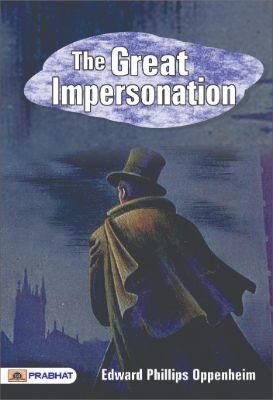
The Great Impersonation by Edward Phillips Oppenheim
The present book ‘The Great Impersonation’ is a mystery novel written by famous author Edward Phillips Oppenheim. It was first published in the year 1920. German Leopold von Ragastein meets his doppelganger, Englishman Everard Dominey, in Africa, and plans to murder him and steal his identity in order to spy on English high society just prior to World War I. However, doubts of the returned Dominey’s true identity begin to arise in this tale of romance, political intrigue, and a haunting past.
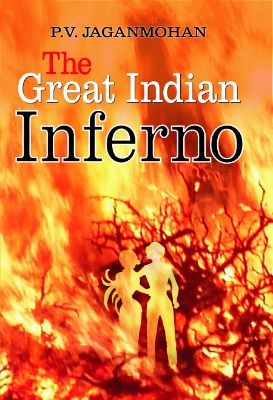
The Great Indian Inferno by P V Jaganmohan
Ayodhya imbroglio – Babri Masjid demolition meant many things to many. For some it triggered off a chain of, law and order problems. For some it demoted our economy. For some it deepened Hindu-Muslim divide. For some it worsened Hindu-Muslim hate. For some it meant religious mania.
For some it was political advantage by polarization of communal vote banks. For some it was depletion of vote bank. For some it was a blessing and for some it was a curse.
But for Jahan Shah, a young IPS Officer, who is also the hero of the story, it was a com of two sides… one side, the mirror and the other side, me fire I
On one side, the Ayodhya mirror reflected almost all follies we had. Our political folly, our social folly, our economic folly, our illiteracy, lack of awareness, poverty, our priority, our policy, our discrete discretion and discrimination… any thing and every thing! All dogmas on the earth, on Indian Earth!
This novel The Great Indian Inferno crafted around the ‘Ayodhya entanglement’ is a timely one. The author P.V. Jaganmohan blends fact with fiction with admirable creative dexterity. He has presented a spellbinding narrative that draws sustenance from the ill-perceived notion of cultural identity. Author narrative exalts the power of common place words and creates a symphony of many voices that augers well for our plural society.

The Great Invasion of 1813-14 by Erckmann-Chatrian
If you would like to know the story of the Great Invasion of 1814, just as it was told me by the old huntsman, Frantz du Hengst, you must come with me to the village of Charmes, in that province of France called the Vosges. About thirty little houses, with stuccoed fronts, and their roofs covered with dark green moss, are dotted along the borders of the Sarre; you can see their gables round which the ivy creeps and the honeysuckle twines—the honeysuckle withered now, for winter is near—the beehives closed with wisps of straw, the little gardens, the wooden palings, the hedge-rows that divide them from each other.
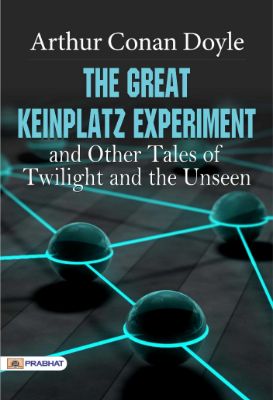
The Great Keinplatz Experiment and Other Tales of Twilight and the Unseen by Arthur Conan Doyle
The Great Keinplatz Experiment and Other Tales of Twilight and the Unseen’ is a collection of short stories by Sir Arthur Conan Doyle. These tales have elements of supernatural, witchcraft and humor too. This collection can be read as the celebrated author’s experiment with “supernatural”.
The Great Panjandrum Himself by Samuel Foote
Great Stories and poems for children is a collection of most delightful childrens stories.
The Great Pearl Secret by A. M. Williamson and C. N. Williamson
A maid opened the door leading from a bedroom to a salon of the “royal suite” at Harridge’s Hotel. Dusk had fallen, and entering, she switched on the electricity. The room, with its almost Louis Seize decorations, was suddenly flooded with light; and to her surprise the Frenchwoman saw a slim black figure nestled deep among cushions on a sofa before the fire. A small white face, with a frame of terra-cotta hair crushed under a mourning toque, turned a pair of big black eyes upon her.
The Great Quest by Charles Boardman Hawes
One morning early in the summer of 1826, I brushed the sweat from my forehead and the flour from my clothes, unrolled my shirt-sleeves to my wrists, donned my coat, and, with never a suspicion that that day was to be unlike any other, calmly walked out into the slanting sunshine. Rain had fallen in the night, and the air was still fresh and cool. Although the clock had but just struck six, I had been at work an hour, and now that my uncle, Seth Upham, had come down to take charge of the store, I was glad that some business discussed the evening before gave me an excuse to go on an errand to the other end of the village.

The Great Shadow and Other Napoleonic Tales by Arthur Conan Doyle
The Great Shadow and other Napoleonic Tales’ is an action and adventure novel written by Sir Arthur Conan Doyle. It was first published in the year 1892. The novel takes place in the Napoleonic era on the English-Scottish border city called West Inch. The Great Shadow refers to the Napoleon’s influence and his reputation that forms a shadow over West Inch.
The Greater Inclination by Edith Wharton
This is a pre-1923 historical reproduction that was curated for quality. Quality assurance was conducted on each of these books in an attempt to remove books with imperfections introduced by the digitization process. We believe this work is culturally important and have elected to bring the book back into print as part of our continuing commitment to the preservation of printed works worldwide.
The Greatest Thing In the World and Other Addresses by Drummond, Henry
Henry Drummond was a Scottish evangelist, writer and lecturer. The Greatest Thing in the World is based on 1 Corinthians 13 and provides life-changing insight into what love means and why it is greater even than faith and hope. “I was staying with a party of friends in a country house during my visit to England in 1884. On Sunday evening as we sat around the fire, they asked me to read and expound some portion of Scripture. Being tired after the services of the day, I told them to ask Henry Drummond, who was one of the party. After some urging he drew a small Testament from his hip pocket, opened it at the 13th chapter of I Corinthians, and began to speak on the subject of Love.
The Green Eyes of Bâst by Sax Rohmer
“Good evening, sir. A bit gusty?”
“Very much so, sergeant,” I replied. “I think I will step into your hut for a moment and light my pipe if I may.”
“Certainly, sir. Matches are too scarce nowadays to take risks with ’em. But it looks as if the storm had blown over.”
“I’m not sorry,” said I, entering the little hut like a sentry-box which stands at the entrance to this old village high street for accommodation of the officer on point duty at that spot. “I have a longish walk before me.”

The Green Flag, and Other Stories of War and Sport by Arthur Conan Doyle
The Green Flag and Other Stories of War and Sport’ is a collection of 15 short stories by renowned British Arthur Conan Doyle. It was first published in the year 1900.

The Green Rust by Edgar Wallace
“I don’t know whether there’s a law that stops my doing this, Jim; but if there is, you’ve got to get round it. You’re a lawyer and you know the game. You’re my pal and the best pal I’ve had, Jim, and you’ll do it for me.”
The dying man looked up into the old eyes that were watching him with such compassion and read their acquiescence.
No greater difference could be imagined than existed between the man on the bed and the slim neat figure who sat by his side. John Millinborn, broad-shouldered, big-featured, a veritable giant in frame and even in his last days suggesting the enormous strength which had been his in his prime, had been an outdoor man, a man of large voice and large capable hands; James Kitson had been a student from his youth up and had spent his manhood in musty offices, stuffy courts, surrounded by crackling briefs and calf-bound law-books.
The Grey Cloak by Harold MacGrath
The present book ‘The Grey Cloak’ was written by one of America’s most popular authors at the turn of the 20th century – Harold MacGrath. It was first published in the year 1903.
The Gringos by B. M. Bower
One of the famous American author who wrote novels, fictional short stories, and screenplays about the American Old West – B. M. Bower’s present novel ‘The Gringos’ was first published in the year 1913.
The Group Mind: A Sketch of the Principles of Collective Psychology by McDougall, William
In this book I have sketched the principles of the mental life of groups and have made a rough attempt to apply these principles to the understanding of the life of nations.
The Growth of a Crystal by Henry A. Miers
The present book, ‘The Growth of a Crystal’ constitutes a lecture delivered by Henry A. Miers who was the Principal of London University. It was delivered on 20th May 1911 at the Eighteenth Robert Boyle Lecture before the Oxford University Junior Scientific Club.

The Growth of a Soul by August Strindberg
In his personal life, Swedish playwright and novelist August Strindberg placed great importance on personal development and progression, even if that process proved to be unbearably painful and disruptive. That value system is reflected throughout the novel ‘The Growth of a Soul’, a coming-of-age story in which the transition to a state of maturity and enlightenment extracts a significant cost.
The Growth of English Drama by Arnold Wynne
“In spite of the fact that an almost superabundant literature of exposition has gathered round early English drama, there is, I believe, still room for this book. Much criticism is available. But the student commonly searches through it in vain for details of the plots and characters, and specimens of the verse, of interludes and plays which time, opportunity, and publishers combine to withhold from him.” -Preface
The Growth of the English Constitution from the Earliest Times by Edward A. Freeman
First published in the year 1872, the present book ‘The Growth of the English Constitution from the Earliest Times’ by social scientist and writer Edward A. Freeman is a political, developmental study of the growth of the English Constitution right from the time of its inception till mid-19th century.

The Guardians by Irving E. Cox
The Old Village wasn’t large—three parallel roads, a mile long, lined with the charred ruins of prefabs, which were exactly like the cottages where the kids lived. It was nothing to inspire either fear or legend. The village had burned a long time ago; the grass from the forest had grown a green mantle over the skeletal walls.
The Guermantes Way by Marcel Proust
A revised version of the Scott Moncrieff/Kilmartin translation of Proust – a new edition of the classic text in six volumes. The book includes new material which has been incorporated in the French Pleiade edition, and which up to this time has not been available to the English reader.
The Gully of Bluemansdyke and Other stories by Arthur Conan Doyle
First published in the year 1881, ‘The Gully of Bluemansdyke and Other stories’ is acollection of renowned British novelist and story writer Sir Arthur Conan Doyle’s mystery and adventure stories.
The Gun Runners by Ralph Williams
The middle twentieth century was chosen as a source of supply after a careful survey of all factors pro and con. The gun runners did not want the mass weapons of their own day, they wanted selective weapons which could be used for private murder. In the mid-twentieth century, the level of technology was such that well-made and reliable weapons were available; and at the same time, social control was still sketchy enough to permit quiet procurement of such merchandise, if one knew how to go about it and was suitably financed.
The gun runners, two men and a woman, knew how to go about it, and they were suitably financed. The profits in their business were commensurate with the risks—which were not small.
The Hairy Ape by Eugene O’Neill
SCENE—The firemen’s forecastle of a transatlantic liner an hour after sailing from New York for the voyage across. Tiers of narrow, steel bunks, three deep, on all sides. An entrance in rear. Benches on the floor before the bunks. The room is crowded with men, shouting, cursing, laughing, singing—a confused, inchoate uproar swelling into a sort of unity, a meaning—the bewildered, furious, baffled defiance of a beast in a cage. Nearly all the men are drunk. Many bottles are passed from hand to hand. All are dressed in dungaree pants, heavy ugly shoes. Some wear singlets, but the majority are stripped to the waist.

The Hampdenshire Wonder by J.D. Beresford
I could not say at which station the woman and her baby entered the train.
Since we had left London I had been engrossed in Henri Bergson’s “Time and Free Will,” as it is called in the English translation. I had been conscious of various stoppages and changes of passengers, but my attention had been held by Bergson’s argument. I agreed with his conclusion in advance, but I wished to master his reasoning.
I looked up when the woman entered my compartment, though I did not notice the name of the station. I caught sight of the baby she was carrying, and turned back to my book. I thought the child was a freak, an abnormality; and such things disgust me.
I returned to the study of my Bergson and read: “It is at the great and solemn crisis, decisive of our reputation with others, that we choose in defiance of what is conventionally called a motive, and this absence of any tangible reason is the more striking the deeper our freedom goes.”
The Hand of Ethelberta: A Comedy in Chapters by Thomas Hardy
First published in the year 1876, ‘The Hand of Ethelberta: A Comedy in Chapters’ was written by Thomas Hardy for the Cornhill Magazine. The author was associated with the magazine through his mentor and friend Lslie Stephen who was the editor to the prestigious magazine.
The Hand of Fu-Manchu by Sax Rohmer
“Who’s there?” I called sharply.
I turned and looked across the room. The window had been widely opened when I entered, and a faint fog haze hung in the apartment, seeming to veil the light of the shaded lamp. I watched the closed door intently, expecting every moment to see the knob turn. But nothing happened.
“Who’s there?” I cried again, and, crossing the room, I threw open the door.
The long corridor without, lighted only by one inhospitable lamp at a remote end, showed choked and yellowed with this same fog so characteristic of London in November. But nothing moved to right nor left of me. The New Louvre Hotel was in some respects yet incomplete, and the long passage in which I stood, despite its marble facings, had no air of comfort or good cheer; palatial it was, but inhospitable.

The Hanging Stranger by Philip K. Dick
The present book ‘The Hanging Stranger’ by famous English writer Philip K. Dick is a science fiction short story which was first published in the year 1953 in a serialized manner in a famous magazine titled Science Fiction Adventures.
The Happy Family by George Hodges
In all ancient discussion of the ethics of social behavior involved in the relation of wives to their husbands, the note is set by old Hammurabi, in the earliest of extant codes of law, when he defines a good wife as one who stays at home and attends diligently to the business of the household.

The Happy Golfer by Henry Leach
First published in the year 1914, the present book ‘The Happy Golfer’ was written by Henry Leach. While giving varied descriptions of golf, this book has experiences and reflections by a golf player, Leach.

The Happy Hypocrite: A Fairy Tale for Tired Men by Max Beerbohm
First published in the year 1896, the present book ‘The Happy Hypocrite: A Fairy Tale for Tired Men’ by Max Beerbohm is a short story with moral implications. It tells the story of a man who deceives a woman with a mask in order to marry her.
The Happy Prince and Other Tales by Oscar Wilde
A collection of fiction short stories written by one of the foremost writers of English literature – Oscar Wilde, for children. These stories are fantasies that are gross and engaging for children to read and experience life in a beautiful way.
The Harbor by Ernest Poole
At the heart of the story is Billy, an aspiring writer who struggles to reconcile his sympathy for workers with his middle-class allegiance to capitalist progress. As Billy comes of age on the New York waterfront, an eyewitness to explosive tensions between labor and capital that culminate in a violent strike, he learns to embrace socialism as the solution to the harbor’s seething injustices. This novel, one of the most direct literary treatments of class warfare, is a valuable social history and a powerful testament to Poole’s legendary talent.
The Harvester by Gene Stratton-Porter
“Bel, come here!” The Harvester sat in the hollow worn in the hewed log stoop by the feet of his father and mother and his own sturdier tread, and rested his head against the casing of the cabin door when he gave the command. The tip of the dog’s nose touched the gravel between his paws as he crouched flat on earth, with beautiful eyes steadily watching the master, but he did not move a muscle.
The Haunted Bookshop by Christopher Morley
The Haunted Bookshop’ is the 1919 novel by Christopher Morley, now in the public domain in the United States. This is a suspenseful novel set in Brooklyn around the time of the end of World War I. It continues the story of Roger Mifflin, the book seller in Parnassus on Wheels. It also details an adventure of Miss Titania Chapman and a young advertising man named Aubrey Gilbert.
The Haunted Man and the Ghost’s Bargain by Charles Dickens
Everybody said so.
Far be it from me to assert that what everybody says must be true. Everybody is, often, as likely to be wrong as right. In the general experience, everybody has been wrong so often, and it has taken, in most instances, such a weary while to find out how wrong, that the authority is proved to be fallible. Everybody may sometimes be right; “but that’s no rule,” as the ghost of Giles Scroggins says in the ballad.
The dread word, GHOST, recalls me.
Everybody said he looked like a haunted man. The extent of my present claim for everybody is, that they were so far right. He did.
The Haunters & The Haunted by Ernest Rhys
In this Ghost Book, M. Larigot, himself a writer of supernatural tales, has collected a remarkable batch of documents, fictive or real, describing the one human experience that is hardest to make good.
The Haunting of Low Fennel by Sax Rohmer
We pulled up short on the brow of the hill. Before me lay a little valley carpeted with heather, purple slopes hemming it in. A group of four tall firs guarded the house, which was couched in the hollow of the dip—a low, rambling building, in parts showing evidence of great age and in other parts of the modern improver.
“That’s the new wing,” continued the Major, raising his stick; “projecting out this way. It’s the only addition I’ve made to the house, which, as it stood, had insufficient accommodation for the servants.”
“It is a quaint old place.”
“It is, and I’m loath to part with it, especially as it means a big loss.”
“Ah! Have you formed any theories since wiring me?”

The Head of Kay’s by P. G. Wodehouse
It is the general view at Eckleton school that there never was such a house of slackers as Kay’s. Fenn, head of house and county cricketer, does his best to impose some discipline but is continually undermined by his house-master, the meddlesome and ineffectual Mr Kay. After the Summer Concert fiasco, Mr Kay resolves to remove Fenn from office and puts his house into special measures, co-opting Kennedy, second prefect of Blackburn’s, as reluctant troubleshooter with a brief to turn the place around. But without the backing of Fenn, and the whole house hostile towards him, how can he achieve the impossible.

The Headswoman by Kenneth Grahame
“It was a bland, sunny morning of a mediæval May,—an old-style May of the most typical quality; and the Council of the little town of St. Radegonde were assembled, as was their wont at that hour, in the picturesque upper chamber of the Hôtel de Ville, for the dispatch of the usual municipal business. Though the date was early sixteenth century, 2the members of this particular town-council possessed considerable resemblance to those of similar assemblies in the seventeenth, eighteenth, and even the nineteenth centuries, in a general absence of any characteristic at all—unless a pervading hopeless insignificance can be considered as such.” -an excerpt

The Healthy Life Cook Book, 2d ed. by Florence Daniel
This little book has been compiled by special and repeated request. It is not addressed to the professional cook, but to those who find themselves confronted with the necessity of manufacturing economical vegetarian dishes without any previous experience of cooking.
The Heart of Asia by Edward Denison Ross and Francis Henry Skrine
A time when Russia’s movements in the East are being watched by all with such keen interest seems a fitting one for the appearance of a work dealing with her Central Asian possessions. “That eternal struggle between East and West,” to quote Sir William Hunter’s apt phrase, has made Russia supreme in Central Asia, as it has made England mistress of India: and thus it has come to pass that two of the greatest European Powers find themselves face to face on the Asiatic Continent. On the results of that contact depends the future of Asia.

The Heart of England by Edward Thomas
The old man was small and straight, and to his thin figure the remains of a long black coat and grey trousers adhered with singular grace. You could not say that he was well dressed, but rather that he was in the penultimate stage of a transformation like Dryope’s or Daphne’s, which his pale face had not altogether escaped. His neglected body seemed to have grown this grey rind that flapped like birch bark. Had he been born in it the clothing could not have been more apt. The eye travelled from these clothes with perfect satisfaction—as from a branch to its fruit—to his little crumpled face and its partial crust of hair. Yet he walked. One hand on a stick, the other beneath a basket of watercress, he walked with quick, short steps, now and then calling out unexpectedly, as if in answer to a question, “Watercresses!” No one interrupted him. He was hungry; he nibbled at pieces of cress with his gums, and so kneaded his face as if it had been dough. He passed the boy; he stooped, picked up a rotten apple, and in the act frightened the pigeon, which rose, as the boy saw, and disappeared.
The Heart of Mid-Lothian, Complete by Walter Scott
After his novel ‘Waverley; Or, ‘Tis Sixty Years Since’ earned him much public and critical applaud, many of his novels were introduced as written by the author of Waverly. Around the same time, he came up with a series named ‘Waverly Novels’. ‘The Heart of Mid-Lothian, Complete’ is his seventh historical drama novel from the waverly series.