
Classic Books
Showing 2701–2750 of 4246 results

The Brothers Karamazov by Fyodor Dostoyevsky
The Brothers Karamazov’ is a passionate philosophical novel set in 19th-century Russia, that enters deeply into the ethical debates of God, free will, and morality. It is a spiritual drama of moral struggles concerning faith, doubt, judgment, and reason, set against a modernizing Russia, with a plot which revolves around the subject of patricide. Dostoyevsky composed much of the novel in Staraya Russa, which inspired the main setting.

The Brown Fairy Book by Andrew Lang
A collection of several short fairy tales by the noted Scottish poet, novelist, literary critic, and anthropologist Andrew Lang. These tales are first English translations of fairy tales from many different languages. This volume was published in a colour-coded manner with brown at the background of each of the pages. He published around 25 such volumes with different colour codes for each. These volumes got immensely popular at that pont of time.
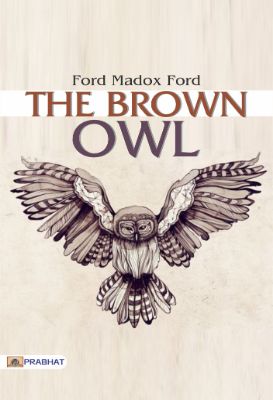
The Brown Owl by Ford Madox Ford
“Once upon a time, a long while ago—in fact long before Egypt had risen to power and before Rome or Greece had ever been heard of—and that was some time before you were born, you know—there was a king who reigned over a very large and powerful kingdom.
“Now this king was rather old, he had founded his kingdom himself, and he had reigned over it nine hundred and ninety-nine and a half years already. As I have said before, it was a very large kingdom, for it contained, among other things, the whole of the western half of the world. The rest of the world was divided into smaller kingdoms, and each kingdom was ruled over by separate princes, who, however, were none of them so old as Intafernes, as he was called.” -an excerpt

The Burden of ISIS by James Teackle Dennis
The object of the editors of this series is a very definite one. They desire above all things that, in their humble way, these books shall be the ambassadors of good-will and understanding between East and West, the old world of Thought, and the new of Action. In this endeavour, and in their own sphere, they are but followers of the highest example in the land. They are confident that a deeper knowledge of the great ideals and lofty philosophy of Oriental thought may help to a revival of that true spirit of Charity which neither despises nor fears the nations of another creed and colour.

The Burgess Animal Book for Children by Thornton W. Burgess
The cordial reception given the Burgess Bird Book for Children, together with numerous letters to the author asking for information on the habits and characteristics of many of the mammals of America, led to the preparation of this volume. It is offered merely as an introduction to the four-footed friends, little and big, which form so important a part of the wild life of the United States and Canada.
There has been no attempt to describe or classify sub-species. That is for the scientist and student with specific interests. The purpose of this book is to acquaint the reader with the larger groups—orders, families, and divisions of the latter, so that typical representatives may be recognized and their habits understood.

The Business of Life by Robert W. Chambers
First published in the year 1913, the present book ‘The Business of Life’ is a collection of short stories by famous author Robert W. Chambers. The colection consists of around twenty amazing fiction short stories.

The Business, As Usual by Jack Sharkey
“In 1962, the United States Air Force found itself possessed of a formidable tool of battle, a radar resistant airplane. While this was the occasion for much rejoicing among the Defense Department members who were cleared for Top Secret, this national-defense solution merely posed a greater problem: What should we do with it?” -an excerpt
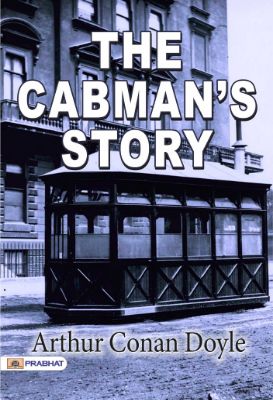
The Cabman’s Story by Arthur Conan Doyle
A suspense short story written by the world famous English author Sir Arthur Conan Doyle, ‘The Cabman’s Story’ is a story of what all mysterious things did a cab driver in London saw.

The Call of the Canyon by Zane Grey
The Call of the Canyon’ is one of Zane Grey’s most powerful novels. It is filled to the brim with adventure and romance. In the novel, Grey draws a sharp contrast between the decadent decline his protagonist sees in the cities of the East Coast and the hardworking pioneers forging new opportunities in the West.

The Call of the Wild by Jack London
The Call of the Wild’ is an adventure novel by Jack London. Published in 1903, it was set in Yukon, Canada during the 1890s Klondike Gold Rush, when strong sled dogs were in high demand. The central character of the novel is a dog named Buck. The story opens at a ranch in Santa Clara Valley, California, when Buck is stolen from his home and sold into service as a sled dog in Alaska. He becomes progressively feral in the harsh environment, where he is forced to fight to survive and dominate other dogs. By the end, he sheds the veneer of civilization, and relies on primordial instinct and learned experience to emerge as a leader in the wild.

The Camp Fire Girls at Driftwood Heights by Margaret Love Sanderson
For a brief instant following her spoken pledge, an eloquent silence reigned over the circle of picturesque figures seated about the brightly-blazing camp fire. Then a storm of acclamation rent the still night air, echoing and re-echoing among the giant oaks that hemmed in the company of ardent fire-worshippers. To hear Ruth Garnier repeat the desire of the Torch Bearer was indeed sufficient reason for applause on the part of her comrades of school and Camp Fire. No one of them was more honestly deserving of that honor than sunny, self-reliant Ruth. It was the highest to which she could attain as a Camp Fire Girl until the passing of years should render her eligible to the post of Guardian.

The Camp Fire Girls at School; Or, The Wohelo Weavers by Hildegard G. Frey
It was a crisp evening in October and the Winnebagos were having their Work Meeting at the Bradford house, as the guests of Dorothy Bradford, or “Hinpoha,” as she was known in the Winnebago circle. Here were all the girls we left standing on the boat dock at Loon Lake, looking just the same as when we saw them last, a trifle less sunburned perhaps, but just as full of life and spirit. Scissors, needles and crochet hooks flew fast as the seven girls and their Guardian sat around the cheerful wood fire in the library. Sahwah was tatting, Gladys and Migwan were embroidering, and Miss Kent, familiarly known as “Nyoda,” the Guardian of the Winnebago group, was “mending her hole-proof hose,” as she laughingly expressed it. The three more quiet girls in the circle, Nakwisi the Star Maiden, Chapa the Chipmunk, and Medmangi the Medicine Man Girl, were working out their various symbols in crochet patterns. Hinpoha was down on the floor popping corn over the glowing logs and turning over a row of apples which had been set before the fireplace to warm. The firelight streaming over her red curls made them shine like burning embers, until it seemed as if some of the fire had escaped from the grate and was playing around her face. Every few minutes she reached out her hand and dealt a gentle slap on the nose of “Mr. Bob,” a young cocker spaniel attached to the house of Bradford, who persistently tried to take the apples in his mouth. Nyoda finally came to the rescue and diverted his attention by giving him her darning egg to chew. The room was filled with the light-hearted chatter of the girls. Sahwah was relating with many giggles, how she had gotten into a scrape at school.
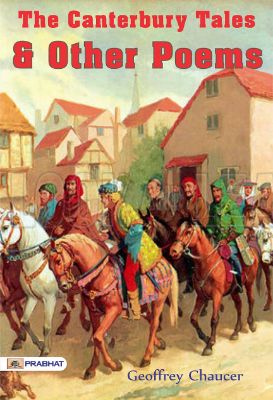
The Canterbury Tales, and Other Poems by Geoffrey Chaucer
The Canterbury Tales’ is a collection of 24 stories written by Geoffrey Chaucer. In 1386, Chaucer became Controller of Customs and Justice of Peace and, three years later, Clerk of the King’s work. It was during these years that Chaucer began working on his most famous text, ‘The Canterbury Tales’. The tales are presented as part of a story-telling contest by a group of pilgrims as they travel together on a journey from London to Canterbury to visit the shrine of Saint Thomas Becket. The prize for this contest is a free meal at the Tabard Inn at Southwark on their return.
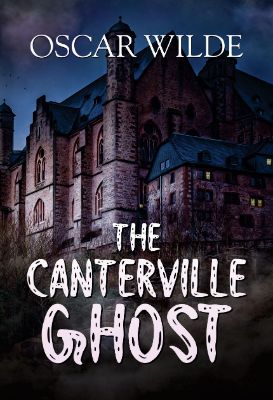
The Canterville Ghost by Oscar Wilde
There has been a ghost in the house for three hundred years, and Lord Canterville’s family have had enough of it. So Lord Canterville sells his grand old house to an American family. Mr Hiram B. Otis is happy to buy the house and the ghost – because of course Americans don’t believe in ghosts. The Canterville ghost has great plans to frighten the life out of the Otis family. But Americans don’t frighten easily – especially not two noisy little boys – and the poor ghost has a few surprises waiting for him.

The Captain of the Polestar, and Other Tales by Arthur Conan Doyle
Although Sir Arthur Conan Doyle is best known as the creator of the brilliant fictional detective Sherlock Holmes, the author tried his hand at a number of different genres before perfecting the detective story. ‘The Captain of the Polestar’ showcases a different, but equally engrossing, side of the author’s undeniable talent for fiction.
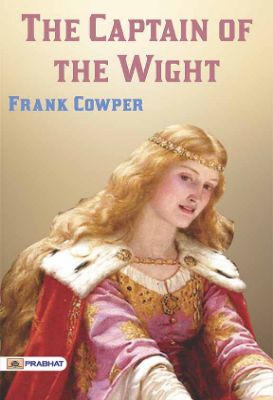
The Captain of the Wight by Frank Cowper
A fictional story of Edward Woodville, Captain of the Wight. ‘The Captain of the Wight’ is the story of how he came to lead 440 Isle of Wight men to their deaths in Brittany. The first part of the book is fiction, the second part is a set of translated letters which outlined the campaign and the great rousing poem written by an island historian on the whole event, and finally the third part is the original medieval report on which the book is based, to verify the facts.
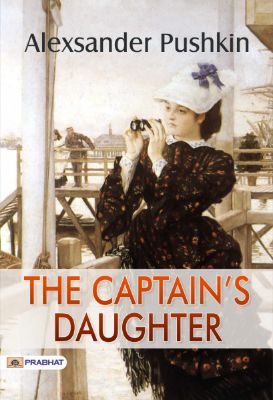
The Captain’s Daughter by Alexsander Pushkin
Shea had just beaten me at chess, as usual, and, also as usual, I had gleaned what questionable satisfaction I might by twitting him with this indication of failing mentality by calling his attention for the nth time to that theory, propounded by certain scientists, which is based upon the assertion that phenomenal chess players are always found to be from the ranks of children under twelve, adults over seventy-two or the mentally defective—a theory that is lightly ignored upon those rare occasions that I win. Shea had gone to bed and I should have followed suit, for we are always in the saddle here before sunrise; but instead I sat there before the chess table in the library, idly blowing smoke at the dishonored head of my defeated king.
While thus profitably employed I heard the east door of the living-room open and someone enter. I thought it was Shea returning to speak with me on some matter of tomorrow’s work; but when I raised my eyes to the doorway that connects the two rooms I saw framed there the figure of a bronzed giant, his otherwise naked body trapped with a jewel-encrusted harness from which there hung at one side an ornate short-sword and at the other a pistol of strange pattern. The black hair, the steel-gray eyes, brave and smiling, the noble features—I recognized them at once, and leaping to my feet I advanced with outstretched hand.
The Captive by Marcel Proust
Valentin Louis Georges Eugène Marcel Proust was a French novelist, critic, and essayist best known for his monumental novel À la recherche du temps perdu, published in seven parts between 1913 and 1927.

The Carolinian by Rafael Sabatini
Excitement and anticipation are rife in the New World – it is a land offering new beginnings and new opportunities. Yet it is also a land of intrigue, deception and deadly opposition. Centred on the rich and fertile soils of Carolina at the time of the American War of Independence, ‘The Carolinian ‘charts the interwoven stories of a host of characters.

The Cartels Jungle by Irving E. Cox
“Lots of guys think they’ll make it. I did once myself. Look at me now. I’m no good in the ships any more, so they bust me back to port hand. It’s too damn easy to throw your credits away in the crumb-joints.”
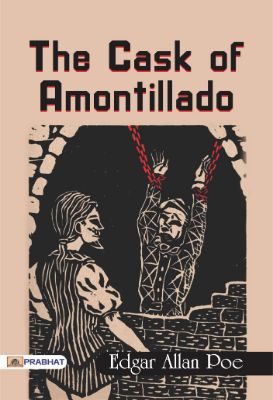
The Cask of Amontillado by Edgar Allan Poe
First published in the year 1846, the present book ‘The Cask of Amontillado’ by Edgar Allan Poe is set in an unnamed Italian city at carnival time in an unspecified year, and is about a man taking fatal revenge on a friend whom, he believes, has insulted him.
The Castle of Otranto by Horace Walpole
The Castle of Otranto’ is a gothic novel by Horace Walpole. It was first published in the year 1764. It is generally regarded as the first gothic novel, initiating a literary genre which would become extremely popular in the later 18th and early 19th century, with authors such as Charles Maturin, Ann Radcliffe, Bram Stoker, Edgar Allan Poe and Daphne du Maurier.
The Categories by Aristotle
The Categories’ is one of Aristotle’s most discussed and revised notions. It places every object of human apprehension under one of ten categories known to medieval writers as predicaments. Aristotle intended them to enumerate everything that can be expressed without composition or structure, thus anything that can be either the subject or the predicate of a proposition.

The Cathedrals of Great Britain: Their History and Architecture by P. H. Ditchfield
In this volume I have attempted to give an architectural description of all the cathedral churches of England, Wales, and Scotland, together with a brief history of each see. In order to include any adequate account of each church and bishopric in one volume of portable size, which may be of use to visitors in their travels, much compression has been necessary, but it is hoped that nothing of importance has been omitted which might be useful to those who would read aright the architectural history of our great churches. On account of their immense importance in the history of Gothic art, it has been thought well to include in this volume some account of the churches of Westminster and Beverley. At the close of each history of a cathedral will be found a record of the principal building dates and dimensions, and also a brief account of the chief places and churches of interest in the city or neighbourhood which it is advisable to visit.
The Cave Girl by Edgar Rice Burroughs
The dim shadow of the thing was but a blur against the dim shadows of the wood behind it.
The young man could distinguish no outline that might mark the presence as either brute or human.
He could see no eyes, yet he knew that somewhere from out of that noiseless mass stealthy eyes were fixed upon him.
This was the fourth time that the thing had crept out from the wood as darkness was settling—the fourth time during those three horrible weeks since he had been cast upon that lonely shore that he had watched, terror-stricken, while night engulfed the shadowy form that lurked at the forest’s edge.
It had never attacked him, but to his distorted imagination it seemed to slink closer and closer as night fell—waiting, always waiting for the moment that it might find him unprepared.

The Celestial Omnibus and other Stories by E. M. Forster
Eustace’s career—if career it can be called—certainly dates from that afternoon in the chestnut woods above Ravello. I confess at once that I am a plain, simple man, with no pretensions to literary style. Still, I do flatter myself that I can tell a story without exaggerating, and I have therefore decided to give an unbiassed account of the extraordinary events of eight years ago.
The Charing Cross Mystery by J. S. Fletcher
Hetherwick had dined that evening with friends who lived in Cadogan Gardens, and had stayed so late in conversation with his host that midnight had come before he left and set out for his bachelor chambers in the Temple; it was, indeed, by the fraction of a second that he caught the last east-bound train at Sloane Square.

The Charterhouse of Parma by Stendhal
The Charterhouse of Parma is a compelling novel of passion and daring, of prisons and heroic escape, of political chicanery and sublime personal courage. Set at the beginning of the nineteenth century, amidst the golden landscapes of northern Italy, it traces the joyous but ill-starred amorous exploits of a handsome young aristocrat called Fabrice del Dongo, and of his incomparable aunt Gina, her suitor Prime Minister Mosca, and Clélia, a heroine of ethereal beauty and earthly passion.

The Chemical History of a Candle by Michael Faraday
From the primitive pine-torch to the paraffin candle, how wide an interval! between them how vast a contrast! The means adopted by man to illuminate his home at night, stamp at once his position in the scale of civilisation. The fluid bitumen of the far East, blazing in rude vessels of baked earth; the Etruscan lamp, exquisite in form, yet ill adapted to its office; the whale, seal, or bear fat, filling the hut of the Esquimaux or Lap with odour rather than light; the huge wax candle on the glittering altar, the range of gas lamps in our streets,—all have their stories to tell. All, if they could speak (and, after their own manner, they can), might warm our hearts in telling, how they have ministered to man’s comfort, love of home, toil, and devotion. -Preface

The Cherry Orchard by Anton Chekhov
A room which is still called the nursery. One of the doors leads into ANYA’S room. It is close on sunrise. It is May. The cherry-trees are in flower but it is chilly in the garden. There is an early frost. The windows of the room are shut. DUNYASHA comes in with a candle, and LOPAKHIN with a book in his hand.
LOPAKHIN. The train’s arrived, thank God. What’s the time?
DUNYASHA. It will soon be two. [Blows out candle] It is light already.
LOPAKHIN. How much was the train late? Two hours at least. [Yawns and stretches himself] I have made a rotten mess of it! I came here on purpose to meet them at the station, and then overslept myself . . . in my chair. It’s a pity. I wish you’d wakened me.
DUNYASHA. I thought you’d gone away. [Listening] I think I hear them coming.
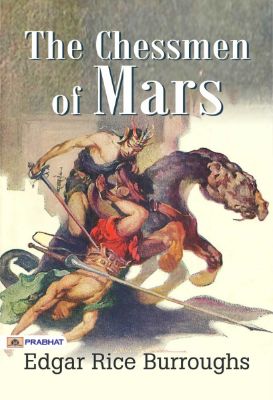
The Chessmen of Mars by Edgar Rice Burroughs
MY father, Andrey Petrovitch Grinyov, had in his youth served under Count Miinnich and retired with the rank of first Major in 17—. From that time onwards he lived on his estate in the province of Simbirsk, where he married Avdotya Vassilyevna U., daughter of a poor landowner of the district. There had been nine of us. All my brothers and sisters died in infancy. Through the kindness of Prince B., our near relative, who was a major of the Guards, I was registered as sergeant in the Semyonovsky regiment. I was supposed to be on leave until I had completed my studies. Our bringing-up in those days was very different from what it is now. At tlie age of five I was entrusted to the groom Savelyitch, who was told off to look after me, as a reward for the sobriety of his behaviour. Under his supervision I had learned, by the age of twelve, to read and write Russian, and could judge very soundly the points of a borzoi dog. At that time my father hired for me a Frenchman, Monsieur Beaupre, who was fetched from Moscow together with the yearly supply of wine and olive oil. Savelyitch very much disliked his coming.
‘The child, thank heaven, has his face washed and his hair combed, and his food given him,’ he grumbled to himself. ‘Much good it is to spend money on the Frenchman, as though there weren’t enough servants on the estate!’

The Chicago Massacre of 1812 by Joseph Kirkland
THE morning of Fort Dearborn’s fatal day dawned bright and clear over Lake Michigan and the sandy flat. The “reveille” doubtless was sounded before sun-rise; and one can imagine the rattle of the drum and scream of the fife as they broke the dewy stillness and floated away, over the sand-spit and out on the lake; across the river to the Kinzie house and its outbuilding, the Ouillemette house; and up stream to the Indian encampments, large, dark and lowering. Quite possibly the tune then prescribed was the same as that now used for the drum-fife reveille, together with the words that have attached themselves to it of late years:
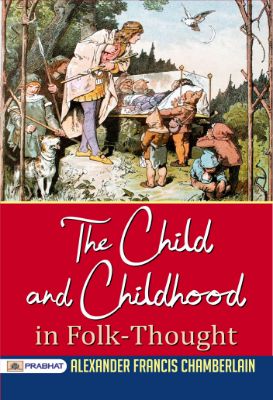
The Child and Childhood in Folk-Thought by Alexander Francis Chamberlain
The Child and Childhood in Folk Thought (the Child in Primative Culture) by Alexander Francis.
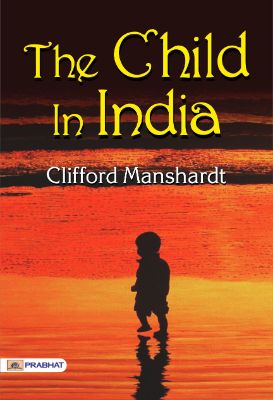
The Child In India by Clifford Manshardt
I have distinguished these two aspects of the work, only, as it were, to join them again, in emphasising that the best
work is done by those who are moved to action by both. The Society for the Protection of Children in Western
India has kept both objects equally clearly in view, to profit society by preventing the wastage of its children, and
to cleanse society by righting a grievous wrong. As the Knight of old in the days of chivalry considered no reward
for his success in a difficult enterprise more meet than to be entrusted with one even more difficult, so I feel sure,
in congratulating the Society for the Protection of Children in Western India on its coming of age, that it will desire
no better wish from me than that its successful labours in the past may be but the prelude to even more laborious and
even more successful days in the future.
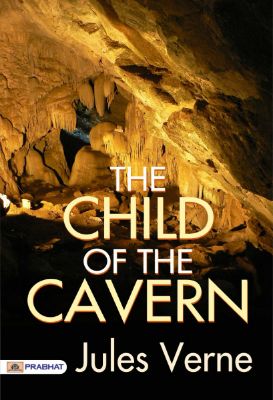
The Child of the Cavern by Jules Verne
Covering a time span of over ten years, this novel follows the fortunes of the mining neighborhood of Aberfoyle close to Stirling, Scotland. Receiving a letter from an ancient colleague, mining engineer James Starr units off for the historic Aberfoyle mine and from the outset, mysterious and unexplained happenings begin to appear round the principal characters.

The Child’s Book of American Biography by Mary Stoyell Stimpson
This book is a collection of Biographical sketches of legendary American men and women such as George Washington, Benjamin Franklin, Henry David Thoreau, Thomas Alva edition this classic Book is readable and informative too.
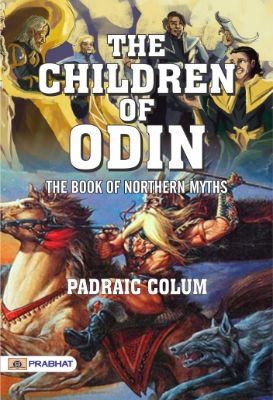
The Children of Odin: The Book of Northern Myths by Padraic Colum
First published in the year 1920, ‘The Children of Odin: The Book of Northern Myths’ is Padraic Colum’s famous retelling of norse myths and tales.
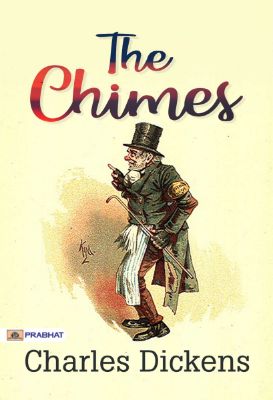
The Chimes by Charles Dickens
There are not many people—and as it is desirable that a story-teller and a story-reader should establish a mutual understanding as soon as possible, I beg it to be noticed that I confine this observation neither to young people nor to little people, but extend it to all conditions of people: little and big, young and old: yet growing up, or already growing down again—there are not, I say, many people who would care to sleep in a church. I don’t mean at sermon-time in warm weather (when the thing has actually been done, once or twice), but in the night, and alone. A great multitude of persons will be violently astonished, I know, by this position, in the broad bold Day. But it applies to Night. It must be argued by night, and I will undertake to maintain it successfully on any gusty winter’s night appointed for the purpose, with any one opponent chosen from the rest, who will meet me singly in an old churchyard, before an old church-door; and will previously empower me to lock him in, if needful to his satisfaction, until morning.
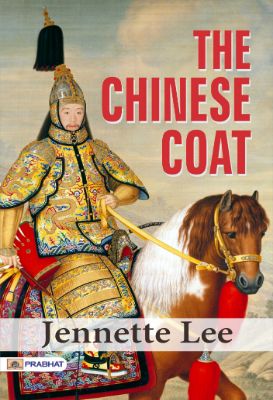
The Chinese Coat by Jennette Lee
We believe this work is culturally important, and despite the imperfections, have elected to bring it back into print as part of our continuing commitment to the preservation of printed works worldwide. We appreciate your understanding of the imperfections in the preservation process, and hope you enjoy this valuable book.

The Chinese Kitten by Edna Adelaide Brown
“I think,” said Lucy Merrill in a whisper to her sister Dora, “that Uncle Dan has a surprise for us.”
Dora was industriously setting the table for supper. Lucy, at the kitchen dresser, was peeling peaches. Lucy had on a big apron belonging to her mother, and it covered both her and the stool on which she sat. Dora wore a pink apron over her checked pink-and-white dress, and Dora’s apron was just like the big one, only the right size.

The Choice by Edith Wharton
“Stilling, that night after dinner, had surpassed himself. He always did, Wrayford reflected, when the small fry from Highfield came to dine. He, Cobham Stilling, who had to find his bearings and keep to his level in the big heedless ironic world of New York, dilated and grew vast in the congenial medium of Highfield. The Red House was the biggest house of the Highfield summer colony, and Cobham Stilling was its biggest man. No one else within a radius of a hundred miles (on a conservative estimate) had as many horses, as many greenhouses, as many servants, and assuredly no one else had three motors and a motor-boat for the lake.” -an excerpt

The Choir Invisible by James Lane Allen
“High overhead ridges of many-peaked cloud—the gleaming, wandering Alps of the blue ether; outstretched far below, the warming bosom of the earth, throbbing with the hope of maternity. Two spirits abroad in the air, encountering each other and passing into one: the spirit of scentless spring left by melting snows and the spirit of scented summer born with the earliest buds. The road through the forest one of those wagon-tracks that were being opened from the clearings of the settlers, and that wound along beneath trees of which those now seen in Kentucky are the unworthy survivors[…]” -an excerpt
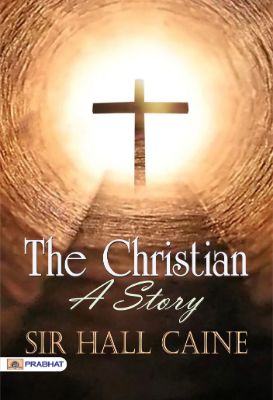
The Christian: A Story by Sir Hall Caine
“On the morning of the 9th of May, 18—, three persons important to this story stood among the passengers on the deck of the Isle of Man steamship Tynwald as she lay by the pier at Douglas getting up steam for the passage to Liverpool. One of these was an old clergyman of seventy, with a sweet, mellow, childlike face; another was a young man of thirty, also a clergyman; the third was a girl of twenty.” -an excerpt
The Christmas Eve: A Ghost Story by Charles Dickens
The mention of Marley’s funeral brings me back to the starting point of my story. There is no doubt that Marley was dead. That must be considered keenly, otherwise nothing wonderful can happen in the story that I will just tell you. If we were not completely convinced that Hamlet’s father was dead before the play began, there would be nothing strange in his nightly walk in the sharp east wind on the walls of his own castle. No more than any other middle-aged gentleman who, after sunset, quickly decides to take a walk in a breezy spot, for example, St. Paul’s Cemetery, merely to astonish his weak son.
—From this Book
The Chronicles of Clovis by Saki
The present book ‘The Chronicles of Clovis’ was written by the famous English author HH Munro who is best known by his pen name Saki. It consists various stories of humour and witt. It was first published in the year 1919.

The Chronology of Ancient Kingdoms Amended by Sir Isaac Newton
First published in the year 1728, the present book, ‘The Chronology of Ancient Kingdoms Amended’ by Sir Isaac Newton, is an approximately 87,000-word composition. The work represents one of Newton’s forays into the topic of chronology, detailing the rise and history of various ancient kingdoms throughout antiquity.

The Church: Her Books and Her Sacraments by E. E. Holmes
“These Lectures were originally delivered as the Boyle Lectures for 1910, and were afterwards repeated in a more popular form at All Saints, Margaret Street. They are now written from notes taken at their delivery at All Saints, and the writer’s thanks are due to the kindness of those who lent him the notes. Some explanation of their elementary character seems called for.” -Introduction

The Circular Staircase by Mary Roberts Rinehart
This is the story of how a middle-aged spinster lost her mind, deserted her domestic gods in the city, took a furnished house for the summer out of town, and found herself involved in one of those mysterious crimes that keep our newspapers and detective agencies happy and prosperous. For twenty years I had been perfectly comfortable; for twenty years I had had the window-boxes filled in the spring, the carpets lifted, the awnings put up and the furniture covered with brown linen; for as many summers I had said good-by to my friends, and, after watching their perspiring hegira, had settled down to a delicious quiet in town, where the mail comes three times a day, and the water supply does not depend on a tank on the roof.
And then—the madness seized me. When I look back over the months I spent at Sunnyside, I wonder that I survived at all. As it is, I show the wear and tear of my harrowing experiences. I have turned very gray—Liddy reminded me of it, only yesterday, by saying that a little bluing in the rinse-water would make my hair silvery, instead of a yellowish white. I hate to be reminded of unpleasant things and I snapped her off.

The Circus, and Other Essays and Fugitive Pieces by Joyce Kilmer
There are, however, some facts in explanation of the appearance of this volume at this time which require to be set down. And a number of circumstances in relation to the material here collected may be told, I think, to general interest. With these matters I am probably as familiar as anyone, and so have the great privilege of undertaking to record them.
The ten highly humorous and altogether charming essays which form the first part of this volume have led a rather queer life so far—though I think their existence will be a very happy one from now on. First, they were not “essays” at the time of their birth. They came into the world as “articles.” So they were spoken of by the young journalist who at various times and with very little to do about the matter wrote them in the course of a bewildering variety of other activities. Or, to be still more frank, he was perhaps more apt to refer to them, when he did refer to them at all, as “Sunday stories,” done as a part of his job with the New York Times Sunday Magazine. What they were called, however, is neither here nor there. The thing is that they are here.
—from this book

The City of God, Volume I by Bishop of Hippo Saint Augustine
“The glorious city of God is my theme in this work, which you, my dearest son Marcellinus, suggested, and which is due to you by my promise. I have undertaken its defence against those who prefer their own gods to the Founder of this city,—a city surpassingly glorious, whether we view it as it still lives by faith in this fleeting course of time, and sojourns as a stranger in the midst of the ungodly, or as it shall dwell in the fixed stability of its eternal seat, which it now with patience waits for, expecting until “righteousness shall return unto judgment,” and it obtain, by virtue of its excellence, final victory and perfect peace. A great work this, and an arduous; but God is my helper.” -an excerpt