
Premium Books
Showing 1551–1600 of 3787 results
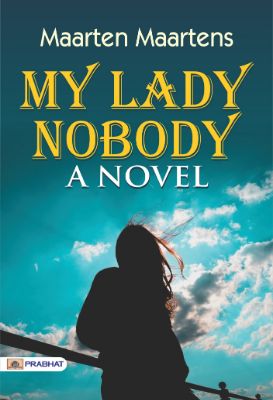
My Lady Nobody: A Novel by Maarten Maartens
It was a white-hot July morning. Long ago the impatient earth had cast aside her thin veil of summer twilight; already she lay, a Danae, in exultant swoon beneath the golden sun. Yet the bridegroom had barely leaped forth to the conquest; his rath kisses were still drinking the pearly freshness from the dawn, while the loud birds filled the resonant heavens with the tumult of their bridal song.
—from this book
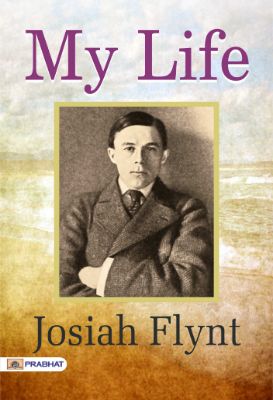
My Life by Josiah Flynt
Many and many an impulse on my part to run away; and I can recall purposely going to her room and society to try and conquer the temptation that was besetting me, although I did not tell her what I had come to her for. What she meant to the other children I do not know, but, my mother being away so much, and the governess representing solely discipline and control, grandmother became almost as dear to me as my mother. Strange to relate, however, I was never demonstratively affectionate with her, nor she with me, whereas I was very distinctly so with my mother when I was trying to be good.
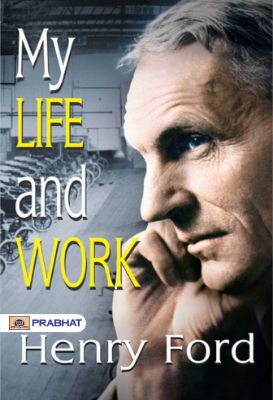
My Life and Work by Henry Ford
Henry Ford (July 30, 1863 – April 7, 1947) was anAmericanindustrialist, the founder of the Ford Motor Company, andsponsorof the development of the assembly line technique ofmassproduction. His introduction of the Model Tautomobilerevolutionized transportation and American industry. Asowner ofthe Ford Motor Company, he became one of the richest andbest-knownpeople in the world. He is credited with “Fordism”: massproductionof inexpensive goods coupled with high wages for workers.Ford hada global vision, with consumerism as the key to peace. Hisintensecommitment to systematically lowering costs resulted inmanytechnical and business innovations, including a franchisesystemthat put dealerships throughout most of North America and inmajorcities on six continents. Ford left most of his vast wealth totheFord Foundation but arranged for his family to control thecompanypermanently. Ford was also widely known for his pacifism during thefirstyears of World War I, but also for being the publisherofanti-Semitic texts such as the book The International Jew.
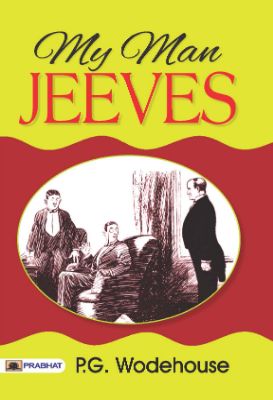
My Man Jeeves by P. G. Wodehouse
My Man Jeeves’ is a collection of short stories by P. G. Wodehouse. It was first published in the United Kingdom in 1919. of the eight stories in the collection, half feature the popular characters Jeeves and Bertie Wooster, while the others concern Reggie Pepper, an early prototype for Wooster.

My Musical Life by Walter Damrosch
I am an American musician and have lived in this country since my ninth year. I was born in Breslau, Silesia, on January 30, 1862, and my first memories are connected with war, the Austro-Prussian War of 1866. I was four years old and remember being with my mother in a room in our apartment in Breslau, which was filled with flowers and growing plants (mother always had a marvellous gift for maintaining and nursing plants) and various friends coming in to condole with her over the death of my baby brother, Hans, who had died of cholera, which was then raging in Breslau. The second child of my parents, born in 1860, had been christened Richard, after Richard Wagner, who had officiated as godfather at the ceremony. This child lived but a short time, and Wagner had vowed that he would never again stand as godfather for the children of any of his friends, as the ill luck which had pursued him all his life was thus carried even into their families.
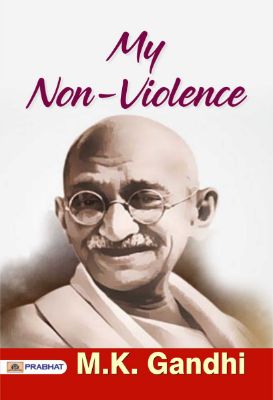
My Non-violence by M.K. Gandhi
I do believe that, where there is only a choice between cowardice and violence, I would advise violence. Thus when my eldest son asked me what he should have done, had he been present when I was almost fatally assaulted in 1908, whether he should have run away and seen me killed or whether he should have used his physical force which he could and wanted to use, and defended me, I told him that it was his duty to defend me even by using violence.
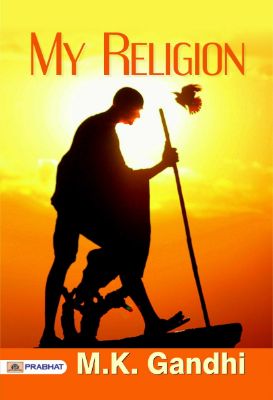
MY RELIGION by M. K. GANDHI
Gandhiji was born a Hindu. But his Hinduism was his own. It had its roots firm in ancient Hinduism, but it grew and developed in the light of his contact with other religions, more especially Christianity, as will be seen from Section Two of this volume. He sought to drink at the spring of all religions, and therefore he felt that he belonged to every religion. And yet, if he had to have a label, the label he preferred and which was his not only by right of birth but also intrinsically, was Hinduism, the religion of his forefathers.

My Schools and Schoolmasters by Hugh Miller
It is now nearly a hundred years since Goldsmith remarked, in his little educational treatise, that “few subjects have been more frequently written upon than the education of youth.” and during the century which has well-nigh elapsed since he said so, there have been so many more additional works given to the world on this fertile topic, that their number has been at least doubled.

My Secret Life (Volumes I to III) by Anonymous
This first reprint of “My Secret Life” is for private distribution
among connoisseur collectors. It is strictly limited to four hundred
and seventy five copies, all of which have been subscribed for prior to
publication.
My Success Story by Robert Turner
“What is to be will be. Our only refuge lies in that which might not have been.”
The story titled ‘Success Story’ by Robert Turner is a multi-fold science thriller. The tragic mystery can be said to have brought in a vast range of human anxieties related to his+her own identity crisis. It is a saga written in a surprisingly tiny length. A short story with a multi layered plot of frequently unfolding yet still hidden mysteries.

My Two Countries by Nancy Astor
My entrance into the House of Commons was not, as some thought, in the nature of a revolution. It was simply evolution. It is interesting how it came about. My husband was the one who started me off on this downward career—from home to the House. If I have helped the cause of women, he is the one to thank—not me. He is a strange and remarkable man. First, it was strange to urge his wife to take up public life, especially as he is a most domesticated creature; but the truth is, he is a born social reformer. He has avoided the pitfalls which so many well-to-do men fall into. He doesn’t think that you can right wrongs with philanthropy. He realises that you must go to the bottom of the causes of wrongs and not simply gild over the top. For eleven years I had helped him with his work at Plymouth. Mine was the personal side. I found out the wrongs and he tried to right them. It was a wonderful and happy combination, and I often wish that it was still going on. However, I am not here to tell you of his work, but it is interesting in so far as it shows you how it came about that I stood for Parliament at all. Unless he had been the kind of man that he was, I don’t believe that the first woman Member of the oldest Parliament in the world would have come from Plymouth—and that would have been a pity.

My Wonderful Visit by Charlie Chaplin
This is a reproduction of a book published before 1923. We believe this work is culturally important, and have elected to bring it back into print as part of our continuing commitment to the preservation of printed works worldwide. We appreciate your understanding of the imperfections in the preservation process, and hope you enjoy this valuable book.

My Year in a Log Cabin by William Dean Howells
In the fall of the year 1850 my father removed with his family from the city of D——, where we had been living, to a property on the Little Miami River, to take charge of a saw-mill and grist-mill, and superintend their never-accomplished transformation into paper-mills. The property belonged to his brothers—physicians and druggists—who were to follow later, when they had disposed of their business in town. My father left a disastrous newspaper enterprise behind him when he came out to apply his mechanical taste and his knowledge of farming to the care of their place. Early in the century his parents had brought him to Ohio from Wales, and his boyhood was passed in the new country, where pioneer customs and traditions were still rife, and for him it was like renewing the wild romance of those days to take up once more the life in a log-cabin interrupted by forty years’ sojourn in matter-of-fact dwellings of frame and brick.
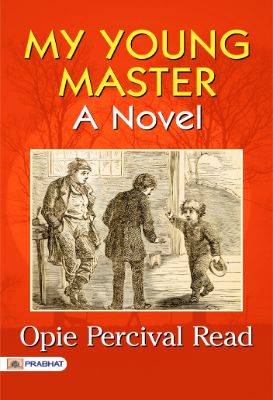
My Young Master: A Novel by Opie Percival Read
This is the story of a master, told by his slave. As I sit now, after the flight of so many years, and gaze at the pictures in the fire—the hills and the valleys of my boyhood, so bright, so glowing—I am oppressed with the fear that my rude hand can but ill execute the work that I have undertaken. And yet, I feel the force that truth alone can lend, for although my transcript may be crude, I know that in the years now far away but which are coming toward us, my history will be read by the thoughtful man who seeks to portray the strange social conditions that once existed in our country.
Myself when Young by Alec Waugh
IF the majority of one’s friends live in Kensington and Bloomsbury, and if one is fond of going out to parties in the evening, then one should live somewhere midway between these two extremities of charm and culture. With the acceptance of each fresh invitation, I am led increasingly to appreciate that there is no stronger deterrent to one’s enjoyment of an evening than the knowledge that one has at the end of it to get to Golders Green. However agreeable the company, however profuse the hospitality, there must always come that moment when one is forced to weigh the expense of a taxi against the degree of entertainment likely to be derived from a refusal to be disturbed by the sirens of the last tube.
It is twenty-five minutes past twelve; in thirteen minutes the shutters of Warren Street Station will be down. You rise from your cushioned comfort. You inform your hostess that it is very late, that you are very busy just now, that you have to be up early in the morning, that you really feel that the time has come. But you rarely complete your explanations. “Oh, but no, really; must you?” she says. “Surely you can stay a little longer. I’m expecting ‘so-and-so’ and ‘so-and-so’ any moment now. They promised{8} faithfully they would come. They’ll be frightfully disappointed if they find you have gone.” Your vanity arrays itself before your prudence. You remind yourself that a taxi will only cost ten shillings; you consider with what speed, with the writing of how few extra words you will be able to earn that sum next morning; you remember a copy-book platitude about a ship and a small amount of tar; you vacillate; and whichever way you decide, eventually you will come to regret your choice. If you stay it is more than likely that the owners of the distinguished names that were dangled as a bait in front of you will never come at all; or, if they do, they will arrive exhausted from some previous entertainment, and will sit silent and unapproachable in a corner. There is a strong probability that the last syphon will be discovered to be finished. Certainly by half-past one you will be in no humour to exchange with the taxi-driver those formalities of reluctance and solicitation that are forced on everyone who lives north of the Marlborough Road.

Mysterious Psychic Forces by Camille Flammarion
The subject treated in the following pages has made great progress in the course of forty years. Now what we are concerned with in psychical studies is always unknown forces, and these forces must belong to the natural order, for nature embraces the entire universe, and everything is therefore under the sway of her sceptre.

Mysticism and Logic and Other Essays by Bertrand Russell
Written by a Nobel Prize winner philosopher Bertrand Russell, ‘Mysticism and Logic and Other Essays’ was first published in the year 1910. This book consists articles based on how people perceive mysticism versus what it might actually be.
Myths and Legends of Ancient Greece and Rome by E. M. Berens
As the title itself suggests, this book is a collected guide to the pantheon of Greek and Roman gods and the myths weaved around them. Split into two parts, the first part of the book consists biographies of the gods, while the second part consists descriptions of famous legends.
Myths and Legends of China by E. T. C. Werner
Myths and Legends of China’ is a collection of mythical stories of China by E. T. C. Werner, who was a noted British diplomat in Qing Dynasty China and sinologist specialising in superstition, myths and magic. This unique and important collection of stories was first published in the year 1915.

Myths and Marvels of Astronomy by Richard A. Proctor
The chief charm of Astronomy, with many, does not reside in the wonders revealed to us by the science, but in the lore and legends connected with its history, the strange fancies with which in old times it has been associated, the half-forgotten myths to which it has given birth. In our own times also, Astronomy has had its myths and fancies, its wild inventions, and startling paradoxes.
Myths of Greece and Rome by H. A. Guerber
The myths of Greece and Rome have inspired so much of the best thought in English literature that a knowledge of them is often essential to the understanding of what we read. Again, expressions such as “the heel of Achilles” are part of the common language, but their meaning is lost upon those to whom the myths from which they are derived are unfamiliar.


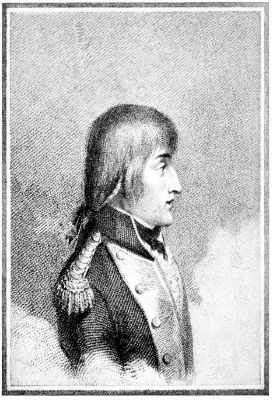
Napoleon by Thomas E. Watson
n this volume the author has made the effort to portray Napoleon as he appears to an average man. Archives have not been rummaged, new sources of information have not been discovered; the author merely claims to have used such authorities, old and new, as are accessible to any diligent student. No attempt has been made to give a full and detailed account of Napoleon’s life or work. To do so would have required the labor of a decade, and the result would be almost a library. The author has tried to give to the great Corsican his proper historical position, his true rating as a man and a ruler,—together with a just estimate of his achievements.
Narada Bhakti Sutras by Swami Vivekananda
Bhakti is defined in the following Sutra. Those who have understood the magnitude of human sufferings in this sense-universe and those who have realised that this world is unreal, impermanent, illusory, perishable, full of troubles, difficulties, miseries, pain, sorrow and tribulation and those who desire to free themselves from the round of births and deaths with its concomitant evils of old age, diseases, etc., should know what Bhakti is, how to develop Bhakti, who is God or Lord or Isvara, the relationship between God and man and the methods to realise God, or to approach Him or to attain God-Consciousness.
Narrative of the Captivity and Restoration of Mrs. Mary Rowlandson by Rowlandson
The sovereignty and goodness of GOD, together with the faithfulness of his promises displayed, being a narrative of the captivity and restoration of Mrs. Mary Rowlandson, commended by her, to all that desires to know the Lord’s doings to, and dealings with her. Especially to her dear children and relations. The second Addition [sic] Corrected and amended. Written by her own hand for her private use, and now made public at the earnest desire of some friends, and for the benefit of the afflicted. Deut. 32.39. See now that I, even I am he, and there is no god with me, I kill and I make alive, I wound and I heal, neither is there any can deliver out of my hand.
On the tenth of February 1675, came the Indians with great numbers upon Lancaster: their first coming was about sunrising; hearing the noise of some guns, we looked out; several houses were burning, and the smoke ascending to heaven. There were five persons taken in one house; the father, and the mother and a sucking child, they knocked on the head; the other two they took and carried away alive. There were two others, who being out of their garrison upon some occasion were set upon; one was knocked on the head, the other escaped; another there was who running along was shot and wounded, and fell down; he begged of them his life, promising them money (as they told me) but they would not hearken to him but knocked him in head, and stripped him naked, and split open his bowels. Another, seeing many of the Indians about his barn, ventured and went out, but was quickly shot down. There were three others belonging to the same garrison who were killed; the Indians getting up upon the roof of the barn, had advantage to shoot down upon them over their fortification. Thus these murderous wretches went on, burning, and destroying before them.
Narrative of the Life of Frederick Douglass, an American Slave by Frederick Douglass
Narrative of the Life of Frederick Douglass is an 1845 memoir and treatise on abolition written by famous orator and former slave Frederick Douglass.

Narrative of William W. Brown, a Fugitive Slave by William Wells Brown
Thirteen years ago, I came to your door, a weary fugitive from chains and stripes. I was a stranger, and you took me in. I was hungry, and you fed me. Naked was I, and you clothed me. Even a name by which to be known among men, slavery had denied me. You bestowed upon me your own. Base, indeed, should I be, if I ever forget what I owe to you, or do anything to disgrace that honored name!
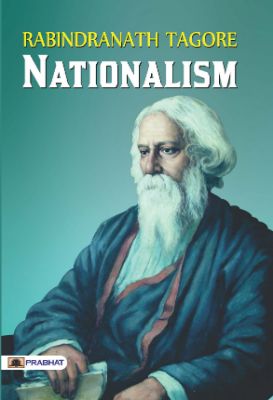
Nationalism by Rabindranath Tagore
An important essay+lecture by eminent classic Bengali poet, novelist and philosopher that India had, Rabindranath Tagore, ‘Nationalism’ sustains an air of modernism that is almost unimaginable, in it’s thought and approach, to have been delivered in early twentieth century.
‘OUR REAL PROBLEM in India is not political. It is social. This is a condition not only prevailing in India, but among all nations. I do not believe in an exclusive political interest. Politics in the West have dominated Western ideals, and we in India are trying to imitate you. We have to remember that in Europe, where peoples had their racial unity from the beginning, and where natural resources were insufficient for the inhabitants, the civilization has naturally taken the character of political and commercial aggressiveness. For on the one hand they had no internal complications, and on the other they had to deal with neighbours who were strong and rapacious. To have perfect combination among themselves and a watchful attitude of animosity against others was taken as the solution of their problems. In former days they organized and plundered, in the present age the same spirit continues – and they organize and exploit the whole world.’
Natural Law in the Spiritual World by Henry Drummond
Have a new understanding on your experience with modern philosophy of life. An argument which have attracted serious readers as Drummond shares thoughts on scientific logics in physical world into the spiritual state of being.
Prof Henry Drummond was a Scottish evangelist, biologist, writer and lecturer. His writings were too nicely adapted to the needs of his own day to justify the expectation that they would long survive it, but few men exercised more religious influence in their own generation, especially on young men.

Nature by Ralph Waldo Emerson
Through his writing and his own personal philosophy, Ralph Waldo Emerson unburdened his young country of Europe’s traditional sense of history and showed Americans how to be creators of their own circumstances. His mandate, which called for harmony with, rather than domestication of, nature, and for a reliance on individual integrity, rather than on materialistic institutions, is echoed in many of the great American philosophical and literary works of his time and ours, and has given an impetus to modern political and social activism.
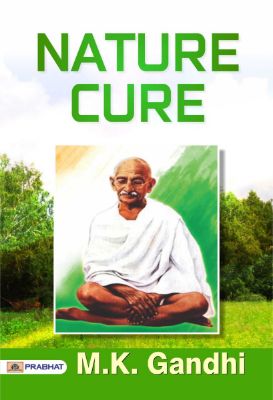
Nature Cure by M. K. Gandhi
This book contains a valuable collection of Gandhiji’s thoughts on Nature Cure etc. and is indeed as rich in its information as it is constructive in its outlook. I commend this book for serious study by all those who are interested in cure of ailments through natural remedies.

Nerves and Common Sense by Annie Payson Call
PEOPLE form habits which cause nervous strain. When these habits have fixed themselves for long enough upon their victims, the nerves give way and severe depression or some other form of nervous prostration is the result. If such an illness turns the attention to its cause, and so starts the sufferer toward a radical change from habits which cause nervous strain to habits which bring nervous strength, then the illness can be the beginning of better and permanent health. If, however, there simply is an enforced rest, without any intelligent understanding of the trouble, the invalid gets “well” only to drag out a miserable existence or to get very ill again.
Never Again! by Edward Carpenter
The rapid and enormous growth of scientific invention makes it obvious that Violence ten times more potent and sinister than that which we are witnessing to-day may very shortly be available for our use — or abuse — in War. On the other hand who can doubt that the rapid growth of interchange and understanding among the peoples of the world is daily making Warfare itself, and the barbarities inevitably connected with it, more abhorrent to our common humanity?
New Bodies for Old by Maurice Renard
It all happened on a certain winter evening more than a year ago, after the last men’s dinner-party I gave to my friends in the little house which I had taken furnished in the Avenue Victor Hugo.
New Grub Street by George Gissing
First published in the year 1891, the present book ‘New Grub Street’ was written by English author George Gissing. It is set in the literary and journalistic circles of 1880s London.

New Poems by D H Lawrence
This work has been selected by scholars as being culturally important, and is part of the knowledge base of civilization as we know it.

New research on the origin of the name América by Jules Marcou
Four facts dominate and summarize the whole question about the origin of the name of America: 1st Amerrique is the Indian name of some mountains between Juigalpa and La Libertad, Department of Chontales, that separate Lake Nicaragua from the coast of mosquitoes. . In Mayan language it means “Country of the wind,” “Country where the wind always blows.”
2. Vespucci’s proper name is, in Italian and Spanish, Alberico , in Latin Albericus .
3.º No name has ever suffered so many variations and combinations, some intentionally, others unconsciously, like Vespucci. Such confusion is without example, it is unique in the history of famous men. With the exception of the Alberico name , none of the other names is found in the nomenclatures and calendars, at that time so rich, of Italian and Spanish saints, and this in time of the greatest religious fervor, and of the absolute supremacy of Roman Catholic Christianity. Let’s list some of those names: Americus , Amerrigo , Amerigo , Amérigo , Amergio , Americo , Almerigo , Albertutio , Almerico , Morigo , Damerrigho , Armerico , Emeric , Aïmeric , Alméric and Améric . These are not diminutives, nor usual alterations, whether in Italian, Spanish or French, by Alberico , Albericus, Albéric , Albert .
Finally, before 1507, the date of the publication of the name Americus by Jean Basin, in Saint Dié, this name is not found in any printed document, or even manuscript, of recognized and incontestable authenticity.

Newcastle-Upon-Tyne; A Sketch-Book by Robert J. S. Bertram
First published in the year 1916, the present book ‘Newcastle-Upon-Tyne; A Sketch-Book’ is a compilation of twenty four of Robert J. S. Bertram’s sketches.

Newfoundland Verse by E. J. Pratt
Old, old is the sea to-day.
A sudden stealth of age
Has torn away
The texture of its youth and grace,
And filched the rose of daybreak from its waters.
Now lines of grey
And dragging vapors on its brow
Heavily are drawn;
And it lies broken as with centuries,
Though yesterday,

Nicholas Nickleby by Charles Dickens
First published as a full fledge novel in the year 1839, the present book ‘Nicholas Nickleby’ was written by famous Victorian novelist and social critic Charles Dickens. The novel centres on the life and adventures of Nicholas Nickleby, a young man who must support his mother and sister after his father dies.

Night and Day by Virginia Woolf
First published in the year 1919, the present novel ‘Night and Day’ by celebrated Victorian novelist Virginia Woolf is set in Edwardian London. It contrasts the daily lives and romantic attachments of two acquaintances, Katharine Hilbery and Mary Datchet. The novel examines the relationships between love, marriage, happiness, and success.
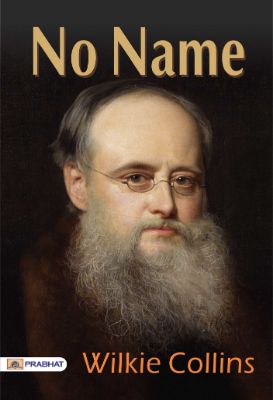
No Name by Wilkie Collins
The present mystery novel ‘No Name’ was written by famous novelist Wilkie Collins. It was first published in the year 1862. It was first serialised in Charles Dickens’ popular magazine ‘All the Year Round’ before publishing in a full book format.

Norðurfari; or, Rambles in Iceland by Pliny Miles
A PREFACE to a book, is a sort of pedestal where the author gets up to make a speech; frequently an apologizing ground, where he “drops in—hopes he don’t intrude;” a little strip of green carpet near the foot-lights, where he bows to the audience, and with a trembling voice asks them to look with lenient eyes on his darling bantling that is just coming before the world. Very likely he tells of the numerous difficulties and disadvantages under which he has labored; perhaps apologizes for his style, under the plea of writing against time, and that he has been greatly hurried. Readers and critics are usually indulgent towards the minor faults of an author, provided he entertains or instructs them; but they pay little attention to special pleadings.