
Premium Books
Showing 1651–1700 of 3787 results
On the various forces of nature and their relations to each other by Michael Faraday
The present publication presents one or two points of interest. In the first place, the Lectures were especially intended for young persons, and are therefore as free as possible from technicalities; and in the second place, they are printed as they were spoken, verbatim et literatim. A careful and skilful reporter took them down; and the manuscript, as deciphered from his notes, was subsequently most carefully corrected by the Editor as regards any scientific points which were not clear to the short-hand writer; hence all that is different arises solely from the impossibility, alas! of conveying the manner as well as the matter of the Lecturer. -Preface

On War — Volume 1 by Carl von Clausewitz
First published in the year 1832, Prussian general Carl von Clausewitz’s ‘On War — Volume 1’ is a book on his war and military strategy.

One Basket by Edna Ferber
Before she tried to be a good woman she had been a very bad woman—so bad that she could trail her wonderful apparel up and down Main Street, from the Elm Tree Bakery to the railroad tracks, without once having a man doff his hat to her or a woman bow. You passed her on the street with a surreptitious glance, though she was well worth looking at—in her furs and laces and plumes. She had the only full-length mink coat in our town, and Ganz’s shoe store sent to Chicago for her shoes. Hers were the miraculously small feet you frequently see in stout women.
One Hundred Proofs That the Earth Is Not a Globe by William Carpenter
“Parallax,” the Founder of the Zetetic Philosophy, is dead; and it now becomes the duty of those, especially, who knew him personally and who labored with him in the cause of Truth against Error, to begin, anew, the work which is left in their hands. Dr. Samuel B. Rowbotham finished his earthly labours, in England, the country of his birth, December 23, 1884, at the age of 89. He was, certainly, one of the most gifted of men: and though his labours as a public lecturer were confined within the limits of the British Islands his published work is known all over the world and is destined to live and be republished when books on the now popular system of philosophy will be considered in no other light than as bundles of waste paper.
One of Ours by Willa Cather
Claude rose and dressed,—a simple operation which took very little time. He crept down two flights of stairs, feeling his way in the dusk, his red hair standing up in peaks, like a cock’s comb. He went through the kitchen into the adjoining washroom, which held two porcelain stands with running water. Everybody had washed before going to bed, apparently, and the bowls were ringed with a dark sediment which the hard, alkaline water had not dissolved. Shutting the door on this disorder, he turned back to the kitchen, took Mahailey’s tin basin, doused his face and head in cold water, and began to plaster down his wet hair.

One Snowy Night Long ago at Oxford by Emily Sarah Holt
When Boniface went forth from England to evangelise Germany, he was received with welcome, and regarded as a saint: when Gerhardt came from Germany to restore the pure Gospel to England, he was cast out of the vineyard and slain.
The spirit of her who is drunk with the blood of the martyrs of Jesus is the same now that it was then. She does not ask if a man agree with the Word of God, but whether he agree with her. “When the Church has spoken” – this has been said by exalted ecclesiastical lips quite recently – “we cannot appeal to Scripture against her!”
One Thousand Secrets of Wise and Rich Men Revealed by C. A. Bogardus
“Agesilaus, king of Sparta, being asked what things he thought most proper for boys to learn, replied: “Those things which they should practice when they become men.” His reply was in perfect harmony with the good judgment of mankind, and cannot fail to be appreciated by all who have good common sense. If Agesilaus lived at the present time, the question would most probably have included both boys and girls, and undoubtedly his reply would be so worded as to apply to men and women.” -preface

One Thousand Ways To Make Money by Page Fox
The object of this work is to help people who are out of employment to secure a situation; to enable persons of small means to engage in business and become their own employers; to give men and women in various lines of enterprise ideas whereby they may succeed; and to suggest new roads to fortune by the employment of capital. The author has been moved to the undertaking by the reflection that there exists nowhere a book of similar character. There have indeed been published a multitude of books which profess to tell men how to succeed, but they all consist of merely professional counsel expressed in general terms. We are told that the secrets of success are “industry and accuracy,” “the grasping of every opportunity,” “being wide awake,” “getting up early and sitting up late,” and other cheap sayings quite as well known to the taker as to the giver. Even men who have made their mark, when they come to treat of their career in writing, seem unable to give any concrete suggestions which will prove helpful to other struggling thousands, but simply tell us they won by “hard work,” or by “close attention to business.”
One Woman by Alfred Ollivant
An old-fashioned carrier’s cart, such as you may still meet on the roads of Sussex, tilted, one-horsed, and moving at the leisurely pace of a bye-gone age, turned East at the Turnpike, and made slowly along the Lewes-Beachbourne road under the northern scarp of the Downs one evening of autumn in 1908. In it, at the back of the driver, were a young man and a young woman, the only passengers, ensconced among hen-coops, flitches of bacon, and baskets of greens.
One, None and a Hundred Thousand by Luigi Pirandello
“What are you doing?” my wife asked me, as she saw me lingering, contrary to my wont, in front of the mirror.
“Nothing,” I told her. “I am just having a look here, in my nose, in this nostril. It hurts me a little, when I take hold of it.”
My wife smiled.
“I thought,” she said, “that you were looking to see which side it is hangs down the lower.”
I whirled like a dog whose tail has been stepped on:
“Which side hangs down the lower? My nose? Mine?”
Only Yesterday by Frederick Lewis Allen
“This book is an attempt to tell, and in some measure to interpret, the story of what in the future may be considered a distinct era in American history: the eleven years between the end of the war with Germany (November 11, 1918) and the stock-market panic which culminated on November 13, 1929, hastening and dramatizing the destruction of what had been known as Coolidge (and Hoover) Prosperity.” -Preface
Opportunities by Susan Warner
It was the morning after that Sunday when Matilda had been baptized. The girls came down to prepare breakfast as usual; Maria in a very unsettled humour. She was cloudy and captious to a degree that Matilda could not understand. The kitchen was hot; the butter was soft; the milk was turned; the bread was dry. All things went wrong.
“It is no wonder the bread is dry,” said Matilda; “it has been baked ever since last Friday.”
“Thursday. I didn’t say it was a wonder. Aunt Candy will have the bread dry. I hate it!”
“And it is no wonder the butter is soft, if you keep it up here in the kitchen. The kitchen must be hot, with this hot stove. But the milkman will be along directly.”

Opticks by Sir Isaac Newton
First published in the year 1704, Sir Isaac Newton’s book ‘Opticks’ analyzes the fundamental nature of light by means of the refraction of light with prisms and lenses, the diffraction of light by closely spaced sheets of glass, and the behaviour of color mixtures with spectral lights or pigment powders.
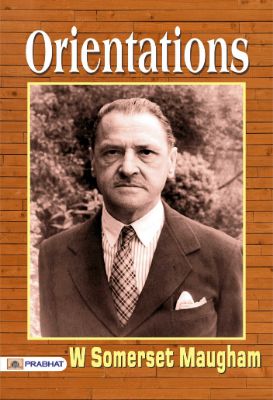
Orientations by W Somerset Maugham
“Xiormonez is the most inaccessible place in Spain. Only one train arrives there in the course of the day, and that arrives at two o’clock in the morning; only one train leaves it, and that starts an hour before sunrise. No one has ever been able to discover what happens to the railway officials during the intermediate one-and-twenty hours. A German painter I met there, who had come by the only train, and had been endeavouring for a fortnight to get up in time to go away, told me that he had frequently gone to the station in order to clear up the mystery, but had never been able to do so; yet, from his inquiries, he was inclined to suspect—that was as far as he would commit himself, being a cautious man—that they spent the time in eating garlic and smoking execrable cigarettes. The guide-books tell you that Xiormonez possesses the eyebrows of Joseph of Arimathea, a cathedral of the greatest quaintness, and battlements untouched since their erection in the fourteenth century. and they strongly advise you to visit it, but recommend you before doing so to add Keating’s insect powder to your other toilet necessaries.” -an excerpt

Orlando, A Biography by Virginia Woolf
Orlando: A Biography is a novel by Virginia Woolf, first published on 11 October 1928. A high-spirited romp inspired by the tumultuous family history of the aristocratic poet and novelist Vita .
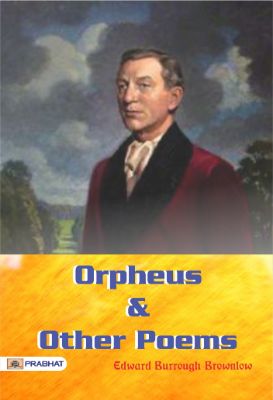
Orpheus and Other Poems by Edward Burrough Brownlow
Unto the realm of Pluto many roads
Lead with dark winding from the bright abodes
Of men, and when life’s last detaining thread
Is cut by Iris, and the body, dead,
With Charon’s coin in palm, rests in the tomb
Or on the pyre, the dæmon of its doom
After much pitiful forbearance tears
The soul from its environment of cares
With promise sweet of love’s awaiting kiss,
Of old friends greeting, and much holy bliss
On shores Elysian, where all ways are peace,
And all existence virtue without cease;
But ere the fields of Asphodel are won
Dire labours manifold must first be done
By soul and dæmon.
From the Book
Oscar In Africa by Harry Castlemon
“”Who is he, anyhow? Where does he hail from, and what is he doing here?”
“The speaker leaned over the little bar in the hotel at Maritzburg, and looked first at the landlord who stood behind it and then at half a dozen roughly dressed companions who were congregated in front of it.
“These men were cattle-dealers and speculators. They made it a business to furnish oxen, wagons, supplies, and servants to hunters and travellers who were bound up the country.” -an excerpt
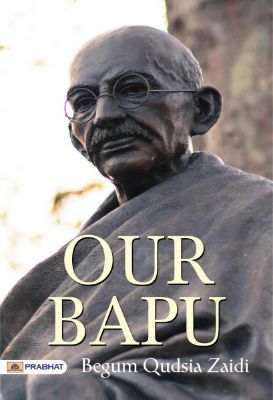
Our Bapu by Begum Qudsia Zaidi
It was six in the evening when little Hari returned home. He found the house very quiet. His father was not at his hookah nor was his mother cooking in the kitchen. The silence and the stillness frightened him. He looked for his mother all over the house and at last found her sitting in a corner and sobbing.
Our Base Ball Club by Noah Brooks
To write an introduction to a story whose slender plot should be threaded on a base ball match seems to be an almost superfluous work. But I am glad that Mr. Brooks has undertaken to illustrate “The National Game” by a story of outdoor life, founded on fact and incidentally introducing personages which are not wholly creatures of his imagination.

Our Common Land by Octavia Hill
Probably few persons who have a choice of holidays select a Bank holiday, which falls in the spring or summer, as one on which they will travel, or stroll in the country, unless, indeed, they live in neighbourhoods very far removed from large towns.
Our Indian Stewardship by Florence Nightingale
As a humble unit of the great English public, I have read with feelings of dismay the terrible indictment brought by Mr. Seymour Keay, in the last number of this journal, against our Indian administration. Hearing such things we must all ask ourselves to what extent are the charges set forth in ‘The Spoliation of India’ well founded? The allegations are specific, and involve charges of national breach of trust on a great scale. How are such charges to be either proved or disproved? England is herself ultimately responsible for the work of her servants in India. What means does she possess of taking an account of this Indian stewardship, so that her servants in the far East may be either acquitted or condemned? In the parable, the householder planted a vineyard, and hedged it round about, and let it out to husbandmen, and went into a far country. But a day of reckoning came at last. Wherever there is a trust, due account should be rendered. If the present charges are false, they should, after proper inquiry, be declared so, in justice to the Indian administration. If they contain even a portion of truth, still more necessary is it that justice should be done in fulfilment of a great national duty.

Our Knowledge of the External World as a Field for Scientific Method in Philosophy by Bertrand Russell
Bertrand Russell (1872 – 1970) was a British philosopher, mathematician, social critic, and political activist. Russell is considered to be one of the founders of analytic philosophy and one of the most important mathematicians and logicians in the 20th century.
Our Little Lady Six Hundred Years Ago by Emily Sarah Holt
Emily Sarah Holt was an English novelist who wrote about 50 books, mainly for children. “Our Little Lady” is one of around 30 books that she wrote about life and faith in the Middle Ages. The story “Our Little Lady” is told from the perspective of Avice, one of the elder women in the book and she recounts how she had become a nursery-maid in the Royal Palace, first at Windsor, and then later at Westminster. This edition retains the original illustrations and contains several helpful footnotes.
Our Mr. Wrenn: The Romantic Adventures of a Gentle Man by Sinclair Lewis
“The ticket-taker of the Nickelorion Moving-Picture Show is a public personage, who stands out on Fourteenth Street, New York, wearing a gorgeous light-blue coat of numerous brass buttons. He nods to all the patrons, and his nod is the most cordial in town. Mr. Wrenn used to trot down to Fourteenth Street, passing ever so many other shows, just to get that cordial nod, because he had a lonely furnished room for evenings, and for daytime a tedious job that always made his head stuffy.” -an excerpt

Our Mutual Friend by Charles Dickens
Last and one of his critically most acclaimed novels, ‘Our Mutual Friend’ was first published in the year 1865. It is considered to be Dickens’ one of most sophisticated works, combining savage satire with social analysis. In the opening chapters a body is found in the Thames and identified as that of John Harmon, a young man recently returned to London to receive his inheritance. Were he alive, his father’s will would require him to marry Bella Wilfer, a beautiful, mercenary girl whom he had never met. Instead, the money passes to the working-class Boffins, and the effects spread into various corners of London society.
Our Nervous Friends Illustrating the Mastery of Nervousness by Robert S. Carroll
This work has been selected by scholars as being culturally important, and is part of the knowledge base of civilization as we know it. This work was reproduced from the original artifact, and remains as true to the original work as possible. We appreciate your understanding of the imperfections in the preservation process, and hope you enjoy this valuable book.

Our True Relationship with India by Francis Younghusband
At the beginning of the last century there were among the great founders of our Indian Empire many who had the most intimate knowledge of the people, and had been most successful in dealing with them, who conceived that our part was so to train and educate the people of India that they would eventually be able to rule themselves. Such great Anglo-Indians as Sir Mountstuart Elphinstone and Sir John Malcolm held this view. They were men of marked ability, and distinguished in a special degree for sympathy with the people, and they thought that by the end of a century we should make our bow, and leave India to be governed by the Indians.
Out of Time’s Abyss by Edgar Rice Burroughs
Out of Time’s Abyss is a science fantasy novel by American writer Edgar Rice Burroughs, the third of his Caspak trilogy.
Outdoor Life and Indian Stories by Edward Sylvester Ellis
What boy can resist the call of the woods, the desire to know the forest and its furred and feathered inhabitants, the fish, the insects, the plants? But to gather this knowledge in safety the boy must first learn the ways of the woods, the life of the camper, how to cook and find his way by the stars, how to tie knots and what to do in case of accident, the language of signs and the secrets of the trail. There is no better way to do this than to study the methods of the Indians, the most expert woodsmen the world has known. At their call the forest produced food, drink, clothes, ornaments and all the necessities of life. Let us see how they managed this.
Outlines of dairy bacteriology by E. G. Hastings and H. L. Russell
“This text was originally the outgrowth of a series of lectures on the subject of dairy bacteriology to practical students in the winter Dairy Course in the University of Wisconsin. The importance of bacteriology in dairy processes has now come to be so widely recognized that no student of dairying regards his training as complete until he has had the fundamental principles of this subject.” -Preface
Over the River by John Galsworthy
A 1933 novel by John Galsworthy, ‘One More River’ was the conclusion of a trilogy the Nobel Prize-winner conceived as a supplement to his popular “Forsyte Saga”, which told of generations of an upper middle class English family through the period when the stability of the Victorian era gave way to the uncertainties and tensions of modernity.

Over There: War Scenes on the Western Front by Arnold Bennett
“From the balcony you look down upon massed and variegated tree- tops as though you were looking down upon a valley forest from a mountain height. Those trees, whose hidden trunks make alleys and squares, are rooted in the history of France. On the dusty gravel of the promenade which runs between the garden and the street a very young man and a girl, tiny figures, are playing with rackets at one of those second-rate ball games beloved by the French petite bourgeoisie. Their jackets and hats are hung on the corner of the fancy wooden case in which an orange-tree is planted. They are certainly perspiring in the heavy heat of the early morning. They are also certainly in love. This lively dalliance is the preliminary to a day’s desk-work. It seems ill-chosen, silly, futile. The couple have forgotten, if they ever knew, that they are playing at a terrific and long-drawn moment of crisis in a spot sacred to the finest civilisation.” -an excerpt
Ozma of Oz by L. Frank Baum
First published in the year 1907, ‘Ozma of Oz’ was the third book of L. Frank Baum’s Oz series. It is the first Oz book where the majority of the action takes place outside of the Land of Oz. Only the final two chapters take place in Oz itself.
Pagan Ideas of Immortality During the Early Roman Empire by Clifford Herschel Moore
Pagan Ideas of Immortality During the Early Roman Empire’ is an interesting look at the evolution of philosophical thought through the age of antiquity into the early christian era through the various mystery sects, cults, and philosophical schools of the time. Speaking of the Stoics, Skeptics, Platonists and more, of Mithra, Osiris, and various tales of the underworld and afterlife, this text is an invaluable occult and academic reference, delivered in the form of a lecture.
Pagan Papers by Kenneth Grahame
“Among the many places of magic visited by Pantagruel and his company during the progress of their famous voyage, few surpass that island whose roads did literally “go” to places — “ou les chemins cheminent, comme animaulx”: and would-be travellers, having inquired of the road as to its destination, and received satisfactory reply, “se guindans” (as the old book hath it — hoisting themselves up on) “au chemin opportun, sans aultrement se poiner ou fatiguer, se trouvoyent au lieu destiné.” -an excerpt

Pages for Laughing Eyes by Unknown
Over the lofty peaks of many of the mountains of Europe a magnificent bird may occasionally be seen flying, while down in the valley, two thousand feet or more below, a hen may be scratching worms for her dinner, or a young lamb gamboling over the sweet meadow grass.
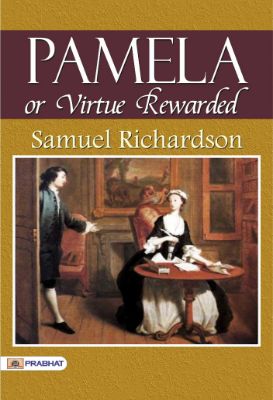
Pamela, or Virtue Rewarded by Samuel Richardson
“This novel (published 1740) created an epoch in the history of English fiction, and, with its successors, exerted a wide influence upon Continental literature. It is appropriately included in a series which is designed to form a group of studies of English life by the masters of English fiction. For it marked the transition from the novel of adventure to the novel of character—from the narration of entertaining events to the study of men and of manners, of motives and of sentiments. In it the romantic interest of the story (which is of the slightest) is subordinated to the moral interest in the conduct of its characters in the various situations in which they are placed. Upon this aspect of the “drama of human life” Richardson cast a most observant, if not always a penetrating glance. His works are an almost microscopically detailed picture of English domestic life in the early part of the eighteenth century.” -Preface

Pamela, Volume II by Samuel Richardson
First published in the year 1740, the present epistolary novel ‘Pamela, Volume II’ was written by English writer Samuel Richardson. It tells the story of a beautiful 15-year-old maidservant named Pamela Andrews, whose country landowner master, Mr. B, makes unwanted advances towards her after the death of his mother. After Mr. B attempts unsuccessfully to seduce and rape her, he eventually rewards her virtue when he sincerely proposes an equitable marriage to her. In the novel’s second part, Pamela marries Mr. B and tries to acclimatize to upper-class society.
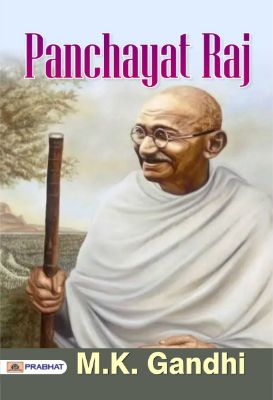
PANCHAYAT RAJ by M. K. Gandhi
Villagers have suffered long from neglect by those who have had the benefit of education. They have chosen the city life. The village movement is an attempt to establish healthy contact with the villages by inducing those who are fired with the spirit of service to settle in them and find self-expression in the service of villagers.
Pandora by Henry James
In 1884, Henry James published a Pandora beautiful masterpiece to literary community.
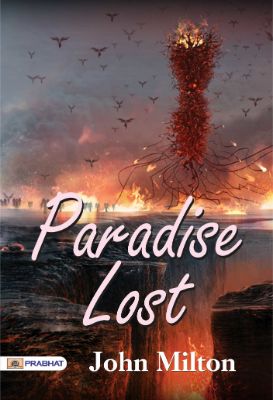
Paradise Lost by John Milton
Paradise Lost’ is an epic poem in blank verse by the 17th-century English poet John Milton. It was first published in the year 1667. The poem concerns the Biblical story of the Fall of Man: the temptation of Adam and Eve by the fallen angel Satan and their expulsion from the Garden of Eden. Milton’s purpose, stated in Book I, is to “justify the ways of God to men”.
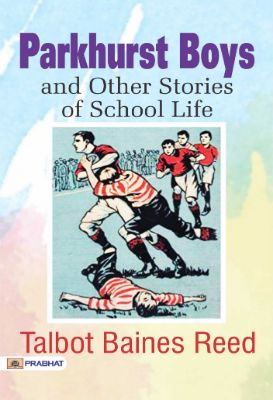
Parkhurst Boys, and Other Stories of School Life by Talbot Baines Reed
It was a proud moment in my existence when Wright, captain of our football club, came up to me in school one Friday and said, “Adams, your name is down to play in the match against Craven to-morrow.”
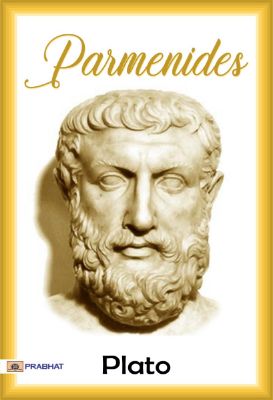
Parmenides by Plato
Parmenides of Elea was a pre-Socratic Greek philosopher from Elea in Magna Graecia. He is thought to have been in his prime around 475 BC.
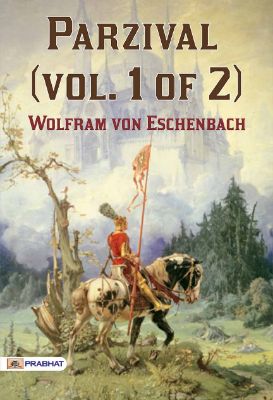
Parzival (vol. 1 of 2) by Wolfram von Eschenbach
Wolfram von Eschenbach was a German knight and poet, regarded as one of the greatest epic poets of medieval German literature. As a Minnesinger, he also wrote lyric poetry.
Wolfram is best known today for his Parzival, sometimes regarded as the greatest of all German epics from that time. It is the first extant work in German to have as its subject the Holy Grail. In the poem, Wolfram’s narrator expresses disdain for Chrétien’s version of the tale, and states that his source was a poet from Provence called Kyot.

Pascal’s Pensées by Blaise Pascal
Pascal’s Pensées’ is a collection of fragments on theology and philosophy written by 17th-century philosopher and mathematician Blaise Pascal. Pascal’s religious conversion led him into a life of asceticism and the Pensées was in many ways his life’s work. This book represented Pascal’s defense of the Christian religion. The concept of “Pascal’s Wager” stems from a portion of this work.

Patanjali Yoga Sutra by Swami Vivekananda
whole theory of religion rests, for the Yogis. It seems the consensus of opinion of the great minds of the world, and it has been nearly demonstrated by researchers into physical nature, that we are the outcome and manifestation of an absolute condition, back of our present relative condition, and are going forward, to return again to that absolute. This being granted, the question is, which is better, the absolute or this state? There are not wanting people who think that this manifested state is the highest state of man. Thinkers of great calibre are of the opinion that we are manifested specimens of undifferentiated being, and this differentiated state is higher than the absolute. Because in the absolute there cannot be any quality they imagine that it must be insensate, dull, and lifeless, that only this life can be enjoyed, and therefore we must cling to it. First of all we want to inquire into other solutions of life. There was an old solution that man after death remained the same, that all his good sides, minus his evil sides, remained forever.” -An excerpt
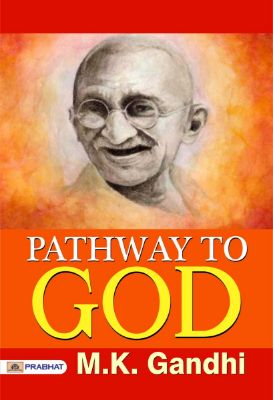
Pathway to God by M. K. Gandhi
The extracts from Gandhiji’s speeches and writings that Shri M. S. Deshpande has collected with such diligence and dedication will help young people in India and elsewhere to find the ballast that will give steadiness to their lives and the purpose which will make it a Pathway to God. I have pleasure in commending this Voice of Gandhiji to the youth of India.
Patty’s Fortune by Carolyn Wells
The story of 20 years old Patty leading a life where everyone, in their own way, is trying to direct her as to what she should have for her future, is relatable for most of the girls, especially in the third world countries despite the fact that the setting of the story is much Victorian Europe. As Patty lives through a dilemma to choose between Bill Farnsworth and Philip Van Reypan, and loses Mrs. Reypen in the meantime, read the novella to have a quick yet fabulous read.