
Premium Books
Showing 1701–1750 of 3787 results


Pembroke by Mary E. Wilkins Freeman
Pembroke is a novel written by Mary E. Wilkins Freeman. It is set in the small town of Pembroke, Massachusetts in the 1830s and 40s. The novel tells the story of a romance gone awry and the dramatic events that follow, which entertain the residents of the small town for years after.
Penelope’s Progress by Kate Douglas Smith Wiggin
“We have traveled together before, Salemina, Francesca, and I, and we know the very worst there is to know about one another. After this point has been reached, it is as if a triangular marriage had taken place, and, with the honeymoon comfortably over, we slip along in thoroughly friendly fashion. I use no warmer word than “friendly” because, in the first place, the highest tides of feeling do not visit the coast of triangular alliances; and because, in the second place, “friendly” is a word capable of putting to the blush many a more passionate and endearing one.” -an excerpt
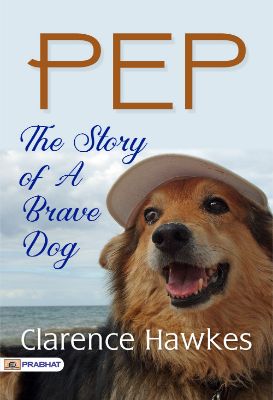
Pep: The Story of a Brave Dog by Clarence Hawkes
Yet this is a scientific fact. The wolf, with all his meanness and skulking cunning, is the progenitor of man’s friend, the dog.

Perfect Behavior A Guide for Ladies and Gentlemen in all Social Crises by Donald Ogden Stewart
The first thing to do on arriving at a symphony concert is to express the wish that the orchestra will play Beethoven’s Fifth. If your companion then says “Fifth what?” you are safe with him for the rest of the evening; no metal can touch you. If, however, he says “So do I”–this is a danger signal and he may require careful handling.
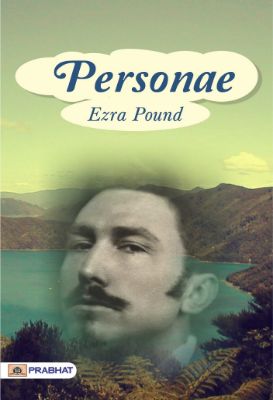
Personae by Ezra Pound
First published in the year 1909, the present book titled ‘Personae’ is remarkable collection of poems of one of the most acclaimed poets of 20th century American literary scene – Ezra Pound.
Personal Memoirs of P. H. Sheridan, General, United States Army — Complete by General Philip Henry Sheridan
The present book ‘Personal Memoirs of P. H. Sheridan, General, United States Army — Complete’ is a collection of General Philip Henry Sheridan’s memoirs. This volume was first published in the year 1888.
Personal Memoirs of U. S. Grant, Complete by Ulysses S. Grant
The Personal Memoirs of Ulysses S. Grant’ is an autobiography by Ulysses S. Grant, the 18th President of the United States. It largely focuses on his military career during the Mexican–American War and the American Civil War. When it was written in 1885, Grant was dying of cancer; therefore, the two-volume set was published by famous novelist Mark Twain shortly after Grant’s death.
Personal Recollections of Joan of Arc — Volume 1 by Mark Twain
The present novel ‘Personal Recollections of Joan of Arc — Volume 1’ was written by the famous English author Mark Twain. This novel recounts the life of Joan of Arc. It was first published in the year 1896.
Persuasion by Jane Austen
First published in the year 1817, the present book ‘Persuasion’ by celebrated English novelist Jane Austen concerns Anne Elliot, a young Englishwoman of 27 years, whose family is moving to lower their expenses and get out of debt, at the same time as the wars come to an end, putting sailors on shore. They rent their home to an Admiral and his wife. The wife’s brother, Navy Captain Frederick Wentworth, had been engaged to Anne in 1806, and now they meet again, both single and unattached, after no contact in more than seven years. This sets the scene for many humorous encounters as well as a second, well-considered chance at love and marriage for Anne Elliot in her second “bloom”.
Peru as It Is, Volume I by Archibald Smith
In this refined age and country, to make a graceful appearance as an author requires endowments to which the writer of the following pages has no pretension: neither would he have intruded himself on the public notice, had he not thought it a duty incumbent on every one who travels, to give his own country the benefit of his observation and experience. He will venture to assert, that he has had ample means of making himself acquainted with his subject, and that he has treated it with candour and impartiality.
Peru as It Is, Volume II by Archibald Smith
Cerro Pasco is thus situated at nearly equal distances, or about twenty leagues, from Tarma on the south and Huanaco on the north, both after their kind fertile and productive. It has the fine lake of Chinchaycocha, near old Pasco on its south; and, on the north, the outskirts of the town almost reach to a funnel-mouthed gullet which leads with a rapid descent to the village of Quinoa, three leagues distant. Its eastern and western aspects are bounded in the view by the respective ridges of the eastern and western Cordillera; and the intervening spaces between this bed of Peruvian treasure, and the stupendous barriers presented by these commanding summits, forming a grand amphitheatre, are enlivened throughout much of their extent by the innumerable herds of sheep and folds of cattle that roam and flourish upon them. Here and there are seen groups of the tame llama and shy vicuña; whilst the whole landscape is variegated with lakes, rivulets, and marshes, whose surfaces are ever rippled by the fluttering flocks of geese, ducks, snipes, plovers, water-hens, herons, yanavicas, flamingos, &c. which at their proper and appropriate seasons animate and adorn this wide expanse. Nor should we omit to mention that far towards the west, and skirting the limits of the great plains, are seen from the surrounding heights strange fragments of rock, as in the neighbourhood of Huallay, that assume to the distant eye the appearance of dark pine-trees rising under the shade of the adjacent mountains.
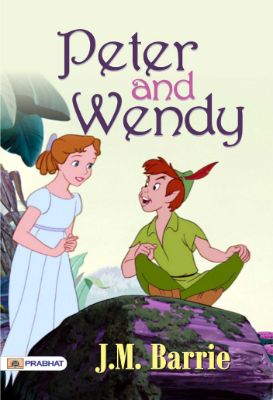
Peter and Wendy by J. M. Barrie
Peter and Wendy’ is a fantasy novel by J. M. Barrie. It was originally written as a play and then published in the form of a novel in the year 1911. It tells the story of Peter Pan, a mischievous yet innocent little boy who can fly, and has many adventures on the island of Neverland that is inhabited by mermaids, fairies, Native Americans and pirates. Peter has many stories involving Wendy Darling and her two brothers, his fairy Tinker Bell, the Lost Boys, and the pirate Captain Hook.
Peter by E.F. Benson
DescriptionEdward Frederic Benson was an English novelist, biographer, memoirist, archaeologist and short story writer.
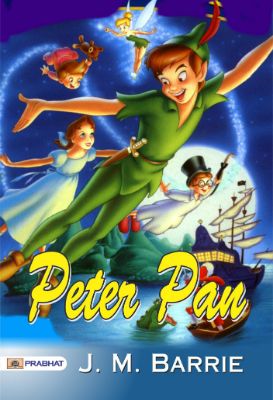
Peter Pan by J. M. Barrie
All children, except one, grow up. They soon know that they will grow up, and the way Wendy knew was this. One day when she was two years old she was playing in a garden, and she plucked another flower and ran with it to her mother. I suppose she must have looked rather delightful, for Mrs. Darling put her hand to her heart and cried, “Oh, why can’t you remain like this for ever!” This was all that passed between them on the subject, but henceforth Wendy knew that she must grow up. You always know after you are two. Two is the beginning of the end.
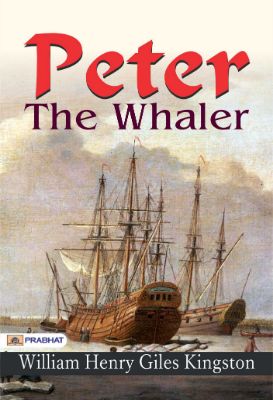
Peter the Whaler by William Henry Giles Kingston
“Peter,” said my father, with a stern look, though the tone of his voice had more of sorrow in it than anger, “this conduct, if you persist in it, will bring ruin on you, and grief and shame on my head and to your mother’s heart. Look there, boy, and answer me: Are not those presumptive evidences of your guilt? Where did they come from?” He pointed, as he spoke, to several head of game, pheasants, partridges, and hares, which lay on the ground, while I stood before him leaning on my gun, my eyes not daring to meet his, which I knew were fixed on me. My two dogs crouched at my feet, looking as if they also were culprits and fully comprehended the tenor of his words.
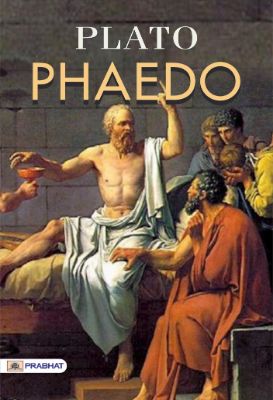
Phaedo by Plato
Phaedo, also known to ancient readers as On The Soul, is one of the best-known dialogues of Plato’s middle period, along with the Republic and the Symposium.
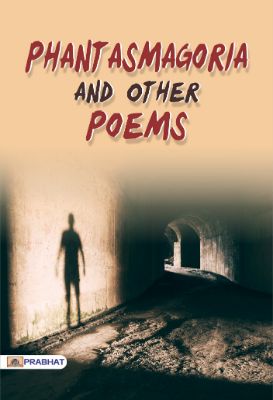
Phantasmagoria and Other Poems by Lewis Carroll
“The history of this little sparkle from the pen of Lewis Carroll may soon be told. It was in October of the year 1884 that he came on a visit to a certain vicarage in Derbyshire, where he had promised, on the score of friendship, to do what was for him a most unusual favour—to give a lecture before a public audience. The writer well remembers his nervous, highly-strung manner as he stood before the little room full of simple people, few of whom had any idea of the world-wide reputation of that shy, slight figure before them. When the lecture was over, he handed the manuscript to me, saying: ‘Do what you like with it.’ The one for whose sake he did this kindness was not long after called ‘Into the Silent Land.’” -Preface by William H. Draper, November 1907

Philebus by Plato
The Philebus, is a Socratic dialogue written in the 4th century BC by Plato. Besides Socrates the other interlocutors are Philebus and Protarchus. Philebus, who advocates the life of physical pleasure, hardly participates, and his position is instead defended by Protarchus, who learnt argumentation from Sophists.
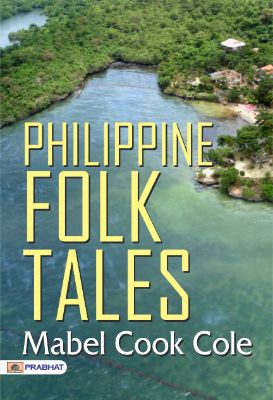
Philippine Folk Tales by Mabel Cook Cole
From time to time since the American occupation of the Islands, Philippine folk-tales have appeared in scientific publications, but never, so far as the writer is aware, has there been an attempt to offer to the general public a comprehensive popular collection of this material. It is my earnest hope that this collection of tales will give those who are interested opportunity to learn something of the magic, superstitions, and weird customs of the Filipinos, and to feel the charm of their wonder-world as it is pictured by these dark-skinned inhabitants of our Island possessions.
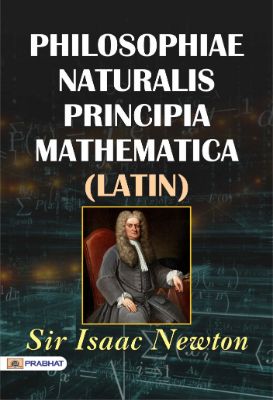
Philosophiae Naturalis Principia Mathematica by Sir Isaac Newton
Philosophiae Naturalis Principia Mathematica (Latin)’ by Sir Isaac Newton was first published in the year 1687 in Latin. It is a work in three books. It is regarded as one of the most important works in the history of science. It states Newton’s laws of motion, forming the foundation of classical mechanics, Newton’s law of universal gravitation, and a derivation of Kepler’s laws of planetary motion.
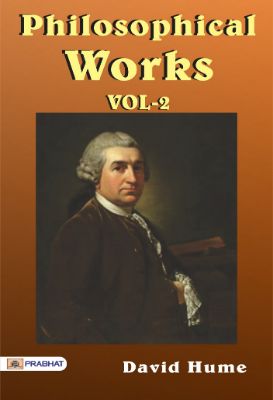
Philosophical Works (Vol-II) by David Hume
David Hume, The Philosophical Works of David Hume. Including all the Essays, and exhibiting the more important Alterations and Corrections in the successive Editions by the Author.
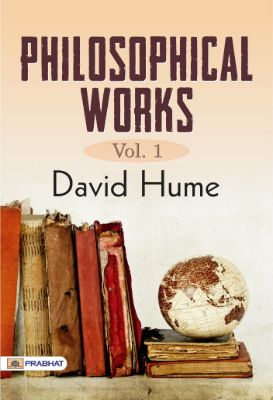
Philosophical Works, v. 1 (of 4) by David Hume
Philosophical Works, v. 1 (of 4)’ is a collection of all the philosophical works by David Hume, including all the essays and letters exhibiting the alterations and corrections made in the successive editions published.
Phroso: A Romance by Anthony Hope
“Quot homines tot sententiæ;’ so many men, so many fancies. My fancy was for an island. Perhaps boyhood’s glamour hung yet round sea-girt rocks, and ‘faery lands forlorn,’ still beckoned me; perhaps I felt that London was too full, the Highlands rather fuller, the Swiss mountains most insufferably crowded of them all. Money can buy company, and it can buy retirement. The latter service I asked now of the moderate wealth with which my poor cousin Tom’s death had endowed me. Everybody was good enough to suppose that I rejoiced at Tom’s death, whereas I was particularly sorry for it, and was not consoled even by the prospect of the island.” -an excerpt
Physics by Thomas D. Cope, Charles H. Smith, Willis E. Tower, and Charles M. Turton
In the preparation of this text, the pupil, his experience, needs, and interests have been constantly kept in mind. The order of topics, illustrations, and problems have been selected with the purpose of leading the pupil into a clear understanding of the physical phenomena continually taking place about him.
The recommendations and conclusions reached by the “New Movement in the Teaching of Physics” have been incorporated into the book as a whole. These conclusions indicate that the most efficient teaching in physics involves a departure from the quantitative, mathematical methods of presentation that were in general use a dozen or more years ago, toward a method better adapted to the capabilities, interests, and requirements of the young people in our physics classes.
Piccadilly Jim by P G Woodhouse
First published in the year 1917, the present novel ‘Piccadilly Jim’ by P G Wodehouse features Ogden Ford and his mother Nesta. Nesta has remarried, to the hen-pecked, baseball-loving millionaire Mr. Peter Pett, and Ogden remains spoilt and obnoxious.
Pictures from English History: A Fireside Amusement by Anonymous
While there are so many pleasant ways of instructing the youth of the present day, it may perhaps appear presumption to add this work to the number. But those who have watched the expansion of a child’s mind may have seen, that the idea of improvement is too frequently combined with that of a task; and where instruction can be conveyed in a lighter form, it is more pleasantly and permanently impressed.

Pierrot, Dog of Belgium by Walter A. Dyer
The charming story of Pierrot, a Belgian cart-dog who was one of the hundreds of dogs recruited to haul small supply carts and machine-guns for the Belgian Army’s `Carabiniers’ on the Belgian Front in the First World War .

Pioneers of Science by Oliver Lodge
This book takes its origin in a course of lectures on the history and progress of Astronomy arranged for Sir Oliver Lodge in the year 1887. The first part of this book is devoted to the biographies and discoveries of well known astronomers like Copernicus, Brahe, Kepler, Galileo and Newton. In the second part, the biographies take a back seat, while scientific discoveries are discussed more extensively, like the discovery of Asteroids and Neptune, a treatise on the tides and others.

Pirates of Venus by Edgar Rice Burroughs
Pirates of Venus is a science fantasy novel by American writer Edgar Rice Burroughs, the first book in the Venus series, the last major series in Burroughs’s career.
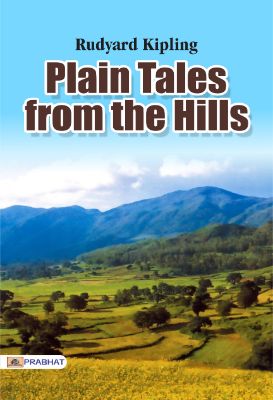
Plain Tales from the Hills by Rudyard Kipling
First published in the year 1888, the present book ‘Plain Tales from the Hills’ is the first collection of short stories by the famous author Rudyard Kipling. Most of the stories collected in this volume are set in Shimla, India, which used to be the “summer capital of the British Raj” during the hot weather.
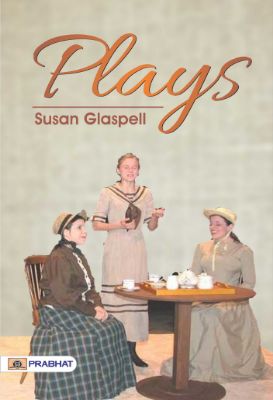
Plays by Susan Glaspell
First published in the year 1987, American Pulitzer Prize winner playwright Susan Glaspell’s present book ‘Plays’ is a compandium of four of her most famous plays : Trifles, The Outside, The Verge, and Inheritors.

Plays of Gods and Men by Lord Dunsany
Tharmia:
You know that my lineage is almost divine.
Arolind:
My father’s sword was so terrible that he had to hide it with a cloak.
Tharmia:
He probably did that because there were no jewels in the scabbard.
Arolind:
There were emeralds in it that outstared the sea.
* * * * * * * *
Tharmia:
Now I must leave you here and go down among the shops for I have not changed my hair since we came to Thek.
Ichtharion:
Have you not brought that from Barbul-el-Sharnak?

Plays of Near & Far by Lord Dunsany
Believing plays to be solely for the stage, I have never before allowed any of mine to be printed until they had first faced from a stage the judgment of an audience, to see if they were entitled to be called plays at all. A successful production also has been sometimes a moral support to me when some critic has said, as for instance of “A Night at an Inn,” that though it reads passably it could never act.
But in this book I have made an exception to this good rule (as it seems to me), and that exception is “The Flight of the Queen.” I know too little of managers and theatres to know what to do with it, and have a feeling that it will be long before it is ever acted, and am too fond of this play to leave it in obscurity. This beautiful story has been lying about the world for countless centuries, without ever having been dramatized. It is the story of a royal court, which I have merely adapted to the stage. The date that I have given is accurate; it happened in June; and happens every June; perhaps in some corner of the reader’s garden. It is the story of the bees.
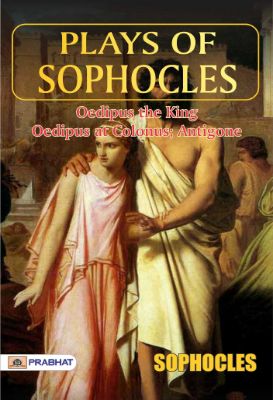
Plays of Sophocles: Oedipus the King; Oedipus at Colonus; Antigone by Sophocles
“To Laius, King of Thebes, an oracle foretold that the child born to him by his queen Jocasta would slay his father and wed his mother. So when in time a son was born the infant’s feet were riveted together and he was left to die on Mount Cithaeron. But a shepherd found the babe and tended him, and delivered him to another shepherd who took him to his master, the King of Corinth. Polybus being childless adopted the boy, who grew up believing that he was indeed the King’s son. Afterwards doubting his parentage he inquired of the Delphic god and heard himself the word declared before to Laius.” -Preface
Plexus by Henry Miller
Towards evening we encountered a broad-minded, warmhearted Southern woman who seemed to take to us immediately. It was a stunning place she had to rent, but far beyond our means. Mona, of course, was determined to have it; it was just the sort of place she had always dreamed of living in. The fact that the rent was twice what we had intended to pay didn’t disturb her. I was to leave everything to her—she would “manage” it. The truth is I wanted the place just as much as she did, but I had no illusions about “managing” the rent. I was convinced that if we took it we would be sunk.

Plutarch’s Lives, Volume 1 (of 4) by Plutarch
“From several passages in Plutarch’s writings we gather that he studied under a master named Ammonius, at Athens. For instance, at the end of his Life of Themistokles, he mentions a descendant of that great man who was his fellow-student at the house of Ammonius the philosopher. Again, he tells us that once Ammonius, observing at his afternoon lecture that some of his class had indulged too freely in the pleasures of the table, ordered his own son to be flogged, “because,” he said, “the young gentleman cannot eat his dinner without pickles,” casting his eye at the same time upon the other offenders so as to make them sensible that the reproof applied to them also.” -an excerpt

Poems by Currer, Ellis, and Acton Bell by Charlotte Brontë
First published in the year 1846, the present book ‘Poems by Currer, Ellis, and Acton Bell’ is a collection of poems of
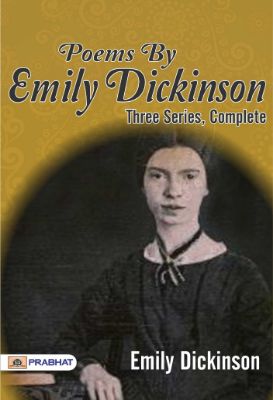
Poems by Emily Dickinson, Three Series, Complete by Emily Dickinson
Famous British writer and poet Emily Dickinson’s poetry volume titled ‘Poems by Emily Dickinson, Three Series, Complete’ was first published in the year 1998. “This selection from her poems is published to meet the desire of her personal friends, and especially of her surviving sister. It is believed that the thoughtful reader will find in these pages a quality more suggestive of the poetry of William Blake than of anything to be elsewhere found,—flashes of wholly original and profound insight into nature and life; words and phrases exhibiting an extraordinary vividness of descriptive and imaginative power, yet often set in a seemingly whimsical or even rugged frame.” -Preface
Poems by Oscar Wilde
HÉLAS!
To drift with every passion till my soul
Is a stringed lute on which all winds can play,
Is it for this that I have given away
Mine ancient wisdom, and austere control?
Methinks my life is a twice-written scroll
Scrawled over on some boyish holiday
With idle songs for pipe and virelay,
Which do but mar the secret of the whole.
Surely there was a time I might have trod
The sunlit heights, and from life’s dissonance
Struck one clear chord to reach the ears of God:
Is that time dead? lo! with a little rod
I did but touch the honey of romance—
And must I lose a soul’s inheritance?
—from the Book
Poems by Rainer Maria Rilke
The present book is a collection of poems of a celebrated modern Bohemian-Australian poet René Karl Wilhelm Johann Josef Maria Rilke, better known as Rainer Maria Rilke.
Poems by Victor Hugo
Colonel Hugo had become General, and there, besides being governor over three provinces, was Lord High Steward at King Joseph’s court, where his eldest son Abel was installed as page. The other two were educated for similar posts among hostile young Spaniards under stern priestly tutors in the Nobles’ College at Madrid, a palace become a monastery. Upon the English advance to free Spain of the invaders, the general and Abel remained at bay, whilst the mother and children hastened to Paris.

Poems of American Patriotism by Brander Matthews
The present book ‘Poems of American Patriotism’ is a collection of poetry based on the theme of patriotism. This collection was first published in the year 1882. These poems were written nd compiled by Brander Matthews.
Points of View by Agnes Repplier
More than half a dozen years have passed since Mr. Andrew Lang, startled for once out of his customary light-heartedness, asked himself, and his readers, and the ghost of Charles Dickens—all three powerless to answer—whether the dismal seriousness of the present day was going to last forever; or whether, when the great wave of earnestness had rippled over our heads, we would pluck up heart to be merry and, if needs be, foolish once again. Not that mirth and folly are in any degree synonymous, as of old; for the merry fool, too scarce, alas, even in the times when Jacke of Dover hunted for him in the highways, has since then grown to be rarer than a phœnix. He has carried his cap and bells, and jests and laughter, elsewhere, and has left us to the2 mercies of the serious fool, who is by no means so seductive a companion. If the Cocquecigruës are in possession of the land, and if they are tenants exceedingly hard to evict, it is because of the connivance and encouragement they receive from those to whom we innocently turn for help: from the poets, and novelists, and men of letters, whose plain duty it is to brighten and make glad our days.
“It is obvious,” sighs Mr. Birrell dejectedly, “that many people appear to like a drab-colored world, hung around with dusky shreds of philosophy;” but it is more obvious still that, whether they like it or not, the drapings grow a trifle dingier every year, and that no one seems to have the courage to tack up something gay. What is much worse, even those bits of wanton color which have rested generations of weary eyes are being rapidly obscured by sombre and intricate scroll-work, warranted to oppress and fatigue. The great masterpieces of humor, which have kept men young by laughter, are being tried in the courts of an orthodox morality, and found lamentably wanting; or else, by way of giving them another chance, they are being3 subjected to the peine forte et dure of modern analysis, and are revealing hideous and melancholy meanings in the process. I have always believed that Hudibras owes its chilly treatment at the hands of critics—with the single and most genial exception of Sainte-Beuve—to the absolute impossibility of twisting it into something serious. Strive as we may, we cannot put a new construction on those vigorous old jokes, and to be simply and barefacedly amusing is no longer considered a sufficient raison d’être. It is the most significant token of our ever-increasing “sense of moral responsibility in literature” that we should be always trying to graft our own conscientious purposes upon those authors who, happily for themselves, lived and died before virtue, colliding desperately with cakes and ale, had imposed such depressing obligations.
Poise: How To Attain It by Starke, D.
Distinction is only efficacious and only possesses its proper force when it is the outcome of the qualities we have been endeavoring to inculcate in this book.—from book
Poker Jim, Gentleman and other Tales and Sketches by Frank G. Lydston
It requires some assurance to step out of the conventional in story writing. Especially does it require courage on the part of one whose ideals of what a story should be are far beyond what his productions can ever attain. But the physician, who gets closer to things human than others do, may perhaps be forgiven unorthodox subjects and methods of expression. Surely, also, he will be excused for drawing upon his own field of work for his subject matter.
I have this to say of my material characters—they are all taken from life. Even Tommy the Outcast was the genuine article of hero. He crept into my life through a hole in my cellar window one furiously stormy night. He went out of it via a dose of poison, meant for his hereditary foes—the rats. Talk? No, he did not talk, but I’m sure he used to think—hard and often—and I fancy no one will upbraid me for trying in my feeble way to readviii his mind and act as his proxy in the expression of the things he thought, and in telling the sad story of his life.
Political Ideals by Bertrand Russell
Written during the upheavel of WW1, famous philosopher Bertrand Russell’s book on political philosophy, ‘Political Ideals’ was first published in the year 1917.

Politics: A Treatise on Government by Aristotle
“Aristotle’s Politics, then, is a handbook for the legislator, the expert who is to be called in when a state wants help. We have called him a state doctor. It is one of the most marked characteristics of Greek political theory that Plato and Aristotle think of the statesman as one who has knowledge of what ought to be done, and can help those who call him in to prescribe for them, rather than one who has power to control the forces of society. The desire of society for the statesman’s advice is taken for granted, Plato in the Republic says that a good constitution is only possible when the ruler does not want to rule; where men contend for power, where they have not learnt to distinguish between the art of getting hold of the helm of state and the art of steering, which alone is statesmanship, true politics is impossible.” -Introduction by A. D. LINDSAY
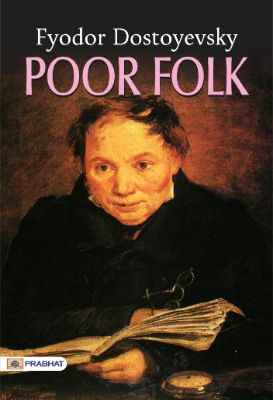
POOR FOLK by Fyodor Dostoyevsky
Poor Folk, sometimes translated as Poor People, is the first novel by Fyodor Dostoyevsky, written over the span of nine months between 1844 and 1845.