
Premium Books
Showing 1401–1450 of 3787 results


Maggie: A Girl of the Streets by Stephen Crane
A very little boy stood upon a heap of gravel for the honor of Rum Alley. He was throwing stones at howling urchins from Devil’s Row who were circling madly about the heap and pelting at him.
His infantile countenance was livid with fury. His small body was writhing in the delivery of great, crimson oaths.
“Run, Jimmie, run! Dey’ll get yehs,” screamed a retreating Rum Alley child.
“Naw,” responded Jimmie with a valiant roar, “dese micks can’t make me run.”
Howls of renewed wrath went up from Devil’s Row throats. Tattered gamins on the right made a furious assault on the gravel heap. On their small, convulsed faces there shone the grins of true assassins. As they charged, they threw stones and cursed in shrill chorus.
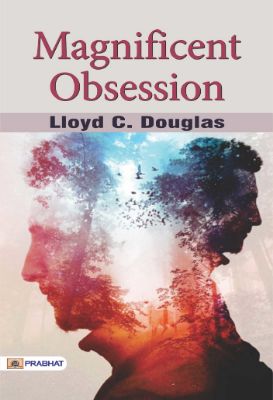
Magnificent Obsession by Lloyd C. Douglas
Lloyd C. Douglas’s 1929 novel ‘Magnificent Obsession’ is about Robert Merrick, who is resuscitated by a rescue crew after a boating accident. The crew is thus unable to save the life of Dr. Hudson, a physician renowned for his ability to help people, who was having a heart attack at the same time on the other side of the lake. Merrick then decides to devote his life to making up for the doctor’s, and becomes a physician himself.

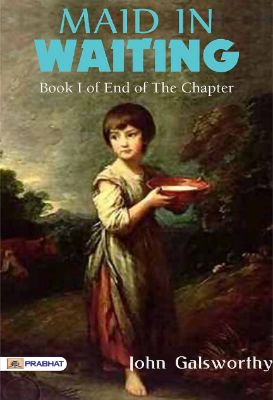
Maid in Waiting by John Galsworthy
An engaging novel by John Galsworthy, ‘Maid in Waiting’ was first published in 1931. “He lay in a room with mullion windows, an ascetic room in a sixteenth-century house, close to the Cathedral, whose scent of age was tempered but imperfectly by the September air coming in. Some zinnias in an old vase on the window-sill made the only splash of colour, and it was noticed by the nurse that his eyes scarcely left it, except to dose from time to time. About six o’clock they informed him that all the family of his long-dead elder brother had arrived.” -an excerpt
Maid Marian by Thomas Love Peacock
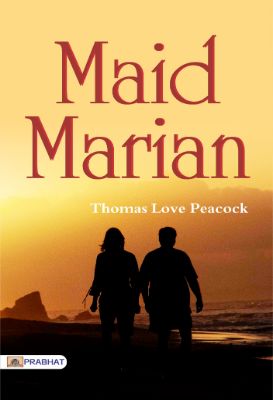
First published in the year 1822, the present historical fiction novel ‘Maid Marian’ was written by one of the Romantic era novelists Thomas Love Peacock. Although he had written written all but three chapters of the novel by 1818, Peacock was recruited to the East India Company in 1819, where his official duties delayed the completion and publication of the novella until 1822.

Main Street by Sinclair Lewis
“ON a hill by the Mississippi where Chippewas camped two generations ago, a girl stood in relief against the cornflower blue of Northern sky. She saw no Indians now; she saw flour-mills and the blinking windows of skyscrapers in Minneapolis and St. Paul. Nor was she thinking of squaws and portages, and the Yankee fur-traders whose shadows were all about her. She was meditating upon walnut fudge, the plays of Brieux, the reasons why heels run over, and the fact that the chemistry instructor had stared at the new coiffure which concealed her ears.” -an excerpt
Major Barbara by Bernard Shaw
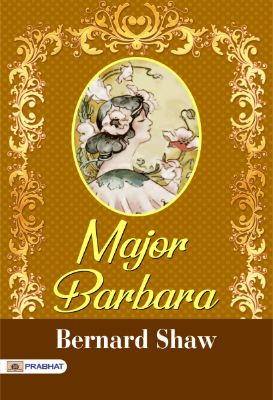
It is after dinner on a January night, in the library in Lady Britomart Undershaft’s house in Wilton Crescent. A large and comfortable settee is in the middle of the room, upholstered in dark leather. A person sitting on it [it is vacant at present] would have, on his right, Lady Britomart’s writing table, with the lady herself busy at it; a smaller writing table behind him on his left; the door behind him on Lady Britomart’s side; and a window with a window seat directly on his left. Near the window is an armchair.

Makers of Electricity by Brother Potamian and James J. Walsh
“This volume represents an effort in the direction of what may be called the biographical history of electricity. The controlling idea in its preparation was to provide brief yet reasonably complete sketches of the lives of the great pioneer workers in electricity, the ground-breaking investigators who went distinctly beyond the bounds of what was known before their time, not merely to add a fringe of information to previous knowledge, but to make it easy for succeeding generations to reach conclusions in electrical science that would have been quite impossible until their revealing work was done. The lives of these men are not only interesting as scientific history, but especially as human documents, showing the sort of men who are likely to make great advances in science and, above all, demonstrating what the outlook of such original thinkers was on all the great problems of the world around us.” -Preface

Making Money by Owen Johnson
The way to get more money is to learn how to attract money to you. In his book entitled “Making Money
” serial entrepreneur and author Omar Johnson shows you how to utilize the laws of the universe to attract money into your life.


Man a Machine by Julien Offray de La Mettrie
The French text presented in this volume is taken from that of a Leyden edition of 1748, in other words, from that of an edition published in the year and in the place of issue of the first edition. The title page of this edition is reproduced in the present volume. The original was evidently the work of a Dutch compositor unschooled in the French language, and is full of imperfections, inconsistencies, and grammatical blunders. By the direction of the publishers these obviously typographical blunders have been corrected by M. Lucien Arréat of Paris.
Man and Superman: A Comedy and a Philosophy by Bernard Shaw
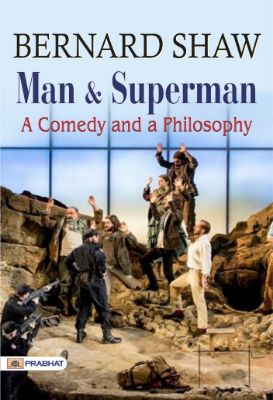
A satirical comedy by the renowned playwright George Bernard Shaw, ‘Man and Superman: A Comedy and a Philosophy’ was written in the year 1903. It is an unique play written by Shaw first time on Don Juan theme.

Man’s Place in Nature, and Other Essays by Thomas Henry Huxley
Let him be thought of as a devotee of truth, and a student of the more materialistic side of things, but never let him be thought of as a philosophical materialist or as one who abounded in cheap negations.—From this book
Man’s Place in the Universe by Alfred Russel Wallace
“This work has been written in consequence of the[ v] great interest excited by my article, under the same title, which appeared simultaneously in The Fortnightly Review and the New York Independent. Two friends who read the manuscript were of opinion that a volume, in which the evidence could be given much more fully, would be desirable, and the result of the publication of the article confirmed their view.” -Preface

Manifesto of the Communist Party by Karl Marx and Friedrich Engels
The Communist Manifesto is an 1848 political pamphlet by German philosophers Karl Marx and Friedrich Engels
MANSFIELD PARK by Jane Austen
Mansfield Park’ is 19th century’s one of the best and controversial novelist Jane Austen’s third published novel. It got published in 1814. The novel tells the story of Fanny Price starting when her overburdened family sends her at age 10 to live in the household of her wealthy aunt and uncle, through to her marriage.


Marching Men by Sherwood Anderson
Marching Men book;best book of Sherwood Anderson; FICTION / General book;Classics Book
Mardi: and a Voyage Thither by Herman Melville
Not long ago, having published two narratives of voyages in the Pacific, which, in many quarters, were received with incredulity, the thought occurred to me, of indeed writing a romance of Polynesian adventure, and publishing it as such; to see whether, the fiction might not, possibly, be received for a verity: in some degree the reverse of my previous experience.
This thought was the germ of others, which have resulted in Mardi. New York, January, 1849.

Marie And Other Women by Lajos Biró
The hotel was recommended by my friends, it was a kind of modest little hotel – maison meublée – on Rue Victor Massé, not far from the boulevard and very close to all the mansions of Montmartre. When my car stopped in front of me, a suitman in brown cotton blues took down my suitcase. At the gate was greeted by a handsome, laughing, fat gentleman: monsieur Bodouin, the farmer, the hotel owner. He knew my income, he spoke my name well, my friends also wrote which room I wanted, Mr. Bodouin treated me kindly, guided me to the bureau, introduced him to his wife, showed her ten-year-old daughter, then took me by the arm and took me up to the first floor.
I was delighted with the room, staring respectfully at the velvet ceiling of the bed, and the fireplace was downright enchanting, because then I had no idea how much more than such an romantic room decoration was worth an ordinary, banal but zealous iron stove. And Mr Bodouin said more and more:
– Marie brings things up… Marie keeps the room tidy… Marie takes care of breakfast…

Marjorie Dean, High School Freshman by Josephine Chase
“What am I going to do without you, Marjorie?” Mary Raymond’s blue eyes looked suspiciously misty as she solemnly regarded her chum.
“What am I going to do without you, you mean,” corrected Marjorie Dean, with a wistful smile. “Please, please don’t let’s talk of it. I simply can’t bear it.”
“One, two—only two more weeks now,” sighed Mary. “You’ll surely write to me, Marjorie?”
“Of course, silly girl,” returned Marjorie, patting her friend’s arm affectionately. “I’ll write at least once a week.”
Marmion: A Tale of Flodden Field in Six Cantos by Walter Scott
Marmion: A Tale of Flodden Field in Six Cantos’ is an epic poem by the renowned novelist Sir Walter Scott. It was first published in the year 1808. This epic poetry is about the Battle of Flodden that took place in 1513. It is considered to be his second major work and carries his genius at historical drama in a different form which is poetry instead of novel.
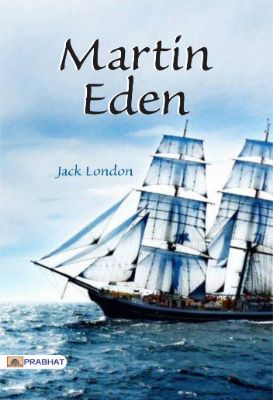
Martin Eden by Jack London
First published in the year 1909, the present novel ‘Martin Eden’ by famous novelist Jack London tells the story of a young proletarian autodidact struggling to become a writer. The central theme of Eden’s developing artistic sensibilities places the novel in the tradition of the Künstlerroman, in which is narrated the formation and development of an artist.
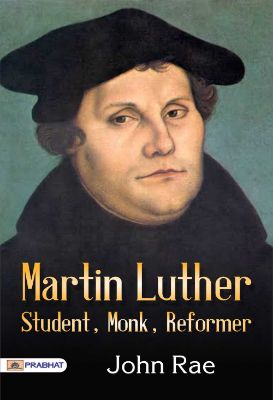
Martin Luther: Student, Monk, Reformer. by John Rae
A great epoch in the history of the German nation, powerfully affecting- and shaping the history c£ the civilised world, was, humanly speaking, created by Martin Luther.
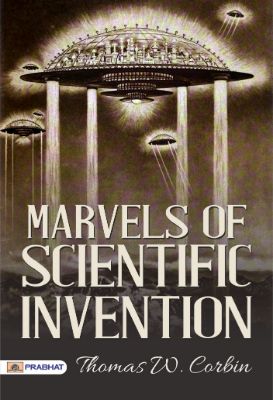
Marvels of Scientific Invention by Thomas W. Corbin
Most people are afraid of the word explosion and shudder with apprehension at the mention of dynamite. The latter, particularly, conjures up visions of anarchists, bombs, and all manner of wickedness. Yet the time seems to be coming when every farmer will regard explosives, of the general type known to the public as dynamite, as among his most trusty implements. It is so already in some places. In the United States explosives have been used for years, owing to the exertions of the Du Pont Powder Company, while Messrs Curtiss’ and Harvey, and Messrs Nobels, the great explosive manufacturers, are busy introducing them in Great Britain.
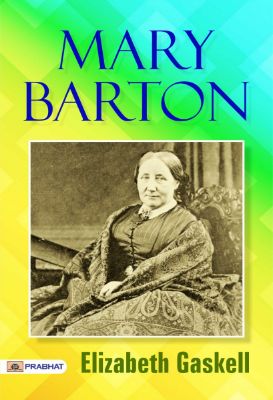
Mary Barton by Elizabeth Gaskell
Three years ago I became anxious (from circumstances that need not be more fully alluded to) to employ myself in writing a work of fiction. Living in Manchester, but with a deep relish and fond admiration for the country, my first thought was to find a frame-work for my story in some rural scene; and I had already made a little progress in a tale, the period of which was more than a century ago, and the place on the borders of Yorkshire, when I bethought me how deep might be the romance in the lives of some of those who elbowed me daily in the busy streets of the town in which I resided. I had always felt a deep sympathy with the care-worn men, who looked as if doomed to struggle through their lives in strange alternations between work and want; tossed to and fro by circumstances, apparently in even a greater degree than other men. A little manifestation of this sympathy, and a little attention to the expression of feelings on the part of some of the work-people with whom I was acquainted, had laid open to me the hearts of one or two of the more thoughtful among them; I saw that they were sore and irritable against the rich, the even tenor of whose seemingly happy lives appeared to increase the anguish caused by the lottery-like nature of their own. Whether the bitter complaints made by them, of the neglect which they experienced from the prosperous—especially from the masters whose fortunes they had helped to build up—were well-founded or no, it is not for me to judge. It is enough to say, that this belief of the injustice and unkindness which they endure from their fellow-creatures, taints what might be resignation to God’s will, and turns it to revenge in too many of the poor uneducated factory-workers of Manchester.
Mary Lee by Geoffrey Pomeroy Dennis
I was born at Tawborough on March the Second, 1848.
It seems to have been a great year in the history books. Fires of revolution sweeping over Europe; half the capitals aflame. From Prague to Palermo, from Paris to Pesth, the peoples rising against their rulers. Wars and rumours of wars; civil strife everywhere. Radicals in Prussia, revolutionaries in Italy, rebels in Austria, republicans in France. Even in old England we had our chartists.
All such troubles failed to touch Tawborough. What did she know of it all, or care if she knew? She was a good old peaceful English country town, with her own day’s work to do. The great world might go its way for all she cared—a wild and noisy way it seemed. She would go hers.
Mary Louise in the Country by L. Frank Baum
First published in the year 1916, the present book ‘Mary Louise in the Country’ by famous children’s books writer L. Frank Baum is one of his books in the Blue Bird books series. This book involves the struggle for Irish independence from Britain.
Mary Louise Stands the Test by Emma Speed Sampson
There were persons in Dorfield who said that Mary Louise’s life was too easy; that Fortune had smiled on her more than any one mortal had a right to expect. Why should beauty, charm, intelligence, and riches all belong to one girl? Why should she have an enormously wealthy grandfather whose one idea was to gratify her every wish, when any other girl, if she had any grandfather at all, was, perhaps, forced to support him or, at any rate, never got even a taste of the breast of the chicken because of the troublesome old gentleman’s predilection for that portion of the fowl?
Mary Minds Her Business by George Weston
So that you may understand my heroine, I am going to write a preface and tell you about her forebears.
In the latter part of the seventeenth century, there was a young blacksmith in our part of the country named Josiah Spencer. He had a quick eye, a quick hand and a quicker temper.
Because of his quick eye he married a girl named Mary McMillan. Because of his quick hand, he was never in need of employment. And because of his quick temper, he left the place of his birth one day and travelled west until he came to a ford which crossed the Quinebaug River.
Mary Wollstonecraft and the beginnings of female emancipation in France and England by Jacob Bouten
There is something particularly fascinating about the study of the literature and philosophy of the eighteenth century, with its gradual evolution of lofty social ideals which the Revolution failed to realise. When the altered circumstances brought promotion within my reach, it completely brought me under its sway, and ultimately came to determine my choice of a subject for an inaugural dissertation. It was while engaged upon tracing the influence of Rousseau’s hopebringing theories on his English disciple William Godwin, that the less boldly assertive, but all the more humanly attractive personality of the latter’s first wife, Mary Wollstonecraft, attracted my attention. My admiration of her husband’s intellect paled before my sympathy for her more modest, but at the same time more emotional character. Where the indebtedness of Godwin to Rousseau and the Encyclopedians has been manifested so clearly in different works, the absence of any direct attempt to prove and determine the extent of the relations between Mary Wollstonecraft and the early French philosophers struck me as an omission for which I found it difficult to account, and made me turn to a subject to which I am fully aware that a book of the size of the present little volume does but scant justice.
Mary, Mary by James Stephens
In 1911 four people came together to establish “The Irish Review.” They were David Houston, Thomas MacDonagh, James Stephens and the present writer. James Stephens mentioned that he could hand over some stuff for publication. The “stuff” was the book in hand. It came out as a serial in the second number with the title “Mary, A Story,” ran for a twelvemonth and did much to make the fortune (if a review that perished after a career of four years ever had its fortune made) of “The Irish Review.”
Mary: The Queen of the House of David and Mother of Jesus by A. Stewart Walsh
Mary: the queen of the house of David and the mother of Jesus – the story of her life is an unchanged, high-quality reprint of the original edition of 1889.
Massimilla Doni by Honoré de Balzac
With a few rare exceptions this brilliant nobility has fallen into utter ruin. Among the gondoliers who serve the English to whom history here reads the lesson of their future fate there are descendants of long dead Doges whose names are older than those of sovereigns. On some bridge, as you glide past it, if you are ever in Venice, you may admire some lovely girl in rags, a poor child belonging, perhaps, to one of the most famous patrician families. When a nation of kings has fallen so low, naturally some curious characters will be met with. It is not surprising that sparks should flash out among the ashes.
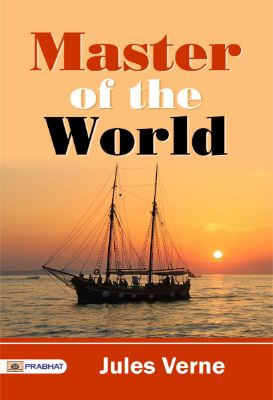
Master of the World by Jules Verne
If I speak of myself in this story, it is because I have been deeply involved in its startling events, events doubtless among the most extraordinary which this twentieth century will witness. Sometimes I even ask myself if all this has really happened, if its pictures dwell in truth in my memory, and not merely in my imagination. In my position as head inspector in the federal police department at Washington, urged on moreover by the desire, which has always been very strong in me, to investigate and understand everything which is mysterious, I naturally became much interested in these remarkable occurrences. And as I have been employed by the government in various important affairs and secret missions since I was a mere lad, it also happened very naturally that the head of my department placed In my charge this astonishing investigation, wherein I found myself wrestling with so many impenetrable mysteries.
In the remarkable passages of the recital, it is important that you should believe my word. For some of the facts I can bring no other testimony than my own. If you do not wish to believe me, so be it. I can scarce believe it all myself.
Masterpieces of Mystery Riddle Stories by Joseph Lewis French
A distinguished American writer of fiction said to me lately: “Did you ever think of the vital American way we live? We are always going after mental gymnastics.” Now the mystery story is mental gymnastics. By the time the reader has followed a chain of facts through he has exercised his mind,—given himself a mental breather. But the claims of the true mystery story do not end with the general reader. It is entitled to the consideration of the discriminating because it indubitably takes its own place as a gauge of mastery in the field of the short story.

Mathilda by Mary Shelley
First published in the year 1819, the present book ‘Mathilda’ by prominent romantic era author Mary Shelley deals with common Romantic themes of incest and suicide. It deals with a father’s incestuous love for his daughter.

MAUPASSANT ORIGANAL SHORT STORIES by GUY DE MAUPASSANT
A compendium of all short stories written by French writer Guy De Maupassant in thirteen volumes. He is remembered as a master of the short story form, and as a representative of the naturalist school of writers, who depicted human lives and destinies and social forces in disillusioned and often pessimistic terms.
Max by Katherine Cecil Thurston
This is “Max,” Katherine Cecil Thurston’s story of a young Russian princess, who, disguised as a boy, flees to the Montmartre Quarter of Paris the night before her arranged marriage. Like everything Thurston wrote, it’s a fine read and a great adventure. Born Katherine Cecil Madden in Cork, Ireland, Thurston was a contributing author of short stories for various British publications.

Maxims for Revolutionists by Bernard Shaw
Do not do unto others as you would that they should do unto you. Their tastes may not be the same.
Never resist temptation: prove all things: hold fast that which is good.
Do not love your neighbor as yourself. If you are on good terms with yourself it is an impertinence: if on bad, an injury.
The golden rule is that there are no golden rules.
McTeague: A Story of San Francisco by Frank Norris
It was Sunday, and, according to his custom on that day, McTeague took his dinner at two in the afternoon at the car conductors’ coffee-joint on Polk Street. He had a thick gray soup; heavy, underdone meat, very hot, on a cold plate; two kinds of vegetables; and a sort of suet pudding, full of strong butter and sugar. On his way back to his office, one block above, he stopped at Joe Frenna’s saloon and bought a pitcher of steam beer. It was his habit to leave the pitcher there on his way to dinner.