
Classic Books
Showing 3751–3800 of 4246 results
The Straw by Eugene O’Neill
The Straw is a three act play written by American playwright Eugene O’Neill in 1922. The play follows lead characters Eileen Carmody and Stephen Murray during their time at Hill Farm Sanatorium.
The Street of Seven Stars by Mary Roberts Rinehart
The present book ‘The Street of Seven Stars’ written by the famous English novelist Mary Roberts Rinehart was first published in the year 1914. This is one of her pre-World War I romance novels.
The Strollers by Frederic S Isham
Frederic Stewart Isham (March 29, 1865 – September 6, 1922) was an American novelist and playwright who wrote mainly historical romances and adventure novels.

The Student’s Elements of Geology by Sir Charles Lyell
Of what materials is the earth composed, and in what manner are these materials arranged? These are the first inquiries with which Geology is occupied, a science which derives its name from the Greek ge, the earth, and logos, a discourse. Previously to experience we might have imagined that investigations of this kind would relate exclusively to the mineral kingdom, and to the various rocks, soils, and metals, which occur upon the surface of the earth, or at various depths beneath it. But, in pursuing such researches, we soon find ourselves led on to consider the successive changes which have taken place in the former state of the earth’s surface and interior, and the causes which have given rise to these changes; and, what is still more singular and unexpected, we soon become engaged in researches into the history of the animate creation, or of the various tribes of animals and plants which have, at different periods of the past, inhabited the globe. -an excerpt
The Study of Astronomy by John Gabriel Stedman
It has long been a matter of surprize to those who are interested in the education of youth, that, among the numerous publications intended for their improvement, so few attempts have been made to facilitate the study of Astronomy.
Many excellent treatises have been written on this important and useful science; but if it be considered that they abound with technical terms, unintelligible to juvenile minds, it cannot be expected that they should derive any great advantage from the perusal of them.
The Subjection of Women by John Stuart Mill
The object of this Essay is to explain as clearly as I am able, the grounds of an opinion which I have held from the very earliest period when I had formed any opinions at all on social or political matters, and which, instead of being weakened or modified, has been constantly growing stronger by the progress of reflection and the experience of life: That the principle which regulates the existing social relations between the two sexes—the legal subordination of one sex to the other—is wrong in itself, and now one of the chief hindrances to human improvement; and that it ought to be replaced by a principle of perfect equality, admitting no power or privilege on the one side, nor disability on the other.
The Subterranean Brotherhood by Julian Hawthorne
In the cell over mine at night
A step goes to and fro
From barred door to iron wall—
From wall to door I hear it go,
Four paces, heavy and slow,
In the heart of the sleeping jail:
And the goad that drives, I know!
I never saw his face or heard him speak;
He may be Dutchman, Dago, Yankee, Greek;
But the language of that prisoned step
Too well I know!
Unknown brother of the remorseless bars,
Pent in your cage from earth and sky and stars,
The hunger for lost life that goads you so,
I also know!

The Success Machine by Henry Slesar
Mechanical brains are all the rage these days, so general products just had to have one. But the blamed thing almost put them out of business. Why? It had no tact. It insisted upon telling the truth! –An excerpt from the book

The Survivors of the Chancellor by Jules Verne
The book is about the last voyage of a British crusing ship, the Chancellor, advised from the point of view of one of its passengers (in the shape of a diary). At the establishing of its voyage, the Chancellor carried 28 people, however via the end, solely eleven human beings remain.
The Sweet Cheat Gone by Marcel Proust
Albertine disparue is the title of the sixth volume of Marcel Proust’s seven part novel, À la recherche du temps perdu. It is also known as La Fugitive and The Sweet Cheat Gone.
The Swiss Family Robinson by J.D. Wyss
The Swiss Family Robinson is a novel by Johann David Wyss, first published in 1812, about a Swiss family of immigrants whose ship en route to Port Jackson, Australia, goes off course and is shipwrecked in the East Indies.
The Sword of Antietam by Joseph A. Altsheler
Historical novel from the Civil War series. “The Sword of Antietam” tells a complete story,
The Sword of the King by Ronald MacDonald
It is matter of no small difficulty and hesitation for a woman to tell a story—in especial, her own story—from the beginning of it even to the end, and to hold, as it were, a straight course throughout. The perplexities, I say, are many, and among them not the least is found in these same words, beginning and end. For where truly his story has its inception, and what will be its ultimate word, might well puzzle the wisest man of this age, or any other.
The Sword of Welleran and Other Stories by Lord Dunsany
Where the great plain of Tarphet runs up, as the sea in estuaries, among the Cyresian mountains, there stood long since the city of Merimna well-nigh among the shadows of the crags. I have never seen a city in the world so beautiful as Merimna seemed to me when first I dreamed of it. It was a marvel of spires and figures of bronze, and marble fountains, and trophies of fabulous wars, and broad streets given over wholly to the Beautiful. Right through the centre of the city there went an avenue fifty strides in width, and along each side of it stood likenesses in bronze of the Kings of all the countries that the people of Merimna had ever known. At the end of that avenue was a colossal chariot with three bronze horses driven by the winged figure of Fame, and behind her in the chariot the huge form of Welleran, Merimna’s ancient hero, standing with extended sword. So urgent was the mien and attitude of Fame, and so swift the pose of the horses, that you had sworn that the chariot was instantly upon you, and that its dust already veiled the faces of the Kings. And in the city was a mighty hall wherein were stored the trophies of Merimna’s heroes. Sculptured it was and domed, the glory of the art of masons a long while dead, and on the summit of the dome the image of Rollory sat gazing across the Cyresian mountains towards the wide lands beyond, the lands that knew his sword. And beside Rollory, like an old nurse, the figure of Victory sat, hammering into a golden wreath of laurels for his head the crowns of fallen Kings.
The Symbolist Movement in Literature by Arthur Symons
The Symbolist Movement in Literature’ by Arthur Symons was a noted work that brought French Revolution to the attention of Anglo-American literary circles. Its first two editions were vital influences on W. B. Yeats and T. S. Eliot—a note that, for nothing else, would assure its historical place with the most important early Modernist criticism.

The Tailor of Gloucester by Beatrix Potter
In the time of swords and periwigs and full-skirted coats with flowered lappets—when gentlemen wore ruffles, and gold-laced waistcoats of paduasoy and taffeta—there lived a tailor in Gloucester.
He sat in the window of a little shop in Westgate Street, cross-legged on a table, from morning till dark.
All day long while the light lasted he sewed and snippeted, piecing out his satin and pompadour, and lutestring; stuffs had strange names, and were very expensive in the days of the Tailor of Gloucester.
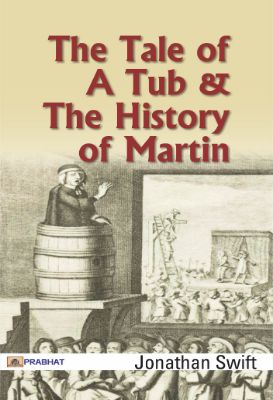
The Tale of a Tub and The History of Martin by Jonathan Swift
Jonathan Swift’s first major work, ‘A Tale of a Tub’ was arguably his most difficult satire and perhaps his most masterly. The tale is a prose parody divided into sections each delving into the morals and ethics of English. It was first published in the year 1704.
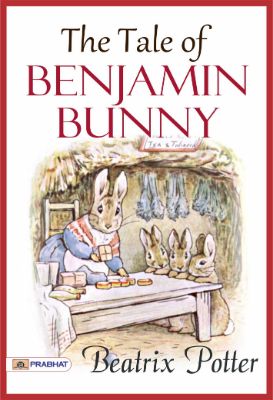
The Tale of Benjamin Bunny by Beatrix Potter
One morning a little rabbit sat on a bank.
He pricked his ears and listened to the trit-trot, trit-trot of a pony.
A gig was coming along the road; it was driven by Mr. McGregor, and beside him sat Mrs. McGregor in her best bonnet.

The Tale of Ginger and Pickles by Beatrix Potter
Once upon a time there was a village shop. The name over the window was “Ginger and Pickles.”
It was a little small shop just the right size for Dolls—Lucinda and Jane Doll-cook always bought their groceries at Ginger and Pickles.
The counter inside was a convenient height for rabbits. Ginger and Pickles sold red spotty pocket-handkerchiefs at a penny three farthings.
They also sold sugar, and snuff and galoshes.
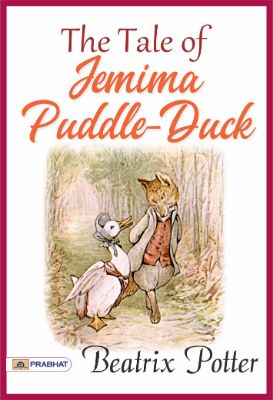
The Tale of Jemima Puddle-Duck by Beatrix Potter
Her sister-in-law, Mrs. Rebeccah Puddle-duck, was perfectly willing to leave the hatching to some one else—”I have not the patience to sit on a nest for twenty-eight days; and no more have you, Jemima. You would let them go cold; you know you would!”
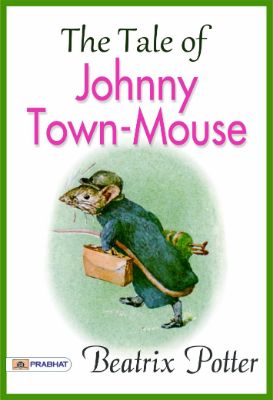
The Tale of Johnny Town-Mouse by Beatrix Potter
Johnny Town-mouse was born in a cupboard. Timmy Willie was born in a garden. Timmy Willie was a little country mouse who went to town by mistake in a hamper. The gardener sent vegetables to town once a week by carrier; he packed them in a big hamper.
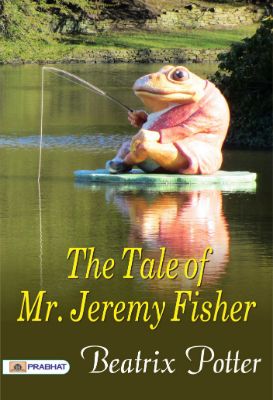
The Tale of Mr. Jeremy Fisher by Beatrix Potter
Once upon a time there was a frog called Mr. Jeremy Fisher; he lived in a little damp house amongst the buttercups at the edge of a pond.
The water was all slippy-sloppy in the larder and in the back passage.
But Mr. Jeremy liked getting his feet wet; nobody ever scolded him, and he never caught a cold!
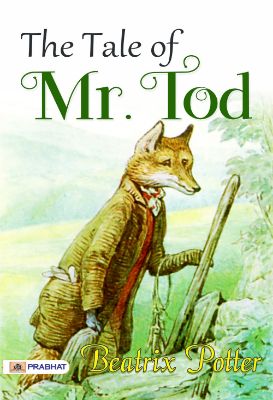
The Tale of Mr. Tod by Beatrix Potter
I have made many books about well-behaved people. Now, for a change, I am going to make a story about two disagreeable people, called Tommy Brock and Mr. Tod.
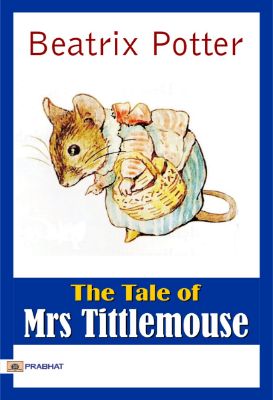
The Tale of Mrs Tittlemouse by Beatrix Potter
The Tale of Mrs. Tittlemouse is a children’s book written and illustrated by Beatrix Potter, and published by Frederick Warne & Co. in 1910. The tale is about housekeeping and insect pests in the home, and reflects Potter’s own sense of tidiness and her abhorrence of insect infestations.

The Tale of Mrs. Tiggy-Winkle by Beatrix Potter
NCE upon a time there was a little girl called Lucie, who lived at a farm called Little-town. She was a good little girl—only she was always losing her pocket- handkerchiefs!
One day little Lucie came into the farm-yard crying— oh, she did cry so! “I’ve lost my pocket-handkin! Three handkins and a pinny! Have you seen them, Tabby Kitten?”
THE Kitten went on washing her white paws; so Lucie asked a speckled hen—
“Sally Henny-penny, have you found three pocket-handkins?”
But the speckled hen ran into a barn, clucking—
“I go barefoot, barefoot, barefoot!”

The Tale of Peter Rabbit by Beatrix Potter
The Tale of Peter Rabbit’ is a children’s book written and illustrated by Beatrix Potter. This book is about mischievous and disobedient young Peter Rabbit. It proceeds as he is chased about the garden of Mr. McGregor. He escapes and returns home to his mother, who puts him to bed after dosing him with camomile tea. The tale was written for five-year-old Noel Moore, son of Potter’s former governess Annie Carter Moore, in 1893.
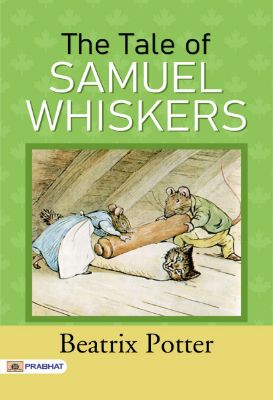
The Tale of Samuel Whiskers by Beatrix Potter
The Tale of Samuel Whiskers or The Roly-Poly Pudding is a children’s book written and illustrated by Beatrix Potter and first published by Frederick Warne & Co. in October 1908 as The Roly-Poly Pudding. In 1926, it was re-published as The Tale of Samuel Whiskers.
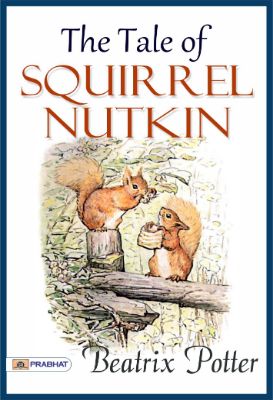
The Tale of Squirrel Nutkin by Beatrix Potter
They also took with them an offering of three fat mice as a present for Old Brown, and put them down upon his door-step.
Then Twinkleberry and the other little squirrels each made a low bow, and said politely—
“Old Mr. Brown, will you favour us with permission to gather nuts upon your island?”
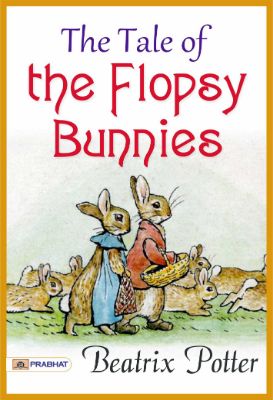
The Tale of the Flopsy Bunnies by Beatrix Potter
It is said that the effect of eating too much lettuce is “soporific.”
I have never felt sleepy after eating lettuces; but then I am not a rabbit.
They certainly had a very soporific effect upon the Flopsy Bunnies!
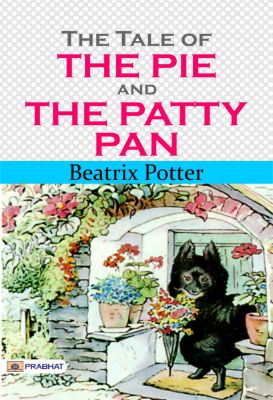
The Tale of the Pie and the Patty Pan by Beatrix Potter
The Tale of the Pie and the Patty-Pan is a children’s book written and illustrated by Beatrix Potter, and published by Frederick Warne & Co. in October 1905. It tells of a cat called Ribby and a tea party she holds for a dog called Duchess.
The Tale of the Spinning Wheel by Elizabeth Cynthia Barney Buel
The spinning-wheel—symbol of the dignity of woman’s labor.—What wealth of memory gathers around the homely implement, homely indeed in the good old sense of the word—because belonging to the home. Home-made and home-spun are honorable epithets, replete with significance, for in them we find the epitome of the lives and labors of our foremothers. The plough and the axe are not more symbolic of the winning of this country from the wilderness, nor the musket of the winning of its freedom, than is the spinning-wheel in woman’s hands the symbol of both.

The Tale of Timmy Tiptoes by Beatrix Potter
Timmy Tiptoes sat out, enjoying the breeze; he whisked his tail and chuckled—”Little wife Goody, the nuts are ripe; we must lay up a store for winter and spring.” Goody Tiptoes was busy pushing moss under the thatch—”The nest is so snug, we shall be sound asleep all winter.” “Then we shall wake up all the thinner, when there is nothing to eat in spring-time,” replied prudent Timothy.
The Tale of Tom Kitten by Beatrix Potter
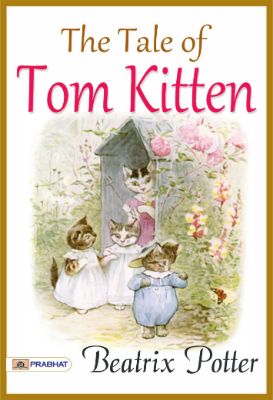
Once upon a time there were three little kittens, and their names were Mittens, Tom Kitten, and Moppet.
They had dear little fur coats of their own; and they tumbled about the doorstep and played in the dust.
But one day their mother—Mrs. Tabitha Twitchit—expected friends to tea; so she fetched the kittens indoors, to wash and dress them, before the fine company arrived.

The Tale of Two Bad Mice by Beatrix Potter
As the fish would not come off the plate, they put it into the red-hot crinkly paper fire in the kitchen; but it would not burn either.
The Tales of Mother Goose by Charles Perrault
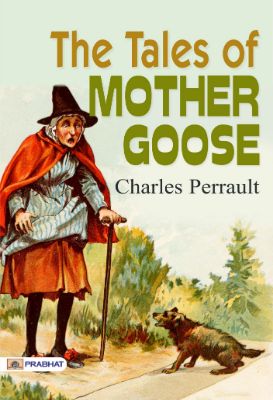
What virtues do these stories possess that have kept them alive for so long a time? They have to some degree stimulated and nourished qualities of supreme worth in individual and social life. With the young the struggle against greed and falsehood and pride and cowardice is a very real one, and situations in which these homely, fundamental traits are involved are full of interest and seriousness. Again, to mature people the reward of well-doing and the punishment of evil conduct portrayed in these stories are apt to seem too realistic, too much also on the cut-and-dried pattern; but it is far different with children. They have a very concrete sense of right and wrong, and they demand a clear, explicit, tangible outcome for every sort of action. They must have concrete, living examples, with the appropriate outcome of each, set before them.
The Tales of My Wrinkles Tell by Dr. Krishna Saksena
The author, crossing 86 years of her life, looks back through the mist of time. There were timeless moments when she walked out in her youth, finding every day an awakening. Those were simple days, of simple people, few rules yet great achievements. She recounts those incidents that still stand sharp in her memory, people she cannot forget, happenings that show her the way and give shape to her philosophy of life. Interesting incidents and peculiar personalities are sure to catch the attention of all those who go through this book and see the difference between how things are today and how they were not long ago.
Dr. Krishna Saksena’s latest book “The Tales my Wrinkles Tell” is a wonderful collection of stories, reminiscences and discourses, very readable and containing wisdom acquired over a lifetime.
The Talisman by Walter Scott
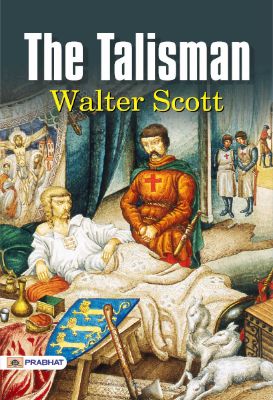
The Talisman is one of the Waverley novels by Sir Walter Scott. Published in 1825 as the second of his Tales of the Crusaders, the first being The Betrothed, it is set during the Third Crusade and centres on the relationship between Richard I of England and Saladin.

The Talking Deaf Man by Johann Conrad Amman
ow important a Benefit is this? How advantageous is the not hearing supplied by this Art? If Envy, or the detestable greedy Desire of Gain_ could have prevailed with me, I had retained this Art, as lockt up in my own Breast. But alass! How miserable is the condition of the Deaf? How lame and defective is that Speach, which is performed by Signs and Gestures? How little are they capable to receive of those things which concern their eternal Salvation? Who doth not commiserate this sort of Persons? Who can refuse to help them by all means which are possible? For my part, I, by the help of God’s Grace, will not only help them, but will make publick and vulgar what is best to be done therein, yea, and have done so already, that they can understand others speaking, even with the softest Voice, or rather whispering.
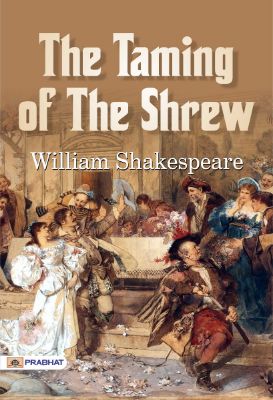
The Taming of the Shrew by William Shakespeare
The Taming of the Shrew is a comedy by William Shakespeare, believed to have been written between 1590 and 1592. The play begins with a framing device, often referred to as the induction, in which a mischievous nobleman tricks a drunken tinker named Christopher Sly into believing he is actually a nobleman himself.

The Tao Teh King, or the Tao and its Characteristics by Laozi
Written by a Chinese sage Laozi, ‘The Tao Teh King, or the Tao and its Characteristics’ is believed to be written in 6th century BC.

The Tariff in Our Times by Ida M. Tarbell
It takes no extended examination of any period in the last fifty years—the term covered by the phrase “Our Times” in the title of this book—to convince an unprejudiced student that as far as the tariff is concerned public opinion has never been fairly embodied in the bills adopted. If the popular understanding of protection as expressed in our elections had been conscientiously followed, there would be to-day no duties on iron and steel products, on cheap cottons and cotton mixtures, and, certainly none on a great variety of raw materials probably including raw wool.
The Tempest by William Shakespeare
The Tempest is a play by William Shakespeare, probably written in 1610–1611, and thought to be one of the last plays that Shakespeare wrote alone.
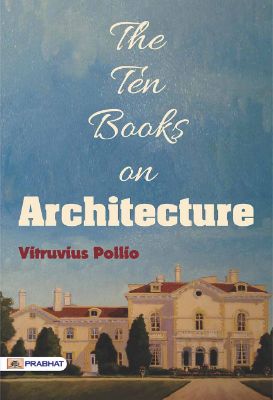
The Ten Books on Architecture by Vitruvius Pollio
Ten Books on Architecture’ is a treatise on architecture by the Roman architect and military engineer Marcus Vitruvius Pollio. As the only treatise on architecture to survive from antiquity, it has been regarded as the first book on architectural theory as well as a major source on the canon of Classical Architecture, since Renaissance. It contains a variety of information on Greek and Roman buildings, as well as prescriptions for the planning and design of military camps, cities, and structures both large and small.
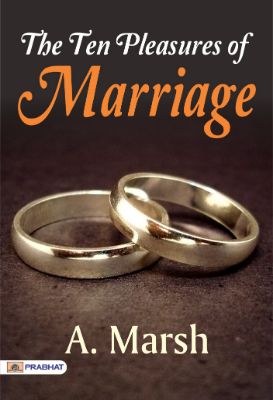
The Ten Pleasures of Marriage by A. Marsh
It is a curious thing, that fundamental English humour. It can be vividly concentrated into a single word, as when, for instance, the chronicler of The Ten Pleasures of Marriage revives the opprobrious term for a tailor—”pricklouse”: the whole history of the English woollen industry and of the stuffy Tudor and Stuart domestic architecture is in the nickname. Or a single phrase can light up an idea, as when, a few days before marriage, “the Bridegroom is running up and down like a dog.” But, on the other hand, the spirit manifests itself sometimes in exuberance, as when Urquhart and Motteux metagrobolized Rabelais into something almost more tumescent and overwhelming than the original. In that vein of humour the present work frequently runs. The author is as ready to pile up his epithets as Urquhart himself. Let the Nurse go, he says, “for then you’ll have an Eater, a Stroy-good, a Stufgut, a Spoil-all, and Prittle-pratler, less than you had before.”
The Tenant of Wildfell Hall by Brontë, Anne
Phenomenally successful at the time of publication, The Tenant of Wildfell Hall was considered quite controversial at the time due to its focus on issues of feminism and marital abuse. When thereclusive widow Helen Graham and her son take up residence in an old mansion, she becomes the unwilling subject of her neighbours’ scrutiny. As Helen tries to escape her difficult past, complicationsarise when young farmer Gilbert Markham falls in love with her. The novel has been adapted extensively across film, television, radio and theatre.
The Tenth Man by W Somerset Maugham
First published in the year 1913, the present book ‘The Tenth Man’ is a play by British playwright, novelist and short story writer W Somerset Maugham. Play’s protagonist George Winters is a self-made man, a wealthy unscrupulous businessman and M.P. for Middlepool who has married into the impoverished nobility for reasons of status. But when his wife threatens to divorce him in public immediately before a general election, a scandal threatens that could endanger his latest bit of shady dealing.

The Theory of Environment by Armin Hajman Koller
I gratefully acknowledge my indebtedness to Professor Martin Schütze of the University of Chicago for the suggestion, made in 1907, to find out what Herder’s idea of milieu is; to my friend and former colleague at the University of Illinois, Dr. Charles C. Adams (now Assistant Professor of Ecology at Syracuse University) for references given me at my request (but he is in no wise to be held responsible for the bringing in of these references); and to my good friend and colleague, Professor John Driscoll Fitz-Gerald of the University of Illinois for a number of helpful suggestions given when reading the manuscript and for assisting with the reading of the galley proof.
The Theory of Heat Radiation by Max Planck
The profoundly original ideas introduced by Nobel laureate Max Planck in this endeavor to reconcile the electromagnetic theory of radiation with experimental facts have proved to be of the greatest importance. Few modern introductions to the theory of heat radiation can match this work for precision, care, and attention to details of proof.
The Theory of Social Revolutions by Brooks Adams
The first chapter of the following book was published, in substantially its present form, in the Atlantic Monthly for April, 1913. I have to thank the editor for his courtesy in assenting to my wish to reprint. The other chapters have not appeared before. I desire also to express my obligations to my learned friend, Dr. M.M. Bigelow, who, most kindly, at my request, read chapters two and three, which deal with the constitutional law, and gave me the benefit of his most valuable criticism.
Further than this I have but one word to add. I have written in support of no political movement, nor for any ephemeral purpose. I have written only to express a deep conviction which is the result of more than twenty years of study, and reflection upon this subject.
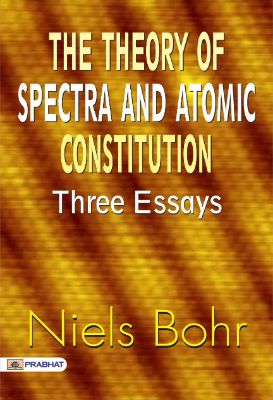
The Theory of Spectra and Atomic Constitution: Three Essays by Niels Bohr
First published in the year 1922, the present book ‘The Theory of Spectra and Atomic Constitution: Three Essays’ by Niels Bohr, professor of theoretical physics at University of Copenhagen at that time, consists of three essays. These essays, which here appear in English, all deal with the application of the quantum theory to problems of atomic structure, and refer to the different stages in the development of this theory.