
Classic Books
Showing 3701–3750 of 4246 results
The Sonnets by William Shakespeare
Shakespeare’s Sonnets is the title of a collection of 154 sonnets by William Shakespeare, which covers themes such as the passage of time, love, beauty and mortality. …
The Sorrows of Young Werther by Johann Wolfgang von Goethe
A classic romantic novel that marked the turn of the conventional romantic literature and proved to be a landmark for the Romantic Age of English literature. It was first published in the year 1774. ‘The Sorrows of Young Werther’ by Johann Wolfgang von Goethe narrates a sad and tragic, yet romantic story of young Wether, who fall in love with a married girl and eventually, kills himself to prevent any complications in her marriage.

The Soul of Man under Socialism by Oscar Wilde
The present book is a 1891 essay written by Oscar Wilde in which he argues that, under capitalism, “the majority of people spoil their lives by an unhealthy and exaggerated altruism—are forced, indeed, so to spoil them”: instead of realising their true talents, they waste their time solving the social problems caused by capitalism, without taking their common cause away. Thus, caring people “seriously and very sentimentally set themselves to the task of remedying the evils that they see in poverty but their remedies do not cure the disease: they merely prolong it” because, as Wilde puts it, “the proper aim is to try and reconstruct society on such a basis that poverty will be impossible.”

The Soul of the Soldier: Sketches from the Western Battle-Front by Thomas Tiplady
“The sketches in this book and in my previous one, “The Cross at the Front,” are attempts to show the soul of the soldier serving in France as I have seen it during the year and a half that I have been with him. It is a padre’s privilege and duty to be the voice with which, in public worship, the soldiers speak to God; and through which their last thoughts are borne to their friends at home. He is their voice both when they are sick or wounded, and when they lie silent in the grave. He speaks of their hopes and fears, hardships and heroisms, laughter and tears. As best he may he tries to tell, to those who have a right and a longing to know, how they thought, and how they bore themselves in the great day of trial when all risked their lives and many laid them down.” -Preface
The Souls of Black Folk by W. E. B. Du Bois
American social scientist W. E. B. Du Bois’ classic work ‘The Souls of Black Folk’ is a seminal work in the history of sociology, and a cornerstone of African-American literary history. First published in 1903, it contains several essays on race. Some of these essays were previously published by the Atlantic Monthly magazine. To develop this work, Du Bois drew from his own experiences as an African American in the American society. Outside of its notable relevance in African-American history, ‘The Souls of Black Folk’ also holds an important place in social science as one of the early works in the field of sociology.

The Sound and the Fury by William Faulkner
The Sound and the Fury is a novel by the American author William Faulkner. It employs several narrative styles, including stream of consciousness. Published in 1929, The Sound and the Fury was Faulkner’s fourth novel, and was not immediately successful.

The Source and Mode of Solar Energy Throughout the Universe by Heysinger
This work is not presented to the reader as a treatise on astronomy, although the different phenomena pertaining to that splendid science are reviewed with some detail, and the established facts bearing upon the subjects discussed are briefly cited in the very words of the great writers upon whose authority they rest. A considerable experience in chemistry, electricity, and the other allied physical sciences long since convinced the author of this work that some simple and uniform principle must control the production of the physical phenomena of astronomy,—some general law capable of being extended in its application to the widest, as well as applied to the narrowest, limits of that science. Knowing the absolute certainty of a magnetic and electrical connection between the sun and the earth, as evidenced by the reflected energy of sun-spots, auroras, etc., and that no known cause except electricity could account for some, at least, of the cometic phenomena, it seemed that any comprehensive law must at all events include this mode of energy as an effective cause, and that if the law be uniform in its application, it must equally exclude all others which may be either antagonistic or not necessary.
The Southern Literary Messenger by Various
The Southern Literary Messenger’ was a periodical published in Richmond, Virginia, from August 1834 until June 1864. Each issue carried a subtitle of “Devoted to Every Department of Literature and the Fine Arts” or some variation and included poetry, fiction, non-fiction, reviews, and historical notes. It was founded by Thomas Willis White who served as publisher and occasional editor until his death in 1843.
Present compendium is its issue 4 of first volume.

The Sovereignty of The Sea by Thomas Wemyss Fulton
The book is divided into two sections, the first comprising an historical account of the pretensions to the dominion of the sea; the second dealing with the relic of such pretensions, the territorial waters, more particularly in the aspect which they present under the Law of Nations and in relation to the rights of fishing. With some doubtful exceptions, the viii claim to a special sovereignty or dominion over the so-called British Seas was a doctrine of the Stuarts, introduced from Scotland to England with that dynasty, and terminating with it. It was aimed in particular against the Dutch, whose commerce, shipping, wealth, and power were believed to be derived from the fisheries which they carried on along the coasts of this country. Hence a very considerable part of the work refers to the dealings and negotiations with that people as to the liberty of fishing and the homage to the flag. -Preface
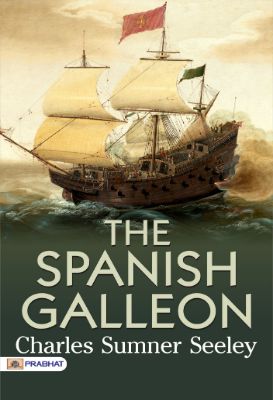
The Spanish Galleon by Charles Sumner Seeley
On the eighteenth day of August, 1886, as the sun was setting, I was floating in the Caribbean Sea. You may mark the place on the map as being approximately N. latitude 15°, and W. longitude 62° from Greenwich; or in other words, between one hundred and two hundred miles west of the French island of Martinique. A chest, well corded but partly filled with water, was all that kept my head above the surface. Without food or drink I had been floating thus since shortly after sunrise of the previous morning. At that time the sloop in which I was voyaging, capsized and sunk in a squall, drowning the negro captain and owner, and his son, who constituted the crew. In this little vessel I was bound for a small uninhabited island known as “Key Seven,” which was in plain sight when the disaster occurred. For two days and a night, without sleep or refreshment, I had been struggling to push the floating chest toward this land.
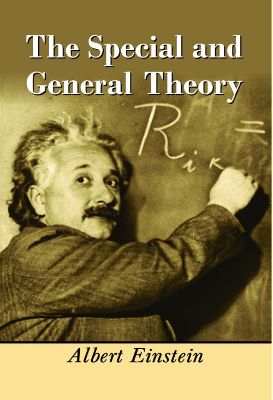
The Special and General Theory by Einstein, Albert
How better to learn the Special Theory of Relativity and the General Theory of Relativity than directly from their creator, Albert Einstein himself? In Relativity: The Special and the General Theory, Einstein describes the theories that made him famous, illuminating his case with numerous examples and a smattering of math (nothing more complex than high-school algebra). Einstein’s book is not casual reading, but for those who appreciate his work without diving into the arcana of theoretical physics, Relativity will prove a stimulating read. “The present book is intended,” Einstein wrote in 1916, “as far as possible, to give an exact insight into the theory of Relativity to those readers who, from a general scientific and philosophical point of view, are interested in the theory, but who are not conversant with the mathematical apparatus of theoretical physics.”

The Spell by William Dana Orcutt
The present fictional novel titled ‘The Spell’ was written by famous novelist William Dana Orcutt. It was first published in the year 1909. This is one of the author’s most celebrated works which was written in the typical old French fashion.
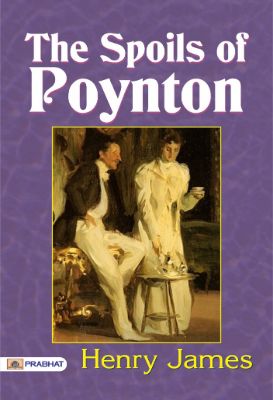
The Spoils of Poynton by Henry James
Mrs. Gereth had said she would go with the rest to church, but suddenly it seemed to her that she should not be able to wait even till church-time for relief: breakfast, at Waterbath, was a punctual meal, and she had still nearly an hour on her hands. Knowing the church to be near, she prepared in her room for the little rural walk, and on her way down again, passing through corridors and observing imbecilities of decoration, the æsthetic misery of the big commodious house, she felt a return of the tide of last night’s irritation, a renewal of everything she could secretly suffer from ugliness and stupidity. Why did she consent to such contacts, why did she so rashly expose herself? She had had, heaven knew, her reasons, but the whole experience was to be sharper than she had feared. —from this Book
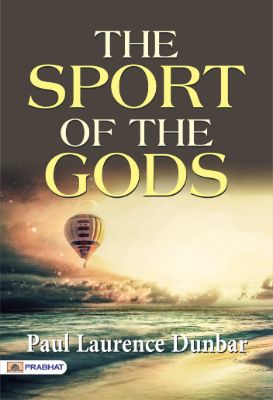
The Sport of the Gods by Paul Laurence Dunbar
Fiction has said so much in regret of the old days when there were plantations and overseers and masters and slaves, that it was good to come upon such a household as Berry Hamilton’s, if for no other reason than that it afforded a relief from the monotony of tiresome iteration.

The Sports and Pastimes of the People of England by Joseph Strutt
A general arrangement of the popular sports, pastimes, and military games, together with the various spectacles of mirth or splendour, exhibited publicly or privately, for the sake of amusement, at different periods, in england.

The Sportsman On Hunting, A Sportsman’s Manual, Commonly Called Cynegeticus by Xenophon
To the gods themselves is due the discovery, to Apollo and Artemis, patrons of the chase and protectors of the hound. As a guerdon they bestowed it upon Cheiron, by reason of his uprightness, and he took it and was glad, and turned the gift to good account.

The Spy: The Story of a Superfluous Man by Maksim Gorky
Yevsey endeavored to escape observation even in his uncle’s home; but here it was difficult. He had to dine and sup in the company of the whole family, and when he sat at the table, Yakov, the uncle’s youngest son, a lusty, red-faced youngster, tried every trick to tease him or make him laugh. He made faces, stuck out his tongue, kicked Yevsey’s legs under the table, and pinched him. He never succeeded, however, in making the Old Man laugh, though he did succeed in producing quite the opposite result, for often Yevsey would start with pain, his yellow face would turn grey, his eyes open wide, and his spoon tremble in his hand.
The Stark Munro Letters by Arthur Conan Doyle
First published in 1895, ‘The Stark Munro Letters’ by Arthur Conan Doyle is written in the form of twelve long letters. These letters are written by the protagonist J. Stark Munro to his friend, and gives an account of his attempts to create a medical practice in partnership with the brilliant but unorthodox James Cullingworth.

The Stark Munro Letters by Arthur Conan Doyle
The letters of my friend Mr. Stark Munro appear to me to form so connected a whole, and to give so plain an account of some of the troubles which a young man may be called upon to face right away at the outset of his career, that I have handed them over to the gentleman who is about to edit them. There are two of them, the fifth and the ninth, from which some excisions are necessary; but in the main I hope that they may be reproduced as they stand. I am sure that there is no privilege which my friend would value more highly than the thought that some other young man, harassed by the needs of this world and doubts of the next, should have gotten strength by reading how a brother had passed down the valley of shadow before him.
HERBERT SWANBOROUGH. LOWELL, MASS.

The Stock Exchange by John Felix Wheeler
It is the aim of this book, therefore, to explain in the simplest possible terms what the Stock Exchange is, and the meaning of the different securities dealt in. The attempt has been made before, but the results appear in books published at a price which puts them beyond the reach of many readers, and it is hoped that the inclusion of such a work hi the People’s Books will do something to enlarge the general knowledge of a subject which to many is a source of bewilderment.

The Stock Exchange from Within by William C. Van Antwerp
In so far as these pages reflect the thoughts of a busy stockbroker, distracted by many duties and lacking in literary skill, they have but little merit and the writer entertains no illusions regarding them.
The Stones of Venice, Volume 1 (of 3) by John Ruskin
“Thus much, however, it is necessary for the reader to know, that, when I planned the work, I had materials by me, collected at different times of sojourn in Venice during the last seventeen years, which it seemed to me might be arranged with little difficulty, and which I believe to be of value as illustrating the history of Southern Gothic. Requiring, however, some clearer assurance respecting certain points of chronology, I went to Venice finally in the autumn of 1849, not doubting but that the dates of the principal edifices of the ancient city were either ascertained, or ascertainable without extraordinary research.” -Preface

The Story of a Baby by Ethel Sybil Turner
First published in the year 1896, English-born Australian novelist Ethel Sybil Turner’s novel ‘The Story of a Baby’ is the story of a lone baby found to a couple.
The Story of Captain, the Horse with the Human Brain by George Wharton James
Early in the year 1915 I was called to lecture on California and the West in the beautiful Sunset Theater of the Southern Pacific Building at the San Francisco Exposition. In taking a survey of the Zone I was soon attracted to a gigantic horse in process of manufacture out of wood and plaster, and a placard before it indicated that a trained horse would soon be shown here. Being fond of animals, naturally, and having seen and read considerably of trained horses, I was ready for the first opening of this show, and there was introduced to CAPTAIN, the educated horse, or, as he has been termed, “the horse with the human brain.” My opinions as to the quality of Captain’s intelligence I have recorded later, but his first performance was a delight to me. His appearance was pleasing. He looked well cared for, contented, happy and willing to go through his exhibition. There was none of the holding back, the whipping, the sharp orders, the ugly looks one so generally sees on the faces of “trained animals” when they are being put through their tricks. Most of these poor creatures show so manifestly that they are trapped, are made to do what they do not like, and that they resent it, that I seldom can tolerate the sight of their anger and humiliation—for that is clearly what nearly every animal reveals to me at these exhibitions.
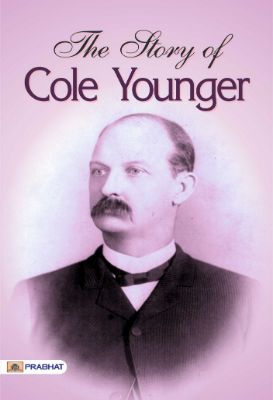
The Story of Cole Younger by Cole Younger
Autobiography of Cole Younger, American Civil War veteran and member of the Jesse James gang. Cole Younger was a member of Quantrill’s Raiders during the Civil War and along with his brother, Jim Younger and the James brothers, robbed banks and trains during the 1870’s.

The Story of Fifty-Seven Cents by Robert Shackleton
Robert Shackleton CBE (25 November 1919 – 9 September 1986) was an English French language philologist and librarian. Shackleton was born in Todmorden, now in West Yorkshire. He was educated at Oriel College, Oxford and taught French at Brasenose College, Oxford from 1946 to 1966.

The Story of Gandhi by Rajkumari Shankar
Mohandas was the youngest of the six children of Kaba Gandhi. He was the favourite child of the family and was called ‘Moniya’ by his fond parents and their friends. Moniya adored his mother. He loved his father too, but he was a little afraid of him.
As a child, Moniya seldom liked to stay at home. He would go home for his meals and then run away again to play outside. If one of his brothers teased him or playfully pulled his ears he would run home to complain to his mother. ‘Why didn’t you hit him? She would ask.

The Story of Great Inventions by Elmer Ellsworth Burns
“The purpose of this book is to tell in simple language how our great inventions came into being, to depict the life-struggles of the men who made them, and, in the telling of the story, to explain the working of the inventions in a way the boy can understand. The stories which are here woven together present the great epochs in the history of physics, and are intended to give to the young reader a connected view of the way in which our great inventions have arisen out of scientific discovery on the one hand, and conditions which we may call social and economic on the other hand. If the book shall appeal to young readers, and lead them to an appreciation of the meaning of a great invention, the author will feel that his purpose has been achieved.” -Introduction

The Story of Mankind by Hendrik Willem Van Loon
The Story of Mankind” follows the history of western civilization from prehistoric times to the early 20th century. Van Loon both wrote and illustrated this book, which he wrote for his grandchildren, in such a way that children would be learning in an entertaining way. From the development of writing and art to the formation of religion and politics, Van Loon emphasizes the people and events central to the changes and achievements of human history. A remarkable, accurate, and enduring work of children’s literature, “The Story of Mankind” is an engaging narration of the procession of events in world history.
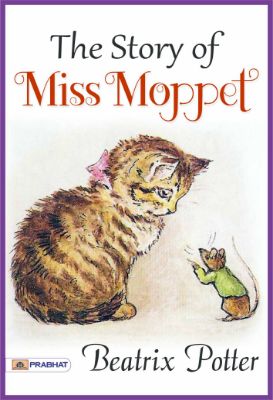
The Story of Miss Moppet by Beatrix Potter
This is a Pussy called Miss Moppet, she thinks she has heard a mouse!
This is the Mouse peeping out behind the cupboard, and making fun of Miss Moppet. He is not afraid of a kitten.
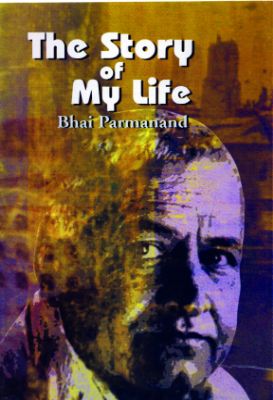
The Story of My Life by Bhai Parmanand
“Excepting Lala Lajpat Raiji, the land of the five rivers has not produced in modern history a nobler Indian Patriot, a more devoted worker in the cause of the political freedom of Hindusthan, our Father Land and our Holy Land, while in suffering and sacrifice none who could be compared with him.
“Many there be who join a great cause when it is victorious and paying; a few there are who join in the fight for it when chances of ultimate victory are not out of sight; but scarcely one in a million is found who refuses to budge an inch and continues the fight for an ideal single-handed and alone even when all is lost and all have either forsaken or betrayed. A Rana Pratap at Chittore, a Bhau Sahab Peshwa at Panipat! It is they who are the standard-bearers of a Nation, a Race, a Religion and it is when drenched in their blood that the Despair of a people is reborn as a Hope in the next generation. Their immediate defeat and death assure the life and victory of a Race. Of such a mettle as that is Bhai Parmananda fashioned.”
—Swatantryavir Vinayak D. Savarkar

The Story of My Life by Clarence Darrow
The Story of My Life’ is a novel by Clarence Darrow, which is narrated in first-person from the point of view of Alison Poole, “an ostensibly jaded, cocaine-addled, sexually voracious 20-year-old.” Alison is originally from Virginia and lives in Manhattan, where she is involved in several sexual relationships and is aspiring to become an actress.

The Story of My Life by Keller, Helen
The name of Helen Keller is known around the world as a symbol of courage in the face of overwhelming odds, yet she was much more than a symbol. She was a woman of luminous intelligence, high ambition and great accomplishment who devoted her life to helping others. Although Helen Keller was blind and deaf, she knew several languages. Helen Keller learned to read and communicate by touch. She used these skills to study English, French, German, Greek, and Latin. Late in her life, she said she wanted to learn even more languages. During her lifetime, Helen Keller was consistently ranked near the top of ‘most admired’ lists. She died in 1968, leaving a legacy that Helen Keller International is proud to carry on in her name and memory. This book is a authorized autobiography of ‘Helen Keller’.

The Story of My Misfortunes by Peter Abelard
The Story of My Misfortunes, also known as Historia Calamitatum (A history of my calamities), is an autobiographical work by Peter Abelard, one of medieval France’s most important intellectuals and a pioneer of scholastic philosophy. The Story of My Misfortunes is one of the first autobiographical works in medieval Western Europe, written in the form of a letter.

The Story of Nelson by William Henry Giles Kingston
My great ambition as a boy was to be a sailor; the idea of becoming one occupied my thoughts by day and influenced my dreams by night. I delighted in reading naval histories and exploits and tales of the sea, and I looked upon Rodney, Howe, Nelson, and Saint Vincent, as well as Duncan, Collingwood, Exmouth, and Sir Sidney Smith, as far greater men, and more worthy of admiration, than all the heroes of antiquity put together—an opinion which I hold even to the present day, and which, I hope, all my readers will maintain with me.

The Story of Perugia by Lina Duff Gordon and Margaret Symonds
The “story” of Perugia is, like the story of nearly all Italian towns, as full and varied as the story of a nation. Every side-light of history is cast upon it, and nearly every phase of man’s policy and art reflected on its monuments. To do justice to so grand a pageant in a narrow space of time and binding was, we may fairly plead, no easy task; and now that the work is done, and the proofs returned to the printer, we are left with an inevitable regret; for it has been impossible for us to retain in shortened sentences and cramped description the charm of all the tales and chronicles which we ourselves found necessary reading for a full knowledge of so wide a subject.
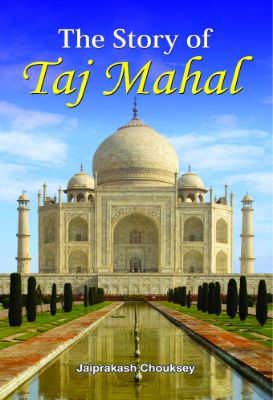
The Story of Taj Mahal by Jayprakash Chowksey
Last year Chowksey wrote Mahatma Gandhi and Cinema, now his fictional account of how the TAJ was created is being published. It is a historical fact that the Moghuls brought with them the Persian culture when they came to India. At that time Indian culture was a bit worn-out because of continuous foreign attacks for centuries. Moghuls were different from other invaders in the sense that they wanted to settle down here and the founder of the Moghul Empire Babur made it clear before entering Agra that the soldiers should not indulge in any atrocities.
Chowksey’s Aurangzeb disapproved the wave of romanticism unleashed by Shahjahan and restored discipline and values in the life of the nation. He did not approve of huge sums of money being spent on the creation of the TAJ.
However, this book has interesting character sketches and excellent dramatic scenes. A couple of years ago the TAJ MAHAL was voted as the number one wonder of the worldby an international survey. It has withstood the test of time and its classic beauty is of universal appeal therefore the story of its creation is worth reading. My friend Chowksey has done justice to the great subject. It is an ode to the synthesis of two great cultures.
—Salim Khan
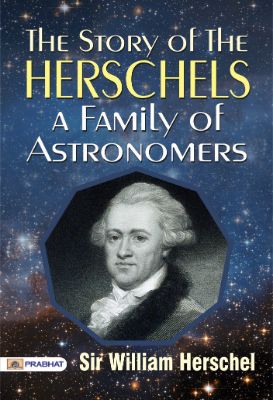
The Story of the Herschels, a Family of Astronomers by Sir William Herschel
“From the best available sources have been gathered the following biographical particulars of a remarkable family of astronomers—the Herschels.
“They will serve to show the young reader how great a pleasure may be found in the acquisition of knowledge, and how solid a happiness in quietly pursuing the path of duty.
“On the value of biography it is unnecessary to insist. It is now well understood that we may learn to make our own lives good and honest and true, by carefully and diligently following the example of the good and honest and true who have gone before us. and certain it is that the lessons taught by the lives of the Herschels are such as young readers will do well to lay to heart.” -Preface

The Story of the Invention of Steel Pens by Henry Bore
In these days of Public Schools and extended facilities for popular education it would be difficult to find many people unaccustomed to the use of steel pens, but although the manufacture of this article by presses and tools must have been introduced during the first quarter of the present century, the inquirer after knowledge would scarcely find a dozen persons who could give any definite information as to when, where, and by whom this invention was made. Less than two decades ago there were three men living who could have answered this question, but two of them passed away without making any sign, and the third—Sir Josiah Mason—has left on record that his friend and patron—Mr. Samuel Harrison—about the year 1780, made a steel pen for Dr. Priestley.

The Story of the Malakand Field Force: An Episode of Frontier War by Churchill
On general grounds I deprecate prefaces. I have always thought that if an author cannot make friends with the reader, and explain his objects, in two or three hundred pages, he is not likely to do so in fifty lines. And yet the temptation of speaking a few words behind the scenes, as it were, is so strong that few writers are able to resist it. I shall not try.

The Story of the Mind by James Mark Baldwin
In this little book, author has endeavoured to maintain the simplicity which is the ideal of this series. Author persuaded that the attempt to make the matter of psychology more elementary than is here done, would only result in making it untrue and so in defeating its own object.
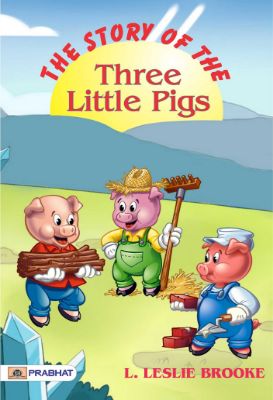
The Story of the Three Little Pigs by L. Leslie Brooke
First published in the year 1905, the present book is a fictional fable for young children, written by L. Leslie Brooke. This story is about three little pigs which has been much adored by children all over the world since its inception.
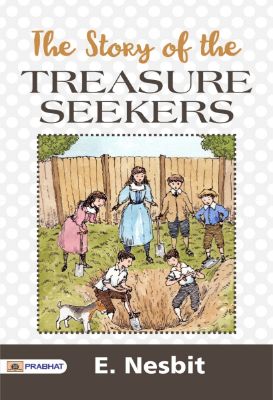
The Story of the Treasure Seekers by E. Nesbit
The Story of the Treasure Seekers is a novel by E. Nesbit. First published in 1899, it tells the story of Dora, Oswald, Dicky, Alice,
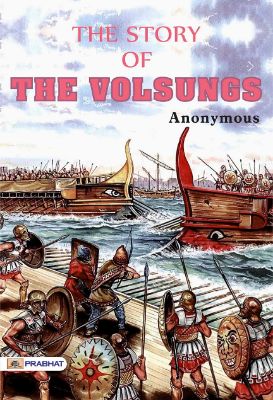
The Story of the Volsungs by Anonymous
I HAVE endeavoured in this Ghostly little book, to raise the Ghost of an Idea, which shall not put my readers out of humour with themselves, with each other, with the season, or with me. May it haunt their houses pleasantly, and no one wish to lay it.’ -Preface by Charles Dickens

The Story of Young Abraham Lincoln by Wayne Whipple
The boy or girl who reads to-day may know about the real Lincoln, than his own children knew. The greatest President’s son, Robert Lincoln, discussing a certain incident in their life in the White House, remarked to the writer, with a smile full of meaning; ” I believe you know more about our family matters that I do!”
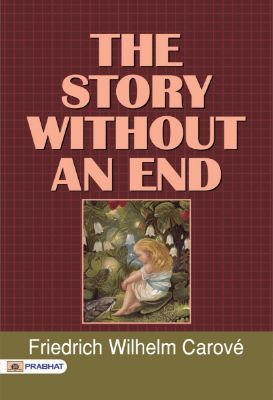
The Story Without an End by Friedrich Wilhelm Carové
THERE was once a Child who lived in a little hut, and in the hut there was nothing but a little bed and a looking-glass which hung in a dark corner. Now the Child cared nothing at all about the looking-glass; but as soon as the first sunbeam glided softly through the casement and kissed his sweet eyelids, and the finch and the linnet waked him merrily with their morning songs, he arose, and went out into the green meadow. And he begged flour of the primrose, and sugar of the violet, and butter of the butter-cup; he shook dew-drops from the cowslip into the cup of a harebell; spread out a large lime leaf, set his little breakfast upon it, and feasted daintily. Sometimes he invited a humming bee, oftener a gay butterfly, to partake his feast; but his favourite guest was the blue dragonfly. The bee murmured a great deal, in a solemn tone, about his riches: but the Child thought that if he were a bee heaps of treasure would not make him gay and happy; and that it must be much more delightful and glorious to float about in the free and fresh breezes of spring, and to hum joyously in the web of the sunbeams, than, with heavy feet and heavy heart, to stow the silver wax and the golden honey into cells.

The Strange Adventures of Mr. Middleton by Wardon Allan Curtis
The present book ‘The Strange Adventures of Mr. Middleton’ is a fictional novel written by the famous writer Wardon Allan Curtis. It is a novel which revolves around a man Mr. Middleton and records the mysteries and adventures that he experience.
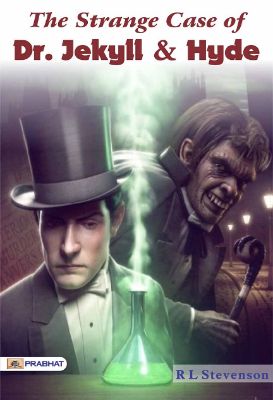
THE STRANGE CASE of DR JEKYLL and HYDE by R L STEVENSON
Scottish author Robert Louis Stevenson’s 1886 novel, ‘Strange Case of Dr Jekyll and Mr Hyde’ is about a London lawyer named Gabriel John Utterson, who investigates strange occurrences between his old friend, Dr Henry Jekyll, and the evil Edward Hyde. The novel’s impact is such that it has become a part of the language, with the very phrase “Jekyll and Hyde” coming to mean a person who is vastly different in moral character from one situation to the next.

The Strange Case of Dr. Jekyll and Mr. Hyde by Robert Louis Stevenson
Mr. Utterson the lawyer was a man of a rugged countenance that was never lighted by a smile; cold, scanty and embarrassed in discourse; backward in sentiment; lean, long, dusty, dreary and yet somehow lovable. At friendly meetings, and when the wine was to his taste, something eminently human beaconed from his eye; something indeed which never found its way into his talk, but which spoke not only in these silent symbols of the after-dinner face, but more often and loudly in the acts of his life. He was austere with himself; drank gin when he was alone, to mortify a taste for vintages; and though he enjoyed the theatre, had not crossed the doors of one for twenty years. But he had an approved tolerance for others; sometimes wondering, almost with envy, at the high pressure of spirits involved in their misdeeds; and in any extremity inclined to help rather than to reprove. “I incline to Cain’s heresy,” he used to say quaintly: “I let my brother go to the devil in his own way.” In this character, it was frequently his fortune to be the last reputable acquaintance and the last good influence in the lives of downgoing men. And to such as these, so long as they came about his chambers, he never marked a shade of change in his demeanour.

The Strange Story Book by Mrs. Lang
The time has come to say good-bye; and good-byes are always so sad that it is much better when we do not know that we have got to say them. It is so long since Beauty and the Beast and Cinderella and Little Red Riding Hood came out to greet you in the ‘Blue Fairy Book,’ that some of you who wore pigtails or sailor suits in those days have little boys and girls of your own to read the stories to now, and a few may even have little baby grandchildren.