
Classic Books
Showing 3651–3700 of 4246 results
The Science of Mind by Ernest S. Holmes
From the Foreword: ‘In presenting these lessons on Mental Science, I do not claim to have discovered any new Truth. The Truth has been known in every age by a few; but the great mass of people has never even dreamed that we live in a mental and spiritual world. To-day, however, there is a great inquiry into the deeper meaning of life because the race has reached a state of unfoldment where a broader scope is possible. These lessons are an attempt to put into the spoken word and into print some of those great truths known to the enlightened of all ages.’

The Science of Real-Estate and Mortgage Investment by Homer Reed
This little volume is the result of being called upon, a few years since, to read a paper before the Kansas City Real Estate and Stock Exchange upon the subject “Real Estate Considered as Investment and Income Property.” That first sog. gested to me to put my ideas on real estate investment in an orderly arrangement. It then occurred to me that an outline of the general principles and considerations which should control such investments would interest a large number of people. Because I have put my thoughts in book form, I do not arrogate to myself any superior knowledge upon the subject as compared with hundreds of other experienced business men in the West who have had largely to do with real estate and real-estate securities. Many of these men could have written better and would also, perhaps, have made fewer errors in their observations of land and its improvements considered as a commodity.
The Science Of Religion by Paramahansa Yogananda
Religion or faith in fundamental principles is the foundation upon which the edifice of reasoning or science is built upon. While it is a religion that binds us into courses of action consistent with those fundamental principles, it is a science that enables us to stay clear of inconsistent systems of guiding principles and to practically attain the goals posited by our principles. The Science of Religion by Paramahansa Yogananda arrives by analysis at inner happiness or bliss as the goal that binds all men.

The Sea-Gull by Anton Pavlovich Chekhov
The Seagull’ is a comic play by Russian dramatist Anton Chekhov. It was written in the year 1895. It was first produced in 1896. It is generally considered to be the first of his four major plays. It dramatises the romantic and artistic conflicts between four characters: the famous middlebrow story writer Boris Trigorin, the ingenue Nina, the fading actress Irina Arkadina, and her son the symbolist playwright Konstantin Tréplev.

The Sea-Hawk by Rafael Sabatini
Rafael Sabatini’s novel ‘The Sea Hawk’ was first published in 1915. The story is set over the years 1588–1593. It is about a retired Cornish seafaring gentleman, Sir Oliver Tressilian, who is villainously betrayed by a jealous half-brother. After being forced to serve as a slave on a galley, Sir Oliver is liberated by Barbary pirates. He joins the pirates, gaining the name “Sakr-el-Bahr” meaning “the hawk of the sea”, and swears vengeance against his brother.

The Sea-Wolf by Jack London
The Sea-Wolf’ is a psychological adventure novel by American novelist Jack London. It first got published in 1904. The protagonist, Humphrey van Weyden, is a literary critic who is a survivor of an ocean collision and who comes under the dominance of Wolf Larsen, the powerful and amoral sea captain who rescues him.

The Sealed Valley by Hulbert Footner
One of the fairest paintings of Nature was at that point among the mountains of the Canadian province of Cariboo where the Campbell River takes the Boardman to its bosom and swings south on its pilgrimage to the Pacific. Like all of Nature’s more dramatic compositions, by reason of its very effectiveness, it was predestined to be smudged by a town, and the collection of shacks and tents known as Fort Edward was already begun. It was conceded that Fort Edward was bound to be a great city when the new transcontinental passed through. To be sure, railhead was still beyond the mountains, a matter of two or three years’ construction, but the noise of the town’s greatness-to-be had been industriously drummed up by real-estate operators outside, and many optimists had struggled up the three hundred miles of the Campbell Valley from the existing railway to be on hand in plenty of time.

The Search After Happiness by Charlotte Brontë
A classic romantic novel by the celebrated English novelist from the Victorian era, Charlotte Bronte, one of the famous Bronte sisters, ‘The Search After Happiness’ was self-published by her in the year 1829.

The Seats of the Mighty, Complete by Gilbert Parker
First published in the year 1896, the present novel ‘The Seats of the Mighty, Complete’ by Gilbert Parker is a historical novel depicting the English conquest of Quebec with James Wolfe and the Marquis de Montcalm as two of the characters.

The Second Jungle Book by Rudyard Kipling
The Second Jungle Book is a sequel to The Jungle Book by Rudyard Kipling. First published in 1895, it features five stories about Mowgli and three unrelated stories, all but one set in India,

The Second Part of King Henry IV by William Shakespeare
Upon my tongues continual slanders ride, The which in every language I pronounce, Stuffing the ears of men with false reports. I speak of peace while covert emnity, Under the smile of safety, wounds the world; and who but Rumour, who but only I, Make fearful musters and prepar’d defence, Whiles the big year, swoln with some other grief, Is thought with child by the stern tyrant war, and no such matter? Rumour is a pipe Blown by surmises, jealousies, conjectures, and of so easy and so plain a stop.
The Second Thoughts of an Idle Fellow by Jerome K. Jerome
“Now, which would you advise, dear? You see, with the red I shan’t be able to wear my magenta hat.”
“Well then, why not have the grey?”
“Yes—yes, I think the grey will be more useful.”
“It’s a good material.”

The Secret Adversary by Agatha Christie
The Secret Adversary is the second published detective fiction novel by Agatha Christie, first published in January 1922 in the United Kingdom by The Bodley Head and in the United States by Dodd, Mead and Company later in that same year

The Secret Agent: A Simple Tale by Joseph Conrad
Noted British author and anthropologist Joseph Conrad’s famous novel ‘The Secret Agent: A Simple Tale’ was first published in the year 1907. The novel is set in London. It revolves around the work of a spy for a country left unnamed in the novel.

The Secret Garden by Frances Hodgson Burnett
When Mary Lennox was sent to Misselthwaite Manor to live with her uncle everybody said she was the most disagreeable-looking child ever seen. It was true, too. She had a little thin face and a little thin body, thin light hair and a sour expression. Her hair was yellow, and her face was yellow because she had been born in India and had always been ill in one way or another. Her father had held a position under the English Government and had always been busy and ill himself, and her mother had been a great beauty who cared only to go to parties and amuse herself with gay people. She had not wanted a little girl at all, and when Mary was born she handed her over to the care of an Ayah, who was made to understand that if she wished to please the Mem Sahib she must keep the child out of sight as much as possible. So when she was a sickly, fretful, ugly little baby she was kept out of the way, and when she became a sickly, fretful, toddling thing she was kept out of the way also. She never remembered seeing familiarly anything but the dark faces of her Ayah and the other native servants, and as they always obeyed her and gave her her own way in everything, because the Mem Sahib would be angry if she was disturbed by her crying, by the time she was six years old she was as tyrannical and selfish a little pig as ever lived. The young English governess who came to teach her to read and write disliked her so much that she gave up her place in three months, and when other governesses came to try to fill it they always went away in a shorter time than the first one. So if Mary had not chosen to really want to know how to read books she would never have learned her letters at all.

The Secret House by Edgar Wallace
First published in the year 1919, the present book ‘The Secret House’ is a classic crime thriller novel written by the famous novelist Edgar Wallace.

The Secret of Charlotte Brontë by Frederika Macdonald
First published in the year 1914, the present book ‘The Secret of Charlotte Brontë’ is a study of Charlotte Bronte’s personal psychology and thought through his works by writer and critic Frederika Macdonald.

The Secret of the Ages by Robert Collier
What makes a New Thought classic? Obviously most of these books are delivering the exact same message. Collier here demonstrates a combination of factors which seems to win over readers: a folksy style, lots of inspirational quotes, particularly from the Bible, and, most of all, constant repetition of the theme that you, too, can tap the power of the Infinite, and get healthy and rich just by instructing your unconscious mind to do so.

The Secret of the Sundial by Mildred A. Wirt
On a certain evening in early September—Friday the thirteenth—to be exact, a stranger in Claymore, Michigan, might have been startled to behold two figures, grotesque in long white sheets which draped them from head to foot, scurrying along an alley leading to Summit Street. It was an appropriate night for ghosts to be abroad. The moon was in the dark and the wind whistled weirdly through the trees.
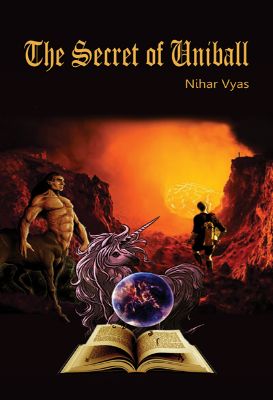
The Secret of Uniball by Nihar Vyas
The Secret of Uniball is the story of a special boy named Parth who comes to Rome in his summer holidays and discovers a secret world called Florencia hidden between the forests. In his amazing discovery, he suddenly finds out that the creatures of this strange world have chosen him for a special mission.
Will he make it to the end? Is he all alone or not? Why is he chosen for this mission? And which final secret will be revealed? The story revolves around these questions.
Set in a modern background, the story combines both Indian and Greek mythologies along with some witty humor. Now, take a deep breath and get ready for a journey of friendship, trust and courage with a touch of thriller, fantasy and action!

The Secret of Volcanic Island by Devyanshi
This is an adventurous novel about a girl Shweta. Persuaded by her cousin brother,Shweta’s father finally makes his mind to go to a deserted island. As much exciting and great as it sounds, once Shweta reaches the island everything seems so wrong. Her expectations of having a brilliant vacation are ruined because the hotel and the island are not the castle of beauty and paradise she imagined. Somehow Shweta bears this but when queer murders take place, she is desperate to leave the place. She is being compelled to go to a volcanic island nearby but she totally doesn’t want to goeven though it meant knowing about the absurd secrets of this volcanic island.
So what is her choice? Is she ready to have a massive change in her life? Will this change bring pleasure to her or give her chilling fear? Is she even ready to accept this change?
Read the thrill through these pages……

The Secret of Wyvern Towers by T. W. Speight
On a certain sunny May morning, about forty years ago, the owner of Wyvern Towers stepped into a lovely glade of Barras Wood, which was a portion of his extensive property.
Felix Drelincourt was a man who stood a little over six feet in height. His black, silky hair had a careless wave in it, and his thin mustache, with its up curled tips, was the cause of his often being taken for a foreigner.
But his eyes were the most striking feature of a striking personality. They were black, and of an extraordinarily piercing quality, with a sort of veiled, somber glow in them at times, as it might be the glow thrown out from between the bars of some hidden furnace, the fire in which was eating its heart away in the flame of its own burning unrest. It was not easy to judge his age, but one might put it down as being somewhere between eight and twenty and four or five and thirty. This morning he was dressed in a velveteen shooting jacket, with cord breeches and leggings, and was wearing a low crowned felt hat.

The Secret Service, the Field, the Dungeon, and the Escape by Albert D. Richardson
Firs5t published in the year 1865, the present book ‘The Secret Service, the Field, the Dungeon, and the Escape’ by famos writer Albert D. Richardson is a collection of his memoirs of his time as a United States Secret Service agent and journalist during the Civil War. Also includes his time as a military prisoner.

The Secret Sharer by Joseph Conrad
First published in the year 1910, the present book ‘The Secret Sharer’ is a short story written by Polish-British author Joseph Conrad. The story takes place on a sailing ship in the Gulf of Siam (now the Gulf of Thailand), at the start of a voyage with cargo for Britain. The narrator is the ship’s young captain, whose name is never given. He is unfamiliar with both his ship and his crew, having joined the ship only a fortnight earlier, and unsure of his ability to exert his authority over the officers and crew who have been together for some time. He makes the point several times that he is the “stranger” on board.
The Secret Teachings of All Ages by Manly P. Hall
NUMEROUS volumes have been written as commentaries upon the secret systems of philosophy existing in the ancient world, but the ageless truths of life, like many of the earth’s greatest thinkers, have usually been clothed in shabby garments. The present work is an attempt to supply a tome worthy of those seers and sages whose thoughts are the substance of its pages. To bring about this coalescence of Beauty and Truth has proved most costly, but I believe that the result will produce an effect upon the mind of the reader which will more than justify the expenditure.

The Secret Tomb by Maurice le Blanc
Under a sky heavy with stars and faintly brighter for a low-hanging sickle moon, the gipsy caravan slept on the turf by the roadside, its shutters closed, its shafts stretched out like arms. In the shadow of the ditch nearby a stertorous horse was snoring.
Far away, above the black crest of the hills, a bright streak of sky announced the coming of the dawn. A church clock struck four. Here and there a bird awoke and began to sing. The air was soft and warm.
Abruptly, from the interior of the caravan, a woman’s voice cried:
“Saint-Quentin! Saint-Quentin!”
A head was thrust out of the little window which looked out over the box under the projecting roof.
“A nice thing this! I thought as much! The rascal has decamped in the night. The little beast! Nice discipline this is!”
Other voices joined in the grumbling. Two or three minutes passed, then the door in the back of the caravan opened and a shadowy figure descended the five steps of the ladder while two tousled heads appeared at the side window.

The Seeds of Creation by Ramesh Pokhriyal ‘Nishank’
The collection of poems in The Seeds of Creation by legendary poet Shri Ramesh Pokhriyal ‘Nishank’ is symbol of his inexhaustible but ever-evolving thinking personality and hence, persuasively inspired by ‘consciousness of creation’. It is virtually a vibrant bouquet of iridescent life experiences of lively and creative thoughts of the heart swinging from the eternal swing of joy, hope, despair, truth, and untruth by the poet which will surely enchant the readers.
The poems meet all the criteria of literature. ‘Nishank’ is a creator fully devoted to sublime thinking and human sensibilities and is in favour of higher values of society. In this collection too, this same sublime musings of the poet have resurfaced.
The Seeds of Creation is a readable compilation of popular poems revealing the values inherent in nature, human relations, and life.
In the world
The poorest
And the weak
Is the one
Who from within
Is weak
Besides who lacks
Control over the self.
***
Never stop for a moment
Sometimes flows like
the ocean
Sometimes swarms like
the storm
Suffers joy and sorrows,
The relationships of the
world in this
Bind like an unbreakable bond.
***
Fill not the heart with poison
Leave the bitterness of speech,
Break the chains of selfishness
In a moment.
***
Look! How humble is it!
While bearing fruits
It bent
Until quietly fuses
With the earth where it stands.
That’s why, it’s said–
Talented person akin to a fructuous tree
Always connects with life,
Idiot like a stub
Sans fruit and inflorescence
Is irrelevantly obdurate.
—from this collection
The Seven Follies of Science [2nd ed.] by John Phin
“In the following pages I have endeavored to give a simple account of problems which have occupied the attention of the human mind ever since the dawn of civilization, and which can never lose their interest until time shall be no more. While to most persons these subjects will have but an historical interest, yet even from this point of view they are of more value than the history of empires, for they are the intellectual battlefields upon which much of our progress in science has been won. To a few, however, some of them may be of actual practical importance, for although the schoolmaster has been abroad for these many years, it is an unfortunate fact that the circle-squarer and the perpetual-motion-seeker have not ceased out of the land.” -Preface

The Shadow Out of Time by H. P. Lovecraft
The Shadow Out of Time is a novella by American horror fiction writer H. P. Lovecraft. Written between November 1934 and February 1935, it was first published in the June 1936 issue of Astounding Stories.
The Shadow over Innsmouth by H. P. Lovecraft
The Shadow over Innsmouth is a horror novella with the aid of H. P. Lovecraft, written in November–December 1931]. It types phase of the Cthulhu Mythos, the use of its motif of a malign undersea civilization. It references countless shared factors of the Mythos, consisting of place-names, legendary creatures and invocations.

The Shaurya Unbound by Nitu And M. Dhinakaran
The lead Internal Security Fore of the country, the central Reserve Police Force holds the proud distinction of being the highest decorated Central Armed Police Force of the country.
‘The Shaurya, Unbeaten’, Chronicles the stories of the C.R.P.F brave hearts with indomitable courage, grit and determination in the face of adversity.

The Sheltered Life by Ellen Glasgow
The Sheltered Life’ stands as one of the most stirring epitaphs to the romantic South in American literature. In the town of Queenborough, Virginia, the Archbalds and the Birdsongs, the two remaining families on Washington Street, hold their ground and attempt to ignore the industrial invasion in the years before the first World War. Told from two perspectives – the wise outlook of elderly General Archbald, a civilized man in an uncivilized world, and the romantic vantage point of Jenny Blair, his impetuous grandchild – the story is a vivid parable of a society in decline.

The Short-story by Atkinson, Harte, Hawthorne, Irving, Kipling, Poe, and Stevenson by William Patterson Atkinson
Contents include: Introduction: I. Definition and Development, II. Forms, III. The Short-story as Narration, IV. Representative Short-stories, V. Bibliography, Washington Irving: Rip Van Winkle (1820), Edgar Allan Poe: The Gold Bug (1842), The Purloined Letter (1845), Nathaniel Hawthorne: Howe’s Masquerade (1838), The Birthmark (1843), Francis Bret Harte: The Outcasts of Poker Flat (1869), Robert Louis Stevenson: The Sire de Maletroit’s Door (1878), Markheim (1885) and Rudyard Kipling: Wee Willie Winkie (1888).
The Shunned House by H. P. Lovecraft
The Shunned House’ is a horror novel by H. P. Lovecraft. It was first published in the October 1937 issue of “Weird Tales”. It is based on an actual house in Providence, Rhode Island, built around 1763 and still standing at 135 Benefit Street; Lovecraft was familiar with the house because his aunt, Lillian Clark, lived there in 1919-20 as a companion to Mrs. H. C. Babbit. But it was another house in Elizabeth, New Jersey that actually provoked Lovecraft to write the story.

The Sick-a-Bed Lady by Eleanor Hallowell Abbott
About The AuthorEleanor Hallowell Abbott (Mrs. Fordyce Coburn) (September 22, 1872 June 4, 1958), born in Cambridge, Massachusetts, was a nationally recognized American author. She was a frequent contributor to The Ladies’ Home Journal.

The Sidereal Messenger of Galileo Galilei by Galileo Galilei and Johannes Kepler
“In this Discussion Kepler gives reasons for accepting Galileo’s observations—although he was not able to verify them from want of a telescope—and entirely supports Galileo’s views and conclusions, adducing his own previous speculations, or pointing out, as in the case of Galileo’s idea of earth-light on the moon, the previous conception of[ix] the same explanation of the phenomenon. He rejects, however, Galileo’s explanation of the copper colour of the moon in eclipses. Kepler ends by expressing unbounded enthusiasm at the discovery of Jupiter’s satellites, and the argument it furnishes in support of the Copernican theory.” -Introduction
The Sign of the Four by Arthur Conan Doyle
Sherlock Holmes took his bottle from the corner of the mantel-piece and his hypodermic syringe from its neat morocco case. With his long, white, nervous fingers he adjusted the delicate needle, and rolled back his left shirt-cuff. For some little time his eyes rested thoughtfully upon the sinewy forearm and wrist all dotted and scarred with innumerable puncture-marks. Finally he thrust the sharp point home, pressed down the tiny piston, and sank back into the velvet-lined arm-chair with a long sigh of satisfaction.
The Silence: What It Is and How To Use It by David V. Bush
There are steps of approach to the Silence. Stillness is one thing and the Silence is another. One may quiet himself physically and not be still, and he may be still without entering the Silence. When one becomes physically and mentally at rest, he is apt to become receptive to psychic influences; and when these are not desired it is advisable to protect oneself while mentally negative. One may affirm his Oneness with God, his being surrounded and protected by the divine Goodness, and may symbolize this by enveloping himself in thought with the white light of love or the mellowed tints of sunshine.
The Sins of Séverac Bablon by Sax Rohmer
“What’s made him break out?” the comedian whispered, aside, to Adeler. For it was an open secret that this man, whose financial operations shook the thrones of monarchy, whose social fêtes were attended by the smartest people, was subject to outbursts of the kind which now saw him seated before a rapidly emptying magnum in a corner of the great restaurant. At such times he would frequent the promenades of music-halls, consorting with whom he found there, and would display the gross vulgarity of a Whitechapel pawnbroker or tenth-rate variety agent.

The Sisters Rondoli, and Other Stories by Guy de Maupassant
No,” said Pierre Jouvent, “I do not know Italy. I started to go there twice, but each time I was stopped at the frontier and could not manage to get any further.

The Sixth Sense by Charles Henry Brent
This book was planned and promised to the publisher more than three years ago. Exacting duties have compelled the writer from time to time, to defer the completion of his undertaking. The delay has been profitable in that it has afforded opportunity for the study of recent works on kindred topics, which in some respects has modified and in some enlarged the original conception of the subject in hand. A long ocean voyage at last has provided the quiet in which to write out these thoughts.

The Sketch Book of Geoffrey Crayon by Washington Irving
The Sketch Book of Geoffrey Crayon, Gent., commonly referred to as The Sketch Book, is a collection of 34 essays and short stories written by the American author Washington Irving. It was published serially throughout 1819 and 1820.

The Skull by Philip K. Dick
The present book ‘The Skull’ by famous English writer Philip K. Dick was first publishe in the year 1952. This is a science fiction short story.

The Slayer of Souls by Robert W. Chambers
Only when the Nan-yang Maru sailed from Yuen-San did her terrible sense of foreboding begin to subside.
For four years, waking or sleeping, the awful subconsciousness of supreme evil had never left her.
But now, as the Korean shore, receding into darkness, grew dimmer and dimmer, fear subsided and grew vague as the half-forgotten memory of horror in a dream.
She stood near the steamer’s stern apart from other passengers, a slender, lonely figure in her silver-fox furs, her ulster and smart little hat, watching the lights of Yuen-San grow paler and smaller along the horizon until they looked like a level row of stars.
The Sleeper Awakes by H. G. Wells
H. G. Wells’s dystopian novel ‘The Sleeper Awakes’ was first published as a book in the year 1899. It narrates the story of a man who wakes up after a very long continuous sleep of hundred and three years. What happens next to him and how the world has changed for him is told interestingly in this novel.
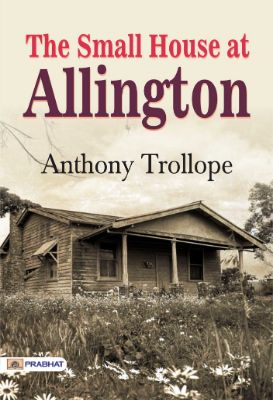
The Small House at Allington by Anthony Trollope
First published in the year 1864, the present historical romance ‘The Small House at Allington’ by Anthony Trollope was his fifth novel in the series named “Chronicles of Barsetshire”. The plot concerns the Dale family, who live in the “Small House”, a dower house intended for the widowed mother of the owner of the estate. The landowner, in this instance, is the bachelor Squire of Allington, Christopher Dale. Dale’s mother having died, he has allocated the Small House, rent free, to his widowed sister-in-law and her daughters Isabella and Lilian.

The Social Cancer: A Complete English Version of Noli Me Tangere by José Rizal
“On the last of October Don Santiago de los Santos, popularly known as Capitan Tiago, gave a dinner. In spite of the fact that, contrary to his usual custom, he had made the announcement only that afternoon, it was already the sole topic of conversation in Binondo and adjacent districts, and even in the Walled City, for at that time Capitan Tiago was considered one of the most hospitable of men, and it was well known that his house, like his country, shut its doors against nothing except commerce and all new or bold ideas. Like an electric shock the announcement ran through the world of parasites, bores, and hangers-on, whom God in His infinite bounty creates and so kindly multiplies in Manila. Some looked at once for shoe-polish, others for buttons and cravats, but all were especially concerned about how to greet the master of the house in the most familiar tone, in order to create an atmosphere of ancient friendship or, if occasion should arise, to excuse a late arrival.” -an excerpt

The Somme: The Second Battle of the Somme (1918) by Michelin & Cie
An informative compendium about the second war of Somme. This books would be useful and interesting to those, who are interested to know about and study deeply the history of various big wars and history of human distruction.

The Son of the Wolf by Jack London
“‘Carmen won’t last more than a couple of days.’ Mason spat out a chunk of ice and surveyed the poor animal ruefully, then put her foot in his mouth and proceeded to bite out the ice which clustered cruelly between the toes.
“‘I never saw a dog with a highfalutin’ name that ever was worth a rap,’ he said, as he concluded his task and shoved her aside. ‘They just fade away and die under the responsibility. Did ye ever see one go wrong with a sensible name like Cassiar, Siwash, or Husky? No, sir! Take a look at Shookum here, he’s—’ Snap! The lean brute flashed up, the white teeth just missing Mason’s throat.” -an excerpt

The Song of the Lark by Willa Cather
Dr. Howard Archie had just come up from a game of pool with the Jewish clothier and two traveling men who happened to be staying overnight in Moonstone. His offices were in the Duke Block, over the drug store. Larry, the doctor’s man, had lit the overhead light in the waiting-room and the double student’s lamp on the desk in the study. The isinglass sides of the hard-coal burner were aglow, and the air in the study was so hot that as he came in the doctor opened the door into his little operating-room, where there was no stove. The waiting room was carpeted and stiffly furnished, something like a country parlor. The study had worn, unpainted floors, but there was a look of winter comfort about it. The doctor’s flat-top desk was large and well made; the papers were in orderly piles, under glass weights. Behind the stove a wide bookcase, with double glass doors, reached from the floor to the ceiling. It was filled with medical books of every thickness and color. On the top shelf stood a long row of thirty or forty volumes, bound all alike in dark mottled board covers, with imitation leather backs.