
Classic Books
Showing 3601–3650 of 4246 results
The Reign of Tiberius by Tacitus
As to the succeeding Princes, Tiberius, Caligula, Claudius, and Nero; the dread of their tyranny, whilst they yet reigned, falsified their history; and after their fall, the fresh detestation of their cruelties inflamed their Historians. Hence my own design of recounting briefly certain incidents in the reign of Augustus, chiefly towards his latter end, and of entering afterwards more fully into that of Tiberius and the other three; unbiassed as I am in this undertaking by any resentment, or any affection; all the influences of these personal passions being far from me…
The Relations Between Religion and Science by Frederick Temple
“Also I direct and appoint, that the eight Divinity Lecture Sermons shall be preached upon either of the following Subjects—to confirm and establish the Christian Faith, and to confute all heretics and schismatics—upon the divine authority of the holy Scriptures—upon the authority of the writings of the primitive Fathers, as to the faith and practice of the primitive Church—upon the Divinity of our Lord and Saviour Jesus Christ—upon the Divinity of the Holy Ghost—upon the Articles of the Christian Faith, as comprehended in the Apostles’ and Nicene Creeds.

The Remarkable Adventures of an Old Woman and Her Pig by Anonymous
Great Stories and poems for children is a collection of most delightful childrens stories.

The Remedy for Unemployment by Alfred Russel Wallace
“The reason why I wrote the present pamphlet (which first appeared in the “Socialist Review,” and is now reprinted in a slightly modified form) was that, although there is a small body of avowed Socialists in Parliament, not one of them has, so far as I am aware, upheld any of the fundamental principles of Socialism as a means of dealing with the greatest of present-day problems—that of chronic unemployment and starvation all over our land. Let me illustrate what I mean by a few examples. Perhaps the most fundamental and universally admitted axiom of Socialism is that all production should be, primarily, for use and not for profit; and the next in importance is that the true or proper wages of labour is the whole product of that labour.” -Alfred Russel Wallace
The Republic by Plato
The Republic is a Socratic dialogue concerning the definition of justice the order and character of the just city-state and the just man—for this reason, ancient readers used the name On Justice as an alternative title (not to be confused with the spurious dialogue also titled On Justice).
The republic of Cicero by Marcus Tullius Cicero
First published in the year 1829, the present book ‘The republic of Cicero’ by celebrated ancient Roman philosopher, politician, lawyer, orator and political theorist Marcus Tullius Cicero is a dialogue on Roman politics, written in six books in Socratic style.
The Return of Dr. Fu-Manchu by Sax Rohmer
“When did you last hear from Nayland Smith?” asked my visitor.
I paused, my hand on the syphon, reflecting for a moment.
“Two months ago,” I said; “he’s a poor correspondent and rather soured, I fancy.”
“What—a woman or something?”
“Some affair of that sort. He’s such a reticent beggar, I really know very little about it.”
I placed a whisky and soda before the Rev. J. D. Eltham, also sliding the tobacco jar nearer to his hand. The refined and sensitive face of the clergy-man offered no indication of the truculent character of the man. His scanty fair hair, already gray over the temples, was silken and soft-looking; in appearance he was indeed a typical English churchman; but in China he had been known as “the fighting missionary,” and had fully deserved the title. In fact, this peaceful-looking gentleman had directly brought about the Boxer Risings!

The Return of Sherlock Holmes by Arthur Conan Doyle
The Return of Sherlock Holmes’ is a collection of thirteen Sherlock Holmes stories, written by Arthur Conan Doyle, that were first published in the year 1903. These are engaging, fast paced, suspense, spine chilling, witty stories of adventures of two detective friends and flatmates.
The Return of the Soldier by Rebecca West and Samuel Hynes
“Come here, Jenny. I’m going to dry my hair.” And when I looked again I saw that her golden hair was all about her shoulders and that she wore over her frock a little silken jacket trimmed with rosebuds. She looked so like a girl on a magazine cover that one expected to find a large “15 cents” somewhere attached to her person. She had taken Nanny’s big basket-chair from its place by the high-chair, and was pushing it over to the middle window. “I always come in here when Emery has washed my hair. It’s the sunniest room in the house. I wish Chris wouldn’t have it kept as a nursery when there’s no chance—” She sat down, swept her hair over the back of the chair into the sunlight, and held out to me her tortoiseshell hair-brush. “Give it a brush now and then, like a good soul; but be careful. Tortoise snaps so!”
The Rhinegold & The Valkyrie by Richard Wagner
A greenish twilight, lighter above than below. The upper part is filled with undulating water, which streams respectively from right to left. Towards the bottom the waves resolve themselves into a mist which grows finer as it descends, so that a space, as high as a mans body from the ground, appears to be quite free from the water, which floats like a train of clouds over the gloomy stretch below. Steep rocky peaks jut up everywhere from the depths, and enclose the entire stage. The ground is a wild confusion of jagged rocks, no part of it being quite level, and on every side deeper fisures are indicated by a still denser gloom. Woglinde circles with graceful swimming movements round the central rock.
The Rhythm of Life, and Other Essays by Alice Meynell
If life is not always poetical, it is at least metrical. Periodicity rules over the mental experience of man, according to the path of the orbit of his thoughts. Distances are not gauged, ellipses not measured, velocities not ascertained, times not known. Nevertheless, the recurrence is sure. What the mind suffered last week, or last year, it does not suffer now; but it will suffer again next week or next year. Happiness is not a matter of events; it depends upon the tides of the mind. Disease is metrical, closing in at shorter and shorter periods towards death, sweeping abroad at longer and longer intervals towards recovery. Sorrow for one cause was intolerable yesterday, and will be intolerable tomorrow; today it is easy to bear, but the cause has not passed. Even the burden of a spiritual distress unsolved is bound to leave the heart to a temporary peace; and remorse itself does not remain—it returns. Gaiety takes us by a dear surprise. If we had made a course of notes of its visits, we might have been on the watch, and would have had an expectation instead of a discovery.
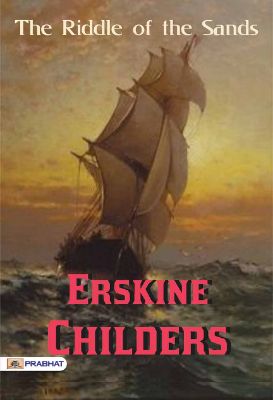
The Riddle of the Sands by Erskine Childers
The Riddle of the Sands’ is a 1903 novel by Erskine Childers. This book got immensely popular in the years before World War I. It is an early example of the espionage novel and was extremely influential in the genre of spy fiction. It has been made into feature-length films for both cinema and television.

The Rime of the Ancient Mariner by Samuel Taylor Coleridge
It is an ancient Mariner,
And he stoppeth one of three.
“By thy long grey beard and glittering eye,
Now wherefore stopp’st thou me?
“The Bridegroom’s doors are opened wide,
And I am next of kin;
The guests are met, the feast is set:
May’st hear the merry din.”
He holds him with his skinny hand,
“There was a ship,” quoth he.
“Hold off! unhand me, grey-beard loon!”
Eftsoons his hand dropt he.
The Rise of Silas Lapham by William Dean Howells
The Rise of Silas Lapham is a realist novel by William Dean Howells published in 1885. The story follows the materialistic rise of Silas Lapham from rags to riches, and his ensuing moral susceptibility.
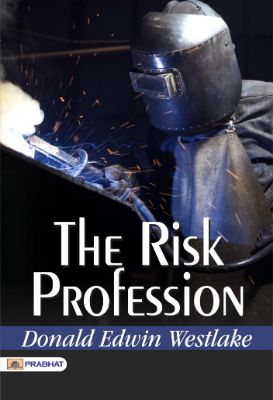
The Risk Profession by Donald Edwin Westlake
Everyone knows him (DONALD E. WESTLAKE) as the mystery writer who published books like The Hook (2000), Bad News 2001, and Put a Lid on It (2002) under his own name, Donald E. Westlake, and of course that he was also Richard Stark and a number of other favorite authors. But a science fiction writer? — Really? — You bet he was, early on in his career. (He even wrote one SF novel — Anarchaos, in 1966, as “Curt Clark.”) He also wrote quite a bit of short SF, like this weird little SF mystery that first graced the pages of Amazing in 1963.
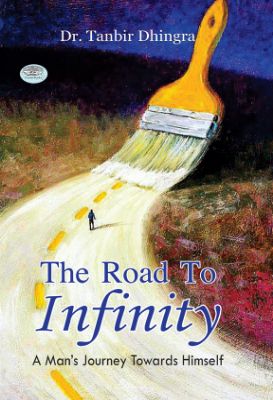
The Road to Infinity by Tanbir Dhingra
A Self-Exploratory Odyssey to ‘Infinity’ and ‘Beyond’ with Infinite Thoughts encapsulating Infinite Emotions in Infinite Moments giving Infinite Chances to explore ‘Who You Are’ in the quest for ‘What Is life’. A magically crafted peregrination of quotations reveals a deep longing for greater sense of meaning, happiness and contentment. It helps to create enchanting thoughts that incorporate the classic tools of transformation into simple philosophy of living. This is not just another book that should find its way to self-help shelf; rather it’s a coach to motivate you and a best friend to inspire you forever. The book teaches us wisdom to: Build a Life of Passion, Purpose and Peace Value Time as our most important commodity Stay Fit by creating healthy habits not restrictions Nourish our Relationships and value things we Love Cultivate innovation of Colors and creativity from Nature

The Robe by Lloyd C. Douglas
One of the best-selling titles of the 1940s, ‘The Robe’ is a historical novel written by Lloyd C. Douglas. The book is about the Crucifixion of Jesus. It was first published in the year 1942. All of Lloyd C. Douglas’ novels, essays, and short stories relied on his spiritual background for thematic and creative inspiration. At the height of his popularity, Douglas was receiving on average 100 letters a week from fans. One of these letters provided the inspiration for ‘The Robe’.
The rocoli of Sant’Alipio by Antonio Caccianiga
La difesa del Cadore è uno dei più eroici episodi delle nostre guerre d’indipendenza. Se io conosco nei più minuti particolari quei fatti memorabili lo devo alla vostra somma benevolenza.

The Romance of a Christmas Card by Kate Douglas Wiggin
This work has been selected by scholars as being culturally important, and is part of the knowledge base of civilization as we know it.
The Romance of Mathematics by P. Hampson
The lectures, essays, and other matter contained in these pages have been discovered recently in a well-worn desk which was formerly the property of a Lady Professor of Girtham College; and as they contain some original thoughts and investigations, they have been considered worthy of publication.

The Romance of Modern Invention by Archibald Williams
The object of this book is to set before young people in a bright and interesting way, and without the use of technical language, accounts of some of the latest phases of modern invention; and also to introduce them to recent discoveries of which the full development is yet to be witnessed.
The author gratefully acknowledges the help given him as regards both literary matter and illustrations by:—Mr. Cuthbert Hall (the Marconi Wireless Telegraphy Co.); Mr. William Sugg; Mr. Hans Knudsen; Mr. F. C. B. Cole; Mr. E. J. Ryves; Mr. Anton Pollak; the Telautograph Co.; the Parsons Steam Turbine Co.; the Monotype Co.; the Biograph Co.; the Locomobile Co.; the Speedwell Motor Co.
The Romance of Names by Ernest Weekley
“The interpretation of personal names has always had an attraction for the learned and others, but the first attempts to classify and explain our English surnames date, so far as my knowledge goes, from 1605. In that year Verstegan published his Restitution of Decayed Intelligence, which contains chapters on both font-names and surnames, and about the same time appeared Camden’s Remains Concerning Britain, in which the same subjects are treated much more fully. Both of these learned antiquaries make excellent reading, and much curious information may be gleaned from their pages, especially those of Camden, whose position as Clarencieux King-at-Arms gave him exceptional opportunities for genealogical research. From the philological point of view they are of course untrustworthy, though less so than most modern writers on the same subject.” -Preface
The Romance of Tristan and Iseult by Joseph Bédier
My lords, if you would hear a high tale of love and of death, here is that of Tristan and Queen Iseult; how to their full joy, but to their sorrow also, they loved each other, and how at last they died of that love together upon one day; she by him and he by her.
Long ago, when Mark was King over Cornwall, Rivalen, King of Lyonesse, heard that Mark’s enemies waged war on him; so he crossed the sea to bring him aid; and so faithfully did he serve him with counsel and sword that Mark gave him his sister Blanchefleur, whom King Rivalen loved most marvellously.’ -an excerpt
A romantic folktale from medieval France that dates back to 12th century.
The Romantic Adventures of a Milkmaid by Thomas Hardy
“It was half-past four o’clock (by the testimony of the land-surveyor, my authority for the particulars of this story, a gentleman with the faintest curve of humour on his lips); it was half-past four o’clock on a May morning in the eighteen forties. A dense white fog hung over the Valley of the Exe, ending against the hills on either side.
“But though nothing in the vale could be seen from higher ground, notes of differing kinds gave pretty clear indications that bustling life was going on there. This audible presence and visual absence of an active scene had a peculiar effect above the fog level. Nature had laid a white hand over the creatures ensconced within the vale, as a hand might be laid over a nest of chirping birds.” -an excerpt
The Room in the Dragon Volant by Joseph Sheridan Le Fanu
J. Sheridan LeFanu — Irish author of such classics as the short vampire novel Carmella and A Chapter in the History of the Tyrone Family (said to be the tale that gave rise to Emily Bronte’s Wuthering Heights — lived from 1814 until 1873.

The Root Cause by Alok Jain
ANGEL and DEVIL both reside inside us. AYURVEDA – one of the Vedic Sciences of India had explained this logic very beautifully using concepts of SATTVIC – the minds possessing positive virtues and TAMASIC – the minds with negative virtues arising out of passion and ignorance due to the force of inertia. It explained how different foods invoke the sattvic or tamasic quality in our minds and that how a tamasic mind not only leads to physical and mental diseases but it also manifests itself into a chaotic state of mind leading to crimes, with scales ranging from as small as uncontrolled/aggressive behavior to as big as ruthless killings in the name of cast/ creed/ religion/ countries.
ASTROLOGY is another occult science of Vedic wisdom that is inseparable from Ayurveda which explains that how each one of us has been gifted a different body and mind by the nature and that how Ayurvedic principles can be applied on different bodies and minds to invoke the Sattvic mind for leading a blissful life.
This book is first of its kind to explain the concepts of Ayurveda, Astrology and other allied sciences of Vedas in the modern scientific language that a layman understands.
The occult sciences will no more be a secret.
At a stage, when this civilization has reached the tipping point, it is up to us whether we just go with the flow and inertia to move into a world full of chaos and misery or learn from our mistakes and gift a beautiful world to our future generations by invoking the Angel within us.
Remember that eating right is the foremost Karma if we wish to reclaim the GOLDEN AGE because
“YOU ARE WHAT YOU EAT”
Also remember that since each one of us has been gifted a different machine, its needs are also different from others. And that is why
‘ONE’S NECTAR COULD BE ANOTHER’S POISON’
The Rosary by Florence L. Barclay
The Rosary is a beautiful love story. Gareth Dalmain falls in love with the Honorable Jane Champion. She loves him back, but does not trust his love, as is known to be a great lover of beauty, and she – alas – is very plain. Just as she decides to trust him, she receives news that he has been blinded in a hunting accident. She wants to go visit him, but he will not receive her, as he wants only her love – not her pity.
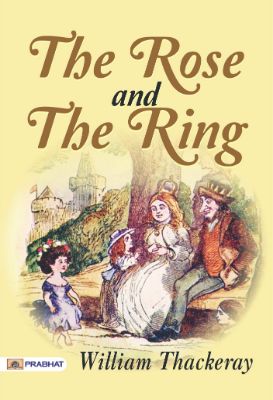
The Rose and the Ring by William Thackeray
First published in the year 1854, the present satirical work of fantasy fiction ‘The Rose and the Ring’ by William Thackeray criticises, to some extent, the attitudes of the monarchy and those at the top of society and challenges their ideals of beauty and marriage.
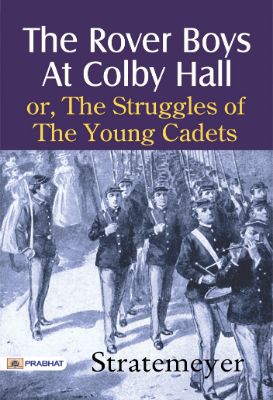
The Rover Boys at Colby Hall; or, The Struggles of the Young Cadets by Stratemeyer
As mentioned in several of the other volumes of the first series, this line was started a number of years ago with the publication of “The Rover Boys at School,” in which my readers were introduced to Dick, Tom, and Sam Rover, three wide-awake American lads. In that volume and in those which followed I gave the particulars of their adventures while attending Putnam Hall Military Academy, Brill College, and while on numerous outings, both in our own country and abroad.

The Rover Boys at School; Or, The Cadets of Putnam Hall by Arthur M. Winfield
While Putnam Hall is not the real name of the particular place of learning I had in mind while penning this tale for your amusement and instruction, there is really such a school, and dear Captain Putnam is a living person, as are also the lively, wide-awake, fun-loving Rover brothers, Dick, Tom, and Sam, and their schoolfellows, Larry, Fred, and Frank. The same can be said, to a certain degree, of the bully Dan Baxter, and his toady, the sneak, commonly known as “Mumps.”

The Rover Boys in Camp; or, The Rivals of Pine Island by Arthur M. Winfield
As I have mentioned before, when I started this line of stories I had in mind to make not more than three, or possibly four, volumes. But the publication of “Rover Boys at School,” “Rover Boys on the Ocean,” “Rover Boys in the Jungle,” and “Rover Boys Out West” did not appear to satisfy my readers, and so I followed with “Rover Boys on the Great Lakes,” “Rover Boys in the Mountains,” and lastly with “Rover Boys on Land and Sea.” But the publishers say there is still a cry for “more! more!” and so I now present to you this new Rover Boys book, which relates the adventures of Dick, Tom, and Sam, and a number of their old-time friends, at home, at dear old Putnam Hall, and in camp on Pine Island.

The Rover Boys on the Farm; or, Last Days at Putnam Hall by Arthur M. Winfield
It is a large number of volumes to write about one set of characters, isn’t it? When I started the series, many years ago, I had in mind, as I have told you before, to pen three books, possibly four. But as soon as I had written “The Rover Boys at School,” “The Rover Boys on the Ocean,” and “The Rover Boys in the Jungle,” there was a cry for more, and so I wrote “The Rover Boys Out West,” “On the Great Lakes,” “In the Mountains,” “On Land and Sea,” “In Camp,” “On the River,” “On the Plains,” and then “In Southern Waters,” where we last left our heroes.

The Rover Boys Under Canvas or The Mystery of the Wrecked Submarine by Arthur M. Winfield
My Dear Boys: This book is a complete story in itself, but forms the third volume in a line issued under the general title, “The Second Rover Boys Series for Young Americans.”

The Royal Road to Health by Chas. A. Tyrrell
This edition has been completely revised and much of it rewritten, and, while the essential principles remain unchanged, some slight departures from previously expressed opinions may be noted; for in the years that have elapsed since the first edition saw the light, some notable advances have been made in rational therapeutics and dietetics, and no one can afford to lag behind the car of Progress.
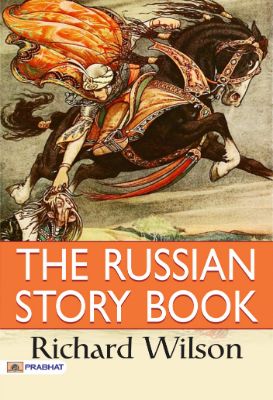
The Russian Story Book by Richard Wilson
I have gone right into the heart of “Holy Russia,” to Kiev and Novgorod and the borders of the Caspian, in an endeavour to show by means of some of the early legends the ideals and point of view of the Russian nation while it was in the process of being made. The stories of the song-cycles of Kiev and Novgorod tell of a barbaric, though not a barbarian, world, full of high colour and spirited action, of the knock-down blow followed quickly by the hand of friendship freely extended to pick up the fallen foeman—if indeed he has had the hardihood to survive.

The S. P. Mystery by Harriet Pyne Grove
“Jean Gordon rushed into the house, her face all aglow. There was some fire within which made her eyes bright and the sharp wind, which came from lakes not too far away, gave her rosy cheeks and nipped her nose as well.
“Without stopping in the hall to take off her pretty red coat or the close little hat that left little but eyes, nose and mouth to be seen, she opened the door into the dining-room, from which the sound of her mother’s machine could be heard.” -an excerpt
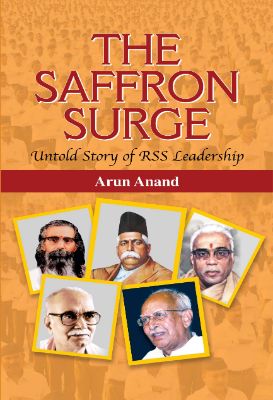
The Saffron Surge Untold Story of Rss Leadership by Arun Anand
Right since its inception, there has been a tradition in the RSS of not highlighting the work of an individual, so the lives and work done by the Sarsanghchalaks have not been discussed publicly much. The general perception is that the RSS chief (Sarsanghchalak) is one of the most powerful persons in the country as he holds sway
over millions of swayamsevaks (volunteers) and dozens of organisations run by these swayamsevaks including the Bharatiya Janata Party which rules at the Centre as well as in several states. But what is the truth? What role Sarsanghchalaks have played in shaping the RSS? This well researched book takes one through the lives of the five Sarsanghchalaks who had steered RSS since its inception through one of its most tumultuous years. It tells a hitherto untold story about not only the lives of the Sarsanghchalaks but also the journey of the RSS itself.

The Saint of the Dragon’s Dale by William Stearns Davis
The glimpse of the Wartburg cheered Johann. Man was there—and what was a “robber-knight” beside a redoubtable pixie? Likewise, what likelier place for pixies than those glades just before? Johann had not forgotten the wise tales of old grandame Elsa; and there it was,—the stone cross, where forty years ago the griping burgomaster Gottfried had been found lying stiff and cold, with purse untouched, and never a scar, save a little one behind his ear. “He had gone to meet the Devil, and the Devil had stolen his soul;” so said Father Georg in church. It was heresy to doubt it.
The Salesman by Waldo T. Boyd
First published in the Science Fiction magazine in March 1953, ‘The Salesman’ is a famous short novella by the renowned writer Waldo T. Boyd.
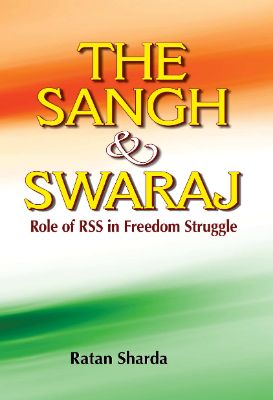
The Sangh & Swaraj by Ratan Sharda
Of late, political compulsions have made Left and so-called secular parties run malicious propaganda about RSS’s role in independence struggle and malign its sterling record of public service. This book tells us that RSS was wedded to the cause of Swaraj since its inception. Dr. Hedgewar’s life and actions and the oath that swayamsevaks took clearly showed the commitment to freedom struggle. To convert this freedom into Swaraj, India required disciplined and brave spirited young men who would be dedicated to the national cause. British records clearly show that they were vary of RSS using its growing clout for independence struggle.
Movement for freedom did not end with ‘Tryst with Destiny’ on 15th August, 1947. There were endless dark nights in this twilight period, when RSS workers were the biggest organised force apart from security forces who put their lives to risk to salvage whatever they could, of destroyed lives of millions. It is for people of India and history to judge whether these acts of bravery were patriotic or communal. The author highlights other factors that led to our Independence and underlines that it was not result of any one agitation or action but rose slowly over a wave that had built up on the back of cultural renaissance triggered by great spiritual leaders of Bharat.
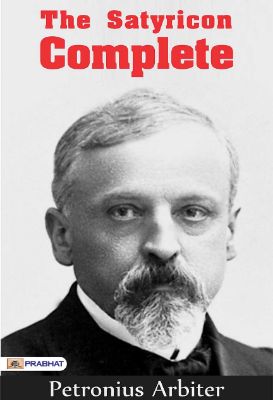
The Satyricon — Complete by Petronius Arbiter
The Satyricon’ is a Latin work of fiction believed to have been written by Gaius Petronius, though the manuscript tradition identifies the author as a certain Titus Petronius. The Satyricon is an example of Menippean satire, which is very different from the formal verse satire of Juvenal or Horace. The work contains a mixture of prose and verse; serious and comic elements; and erotic and decadent passages.

The Sayings of Confucius by Confucius
Confucius was a Chinese philosopher and politician of the Spring and Autumn period. The philosophy of Confucius, also known as Confucianism, emphasized personal and governmental morality, correctness of social relationships, justice, kindness, and sincerity.
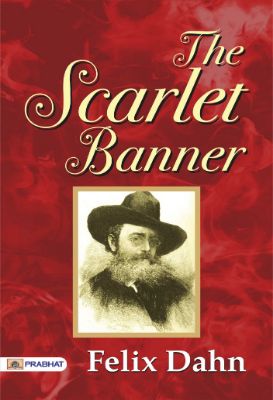
The Scarlet Banner by Felix Dahn
This story, published in Germany under the title of Gelimer is the third volume in the group of romances to which “Felicitas” and “The Captive of the Roman Eagles” belong, and, like them, deals with the long continued conflict between the Germans and the Romans. But in the present novel the scene of the struggle is transferred from the forests of Germania to the arid sands of Africa, and, in wonderfully vivid pen pictures, the author displays the marvellous magnificence surrounding the descendants of the Vandal Genseric.

The Scarlet Letter by Nathaniel Hawthorne
The Scarlet Letter: A Romance is an 1850 work of fiction in a historical setting, written by American author Nathaniel Hawthorne. The book is considered to be his “masterwork”.
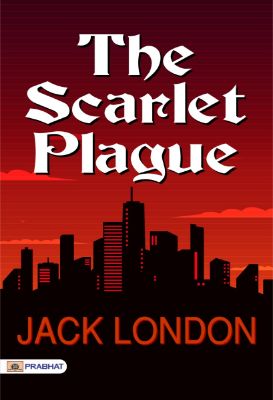
The Scarlet Plague by Jack London
The Scarlet Plague is a post-apocalyptic fiction novel written by Jack London and originally published in London Magazine in 1912.

The Sceptical Chymist by Robert Boyle
First published in the year 1661, the present book ‘The Sceptical Chymist’ by scientist Robert Boyle is written in the form of a dialogue. It presents Boyle’s hypothesis that matter consisted of atoms and clusters of atoms in motion and that every phenomenon was the result of collisions of particles in motion. For these reasons Robert Boyle has been called the founder of modern chemistry by J. R. Partington.

The School for Husbands by Jean-Baptiste Poquelin (Moliere)
The School for Husbands is a play written by Molière and originally performed in 1661 in Paris. It was the first of his full length plays, preceding The School for Wives by a year.

The School for Scandal by Richard Brinsley Sheridan
The School for Scandal is a play written by Richard Brinsley Sheridan. It was first performed in London at Drury Lane Theatre on 8 May 1777.

The Science of Being Well by Wallace D. Wattles
The Science of Being Well gives an extraordinary effective and successful method to achieve the physical well being, have a healthy body and enjoy durable health.
Wallace Delois Wattles was an American author. A New Thought writer, he remains personally somewhat obscure, but his writing has been widely quoted and remains in print in the New Thought and self-help movements.
The Science of Getting Rich by Wallace Delois Wattles
First published in 1910, this book sets out the way you can become rich, using things like visualisation, belief and the law of attraction.