
Classic Books
Showing 1301–1350 of 4246 results

In Tune with the Infinite or, Fullness of Peace, Power, and Plenty by Ralph Waldo Trine
Within yourself lies the cause of whatever enters into your life. To come into the full realization of your own awakened interior powers, is to be able to condition your life in exact accord with what you would have it.
Ralph Waldo Trine was a philosopher, mystic, teacher and author of many books, and was one of the early mentors of the New Thought Movement. His writings had a great influence on many of his contemporaries including Ernest Holmes, founder of Religious Science. He was a true pioneer in the area of life-transforming thought. No other New Thought author has sold more books than he, his writings reaching far beyond New Thought circles out to the general public, which has bought and read Trine’s books without ever knowing that they were New Thought.
In-Form to Formless by Chintamani Shriram
Last but not the least, a great learned person and devotee of Shree Akkalkot Swami Samarth, late Shree Vasant Gangadhar Udas (popularly known as Shree Udas Maharaja in Chinchvad and Pune) is my spiritual Guru. He has always encouraged and guided me in this endeavour. I feel really very happy to note that only because of his inspiration, I was able to accomplish this book. This study is my humble tribute to him
Incidents in the Life of a Slave Girl by Harriet Jacobs
The true story of an individual’s struggle for self-identity, self-preservation, and freedom, Incidents in the Life of a Slave Girl remains among the few extant slave narratives written by a woman.The book documents Jacobs’ life as a slave and how she gained freedom for herself and for her children. Jacobs contributed to the genre of slave narrative by using the techniques of sentimental novels “to address race and gender issues.” She explores the struggles and sexual abuse that female slaves faced as well as their efforts to practice motherhood and protect their children when their children might be sold away.
Increasing Human Efficiency in Business by Walter Dill Scott
“THE modern business man is the true heir of the old magicians. Every thing he touches seems to increase ten or a hundredfold in value and usefulness. All the old methods, old tools, old instruments have yielded to his transforming spell or else been discarded for new and more effective substitutes. In a thousand industries the profits of to-day are wrung from the wastes or unconsidered trifles of yesterday.” -an excerpt
Increasing Personal Efficiency by Russell H. Conwell
This book explains a lot on techniques and ideas on enhancing one’s personal efficiency. With esential topics in form of chapters in this book: Wome, Musical Culture, Oratory, Self-Help & Some advice to Young Men; this book is a helpful tool for one’s performance in life.

Incredible Adventures by Algernon Blackwood
John Hendricks was bear-leading at the time. He had originally studied for Holy Orders, but had abandoned the Church later for private reasons connected with his faith, and had taken to teaching and tutoring instead. He was an honest, upstanding fellow of five-and-thirty, incorruptible, intelligent in a simple, straightforward way. He played games with his head, more than most Englishmen do, but he went through life without much calculation. He had qualities that made boys like and respect him; he won their confidence. Poor, proud, ambitious, he realised that fate offered him a chance when the Secretary of State for Scotland asked him if he would give up his other pupils for a year and take his son, Lord Ernie, round the world upon an educational trip that might make a man of him.
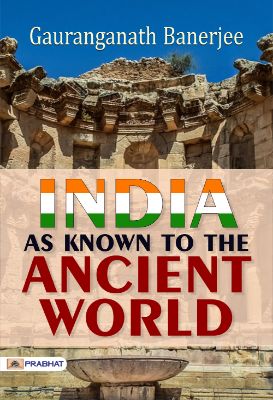
India As Known to the Ancient World by Gauranganath Banerjee
The object of this little book is to offer a survey of the remarkable civilisation which arose in ancient India thousands of years ago and which influenced not only the manners, religion and customs of the people of the Malaya Archipelago and Indo-China, but gave also a thin veneer of culture to the nomads of Central Asiatic steppes, through her commercial enterprise and religiouspropaganda.
India Beckons by Rajshekhar
Writing a book of fiction was not something that I dreamt of in my growing years. In fact, it was only some years ago that the thought struck me and I decided to go ahead with it when I had a handful of ideas ready. Not a voracious reader and one short of patience, short
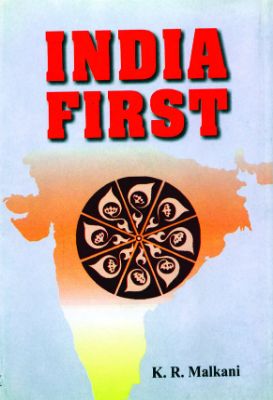
India First by K. R. Malkani
The India of 2002 is not the India of 1947.
The India of Vajpayee is not the India of Nehru.
The India of 1947 was drenched in blood and immersed in self-doubt. The India of 2002 stands strong and tall. The main engine of this Silent Revolution has been the Sangha Parivar led by RSS and including BJS-BJP, BMS-BKS, ABVP, VHP, SJM etc. MaIkani as Swayamsevak for sixty years, ‘Organiser’ editor for 35 years and BJP man since the Party’s birth—nay conception—has been a witness to this era.
‘INDIA FIRST is his analysis of, and Running Commentary on, this unfolding Drama.
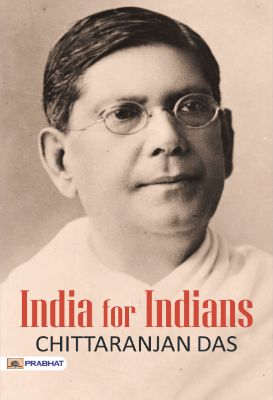
India for Indians by CHITTA RANJAN DAS
Personally I have known Mr. Chitta Ranjan Das from the days of his youth. His father, the late Babu Bhuban Mohan Das was a friend of mine. Bhuban Mohan was a well-known Attorney of the Calcutta High Court. For some time he was connected also with Bengalee journalism. As editor, first, of the Brahmo Public Opinion, and subsequently of the Bengal Public Opinion, he made a very high position for himself among Bengalee journalists. His style was very simple, and he spoke with a directness that was rather rare in our more successful English weeklies of those days. Babu Bhuban Mohan was a sincere patriot, and though like good many English educated Bengalees of his generation, he threw himself heart and soul into the Brahmo Samaj Movement, in his personal life and more particularly in his dealings with his Hindu relatives, he belonged to the old Hindu type, and spent whatever he earned,—and he earned a lot—for the support of his poorer relatives. Indeed he spent upon them more than his finances allowed and consequently got involved in heavy liabilities that forced him, during the closing years of his professional life, to take refuge in the Insolvency Court.
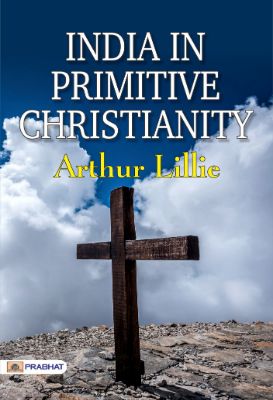
India in Primitive Christianity by Arthur Lillie
Fully illustrated. The connection between Christianity and Buddhism is unmistakable, both in terms of the traditional narratives of the respective founders, and in their attributed sayings. Arthur Lillie here examines possible historical linkages between the two religions from a critical, rationalist, viewpoint. For some reason, there is what appears to be a missing gap of several paragraphs somewhere in the later pages; a numbered list of astrological signs starts with the number 3. This is how the text was and I have no explanation for this. Chapters include: S’iva; Baal; Buddha; “The Wisdom Of The Other Bank”; King Asoka; The Mahâyâna; Avalokitishwara; The Cave Temple And Its Mysteries; Architecture; The Essenes; The Essene Jesus; More Coincidences; Rites; Paulinism; Transubstantiation; and more.
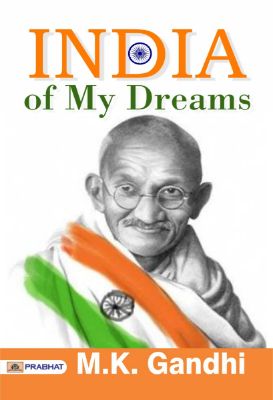
India of My Dreams by M.K. Gandhi
A book, which places before the reader not only those basic and fundamental principles, but also indicates how we can help to fulfill them through our freedom by establishing a polity and social life, and through the instrumentality of a constitution and the dedication of the human material which this vast country will now throw up to work without any external fetters or internal inhibitions, will be welcomed by all. Shri R. K. Prabhu has proved his skill in making a selection of the most telling and significant passage from Mahatma Gandhi’s writings and have no doubt that this volume will be a useful addition to the literature on the subject.

India: Past, Present, and Future by Charles Crosthwaite
What is India? I make no apology for answering the question in the words used by Lord Dufferin at the St. Andrew’s dinner, Calcutta, on November 80, 1888, for they give the most vivid picture of what we mean by India that has been drawn in a few lines. ‘It is an Empire,’ he said, ‘equal in size, if Russia be excluded, to the entire Continent of Europe, with a population of 250,000,000 souls.
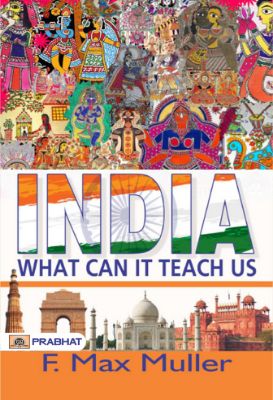
India: What Can it Teach Us? by F. Max Müller
The collection of lectures of F. Max Müller portrays India, specially, the Vedic India, as an epitome of virtuosity & morality, whose glory is equal if not greater to the classical Greek or Roman Civilizations. Müller urges the Westerners to come out of their supreme colonial mindset & admire & adopt the multidimensional efficacy that is inherent in India. He espouses an amazing depth of love & reverence for India, & highlights such positive aspects about her that it compels the reader to look at his or her own country in a different positive light.
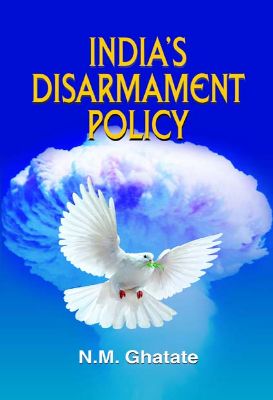
India’s Disarmament Policy by Dr. N.M. Ghatate
Disarmament has been the main plank of India’s Foreign Policy since independence. However, of all international issues, it is the most pressing as it directly affects country’s capability to protect itself. It cannot be ignored as the future of humanity is at stake!
To this end, the book examines India’s role in conciliation and its contribution on this issue. The book discusses establishment of negotia-tion machinery, suspension of nuclear test, proliferation of nuclear weapons, establishment of nuclear free zones, reduction of nuclear and conventional weapons, international control of atomic energy and establishment of international police force.
This book explores specific security scenarios that impelled India to oppose the Non Prolifera-tion Treaty (NPT), Comprehensive Test Ban Treaty (CTBT) and give nuclear dimension to India’s military power.
Finally, bilateral and multilateral treaties in the sphere of arms control and its reduction are examined, followed by controversial Indo-US Deal, 2008 and its impact on India disarmament policy.
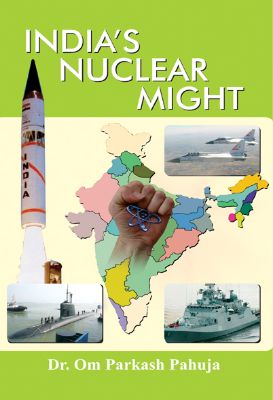
India’s Nuclear Might by Om Parkash Pahuja
This book contains the elementary unclassified information which a common man of a country, particularly a Nuclear Weapon State like India, needs to know. The basics of nuclear power, the nuclear energy necessary for the country’s Industrial Power have been dealt in detail. It gives the amusing history of discovery of the Nuclear Chain Reaction which led to the making of horrible Weapons of Mass Destruction (WMDs), as well as Nuclear Reactors for the electrical power.

Indian Army Chief’s by Parijat Tripathi
The lives of these Army Directors are an inspiration for us, so that we too, can follow their footsteps and serve the country and be called the “heroic sons” of our country.
It is a matter of pride for me that I have got an opportunity to write about the directors of the Indian Army. With the slogan given by the former Indian Prime Minister Sri Lal Bahadur Shastri; I present this book to my brilliant readers.
— Parijat Tripathi
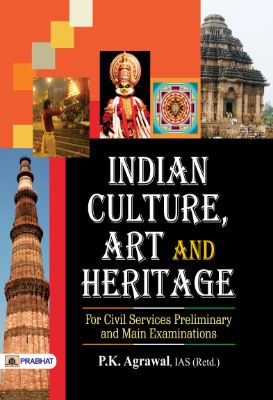
Indian Culture, Art and Heritage by Dr. P. K. Agrawal
The book ‘Indian Culture, Art and Heritage’ is collection of vast details of the Indian culture most prominent through ages, art in various facets and historical monuments including World Heritage Sites.
The book has basic details about the relevant topics for UPSC examination and pictorial presentations make it interesting and easy. Yet, it provides comprehensice material for thinkers and academicians.
I am sure that the book will be very useful for condidates appearing in UPSC Civil Services Examination and other competitive examinations as it provides authentic information from reliable sources.

Indian Education by Theodore Morison
In the eyes of the great majority of thoughtful Indians, education is the grand justification of British rule in India. Many of them cavil at our military expenditure, at our fiscal policy and our autocratic methods of administration, out even the most hostile critics of Indian government are whole-hearted advocates of English education, and persistently demand that a larger share of public money shall be spent upon diffusing European learning in India. It seems a strange anomaly that those who can see no good in anything done in India by Englishmen should at the same time be struggling most earnestly to make English ideas paramount among their own people, but of the fact there can be no question. I have heard an eminent Indian politician maintain throughout the evening that the English were draining all the wealth out of India, and yet in the end confess that the moral advantages of British rule more than compensated for this loss. This is not an empty phrase. It is not a conciliatory platitude to cover an awkward situation, but the expression of an intense conviction, often uttered by educated Indians, that the regeneration of their people depends upon the introduction into India of Western thought and Western education. European culture necessarily comes to them through the medium of English, and it is therefore to the great masters of English thought that their homage is chiefly paid. This is how they come to be such warm advocates of the study of English literature by their countrymen.

Indian Fairy Tales by Joseph Jacobs and John Dickson Batten
From the extreme West of the Indo-European world, we go this year to the extreme East. From the soft rain and green turf of Gaeldom, we seek the garish sun and arid soil of the Hindoo. In the Land of Ire, the belief in fairies, gnomes, ogres and monsters is all but dead; in the Land of Ind it still flourishes in all the vigour of animism.
Soils and national characters differ; but fairy tales are the same in plot and incidents, if not in treatment. The majority of the tales in this volume have been known in the West in some form or other, and the problem arises how to account for their simultaneous existence in farthest West and East. Some—as Benfey in Germany, M. Cosquin in France, and Mr. Clouston in England—have declared that India is the Home of the Fairy Tale, and that all European fairy tales have been [viii]brought from thence by Crusaders, by Mongol missionaries, by Gipsies, by Jews, by traders, by travellers. The question is still before the courts, and one can only deal with it as an advocate. So far as my instructions go, I should be prepared, within certain limits, to hold a brief for India. So far as the children of Europe have their fairy stories in common, these—and they form more than a third of the whole—are derived from India. In particular, the majority of the Drolls or comic tales and jingles can be traced, without much difficulty, back to the Indian peninsula.
Indian Ghost Stories by S. Mukerji
Such ghost stories are a source of pleasure, and are read as a pastime and are often vastly enjoyed, because though the reader is a bit afraid of what he does not know, still he likes to be assured that ghosts do not in reality exist.
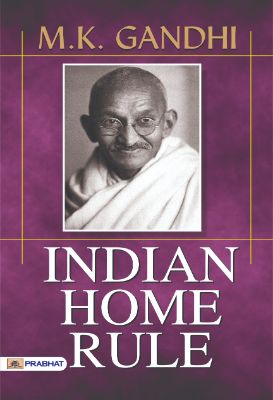
Indian Home Rule by M.K. Gandhi
This document became the guide book by which Gandhi led his people out from the subjugation of British Rule.
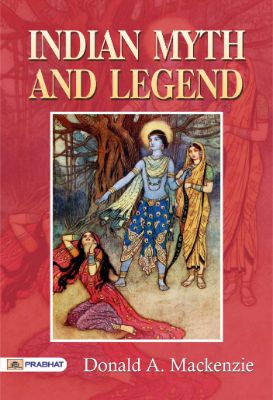
Indian Myth and Legend by Donald A. Mackenzie
This book deals with the myths and legends of India, which survive in the rich and abundant storehouse of Sanskrit literature. The reader is introduced to the various sacred works of the Hindus. Reprint, with illustrations.
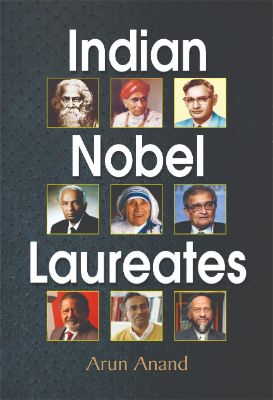
Indian Nobel Laureates by Arun Anand
Indian Nobel Laureates
Established by the philanthropist inventor Alfred Nobel, the Nobel Prize is awarded for exemplary work in different fields. Since its inception in 1895, the recipients of this prize have been from various countries. Many Indians too have received this prestigious award.
In this book the life and achievements of all those Indians who have won the Nobel Prize has been diligently accounted. The one common thread that runs through their lives is the unflinching determination to pursue something, surmounting all odds and achieving the seemingly impossible. Their achievement is commendable proving that where there is a will there is a way. The lives of these great achievers are truly inspiring.

Indian Politics & Our Thought by Rajnath Singh
BJP is a political party rich in distinct ideology possessing an army of committed and dedicated workers. Added to this is a succession of capable, industrious and talented leaders. Our collective endeavour would accelerate the process of development and instill probity in public life. On being returned to power, our commitment would be to establish Su-Raj (good governance).
—
A negligent and lethargic attitude about casting one’s vote, despite having the capacity and facility to do so, in principle not only weakens the democracy but in practice also paves the way for unhealthy elements getting into the polity which in turn is detrimental to the health of democracy. Voters should also bear in mind that they not only form the government by casting their vote but also indirectly pave the way for someone to form the government by not exercising their franchise.
—
The entire nation is looking at us to find answers to these challenges. If the BJP fails to respond to these challenges, then rest assured, no other political party will have a solution for them. If by galvanizing our organizational powers we are successful in this election, respond to all these challenges and take the country out of these crises, then we will be considered as architects of history in the years to come.
—From this book
Collection of speeches of BJP President Shri Rajnath Singh which reflect the basic ethics and characteristics of this nationalist party and emphasis on the motto of ‘Nation First’.

Indian Summer by Emily Grant Hutchings
Tense quiet filled the crooked streets of Bromfield, the quiet that presages storm. Vine Larimore looked anxiously from the window. She was not afraid of tempests: she reveled in them. But a great fear had gripped her in the night. Why had Calvin failed to stop on his way home from the station? What business was it that took Calvin Stone to Rochester every week or two? Another sweetheart? She would not give the hideous thought house room. Was not she, Lavinia Larimore, the handsomest girl in Bromfield? Was not her father, next to the Calvins and the Stones, the most important man in the rusty old New York village? Had she not worn Calvin’s ring for three endless years? Most of the girls in her set were already married, and at New Year’s she had worn the green stockings for her seventeen-year-old sister, Isabel. The wedding dress she had made with so much care and skill, two years agone, hid its once modish lines beneath the cover of the cedar chest—the hope chest that Calvin had ordered for her at Stephen Trench’s shop
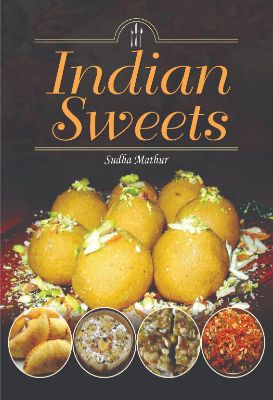
Indian Sweet by Sudha Mathur
Indian sweets are famous world-wide. In almost even country Indian sweets are eaten with great taste.
Preparing sweets at home has its own delight. The present book discusses the best methods of preparing various types of Indian sweets the aid of Pulses, Chocolates, Cheese, Milk and Curd. It provides recipes of different colours and tastes in the preparation of Laddu, Halwa, Kheer Barfi and many more.
With the help of these recipes impress your guests with different varieties and the art of making them.
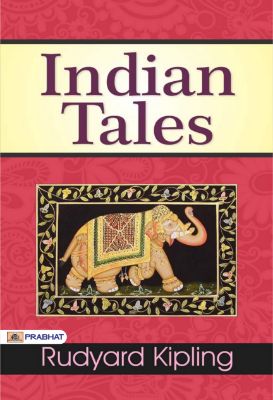
Indian Tales by Rudyard Kipling
These tales are remarkable not just for the range of Indian places and situations they describe or their wealth of historical detail but also for their sensitive and by and large fair representations of both British and Indian characters. Kipling takes on the thorny issues of empire, race, miscegenation and the practice of ???going native’, and uses them as literary tropes, to examine human culture, religion and society.
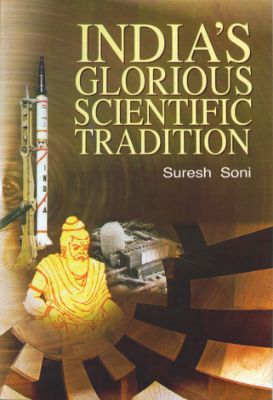
Indias Glorious Scientific Tradition by Suresh Soni
Most common people feel that the first rays of science broke out in the west and thus started the wheel of development throughout the world. There was darkness in the field of science in the east As such, there is a tendency to follow the west. The unawareness of the fact that we had a scientific tradition and a scientific point of view often puts us on the backfoot.
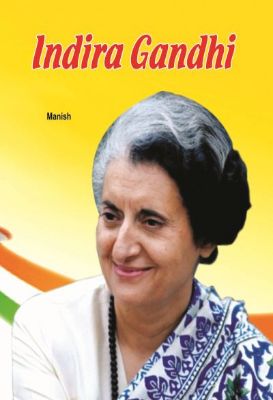
Indira Gandhi by Manish
Indira Gandhi was not only the first woman Prime Minister of India, but also amongst the ten greatest women of the world. She remained the Prime Minister of India from 1966 to 1977 and from 1980 to 1984. During her time, she was as popular as Queen Elizabeth I. Shrimati Indira Gandhi was born on November 19, 1917 in Allahabad. She was the only child of India’ s first Prime Minister Jawaharlal Nehru and Kamla Nehru. Being the only child, she was highly adored by her grandfather, Pandit Motilal Nehru.
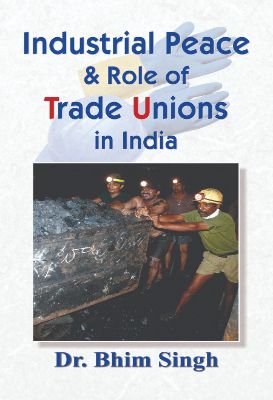
Industrial Peace & Role of Trade Unions in India by Dr. Bhim Singh
The economic development of a country is largely dependent upon the industrial growth and development. It is in this context that industrial peace acquires significance. Disturbed and non-conducive industrial environment proportionately affects the industrial growth adversely. And, therefore, the relationship obtainable in any industry is a matter of great concern.
Industrial environment is the outcome of the interaction among the actors of industrial relations. In this context, trade union leaders become a very significant actor as the activities of their followers which build the industrial environment is the outcome of their actions.
Industrial peace has to be established by all means and that is the need of the hour. This cannot be achieved without positive and constructive role of the trade union leaders.
Trade union leaders have been viewed by authors as agents of adversarialism and it has been pronounced that they cannot imagine themselves making common cause with capital or even recognise that they have shared interest. Such impressions have been perceived by assessing the actions of their followers i.e. the workers. It is also argued that the leaders are not at all sensitive about their social responsibilities. The actions of workers or the followers of trade union leaders are directly proportional to the faith and confidence the followers have in their leaders. It is, therefore, very apt to assess and gauge the impression carried by the followers about their leaders.
In the present scenario it is desirable that the leaders and their followers understand each other and their mutual relationship is harmonized to the maximum extent.
A leader must have the capability to get himself acquainted with the developments taking place and communicate and direct his followers accordingly. The followers desire that their leader should rise from the level of fairly good to the level of exceptionally good.
This maiden attempt of the author, Dr. Bhim Singh automatically gains significance and importance as he has been able to correlate the followers perceptions about leadership qualities desired by the followers and its linkage with creation of industrial peace.

Inhibition by James Causey
Planetfall.
Here the forest was green and cool. A soft, damp wind promised rain. The colonists moved down the ramp, staring at the crew members piling crates of supplies in the meadow beyond.
Frowns. Then whispers.
Saxon glanced up. His nostrils flared. “Hurry,” he told the crewmen, and came forward, beaming. He was tired. It showed in his feverish, too-bright smile as he said, “Afraid Engineering’s a little behind schedule. They’ll be here tomorrow morning to erect your city. Tonight you’ll have to rough it.”
Initiative Psychic Energy by Warren Hilton
“Are you an unusually persevering and persistent person? Or, like most of us, do you sometimes find it difficult to stick to the job until it is done? What is your usual experience in this respect?
“Is it not this, that you work steadily along until of a sudden you become conscious of a feeling of weariness, crying “Enough!” for the time being, and that you then yield to the impulse to stop?” -An excerpt
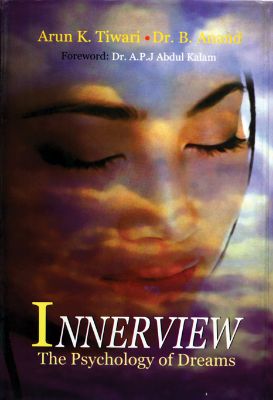
Inner View : the Psychology of Dreams by Arun K. Tiwari; Dr. B. Anand; Dr. A.P.J. Abdul Kalam
To write on this facinating but complex subject I teamed up with my friend Dr. B. Anand who provided scientific ground to various fragments of my curious imagination. I acknowledge Dr. B. Anand as the real author of this book, my being crafting the worlds around.
I am also greatful to Dr. A.P.J. Abdul Kalam my guide and mentor in life who so gladly wrote the foreword of this book disregarding the demands of protocol of his high office. I also place on record my deepest gratitude and appreciating support and care of my wife Dr. Anjana Tiwari. I really tested her discretion by my dreams and delusions.
This book has very well gone into the dream origin and mechanism and above all how a dream can provide guidance as well as solace. But it all depends on individual to give inputs to the thoughts and produce output. This aspect is beautifully narrated in this book.
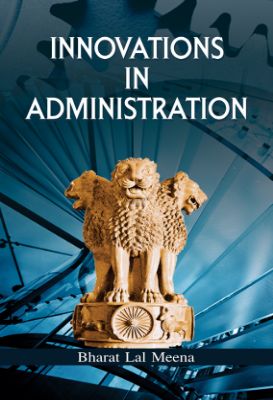
Innovations in Adminstration by Bharat Lal Meena
All the successive governments in India, since Independence, have talked about community participation in governance, but the results have been disappointing. In this scenario, the 1985 batch Karnataka cadre IAS officer Bharat Lal Meena made it possible through his out of the box initiatives during his three-decade long Civil Service career. Right from his first posting as Assistant Commissioner in Lingasugur tehsil of Raichur District in Karnataka to his present posting as Additional Chief Secretary and In-charge of Higher Education, he has created a model of active community participation in governance with wonderful results. This book provides vivid description of some of his innovative steps that proved to be a precedent in governance and have been subsequently adopted by the States and Union Governments. Many of the present innovative schemes like Smart Cities, DBT, Soil Health Cards, Social Audit, biometric attendance, etc., were visualised and materialised by author decades back. Apart from providing information about these steps, the book also acquaints the readers with the ways he dealt with various challenges in administration and how he turned the ‘I’ feeling into the ‘we’ feeling. An essential read for the management professionals, serving bureaucrats and the youth preparing for civil services or other competitive examinations.
Inquiries into Human Faculty and Its Development by Sir Francis Galton
Inquiries into Human Faculty and Its Development’ is an 1883 book by Francis Galton, in which he covers a variety of psychological phenomena and their subsequent measurement. In this text he also references the idea of eugenics and coined the term for the first time. (courtesy: wikipedia)

Inspiration by Edward Hoare
I take it for granted therefore that inspiration is an admitted fact, so that my only business is to consider how far it carries us, and what security it gives us for certain, reliable, infallible truth, in all the statements of the inspired word. – Edward Hoare
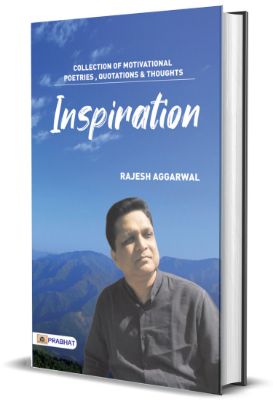
Inspiration by Rajesh Aggarwal
Only an awakened person can be a true leader. He will share his experiences rather than imposing them on others. A leader should have clarity and capacity to explain any situation before the others and give them freedom to choose according to their own understanding.
That knowledge is a true knowledge which is able to eradicate completely the venomous diseases, like unrealistic desires, anger, laziness, greed, pride, tension and depression from its root.
When the source of the problem has been identified and salvaged, the solution comes automatically because alertness is the only key and the final solution to any problem.
A person can truly love only when from the core of his heart, he eradicates all negativities, jealousy, hatred, inferiority complex, false hopes and fills himself with immense love.
If a person really desires to become strong, there should be a balance and synchronisation of all the three qualities – traditions, thoughts and behaviour.
—from this book
These gems of thoughts will inspire you and transform your life, thus giving contentment, satisfaction, happiness and all the good virtues.
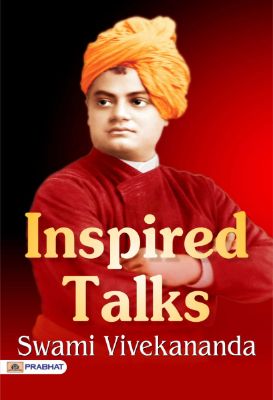
Inspired Talks by Swami Vivekananda
Good is near Truth, but is not yet Truth. After learning not to be disturbed by evil, we have to learn not to be made happy by good. We must find that we are beyond both evil and good; we must study their adjustment and see that they are both necessary.
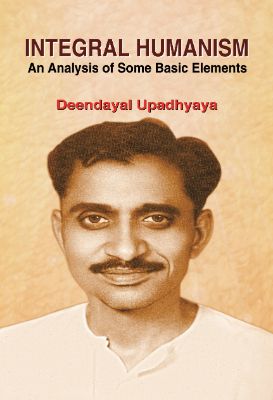
Integral Humanism: An Analysis of Some Basic Elements by Deendayal Upadhyaya
Though, childhood of Pandit Deendayal Upadhyaya was spent in dire circumstances, yet he was masked as a talented student when Indian struggle for independence was engulfed by two nation theory. 1942 he started his public life via Rashtriya Swayam Sewaksangh. He was an astute organiser, man of letters, a journalist and an orator. He supplemented his work of R.S.S. through his skills.
He joined politics when Bharatiya Jana Sangh was established as a political party under the presidentship of Dr. Syama Prasad Mookerjee. He started Kashmir movement, independence of Goa movement and movement against transferring of Berubari and thus kept these issues alive in Indian politics to strengthen unity and integrity of India. He devoted whole of his life for the integration of India.
India needed a strong opposition party and Bharatiya Jana Sangh emerged as a powerful opposition. He made extensive preparation for making this opposition party as an alternative to the ruling party.
An alternative was needed not only of the old system but of the old ideologies too. He gave a call for ‘Integral Humanism’, ‘Cultural Nationalism’ and ‘Indianisation’. He remained General Secretary of Bharatiya Jana Sangh from 1951 to 1967 and was made president of the party in 1968, shortly before his gruesome murder. The political party he nurtured became the political alternative in the form of Bharatiya Janata Party.
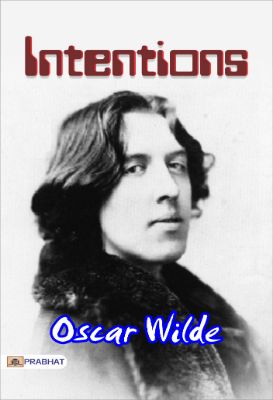
Intentions by Oscar Wilde
First published in the year 1891, the present book ‘Intentions’ was written by Oscar Wilde. It is a collection of literary essays that present his views on art and criticism. Wilde’s aesthetic philosophy and his commentaries on art, literature, criticism, and society asserts the philosophy of ‘art for art’s sake’: art is an end in itself, and literature does not need to convey didactic lessons to be valuable.

Internal Security by Dr. B. Ramaswamy; Dr. Sasikala Pushpa; Dr. Sr. V.A. Mary
India has unique technologies and methods that do not essentially interoperate ideally. That is a major shortcoming. There are similarly a lot of cases purportedly demonstrating that foreigners from neighbouring nations are effortlessly ready to get some sort of identity cards which instantaneously and unlawfully, transform them into Indian citizens.
International Short Stories: French by Various
The young Duc de Hardimont happened to be at Aix in Savoy, whose waters he hoped would benefit his famous mare, Perichole, who had become wind-broken since the cold she had caught at the last Derby,—and was finishing his breakfast while glancing over the morning paper, when he read the news of the disastrous engagement at Reichshoffen.

Intestinal Irrigation by Alcinous B. Jamison
In the year 1496 an Italian, Gatenaria, invented an appliance for taking an enema; since that time depuratory instruments have had more or less vogue in all civilized countries. of late years inventive powers have been taxed to construct more convenient and effective appliances, and now perfection has been almost reached, and the poor civilizee, whose habits are really very bad from the savage point of view, may enjoy the delicious privilege of an internal bath whenever he feels the need of it. By any other name this bath is just as purifying: call it irrigation, injection, lavement, clyster, enema—its many names and what they mean testify to the fact that it is for the disease of civil¬iza¬tion.
From the Book.
Into the Oblivion by Dr. A.P. Maheshwari/Vineeta Chandak
This is not merely a tale. Reflecting upon the harsh realities of life, this book on one hand throws useful light on the various intricacies related to the treatment of Cancer, and on the other, penetrates deep into the spiritual world, and poignantly exposes the nuances of the difficulties of human life. Ultimately, it carries its protagonist far beyond the worldly bondages into the horizon of freedom, there, where everything remains forever ‘unsaid’.
Introduction to Mathematical Philosophy by Bertrand Russell
“This book is intended essentially as an “Introduction,” and does not aim at giving an exhaustive discussion of the problems with which it deals. It seemed desirable to set forth certain results, hitherto only available to those who have mastered logical symbolism, in a form offering the minimum of difficulty to the beginner. The utmost endeavour has been made to avoid dogmatism on such questions as are still open to serious doubt, and this endeavour has to some extent dominated the choice of topics considered. The beginnings of mathematical logic are less definitely known than its later portions, but are of at least equal philosophical interest. Much of what is set forth in the following chapters is not properly to be called “philosophy,” though the matters concerned were included in philosophy so long as no satisfactory science of them existed.” -Introduction
Invention and Discovery: Curious Facts and Characteristic Sketches by Anonymous
In the annals of Invention and Discovery, it may be said without undue boasting, no nation of modern times can lay claim to such an eminent position as Great Britain; and her many ingenious and intrepid adventurers into what they found unknown regions of the arts, the sciences, and the earth’s surface, have so largely contributed to raise her to her great place and power, that it is mere justice and self-interest to bestow on them grateful rewards in life, and renown after death. In this little volume are brought together a number of sketches and memoranda, illustrating the history of discovery, and the lives and labours of inventors and explorers, not of our own country alone, but of others—for knowledge is of no country, but of all. The object of the collector has been rather to present the popular than the strictly scientific side of his subject—to furnish materials of interest and amusement, as well as instruction; and if now and then he has been tempted to stray into bye-paths of anecdote and gossip, excuse may readily be found in the fact that the private life of our men of science, often singularly noble and full of character, is apt to be altogether obscured by the brilliancy of the results of their secret and silent toil. This volume will have served its purpose, if it excites an appetite for fuller and deeper inquisition into the sources of British greatness and of modern civilisation.
Invention: The Master-key to Progress by Bradley A. Fiske
“To show that inventors have accomplished more than most persons realize, not only in bringing forth new mechanisms, but in doing creative work in many walks of life, is, in part, the object of this book. To suggest what they may do, if properly encouraged, is its main intention. For, since it is to inventors mainly that we owe all that civilization is, it is to inventors mainly that we must look for all that civilization can be made to be.” -Preface
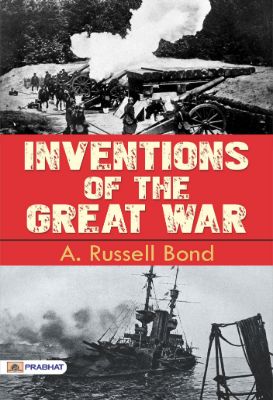
Inventions of the Great War by A. Russell Bond
The great World War was more than two-thirds over when America entered the struggle, and yet in a sense this country was in the war from its very beginning. Three great inventions controlled the character of the fighting and made it different from any other the world has ever seen. These three inventions were American. The submarine was our invention; it carried the war into the sea. The airplane was an American invention; it carried the war into the sky. We invented the machine-gun; it drove the war into the ground.

Inventors at Work With Chapters on Discovery by George Iles
Aid in writing this volume is acknowledged in the course of its chapters. The author’s grateful thanks are rendered also to Dr. L. A. Fischer, of the Bureau of Standards at Washington, who has revised the paragraphs describing the work of the Bureau; to Mr. C. R. Mann of the Ryerson Physical Laboratory, University of Chicago, who corrected the paragraphs on the interferometer; to Mr. Walter A. Mitchell, formerly of Columbia University, New York, who revised most of the chapters on measurement. Mr. Thomas E. Fant, Head of the Department of Construction and Repair at the Navy Yard, Washington, D. C., gave the picture of the model basin here reproduced. Mr. Walter Hough of the National Museum, Washington, D. C., contributed a photograph of the Pomo basket also reproduced here. Mr. John Van Vleck and Mr. Henry G. Stott of New York, Mr. George R. Prowse and Mr. Edson L. Pease of Montreal, have furnished drawings and photographs for illustrations of unusual interest. Mr. George F. C. Smillie, of the Bureau of Engraving, Washington, D. C., Mr. Percival E. Fansler, Mr. Ernest Ingersoll, and Mr. Ashley P. Peck, of New York, have read in proof parts of the chapters which follow. Their corrections and suggestions have been indispensable.