
Classic Books
Showing 1251–1300 of 4246 results

How to Succeed in Civil Services by Deepak Anand (Ias)
The Civil Services are the most prestigious and responsible services in India. It is a major attraction for the educated youth. Every youth desires to become a Civil Servant. In a population of over 125 crores, merely 1,000 Civil Servants are selected every year from amongst several lakhs of candidates who apply. From these figures, one can easily understand the superiority and importance of the services.
The candidates who apply for the services have to undergo a three-phase selection process. The candidates who manage to qualify the fiery examinations are selected and pledge to serve the nation with their unmatched radiance.
This book is a humble attempt to guide candidates on the road to preparing for the Civil Services Examination. This book tells you how to prepare for the examination and the points to remember while studying for it. Most of the difficulties and doubts which the candidates face have been addressed by this book. The author of the book is himself an IAS officer and was a topper in the Civil Services Examination. This book is based on his deep and vast experience which he has presented before the aspiring candidates.
This is a very useful book for all the candidates appearing for competitive examinations and also for those who want to succeed in their career.
How to Succeed or, Stepping-Stones to Fame and Fortune by Orison Swett Marden
In How to succeed or Stepping Stones to Fame and Fortune Orison Swett Marden gives hard honest advice on how to succeed that starts with “First Be a Man,” that is stand up to your responsibilities and don’t expect to succeed without hard work and determination. Follow the advice and examples in this book and you will succeed in whatever it is you may chose to do.
How To Teach A Foreign Language by Otto Jespersen
When, in accordance with a wish expressed by English and American friends, I determined to have my Sprogundervisning translated into English, I found it difficult to decide what to retain and what to leave out of the original. So much of what I had written appeared to me to apply more or less exclusively to Danish schools and Danish methods, and I had too little personal experience of the practice of English teachers or of English school-books to be quite sure of the advisability in each case of including or excluding this or that remark. -Preface
How to Tell a Story, and Other Essays by Mark Twain
The present book ‘How to Tell a Story, and Other Essays’ is a series of literary essays by the celebrated writer Mark Twain. This collection was first published in the year 1897.

How to Win Friends and Influence People by Dale Carnegie
♥♥How to Win Friends and Influence People♥♥ is one of the best selling self-help books ever published.
♥How to Win Friends and Influence People♥ is a self-help book written by ★ Dale Carnegie★, published in 1936. Over 30 million copies have been sold worldwide, making it one of the best-selling books of all time.
Six Ways to Make People Like You
1. Become genuinely interested in other people.♥
✔✔ “You can make more friends in two months by being interested in them, than in two years by making them interested in you.” The only way to make quality, lasting friendships is to learn to be genuinely interested in them and their interests.
2. Smile.♥
✔✔ Happiness does not depend on outside circumstances, but rather on inward attitudes. Smiles are free to give and have an amazing ability to make others feel wonderful. Smile in everything that you do.
3. Remember that a person's name is, to that person, the sweetest and most important sound in any language.♥
✔✔ “The average person is more interested in their own name than in all the other names in the world put together.” People love their names so much that they will often donate large amounts of money just to have a building named after themselves. We can make people feel extremely valued and important by remembering their name.
4. Be a good listener. Encourage others to talk about themselves.★
✔✔ The easiest way to become a good conversationalist is to become a good listener. To be a good listener, we must actually care about what people have to say. Many times people don't want an entertaining conversation partner; they just want someone who will listen to them.
5. Talk in terms of the other person's interest.★
✔✔ The royal road to a person's heart is to talk about the things he or she treasures most. If we talk to people about what they are interested in, they will feel valued and value us in return.
6. Make the other person feel important – and do it sincerely.♥
✔✔ The golden rule is to treat other people how we would like to be treated. We love to feel important and so does everyone else. People will talk to us for hours if we allow them to talk about themselves. If we can make people feel important in a sincere and appreciative way, then we will win all the friends we could ever dream of.

How to Write Letters (Formerly The Book of Letters) by Mary Owens Crowther
The present book ‘How to Write Letters (Formerly The Book of Letters)’ was written by Mary Owens Crowther. It was first published in the year 1922. This book is aimed at guiding readers on how to write a letter.
How We Think by John Dewey
Famous American education philosopher John Dewey’s book ‘How We Think’ was first published in the year 1910. “This book represents the conviction that the needed steadying and centralizing factor is found in adopting as the end of endeavor that attitude of mind, that habit of thought, which we call scientific. This scientific attitude of mind might, conceivably, be quite irrelevant to teaching children and youth. But this book also represents the conviction that such is not the case; that the native and unspoiled attitude of childhood, marked by ardent curiosity, fertile imagination, and love of experimental inquiry, is near, very near, to the attitude of the scientific mind.” -Preface

Howards End by E. M. Forster
Dearest Meg,
It isn’t going to be what we expected. It is old and little, and altogether delightful–red brick. We can scarcely pack in as it is, and the dear knows what will happen when Paul (younger son) arrives tomorrow. From hall you go right or left into dining-room or drawing-room. Hall itself is practically a room. You open another door in it, and there are the stairs going up in a sort of tunnel to the first-floor. Three bedrooms in a row there, and three attics in a row above. That isn’t all the house really, but it’s all that one notices–nine windows as you look up from the front garden.

Hugh Wynne, Free Quaker by S. Weir Mitchell
“Since Hugh Wynne was published in book form in 1896, it has been many times reprinted, and now that again there is need for a new edition, I use a desired opportunity to rectify some mistakes in names, dates, and localities. These errors were of such a character as to pass unnoticed by the ordinary reader and disturb no one except the local archaeologist or those who propose to the novelist that he shall combine the accuracy of the historical scholar with the creative imagination of the writer of what, after all, is fiction.” -Preface
Human, All Too Human: A Book for Free Spirits by Friedrich Wilhelm Nietzsche
First published in the year 1878, famous philosopher, thinker and writer Friedrich Wilhelm Nietzsche’s book ‘Human, All Too Human: A Book for Free Spirits’ is the author’s first in the aphoristic style that would come to dominate his writings, discussing a variety of concepts in short paragraphs or sayings.

Humorous Ghost Stories by Dorothy Scarborough
The present book ‘Humorous Ghost Stories’ is a collection of classic humorous ghost stories that will haunt you as well as tickle you at the same time. These stories were written by the famous fiction writer Dorothy Scarborough. It was first published in the year 1921.
Humours of Irish Life by Charles L. Graves
“The first of the notable humorists of Irish life was William Maginn, one of the most versatile, as well as brilliant of Irish men of letters.
“He was born in Cork in 1793, and was a classical schoolmaster there in early manhood, having secured the degree of LL.D. at Trinity College, Dublin, when only 23 years of age. The success in “Blackwood’s Magazine” of some of his translations of English verse into the Classics induced him, however, to give up teaching and to seek his fortunes as a magazine writer and journalist in London, at a time when Lamb, De Quincey, Lockhart and Wilson gave most of their writings to magazines.” -Introduction

Hunger by Knut Hamsun
Hunger is a novel by the Norwegian author Knut Hamsun published in 1890. Parts of it had been published anonymously in the Danish magazine Ny Jord in 1888. The novel has been hailed as the literary opening of the 20th century and an outstanding example of modern, psychology-driven literature. Hunger portrays the irrationality of the human mind in an intriguing and sometimes humorous manner.

Hygeia, a City of Health by Benjamin Ward Richardson
The immediate success of this Address caused me to lay it aside for some months, to see if the favour with which it was received would remain. I am satisfied to find that the good fortune which originally attended the effort holds on, and that in publishing it now in a separate form I am acting in obedience to a generally expressed desire.
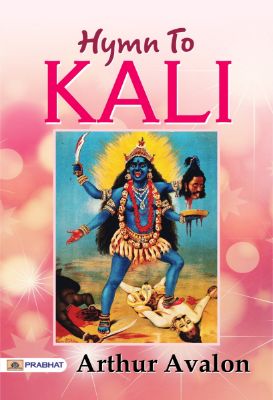
Hymn to Kali by Arthur Avalon
This celebrated Kaula Stotra, which is now translated from the Sanskrit for the first time, is attributed to Mahākāla Himself. The Text used is that of the edition published at Calcutta in 1899 by the Sanskrit Press Depository, with a commentary in Sanskrit by the late Mahāmahopādhyāya Kṛṣhṇanātha Nyāya-pañcānana, who was both very learned in Tantra-Śāstra and faithful to his Dharma. He thus refused the offer of a good Government Post made to him personally by a former Lieutenant-Governor on the ground that he would not accept money for imparting knowledge.

Hymnological Studies by Matthew N. Lundquist
“This humble little work is the outcome of personal interest and some lecture work in the field of Hymnology. I trust that this little volume will be of some value, especially to fellow Lutheran organists and choir directors. For further study the student is referred to John Julian’s great “Dictionary of Hymnology” and Benson’s “The English Hymn,” as well as works by Duffield, Breed, Ninde, and others. Every organist and choir director ought to read “The Hymn as Literature” by Jeremiah Bascom Reeves.” -Preface
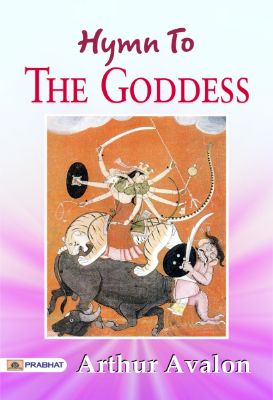
Hymns to the Goddess by Arthur Avalon
Genesis has a character of its own; and, as the beginning of the Holy Book, presents to us all the great elementary principles which find their development in the history of the relationships of God with man, which is recorded in the following books. The germ of each of these principles will be found here, unless we except the law. There was however a law given to Adam in his innocence; and Hagar, we know, prefigures at least Sinai.
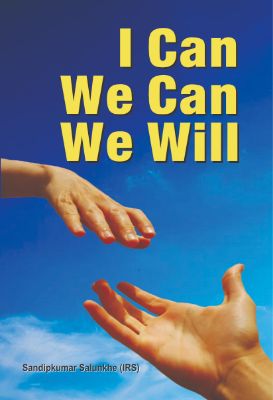
I Can We Can We Will by Sandeep Kumar Salunkhe
Human emotions transcend all artificial boundaries for we belong to one Universal Soul. This oneness may be behind the enormous success of Sandipkumar Salunkhe’s book.
A semi-autobiographical account of the author’s life it connects to the struggling rural youth and encourages them to surmount difficulties and achieve in life.
The author has recorded the swinging graph of his life through different phases he experienced and his tireless efforts to realize his dream. He candidly talks about his own faults and shortcomings and how he removed them. Thus setting an example for others to follow—If I can—you can.
Therefore, if you feel
– life is stagnant, devoid of happiness.
– you have dreams but lack direction or need guidance,
– you lack confidence and self-esteem.
– cannot overcome stress or dejection.
– you are not inspired by stories of achievers because they belong to another environment.
Then this book is for you and the sky is the limit!

I Know How to Live, I Know How to Die by Neville Hodgkinson
Frontier science meets deep soul awareness in this unique exploration of the teachings of Dadi Janki, head of the Brahma Kumaris World Spiritual University, by Neville Hodgkinson, former Sunday Times science and medical correspondent. I Know How to Live, I Know How to Die conveys the love and strength that emerge within us, and the huge benefits brought to our work and relationships, when we restore our connection with the divine through spiritual understanding and practice.

I Know You Now by Sushant Changotra
Nitin’s mother means the world to him and when she breathes her last in his arms, it changes him upside down. A soft and humble guy declares rebellion against his father. On the way to fulfill his father’s desire of him becoming an engineer, he takes a bold decision and runs away to a completely new city for pursuing his ambition of becoming a famous singer.
Against all the odds, he is not just able to fight the blues, but also forges new bonds of friendship in a completely new place. Once again destiny catches up with his happiness and he finds himself on the crossroad of life. His most loved friends end up in grave trouble and Nitin is confronted with the most difficult choice of his life!
Will Nitin be able to survive the outcome of his choice and come out of it as a champion or will he take the plunge towards deluge of depression?
Nitin’s journey is the one, which almost every individual has to undergo in one form or the other. This story gives the insight into the actual challenges that confront all of us and it also shares the wisdom to understand that most solutions are not just within our reach, but are within ourselves. The process is just about digging deep within.

I M Possible by Tarun Pithode
It is a story of a boy, Aditya, who struggles hard to achieve his dreams despite many odds. The novel takes the reader through Aditya’s early childhood adventures to success in the school and college. The college trekking expedition to Himalayas takes the reader through beautiful unique experiences of Himalayas where Aditya wins his love.
It describes ways to understand the world in a different way and even touches various social issues prevalent in India like caste, religion, child abuse, corruption and inflation.
In the final part, it talks of the inner voice and mysticism of the universal soul which are considered to be great guiding forces for a human being, provided he lowers his defence mechanisms to hear it. It is a philosophical, psychological and motivational story.
This book won’t let its reader lose the battle of life. It equips them to understand the world better and never get used by anybody.
A self motivating novel which will provide energy to its readers to excel and succeed in life, especially those who are in search of their dream.

I Was a Teen-Age Secret Weapon by Richard Sabia
“GET AWAY from me!” screamed Dr. Berry at the approaching figure.
“But Ah got to feed an’ water the animals an’ clean out the cages,” drawled the lanky, eighteen-year-old boy amiably.
“Get out of this laboratory, you hoodoo,” shrilled Berry, “or I swear I’ll kill you! I’ll not give you the chance to do me in!” -an excerpt
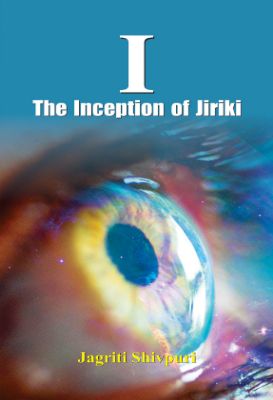
I—The Inception of Jiriki by Jagriti Shivpuri
It is a universal truth that whatever you impress on your WILL, is expressed on the screen of space as condition, experience, and event. JIRIKI is a term for self power, the ability to achieve liberation or enlightenment through one’s own efforts. It is experiencing truth for oneself and not merely accepting the testimony of another. Self-empowerment means that you take charge of your own life. This involves recognising that within each of us is the ability to live from our natural state. Another way to put it is to say that a self-empowered individual does not let go of the power as the expert of self. The main characteristic of self-empowerment is peace. This sounds so obvious, yet most of us don’t achieve inner peace. To explore this concept further, let’s look at it this way – could you be self-empowered if you had the knowledge and tools necessary for the task? Find out how many people are transforming their lives from dull and stressful to happy and stress-free. Do you entitle your soul to be a JIRIKI? As you sow in your will , so shall you reap in your environment. Imagine your soul energy as a bed of rich soil that will help all kinds of seeds to sprout and flourish. Every thought is a cause, and every condition is an effect. This is the reason so essential that you take charge of your thoughts. In that way, you can bring forth only desirable conditions.

Iaf Strikes @ 0328 Hours by Mukesh Kaushik & Sanjay Singh
‘IAF Strikes @ 0328 hours’ is a comprehensive account of the events that unfolded that night. I want to express that whatever surfaced following the attacks in the Indian media is largely true. On the other hand, whatever surfaced in Pakistan is imaginative, at best. I want to congratulate Mr. Mukesh Kaushik and Mr. Sanjay Singh, for this book. Their efforts and attention to detail is highly commendable.
—Air Marshal C. Hari Kumar
Former Chief of Western Air Command
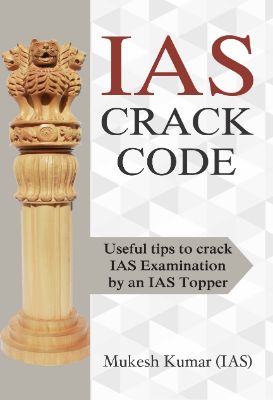
IAS Crack Code by Mukesh Kumar, Ias
This exam is not for people who believe in shortcuts, who are impatient and who are casual. It is in need of such people, who believe in rigorous study. Only the candidates who are thoroughly organized, disciplined and determined can taste its success – ultimately the country needs officers complete with these qualities.
If those candidates who have a profusion of the aforesaid qualities get the right guidance, then they can definitely crack the IAS. This book has been prepared for such deserving and appropriate candidates. We are not just hopeful, but have complete faith that this book will definitely work as a useful guidance in making the honest and strong willed candidates as IAS.
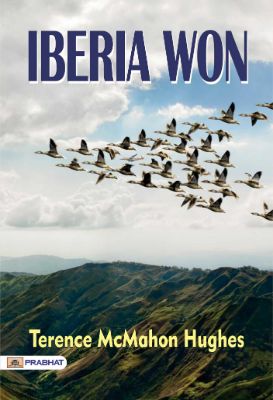
Iberia Won by Terence McMahon Hughes
Excerpt from Iberia Won:
But we weak minstrels of a laggard day,
Skilled but to imitate an elder page,
Timid and raptureless, can we repay
The debt thou claim’st in this exhausted age?
Thou giv’st our lyres a theme, that might engage
Those that could send thy name o’er sea and land,
While sea and land shall last; for Homer’s rage
A theme; a theme for Milton’s mighty hand—
How much unmeet for us, a faint degenerate band!
Ibong Adarna by Anonymous
Virgeng Ináng mariquit
Emperor of Heaven,
help make you think
learn to repeat.
That’s right, really
Vírgeng ualang macapára,
acong hamac na oveja
graduate of your grace.
Learn how to speak
turn the cagarilán,
and when to complain
the little story.
Ideas of Good and Evil by W. B. Yeats
From the Excerpts of the Book: I believe in the practice and philosophy of what we have agreed to call magic, in what I must call the evocation of spirits, though I do not know what they are, in the power of creating magical illusions, in the visions of truth in the depths of the mind when the eyes are closed; and I believe in three doctrines, which have, as I think, been handed down from early times, and been the foundations of nearly all magical practices.
William Butler Yeats was an Irish poet and one of the foremost figures of 20th-century literature. A pillar of both the Irish and British literary establishments, he helped the foundation of the Abbey Theatre, and in his later years served as an Irish Senator for two terms and was a driving force behind the Irish Literary Revival along with Lady Gregory, Edward Martyn and others.
Idiomatic Words & Phrases by Najmussehar
Idioms serves as ornaments to a language. Any verb when followed by different prepositions, or adverbs acquire an idiomatic sense which is quite different from its surface meaning. This book guides from the use of idiomatic words & phrases to forming new words followed by appropriate Prepositions.
Idolatry: A Romance by Julian Hawthorne
The performance once over, let him, if so inclined, strip the feathers from the flights of imagination, and wash the color from the incidents; if aught save the driest and most ordinary matters of fact reward his researches, then let him be offended!
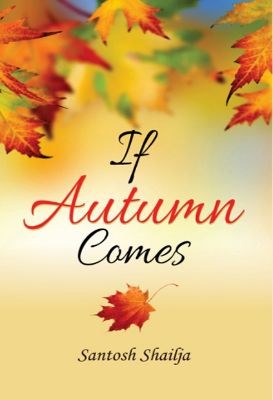
If Autumn Comes by Santosh Shailja
There is one long story or a short novel ‘Ninni’. The stories are historical, regional, social and romantic. In a nutshell, these are from the varied pattern of life which is woven with bright as well as grey threads. You will find the characters as if they were quite known to you. You might feel a bond with them in their smiles or tears; their happiness or sorrow. And that is the essence of a story to immerse you in its depth. The writer is blessed when the reader feels one with the written word.
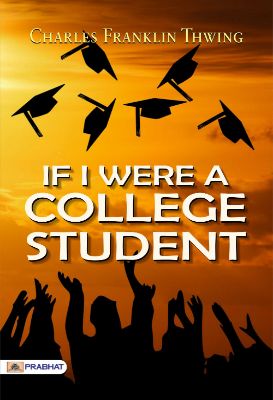
If I were a college student by Thwing, Charles Franklin
“Your father has two existences. Spirit- ually he lives in all our minds (in mine he has lived for nearly forty years), in forms imperishable as diamonds which time and change have no power over.

If: A Play in Four Acts by Lord Dunsany
A small railway station near London. Time: Ten years ago.
BERT
‘Ow goes it, Bill?
BILL
Goes it? ‘Ow d’yer think it goes?
BERT
I don’t know, Bill. ‘Ow is it?
BILL
Bloody.
BERT
Why? What’s wrong?
BILL
Wrong? Nothing ain’t wrong.
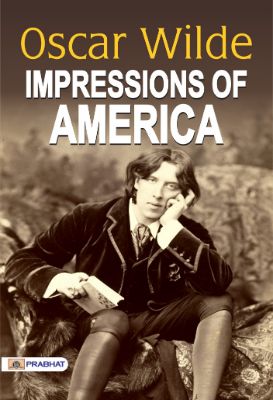
Impressions of America by Oscar Wilde
Oscar Wilde visited America in the year 1882. Interest in the Esthetic School, of which he was already the acknowledged master, had sometime previously spread to the United States, and it is said that the production of the Gilbert and Sullivan opera, “Patience,” in which he and his disciples were held up to ridicule, determined him to pay a visit to the States to give some lectures explaining what he meant by Estheticism, hoping thereby to interest, and possibly to instruct and elevate our transatlantic cousins.

Improve Your Word Power by Subhash Jain
Improve Your Word Power combines the ‘tried-and-tested’ methods of teaching with the latest modern methods of vocabulary building and English instruction. All of the text, all the words taught and examples given, and all the word puzzles have been carefully selected to help the reader master a large vocabulary and the rules of good English.
The purpose of this book is very simple—to help one master the English language quickly, easily, and thoroughly. If you are a poor speaker or writer, this book will help you become a good one. If you are a good speaker and writer, it will help you become a better one. It will help you to increase that vital asset – your Word Power. Then, this book can help you by showing you the easy way to word power. The book gives you concise, easy-to-remember explanations of one basic group of vocabulary words or of one basic problem in English.
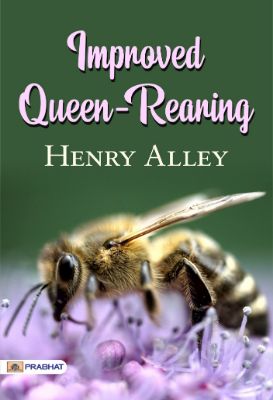
Improved Queen-Rearing by Henry Alley
Well, I did not require very much experience with bees to find out that all the above performances were indulged in only by ignorant and superstitious bee-keepers. With all the literature we now have concerning apiculture, some bee-keepers may be found who know no more about bees than those who kept them 50 years ago.
In the month of July, 1857, I found a fine swarm of bees hanging upon a limb of a tree in my garden. The bees were hived in a small packing box, and at once commenced to build comb and store honey. When fall came the box was well filled with bees and stores, and the colony went into winter quarters in fine condition, and came out in the spring strong in numbers, proving to be a first-class colony in all respects.
In a Hollow of the Hills by Bret Harte
It was very dark, and the wind was increasing. The last gust had been preceded by an ominous roaring down the whole mountain-side, which continued for some time after the trees in the little valley had lapsed into silence. The air was filled with a faint, cool, sodden odor, as of stirred forest depths. In those intervals of silence the darkness seemed to increase in proportion and grow almost palpable. Yet out of this sightless and soundless void now came the tinkle of a spur’s rowels, the dry crackling of saddle leathers, and the muffled plunge of a hoof in the thick carpet of dust and desiccated leaves. Then a voice, which in spite of its matter-of-fact reality the obscurity lent a certain mystery to, said:—
In a Steamer Chair, and Other Stories by Robert Barr
Mr. George Morris stood with his arms folded on the bulwarks of the steamship City of Buffalo, and gazed down into the water. All around him was the bustle and hurry of passengers embarking, with friends bidding good-bye. Among the throng, here and there, the hardworking men of the steamer were getting things in order for the coming voyage. Trunks were piled up in great heaps ready to be lowered into the hold; portmanteaux, satchels, and hand-bags, with tags tied to them, were placed in a row waiting to be claimed by the passengers, or taken down into the state-rooms. To all this bustle and confusion George Morris paid no heed. He was thinking deeply, and his thoughts did not seem to be very pleasant. There was nobody to see him off, and he had evidently very little interest in either those who were going or those who were staying behind. Other passengers who had no friends to bid them farewell appeared to take a lively interest in watching the hurry and scurry, and in picking out the voyagers from those who came merely to say good-bye.

In Convent Walls by Emily Sarah Holt
Emily Sarah Holt (1836-1893) was an English novelist. She wrote about fifty books, mainly for children. Most of her work can be classified as historical novels. Her work has a Protestant religious theme. Amongst her works are Mistress Margery, Ashcliffe Hall, The Well in the Desert (1872), The White Rose of Langley, Clare Avery (1876), Imogen (1876), For the Master’s Sake (1877), Earl Hubert’s Daughter (1880), The Maidens’ Lodge (1880), Through the Storm (1895), Lights in the Darkness (1896) and The Gold that Glitters (1896).

In Partnership by Brander Matthews and H. C. Bunner
a book of collected articles by Brander Matthews and H. C. Bunner, ‘In Partnership’ is compendium that consists of details related to various literary studies of the storytelling art and tradition.
In Search of the Unknown by Robert W. Chambers
It appears to the writer that there is urgent need of more “nature books”—books that are scraped clear of fiction and which display only the carefully articulated skeleton of fact. Hence this little volume, presented with some hesitation and more modesty. Various chapters have, at intervals, appeared in the pages of various publications. The continued narrative is now published for the first time; and the writer trusts that it may inspire enthusiasm for natural and scientific research, and inculcate a passion for accurate observation among the young.

In the Cage by Henry James
First published in the year 1898, the present novella ‘In the Cage’ by Henry James centers on an unnamed London telegraphist. She deciphers clues to her clients’ personal lives from the often cryptic telegrams they submit to her as she sits in the “cage” at the post office. Sensitive and intelligent, the telegraphist eventually finds out more than she may want to know.
In the Days of the Comet by H.G. Wells
I HAVE set myself to write the story of the Great Change, so far as it has affected my own life and the lives of one or two people closely connected with me, primarily to please myself.
Long ago in my crude unhappy youth, I conceived the desire of writing a book. To scribble secretly and dream of authorship was one of my chief alleviations, and I read with a sympathetic envy every scrap I could get about the world of literature and the lives of literary people. It is something, even amidst this present happiness, to find leisure and opportunity to take up and partially realize these old and hopeless dreams. But that alone, in a world where so much of vivid and increasing interest presents itself to be done, even by an old man, would not, I think, suffice to set me at this desk. I find some such recapitulation of my past as this will involve, is becoming necessary to my own secure mental continuity.
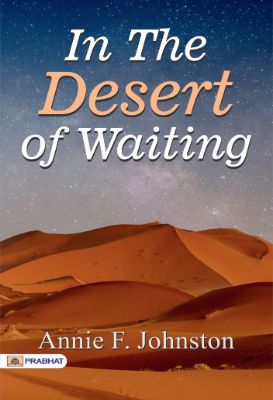
In the Desert of Waiting by Annie F. Johnston
An inspirational story about the value of perseverance along the road to success by the author of The Little Colonel series. Originally published in 1904, this small book relates the story of Shapur, a salt merchant traveling across the desert to sell his wares at the palace of the Rajah. Along the way, misfortune overcomes Shapur and he is faced with decisions that change his life.

In the Land of Dragons by Mitali Chakravarty
W hen my husband and I left India in 1991, we
boarded the flight to Singapore with two suitcases and a bag. We planned to be back in two years. The two years have stretched to over twenty years and, now, even when I travel for two weeks with my family which has doubled its numbers, I need four suitcases, four bag packs and a cabin luggage. I do not know when we will return but I do know that I am richer for all the experiences I have had over the years. My children are fortunate to have friends from all over the world and a wide variety of experiences. Everyday I thank God for the blessings he has showered on us and for the fantastic future which is sure to unfurl before us.

In the Middle by Vandana Kumar Jena
Middles are life in miniature. The middles in the book, ‘In the Middle’ by Vandana Kumari Jena are a diverse collection, depicting a kaleidoscope of rainbow hued images. At times they are pen portraits of ordinary people who led extraordinary lives, like the man who wanted to make it to the Guinness Book of Records because of the size of his moustache. At other times they are a globetrotter’s delight and sketch picture post cards of exotic locales, the starkly beautiful Kosovo, the mesmerising Marrakech, the amazing Queens town or the exotic Istanbul. Many a time they provide a glimpse of the lighter side of life. Each one of them, in its own way, celebrates the very essence of life.

In the Wilds of Africa by William Henry Giles Kingston
A dense mist hung over the ocean; the sky above our heads was of a grey tint; the water below our feet of the colour of lead. Not a ripple disturbed its mirror-like surface, except when now and then a covey of flying fish leaped forth to escape from their pursuers, or it was clove by the fin of a marauding shark. We knew that we were not far off the coast of Africa, some few degrees to the south of the Equator; but how near we were we could not tell, for the calm had continued for several days, and a strong current, setting to the eastward, had been rapidly drifting us toward the shore.

In the Wilds of South America by Leo E. Miller
I have frequently wondered how many of the large number of people who visit natural-history museums have any conception of the appearance and actions, in their wilderness homes, of the creatures they see, and of the experiences of the field-naturalists who visit the little-known places of the earth in search of them.

In the World by Maksim Gorky
I went out into the world as “shop-boy” at a fashionable boot-shop in the main street of the town. My master was a small, round man. He had a brown, rugged face, green teeth, and watery, mud-colored eyes. At first I thought he was blind, and to see if my supposition was correct, I made a grimace.
“Don’t pull your face about!” he said to me gently, but sternly. The thought that those dull eyes could see me was unpleasant, and I did not want to believe that this was the case. Was it not more than probable that he had guessed I was making grimaces?
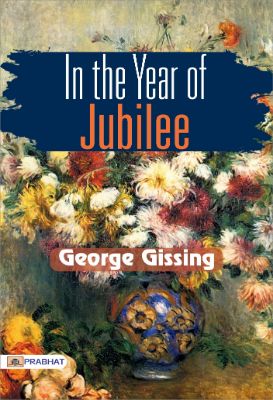
In the Year of Jubilee by George Gissing
“At eight o’clock on Sunday morning, Arthur Peachey unlocked his front door, and quietly went forth. He had not ventured to ask that early breakfast should be prepared for him. Enough that he was leaving home for a summer holiday—the first he had allowed himself since his marriage three years ago.
“It was a house in De Crespigny Park; unattached, double-fronted, with half-sunk basement, and a flight of steps to the stucco pillars at the entrance. De Crespigny Park, a thoroughfare connecting Grove Lane, Camberwell, with Denmark Hill, presents a double row of similar dwellings; its clean breadth, with foliage of trees and shrubs in front gardens, makes it pleasant to the eye that finds pleasure in suburban London. In point of respectability, it has claims only to be appreciated by the ambitious middle-class of Camberwell. Each house seems to remind its neighbour, with all the complacence expressible in buff brick, that in this locality lodgings are not to let.” -an excerpt