
Classic Books
Showing 1201–1250 of 4246 results

History of the French Revolution from 1789 to 1814 by M. Mignet
Of the great incidents of History, none has attracted more attention or proved more difficult of interpretation than the French Revolution. The ultimate significance of other striking events and their place in the development of mankind can be readily estimated. It is clear enough that the barbarian invasions marked the death of the classical world, already mortally wounded by the rise of Christianity. It is clear enough that the Renaissance emancipated the human intellect from the trammels of a bastard mediaevalism, that the Reformation consolidated the victory of the “new learning” by including theology among the subjects of human debate. But the French Revolution seems to defy complete analysis. Its complexity was great, its contradictions numerous and astounding. A movement ostensibly directed against despotism culminated in the establishment of a despotism far more complete than that which had been overthrown. The apostles of liberty proscribed whole classes of their fellow-citizens, drenching in innocent blood the land which they claimed to deliver from oppression. The apostles of equality established a tyranny of horror, labouring to extirpate all who had committed the sin of being fortunate. The apostles of fraternity carried fire and sword to the farthest confines of Europe, demanding that a continent should submit to the arbitrary dictation of a single people. And of the Revolution were born the most rigid of modern codes of law, that spirit of militarism which to-day has caused a world to mourn, that intolerance of intolerance which has armed anti-clerical persecutions in all lands. Nor were the actors in the drama less varied than the scenes enacted. The Revolution produced Mirabeau and Talleyrand, Robespierre and Napoleon, Sieyès and Hébert. The marshals of the First Empire, the doctrinaires of the Restoration, the journalists of the Orleanist monarchy, all were alike the children of this generation of storm and stress, of high idealism and gross brutality, of changing fortunes and glory mingled with disaster.

History of the government of the island of Newfoundland by John Reeves
After my return from Newfoundland, in the year 1791, I was curious to look back into what had been done, in former times, on the subject upon which I had myself been just employed. I accordingly looked over the Newfoundland Entries, and the Newfoundland Bundles among the books which belonged to the late board of trade; and I then pursued the subject through the Registers of the present committee of council for trade and plantations.
History of the Great American Fortunes, Vol. I by Gustavus Myers
In writing this work my aim has been to give the exact facts as far as the available material allows. Necessarily it is impossible, from the very nature of the case, to obtain all the facts. It is obvious that in both past and present times the chief beneficiaries of our social and industrial system have found it to their interest to represent their accumulations as the rewards of industry and ability, and have likewise had the strongest motives for concealing the circumstances of all those complex and devious methods which have been used in building up great fortunes. In this they have been assisted by a society so constituted that the means by which these great fortunes have been amassed have been generally lauded as legitimate and exemplary.

History of the Indians, of North and South America by Samuel G. Goodrich
This is a reproduction of a book published before 1923. We believe this work is culturally important.Hope you enjoy this valuable book.

History of the Jesuits: Their origin, progress, doctrines, and designs by Nicolini
I trust that in the following pages I have succeeded in the task I proposed to myself, of conveying to my readers a just and correct idea of the character and aims of the brotherhood of Loyola. At least I have spared no pains to accomplish this end.

History of the Nineteenth Army Corps by Richard Biddle Irwin
This scarce antiquarian book is a facsimile reprint of the original. We believe this work is culturally important, we have made it available as part of our commitment for protecting, preserving, and promoting the world’s literature in affordable, high quality, modern editions that are true to the original work. We have endeavoured to keep the quality of these images, so they represent accurately the original artefact.
History Quiz Book by Sachin Singhal
This book travels through Ancient, Medieval and Modern era of India and World covering all the various aspects of History. When did the Britishers come to India? Who was Ashoka? What was Nalanda famous for? All these and many more questions give a lot of information about History. A well researched book for historians, students and researchers.

Hitopdesh Tales by Narayana Pandit
Hitha meaning Good and Updesha meaning Advise thus meaning Good Advice, is a collection of fables and were supposed to have been used to teach young generation in the earlier ages. The original tales are in Sanskrit and are attributed to various sources such as Narayana Pandit under the patronage of King Dhavalachandra and first manuscript could be traced to 1373. Abu Fazl, the minister of Emperor Akbar, had also translated the tales. These stories have enchanted young children in India and are an essential part of Indian folk literature. In our efforts to bring classic Indian literature to the world on modern platforms, we are presenting here selected short stories from these tales for children and teenagers.

Holidays & Happy-Days by Hamish Hendry
Little children are usually snug in bed when the first holiday of the year arrives. It comes at midnight when all is dark out of doors. Sometimes the weather is very cold, here in England, with snow upon the ground; and as it nears midnight on the 31st December there is a great silence beneath the stars. The children are in bed; but in most homes there are grown-up people – fathers, mothers, uncles or aunts – who sit late and watch the clock. They watch; and when the clock strikes twelve they know that the first day of the New Year has arrived.

Home Life in Russia, Volumes 1 and 2 by Nikolai Vasilevich Gogol
In laying before English readers a Work, of which the scene is exclusively laid in Russia, and which, it is confidently anticipated, will be recognised as furnishing a most interesting and graphic account of the manners and customs of a very extraordinary nation, the Editor considers it his duty to devote a few words to an explanation of the circumstances connected with the publication of these volumes.
The Work is written by a Russian nobleman, who offered the MS. in English to the publishers, and the Editor’s task has been confined to altering such verbal errors as might be expected, when we bear in mind that the Author has written in a language which is not his own.

Homi Jahangir Bhabha by Sanjay Goyal
The beginning of the nuclear science programmes in independent India marked the rise of a new powerful India. The credit for this goes to Dr . Homi Jehangir Bhabha, who laid the foundation of these programmes. It is for this reason that he is known as “the Director of the Nuclear Science in modern India” . Dr . Homi Jehangir was born on 30 October , 1909 in Bombay in an educated and prosperous Parsi family . His grandfather , Dr . Hurmus Bhabha was the Director of the Department of Education in the State of Mysore and his father Shri J.H. Bhabha got his education for some time in the Oxford University . His name is taken with respect in the then senior barristers. Her mother’s name was Smt. Mehran Bhabha. She was a very simple and religious lady.

Hong Kong by Gene Gleason
Hong Kong is a high point on the skyline of the Free World. As a free port operating on a free-world basis, it is too valuable to lose.
—SIR ROBERT BROWN BLACK, Governor of the British Crown Colony of Hong Kong, 1962
Except for Portugal’s tiny overseas province of Macao, Hong Kong is the last Western outpost on the mainland of China. It is the Berlin of East Asia, poised in perilous balance between two ideologies and two civilizations.
The government and people of Hong Kong have performed a matter-of-fact miracle by saving the lives of more than a million refugees from Red China. Without appealing for foreign aid or emergency subsidies from the home country, the colony’s rulers have provided jobs, homes and freedom for the destitute. Private charitable organizations overseas and outright gifts from the governments of Great Britain and the United States have achieved miracles on their own in feeding, clothing and educating the poor of Hong Kong, but the main burden is too great to be borne by any agency except the full public power of the royal crown colony.
Honorine by Honoré de Balzac
Balzac’s literary output began with chronicles and sketches on widely varied social and artistic topics. The journals to which he contributed were increasingly looking for short fiction, which Balzac was able to provide. A collection Scnes de la vie prive came out in 1829, and was well received: these were tales told with a journalistic eye which looked into the fabric of modern life and did not shun social and political realities. Balzac had found a distinctive voice.
Horace Walpole by Austin Dobson
A memoir of Horace Walpole by Austin Dobson. The present book gives interesting anacdotes about the life, works and time of Horace Walpole, who was an English art historian, man of letters, antiquarian and Whig politician.

Hospital Sketches by Louisa May Alcott
The present book titled ‘Hospital Sketches’ is a collection of some of the rmarkable sketches drawn by famous writer, artist Louisa May Alcott. It was first published in the year 1863.

Household Helps by Arthur L. Fowler
Fowler’s Household Helps – Over 300 Useful and Valuable Helps About the Home, Carefully Compiled and Arranged in Convenient Form for Frequent Use
Household Stories by the Brothers Grimm by Jacob Grimm and Wilhelm Grimm
“Go into the garden, and drive away the rabbit.”
“Shoo! shoo!” said the maiden; “don’t eat up all our cabbages, little rabbit!”
“Come, maiden,” said the rabbit, “sit on my tail and go with me to my rabbit-hutch.” But the maiden would not.
Again, a third time back came the rabbit, and ate away at the cabbages, until the woman said to her daughter,
“Go into the garden, and drive away the rabbit.”
“Shoo! shoo!” said the maiden; “don’t eat up all our cabbages, little rabbit!”
“Come, maiden,” said the rabbit, “sit on my tail and go with me to my rabbit-hutch.”
And then the girl seated herself on the rabbit’s tail, and the rabbit took her to his hutch.

Household Tales by Brothers Grimm by Jacob Grimm and Wilhelm Grimm
In the old times, when they were silent, they were all beautiful, but the youngest was so beautiful that the sun itself, which has seen so much, which is astonished whenever it shone in her face. Close by the King’s castle is a great dark forest and under an old lime-tree in the forest what a well and when the day was very warm, the King’s child went out into the forest and sat down by the side of the cool fountain and when she was dull she took a golden ball, and threw it on high and caught it, and this ball was her favorite plaything.

How and When to Be Your Own Doctor by Isabel A. Moser
All about being your own doctor; from nutrious diet plan to fasting and understanding nature and cause of diseases.

How Beauty Was Saved by Amanda Alcenia Strickland Washington
“In the summer of 1862, in the Bayou Manchac country near Baton Rouge, Louisiana, there was a modest little schoolhouse called the “Dove’s Nest.” To that school came two young girls to complete a course of study begun in Baton Rouge before the Federals captured that city.
“The country was visited quite often by bands of Confederates, “Jayhawkers,” and Federals; the slaves on the vast sugar plantations were in a demoralized condition from being so near the enemy’s lines; yet the girls braved all these dangers, and rode on horseback three miles through forest and field to attend school. They had no fear, for both could shoot a pistol, and always carried a loaded one, and a small Spanish dirk for self-protection. All the valuable horses on the plantation having been given to the Confederate army, only two were left for family use, an old one, not of much service, and a young beautiful bay, the individual property of one of the girls.” -an excerpt

How Britannia Came to Rule the Waves by William Henry Giles Kingston
Rome was not built in a day, nor has the glorious British Navy attained its present condition except by slow degrees, by numerous trials and experiments, by improvements gradually and cautiously introduced, and by the employment of a vast amount of thought, energy, and toil. We are apt to forget when we see an elaborate machine, the immense quantity of mental and physical exertion it represents, the efforts of the united minds perhaps of many successive generations, and the labour of thousands of workmen. I propose briefly to trace the progress which the British Navy has made from age to age, as well as its customs, and the habits of its seamen, with their more notable exploits since the days when this tight little island of ours first became known to the rest of the world.
How Chandu Earned and Chinki Lost in the Stock Market by Mahesh Chandra Kaushik
With the help of this book, you will learn how to make handsome
profits in positional trades and earn money in share trading. This will automatically enable you to understand when to buy a share and when to sell the same.
You will also learn how to accumulate shares of your choice in big numbers without taking heavy risk of losing money. You can earn money as the share prices go up and can exit with minimum loss before a huge fall in the price of any share. How to keep your portfolio always in profit is one of the key points included in this book.
This book can bring a change in your thinking and you would definitely be able to earn a desirable amount of money using the formulae provided herein.
A practical book that would make you guru of share market and provide you the nitty-gritty of the same. The systematic, user-friendly information provided will equip you to earn a good amount of money by implementing better methods of investing.

How Does a Tree Grow? Botany for Young Australian by James Bonwick
Willie was a fine rosy-faced boy of our southern colony. Though not eight years of age, he was as healthy and merry a lad as ever climbed up a Gum tree, picked up manna, or rode in a bullock dray.
His father had once occupied a good position in Old England; but the uncertainties and losses of business, and the constant struggle to uphold a respectable appearance with decreasing means, became so burdensome to his mind, that his spirits failed, and his energies sunk. His attention was directed to Australia, the land of mutton and corn, the home of health and plenty. Gathering up the wreck of the past, he left the country of taxation and paupers, and established himself on a small farm in Port Phillip.
How I Found the Lost Atlantis by Paul Schliemann
Dr. Paul Schliemann, the distinguished grandson of the late Dr. Heinrich Schliemann, finder of ancient Troy and one of the world’s greatest archaeologists, presents here one of the most remarkable and fascinating narratives of discovery every published.
How I Know God Answers Prayer: The Personal Testimony of One Life-Time by Goforth
“It seems fitting that this little book of personal testimonies to answered prayer should have a brief introductory word as to how they came to be written. The question has been asked by some who read many of these testimonies as they appeared in the pages of The Sunday School Times: “How could you write such personal and sacred incidents in your life?” I could not have written them but for a very clear, God-given leading.
“The story is as follows: When in Canada on our first furloughs I was frequently amazed at the incredulity expressed when definite testimony was given to an answer to prayer. Sometimes this was shown by an expressive shrug of the shoulders, sometimes by a sudden silence or turning of the topic of conversation, and sometimes more openly by the query: “How do you know that it might not have happened so, anyway?”
“Gradually the impression deepened[…]” -Foreword

How it Works by Archibald Williams
Messrs. F.J.C. Pole and M.G. Tweedie (for revision of MS.); W. Lineham; J.F. Kendall; E. Edser; A.D. Helps; J. Limb; The Edison Bell Phonograph Co.; Messrs. Holmes and Co.; The Pelton Wheel Co.; Messrs. Babcock and Wilcox; Messrs. Siebe, Gorman, and Co.; Messrs. Negretti and Zambra; Messrs. Chubb; The Yale Lock Co.; The Micrometer Engineering Co.; Messrs. Marshall and Sons; The Maignen Filter Co.; Messrs. Broadwood and Co.
How Music Developed by W. J. Henderson
“In reading any history of the development of music as an art one must ever bear in mind the fact that music was also developing at the same time as a popular mode of expression, and that the two processes were separate. The cultivation of modern music as an art was begun by the medieval priests of the Roman Catholic Church, who were endeavoring to arrange a liturgy for their service, and it is due to this fact that for several centuries the only artistic music was that of the Church, and that it was controlled by influences which barely touched the popular songs of the times. In the course of years the two kinds of music came [Pg 2] together, and important changes were made. But any account of the development of modern music as an art is compelled to begin with the story of the medieval chant.” -An excerpt

How People May Live and not Die in India by Florence Nightingale
The Report of the Royal Commissioners on the sanitary condition of the Indian army was signed on May 19th, 1863. The following short abstract of some of the leading principles in that Report was read at the Edinburgh meeting of the Social Science Association held in October of the same year. It is now reprinted in consequence of many applications made for copies, on the ground that the paper had been found useful for soldiers and others interested in the Indian health question. Since the inquiry of the Royal Commission was begun, several great measures advocated in the Report and urged in the following pages, have been carried out. A Commission of Health has been appointed for each Presidency. And one of these Commissions, that for Bengal, has given public evidence of the zeal with which it has entered on its work. These authorities have been put into communication with the Barrack and Hospital Improvement Commission at the War Office, which now contains members representing the India Government. And by this time the India Commissions have been put in possession of all the more recent results of sanitary works and measures which have been of use at home.

How the Other Half Lives: Studies Among the Tenements of New York by Jacob A. Riis
The belief that every man’s experience ought to be worth something to the community from which he drew it, no matter what that experience may be, so long as it was gleaned along the line of some decent, honest work, made me begin this book. With the result before him, the reader can judge for himself now whether or not I was right. Right or wrong, the many and exacting duties of a newspaper man’s life would hardly have allowed me to bring it to an end but for frequent friendly lifts given me by willing hands. To the President of the Board of Health, Mr. Charles G. Wilson, and to Chief Inspector Byrnes of the Police Force I am indebted for much kindness. The patient friendship of Dr. Roger S. Tracy, the Registrar of Vital Statistics, has done for me what I never could have done for myself; for I know nothing of tables, statistics and percentages, while there is nothing about them that he does not know. Most of all, I owe in this, as in all things else, to the womanly sympathy and the loving companionship of my dear wife, ever my chief helper, my wisest counsellor, and my gentlest critic.

How the Two Ivans Quarrelled by Nikolai Vasilievich Gogol
Ivan Ivanovitch and Ivan Nikiforovitch
A fine pelisse has Ivan Ivanovitch! splendid! And what lambskin! deuce take it, what lambskin! blue-black with silver lights. I’ll forfeit, I know not what, if you find any one else owning such a one. Look at it, for heaven’s sake, especially when he stands talking with any one! look at him side-ways: what a pleasure it is! To describe it is impossible: velvet! silver! fire! Nikolai the Wonder-worker, saint of God! why have I not such a pelisse? He had it made before Agafya Fedosyevna went to Kief. You know Agafya Fedosyevna who bit the assessor’s ear off?
How to Add 1000 Productive Hours a Year to Your Life by Sanjay Kumar Agarwal
This is the unique book of its kind, dealing ‘Time Management’ and ‘Goal Setting’ both at great length. This book revolves around three major concepts. First concept is about moving from ‘negatives’ to ‘positives’, whether this is at the level of your thoughts, actions, behaviour, language, time utilisation patterns, etc. Second concept is about understanding the power of sub-conscious mind and effectively using it to move towards the life of your dreams. And the third concept is about understanding & tapping the benefits of Law of Cause & Effects i.e. Law of Karma towards achievement of your life purpose.
Author has revealed, how 3 productive hours can be gained per day by using GOPTA – ‘Goals Oriented Positive Thinking & Actions’ – translating to about 1000 productive hours a year, which you can utilise towards achieving your goals in different walks of life and striking balance therein.
A practical handbook for effective time management leading to attain success in life.

How to Analyze People on Sight by Elsie Lincoln Benedict and Ralph Paine Benedict
How to Analyze People on Sight or How to Analyze People on Sight Through the Science of Human Analysis: The Five Human Types is a 1921 book by Elsie Lincoln Benedict and Ralph Paine Benedict.

How to Awaken and Direct It by Paramahansa Yogananda
You will discover the untold power that lies within, and learn how to take steps daily to live life with greater joy and meaning.
Paramahansa Yogananda was an Indian monk, yogi and guru who lived his last 32 years in America. He introduced millions to the teachings of meditation and Kriya Yoga through his organization Self-Realization Fellowship / Yogoda Satsanga Society of India.

How to Be a Detective by Old King Brady
There are hundreds of detectives, moreover, who barely make a living. Only the experienced and the skillful grow rich, for it is in this business precisely the same as in everything else. Only hard work, patience, pluck and perseverance will win the fight.
I remain, my dear readers,
—JAMES BRADY.
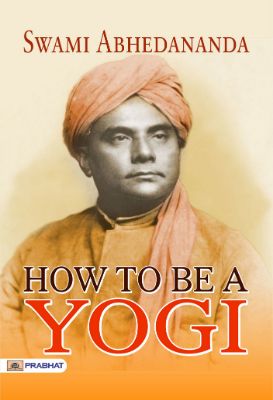
How to Be a Yogi by Swami Abhedananda
A short treatise on the various forms of yoga, including Hatha, Raja, Karma, Bhakti, and Jnana. The book also has chapters on the science of breathing, and the possibility that Christ was a Yogi.
How to Be Genius in Mathematics by Rajesh Kumar Thakur
Mathematics is the backbone of all subjects that’s why it is called the queen. Since the Vedic era, the knowledge of mathematics has been felt essential for the growth of human being. The Rishis were using mathematical knowledge to perform Yagna and making altar for Yagna.
Mathematics is now considered the dreadful subject and most dangerous subject. Most of the students dislike it. If you try to look at the reason, you will find that the basic knowledge of mathematics is missing; causing a great loss to the subject.
Most of the basic and fundamental things have been arranged here with examples so that even a layman with less or no knowledge of mathematics can begin to attract towards mathematics by gaining the missing gaps.

How to be Happy Though Married: Being a Handbook to Marriage by E. J. Hardy
Most of the books intended to give “counsel and ghostly strength” to newly-married people are so like a collection of sermons that they are given away rather than read. When writing the following pages I have remembered that the only kind of vice all people agree to shun is—advice, and have endeavoured to hide the pill. This is my excuse if at times I seem to fall into anecdotage.

How to Become a Public Speaker by William Pittenger
The methods of oratorical cultivation presented in this volume are not based upon mere theory. They have been tested in hundreds of instances, and their results are beyond question. A carpenter will assert with perfect assurance, “I guarantee to take an ordinary young man, who will place himself in my hands for a reasonable time, and turn him out a thorough mechanic, master of every part of his trade.” The effects of training are as marvelous and as certain in the fields of eloquence.’ -an excerpt from the book

How to Behave: A Pocket Manual of Republican Etiquette, and Guide to Correct by Samuel R Wells
Desiring to make our readers something better than mere imitators of foreign manners, often based on social conditions radically different from our own—something better than imitators of any manners, in fact, we have dwelt at greater length and with far more emphasis upon general principles, than upon special observances, though the latter have their place in our work. It has been our first object to impress upon their minds the fact, that good manners and good morals rest upon the same basis, and that justice and benevolence can no more be satisfied without the one than without the other.

How to Collect a Doctor Bill by Franklyn Pierre Davis
My excuse for presenting this little book to the profession is that I have often felt the want of just such information as is herein contained. In fourteen years of practice I have made it a point to study my patients and the business problems that confront the man in our profession. Some of the things that I have learned are embodied in this book. Taking my professional experience as a whole I have collected over ninety per cent of my accounts.
If this book shall be the means of causing any physician to study the business side of professional life, and get what is due him, I will feel that I have not worked in vain.

How to Control Fate Through Suggestion by Henry Harrison Brown
Unity of nature is now the basic thought in science and in the new Philosophy. The ancient and child-man thought duality. This conception, which from earliest times has dominated the conceptions of man, has passed from the mind of the present thinker. With it must pass all the old conceptions of man and nature. With these conceptions, must also ultimately pass the customs, laws and theologies based upon the unscientific, primitive conception of nature as duality.
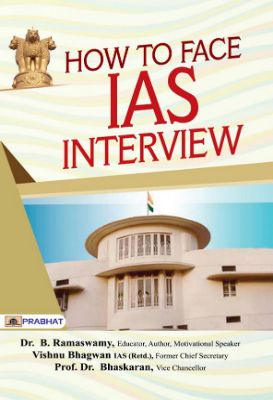
How to Face IAS Interview: Character and Nation Building by Dr. B. Ramaswamy; Mr. Vishnu Bhagwan; Prof. Dr. G. Bhaskaran
This book also creates an understanding of interview in its totality. Knowing the types of interviews, the importance of interview, mock interview and bio-data/curriculum vitae is described. The significance of an informational interview is explained and the ways to handle group discussion and interviews are given.—From book

How to Get on in the World: A Ladder to Practical Success by A. R. Calhoun
Are you having trouble making your way in the world? Have you encountered difficulty deciding which path you should take in life? If so, you might benefit from A.R. Calhoun’s ‘How to Get On in the World: A Ladder to Practical Success’. Regarded as a classic in the self-help genre, this book offers up plenty of straightforward, no-nonsense advice that will help you define success on your terms — and achieve it.
How To Get What You Want by Orison Swett Marden
Chapters include: Something Touched Him; How To Get What You Want; Playing The Glad Game; Discouragement A Disease—How To Cure It; The Force That Moves Mountains; Faith And Drugs; How To Find Oneself; How To Attract Prosperity; Thinking All Over; Heart-To-Heart Talks With Yourself; and, Our Partnership With God.

How to Invest Money by George Garr Henry
The aim of this book is to present in clear form the simple principles of investment, and to afford the reader a working knowledge of the various classes of securities which are available as investments and their relative adaptability to different needs. The book is an outgrowth of the writer’s personal experience as an investment banker. Most of the matter which is presented has appeared in the pages of “System” Magazine, through the courtesy of whose editors it is now rearranged and consolidated for publication in book form.

How to Live on 24 Hours a Day by Arnold Bennett
First published in the year 1910, renowned self-help inspirational books writer Arnold Bennett’s book ‘How to Live on 24 Hours a Day’ guides the readers to manage their day in order to make full use of every minute.

How to Live: Rules for Healthful Living Based on Modern Science by Fisher and Fisk
To one who has been an eye-witness of the wonderful achievements of American medical science in the conquest of acute communicable and pestilential diseases in those regions of the earth where they were supposed to be impregnably entrenched, there is the strongest possible appeal in the present rapidly growing movement for the improvement of physical efficiency and the conquest of chronic diseases of the vital organs.

How To Make Candy by Various
First published in the year 1891 with contribution of various food writers and experts, the present book ‘How To Make Candy’ is a handbook to the recipe of making and understanding the nature of Candies, Ice Creams, and other sweet things loved and adored by children.

How to Make Profit in Share Market by Mahesh Chandra Kaushik
This book is an excellent work of the famous Financial Advisor Mahesh Chandra Kaushik. It focuses on retail investors and provides useful suggestions for their investments. The writer has made it easy and an interesting to read, avoiding use of technical jargon.
After reading this book, you will understand why some people always make money in share market while some people always lose money. If you read this book step-by-step and follow the suggestions provided herein you will never lose money in share market.
After reading this book, you will know how an initial investment of 100 Dollars in share market can become 7,18,03,722 Dollars in 20 years.
Please stop paying money for share market tips. Just read this book—you will yourself learn the tips for winning in the share market and start earning handsome profits.
How to Succeed by Rosetta Dunigan
The little things in youth accumulate into character in age and destiny in eternity. Little sins make up the grand total of life. Each day is brightened or clouded. Great things come but seldom, and are often unrecognized until passed. If a man conceives the idea of becoming eminent in learning, and cannot toil through the many drudgeries necessary to carry him on, his learning will soon be told. Or if he undertakes to become rich, but despises the small and gradual advances by which wealth is acquired, his expectations will be the sum of his riches. The successful businessman at home, surrounded by articles of luxury, is a spectacle calculated to spur on the toiler.