
Classic Books
Showing 1451–1500 of 4246 results
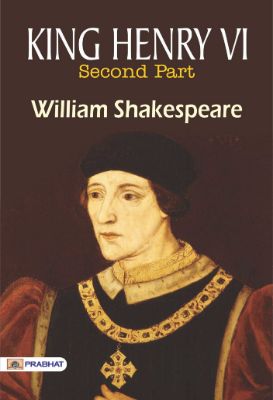
King Henry VI, Second Part by William Shakespeare
Among many accounts, Shakespeare’s was the most ambitious, dramatically innovative and radical. The Second Part of King Henry VI is concerned with the nature of history, the role of conscience and the relation between law and equity. It contains a complex reading of a popular uprising, led by Jack Cade.
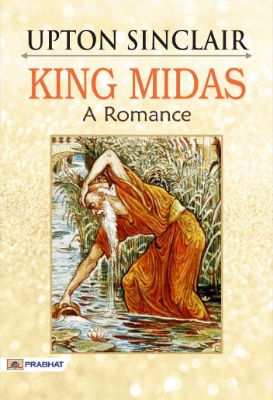
King Midas: A Romance by Upton Sinclair
King Midas A Romance was first published under the title Springtime and Harvest. “I find a fine current of feeling through the pages. They are touched throughout with the hues of poetry and the noblest ideals of life.”–Edwin Markham. Upton Sinclair was a Pulitzer Prize-winning who wrote over 90 books, best known for his muckraking novel, The Jungle.

King Solomon’s Mines by H. Rider Haggard
King Solomon’s Mines’ was published in 1885. It is a popular novel by the Victorian adventure writer and fabulist Sir H. Rider Haggard. It is about a search of an unexplored region of Africa by a group of adventurers led by Allan Quatermain for the missing brother of one of the party. It is the first English adventure novel set in Africa, and is considered to be the genesis of the Lost World literary genre.
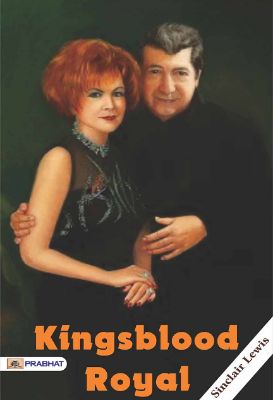
Kingsblood Royal by Sinclair Lewis
First published in 1947, ‘Kingsblood Royal’ is a satirical novel on the American discrimination on the basis of one’s skin colour and class. Siclair Lewis met many such working class Americans who had a black ancestory and are now leading a life of a White on the basis of their skin colour.

Kingsford, Quarter by Ralph Henry Barbour
At the top of the final flight he set the bag[4] down and looked speculatively up and down the long, dim hallway. In front of him the closed door was numbered 24. At the office they had assigned him to 36 Holden. He had found the dormitory without difficulty, and now he had only to find 36. He wondered which way the numbers ran. That he wasn’t alone up here on the second floor was evident, for from behind closed doors and opened doors came the sound of much talking and laughter. While he stood there resting his tired arms, the portal of number 24 was flung open, and a tall youth in his shirt-sleeves confronted him. Behind the tall youth the room seemed at first glance to be simply seething with boys.
Knock, Knock, Knock and Other Stories by Ivan Sergeevich Turgenev
We all settled down in a circle and our good friend Alexandr Vassilyevitch Ridel (his surname was German but he was Russian to the marrow of his bones) began as follows:
I am going to tell you a story, friends, of something that happened to me in the ‘thirties … forty years ago as you see. I will be brief–and don’t you interrupt me.
I was living at the time in Petersburg and had only just left the University. My brother was a lieutenant in the horse-guard artillery. His battery was stationed at Krasnoe Selo–it was summer time. My brother lodged not at Krasnoe Selo itself but in one of the neighbouring villages; I stayed with him more than once and made the acquaintance of all his comrades. He was living in a fairly decent cottage, together with another officer of his battery, whose name was Ilya Stepanitch Tyeglev. I became particularly friendly with him.
Know About Rss by Arun Anand
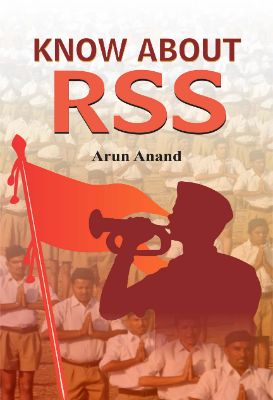
The gradual and steady rise of the 90-year-old Rashtriya Swayamsevak Sangh has fueled many myths. ‘Know About RSS’ unravels the functioning of the organisation by providing an insight into the hitherto unexplained aspects of the RSS – the daily Shakha, Saffron Flag, Prayer, Training Camps, Full-Time Workers etc. This book provides authentic information about the organisational structure of the RSS which is simple yet unique and baffling for all those who do not know about the RSS.

Knowing Self Through Karmayoga by Veenaa Ahuwalia
Search for serenity, calmness and meaningfulness in a world of rapid changes is what everyone is looking for and how to integrate spiritual values into an ordinary life is the prime concern of every Grihastha—a householder.
What can someone, who doesn’t want to give up family and social obligation, do, to live a spiritually meaningful life or to live the right way?
Answer is—‘The Philosophy of Gita’.
Karamyoga is a very ancient science told by Lord Krishna in Gita which is flawlessly state- of-the-art which challenges the general consensus that perfect spiritual life is possible only through renunciation—Sannyas and emphasises on the values of perfect spiritual path by leading an active Grihastha Jeevan.
This book will enable us to understand Karma. We will get all the answers of our questions, curiosity and doubts which would lead us to the path of Gyana and through Gyana ultimate goal is achieved—the highest spiritual attainment i.e. ‘knowing self’, thus understanding God.
This book will inspire all the generations especially younger ones, the millennials. Hope this book will keep its readers engaged and hooked as this is the only yardstick!

Kora in Hell by William Carlos Williams
Her voice was like rose-fragrance waltzing in the wind.
She seemed a shadow, stained with shadow colors,
Swimming through waves of sunlight.…
The sole precedent I can find for the broken style of my prologue is Longinus on the Sublime and that one far-fetched.
When my mother was in Rome on that rare journey forever to be remembered, she lived in a small pension near the Pincio gardens. The place had been chosen by my brother as one notably easy of access, being in a quarter free from confusion of traffic, on a street close to the park and furthermore the tram to the American Academy passed at the corner. Yet never did my mother go out but she was in fear of being lost. By turning to the left when she should have turned right, actually she did once manage to go so far astray that it was nearly an hour before she extricated herself from the strangeness of every new vista and found a landmark.
Korean English Dictionary by Leon Kuperman
The present volume is a dictionary of Korean to English language. It is a useful compendium for those aspiring to learn Korean from English or vice versa. Either way, it is highly recommended not only for new learners but also for those who know the language and wish to improve their vocabularies.
Krishna Deities and Their Miracles by Stephen Knapp
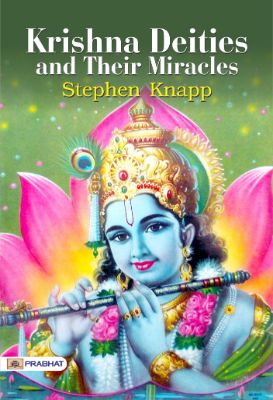
Krishna Deities and Their Miracles include traditional pastimes that have been recorded from years ago, as well as those that are more recent. It shows how great or even minor devotees can have experiences with Krishna as long as they have two qualities, which is great faith and love. A variety of situations are provided in these Book, which shows the many ways that the Lord can reveal Himself, and the favor that is shown by Him to those who worship Him.
La Grenadiere by Honoré de Balzac
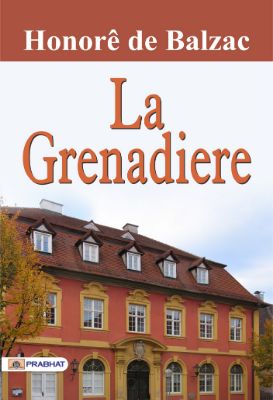
La Grenadiere is a little house on the right bank of the Loire as you go down stream, about a mile below the bridge of Tours. At this point the river, broad as a lake, and covered with scattered green islands, flows between two lines of cliff, where country houses built uniformly of white stone stand among their gardens and vineyards. The finest fruit in the world ripens there with a southern exposure. The patient toil of many generations has cut terraces in the cliff, so that the face of the rock reflects the rays of the sun, and the produce of hot climates may be grown out of doors in an artificially high temperature.
Laches by Plato
Lysimachus, the son of Aristides the Just, and Melesias, the son of the elder Thucydides, two aged men who live together, are desirous of educating their sons in the best manner. Their own education, as often happens with the sons of great men, has been neglected; and they are resolved that their children shall have more care taken of them, than they received themselves at the hands of their fathers.
Lachesis Lapponica; Or, A Tour in Lapland, Volume 1 by Carl Linnaeus
“The biographers of Linnæus have often mentioned the Journal of his Lapland Tour, to which he himself has frequently adverted, in various parts of his voluminous works, under the title of Lachesis Lapponica. The publication of this Journal has been anxiously desired; and so valuable was the manuscript considered, that on his whole collection and library being sold, after the death of his son, it was remarked that these papers at least ought to have been retained in Sweden, as a national pro[Pg viii]perty; the journey which they record having been undertaken at the public expense, and the objects illustrated thereby being, necessarily, more important to the author’s countrymen than to any other people.” -Preface

Lachesis Lapponica; Or, A Tour in Lapland, Volume 2 by Carl Linnaeus
“The biographers of Linnæus have often mentioned the Journal of his Lapland Tour, to which he himself has frequently adverted, in various parts of his voluminous works, under the title of Lachesis Lapponica. The publication of this Journal has been anxiously desired; and so valuable was the manuscript considered, that on his whole collection and library being sold, after the death of his son, it was remarked that these papers at least ought to have been retained in Sweden, as a national pro[Pg viii]perty; the journey which they record having been undertaken at the public expense, and the objects illustrated thereby being, necessarily, more important to the author’s countrymen than to any other people.” -Preface
Lady Chatterley’s Lover by D. H. Lawrence
Ours is essentially a tragic age, so we refuse to take it tragically. The cataclysm has happened, we are among the ruins, we start to build up new little habitats, to have new little hopes. It is rather hard work: there is now no smooth road into the future: but we go round, or scramble over the obstacles. We’ve got to live, no matter how many skies have fallen.
This was more or less Constance Chatterley’s position. The war had brought the roof down over her head. And she had realized that one must live and learn.
Lady Susan by Jane Austen
First published in 1871, the present book ‘Lady Susan’ by celebrated English novelist Jane Austen is about Lady Susan Vernon, a beautiful and charming recent widow, who visits her brother- and sister-in-law, Charles and Catherine Vernon, with little advance notice at Churchill, their country residence. Catherine is far from pleased, as Lady Susan had tried to prevent her marriage to Charles and her unwanted guest has been described to her as “the most accomplished coquette in England”. Among Lady Susan’s conquests in London is the married Mr. Mainwaring.
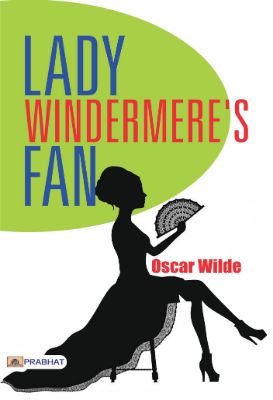
Lady Windermere’s Fan by Oscar Wilde
Lady Windermere’s Fan’ is a four-act comedy by Oscar Wilde. The story concerns Lady Windermere, who suspects that her husband is having an affair with another woman. She confronts him with it but although he denies it, he invites the other woman, Mrs Erlynne, to his wife’s birthday ball. Angered by her husband’s supposed unfaithfulness, Lady Windermere decides to leave her husband for another lover. After discovering what has transpired, Mrs Erlynne follows Lady Windermere and attempts to persuade her to return to her husband and in the course of this, Mrs Erlynne is discovered in a compromising position. It is then revealed Mrs Erlynne is Lady Windermere’s mother, who abandoned her family twenty years before the time the play is set. Mrs Erlynne sacrifices herself and her reputation to save her daughter’s marriage. The best-known line of the play sums up the central theme: We are all in the gutter, but some of us are looking at the stars. — Lord Darlington (courtesy: Wikipedia)
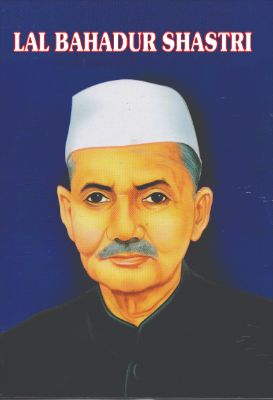
Lal Bahadur Shastri by Meenu Sinhal
India, a land of penance, sacrifice, courage and dedication, has given bir th to such sons who are unparalleled in the world. Such an example of a worthy son of India is Lal Bahadur Shastri. The multifaceted personality, was born on 2nd October, 1904 in Mughal Sarai, in the Varanasi district of Uttar Pradesh. His father was Sharada Prasad Shrivastava, and his mother was Ram Dulari Devi. His father led a simple life and was a teacher by profession and an honest teacher while his mother was a religious minded woman. Although, his family was poor, yet because of their truthfulness and honesty, they earned an honourable position in the society.
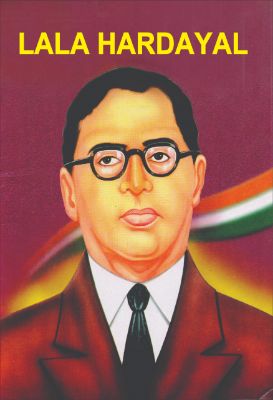
Lala Hardayal by Neeraj
Lala Hardayal, the great revolutionary and the founder of the Ghadar Party , was born on 14th October 1884 in a lower middle class Kayastha family . His father , Gauridayal Mathur was a reader in the district court of Delhi. He had a good knowledge of Urdu and Persian. His mother , Bhori was a simple housewife of religious nature . When Hardayal was four years old, he was admitted to the primary school of Cambridge Mission. He began taking interest in his studies. He had an extraordinary memory and stood first in each class .
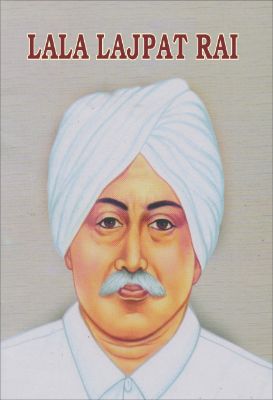
Lala Lajpat Rai by Sachin Sinhal
Lala Lajpat Rai was born in the land of five rivers that has not only given birth to one but innumerable stories of braver y and courage. On this soil and land was born, ‘Punjab Kesari’ Lala Lajpat Rai. He was born on 28th Januar y 1865, in a small town called Jagraon in the Firozpur district of Punjab . His father was Lala Radha Kishan and his mother was Gulab Devi. They were originally from Punjab.

Lamia’s Winter-Quarters by Alfred Austin
‘Where is Lamia?’
The inquiry is one not infrequently made; for, while most of us can vanish without being missed, some favoured individuals there are whose disappearance at once excites a sense of loss; and Lamia is one of these. The question, I need scarcely say, was put by Veronica; since the Poet maintains a fine irresponsible attitude respecting others as well as about himself, and, however anxious I may be to keep sight of Lamia, I am hardly so simple as to betray my desire. But, responding with sincere alacrity to Veronica’s question, I protested I had not the faintest notion where she was, but would at once go in search of her. -an excerpt
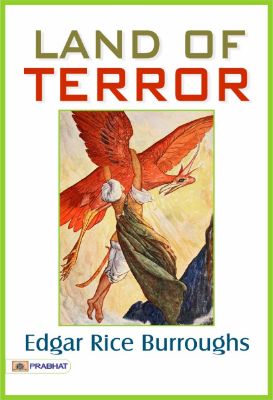
Land of Terror by Edgar Rice Burroughs
This is the penultimate novel in the series and the last to be published during Burrough’s lifetime. Unlike most of the other books in the Pellucidar series, this novel was never serially published in any magazine because it was rejected by all of Burroughs’s usual publishers. The novel tells the adventures of David Innes on his return from Lo-Har to Sari in the wake of the events of Back to the Stone Age.
Language: An Introduction to the Study of Speech by Edward Sapir
Language an Introduction to the Study of Speech” from Edward Sapir. Edward Sapir, american anthropologist-linguist (1884-1939).
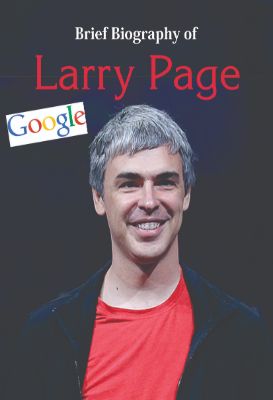
Larry Page by Kalyani Mookherji
Born as Lawrence Page on March 26, 1973, in East Lansing, Michigan, the future Internet whiz is one of two children to Carl Vincent and Gloria Page. Both his parents were computer engineers themselves – his father was one of the earliest researchers and Ph.D holders in computer science as well as a pioneer in the field of artificial intelligence. Likewise Larry’s mother taught computer programming at Lyman Briggs College at Michigan State University.
Last Words by Stephen Crane
“Two men sat by the sea waves.
“Well, I know I’m not handsome,” said one gloomily. He was poking holes in the sand with a discontented cane.
The companion was watching the waves play. He seemed overcome with perspiring discomfort as a man who is resolved to set another man right.
Suddenly his mouth turned into a straight line. “To be sure you are not,” he cried vehemently. “You look like thunder. I do not desire to be unpleasant, but I must assure you that your freckled skin continually reminds spectators of white wall paper with gilt roses on it. The top of your head looks like a little wooden plate. and your figure—heavens!”
For a time they were silent. They stared at the waves that purred near their feet like sleepy sea-kittens.” -an excerpt
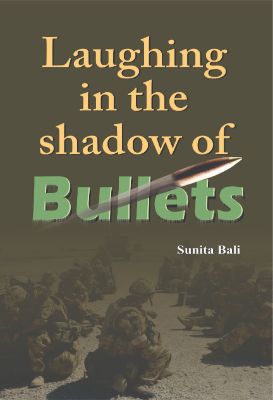
Laughing in the Shadow of Bullets by Sunita Bali
Laughing in the Shadow of Bullets is almost a four decades long ring side as also the grand stand view of the Army Life as seen, heard and experienced by a lady married to an Army Officer—an Infantry Soldier.
She recounts and recapitulates various hilarious incidents along with their manifestations and that apart from making you laugh bring to fore the unmistakable spirit to do or die that can be vividly seen only among these men of arms who are always ready to ‘slay or sacrifice’ when the trumpet blows and duty calls.
These pages in your hands thus afford you an introduction; a familiarisation to your Army. The narratives are primarily aimed at making you smile and are an attempt to dilute the adverse impact of contemporary interminable assault of tension on our collective life style.
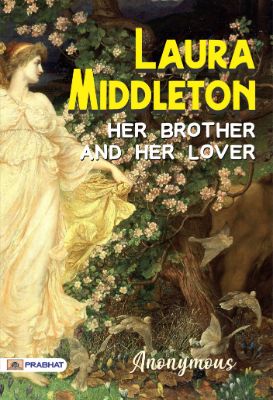
Laura Middleton; Her Brother and her Lover by Anonymous
The remarks which Emily had made regarding the share Laura Middleton had had in opening up her ideas on the subject of the mysteries in which she had now been fully initiated had not escaped my observation. It so happened that at that very time I was under an engagement to pay a visit to the Middletons, who were very distant relations of my mother. It of course occurred to me that it was possible I might be able to turn the information I had thus acquired to some account. Laura and I were old friends. She was about two years older than I, a very handsome, fine-looking girl but, as I had then fancied, upon rather a larger scale than quite suited my taste. We had always been on very good terms as children, but she had a sort of haughty, imperious air which, joined to the difference in our ages, had operated in a manner that would have prevented me from thinking of taking any liberties with her; and she was about the last person in the world I should have been disposed to imagine addicted to the amusements in which Emily had participated with her.
Laws by Plato
The genuineness of the Laws is sufficiently proved (1) by more than twenty citations of them in the writings of Aristotle, who was residing at Athens during the last twenty years of the life of Plato, and who, having left it after his death (B.C. 347), returned thither twelve years later (B.C. 335); (2) by the allusion of Isocrates
(Oratio ad Philippum missa, p.84: To men tais paneguresin enochlein kai pros apantas legein tous sunprechontas en autais pros oudena legein estin, all omoios oi toioutoi ton logon (sc. speeches in the assembly) akuroi tugchanousin ontes tois nomois kai tais politeiais tais upo ton sophiston gegrammenais.) —writing 346 B.C., a year after the death of Plato, and probably not more than three or four years after the composition of the Laws—who speaks of the Laws and Republics written by philosophers (upo ton sophiston); (3) by the reference (Athen.) of the comic poet Alexis, a younger contemporary of Plato (fl. B.C 356-306), to the enactment about prices, which occurs in Laws xi., viz that the same goods should not be offered at two prices on the same day
(Ou gegone kreitton nomothetes tou plousiou
Aristonikou tithesi gar nuni nomon,
ton ichthuopolon ostis an polon tini
ichthun upotimesas apodot elattonos
es eipe times, eis to desmoterion
euthus apagesthai touton, ina dedoikotes
tes axias agaposin, e tes esperas
saprous apantas apopherosin oikade.

Le Morte D’Arthur by Thomas Malory
Le Morte d’Arthur was first published in 1485 by William Caxton. This book is a reworking of traditional tales by Sir Thomas Malory about the legendary King Arthur, Guinevere, Lancelot, Merlin and the Knights of the Round Table. Malory interprets existing French and English stories about these figures and adds original material. It is perhaps one of the best-known works of Arthurian literature in English.

Le Morte d’Arthur: Volume 1 by Sir Thomas Malory
THE Morte D’Arthur was finished, as the epilogue tells us, in the ninth year of Edward IV., i.e. between March 4, 1469 and the same date in 1470. It is thus, fitly enough, the last important English book written before the introduction of printing into this country, and since no manuscript of it has come down to us it is also the first English classic for our knowledge of which we are entirely dependent on a printed text. Caxton’s story of how the book was brought to him and he was induced to print it may be read farther on in his own preface. From this we learn also that he was not only the printer of the book, but to some extent its editor also, dividing Malory’s work into twenty-one books, splitting up the books into chapters, by no means skilfully, and supplying the “Rubrish” or chapter-headings. It may be added that Caxton’s preface contains, moreover, a brief criticism which, on the points on which it touches, is still the soundest and most sympathetic that has been written.
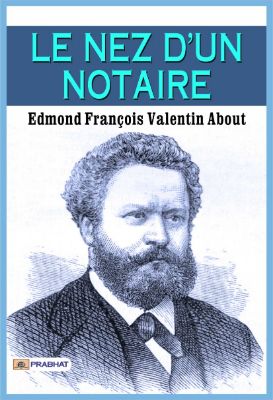
Le nez d’un notaire by Edmond François Valentin About
Permettez-moi, monsieur, d’inscrire en tête de ce petit livre le nom cher et honoré d’un homme qui a consacré toute sa vie à la cause du progrès, d’un père qui a offert ses deux fils à la délivrance de l’Italie, d’un ami qui est venu entre les premiers me donner une preuve de sympathie le lendemain de «Gaëtana».
TABLE DES MATIÈRES
1. LE NEZ D’UN NOTAIRE
2. A M. ALEXANDRE BIXIO
3. I L’ORIENT ET L’OCCIDENT SONT AUX PRISES: LE SANG COULE
4. II LA CHASSE AU CHAT
5. III OÙ LE NOTAIRE DÉFEND SA PEAU AVEC PLUS DE SUCCÈS
6. IV CHÉBACHTIEN ROMAGNÉ
7. V GRANDEUR ET DÉCADENCE
8. VI HISTOIRE D’UNE PAIRE DE LUNETTES ET CONSÉQUENCES D’UN RHUME DE CERVEAU
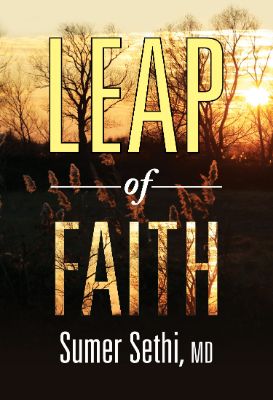
Leap of Faith by Sumer Sethi, Md
The book is another master piece by the dynamic writer. It compels the reader to sit back and think about the phenomenon called ‘life’.
It stirs the readers mind with great deal of positivity.
It is subtle yet stimulating. The chapters outlay complete process of life and actions.
The reader would get an alleviation in complex process of thinking. It would generate an un-diminishing impact on the minds of readers.
It requires a great deal of intelligence to interpret stimuli into words. The art is to perceive signals / hints in a right way, act to amplify your efforts, and, live life with passion. The author has a great way of saying that life is swift, realise it’s potential.
We live in a world where time is the biggest constraint. So we need to substantiate our lives by taking right decisions. And such decisions should be quick and correct.
Never lose faith in ourselves and live it with a purpose. That is the true meaning of life.
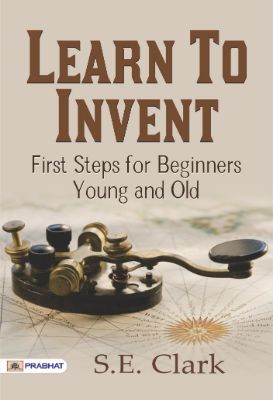
Learn to Invent by S. E. Clark
Invention is the fountain source of material progress. It would indeed be a fruitless effort to try to express in adequate language its wondrous possiblities and practical worth to mankind. Its field of action surpasses all others.
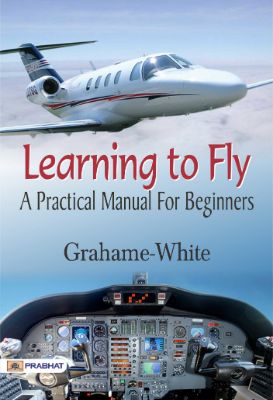
Learning to Fly: A Practical Manual for Beginners by Grahame-White
This book is written for the novice-and for the novice who is completely a novice. We have assumed, in writing it, that it will come to hands of men who, having determined to enter this great industry of aviation, and having decided wisely to learn to fly.
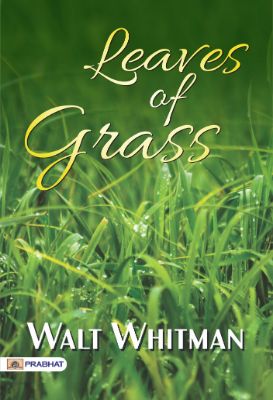
Leaves of Grass by Walt Whitman
First published in the year 1855, the present book ‘Leaves of Grass’ is a poetry collection by the American poet Walt Whitman. The poems of Leaves of Grass are loosely connected, with each representing Whitman’s celebration of his philosophy of life and humanity. This book is notable for its discussion of delight in sensual pleasures during a time when such candid displays were considered immoral. Where much previous poetry, especially English, relied on symbolism, allegory, and meditation on the religious and spiritual, ‘Leaves of Grass’ exalted the body and the material world.
Leaves of Life, for Daily Inspiration by Margaret Bird Steinmetz
First published in the year 1914, Margaret Bird Steinmetz’s book ‘Leaves of Life, for Daily Inspiration’ offers wisdom and insight for applying Biblical truths to the ups and downs of everyday life.
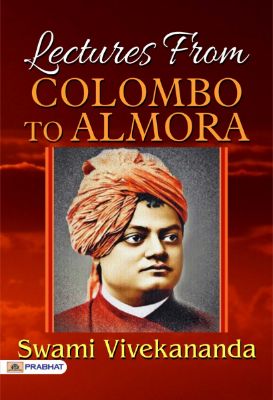
Lectures from Colombo to Almora by Swami Vivekananda
After his memorable work in the West, Swami Vivekananda landed at Colombo on the afternoon of January 15, 1897, and was given a right royal reception by the Hindu community there.
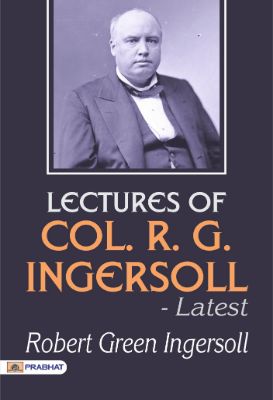
Lectures of Col. R. G. Ingersoll – Latest by Robert Green Ingersoll
I was reading, yesterday, a poem called the “Light of Asia,” and I read in that how a Boodh seeing a tigress perishing of thirst, with her mouth upon the dry stone of a stream, with her two cubs sucking at her dry and empty dugs, this Boodh took pity upon this wild and famishing beast, and, throwing from himself the Yellowrobe of his order, and stepping naked before this tigress, said: “Here is meat for you and your cubs.” In one moment the crooked daggers of her claws ran riot in his flesh, and in another he was devoured. Such, during nearly all the history of this world, has been the history of every man who has stood in front of superstition.
Lectures on Language, as Particularly Connected with English Grammar by Balch
There is no subject so deeply interesting and important to rational beings as the knowledge of language, or one which presents a more direct and powerful claim upon all classes in the community; for there is no other so closely interwoven with all the affairs of human life, social, moral, political and religious. It forms a basis on which depends a vast portion of the happiness of mankind, and deserves the first attention of every philanthropist.
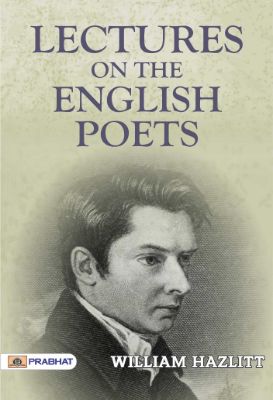
LECTURES ON THE ENGLISH POETS by WILLIAM HAZLITT
First published in the year 1818, th epresent book ‘LECTURES ON THE ENGLISH POETS’ is a copilation of a lecture series delivered by WILLIAM HAZLITT on the subject of European poetry from Chaucer and Spencer to the poets of the early 19th century.

Lectures on the Origin and Growth of Religion as Illustrated by the Native Religions of Mexico and Peru by Albert Réville
This book is a collection of a series of lectures delivered at Oxford and London, In April and May, 1884 published in book form in the same year. The author was a distinguished French Protestant theologian and a prolific writer on the comparative history of world religions.
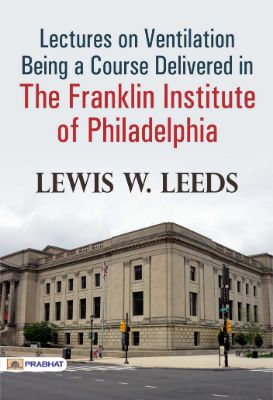
Lectures on Ventilation Being a Course Delivered in the Franklin Institute of Philadelphia by Lewis W. Leeds
This book is a reproduction of an important historical work. Unlike some other reproductions of classic texts. We have not used OCR, as this leads to bad quality books with introduced typos. In books where there are images such as portraits, maps, sketches etc. We have endeavored to keep the quality of these images, so they represent accurately the original artefact. We feel they deserve to be made available for future generations to enjoy.
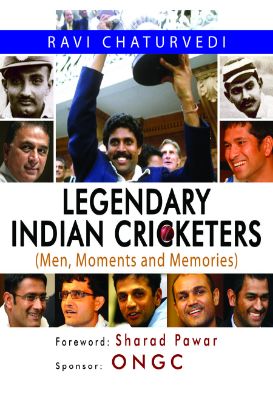
Legendary Indian Cricketers by Ravi Chaturvedi
legendary Indian Cricketers’ follow the form and format of the ragas of Indian classical music. The first phase, which spans over several decades, has the leisurely pace of village life; the second phase, which unfolds over the 1950s and 70s, goes with a simple, measured melodious beat; while the third is a kind of scherzo, where action is compressed into less than a day. All the same the scene, the setting and the structure of the Legendary Indian Cricketers (Men, Moments and Memories) are classically Indian. The echoes and the ethos too have a typical Indian flavour.

Legendary Tales of the Highlands (Volume 2 of 3) by Thomas Dick Lauder
There is a long, low, flat-topped, and prettily wooded eminence, that rises out of the middle of the bonny haughs of Kilmaichly, at some distance below the junction of the rivers Aven and Livat. I don’t remember that it has any particular name, but it looks, for all the world, like the fragment of some ancient plain, that must have been of much higher level than that from which it now rises, which fragment had been left, after the ground on each side of it had been worn down to its present level, by the changeful operations of the neighbouring streams. But whatever you geology gentlemen might say, as to what its origin might have been, every lover of nature must agree, that it is a very beautiful little hill, covered as its slopes are with graceful weeping birches, and other trees. The bushes that still remain, show that, in earlier times, it must have been thickly wooded with great oaks, which probably gave shelter to the ould auncient Druids, when engaged in their superstitious mysteries. At the period to which the greater part of my story belongs—that is, in and about that of the reign of King James the III.—the blue smoke that curled up from among the trees betrayed the existence of a cottage, that sat perched upon the brow of its western extremity, looking towards the Castle of Drummin. This little dwelling was much better built, and, in every respect, much neater than any of those in the surrounding district; and its interior exhibited more comforts as to furniture and plenishing of all sorts, and those too of a description, superior to any thing of the kind which a mere cottager might have been reasonably expected to have possessed.
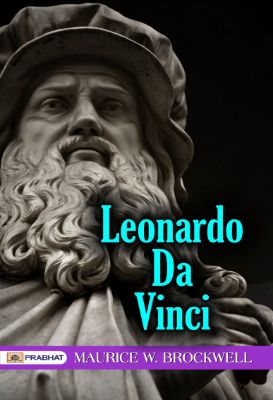
Leonardo Da Vinci by Maurice W. Brockwell
Leonardo Da Vinci, the many-sided genius of the Italian Renaissance, was born, as his name implies, at the little town of Vinci, which is about six miles from Empoli and twenty miles west of Florence.

Leonardo da Vinci, Pathfinder of Science by Leonardo da Vinci
“This book is about Leonardo the scientist, and to fully write of his many accomplishments would require an encyclopedic mind. My intent has been to extract the essence of his story in the hopes that it would arouse the enthusiasm of a reader to further his interest in those other, more fully documented books—and, above all, in the notebooks that Leonardo himself wrote.” -Author’s Note
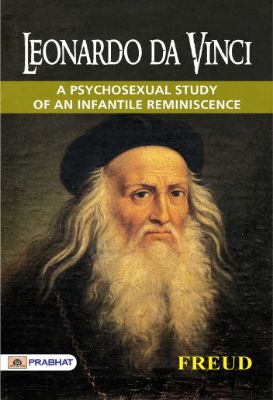
Leonardo da Vinci: A Psychosexual Study of an Infantile Reminiscence by Freud
First published in the year 1910, ‘Leonardo da Vinci: A Psychosexual Study of an Infantile Reminiscence’ is an essay by famous psychologist and father of psychoanalysis theories, Sigmund Freud. This essay is psychoanalytical study of Leonardo da Vinci’s childhood through his paintings.
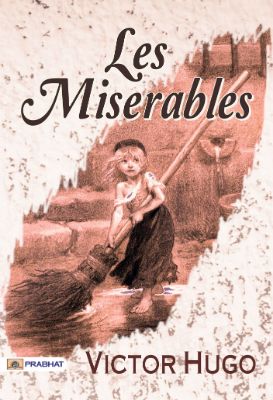
Les Miserables by Victor Hugo
First published in the year 1862, the present book ‘Les Miserables’ by Victor Hugo is a French historical novel. Beginning in 1815 and culminating in the 1832 June Rebellion in Paris, the novel follows the lives and interactions of several characters, particularly the struggles of ex-convict Jean Valjean and his experience of redemption.
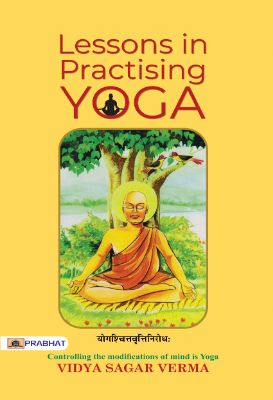
Lessons in Practising Yoga by Vidya Sagar Verma
Sage Patanjali’s Yoga contains 195 Aphorisms. Of these, only 3 relate to Asanas and 6 to Pranayama. All the rest relate to Moral Elevation and Meditation which opens new vistas of mind. This book will help you on that path.