
Classic Books
Showing 2501–2550 of 4246 results

Temple Management by Dr. Suresh Haware
India has a rich and diverse culture, with its different rituals, practices and customs. The temples all across the country are testimony to such diverse rituals. India has around 30 lakh temples. It has a potential to bring socio-economic transformation in India. The book is a documentation to this effect on a very novel subject of temple management. The scientific approach, the service mind and the management skills have the potential to change the scenario of the temples in India.
Dr. Suresh Haware being a senior nuclear scientist and a successful businessman besides serving as chairman of Sri Sai Baba temple located at Shirdi, has penned down his experiences and his prospective plans on managing the temples.
The temples possess a huge potential for employment generation that has not yet been harnessed. Institutions could carve out professional courses in the subject to make suitable manpower available for managing the temples effectively.
This book is of interest to and will attract the attention of professionals towards this necessity. It will provide a spark to many minds from the business, industry, religion and institutions so as to attract many souls to the innovative subject of temple management.
Temple management will then make a difference.

Ten Great Religions : An Essay In Comparative Theology by James Freeman Clarke
First comprehensive book on comparative religion. Born in Hanover, New Hampshire, James Freeman Clarke attended the Boston Latin School, graduated from Harvard College in 1829, and Harvard Divinity School in 1833. Ordained into the Unitarian church he first became an active minister at Louisville, Kentucky, then a slave state and soon threw himself into the national movement for the abolition of slavery.

Ten Thousand Wonderful Things by Edmund Fillingham King
A Book of Wonders requires but a brief introduction. Our title-page tells its own tale and forms the best exposition of the contents of the volume.
Everything that is marvellous carries with it much that is instructive, and, in this sense, “Ten Thousand Wonderful Things,” may be made useful for the highest educational purposes. Events which happen in the regular course have no claim to a place in any work that professes to be a register of what is uncommon; and were we to select such Wonders only as are capable of familiar demonstration, we should destroy their right to be deemed wondrous, and, at the same time, defeat the very object which we profess to have in view. A marvel once explained away ceases to be a marvel. For this reason, while rejecting everything that is obviously fictitious and untrue, we have not hesitated to insert many incidents which appear at first sight to be wholly incredible.
Ten Years Later by Alexandre Dumas
The reader guesses beforehand whom the usher preceded in announcing the courier from Bretagne. This messenger was easily recognized. It was D’Artagnan, his clothes dusty, his face inflamed, his hair dripping with sweat, his legs stiff; he lifted his feet painfully at every step, on which resounded the clink of his blood-stained spurs. He perceived in the doorway he was passing through, the superintendent coming out. Fouquet bowed with a smile to him who, an hour before, was bringing him ruin and death. D’Artagnan found in his goodness of heart, and in his inexhaustible vigor of body, enough presence of mind to remember the kind reception of this man; he bowed then, also, much more from benevolence and compassion, than from respect. He felt upon his lips the word which had so many times been repeated to the Duc de Guise: “Fly.”

Tender Buttons by Gertrude Stein
Tender Buttons is a 1914 book by American writer Gertrude Stein consisting of three sections titled “Objects”, “Food”, and “Rooms”.
Tender is the Night by Fitzgerald, F. Scott
It is the French Riviera in the 1920s. Nicole and Dick Diver are a wealthy, elegant, magnetic couple. A coterie of admirers are drawn to them, none more so than the blooming young starlet Rosemary Hoyt. When Rosemary falls for Dick, the Diver’s calculated perfection begins to crack. As dark truths emerge, Fitzgerald shows both the disintegration of a marriage and the failure of idealism. Tender is the Night is as sad as it is beautiful. A profound study of the romantic concept of character, Tender Is the Night is lyrical, expansive, and hauntingly evocative.

Territorial Army by Maj Surender Singh
Formation of citizens’ armed forces, which provide, to the youth engaged in civilian professions, opportunities and facilities for military training and thereby constitute a reserve of trained manpower for ‘effective national defence in the event of an emergency’ is the direct result of the changed nature and character of modern war.
Modern warfare (termed in military terminology as the fourth generation warfare) has not only greatly extended the area of conflict and the impact of fighting but it has completely wiped out the traditional difference between the ‘actual fighting lines and civilian population in the rear’.
Terror in Kashmir & Other Stories by Lt Gen Yashwant Mande
The stones in this book are noteworthy because of their novelty and variety. The topic in each story is new, original and different from others. They cover incidents that have taken place in India’s long history. They are revealing and thought provoking.
The style of narration and the story-craft are essential features of good stories. The stories we full off movement and curiousity is kept alive right up to the end. There is never a dull moment and the reader once he starts with a story cannot possibly put the book down. The characters, though imaginary in most cases, appear to be real because of authentic background. The author takes the readers along with the stories and never permits boredom to set in. The stories have literary merit both because of subject and its treatment.
We hope that the readers— children, women and elderly people will equally find this book interesting.
Tess of the d’Urbervilles: A Pure Woman by Thomas Hardy
One of the most critically acclaimed and appreciated works around the lives of women in the late 19th century by Thomas Hardy, ‘Tess of the d’Urbervilles: A Pure Woman’ was first published in 1891. It challenged the sexual morals of late Victorian England and considered to be Hardy’s fictional masterpiece.
Tess of the Storm Country by Grace Miller White
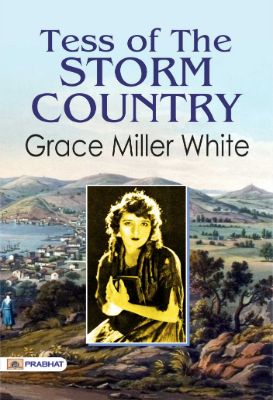
Published in 1909, this classic romance is set in Ithaca, New York. Living in a squatters shanty, shunned by the upstanding folk of Ithaca, Tessibel is nonetheless shocked when her father, a fisherman, is accused of murder. Barefoot, beautiful, and innocent, Tess sets out to clear his name. Along the way, she meet a Cornell man. Tess lives in a rotting shanty surrounded by fish bones. Her education is minimal. Her best friend is a toad. How can she compare with the brainy beauties he squires around?
Test Your Iq & Reasoning by Vijaya Khandurie
There are several factors that an I.Q. test measures like general intelligence, language, visual-spatial concept, mathematical skills, logical reasoning and general knowledge. Normally I.Q. tests asses your intellectual potential. In modern times I.Q. or Mentally Ability Test has become an important tool to select a candidate in competitive examinations whether it is the National Talent Search Examination (NTSE) or I.A.S. There is hardly any competition where such types of tests are not conducted. This book containing 1000 questions, divided in 40 Tests will certainly help you enhance your Intelligence Quotient

Testament of Youth by Vera Brittain; Mark Bostridge
For nearly a decade I have wanted; with a growing sense of urgency; to write something which would show what the whole War and post-war period — roughly; from the years leading up to 1914 until about 1935 — has meant to the men and women of my generation; the generation of those boys and girls who grew up just before the war broke out. I wanted to give too; if I could; an impression of the changes which that period brought about in the minds and lives of very different groups of individuals belonging to the large section of middle-class society from which my own family comes.

Thackeray’S London by William H. Rideing
Thackeray does not give the same opportunities for the identification of his scenes as Dickens. The elaboration with which the latter localizes his characters, and the descriptive minutiæ with which he makes their haunts no less memorable than themselves, are not to be found in the works of the author of Vanity Fair. No faculty was stronger in Dickens, or of more service to him, than his power of word-painting. He reproduces the objects p. 2by which the persons he describes are surrounded with a fidelity which would be tedious, if it were not relieved by the humor which humanizes bricks, and imparts a grotesque sort of sensibility to articles of furniture; and it is not easy to think of any of his leading characters without being reminded of the neighborhoods in which they played their parts.

That Girl Montana by Marah Ellis Ryan
The present book ‘That Girl Montana’ was written by a famous author, actress, and activist from the United States – Marah Ellis Ryan. It was first published in the year 1901. The author takes her characters to the wilds of Idaho, in the land of the Kootenais, where the reader is made acquainted with people who win admiration for their honest, sincerity, and the whole-souled generosity of their natures.
The “Characters” of Jean de La Bruyère by Jean de La Bruyère
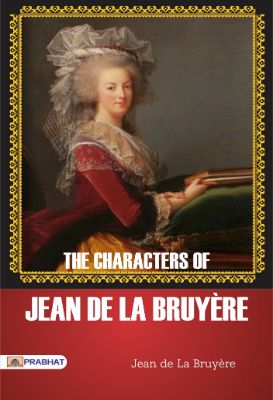
“It is a common practice for translators to state to the public that the author they are going to introduce, and whom they sometimes traduce, is one of the greatest men of the age, and that already for a long time a general desire has been felt to make the acquaintance of such a master-mind. It would be an insult to French scholars to speak thus of La Bruyère, for the merits of his “Characters” are known; but, for the benefit of those who are not so well acquainted with our author, I may state that he is neither so terse, epigrammatic, sublime, nor profound as either Pascal or La Rochefoucauld are, but that he is infinitely more readable, as he is always trying to please his readers, and now and then sacrifices even a certain depth of thought to attain his object.” -Introduction
The “Genius” by Theodore Dreiser
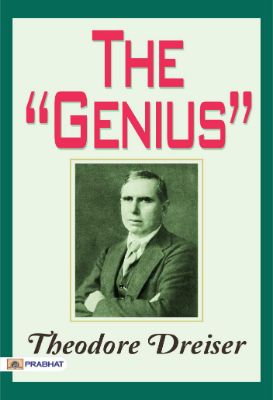
The “Genius” is a semi-autobiographical novel by Theodore Dreiser, first published in 1915. It concerns Eugene Witla, a talented painter of strong sexual desires who grapples with his commitment to his art and the force of his erotic needs. (courtesy: wikipedia)

The $30,000 Bequest, and Other Stories by Mark Twain
First published in the year 1903, the present book ‘ iconic American humorist and writer Mark Twain’s collection of thirty comic short stories.

The Abominations of Modern Society by Rev. T. De Witt Talmage
The book “The Abominations of Modern Society” explores the abominations or the evil practices prevailing in this modern world. It is a Christian book which explores and talks in great details about the topics of drinking, fashion, sexuality, pornography, adultery, prostitution, incest, fornication, night clubs, gambling, blasphemy, gambling, and administrative taxes imposed on the common people. The most striking point that the book eloquently asserts is: The best being that God ever made is a good woman, and the worst that the devil ever made is a bad one. The author has written the book with a view to contribute to the society which he seems is rapidly degenerating. The insight is very deep and highly ingenious.
The Absentee by Maria Edgeworth
Miss Edgeworth’s own letters all about this time are much more concerned with sociabilities than with literature. We read of a pleasant dance at Mrs. Burke’s; of philosophers at sport in Connemara; of cribbage, and company, and country houses, and Lord Longford’s merry anecdotes during her visit to him. Miss Edgeworth, who scarcely mentions her own works, seems much interested at this time in a book called MARY AND HER CAT, which she is reading with some of the children.
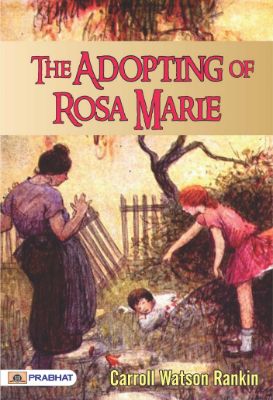
The Adopting of Rosa Marie by Carroll Watson Rankin
First published in the year 1908, the present book ‘The Adopting of Rosa Marie’ by the famous American writer Carroll Watson Rankin is a fictional novel which is a sequel to the author’s ‘Dandelion Cottage’.
The Adventure of the Bruce-Partington Plans by Arthur Conan Doyle
The Adventure of the Bruce-Partington Plans’ is one of the stories among 56 Sherlock Holmes adventure by Arthur Conan Doyle.

The Adventure of the Bruce-Partington Plans by Arthur Conan Doyle
The Adventure of the Bruce-Partington Plans’ is one of the stories among 56 Sherlock Holmes adventure by Arthur Conan Doyle.

The Adventure of the Cardboard Box by Arthur Conan Doyle
The Adventure of the Cardboard Box’ is one of the stories among 56 Sherlock Holmes adventure by Arthur Conan Doyle.

The Adventure of the Devil’s Foot by Arthur Conan Doyle
The Adventure of the Devil’s Foot’ is one of the stories among 56 Sherlock Holmes adventure by Arthur Conan Doyle.

The Adventure of the Dying Detective by Arthur Conan Doyle
The Adventure of the Dying Detective’ is one of the stories among 56 Sherlock Holmes adventure by Arthur Conan Doyle.

The Adventure of the Red Circle by Arthur Conan Doyle
The Adventure of the Red Circle’ is one of the stories among 56 Sherlock Holmes adventure by Arthur Conan Doyle.
The Adventure of Wisteria Lodge by Arthur Conan Doyle
The Adventure of Wisteria Lodge’ is one of the stories among 56 Sherlock Holmes adventure by Arthur Conan Doyle.
The Adventures of a Modest Man by Robert W. Chambers
This volume packed with bric-à-brac
I offer you with my affection,—
The story halts, the rhymes are slack—
Poor stuff to add to your collection.
Gems you possess from ages back:
It is the modern junk you lack.

The Adventures of a Three-Guinea Watch by Talbot Baines Reed
“Then you can guarantee it to be a good one to go?”
“You couldn’t have a better, sir.”
“And it will stand a little roughish wear, you think?”
“I’m sure of it, sir; it’s an uncommon strong watch.”
“Then I’ll take it.”
These few sentences determined my destiny, and from that moment my career may be said to have begun.
The Adventures of Ann by Mary E. Wilkins Freeman
“The Adventures of Ann” from Mary Eleanor Wilkins Freeman. Prominent 19th-century American author (1852-1930)
The Adventures of Captain Horn by Frank Richard Stockton
First published in the year 1894, the present adventure novel ‘The Adventures of Captain Horn’ by Frank Richard Stockton was third bestselling novel of that year in the US. Its popular sequel ‘Mrs. Cliff’s Yacht’ was released in 1897.

The Adventures of Dr. Thorndyke by R. Austin Freeman
This I have always regarded as somewhat of a mistake. In real life, the identity of the criminal is a question of supreme importance for practical reasons; but in fiction, where no such reasons exist, I conceive the interest of the reader to be engaged chiefly by the demonstration of unexpected consequences of simple actions, of unsuspected causal connections, and by the evolution of an ordered train of evidence from a mass of facts apparently incoherent and unrelated. The reader’s curiosity is concerned not so much with the question “Who did it?” as with the question “How was the discovery achieved?” That is to say, the ingenious reader is interested more in the intermediate action than in the ultimate result.

The Adventures of François by S. Weir Mitchell
In the summer of the year 1777 a lad of about ten years, clad in a suit of gray, was playing in the high-walled garden of the Benedictine Asylum for Orphans in Paris. The sun was pleasant, the birds sang overhead, the roses were many, for the month was June. A hundred lads were noisily running about. They had the look of being well fed, decently clothed, and kindly cared for. An old priest walked to and fro, at times looking up from his breviary to say a pleasant word or to check some threatening quarrel. -an excerpt
The Adventures of Gerard by Arthur Conan Doyle
A collection of short historical stories by British writer Arthur Conan Doyle. These stories are based on a French Brigadier. It was first published in the year 1903.
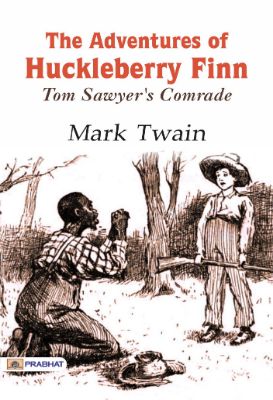
The Adventures of Huckleberry Finn Tom Sawyer’s Comrade by Mark Twain
This is a reproduction of a book published before 1923. Quality assurance was conducted on each of these books in an attempt to remove books with imperfections introduced by the digitization process. We believe this work is culturally important and have elected to bring the book back into print as part of our continuing commitment to the preservation of printed works worldwide. We appreciate your understanding of the imperfections in the preservation process, and hope you enjoy this valuable book.

The Adventures of Huckleberry Finn by Mark Twain
First published in the year 1884, the present book ‘The Adventures of Huckleberry Finn’ was written by famous American writer, humorist, entrepreneur, publisher, and lecturer – Mark Twain. The book is noted for its colorful description of people and places along the Mississippi River. Set in a Southern antebellum society that had ceased to exist about 20 years before the work was published, this book is an often scathing satire on entrenched attitudes, particularly racism.
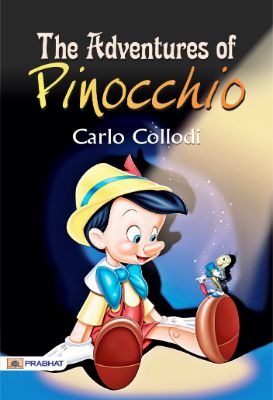
The Adventures of Pinocchio by Carlo Collodi
First published in the year 1883, ‘The Adventures of Pinocchio’ is a children’s adventure fantasy by Italian author Carlo Collodi. It is a story about an animated puppet, boys who turn into donkeys and other fairy tale devices. The setting of the story is the Tuscan area of Italy. It was a unique literary marriage of genres for its time. The story’s Italian language is peppered with Florentine dialect features, such as the protagonist’s Florentine name.
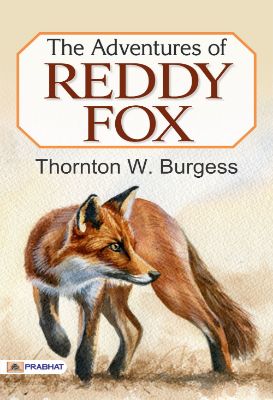
The Adventures of Reddy Fox by Thornton W. Burgess
Reddy Fox lived with Granny Fox. You see, Reddy was one of a large family, so large that Mother Fox had hard work to feed so many hungry little mouths and so she had let Reddy go to live with old Granny Fox. Granny Fox was the wisest, slyest, smartest fox in all the country round, and now that Reddy had grown so big, she thought it about time that he began to learn the things that every fox should know. So every day she took him hunting with her and taught him all the things that she had learned about hunting: about how to steal Farmer Brown’s chickens without awakening Bowser the Hound, and all about the thousand and one ways of fooling a dog which she had learned.
The Adventures of Sally by P. G. Wodehouse
No, wrong – at least for Sally Nicholas, whose generosity of spirit immediately runs into all the slings and arrows outrageous fortune can send. Her handsome fiance turns out not to be all he seems – and then there is the show he’s written, which Sally puts on in the theatre. No, in this delightful early novel from the master of Englsih comedy, life is not straightforward at all. But waiting in the wings is Ginger Kemp, who really does adore her, seems to make a hash of everything he tries and yet is always ready to try something else. If money becomes a problem, perhaps Ginger will provide a solution.

The Adventures of Sherlock Holmes by Arthur Conan Doyle
To Sherlock Holmes she is always the woman. I have seldom heard him mention her under any other name. In his eyes she eclipses and predominates the whole of her sex. It was not that he felt any emotion akin to love for Irene Adler. All emotions, and that one particularly, were abhorrent to his cold, precise but admirably balanced mind. He was, I take it, the most perfect reasoning and observing machine that the world has seen, but as a lover he would have placed himself in a false position. He never spoke of the softer passions, save with a gibe and a sneer. They were admirable things for the observer—excellent for drawing the veil from men’s motives and actions. But for the trained reasoner to admit such intrusions into his own delicate and finely adjusted temperament was to introduce a distracting factor which might throw a doubt upon all his mental results. Grit in a sensitive instrument, or a crack in one of his own high-power lenses, would not be more disturbing than a strong emotion in a nature such as his. And yet there was but one woman to him, and that woman was the late Irene Adler, of dubious and questionable memory.
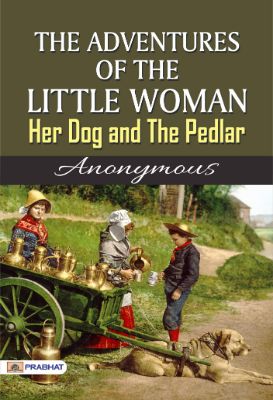
The Adventures of the Little Woman, Her Dog and the Pedlar by Anonymous
This book is very useful for children and is beneficial in the development of children because the best category of pictures and poetry is included in the books. And the curriculum of these books has been given in a way that helps in the development of children.

The Adventures of Tom Sawyer by Mark Twain (Samuel Clemens)
The Adventures of Tom Sawyer is the first of Mark Twain’s novels, The Adventures of Tom Sawyer is redolent of life in the Mississippi River towns in which Twain spent his own youth. A sombre undercurrent flows through the high humour and unabashed nostalgia of the novel, however, for beneath the innocence of childhood lie the inequities of adult reality—base emotions and superstitions, murder and revenge, starvation and slavery.

The Aeneid by Virgil
In this translation I have in the main followed the text of Conington and Nettleship. The more important deviations from this text are mentioned in the notes; but I have not thought it necessary to give a complete list of various readings, or to mention any change except where it might lead to misapprehension. Their notes have also been used by me throughout.

The Affair of the Brains by Anthony Gilmore
THOUGH it is seldom nowadays that Earthmen hear mention of Hawk Carse, there are still places in the universe where his name retains all its old magic. These are the lonely outposts of the farthest planets, and here when the outlanders gather to yarn the idle hours away their tales conjure up from the past that raw, lusty period before the patrol-ships came, and the slender adventurer, gray-eyed and with queer bangs of hair obscuring his forehead, whose steely will, phenomenal ray-gun draw and reckless space-ship maneuverings combined to make him the period’s most colorful figure. These qualities of his live again in the outlanders’ reminiscences and also of course his score of blood-feuds and the one great feud that shook whole worlds in its final terrible settling—the feud of Hawk Carse and Dr. Ku Sui.

The African Colony: Studies in the Reconstruction by John Buchan
“On the last day of May 1902 the signature at Pretoria of the conditions of peace brought to an end a war which had lasted for nearly three years, and had among other things destroyed a government, dissolved a society, and laid waste a country. In those last months of fighting some progress had been made with the reconstruction—at least with that not unimportant branch of it which is concerned with the machinery of government. A working administration had been put together, new ordinances in the form of proclamations had been issued, departments had been created and the chief appointments made, the gold industry was beginning to set its house in order, refugees were returning, and already political theories were being mooted and future parties foreshadowed. But it is from the conclusion of peace that the work of resettlement may fairly be taken to commence. Before that date the restrictions of war limited all civil activity; not till the shackles were removed and the civil power left in sole possession does a fair field appear either for approval or criticism.” -Introduction
The Age of Innocence by Edith Wharton
One of the most read and most critically read works from early 20th century, ‘The Age of Innocence’ by Edith Wharton was first published in the year 1920. It centers on an upper-class couple’s impending marriage, and the introduction of the bride’s cousin, plagued by scandal, whose presence threatens their happiness. Though the novel questions the assumptions and morals of 1870s New York society, it never develops into an outright condemnation of the institution.
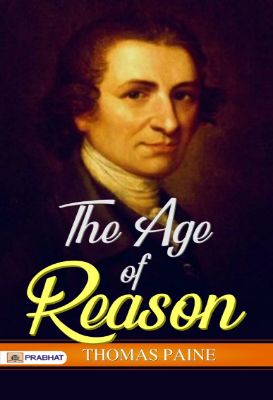
The Age of Reason by Thomas Paine
All national institutions of churches, whether Jewish, Christian or Turkish, appear to me no other than human inventions, set up to terrify and enslave mankind, and monopolize power and profit.
I do not mean by this declaration to condemn those who believe otherwise; they have the same right to their belief as I have to mine. But it is necessary to the happiness of man, that he be mentally faithful to himself. Infidelity does not consist in believing, or in disbelieving; it consists in professing to believe what he does not believe. — From the Book

The Agricola and the Germania by Tacitus
The Agricola’ is both a portrait of Julius Agricola – the most famous governor of Roman Britain and Tacitus’ well-loved and respected father-in-law – and the first detailed account of Britain that has come down to us. It offers fascinating descriptions of the geography, climate and peoples of the country, and a succinct account of the early stages of the Roman occupation, nearly fatally undermined by Boudicca’s revolt in AD 61 but consolidated by campaigns that took Agricola as far as Anglesey and northern Scotland. The war-like German tribes are the focus of Tacitus’ attention in ‘the Germania’, which, like ‘the Agricola’, often compares the behaviour of ‘barbarian’ people favourably with the decadence and corruption of Imperial Rome.

The Alchemist by Ben Jonson
The Alchemist is set during a plague epidemic in the Liberty of Blackfriars in 1610 – and was first performed on tour in 1610 by the company whose London home at Blackfriars was temporarily closed due to a plague epidemic. The play is a sublimely accomplished satirical farce about people’s diverse dreams of self-refinement: they all want to transform themselves into something nobler, richer, more powerful, more virile, just as base metal was supposed to be transformed into gold in the alchemical process. During their master’s absence from the house, the con-artists Face, Subtle and Doll Common dupe a series of ‘customers’ whose greed leads them to believe in the existence of the fabled Philosopher’s Stone.

The Alhambra by Washington Irving
Shortly after completing a biography of Christopher Columbus in 1828, Washington Irving traveled from Madrid, where he had been staying, to Granada, Spain. At first sight, he described it as “a most picturesque and beautiful city, situated in one of the loveliest landscapes that I have ever seen.” Irving was preparing a book called A Chronicle of the Conquest of Granada, a history of the years 1478–1492, and was continuing his research on the topic. He immediately asked the then-governor of the historic Alhambra Palace as well as the archbishop of Granada for access to the palace, which was granted because of Irving’s celebrity status.