
Classic Books
Showing 2351–2400 of 4246 results

Ssb Intelligence and Personality Test by Gyan Ganga Editorial Board
Services Selection Board is the selection board which conducts Personality and Intelligence Interview, which scientifically analyses each candidate’s potential and compatibility for commission into the Armed Forces of India. Complete 5 to 6 days procedure is called as SSB interview.
This book gives a practical, scientific and result oriented approach of SSB interview. The subject matter designed in the book covers all the aspects of SSB for NDA, NA, SSC, 10+2 Technical Entry, and BE/B-Tech Technical Entry Exams, OTA and all other entries for defense forces.
This book is a must for all those who desire to succeed in this exam.

St. Leon by William Godwin
St. Leon’ is the tale of a French aristocrat, Count Reginald de St. Leon, who loses his wealth gambling and experiences guilt that drives him almost to madness. He accepts, from a dying stranger, the gift of the secret of the elixir of life and of the power of multiplying wealth, and consequently is forced to wander separated from humankind.
Stained Glass Work: A text-book for students and workers in glass by Whall
You are to know that stained glass means pieces of coloured glasses put together with strips of lead into the form of windows; not a picture painted on glass with coloured paints.
You know that a beer bottle is blackish, a hock bottle orange-brown, a soda-water bottle greenish-white—these are the colours of the whole substance of which they are respectively made.

Standard Catholic Readers by Grades: Fifth Year by Various
A collection of classic short stories written by many eminent writers of early 20th century. This anthology is an attempt to build and rear a qualitative literary taste in children.

Standard Selections by Fulton, Trueblood, and Trueblood
The purpose of the compilers of this volume is:—
First, to provide some new material in poetry and eloquence that has never before appeared in books of this character, in addition to many standard selections familiar to the general public;
Second, to furnish selections that will stand the test of literary criticism and at the same time prove to be popular and successful for public entertainment;
Third, to offer for the use of classes in public speaking such carefully selected literature of varied scope as will be helpful and stimulating in the practice of reading aloud and profitable in acquiring power of vocal interpretation;
Stanford Stories Tales of a Young University by Charles K. Field Will H. Irwin
When a college man’s good fairy makes her first call at his cradle, she may bestow upon him the football instinct, with muscles to match; no fairy could do more. But if she bumps up against Heredity, and is powerless to give him the supreme gift, she may compensate for it in a degree by leaving the kind of larynx and tympanum used in the Glee Club. Failing this, she may render next best service by throwing a mandolin in his way and bewitching his parents into paying for lessons. Some twenty years later, behind the enchanted scenes of a specially hired theater, or on the polished floor of society’s inner temple, he may think of the fairy kindly.

Statehood For Delhi? by S.K. Sharma
The founding fathers of the Constitution were unambiguous, categorical and crystal clear that the concept of Statehood for Delhi is impractical and cannot be given effect to as long as Delhi remains India’s Federal capital and the seat of Central Government.
However, notwithstanding unanimity of views expressed by them, some political parties at the local level, driven unabashedly by narrow vested interests and in contradiction to the vision and wisdom of our national icons, continued to demand full Statehood for Delhi from time to time.
Thanks to the maturity and sophistication of Delhi voters, they have now bottled up the issue by puncturing the plank of Statehood in the recently concluded Parliamentary elections, 2019 by not giving even a single seat in Lok Sabha to the protagonists of this concept.
An unmissable book on the subject which unravels many mysteries.

Statesman by Plato
The Statesman, also known by its Latin title, Politicus, is a Socratic dialogue written by Plato. The text depicts a conversation among Socrates,

Steam Navigation and Its Relation to the Commerce of Canada and the United States by James Croil
During the past few years several important contributions to this class of literature have issued from the metropolitan press. Three of these deserve special mention: (1) “The Atlantic Ferry; its Ships, Men, and Working,” by Arthur J. Maginnis, gold medallist and member of the Institution of Naval Architects, 1892; (2) “Our Ocean Railways, or the Rise, Progress, and Development of Ocean Steam Navigation,” by A. Fraser-Macdonald, 1893; (3) “The History of North Atlantic Steam Navigation, with Some Account of Early Ships and Shipowners,” by Henry Fry, ex-President of Dominion Board of Trade of Canada and Lloyd’s Agent at Quebec, 1896. Each of these writers, in his own way, has treated the subject so thoroughly and satisfactorily, the author feels as though the wind had been taken out of his sails somewhat, and it is not without hesitation that he has yielded to the advice of friends in whose judgment he has implicit confidence, and ventured to follow in the wake of such accomplished writers.

Step By Step Guide to Seo by Upendra Rana
This is a hands on, very straight and step by step guide on SEO. Contains in- depth knowledge of Search Engine Optimization, Social Media Optimization, Do’s and Don’ts of SEO and SMO. Author has covered all aspects from inception and planning of business, keeping in mind SEO and SMO. Brief knowledge of Affiliated marketing has also been included in this book which will be a practical guide for both—beginners and experts.

Stephen H Branch’s Alligator by Stephen H Branch
James Gordon Bennett: We left New York amid the huzzas of friends, who bade us a most affectionate adieu. The passengers are from every section of the Union. There are men of talent and high integrity among us. The emigrants in the Crescent City have never been excelled, always excepting the Pilgrim Fathers. On leaving the Pier, I noticed but two females, who waved their handkerchiefs most gracefully, and imparted their sweetest smiles. -an excerpt

Steve Jobs by Kalyani Mookherji
Born as Steven Paul Jobs on February 24, 1955 in San Francisco, California, the future inventive genius was actually given up for adoption after his birth as his biological parents were a pair of unmarried graduate students and did not want a family right then. He was adopted at birth by Clara and Paul Jobs and the family later moved to Mountain View, California where Steve grew up.

Stop This Game! by Krishna Saksena
Society is in great distress today. We feel proud that we have advanced in the field of technology and science. But then we hang our heads down when corruption, deceit and immorality guide us to choose our
way in life. Elders fail to give a right direction to
the young.
All this and much more are disheartening as we walk ahead. But then, I would say, all is not lost, for hope glimmers from those few that can still show us the way.

Stories and Fables from the Mahabharata by Dr. R.K. Sinha
The Mahabharata is the “book of books”. It is an encyclopedia of ancient Bharat (India). That is why it is said, “What is not in the Mahabharata is not in Bharat (India)”. Expanse and depth of thoughts and ideas in this book are bewildering, The highest and lowest of human nature are painted in glowing colors. The stories of gods, men, demons, birds, beasts, insects and plants are spread on a big canvas. Conflicts of emotions and call of duty, the wisdom and foolishness of human endeavors described in the Mahabharata, stun the readers. The variety of characters and situations are perennial source of inspiration for politicians, poets, writers and scholars. Even for saints and sages.
The Mahabharata is full of interesting and instructive fables. Much before the Aesop’s fables, and the Panchtantras, the Mahabharata presented gems of political, diplomatic and humanitarian thoughts and ideas through the fables. They are used to impart valuable ethical and social lessons.
The fables from the Mahabharata provide us practical knowledge and also elevate us to higher ethical standards.
Stories by American Authors, Volume 5 by Various
April 4, 1857.—I have changed my sky without changing my mind. I resume these old notes in a new world. I hardly know of what use they are; but it’s easier to stick to the habit than to drop it. I have been at home now a week—at home, forsooth! And yet, after all, it is home. I am dejected, I am bored, I am blue. How can a man be more at home than that? Nevertheless, I am the citizen of a great country, and for that matter, of a great city. I walked to-day some ten miles or so along Broadway, and on the whole I don’t blush for my native land. We are a capable race and a good-looking withal; and I don’t see why we shouldn’t prosper as well as another. This, by the way, ought to be a very encouraging reflection.

STORIES BY ENGLISH AUTHORS SCOTLAND by Various
For two years it had been notorious in the square that Sam’l Dickie was thinking of courting T’nowhead’s Bell, and that if Little Sanders Elshioner (which is the Thrums pronunciation of Alexander Alexander) went in for her, he might prove a formidable rival. Sam’l was a weaver in the tenements, and Sanders a coal-carter, whose trade-mark was a bell on his horse’s neck that told when coal was coming. Being something of a public man, Sanders had not, perhaps, so high a social position as Sam’l, but he had succeeded his father on the coal-cart, while the weaver had already tried several trades. It had always been against Sam’l, too, that once when the kirk was vacant he had advised the selection of the third minister who preached for it on the ground that it became expensive to pay a large number of candidates.

Stories by English Authors: Africa by Various
Do I know why Tom Donahue is called “Lucky Tom”? Yes, I do; and that is more than one in ten of those who call him so can say. I have knocked about a deal in my time, and seen some strange sights, but none stranger than the way in which Tom gained that sobriquet, and his fortune with it. For I was with him at the time. Tell it? Oh, certainly; but it is a longish story and a very strange one; so fill up your glass again, and light another cigar, while I try to reel it off. Yes, a very strange one; beats some fairy stories I have heard; but it’s true, sir, every word of it. There are men alive at Cape Colony now who’ll remember it and confirm what I say. Many a time has the tale been told round the fire in Boers’ cabins from Orange state to Griqualand; yes, and out in the bush and at the diamond-fields too.

Stories by English Authors: England by Wilkie Collins et al.
The 10:15 train glided from Paddington May 7, 1847. In the left compartment of a certain first-class carriage were four passengers; of these two were worth description. The lady had a smooth, white, delicate brow, strongly marked eyebrows, long lashes, eyes that seemed to change colour, and a good-sized, delicious mouth, with teeth as white as milk. A man could not see her nose for her eyes and mouth; her own sex could, and would have told us some nonsense about it. She wore an unpretending grayish dress, buttoned to the throat with lozenge-shaped buttons, and a Scottish shawl that agreeably evaded colour.

Stories By English Authors: France (Selected by Scribners) by Wilkie Collins et al.
The cemetery of St. John had taken its own share of the snow. All the graves were decently covered; tall white housetops stood around in grave array; worthy burghers were long ago in bed, be-nightcapped like their domiciles; there was no light in all the neighbourhood but a little peep from a lamp that hung swinging in the church choir, and tossed the shadows to and fro in time to its oscillations. The clock was hard on ten when the patrol went by with halberds and a lantern, beating their hands; and they saw nothing suspicious about the cemetery of St. John.

Stories by English Authors: Germany (Selected by Scribners) by William Black et al.
It was about four in the afternoon when a young girl came into the salon of the little hotel at C—— in Switzerland, and drew her chair up to the fire.
“You are soaked through,” said an elderly lady, who was herself trying to get roasted. “You ought to lose no time in changing your clothes.”
“I have not anything to change,” said the young girl, laughing. “Oh, I shall soon be dry!”
“Have you lost all your luggage?” asked the lady, sympathetically.

Stories By English Authors: London by Various
Frequently I have to ask myself in the street for the name of the man I bowed to just now, and then, before I can answer, the wind of the first corner blows him from my memory. I have a theory, however, that those puzzling faces, which pass before I can see who cut the coat, all belong to club waiters.
Stories by English Authors: The Orient by Various
The present book ‘Stories by English Authors: The Orient’ is a compandium of six best works of six of the most famous and critically acclaimed writers in the English language, including Rudyard Kipling, Miss Mitford, RK Douglas, Mary Beaumont, Morley Roberts and Netta Syrett.

Stories by Foreign Authors: Scandinavian by Juhani Aho et al.
The man whose story is here to be told was the wealthiest and most influential person in his parish; his name was Thord Overaas. He appeared in the priest’s study one day, tall and earnest.
“I have gotten a son,” said he, “and I wish to present him for baptism.”
“What shall his name be?”
“Finn,—after my father.”
“And the sponsors?”

Stories by Foreign Authors: Spanish by Alarcón, Bécquer, Caballero, and Selgas
The speaker was Gabriel, a distinguished civil engineer of the mountain corps. He was seated under a pine tree, near a spring, on the crest of the Guadarrama. It was only about a league and a half distant from the palace of the Escurial, on the boundary line of the provinces of Madrid and Segovia. I know the place, spring, pine tree and all, but I have forgotten its name.
Stories from Everybody’s Magazine by Various
“No doubt you have heard the age-old legend of the Mother Vein of Gold, which appears and vanishes, now and again, in this corner of the world. Superstition regarding this great original vein of gold is found wherever men seek the precious metal. The feverish Spaniards called this phantom lode the Madre d’Oro, or “Mother of Gold.” Now it is located in Mexico, now in India or Peru, California or Australia. Tradition says that Montezuma got his gold from this great vein, which lay in a secret valley whose where-abouts was jealously guarded by three priests of the war tribe, sole possessors of the knowledge. Any intruder who by chance or design looked down into this valley was smitten absolutely blind. Tradition among the successors of the Aztecs says that when Montezuma passed, the Madre d’Oro sank back again into the earth, and has been seen no more. Men still follow the phantom vein. Those who see it, even in their dreams, still are smitten blind.” -Preface

Stories from Hans Andersen by H. C. Andersen
Now we are about to begin, and you must attend; and when we get to the end of the story, you will know more than you do now about a very wicked hobgoblin. He was one of the worst kind; in fact he was a real demon. One day he was in a high state of delight because he had invented a mirror with this peculiarity, that every good and pretty thing reflected in it shrank away to almost nothing. On the other hand, every bad and good-for-nothing thing stood out and looked its worst. The most beautiful landscapes reflected in it looked like boiled spinach, and the best people became hideous, or else they were upside down and had no bodies.

Stories from Tagore by Rabindranath Tagore
The present book ‘Stories from Tagore’ is a collection of celebrated classic Indian writer, poet, philosopher Rabindranath Tagore, translated in English to introduce children to best of the Indian literature. this volume was first produced and published in the year 1918.
Stories of Courage and Heroism by William Patten
This collection, carefully used by parents and teachers with due reference to individual tastes and needs, will make many children enjoy good literature. It will inspire them with a love of good reading, which is the best possible result of any elementary education. The Junior Classics constitute a set of books whose contents will delight children and at the same time satisfy the legitimate ethical requirements of those who have the children’s best interests at heart.
Stories of Great Inventors by Hattie E. Macomber
This book is a great collection of stories of great inventors of the world: Robert Fulton, Eli Whitney, Samuel Morse, Peter Cooper, Thomas A. Edison
Stories of Later American History by Wilbur F. Gordy
First published in the year 1915, the present book ‘Stories of Later American History’ was written by Wilbur F. Gordy. This book was written purposely to provide a compendium of the later history of America for the students of Grade V as per the material provided by the concerned governmental authorities.
Stories of Mystery by Rossiter Johnson
Included in this collection are The Ghost – William D. O’Connor, The Four-Fifteen Express – Amelia B. Edwards, The Signal-Man – Charles Dickens, The Haunted Ships – Allan Cunningham, A Raft That No Man Made – Robert T.S. Lowell, The Invisible Princess – Francis O’Connor, The Advocate’s Wedding-Day – Catherine Crowe, and The Birthmark -Nathaniel Hawthorne.

Stories of Robin Hood by Bertha E. Bush
stories of Robin Hood in a lively retelling that chronicles the events of the time in which Robin Hood lived. Describes how and why he came to live in the Green Wood, and the adventures he had there with Little John, Maid Marian, and the Sheriff of Nottingham. Selections from the original ballads are woven into the story. A delightful introduction to these stories for children ages 8 and up
Stories of the Badger State by Reuben Gold Thwaites
In recognition of this fact, these true stories, selected from Wisconsin’s history, have been written as a means to the cultivation of civic patriotism among the youth of our commonwealth. It is not the purpose of the book to present a continuous account of the development of the State; for this, the author begs to refer to his larger work, “The Story of Wisconsin” (in the Story of the States Series). Rather is it desired to give selections from the interesting and often stirring incidents with which our history is so richly stored, in the hope that the reader may acquire a taste for delving more deeply into the annals of the Badger State.
Stories of the Days of King Arthur by Charles Henry Hanson
First published in the year 1882, the present book ‘Stories of the Days of King Arthur’ is a collection of historical fictional tales based on the adventures and life of King Arthur from the medieval history written by famous writer Charles Henry Hanson.
Stories of Upnishad by Mahesh Dutt Sharma
This compandium is a selection of tales from the numerous stories that together form the Upanishad. Mahesh Dutt Sharma has compiled this volume for the modern English readers to read, enjoy and cherish the enigma of these ageless tales.
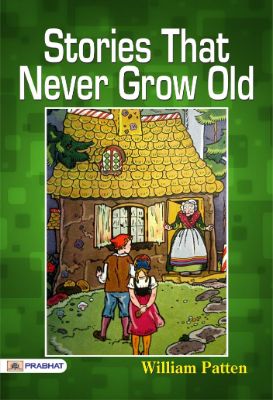
Stories that never grow old by William Patten
Stories that never grow old. The Junior Classics constitute a set of books whose contents will delight children and at the same time satisfy the legitimate ethical requirements of those who have the children’s best interests at heart. Beautifully illustrated.

Stories the Iroquois Tell Their Children by Mabel Powers
Now we have little left but stories of our fathers. They, too, will soon be lost and forgotten, but a voice has come to speak for us. Yeh sen noh wehs—the one who tells the stories—will carry these stories of our fathers to Paleface. She will help White man to understand Indian, Indian to be understood. She will have all men brothers.
Indian’s heart is glad that Yeh sen noh wehs, our white friend, has come to us. She have good eyes. She see right. She like things Indian. She try to preserve them. Our old men and women tell her the stories told them, many, many moons ago, when little children.
Strands of Indian Thought by Vidya Nivas Misra
While making a collection of this series of articles my own work of mass communication is in for an assemblage. I persuade myself that this might not have been a meaningless offering of an earthen lamp, no matter the wick in it might have been rather ill twined, the ghee might not have remained that pure, the earthen lamp might not have soaked the water so well as to let the ghee last longer, just likely it itself might not have been placed on the right base; perhaps the method of buoying it far was quasi-perfect; but on the advent of Kârtik (November) people on the river banks will curiously observe the rows of earthen lamps in the Indian life stream, earthen lamps of unalloyed clay; some day they will feel conscious of the maker of these lamps, the potter; they may have the sensibility ever of squeezing their psyche to fill in them their own sap and oil of affection, in some distant time they may have a mind to replenish it with a straight and well-threaded wick, they may sometimes be impelled for their own heart churning to give it a fill of their ardour; and perhaps at some inexplicable part of time they may make up their minds to buoy those earthen lamps after a touch of that first wick with another wick onto the current.
Strange Interlude by Eugene O’Neill
The present work, ‘Strange Interlude’, is an experimental play by American playwright Eugene O’Neill. It is written in nine acts. Written in 1923, it won the Pulitzer Prize for Drama for its 1928 Broadway production. The play’s subject matter, very controversial for the 1920s, led to it being censored or banned in many cities outside New York. ‘Strange Interlude’ makes extensive use of a soliloquy technique, in which the characters speak their inner thoughts to the audience.
Streets, and Other Verses by Douglas Goldring
This great grey city that bred me and mine—
Supreme, mysterious, dirty and divine—
Is made up all of contrast, light and gloom.
It has green hills and parks where flowers bloom;
And shadowed pathways where young lips are shy
And warm hands tangle while the night slips by;
Deserts of humble brick, resigned and drear;
And crowded taverns, full of noise and beer;
Thronged streets where jostle theatre and hotel,
And stately terraces where rich folk dwell….
It has black alleys, and most dismal plains
Crossed by long, steady, fire-emitting trains;
Foul slums and palaces, prisons and spires
And suburbs where the jaundiced clerk expires.

Struwwelpeter: Merry Stories and Funny Pictures by Heinrich Hoffmann
Struwwelpeter: Merry Stories and Funny Pictures’ is a German children’s book by Heinrich Hoffmann. It was first published in the year 1845. It comprises ten illustrated and rhymed stories, mostly about children. Each has a clear moral that demonstrates the disastrous consequences of misbehavior in an exaggerated way. The title of the first story provides the title of the whole book. It is one of the earliest books for children that combines visual and verbal narratives in a book format, and is considered a precursor to comic books.
Studies in Classic American Literature by D. H. Lawrence
Studies in Classic American Literature is a work of literary criticism by the English writer D. H. Lawrence. It was first published by Thomas Seltzer in the United States in August 1923.
Studies in Logical Theory by John Dewey
This volume presents some results of the work done in the matter of logical theory in the Department of Philosophy of the University of Chicago in the first decade of its existence. The eleven Studies are the work of eight different hands, all, with the exception of the editor, having at some period held Fellowships in this University, Dr. Heidel in Greek, the others in Philosophy. Their names and present pursuits are indicated in the Table of Contents. The editor has occasionally, though rarely, added a footnote or phrase which might serve to connect one Study more closely with another. The pages in the discussion of Hypothesis, on Mill and Whewell, are by him. With these exceptions, each writer is individually and completely responsible for his own Study.

Studies in Spermatogenesis (Part 1 of 2) by Nettie Maria Stevens
A brief account of a chromatin element resembling the accessory chromosome in Sagitta has been added for comparison. The spermatogenesis of each form will be described in detail, and a general discussion of the results and their relation to the accessory chromosome and sex determination will follow. The spermatogenesis of the aphid has been included in another paper, but a summary of results and a few figures will be given here for reference in the general discussion.

Studies in Spermatogenesis (Part 2 of 2) by Nettie Maria Stevens
In Part I of this series of papers, the spermatogenesis of five species belonging to four different orders of insects was considered. In two species of Orthoptera an “accessory chromosome” was found; in Tenebrio molitor, one of the Coleoptera, an unequal pair of chromosomes was described; in the other species no heterochromosomes were discovered. The apparent bearing of the chromosome conditions in Tenebrio molitor on the problem of sex determination has led to a further investigation of the germ cells of the Coleoptera.
Studies in the Book of Revelation by Stephen Alexander Hunter
Stephen Alexander Hunter’s ‘Studies in the Book of Revelation’ provides clear and accurate results of the investigation of modern scholars, in language which is comprehensible to the intelligent reader of the English Bible. The Revelation of St. John has been an enigma from the earliest Christian centuries. On the one hand, it has been shunned because of its mysteriousness; on the other, it has been discredited for sober-minded, intelligent Christians by the absurd vagaries of its interpreters.
Studies of childhood by James Sully
The following Studies are not a complete treatise on child-psychology, but merely deal with certain aspects of children’s minds which happen to have come under my notice, and to have had a special interest for me. In preparing them I have tried to combine with the needed measure of exactness a manner of presentation which should attract other readers than students of psychology, more particularly parents and young teachers.
A part of these Studies has already appeared elsewhere. The Introductory Chapter was published in the Fortnightly Review for November, 1895. The substance of those from II. to VIII. has been printed in the Popular Science Monthly of New York. Portions of the “Extracts from a Father’s Diary” appeared in the form of two essays, one on “Babies and Science” in the Cornhill Magazine in 1881, and the other on “Baby Linguistics” in the English Illustrated Magazine in 1884. The original form of these, involving a certain disguise—though hardly one of impenetrable thickness—has been retained. The greater part of the study on “George Sand’s Childhood” was published as two articles in Longmans’ Magazine in 1889 and 1890.

Studies of the Greek Poets by John Addington Symonds
Originally published in 1873. This book is a republication of the revised and enlarged edition from 1920. A comprehensive study of the Greek poets and their enormous and important contribution to literature. Every aspect of their work is discussed in detail.

Subhdara Kumari Chauhan by Manish Kumar
Subhadra was a naughty child. Therefore, her parents took special care of her. She was often scolded because of her sharp and prankishful nature. But she was very kind at heart. She behaved very politely even with the servants of her house.
Her parents taught her how to read and write at home. Then, her primary education took place in a school at Prayag (Allahabad). She had been inclined to write right since her school days. She wrote her first poem at the age of 15. Her inclination towards writing was often the cause of problem for her parents and teachers. Subhadra often composed her poems in mathematics notebook.
In 1919, Subhadra was a student of class nine. The Jallianwallah Bagh massacre in Punjab had taken place that year. The kind-hearted Subhadra was moved and decided to use her pen as a weapon.

Submarine Warfare of To-day by Charles W. Domville-Fife
“While Great Britain remains an island, with dominion over palm and pine, it is to the sea that her four hundred millions of people must look for the key to all that has been achieved in the past and all that the future promises in the quickening dawn of a new era.
“Not only over Great Britain alone, however, does the ocean cast its spell, for it is the free highway of the world, sailed by the ships of all nations, without other hindrances than those of stormy nature, and navigated without restriction from pole to pole by the seamen of all races. It was the international meeting-place, where ensigns were “dipped” in friendly greeting, and since the dawn of history there has been a freemasonry of the sea which knew no distinction of nation or creed.” -Introduction