
Classic Books
Showing 2301–2350 of 4246 results

Sister Carrie by Theodore Dreiser
First published in the year 1900, the present novel ‘Sister Carrie’ by Theodore Dreiser is about a young country girl who moves to the big city where she starts realizing her own American Dream, first as a mistress to men that she perceives as superior, and later becoming a famous actress.

Sister Nivedita by Sumit Kumar
Nivedita was born in Tyron city of North Ireland on October 23, 1867. Her ancestors were originally the citizens of Scotland and had come to settle in Ireland. Her father, Samuel Nobel, and mother, Lady Hamilton, remained childless for several years after their marriage. They prayed to God for a child. They promised that they would dedicate the child to the service of God. When she was born, her parents gave her the name—Margaret Elizabeth Nobel.
Nivedita’s family were religious by nature. Therefore, it was natural for Nivedita to be influenced by religious belief. Since her childhood, she used to go out with her father to serve the poor.
Since her childhood days, serving the needy and the poor had become an intrinsic part of her personality. She had received nationalistic inspiration from her father and grandfather. Similarly, she had inherited beauty and humility from her mother.

Sita : the Divine Mother by Rajendra Arun
The character of Sita is the live example of ideal form of Indian woman. Chastity, fidelity, modesty, forbearance, humility and kindness are the root basis of her character. Today, the entire humanity strives to emulate these basic values of life in their lives. And at this point of time remembering Sita is natural and necessary too.
Woman is the basis of moral life of the society. The more a society gives dignity to women, the more moral it becomes. Today’s woman is becoming the poster attraction of flesh. Social and family dignities are being perished due to this business of commercialisation of woman’s body. Woman becoming the attraction of life is today’s prime need. May she nourish and inspire the life as a mother, sister, wife and beloved. Therefore, Sita’s character is more relevant and important today.
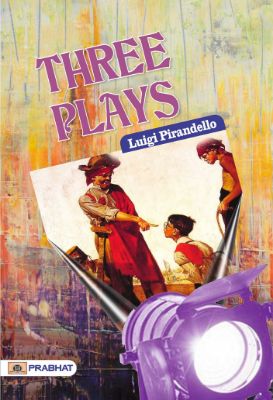
Six Characters in Search of an Author by Luigi Pirandello
“No apology is necessary for offering to American readers a play which critics, with singular unanimity, have called one of the most original productions seen on the modern stage. In less than a year’s time, “Six Characters in Search of an Author” has won a distinguished place in the dramatic literature of the Western world, attracting audiences and engaging intellects far removed from the particular influences which made of it a season’s sensation in Italy.” -Preface
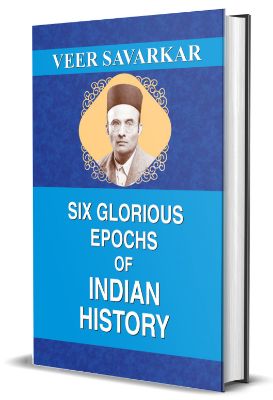
Six Glorious Epochs of Indian History by Veer Savarkar
Six Glorious Epochs of Indian History is a learning experience which covers the period of Muslim invasions in India and brave retaliation by the natives. No less was the struggle of Indian manes against British rule and for freedom and liberation of the mother country. The author’s tribute to the martyrs and his letters to dear ones from Andamans, miscellaneous statements and writings are also included in this book. The first four epochs are covered in only hundred plus pages while the last two epochs span almost four hundred plus pages, signifying the importance that the author gave to this period.
So far we have been given the picture of British rule, the history and politics in India by foreign and leftist writers, but in this book Veer Savarkar makes us look at the country’s history and politics from the Bharatiya perspective. Not only does he analyse the mistakes committed by Hindus since the time of Alexander’s invasion till the British rule, he tries to enlighten our minds with the prevalent situation in his time. All that he himself learnt from history, he tries to correct through this book of his.

Sixes and Sevens by O. Henry
Inexorably Sam Galloway saddled his pony. He was going away from the Rancho Altito at the end of a three-months’ visit. It is not to be expected that a guest should put up with wheat coffee and biscuits yellow-streaked with saleratus for longer than that. Nick Napoleon, the big Negro man cook, had never been able to make good biscuits. Once before, when Nick was cooking at the Willow Ranch, Sam had been forced to fly from his cuisine, after only a six-weeks’ sojourn.

Sketches in Crude Oil by John J. McLaurin
This work is aimed at give the busy outside world, by anecdote and incident and brief narration, a glimpse of the grandest industry of the ages and of the men chiefly responsible for the origin and growth of the great Petroleum Industry. Many of the portraits and illustrations presented in this volume will be valuable mementoes of individuals and localities that have passed from mortal sight forever. If the reader shall find that “within is more of relish than of cost” the writer of these “Sketches” will be amply satisfied.
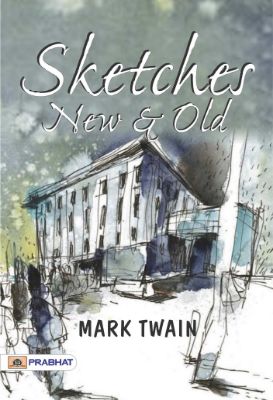
Sketches New and Old by Mark Twain
Noted American writer Mark Twain’s ‘Sketches New and Old’ is a large short stories collection which was first published in the year 1875 in the present form.

Slave Narratives: A Folk History of Slavery in the United States From Interviews with Former Slaves: Volume I, Alabama Narratives by United States. Work Projects Administration
First published between 1936-38, the present volume ‘Slave Narratives: A Folk History of Slavery in the United States From Interviews with Former Slaves: Volume I, Alabama Narratives’ is a compilation of numerous real slave narratives undertaken by the Federal Writers’ Project of the Works Progress Administration.

Sleep : It’s Body Repair Time by Sanjay Kumar Agarwal
Have you ever wondered—
• Why some people look fresh & energetic during whole day and some people always look lethargic during the awaken period?
• Why your laziness impacts your productivity at your workplace?
• What is the correct quantum of sleep?
• What is the most appropriate time to leave the bed?
• Why efforts to wake up early are busted in a week or two?
• How some people in your family are awake in the morning without using alarm?
• What are the ways to com-pensate for long accumulated short sleep?
If the answer is ‘YES’, don’t worry. You are not alone. Most of us face these challenges in our daily lives.
The author has researched a lot on sleep and found the true reasons for continuous drowsiness. This book provides easy-to-grasp and easy-to-follow solutions in simple layman language so that a common man can also improve his sleep patterns and enhance his productivity.
This book is not written from a medical perspective towards sleep related problems rather it provides practical tips to balance the sleep, ultimately resulting in enhancement of quality life.

Slips of Speech : a Helpful Book for Everyone Who Aspires to Correct the Everyday Errors of Speaking by Bechtel, John Hendricks
A helpful book for everyone who aspires to correct the everyday errors of speaking and writing.

Smoke by Ivan Sergeevich Turgenev
‘Smoke’ was first published in 1867, several years after Turgenev had fixed his home in Baden, with his friends the Viardots. Baden at this date was a favourite resort for all circles of Russian society, and Turgenev was able to study at his leisure his countrymen as they appeared to foreign critical eyes. The novel is therefore the most cosmopolitan of all Turgenev’s works. On a veiled background of the great world of European society, little groups of representative Russians, members of the aristocratic and the Young Russia parties, are etched with an incisive, unfaltering hand. Smoke, as an historical study, though it yields in importance to Fathers and Children and Virgin Soil, is of great significance to Russians. It might with truth have been named Transition, for the generation it paints was then midway between the early philosophical Nihilism– of the sixties and the active political Nihilism of the seventies.

Snowbound for Christmas by Edna I. MacKenzie
Excerpt from Snowbound for Christmas
PA (throws down paper) – Do you suppose we don’t know that it’s snowing, and that it’s been snowing for three days and tomorrow’s Christmas. Can’t you tell us some thing new?
Sam – But, Pa, how are we going to get to town to buy our Christmas presents and things?
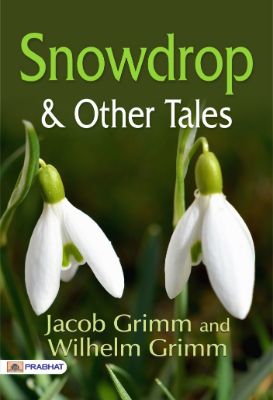
Snowdrop & Other Tales by Jacob Grimm and Wilhelm Grimm
Now the poor child was alone in the great wood, with no living soul near, and she was so frightened that she knew not what to do. Then she began to run, and ran over the sharp stones and through the brambles, while the animals passed her by without harming her. She ran as far as her feet could carry her till it was nearly evening, when she saw a little house and went in to rest. Inside, everything was small, but as neat and clean as could be. A small table covered with a white cloth stood ready with seven small plates, and by every plate was a spoon, knife, fork, and cup. Seven little beds were ranged against the walls, covered with snow-white coverlets. As Snowdrop was very hungry and thirsty she ate a little bread and vegetable from each plate, and drank a little wine from each cup, for she did not want to eat up the whole of one portion. Then, being very tired, she lay down in one of the beds. She tried them all but none suited her; one was too short, another too long, all except the seventh, which was just right. She remained in it, said her prayers, and fell asleep.
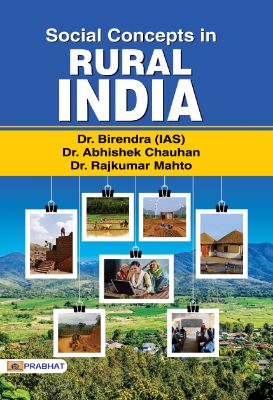
Social Concepts in Rural India by Dr. Birendra (Ias), Dr. Abhishek Chauhan, Dr. Rajkumar Mahto
This book on Rural Development in India comprises of eight units which focus to reconstruct the importance of villages in India since time immemorial. The authors have very well tried their level best to provide a historical and conceptual clarity on various aspects of Indian villages. The authors have discussed about the types and characteristics of Indian villages with focus on theoretical concepts like—Sanskritisation, Westernisation, Globalisation, Tribe-Caste-Continum. Focus has also been made on the practice of Jajmani System within the Indian villages. Above all the well-defined and chronological sequence of Indian village studies has been explained in this book.

Social Environment and Moral Progress by Alfred Russel Wallace
First published in the year 1913, the present book ‘Social Environment and Moral Progress’ by Alfred Russel Wallace is a collection of the author’s essays on the concerned subject. It is divided here in two parts – Historical, and Theoretical. A must read for sociology enthusiasts and researchers.

Social Harmony by Narendra Modi
Prime Minister Narendra Modi went through different stages of life, but his thoughts and actions have always been consistent. The strong flow of feelings towards society and social harmony has been flowing continuously in his heart. He has a unique vision and approach towards society. His radical thought extends to his social dealings too and his focus is always on the happiness of the common man.
Narendra Bhai has always worked untiringly for equality, love and harmony. His persona signifies consistency in thoughts, beliefs and lifestyle. He is intensely focused on finding measures to eradicate sorrows from the lives of the deprived and persecuted.
The concept of a welfare state which gives the highest priority to the wellbeing and happiness of its people has long been advocated by our Indian culture. The true measure of the progress of any state is the extent of progress achieved by the underprivileged. True development is that which brings the fruits of happiness even to the last person in the remotest backward area.
This book is a compilation of the articles written by Shri Narendra Modi which shows his love for the underprivileged, his endeavour to share in their joys and sorrows, the excellence of his thought processes and his sensitivity towards the society.

Social Media Simplified by Vijayendra Haryal
Besides facilitating information dissemination, building bonds and making world much more ‘connected’ than ever before, Social Media websites like Facebook and Twitter are branding you and your business 24×7. Each time you update your status message or tweet, it creates an impression about you and forms an image in the mind of the reader. This is a continuous process and slowly but steadily ‘perceptions’ emerge or get modified or change about a person or a firm by the way their social media presence is executed. What appears a casual activity may have a deep implication. This book explores the current scenario in the Indian context, providing insights and observations for making your social media presence more effective beyond casual usage. The earnest attempt of the book is to build a holistic perspective on Social Media.
We believe that facets of social media unknown to you would be unraveled as you read and this experience will provide you with more confidence. Also, please note that reading is just the beginning of our association. Do buzz us on Facebook page and Twitter handle of this book. Be assured, we will revert to you as soon as possible.

Socialism by John Stuart Mill
It was in the year 1869 that, impressed with the degree in which, even during the last twenty years, when the world seemed so wholly occupied with other matters, the socialist ideas of speculative thinkers had spread among the workers in every civilized country, Mr. Mill formed the design of writing a book on Socialism. Convinced that the inevitable tendencies of modern society must be to bring the questions involved in it always more and more to the front, he thought it of great practical consequence that they should be thoroughly and impartially considered, and the lines pointed out by which the best speculatively-tested theories might, without prolongation of suffering on the one hand, or unnecessary disturbance on the other, be applied to the existing order of things.
Society and Solitude: Twelve Chapters by Ralph Waldo Emerson
Ralph Waldo Emerson was an American essayist, lecturer, philosopher, and poet who led the transcendentalist movement of the mid-19th century.
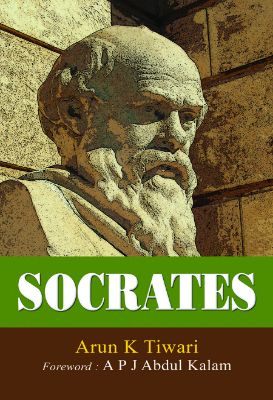
Socrates by Arun K Tiwari
Socrates had an early interest in the scientific theories of Anaxagoras, who taught that there are an infinite number of different kinds of elementary particles (atoms) and it is the action of Mind upon these that produces the objects that we see. Socrates believed that the senses of the body created difficulty for the thinking of the mind and came to regard the physical world as deceptive.
He believed that his work, which he sought to understand through critical questioning and dialogue, was given to him as a divine mission and, hence, was his duty. His total lack of interest in material possessions was evident by his always being barefoot and wearing an old cloak the whole year round. His habit of going barefoot even in winter showed his powers of endurance too. To him, the aspiration for virtue was the highest aim anyone could have.
Socrates’ philosophy was a matter of how to live one’s life. In subsequent centuries the love of wisdom became a great deal more academic, something that could be as remote from people’s practical concerns as a game of chess. “There are nowadays professors of philosophy, but not philosophers”, Thoreau writes in Walden. And he adds, “To be a philosopher is to love wisdom as to live according to its dictates, it is to solve some of the problems of life, not only theoretically, but practically.”
(from Dr. A.P.J. Abdul Kalam’s Foreword)
Soldiers of Fortune by Richard Harding Davis
“It is so good of you to come early,” said Mrs. Porter, as Alice Langham entered the drawing-room. “I want to ask a favor of you. I’m sure you won’t mind. I would ask one of the debutantes, except that they’re always so cross if one puts them next to men they don’t know and who can’t help them, and so I thought I’d just ask you, you’re so good-natured. You don’t mind, do you?” -an excerpt

Soldiers of the Queen by Harold Avery
The battle was nearly over. Gallant tin soldiers of the line lay where they had fallen; nearly the whole of a shilling box of light cavalry had paid the penalty of rashly exposing themselves in a compact body to the enemy’s fire; while a rickety little field-gun, with bright red wheels, lay overturned on two infantry men, who, even in death, held their muskets firmly to their shoulders, like the grim old “die-hards” that they were.

Soldiers’ Stories of the War by Walter Wood and A. C. Michael
All the stories in this volume are told by men who were seen personally, and who, with one or two exceptions—cases of soldiers who had returned to the front—read the typescripts of their narratives, so that accuracy should be secured. The narrators spoke while the impressions of fighting and hardships and things seen were still strong and clear; in several cases full notes had been made or diaries kept, and reference to these records was of great value in preparing the stories. When seeing an informant I specially asked that a true tale should be told, and I believe that no unreliable details were knowingly given.
Some Observations Upon the Civilization of the Western Barbarians, Particularly by Ah Chin-Lee
AH-CHIN-LE, Mandarin, and member of the exalted Calao, to the Illustrious Wo-sung, Mandarin, First class, President of the most Serene, the grand Council, Calao; virtue, health, and the highest place in the Hall of your Sublime Ancestors! Trained from my youth for many years in the school of the Foreigners [Fo-kien], so as to be versed in the languages of the chief Barbarians of the West, and particularly of the English, afterwards perfected in the latter at our port of Shanghai, and sent by your Illustrious command upon a private mission with the Imperial Embassy to the outside Barbarians of the far West to curiously seek into the state of those Peoples, and report upon the same to your Illustrious mind—that being so informed exactly, your Wisdom might, in those matters appertaining to the Western Barbarians, enlighten the Son of Heaven (our Celestial and Imperial Majesty [Bang-ztse] most renowned and exalted) when, in Council, things touching those outer Barbarians should be considered: these, my poor words, in so far as to your Illustrious Wisdom it has been thought proper to make general, are now produced: that the happy subjects of our Central, Flowery Kingdom, may understand more perfectly the condition of those outside Barbarians, respecting whom so very little is known, and may the more cautiously guard the Sacred Institutions [Kam-phfe] of our Celestial Land—wise, peaceful, powerful, and teeming with an industrious and contented people, before the Western Barbarians had so much as the rudiments of learning.

Songs of Innocence and Songs of Experience by William Blake
Songs of Innocence and of Experience is an illustrated collection of poems by William Blake.

Songs of Life by A P J Abdul Kalam
The Songs of Life is presented with selected poems from my books of poem Life Tree, Luminous Sparks and My Journey, and also some of my new poems. The purpose of this Songs of Life is to celebrate the human life. Inspite of many sufferings all around, God has blessed us with his grace in multiple dimensions of nature smiling at us. Hence, Songs of Life is the Song of every heart and soul in happiness and, in sorrow. The result of the poems should be to cheer our hearts.

Songs Of The Road by Arthur Conan Doyle
God save Wales, from Snowdon’s vales
To Severn’s silver strand!
For all the grace of that old race
Still haunts the Celtic land.
And, dear old Ireland, God save you,
And heal the wounds of old,
For every grief you ever knew
May joy come fifty-fold!

Songs of Travel, and Other Verses by Robert Louis Stevenson
First published in the year 1896, the present book ‘Songs of Travel, and Other Verses’ is a collection of poetry by renowned literary figure Robert Louis Stevenson. It explores the author’s perennial themes of travel and adventure.

Sons and Lovers by D,H Lawrence
One of the earliest novels of D.H. Lawrence, this novel is regarded as a masterpiece not only for its portrayal of characters and situations but also for its subtle themes of passion, love and relationship within a family. The novel is in fact a semi-autobiography, and is set in the background of a working class life and the impacts of industrialization. The novel made a sensation in literature by bringing in the phenomena of mother-son love, which later became popular in psychology as the Oedipus Complex.
Sophist by Plato
The Sophist is a Platonic dialogue from the philosopher’s late period, most likely written in 360 BC. Its main theme is to identify what a sophist is and how a sophist differs from a philosopher and statesman.
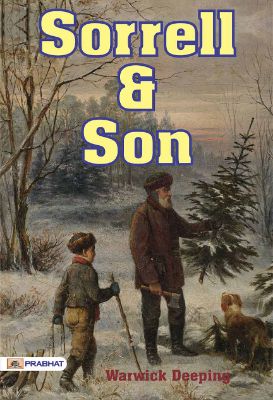
Sorrell and Son by Warwick Deeping
Sorrell and Son’ is a popular culture novel by Warwick Deeping. The story is set in England. It is about a man who devotes his life to making his son’s life a success. As the story proceeds, many themes are explored including life, love, career and familial and marital relationships.

Sound by John Tyndall
The cases are few in which I have been content to reproduce what I have read of the works of acousticians. I have sought to make myself experimentally familiar with the ground occupied; trying, in all cases, to present the illustrations in the form and connection most suitable for educational purposes. -Preface
Sound Mind by John Haslam
The indulgence of the public has been already extended to several works which I have submitted to its decision on the subject of Insanity; and the same favourable interpretation is now solicited for the present performance,—which attempts the more difficult investigation of Sound Mind.
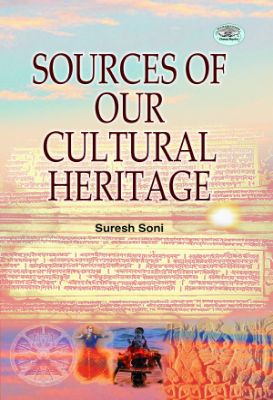
Sources of Our Cultural Heritage by Suresh Soni
India is one of the most ancient civilizations. India is a land of many creeds, the cradle of mankind, the motherland of language, the mother of history, the grandmother of epics and the great grandmother of traditions.
Our cultural heritage is ancient, vast, rich and blissful and its sources are—four Vedas, 18 Puraanas, 108 Upanishads, the Ramayana, the Mahabharata consisting of about one lakh verses, the Agamas of the Jains, the Tripitikas of the Buddhists, the Guru Granth Sahib of the Sikh brothers and the holy words of the pious saints of different regions.
As the time has passed, lack of knowledge about the same has failed to create self pride and esteem for these. Also, unfortunately, during the last few centuries, due to external attacks on the country, particularly those by the British, India has lost its capacity of guiding the world. The newly educated generation of this country today is totally unaware of the culture, traditions, philosophy and life values of this country.
Sources of Our Cultural Heritage will open the eyes of the people, trying to distance themselves from Hinduism. This book will let them know the great commonalities. It gives valuable knowledge and information about our vast and enriched cultural heritage in a very simple and lucid language.
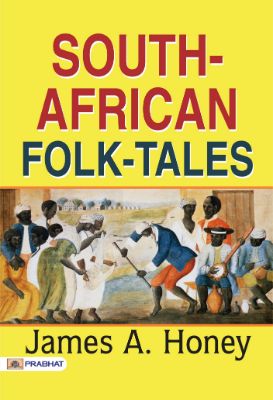
South-African Folk-Tales by James A. Honey
In presenting these stories, which are of deep interest and value to South Africans, I hope they may prove of some value to those Americans who have either an interest in animals or who appreciate the folklore of other countries.
Many of these tales have appeared among English collections previous to 1880, others have been translated from the Dutch, and a few have been written from childhood remembrance. Consequently they do not pretend to be original or unique. Care has been taken not to spoil the ethnological value for the sake of form or structure; and in all cases they are as nearly like the original as a translation from one tongue to another will allow. They are all South-African folklore tales and mainly from the Bushmen.
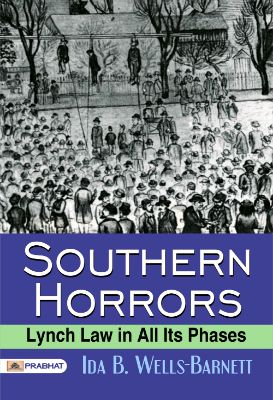
Southern Horrors: Lynch Law in All Its Phases by Ida B. Wells-Barnett
The greater part of what is contained in these pages was published in the New York Age June 25, 1892, in explanation of the editorial which the Memphis whites considered sufficiently infamous to justify the destruction of my paper, the Free Speech.
Since the appearance of that statement, requests have come from all parts of the country that “Exiled” (the name under which it then appeared) be issued in pamphlet form. Some donations were made, but not enough for that purpose. The noble effort of the ladies of New York and Brooklyn Oct. 5 have enabled me to comply with this request and give the world a true, unvarnished account of the causes of lynch law in the South.

Southey by Edward Dowden
No one of his generation lived so completely in and for literature as did Southey. “He is,” said Byron, “the only existing entire man of letters.” With him literature served the needs both of the material life and of the life of the intellect and imagination; it was his means of earning daily bread, and also the means of satisfying his highest ambitions and desires. This, which was true of Southey at five-and-twenty years of age, was equally true at forty, fifty, sixty.
Spanish Papers by Washington Irving
Washington Irving (1783-1859) was an American author of the early nineteenth century. Best known for his short stories The Legend of Sleepy Hollow and Rip van Winkle, he was also a prolific essayist, biographer and historian. This book is a reproduction of an important historical work. We believe this work is culturally important. We appreciate your understanding and hope you enjoy this valuable book. Edited by Pierre Irving, and includes chronicles from the unpublished manuscripts of Washington Irving.
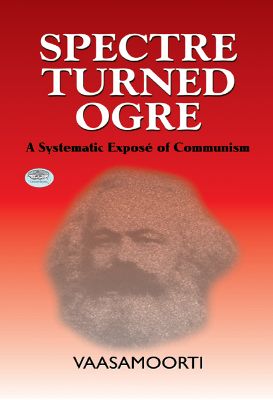
Spectre Turned Ogre by Vaasamoorti
The writer, like most young men, was in the beginning fascinated by the communist idea. Being a book lover, he went through some literature on the subject. He developed some doubts. He studied deep into the subject. Now he had more questions on the concept of communism itself, materialistic determinism, the bed-rock of communism, Marxist use of the Dialectics, the theory of surplus value, the wide divergence between the theory and practice, and the mouthing of sham and hollow ideals etc. All these questions are placed before the reader along with the factual material that led to these questions for his own judgement.
The present work was actually the third part of a bigger book, ‘The Age of Intelligence’, on the role of intelligence as the main constituent of human progress. The third part was published earlier under the title, Marxism: Relevance and Practice. The present book is an enlarged version with more relevant material.
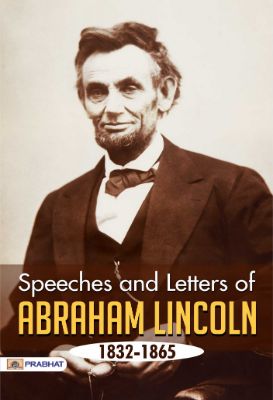
Speeches and Letters of Abraham Lincoln, 1832-1865 by Abraham Lincoln
This work has been selected by scholars as being culturally important, and is part of the knowledge base of civilization as we know it. This work was reproduced from the original artifact, and remains as true to the original work as possible.
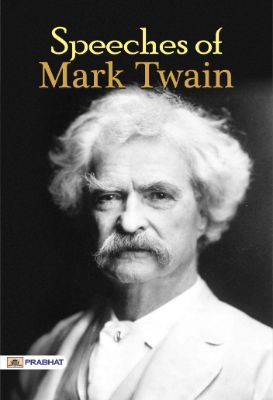
Speeches of Mark Twain by Mark Twain
Mark Twain was one of the most popular public speakers of his day. This collection brings together in a single volume the complete collected speeches of Mark Twain which was first published in 1871.

Spirits in Bondage by C.S. Lewis
Spirits in Bondage was C. S. Lewis’s first published work. Lewis was twenty years old and had just returned from military service in the First World War.

Spitting at the Sun by Spitting at the Sun
If I die of a lingering illness, nay even by as much as a boil or a pimple, it will be your duty to proclaim to the world, even at the risk of making people angry with you, that I was not the man that I claimed to be. If you do that it will give my spirit peace. Note down this also that if some one were to end my life by putting a bullet through me as someone tried to do with a bomb the other day and I met his bullet without a groan, and breathed my last taking God’s name, then alone would I have made good my claim.
—Gandhi
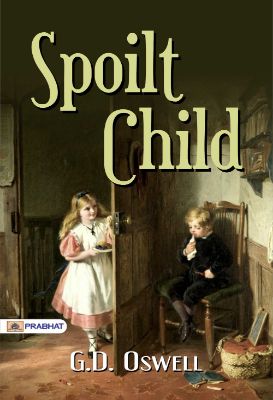
Spoilt Child by Oswell, G. D., Tr
His life was devoted to the good of his fellow-country- men, and he was especially eager in the cause of female education. In the preface to one of his works, written with that object in view, ho writes : — “ I was born in the year 1814.

Spons’ Household Manual by E. Spon and F. N. Spon
Time was when the foremost aim and ambition of the English housewife was to gain a full knowledge of her own duties and of the duties of her servants. In those days, bread was home-baked, butter home-made, beer home-brewed, gowns home-sewn, to a far greater extent than now.
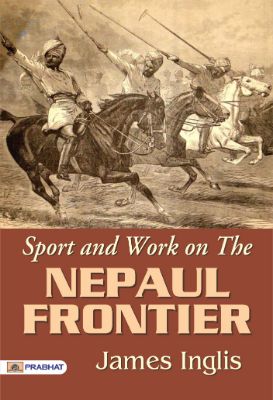
Sport and Work on the Nepaul Frontier by James Inglis
I went home in 1875 for a few months, after some twelve years’ residence in India. What first suggested the writing of such a book as this, was the amazing ignorance of ordinary Indian life betrayed by people at home. The questions asked me about India, and our daily life there, showed in many cases such an utter want of knowledge, that I thought, surely there is room here for a chatty, familiar, unpretentious book for friends at home, giving an account of our every-day life in India, our labours and amusements, our toils and relaxations, and a few pictures of our ordinary daily surroundings in the far, far East.

Square Deal Sanderson by Charles Alden Seltzer
First published in the year 1922, the present book ‘Square Deal Sanderson’ was written by one of twentieth century’s most prolific authors Charles Alden Seltzer. This novel was written in the Western genre of writing and marks the latter’s mastery in the genre.
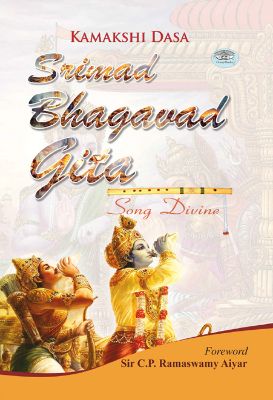
Srimad Bhagavad Gita by Kamakshi Dasa
Although the English language is rather sparse in the matter of apt rhymes, the author has taken great care to reproduce the assonance as well as the spirit of the original. He has done specially well in Chapter II (Sankhya Yoga), Chapter VI (Adhyathma Yoga) and Chapter IX (which he entitles Yoga of Royal Science). Naturally, in Chapter XI relating to the Visvarupa, the difficulties encountered by him from a metrical point of view are immense and it is on account of such difficulties that many persons have preferred, in translating the great classics of Greece, Rome and India, prose to verse as their medium of expression.
Those who cannot read the memorable Gospel of Sri Krishna in the original, this version will serve as a useful guide and faithful interpretation.
Dec. 3, 1957
—(Sd.) C.P. Ramaswami Aiyar
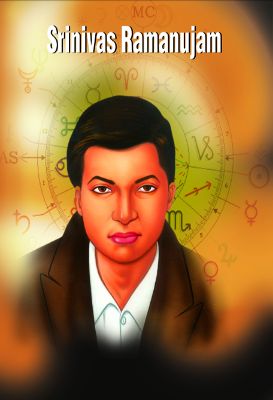
Srinivas Ramanujan by Sanjay Goyal
From childhood, Ramanujan was highly interested in mathematics. He could solve complex mathematical problems easily at a tender age of five to six years. At the age of five, he was sent to the village school to study. At school, he used to always discuss mathematics with his friends. He would ask such questions to his teachers, which were difficult to solve. He would ask about things like constellations and circumference from his teachers.
Ramanujan had a very sharp memory too. He would never forget whatever was told to him just once.