
Premium Books
Showing 951–1000 of 3787 results


Gobseck by Honoré de Balzac
This is a pre-1923 historical reproduction that was curated for quality. We believe this work is culturally important, and despite the imperfections, have elected to bring it back into print as part of our continuing commitment to the preservation of printed works worldwide. We appreciate your understanding of the imperfections in the preservation process, and hope you enjoy this valuable book.
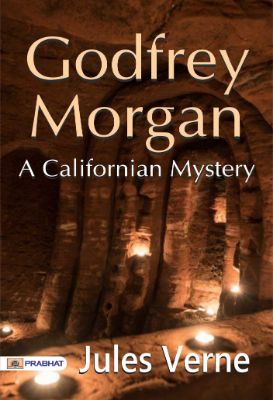
Godfrey Morgan: A Californian Mystery by Jules Verne
“An island to sell, for cash, to the highest bidder!” said Dean Felporg, the auctioneer, standing behind his rostrum in the room where the conditions of the singular sale were being noisily discussed.
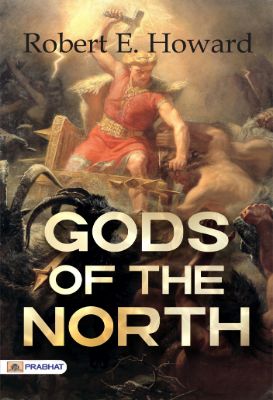
Gods of the North by Robert E. Howard
The clangor of the swords had died away, the shouting of the slaughter was hushed; silence lay on the red-stained snow. The pale bleak sun that glittered so blindingly from the ice-fields and the snow-covered plains struck sheens of silver from rent corselet and broken blade, where the dead lay in heaps. The nerveless hand yet gripped the broken hilt: helmeted heads, back-drawn in the death throes, tilted red beards and golden beards grimly upward, as if in last invocation to Ymir the frost-giant.
Golden Steps to Respectability, Usefulness and Happiness by John Mather Austin
This work has been selected by scholars as being culturally important, and is part of the knowledge base of civilization as we know it. This work was reproduced from the original artifact, and remains as true to the original work as possible. Therefore, you will see the original copyright references, library stamps (as most of these works have been housed in our most important libraries around the world), and other notations in the work.
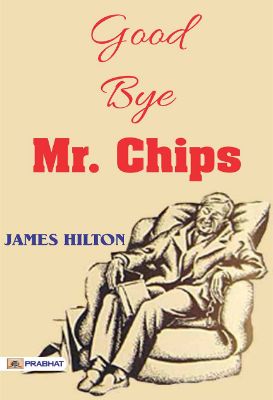
Good-Bye Mr. Chips by James Hilton
Good-Bye, Mr. Chips’ is a short novella by James Hilton. It is about about the life of a schoolteacher, Mr. Chipping. It was first published by Hodder & Stoughton in October 1934. The novel has been adapted into two films and two television adaptations.
Gorgias by Plato
Gorgias book;Best book of Plato; FICTION / General book;Classics Book
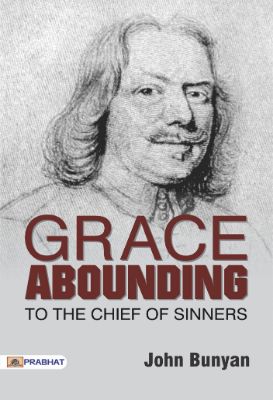
Grace Abounding to the Chief of Sinners by John Bunyan
First published in the year 1666, the present book ‘Grace Abounding to the Chief of Sinners’ is a Puritan spiritual autobiography written by John Bunyan. It was written while Bunyan was serving a twelve-year prison sentence in Bedford gaol for preaching without a license.
Grace Harlowe’s Junior Year at High School by Josephine Chase
To the readers of “Grace Harlowe’s Plebe Year at High School,” and “Grace Harlowe’s Sophomore Year at High School,” the girl chums have become familiar figures. It will be remembered how Grace Harlowe and her friends, Nora O’Malley and Jessica Bright, during their freshman year, became the firm friends of Anne Pierson, the brilliant young girl who won the freshman prize offered each year to the freshmen by Mrs. Gray. The reader will recall the repeated efforts of Miriam Nesbit, aided by Miss Leece, the algebra teacher, to disgrace Anne in the eyes of the faculty, and the way each attempt was frustrated by Grace Harlowe and her friends. Mrs. Gray’s house party, the winter picnic in Upton Wood, and Anne Pierson’s struggles to escape her unworthy father all contributed toward making the story stand out in the reader’s mind.
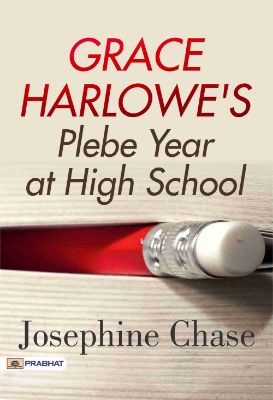
Grace Harlowe’s Plebe Year at High School by Josephine Chase
“Who is the new girl in the class?” asked Miriam Nesbit, flashing her black eyes from one schoolmate to another, as the girls assembled in the locker room of the Oakdale High School.
“Her name is Pierson; that is all I know about her,” replied Nora O’Malley, gazing at her pretty Irish face in the looking glass with secret satisfaction. “She’s very quiet and shy and looks as if she would weep aloud when her turn comes to recite, but I’m sure she’s all right,” she added good naturedly. For Nora had a charming, sunny nature, and always saw the best if there was any best to see.
“She is very bright,” broke in Grace Harlowe decisively. “She went through her Latin lesson without a mistake, which is certainly more than I could do.”
“Well, I don’t like her,” pouted Miriam. “I never trust those quiet little things. And, besides, she is the worst-dressed girl in——”

Grace Harlowe’s Senior Year at High School by Josephine Chase
In “Grace Harlowe’s Sophomore Year at High School” the interest of the story was centered around the series of basketball games played by the sophomore and junior classes for the High School championship. In this volume was narrated the efforts of Miriam Nesbit, aided by Julia Crosby, the disagreeable junior captain, to discredit Anne, and force Grace to resign the captaincy of her team. The rescue of Julia by Grace from drowning during a skating party served to bring about a reconciliation between the two girls and clear Anne’s name of the suspicion resting upon it. The two classes, formerly at sword’s points, became friendly, and buried the hatchet, although Miriam Nesbit, still bitterly jealous of Grace’s popularity, planned a revenge upon Grace that nearly resulted in making her miss playing on her team during the deciding game. Grace’s encounter with an escaped lunatic, David Nesbit’s trial flight in his aeroplane, were incidents that also held the undivided attention of the reader.

Grace Harlowe’s Sophomore Year at High School by Josephine Chase
“Anne, you will never learn to do a side vault that way. Let me show you,” exclaimed Grace Harlowe.
The gymnasium was full of High School girls, and a very busy and interesting picture they made, running, leaping, vaulting, passing the medicine ball and practising on the rings.
In one corner a class was in progress, the physical culture instructor calling out her orders like an officer on parade.
The four girl chums had grown somewhat taller than when last seen. A rich summer-vacation tan had browned their faces and Nora O’Malley’s tip-tilted Irish nose was dotted with freckles. All four were dressed in gymnasium suits of dark blue and across the front of each blouse in letters of sky-blue were the initials “O.H.S.S.” which stood for “Oakdale High School Sophomore.” They were rather proud of these initials, perhaps because the lettering was still too recent to have lost its novelty.
Graded Lessons in English by rainerd Kellogg and Alonzo Reed
Brainerd Kellogg was born in Champlain, New York. He was a Tutor and Professor of Rhetoric and English Literature at Middlebury College in Vermont, United States. From 1868 to 1907 he was professor at the Brooklyn Polytechnic Institute.








Grand Moving Diorama of Hindostan by Fanny Parkes Parlby
In the month of October, 1589, a body of English merchants addressed a memorial to her majesty, Queen Elizabeth, requesting licence to equip three ships for the purpose of trading to the East Indies: this request appears to have been favourably received, and in 1591 the first English commercial voyage was commenced in three vessels. It proved a disastrous one; but considerable experience was obtained, and the ardour of the English merchants was but little damped by the result.
GREAT ASTRONOMERS by SIR ROBERT S. BALL
First published in the year 1895, The present book is a compandium of informative yet short biographies of some of the greatest astronomers of the world born by that point of time.
Great Englishwomen by M. B. Synge
Great Englishwomen is a collection of biographie s of some of the greatest women in England’s history. Women who were leaders of their country in troubled times, women who were reformers in prison conditions, and those who sought improvement in the education and living conditions of the poor. Some were great painters, poets, and writers.
Great Expectations by Dickens, Charles
In what may be Dickens’s best novel, humble, orphaned Pip is apprenticed to the dirty work of the forge but dares to dream of becoming a gentleman — and one day, under sudden and enigmatic circumstances, he finds himself in possession of “great expectations.” In this gripping tale of crime and guilt, revenge and reward, the compelling characters include Magwitch, the fearful and fearsome convict; Estella, whose beauty is excelled only by her haughtiness; and the embittered Miss Havisham, an eccentric jilted bride.

Great Fortunes from Railroads by Gustavus Myers
In contrast to the slow, almost creeping pace of the factory owners in the race for wealth, the railroad owners sprang at once into the lists of mighty wealth-possessors, armed with the most comprehensive and puissant powers and privileges, and vested with a sweep of properties beside which those of the petty industrial bosses were puny. Railroad owners, we say; the distinction is necessary between the builders of the railroads and the owners. The one might construct, but it often happened that by means of cunning, fraud and corruption, the builders were superseded by another set of men who vaulted into possession.

Great Ghost Stories by Joseph Lewis French
Ghost stories lend themselves well to fiction. They leave the imagination entirely free. In ordinary fiction, especially of the realistic type, we expect some concessions to be made to facts but when it comes to a ghost story we assign no limits to the imagination. This is because the supernatural world offers us no standards for curbing our fancy. Icarus is given impunity in that atmosphere and there is no sun to melt his wings. Whatever our wishes, we do not expect ghosts to be real, and we are fancy free to invent or distort as we may. But in the twilight of human knowledge it was not thus. The boundaries of the real and the unreal were undefined and the belief in the supernatural, while it allowed the imagination free reins, revealed little difference between its creations and the ideas men held of the actual world. In this overlapping of the real and the imaginary, the ghost story arose and has never lost its interest for men, though the cold judgment of science deprived the real thing of its terrors.

Great Inventions and Discoveries by Willis Duff Piercy
Tens of thousands of years ago, when the world was even then old, primitive man came into existence. The first men lived in the branches of trees or in their hollow trunks, and sometimes in caves. For food they chased horses or caught fish from the streams along whose shores they lived. If they had clothing, it was the skins of wild beasts. Life was simple, slow, and crude. There were no cities, books, railroads, clocks, newspapers, schools, churches, judges, teachers, automobiles, or elections. Man lived with other animals and was little superior to them. These primitive men are called cave-dwellers.

Great Men and Famous Women by Various (Ed. Charles F. Horne)
William, Prince of Orange, the third king of England of that name, born November 14, 1650, was the posthumous son of William II., Prince of Orange, and Mary Stuart, daughter of Charles I. of England. The fortunes of his childhood did not promise that greatness which he attained. His father had been thought to entertain designs hostile to the liberties of the United Provinces, and the suspicions of the father produced distrust of the son. When Cromwell dictated terms of peace to the Dutch in 1654, one of the articles insisted on the perpetual exclusion of the Prince of Orange from all the great offices formerly held by his family; and this sentence of exclusion was confirmed, so far as Holland was concerned, thirteen years after, by the enactment of the Perpetual Edict, by which the office of Stadtholder of Holland was forever abolished. The restoration of the Stuarts, however, was so far favorable to the interests of the House of Orange, as to induce the princess-royal to petition, on her son’s behalf, that he might be invested with the offices and dignities possessed by his ancestors. The provinces of Zealand, Friesland, and Guelderland warmly espoused her cause: even the States of Holland engaged to watch over his education, “that he might be rendered capable of filling the posts held by his forefathers.” They formally adopted him as “a child of the state,” and surrounded him with such persons as were thought likely to educate him in a manner suited to his station in a free government.
Great Men as Prophets of a New Era by Newell Dwight Hillis
This work has been selected by scholars as being culturally important, and is part of the knowledge base of civilization as we know it. This work was reproduced from the original artifact, and remains as true to the original work as possible.
Great Pianists on Piano Playing by James Francis Cooke
First published in the year 1913, the present book titled ‘Great Pianists on Piano Playing’ was written by James Francis Cooke. This book is a series of personal educational conferences with renowned masters of the keyboard, presenting the most modern ideas upon the subjects of technique, interpretation, style and expression.
Green Light by Lloyd C. Douglas
Published in 1935, ‘Green Light’ is a novel written by American minister and author Lloyd C. Douglas, who was born and spent some time of his boyhood in Columbia, Indiana. The novel tells the story of Newell Paige, a rising young surgeon whose career is destroyed when he takes the blame for his mentor, Dr Endicott, who botches an operation and causes the death of a patient.

Green Tea by Joseph Sheridan Le Fanu
Though carefully educated in medicine and surgery, I have never practised either. The study of each continues, nevertheless, to interest me profoundly. Neither idleness nor caprice caused my secession from the honourable calling which I had just entered. The cause was a very trifling scratch inflicted by a dissecting knife. This trifle cost me the loss of two fingers, amputated promptly, and the more painful loss of my health, for I have never been quite well since, and have seldom been twelve months together in the same place.
Greybeards at Play by G K Chesterton
Gilbert Keith Chesterton was an English writer, philosopher, lay theologian, and literary and art critic.
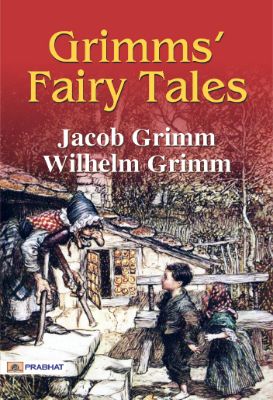
Grimms’ Fairy Tales by Jacob Grimm and Wilhelm Grimm
A certain king had a beautiful garden, and in the garden stood a tree which bore golden apples. These apples were always counted, and about the time when they began to grow ripe it was found that every night one of them was gone. The king became very angry at this, and ordered the gardener to keep watch all night under the tree. The gardener set his eldest son to watch; but about twelve o’clock he fell asleep, and in the morning another of the apples was missing. Then the second son was ordered to watch; and at midnight he too fell asleep, and in the morning another apple was gone. Then the third son offered to keep watch; but the gardener at first would not let him, for fear some harm should come to him: however, at last he consented, and the young man laid himself under the tree to watch. As the clock struck twelve he heard a rustling noise in the air, and a bird came flying that was of pure gold; and as it was snapping at one of the apples with its beak, the gardener’s son jumped up and shot an arrow at it. But the arrow did the bird no harm; only it dropped a golden feather from its tail, and then flew away. The golden feather was brought to the king in the morning, and all the council was called together. Everyone agreed that it was worth more than all the wealth of the kingdom: but the king said, ‘One feather is of no use to me, I must have the whole bird.’

Group Psychology and The Analysis of The Ego by Sigmund Freud
First published in the year 1921 by International Psychoanalytic Publishing House, Vienna, the present book, ‘Group Psychology and The Analysis of The Ego’ by the father of psychoanalysis Sigmund Freud, is a monograph in which he describes psychological mechanisms at work within mass movements. A mass, according to Freud, is a “temporary entity, consisting of heterogeneous elements that have joined together for a moment.”
Growth of the Soil by Knut Hamsun
The long, long road over the moors and up into the forest—who trod it into being first of all? Man, a human being, the first that came here. There was no path before he came. Afterward, some beast or other, following the faint tracks over marsh and moorland, wearing them deeper; after these again some Lapp gained scent of the path, and took that way from field to field, looking to his reindeer. Thus was made the road through the great Almenning—the common tracts without an owner; no-man’s-land.

Gryll Grange by Thomas Love Peacock
First published in the year 1861, the present novel ‘Gryll Grange’ by Thomas Love Peacock was the seventh and final novel of the author. The exuberant humour of his former works may be wanting, but the book is delightful for its stores of anecdote and erudition, and unintentionally most amusing through the author’s inveterate prejudices and pugnacious hostility to every modern innovation.
