
Premium Books
Showing 851–900 of 3787 results
Finding the Lost Treasure by Helen M. Persons
Finding the Lost Treasure is a detective fiction novel written by Helen M. Persons, an adventure and mystery novelist and the author of “The Mystery of Arnold Hall”.
Excerpts from the first chapter. The lives of the children had been simple, happy ones, until the recent death of their father and mother, hardly three months apart. John Wistmore, in whose veins flowed the blood of men of culture and ambition, had been anxious to give his children greater educational advantages than Sissiboo afforded. Jack, therefore, had been sent to Wolfville to school, and was now ready for college; while Desiré was looking forward to high school in the autumn

Finding Themselves by Julia Stimson
Dearest Mother and Dad:—
As you have probably seen by the papers, we all are in the midst of alarms. We have had less than a week’s notice to get ready for mobilization for service in France, and so it has been a rushing week. Last Saturday afternoon we received word we were likely to be called out soon—in two or three weeks—but on Tuesday night I received word to have the nurses ready by Saturday. It is now Friday evening and most of the nurses are ready, but it is quite certain we won’t be leaving for several days as the doctors’ uniforms, for instance, won’t be ready till next Wednesday. I am glad indeed for the extra time. The nurses can take a very small steamer trunk and a suitcase. As we apparently are to be sent abroad “for the duration of the war” it is rather a puzzle to know what to take.

Fire and Sword in the Sudan by Freiherr von Rudolf Carl Slatin
An 1896 book, ‘Fire and Sword in the Sudan: A personal Narrative of Fighting and Serving the Dervishes’ was written by Freiherr von Rudolf Carl Slatin, who was a Colonel in the Egyptian army at that time.
Fire-Tongue by Sax Rohmer
Some of Paul Harley’s most interesting cases were brought to his notice in an almost accidental way. Although he closed his office in Chancery Lane sharply at the hour of six, the hour of six by no means marked the end of his business day. His work was practically ceaseless. But even in times of leisure, at the club or theatre, fate would sometimes cast in his path the first slender thread which was ultimately to lead him into some unsuspected labyrinth, perhaps in the underworld of London, perhaps in a city of the Far East.
His investigation of the case of the man with the shaven skull afforded an instance of this, and even more notable was his first meeting with Major Jack Ragstaff of the Cavalry Club, a meeting which took place after the office had been closed, but which led to the unmasking of perhaps the most cunning murderer in the annals of crime.

First Book in Physiology and Hygiene by John Harvey Kellogg
This book is intended for children. There is no subject in the presentation of which object-teaching may be employed with greater facility and profit than in teaching Physiology, and none which may be more advantageously impressed upon the student’s mind by means of simple experimentation than the subject of Hygiene. Every teacher who uses this book is urgently requested to supplement each lesson by the use of object-teaching or experiments. A great number of simple experiments illustrative of both Physiology and Hygiene may be readily arranged. Many little experiments are suggested in the text, which should invariably be made before the class, each member of which should also be encouraged to repeat them at home.

First Footsteps in East Africa by Sir Richard Francis Burton
“If a fit and proper person volunteer to travel in the Somali Country, he goes as a private traveller, the Government giving no more protection to him than they would to an individual totally unconnected with the service. They will allow the officer who obtains permission to go, during his absence on the expedition to retain all the pay and allowances he may be enjoying when leave was granted: they will supply him with all the instruments required, afford him a passage going and returning, and pay the actual expenses of the journey.”
First Lessons in Natural Philosophy by Joseph C. Martindale
First published in the year 1881, ‘First Lessons in Natural Philosophy’ is an essential reading for those who are serious and curious about learning philosophy. Joseph C. Martindale’s engaging and simple writing style makes it even better for the beginners.

First Love and Other Fascinating Stories of Spanish Life by Various
How old was I then? Eleven or twelve years? More probably thirteen, for before then is too early to be seriously in love; but I won’t venture to be certain, considering that in Southern countries the heart matures early, if that organ is to blame for such perturbations.

First love and other stories by Ivan Sergeevich Turgenev
The novel “First Love” was Turgénieff’s favourite work, as he more than once confessed. What the author prized in this purely intimate but beautifully finished story was its fidelity to actuality; that is to say, he prized the personal recollections of early youth. In that respect this story has a prominent interest for readers, since it narrates—according to the testimony of the author—an actual fact in his life, and that without the slightest artificial colouring.[1] To what degree Turgénieff’s testimony is credible, remarks one critic, is a question which can be rightly decided only by biographical documents. Famous writers are particularly inclined by nature to romantic coquetry with their own personalities—a characteristic which was, apparently, to some extent, inherent in Turgénieff, despite his renowned modesty. Famous writers are fond of leading their contemporaries—and still more posterity—astray with regard to the reflection of intimate details of {vi}their lives in their artistic works…. At any rate, Russian artistic productions, in which the authors have endeavoured to set forth biographical details, must be scrutinised with extreme cautiousness. The author, while imagining that he is thoroughly sincere, may involuntarily indulge in inventions concerning himself. But in its literary aspect this story indubitably is one of Turgénieff’s masterpieces, and in it the original character of its chief heroine, Princess Zinaída Zasyékin, is depicted with remarkable clearness and charm…. The artist threw off this light and elegant little intimate study by way of relaxation after “On the Eve,” a romance dealing with a broad social problem, and by way of preparation for a new work, still more serious in intention, “Fathers and Children.”
Five Hundred Mistakes of Daily Occurrence in Speaking, Pronouncing, and Writing the English Language, Corrected by Anonymous
This book is offered to the public, not to be classed with elaborate or learned works, nor expected, like some of its more pretending companions among the offspring of the press, to run the gauntlet of literary criticism. It was prepared to meet the wants of persons—numbered by multitudes in even the most intelligent and refined communities—who from deficiency of education, or from carelessness of manner, are in the habit of misusing many of the most common words of the English language, distorting its grammatical forms, destroying its beauty, and corrupting its purity.
Five Lectures on Blindness by Kate M. Foley
The following lectures were written primarily to be delivered at the summer sessions of the University of California, at Berkeley and at Los Angeles, in the summer of 1918. We are printing them, however, so that the information in them can be more widely distributed, since they are the outgrowth of almost a quarter of a century spent in work for the blind, and were written from the standpoint of a blind person, seeking to better the condition of the blind. They were addressed not to the blind, but to the seeing public, for the benefit that will accrue to the blind from a better understanding of their problems.
Five Minute Stories by Laura Elizabeth Howe Richards
There are about 103 stories and short poems in this volume, written for children

Five of Maxwell’s Papers by James Clerk Maxwell
“When observing the spectrum formed by looking at a long ve rtical slit through a simple prism, I noticed an elongated dark spot running up and down in the blue, and following the motion of the eye as it moved up and down the spectrum, but refusing to pass out of the blue into the other colours. It was plain that the spot belonged both to the eye and to the blue part of the spectrum. The result to which I have come is, that the appearance is due to the yellow spot on the retina, commonly called the Foramen Centrale of Soemmering.” -an excerpt

Five Plays by Lord Dunsany
Observation and imagination are the basic principles of all poetry. It is impossible to conceive a poetical work from which one of them is wholly absent. Observation without imagination makes for obviousness; imagination without observation turns into nonsense. What marks the world’s greatest poetry is perhaps the presence in almost equal proportion of both these principles. But as a rule we find one of them predominating, and from this one-sided emphasis the poetry of the period derives its character as realistic or idealistic.

Five Weeks in a Balloon by Jules Verne by Jules Verne
First published in the year 1863, celebrated classic English novelist Jules Verne’s novel ‘Five Weeks in a Balloon’ is an adventure novel. The book gives readers a glimpse of the exploration of Africa, which was still not completely known to Europeans of the time, with explorers traveling all over the continent in search of its secrets.
Flappers and Philosophers by F Scott Fitzgerald
The present book ‘Flappers and Philosophers’ by one of the most celebrated English novelist F Scott Fitzgerald is a collection of short stories. It was his first collection of stories, and included eight short stories. It was first published in the year 1920.

Flatland: A Romance of Many Dimensions (Illustrated) by Edwin Abbott Abbott
Flatland: A Romance of Many Dimensions’ is a satirical novella by the English schoolmaster Edwin Abbott Abbott. It was first published in 1884. The book used the fictional two-dimensional world of Flatland to comment on the hierarchy of Victorian culture, but the novella’s more enduring contribution is its examination of dimensions.

Fletcher of Saltoun by George W. T. Omond
“Andrew Fletcher, eldest son of Sir Robert Fletcher of Saltoun, in the county of Haddington, and of Catherine, daughter of Sir Henry Bruce of Clackmannan, was born in the year 1653. He was educated either at home or in the parish school of Saltoun until 1665. On the thirteenth of January in that year his father died, having, on his deathbed, intrusted the charge of educating his son to Burnet, the future Bishop of Salisbury, who had just been presented to the living of Saltoun, of which Sir Robert was the patron.” -an excerpt

Florante and Laura by Francisco Baltazar
By the time of 1906, the book of “Who created the Florante,” by Mr. Hermenegildo Cruz, the book “Out Of The Florante” , is said to have some 106,000 translations of “Florante and Laura” others; and since then it has been so many years ago, and during that time-especially when it was time for the development of the Tagalog Literature and the adventure of emotion and the love that made us more love unparalleled that Makati Francisco Baltazar-is undoubtedly the precise figure of 106,000 not too small and no more than a thousand more.

Florence Nightingale, The Angel of the Crimea by Laura E. Richards
One evening, some time after the great Crimean War of 1854-55, a company of military and naval officers met at dinner in London. They were talking over the war, as soldiers and sailors love to do, and somebody said: “Who, of all the workers in the Crimea, will be longest remembered?”
Each guest was asked to give his opinion on this point, and each one wrote a name on a slip of paper. There were many slips, but when they came to be examined there was only one name, for every single man had written “Florence Nightingale.”
Flower Fables by Louisa May Alcott
THE summer moon shone brightly down upon the sleeping earth, while far away from mortal eyes danced the Fairy folk. Fire-flies hung in bright clusters on the dewy leaves, that waved in the cool night-wind; and the flowers stood gazing, in very wonder, at the little Elves, who lay among the fern-leaves, swung in the vine-boughs, sailed on the lake in lily cups, or danced on the mossy ground, to the music of the hare-bells, who rung out their merriest peal in honor of the night.

Folk-Lore of West and Mid-Wales by Jonathan Ceredig Davies
“The writer of this book lived for many years in the Welsh Colony, Patagonia, where he was the pioneer of the Anglican Church. He published a book dealing with that part of the world, which also contained a great deal of interesting matter regarding the little known Patagonian Indians, Ideas on Religion and Customs, etc. He returned to Wales in 1891; and after spending a few years in his native land, went out to a wild part of Western Australia, and was the pioneer Christian worker in a district called Colliefields, where he also built a church.” -Preface
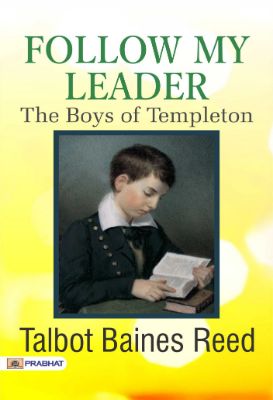
Follow My Leader: The Boys of Templeton by Talbot Baines Reed
On a raw, damp morning in early spring, a rather forlorn group of three youngsters might have been seen on the doorstep of Mountjoy Preparatory School, casting nervous glances up and down the drive, and looking anything but a picture of the life and spirits they really represented.

Food and Health by Lydia E. Pinkham Medicine Company
How often do we hear women exclaim, “Oh dear, what shall I have for the next meal?”
This little book will aid you in answering that troublesome question. The recipes are carefully selected and we hope you will find them helpful. More important to you than the question of food is that of health. Therefore, in this book we show you many letters from women who have received great benefit

Food Remedies: Facts About Foods and Their Medicinal Uses by Florence Daniel
Salts and acids as found in organised forms are quite different in their effects to the products of the laboratory, notwithstanding that the chemical composition may be shown to be the same. The chemist may be able to manufacture a “fruit juice,” but he cannot, as yet, manufacture the actual fruit. The mysterious life force always evades him. Fruit is a vital food, it supplies the body with something over and above the mere elements that the chemist succeeds in isolating by analysis. The vegetable kingdom possesses the power of directly utilising minerals, and it is only in this “live” form that they are fit for the consumption of man. In the consumption of sodium chloride (common table salt), baking powders, and the whole army of mineral drugs[Pg 5] and essences, we violate that decree of Nature which ordains that the animal kingdom shall feed upon the vegetable and the vegetable upon the mineral.
For God and Gold by Julian Stafford Corbett
It is not to be denied that the usual practice in ushering into the world a long-hidden manuscript has been to give some account of its existence in its former state, and of the manner in which it came to light. For sufficient reasons that course will not be followed in the present case.
Should any one in consequence be brought to doubt the genuineness of these memoirs, it is hoped that it will be sufficient to refer him to a curious little work entitled Sir Francis Drake Revived, which contains a very sprightly account of that renowned navigator’s so-called Third Voyage to the Indies, being that in which he attempted Nombre de Dios, and which, as the title-leaf recites, is ‘faithfully taken out of the report of Master Christopher Ceely, Ellis Hixom, and others who were in the same voyage with him, by Philip Nichols, Preacher; Reviewed also by Sir Francis Drake himself before his death, and much holpen and enlarged by divers notes with his own hand here and there inserted, and set forth by Sir Francis Drake (his nephew), now living, 1626.’

For the Sake of the School by Angela Brazil
Snorting and puffing, as if in agitated apology for the tardiness of its arrival, the train came steaming into the station, the drag of its brakes adding yet another item of noise to the prevailing babel. Intending passengers clutched bags and baskets; fathers of families gave a last eye to the luggage; mothers grasped children firmly by the hand; a distracted youth, seeking vainly for his portmanteau, upset a stack of bicycles with a crash; while above all the din and turmoil rose the strident, rasping voice of a book-stall boy, crying his selection of papers with ear-splitting zeal.
From the windows of the in-coming express waved seventeen agitated pocket-handkerchiefs, and the signal was answered by a counter-display of cambric from the twenty girls hustled back by an inspector in the direction of the weighing-machine.

For the Soul of Rafael by Marah Ellis Ryan
“Over the valley of the Mission of the Tragedies, the grass was knee-deep in March that year. The horses galloping from the mesa trail down to Boca de la Playa (the mouth of the ocean) were fat and sleek and tricky as they ran neck and neck past the corral of the little plain, and splashed in glee through the San Juan River, where it ends its short run from the Sierras to the Pacific.” -an excerpt

For the Term of His Natural Life by Marcus Clarke
On the evening of May 3, 1827, the garden of a large red-brick bow-windowed mansion called North End House, which, enclosed in spacious grounds, stands on the eastern height of Hampstead Heath, between Finchley Road and the Chestnut Avenue, was the scene of a domestic tragedy.
Forbidden Fruit by Anonymous
Forbidden fruit is a phrase that originates from Genesis concerning Adam and Eve in Genesis 2:16–17. In the narrative, Adam and Eve ate the fruit of good and evil in the Garden of Eden, which they had been commanded not to do by God

Forge Work by William L. Ilgen
William L. Ilgen’s book Forge Work is an instructional text detailing metalwork, and more specifically working with a forge. The original purpose of the book, as outlined in the author’s preface, was to commit to text many of the oral instructions provided to metalworking and blacksmithing students so that they may have a reference document to which they can refer.
Forgive Us Our Trespasses by Lloyd C. Douglas
Published in 1932, ‘Forgive Us Our Trespasses’ is a novel written by American minister and author Lloyd C. Douglas, who was born and spent some time of his boyhood in Columbia, Indiana.

Forgotten Books of the American Nursery by Rosalie Vrylina Halsey
ASHELF full of books belonging to the American children of colonial times and of the early days of the Republic presents a strangely unfamiliar and curious appearance. If chronologically placed, the earliest coverless chap-books are hardly noticeable next to their immediate successors with wooden sides; and these, in turn, are dominated by the gilt, silver, and many colored bindings of diminutive dimensions which hold the stories dear to the childish heart from Revolutionary days to the beginning of the nineteenth century. Then bright blue, salmon, yellow, and marbled paper covers make a vivid display which, as the century grows older, fades into the sad-colored cloth bindings thought adapted to many children’s books of its second quarter.

Foster’s Complete Hoyle by R. F. Foster
An interesting and useful manual with intrinsic information about many games that one can play while staying indoors, ‘Foster’s Complete Hoyle’ is written by R. F. Foster.
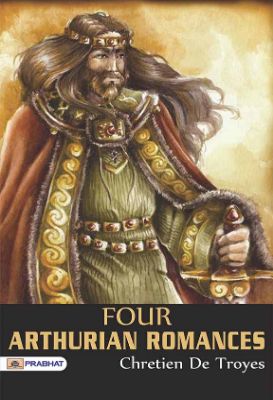
Four Arthurian Romances by active 12th century by Chrétien de Troyes
A compendium of four most remarkable romances about the legends of King Arthur and the Knights of the Round Table, and associated figures of the Arthurian mythos. This compendium consists of the tales of EREC ET ENIDE, CLIGES, YVAIN, and LANCELOT.


Frankenstein or, The Modern Prometheus by Mary W. Shelley
Frankenstein; or, The Modern Prometheus is a novel written by Mary Shelley about eccentric scientist Victor Frankenstein, who creates a grotesque creature in an unorthodox scientific experiment. Shelley started writing the story when she was nineteen, and the novel was published when she was twenty-;

Fred Fenton on the Crew; Or, The Young Oarsmen of Riverport School by Allen Chapman
“Hello! there, Bristles!”
“Hello! yourself, Fred Fenton!”
“Why, what ails you this fine summer morning, Bristles? You don’t look as jolly as you might.”
“Well, I was only waiting to see if you cared to speak to me, Fred.”
“Why in the wide world shouldn’t I, when you’re one of my chums, Bristles Carpenter?”

Fred Fenton on the Track; Or, The Athletes of Riverport School by Allen Chapman
“I see you’re limping again, Fred.”
“That’s right, Bristles. I stubbed my toe at the very start of this cross-country run, and that lost me all chance of coming in ahead. That’s why I fell back, and have been loafing for a stretch.”
“And let me catch up with you; eh? Well, I reckon long-legged Colon will have a cinch in this race, Fred.”

Frederick Douglass by Charles W. Chesnutt
First published in the year 1899, the present book by Charles W. Chesnutt is a biography of famous Frederick Douglass, an African-American social reformer, abolitionist, orator, writer, and statesman.

Free Air by Sinclair Lewis
“When the windshield was closed it became so filmed with rain that Claire fancied she was piloting a drowned car in dim spaces under the sea. When it was open, drops jabbed into her eyes and chilled her cheeks. She was excited and thoroughly miserable. She realized that these Minnesota country roads had no respect for her polite experience on Long Island parkways. She felt like a woman, not like a driver.” -an excerpt
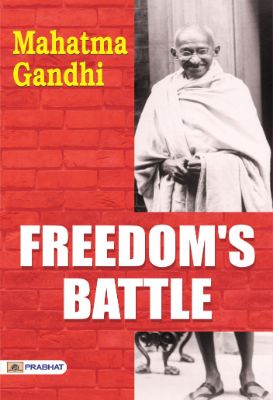
Freedom’s Battle by Mahatma Gandhi
After the great war it is difficult, to point out a single nation that is happy; but this has come out of the war, that there is not a single nation outside India, that is not either free or striving to be free.
It is said that we, too, are on the road to freedom, that it is better to be on the certain though slow course of gradual unfoldment of freedom than to take the troubled and dangerous path of revolution whether peaceful or violent, and that the new Reforms are a half-way house to freedom.
The new constitution granted to India keeps all the military forces, both in the direction and in the financial control, entirely outside the scope of responsibility to the people of India. What does this mean? It means that the revenues of India are spent away on what the nation does not want. But after the mid-Eastern complications and the fresh Asiatic additions to British Imperial spheres of action. This Indian military servitude is a clear danger to national interests.
French and German Socialism in Modern Times by Richard T. Ely
Communism and Socialism represent different and yet allied movements of theory and practice. They aim to improve the common lot of humanity, in particular that of the lower classes, in a radical manner and by the application of thoroughgoing measures.

Fresh Every Hour by John Peter Toohey
A most prepossessing young person whose parents had inflicted upon her the name of Lolita Murphy was directly responsible for the alarming symptoms already hinted at. From the precise moment that Lolita came within his ken Jimmy ceased to be a rational being in full control of his faculties and his heart, in sympathetic accord with the agitated condition of its owner, began to put on an antic disposition and indulged in curious palpitations of a most annoying nature on the slightest pretext. The usual provocation at first was the sight of Lolita herself, but after a day or two even the thought of her produced a cardiac ratiplan that would have done credit to the trap drummer of a jazz band.

Friendship Village by Zona Gale
Friendship Village is not known to me, nor are any of its people, save in the comradeship which I offer here. But I commend for occupancy a sweeter place. For us here the long Caledonia hills, the four rhythmic spans of the bridge, the nearer river, the island where the first birds build—these teach our windows the quiet and the opportunity of the “home town,” among the “home people.” To those who have such a bond to cherish I commend the little real home towns, their kindly, brooding companionship, their doors to an efficiency as intimate as that of fairy fingers. If there were shrines to these things, we would seek them. The urgency is to recognize shrines.

Froebel as a Pioneer in Modern Psychology by E. R. Murray
First published in the year 1914, the present book ‘Froebel as a pioneer in modern psychology’ by the renowned educationist and intellectual E. R. Murray is aimed at showing that Froebel’s educational theories were based on psychological views of a type much more modern than is at all generally understood.
From Bapaume to Passchendaele, 1917 by Philip Gibbs
“Last New Year’s Eve—the end of a year which had been full of menace for our fighting men, because, at the beginning, our lines had no great power of guns behind them, and full of hopes that had been unfilled, in spite of all their courage and all their sacrifice—an artillery officer up in the Ypres salient waited for the tick of midnight by his wrist-watch (it gave a glow-worm light in the darkness), and then shouted the word “Fire!” … One gun spoke, and then for a few seconds there was silence. Over in the German line the flares went up and down, and it was very quiet in the enemy trenches, where, perhaps, the sentries wondered at that solitary gun. Then the artillery officer gave the word of command again. This time the battery fired nine rounds. A little while there was silence again, followed by another solitary shot, and then by six rounds. So did the artillery in the Ypres salient salute the birth of the New Year, born in war, coming to our soldiers and our race with many days of battle, with new and stern demands for the lives and blood of men.” -An abstract

From Manassas to Appomattox: Memoirs of the Civil War in America by Longstreet
First published in the year 1895, the present book ‘From Manassas to Appomattox: Memoirs of the Civil War in America’ was written by Longstreet. It has various memoirs of the personalities involved with the American Civil War.
From Poverty to Power by James Allen
Chapters include: The lesson of evil, The world a reflex of mental states, The way out of undesirable conditions, The silent power of thought: controlling and directing one’s forces, The secret of health, success, and power, The secret of abounding happiness, The realization of prosperity, The power of meditation, The two masters, self and truth, The acquirement of spiritual power, The realization of selfless love, Entering into the infinite, Saints, sages and saviors: the law of service, and, The realization of perfect peace.
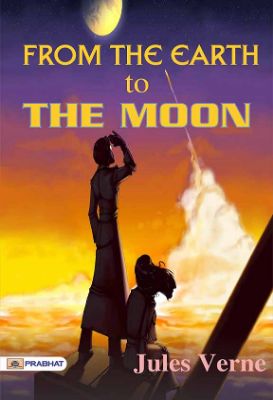
From the Earth to the Moon; and, Round the Moon by Jules Verne
An 1865 illustrated novel, ‘From the Earth to the Moon’ by Jules Verne tells the story of the Baltimore Gun Club, which is a post-American Civil War society of weapons enthusiasts. It narrates the group members’ attempts to build an enormous Columbiad space gun and launch three people—the Gun Club’s president, his Philadelphian armor-making rival, and a French poet—in a projectile with the goal of a moon landing.