
Classic Books
Showing 701–750 of 4246 results
Cousin Betty by Honoré de Balzac
In this most paradoxical of all novels, Destiny takes revenge on the ungrateful cousin Betty. It is a tale of unfaithfulness, deception, betrayal, lust, and hatred, set in nineteenth century Paris, a world of high finance and politics. The Hulots are a wealthy family, and Hortense — Betty’s cousin — has made a fortunate marriage . . . to Betty’s beloved. Hortense is good to her cousin, bringing her to live with them in a beautiful house. The Hulots are good to her, but Betty wants only revenge. Betty tries with all her wiles to destroy the family. Certainly she has many opportunities to do it, because the Hulots are flawed, and intrigue is Betty’s favorite sport, intrigue with meanness and cruelty. But no good comes from bad deeds, and life, always ironic, will not allow Betty’s deeds to accomplish her revenge.
Cousin Pons by Honoré de Balzac
He was even more desperate as a collector and fancier of ez’ee/ofs than he was as a speculator; and while the one mania was nearly as responsible for his pecuniary troubles and his need to overwork himself as the other, it certainly gave him more constant and more comparatively harmless satisfactions. His connoisseurship has, of course, been questioned one connoisseur would be nothing if he did not question the competence of another, if not of all others. It seems certain that Balzac frequently bought things for what they were not and probable that his own acquisitions went, in his own eyes, through that succession of stages which Charles Lamb described inimitably.
Cow: a Celestial Being by S. Balakrishnan And K.M. Shukla
Ifyou have not given much I thought as to what an amazing gift of God, a cow is, this book is a great place to start! So it is, if cows have always been close to your heart. This unique work of heart, effortlessly explores the intricate and deeply interwoven relationship man shares with these bovine beauties! India perhaps, is the only country in the world, where this bond is so very sacred and special, yet complex and complicated!
This book grazes you through the heart, body and soul of a cow, breezing through various complex issues related to it, ranging from Science to Spirituality, history to the present troubled times. But in all this, what lingers in the reader’s mind, is the beautiful flavour and fragrance of the deep rooted love of the authors, towards these lovable, affectionate, emotional, at the same time smart and intelligent bovine creatures!
Cranford by Elizabeth Gaskell
The Cranford ladies have only an occasional little quarrel, spirited out in a few peppery words and angry jerks of the head; just enough to prevent the even tenor of their lives from becoming too flat. Their dress is very independent of fashion; as they observe, “What does it signify how we dress here at Cranford, where everybody knows us?” And if they go from home, their reason is equally cogent, “What does it signify how we dress here, where nobody knows us?” The materials of their clothes are, in general, good and plain, and most of them are nearly as scrupulous as Miss Tyler, of cleanly memory; but I will answer for it, the last gigot, the last tight and scanty petticoat in wear in England, was seen in Cranford—and seen without a smile.
Creating a Livable Planet by Dr. A.P.J. Abdul Kalam
A nation’s capability of self-sustainability is seen as the foremost marker for it to be considered a developed nation. Its self-sufficiency in agriculture, economy, health and education facilities for its citizens builds its sustainability. An ideal nation should be able to fulfil the basic needs for each of its citizen on its own. To achieve this level of self-sufficiency was one of India’s former President Dr. A.P.J. Abdul Kalam’s major aspirations for the country.
Creating A Livable Planet is a volume especially compiled with an aim to preserve and spread Dr. Kalam’s enlightening and informative ideas on the usage of right technology to benefit and improve India’s agriculture, economy, atmosphere and health of citizens. He, through these articles, educates the citizens, both young and old, on how using inexpensive, conventional and nature-friendly techniques can help us enrich our agriculture, environment and health. He also advocates the adoption of necessary modern technologies that could help our society evolve.
Creating Capital by Frederick L. Lipman
First published in the year 1918, the present book ‘Creating Capital’ by Frederick L. Lipman is an essay on moral values of thrift. This is a broad discussion of money-making in its moral aspects, an examination of its prevalence as an aim among people generally and the moral standards which obtain among those who consciously seek to make money.
Creative Evolution by Henri Bergson
Must we then give up fathoming the depths of life? Must we keep to that mechanistic idea of it which the understanding will always give us—an idea necessarily artificial and symbolical, since it makes the total activity of life shrink to the form of a certain human activity which is only a partial and local manifestation of life, a result or by-product of the vital process? We should have to do so, indeed, if life had employed all the psychical potentialities it possesses in producing pure understandings—that is to say, in making geometricians.

Creative Mind and Success by Ernest S. Holmes
A spirited guide to mental and business success, this inspirational book was written by the founder of the Religious Science movement. A simple, direct manual for understanding the nature of the universe and the mind’s creative power, this classic explains how “right thinking” can help achieve independence and prosperity.
Creative Unity by Rabindranath Tagore
It costs me nothing to feel that I am; it is no burden to me. And yet if the mental, physical, chemical, and other innumerable facts concerning all branches of knowledge which have united in myself could be broken up, they would prove endless. It is some untold mystery of unity in me, that has the simplicity of the infinite and reduces the immense mass of multitude to a single point.
This One in me knows the universe of the many. But, in whatever it knows, it knows the One in different aspects. It knows this room only because this room is One to it, in spite of the seeming contradiction of the endless facts contained in the single fact of the room. Its knowledge of a tree is the knowledge of a unity, which appears in the aspect of a tree.
Creative-Mind by Ernest S. Holmes
From the author of Creative Mind And Success, comes this short book on how to utilise the power of your mind. Holmes shows us how our thoughts can become reality and what we can do to use that to our benefit.
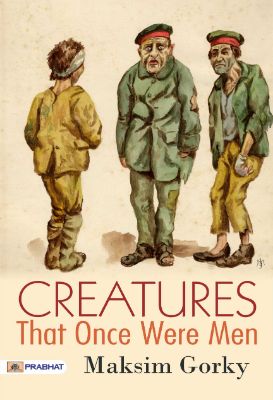
Creatures That Once Were Men by Maksim Gorky
It is certainly a curious fact that so many of the voices of what is called our modern religion have come from countries which are not only simple, but may even be called barbaric. A nation like Norway has a great realistic drama without having ever had either a great classical drama or a great romantic drama. A nation like Russia makes us feel its modern fiction when we have never felt its ancient fiction. It has produced its Gissing without producing its Scott. Everything that is most sad and scientific, everything that is most grim and analytical, everything that can truly be called most modern, everything that can without unreasonableness be called most morbid, comes from these fresh and untried and unexhausted nationalities. Out of these infant peoples come the oldest voices of the earth.
This contradiction, like many other contradictions, is one which ought first of all to be registered as a mere fact; long before we attempt to explain why things contradict themselves, we ought, if we are honest men and good critics, to register the preliminary truth that things do contradict themselves. In this case, as I say, there are many possible and suggestive explanations. It may be, to take an example, that our modern Europe is so exhausted that even the vigorous expression of that exhaustion is difficult for every one except the most robust.

Credit by Clark W. Bryan
Pausing momentarily on the midway staircase-landing, which
has prominent place between the second and third stories of the
Bradstreet establishment at 279, 281 and 283 Broadway, New York,
an undefined sensation, which attains almost to inspiration, comes to
the hand that traces these lines as the eye falls upon the army of
busy workers below—an inspiration creating an intense desire to
learn, if possible, what battle of life that army is engaged in fighting
so earnestly—whether the cause in which its daily engagements are
being made is a just or an unjust, a noble or an ignoble, one; whether
engendered in generous or selfish-minded motives, and also whether
the day is being lost or won by the serried ranks of men and women
there drawn up in battle array.
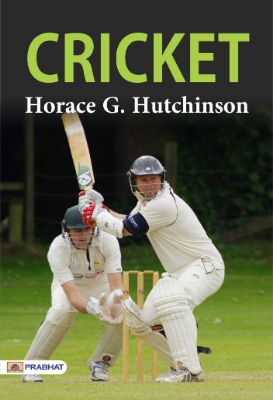
Cricket by Horace G. Hutchinson
Surely it is sheer neglect of opportunity offered by an official position if, being an editor, one has no prefatory word to say of the work that one is editing. It is said that that which is good requires no praise, but it is a saying that is contradicted at every turn—or else all that is advertised must be very bad. While it is our firm belief that the merits of the present book—The Country Life Cricket Book—are many and various (it would be an insult to the able heads of the different departments into which the great subject is herein divided to think otherwise), we believe also that the book has one very special and even unique merit. We believe, and are very sure, that there has never before been given to the public any such collection of interesting old prints illustrative of England’s national game as appear in the present volume. It is due to the kind generosity of the Marylebone Cricket Club, as well as of divers private persons, that we are able to illustrate the book in this exceptional way; and we (that is to say, all who are concerned in the production) beg to take the opportunity of giving most cordial thanks to those who have given this invaluable help, and so greatly assisted in making the book not only attractive, but also original in its attraction.
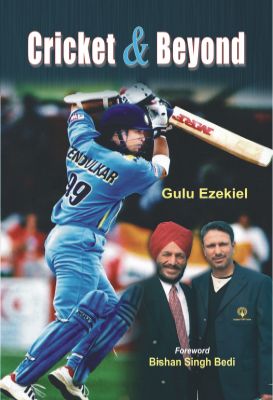
Cricket and Beyond by Gulu Ezekiel
Gulu wears his passion on his sleeve and on the numerous TV debates in which we have featured together I have found we are on the same wavelength when it comes to issues and controversies concerning cricket.
This book contains an impressive array of Gulu’s articles on a wide range of sports with an emphasis on cricket which is so close to Gulu’s heart.
There are numerous articles on the India Premier League in this collection stretching back to its origins and the reader can judge for himself how perceptive Gulu has been on this vexing issue. On this we share common ground and many of our dire predictions on what we both consider a cancer in the game have proved uncannily correct.
Besides controversies, there is much to celebrate as well in this anthology and I wish both the book and its author all the best while looking forward to another such collection 20 years down the line!
—from the Foreword ofBishan Singh Bedi
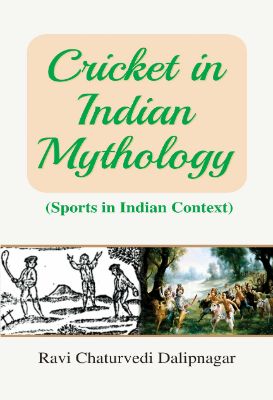
Cricket in Indian Mythology by Ravi Chaturvedi
Since the author has been actively involved in cricket as a commentator for nearly half-a-century, he got an opportunity to explore avenues beyond the accepted norms. When Dr. Heiner Gillmeister, a Professor at the University of Bonn in Germany came up with a theory that cricket is a game of Flemish origin played in the County of Philanders, it took the author to his childhood game of Gulli Danda. It aroused in him an insatiable hunger to delve deep and find out other indigenous games akin to the primitive game of cricket played by the Philanders. Going through the life of Lord Krishna, the author came to know of a game Kanduka Krida played in Vrindavan by the shepherds with Krishna. A thorough research, substantiated by relevant quotes from the scriptures, helped the author establish the similarity between Kanduka Krida and archaic cricket.
The analogy in the book that Sanjaya of Mahabharata was the first commentator of the world at Kurukshetra, describing the events with the help of his celestial vision which the author equates with the lens of the television camera. Indian mythology again finds place in cricket where the author finds a distinct functional similarity between the Third Eye of Lord Shiva and the Third Umpire of cricket. It is a unique book which acknowledges that Indian scriptures are a storehouse of vast unexplored knowledge.
Crime And Punishment by Fyodor Dostoevsky
A few words about Dostoevsky himself may help the English reader to understand his work.
Dostoevsky was the son of a doctor. His parents were very hard-working and deeply religious people, but so poor that they lived with their five children in only two rooms. The father and mother spent their evenings in reading aloud to their children, generally from books of a serious character.
Though always sickly and delicate Dostoevsky came out third in the final examination of the Petersburg school of Engineering. There he had already begun his first work, “Poor Folk.”
This story was published by the poet Nekrassov in his review and was received with acclamations. The shy, unknown youth found himself instantly something of a celebrity. A brilliant and successful career seemed to open before him, but those hopes were soon dashed. In 1849 he was arrested.
Crimes Against Women in India by Mamta Mehrotra
The Book deals with contemporary issues of rape, the aftermath and THE judgment. Rape is rampant in the country. No girl or women for that matter is safe, whether at home, workplace or on the road. With or without a chaperon she is subjected to all kinds of humility. A woman is not safe even in the so called safe environment of her home. The person who takes oath to protect her sometimes, rather most of the times becomes one whom she has to fear. She is unsafe even with him. Is it right?
This subject of rape has been extensively dealt in this book, cited with many instances from the present times. It also deals with the verdicts passed on these atrocities. Like Draupadi a woman needs protection for there are innumerable men ready to pounce at her and subject her to un-mentionable humiliation. But where is Krishna?
Who is there to protect her? Treat her as a human and not as an article to be used and thrown. Is the judiciary blind like Dhritarashtra or helpless like Bhishma. The book deals with many such issues. And the question remains: Are women safe?

Crimes of Preachers by M. E. Billings
In the year 1906 the Young Men’s Christian Association of Pittsburgh, in Pennsylvania, rejected the application of an actor for membership on the ground that one of his profession could not be a moral person. Viewing the action as a slur cast on the whole theatrical profession, Mr. Henry E. Dixey, the well-known actor, offered to give one thousand dollars to charity if it could be shown that actors, man for man, were not as good as ministers of the gospel. No champion of the cloth appearing to claim Mr. Dixey’s money on that proposition, he went further and offered another thousand dollars if there could not be found a minister in jail for every state in the Union.
Crito by Plato
Crito’ is a dialogue by the ancient Greek philosopher Plato. It depicts a conversation between Socrates and his wealthy friend Crito regarding justice, injustice and the appropriate response to injustice. Socrates thinks that injustice may not be answered with injustice, and refuses Crito’s offer to finance his escape from prison.
Crome Yellow by Aldous Huxley
The present novel ‘Crome Yellow’ is a historical fictional novel written by the famous British author Aldous Huxley. It was first published in the year 1921. It is the story of a house party at Crome, a parodic version of Garsington Manor, home of Lady Ottoline Morrell, a house where authors such as Huxley and T. S. Eliot used to gather and write.

Cross Creek by Marjorie Kinnan Rawlings
First published in the year 1942, ‘Cross Creek’ was written by a twentieth century American novelist Marjorie Kinnan Rawlings, who lived in rural Florida and wrote novels with rural themes and settings. “Cross Creek is a bend in a country road, by land, and the flowing of Lochloosa Lake into Orange Lake, by water. We are four miles west of the small village of Island Grove, nine miles east of a turpentine still, and on the other sides we do not count distance at all, for the two lakes and the broad marshes create an infinite space between us and the horizon. We are five white families; “Old Boss” Brice, the Glissons, the Mackays and the Bernie Basses; and two colored families, Henry Woodward and the Mickenses. People in Island Grove consider us just a little biggety and more than a little queer. Black Kate and I between us once misplaced some household object, quite unreasonably.” -Preface
Crotchet Castle by Thomas Love Peacock
First published in the year 1831, the present humorous fictional novel ‘Crotchet Castle’ was the sixth novel by the famous English author Thomas Love Peacock. In this novel, Peacock assembles a group of eccentrics, each with a single monomaniacal obsession, and derives humour and social satire from their various interactions and conversations.
Crucial Instances by Edith Wharton
Crucial Instances’ is renowned writer Edith Wharton’s short story collection. It was first published in the year 1901. The stories narrated here are written in the classic Victorian style.
Curiosities of Medical Experience by J. G. Millingen
The rapid sale of the first edition of this work has induced the publisher to reprint it with considerable additions in a less expensive, and more concise form—and the author embraces this opportunity, gratefully to acknowledge the liberality with which it has been received, and the indulgence shown to its many imperfections.

Curious Epitaphs by William Andrews
First published in the year 1883, the present book ‘Curious Epitaphs’ was written by William Andrews. This is among those books from the nineteenth century which have got lost with the time and remained unrecovered for a long time.
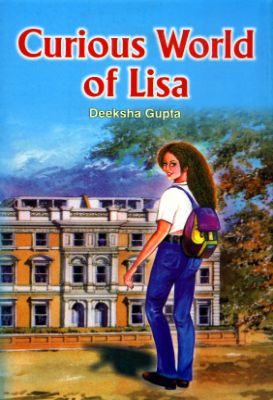
Curious World of Lisa by Deeksha Gupta
“Lisa, honey you’re getting late.” shouted Mrs. Philips.
“Coming” said Lisa “Bye Leona,” she added. Lisa was in eight grade and was going to be 13 in two week’s time. She was pretty and smart with wavy blond hair and blue eyes. She went to St. Michael School. Leona was her imaginary friend and one of the most important things in her life.
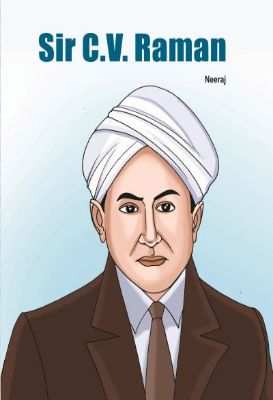
Cv Raman by Neeraj
A normal vision helps us to see the objects, but a scientific vision helps us imagine not only the absence of objects but also a solid shape of those invisible objects. It sharpens one’ s imagination. The credit for achieving the modern development in India, which is the basis of our nation’ s pride, goes to science and scientists. Dr . Chandrashekhar V enkat Raman is a highly respected name amongst the great Indian scientists.
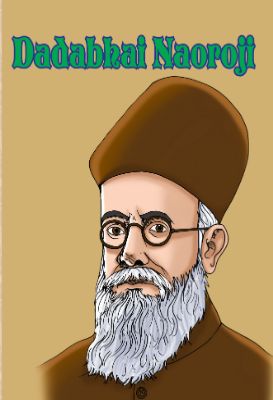
Dadabhai Naoroji by Kumkum Khanna
Dadabhai Naoroji – affectionately called ‘The grand old man of India’ was a Parsi intellectual and educator , and Indian political leader . He is viewed as the architect who laid the foundation of the Indian freedom struggle and Swaraj. A leading nationalist author and spokesman, he was the first Indian to be elected Member of British Parliament. During 1845 and 1917 he was a great public figure who was fighting for the rights of the Indian people, both in England and India.

Daddy-Long-Legs by Jean Webster
The first Wednesday in every month was a Perfectly Awful Day—a day to be awaited with dread, endured with courage and forgotten with haste. Every floor must be spotless, every chair dustless, and every bed without a wrinkle. Ninety-seven squirming little orphans must be scrubbed and combed and buttoned into freshly starched ginghams; and all ninety-seven reminded of their manners, and told to say, ‘Yes, sir,’ ‘No, sir,’ whenever a Trustee spoke.
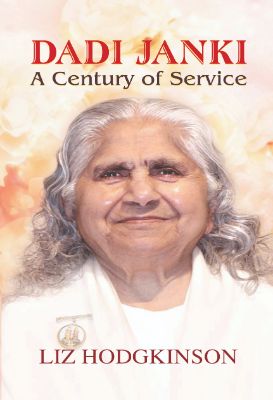
Dadi Janki a Century of Service by Liz Hodgkinson
Dadi Janki, the unusual subject of this biography, presides over a unique global spiritual empire run and led by women.
Born in 1916 into a traditional Hindu family, she was expected to follow the standard pattern for Indian women of the day, which was to succumb to an arranged marriage at the earliest possible opportunity and then disappear from view.
But she had other ideas. Since the age of two, she has only ever wanted to connect to one being, and that is God. She never sought nor desired any other relationship and she managed to escape her unwanted marriage in order to dedicate her life to spiritual study, service and contemplation.
She joined the Brahma Kumaris, then in its infancy, in 1937, and for many years, ran centres in India. In the early 1970s, the decision was taken to try and introduce the movement to the West and Dadi Janki arrived in London with no real idea how she would do it.
Her task was made especially difficult as she arrived not speaking any English, with no money, no influence and nowhere to live. But with God as her constant companion, she never gave up and within 20 years of being in London, had established the Brahma Kumaris as a respected, influential, worldwide organization.
This is the story of how she did it.

Daemonologie. by King of England James I
First published in the year 1597, the present book ‘Daemonologie’ is originally a philosophical dissertation on contemporary necromancy and the historical relationships between the various methods of divination used from ancient Black magic written by King of England James I.

Daisy Miller by Henry James
Traveling in Europe with her family, Daisy Miller, an exquisitely beautiful young American woman, presents her fellow-countryman Winterbourne with a dilemma he cannot resolve. Is she deliberately flouting social conventions in the way she talks and acts, or is she simply ignorant of them? When she strikes up an intimate friendship with an urbane young Italian, her flat refusal to observe the codes of respectable behavior leaves her perilously exposed. In Daisy Miller James created his first great portrait of an enigmatic and independent American woman, a figure who would come to dominate his later masterpieces.

Damaged Goods by Eugène Brieux and Upton Sinclair
In Damaged Goods the horrors of venereal disease are explored in this social drama. The story centers on a young couple whose future is endangered when the husband makes a terrible mistake.Novelized version of the Great Play, Les Avaries, with the approval of the author Eugene Brieux. American novelist, essayist, playwright, and short story writer, whose works reflect socialistic views.
Damn History by Govind Mishra
What attracted me towards Govind’s stories was a strange kind of innocence which is reflected there. The injured in the story – be it a person, a character or his/her feelings – about whom we don’t know much nor the author tells much, just the feeling of being injured… it comes out with such passion that is seldom seen in other story-writers.”
So said Nirmal Verma about Govind Mishra’s short stories. Another prominent short story writer of Hindi Shailesh Matiyani opined – ‘Even though writing on both the worlds – the inner and the outer – Govind Mishra saved himself from the dangers of both realism and romanticism. That way he comes to belong to the tradition of not so much Jainendra, Ajneya or Nirmal Verma but that of Premchand.’
Having created more than a thousand characters in his fiction, Govind Mishra’s portrayal extends from villages, to towns, to cities, to metros and even up to foreign melieu. ‘Few writers have such a big range’ – said Srilal Shukla of Rag Darbari fame.
‘Damn History’ attempts to present in English for the first time, representative stories of the author, selected from more than fifteen collections of his short stories in Hindi, 1965 onwards.

Danger! and Other Stories by Arthur Conan Doyle
A 1918 short stories collection by Arthur Conan Doyle, ‘Danger! and Other Stories’ has a variety of short story genres ranging from medical to mystery and gothic fiction stories.
Dangerous Days by Mary Roberts Rinehart
The present book ‘Dangerous Days’ was written by Mary Roberts Rinehart. It was first published in the year 1919. Set on the eve of America’s entry into World War I, this complex, multi-generational family drama focuses on an ambitious businessman, Clayton Spencer, who is increasingly estranged from his wife and rebellious son, Graham.
Daniel Deronda by George Eliot
First published in the year 1876, the present book ‘Daniel Deronda’ was written by one of the foremost novelists and social critic of the Victorian era George Eliot. It was the last novel she completed and the only one set in the contemporary Victorian society of her day. The work’s mixture of social satire and moral searching, along with its sympathetic rendering of Jewish proto-Zionist and Kabbalistic ideas, has made it the controversial final statement of one of the most renowned of Victorian novelists.
Daphnis and Chloe by Longus
On Longus, there is nothing to say. On his book and on Amyot’s translation, the Translator’s Preface gives all the desirable information.
It was in 1807 that Paul-Louis Courier discovered in the Laurentian Library, in Florence, a manuscript of the Pastorales de Longus containing a rather long passage hitherto unknown. Later, he transcribed this fragment, and in 1810 he had a complete edition of the Greek text printed in Rome, which was printed at only fifty-two copies. The same year, he had sixty copies of Amyot’s version printed in Florence, in which he had introduced a translation [Pg 6]of the newly discovered fragment, made by him in the style of the first translator.
In 1813, he published at Firmin Didot a “complete translation according to the Greek text of the best manuscripts”. In this translation he had preserved as much as Amyot’s.
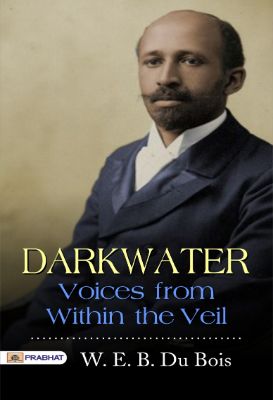
Darkwater, Voices from Within the Veil by W. E. B. Du Bois
These are the things of which men think, who live: of their own selves and the dwelling place of their fathers; of their neighbors; of work and service; of rule and reason and women and children; of Beauty and Death and War. To this thinking I have only to add a point of view: I have been in the world, but not of it. I have seen the human drama from a veiled corner, where all the outer tragedy and comedy have reproduced themselves in microcosm within. From this inner torment of souls the human scene without has interpreted itself to me in unusual and even illuminating ways. For this reason, and this alone, I venture to write again on themes on which great souls have already said greater words, in the hope that I may strike here and there a half-tone, newer even if slighter, up from the heart of my problem and the problems of my people.

Dasharath : Man of Words by Rajendra Arun
In the epic Ramcharitmanas, which revolves around the life and times of Lord Rama, the character of Dashrath stands alone and apart. He gets the honour of being the father of Shri Rama who is an incarnation of none other than Lord Vishnu. Having the Lord as his son, Dashrath not only enjoyed his status but also paid a price as well. This is in line with the fundamental rule in the world that the more valuable the item you seek, the more the price you have to pay. Dasharath always passed successfully those acid tests that Destiny put him to. It is the love and adherence to truth in his life that attracts one the most. The dignity of the character of Ayodhya’s king Dashrath is such that the he lived for ideals and eventually died for them. In adversity, when an ordinary human being would run for his life, Dashrath gave up hi life only to honour his pledge. Only such lives as that of Dashrath become sources of inspiration for the generations to come. A society that stops producing great men stifles the growth of not only its present but of its future also. Dasharath, thus, is a symbol of our desire to have a great society. This book dignifies the role of Dashrath in Ramcharitmanas. About The Author: Rajendra Arun has his own place among the narrators of Ramcharitmanas. He is unique in his style, as he engages his audience and readers in a manner that is neither unnecessarily melodramatic nor philosophically dry. He narrates the story of Ramayana in a very articulate and lucid way so that the listeners while enjoying it, are immensely inspired. He has earned the adulation of his readers and recognition of critics and institutions around the world. Rajendra Arun was born on July 29, 1945 in Naravapitambarpur village in Faizabad district, Uttar Pradesh, India. He adopted journalism after acquiring a Masters in Hindi from Allahabad University.

Dattopant Thengadi the Activist Parliamentarian by Navin Kalingan, Anirban Ganguly
The dimension of Dattopant Thengadi, founder of the largest trade union movement in India, that has been brought out in this volume is his role as an activist parliamentarian through his debates in the Rajya Sabha for two terms from 1964 to 1976. What stands out from the extracts of his speeches in Parliament are his meticulous presentation of facts, highly referenced propositions and dignified response to counter viewpoints. His intense intellectualism and his diverse fields of knowledge are manifest in the range of subjects Thengadi handled, each an area of specialisation for an expert.
This volume is a lesson for young and elder parliamentarians of today on how to be an efficient, a competent and an elegant parliamentarian. To those interested in post-independence India’s political evolution, this volume provides a window through Thengadi’s political activism in his two terms in Parliament which spanned some of the most momentous developments in India’s political history after independence.

David Copperfield by Charles Dickens
David Copperfield, is the eighth novel by Charles Dickens. The novel’s full title is, The Personal History, Adventures, Experience and Observation of David Copperfield the Younger of Blunderstone Rookery.

David Poindexter’s Disappearance, and Other Tales by Julian Hawthorne
Among the records of the English state trials are to be found many strange stories, which would, as the phrase is, make the fortune of a modern novelist. But there are also numerous cases, not less stimulating to imagination and curiosity, which never attained more than local notoriety, of which the law was able to take but comparatively small cognizance, although they became subjects of much unofficial discussion and mystification. Among these cases none, perhaps, is better worth recalling than that of David Poindexter. It will be my aim here to tell the tale as simply and briefly as possible—to repeat it, indeed, very much as it came to my ears while living, several years ago, near the scene in which its events took place. There is a temptation to amplify it, and to give it a more recent date and a different setting; but (other considerations aside) the story might lose in force and weight more than it would thereby gain in artistic balance and smoothness.

Days to Remember: The British Empire in the Great War by John Buchan
“It is never easy to fix upon one cause as the origin of a great war, and the war of 1914 was the outcome of several causes combined. For twenty years there had been growing up in Europe a sense of insecurity; the great Powers had become restless and suspicious of one another, and one Power, Germany, was seriously considering the possibility of some bold stroke which would put her beyond the reach of rivalry. Germany, since her victory over France in 1870, had become a very great and rich nation; she had spread her commerce over the world; and she was anxious to create an empire akin to those of Britain and France. But she began the task too late in the day; she could succeed only at the expense of her neighbours. The ambition of Germany was, therefore, one perpetual source of danger.” -an excerpt
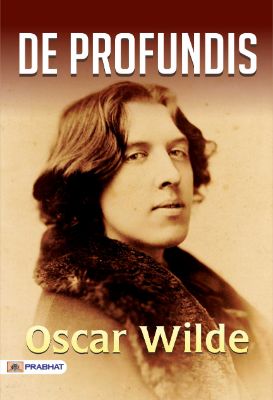
De Profundis by Oscar Wilde
. . . Suffering is one very long moment. We cannot divide it by seasons. We can only record its moods, and chronicle their return. With us time itself does not progress. It revolves. It seems to circle round one centre of pain. The paralysing immobility of a life every circumstance of which is regulated after an unchangeable pattern, so that we eat and drink and lie down and pray, or kneel at least for prayer, according to the inflexible laws of an iron formula: this immobile quality, that makes each dreadful day in the very minutest detail like its brother, seems to communicate itself to those external forces the very essence of whose existence is ceaseless change. Of seed-time or harvest, of the reapers bending over the corn, or the grape gatherers threading through the vines, of the grass in the orchard made white with broken blossoms or strewn with fallen fruit: of these we know nothing and can know nothing.
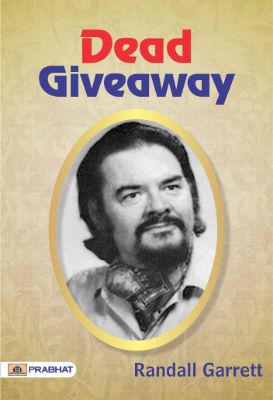
Dead Giveaway by Randall Garrett
The present book titled ‘Dead Giveaway’ was written by Randall Garrett. It was “produced from Astounding Science Fiction August 1959.”

Dead Men’s Money by J. S. Fletcher
The very beginning of this affair, which involved me, before I was aware of it, in as much villainy and wickedness as ever man heard of, was, of course, that spring evening, now ten years ago, whereon I looked out of my mother’s front parlour window in the main street of Berwick-upon-Tweed and saw, standing right before the house, a man who had a black patch over his left eye, an old plaid thrown loosely round his shoulders, and in his right hand a stout stick and an old-fashioned carpet-bag. He caught sight of me as I caught sight of him, and he stirred, and made at once for our door.
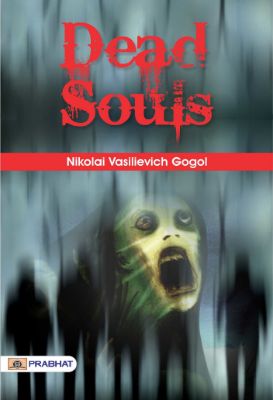
Dead Souls by Gogol, Nikolai
First published in the year 1842, Russian writer-activist Nikolai Gogol’s book ‘Dead Souls’ was one of the most appreciated satirical works of the 19th century Russian literature. The purpose of the novel was to demonstrate the flaws and faults of the Russian mentality and character.

Death in Venice by Thomas Mann;Joachim Neugroschel
I knew of the plot of the book so I was ready to dive into a whirl of emotions. No – this is not how Mann writes. We follow the story of Gustav von Aschenbach, a middle-aged man who is at the height of recognition as an artist and basically on the verge of going downhill. He tries to find inspiration anywhere, and this has to be Venice. From the beginning, I could not sympathise with him. Because the story is told by an unknown third person, I find there is too much distance between myself and the main character. While I can read about his struggle, it felt like reading a report on some unknown soldier in a far-away land. How much more impressive it would have been had I been reading Gustav’s own thoughts and fears and expectations! That was a point I was really astonished with and it triggered a bit of research into Mann’s point of view: It turns out that the story of this book is based on Mann’s own experience. This put everything into a new perspective: did Mann deliberately want to “tone down” the connection between Gustav and himself? Was he afraid that if he had the protagonist talk for himself, he might have revealed more than he was comfortable with? And why should he be uncomfortable?
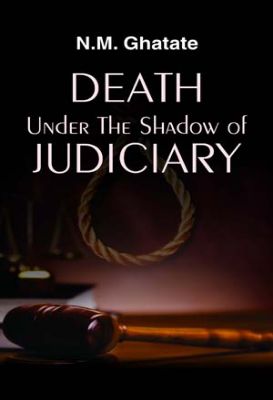
Death Under the Shadow of Judiciary by Dr. N.M. Ghatate
Rendering punishment by death is one of the forms of punishment that have been employed through the ages. It is one of the severest punishments. Extinguishing a life is not an ordinary incident and the means employed are also out of the ordinary. Right from early ages, the mode of conducting this punishment varied from place to place, country to country and time to time.
This book chronicles the various modes of execution employed from the medieval to the present time, the nature of the case which prompted such a sentence, various cases and the laws behind them.
Although majority of the countries have abolished this kind of punishment, there are still some countries where it is prevalent. Around sixty percent of the population lives in such countries. A study of global trends as a whole and more specifically the United States and India, where this trend still exists, has been conducted in this book. It also critically examines procedural precautions taken in the execution.
The book is replete with maps, statistics, charts and diagrams showing the public opinion on the subject in the world and the impact of international terrorism to national security on the issue of death punishment. Some of the leading cases in the US and India have been examined, especially that of Deena, which is the only case in India where the judiciary deliberated on the method of execution of death by hanging.