
Classic Books
Showing 551–600 of 4246 results

Books and Habits, from the Lectures of Lafcadio Hearn by Lafcadio Hearn
These chapters, for the most part, are reprinted from Lafcadio Hearn’s “Interpretations of Literature,” 1915, from his “Life and Literature,” 1916, and from his “Appreciations of Poetry,” 1917. Three chapters appear here for the first time. They are all taken from the student notes of Hearn’s lectures at the University of Tokyo, 1896-1902, sufficiently described in the earlier volumes just mentioned. They are now published in this regrouping in response to a demand for a further selection of the lectures, in a less expensive volume and with emphasis upon those papers which illustrate Hearn’s extraordinary ability to interpret the exotic in life and in books.
Boon, The Mind of the Race, The Wild Asses of the Devil, and The Last Trump; by Herbert George Wells
Whenever a publisher gets a book by one author he wants an Introduction written to it by another, and Mr. Fisher Unwin is no exception to the rule. Nobody reads Introductions, they serve no useful purpose, and they give no pleasure, but they appeal to the business mind, I think, because as a rule they cost nothing. At any rate, by the pressure of a certain inseparable intimacy between Mr. Reginald Bliss and myself, this Introduction has been extracted from me. I will confess that I have not read his book through, though I have a kind of first-hand knowledge of its contents, and that it seems to me an indiscreet, ill-advised book….
Boris Godunov by Alexsander Pushkin
BORIS GODUNOV, afterwards Tsar.
PRINCE SHUISKY, Russian noble.
PRINCE VOROTINSKY, Russian noble.
SHCHELKALOV, Russian Minister of State.
FATHER PIMEN, an old monk and chronicler.
GREGORY OTREPIEV, a young monk, afterwards the Pretender
to the throne of Russia.
THE PATRIARCH, Abbot of the Chudov Monastery.
MISSAIL, wandering friar.
VARLAAM, wandering friar.
Born in Exile by George Gissing
Born in Exile’ is a novel by George Gissing first published in 1892. It deals with the themes of class, religion, love and marriage. The premise of the novel is drawn from Gissing’s own early life — an intellectually superior man born into a socially inferior milieu, though the story arc diverges significantly from the actuality.

Bosambo of the River by Edgar Wallace
To assure themselves of Bosambo’s obedience, the Government of Liberia set over him a number of compatriots, armed with weapons which had rendered good service at Gettysburg, and had been presented to the President of Liberia by President Grant. They were picturesque weapons, but they were somewhat deficient in accuracy, especially when handled by the inexpert soldiers of the Monrovian coast. Bosambo, who put his axe to an ignoble use, no less than the slaying of Captain Peter Cole—who was as black as the ten of clubs, but a gentleman by the Liberian code—left the penal settlement with passionate haste. The Gettysburg relics made fairly good practice up to two hundred yards, but Bosambo was a mile away before the guards, searching the body of their dead commander for the key of the ammunition store, had secured food for their lethal weapons.

Botchan by Natsume Sōseki
The present novel ‘Botchan’ was written by famous Japanese writer Natsume Sōseki. It was first published in the year 1906 and got a lot of appreciation. It was also taught in schools in japan for a long time.
Bound to Rise by Horatio Alger
“Sit up to the table, children, breakfast’s ready.”
The speaker was a woman of middle age, not good-looking in the ordinary acceptation of the term, but nevertheless she looked good. She was dressed with extreme plainness, in a cheap calico; but though cheap, the dress was neat. The children she addressed were six in number, varying in age from twelve to four. The oldest, Harry, the hero of the present story, was a broad-shouldered, sturdy boy, with a frank, open face, resolute, though good-natured.

Boy Scouts Handbook by Boy Scouts of America
First released in 1910, ‘Boy Scouts Handbook’ of Boy Scouts of America is a descendant of Baden-Powell’s original handbook, Scouting for Boys, which has been the basis for Scout handbooks in many countries, with some variations to the text of the book depending on each country’s codes and customs.
Boycotted, and Other Stories by Talbot Baines Reed
I hardly know yet what it was all about, and at the time I had not an idea. I don’t think I was more of a fool than most fellows of my age at Draven’s, and I rather hope I wasn’t an out-and-out cad.
But when it all happened, I had my doubts on both points, and could explain the affair in no other way than by supposing I must be like the lunatic in the asylum, who, when asked how he came to be there, said, “I said the world was mad, the world said I was mad; the world was bigger than I was, so it shut me up here!”
Boyhood by Leo Tolstoy
Boyhood’s young narrator grew up in a small country town. With a father he imitated but could not respect, and a mother he both adored and resented, he picked his way through a world that refused to explain its rules, but whose rules he knew he must obey. Steering between these contradictions, Boyhood evokes the tensions, delights and terrors of childhood with startling, haunting immediacy. Coetzee examines his young self with the dispassionate curiosity of an explorer rediscovering his own early footprints, and the account of his progress is bright, hard and simply compelling.

Brain Twister by Randall Garrett and Laurence M. Janifer
BRAIN TWISTER was fifteen years in the making, of which time three days were spent in the actual writing. When the book was finished, both authors relaxed in the mutual pleasure of nervous breakdowns, from which it is not certain that either has ever recovered.

Brand Ramdev by A.K. Gandhi
Baba Ramdev has made the ancient Yoga and herbs relevant in the modern times. He is the harbinger of ancient wisdom in the present times, so it becomes necessary to look into his life and way of living, his thinking and his doctrine, and his way of working and way of conducting himself in public life, all of which have contributed to present him to the world like a brand: a brand everybody is after, a brand everybody adores and a brand that even multinational companies envy.
Brave and Bold; Or, The Fortunes of Robert Rushton by Jr. Horatio Alger
First published in the year 1874, ‘Brave and Bold; or, The Fortunes of Robert Rushton’ is part of a series of rags to riches stories of boys working hard and achieving the American dream of wealth. The stories can be seen as tracing American cultural and social patterns.

Brave Men and Women: Their Struggles, Failures, And Triumphs by Osgood E. Fuller
Struggle, failure, triumph: while triumph is the thing sought, struggle has its joy, and failure is not without its uses.
“It is not the goal,” says Jean Paul, “but the course which makes us happy.” The law of life is what a great orator affirmed of oratory–“Action, action, action!” As soon as one point is gained, another, and another presents itself.
“It is a mistake,” says Samuel Smiles, “to suppose that men succeed through success; they much oftener succeed through failure.” He cites, among others, the example of Cowper, who, through his diffidence and shyness, broke down when pleading his first cause, and lived to revive the poetic art in England; and that of Goldsmith, who failed in passing as a surgeon, and yet wrote the “Deserted Village” and the “Vicar of Wakefield.” Even when one turns to no new course, how many failures, as a rule, mark the way to triumph, and brand into life, as with a hot iron, the lessons of defeat!

Brave New World by Aldous Huxley
Brave New World is Aldous Huxley’s 1932 dystopian novel. Borrowing from The Tempest , Huxley imagines a genetically-engineered future where life is pain-free but meaningless. The book heavily influenced George Orwell’s 1984 and science-fiction in general.

Brazil and Her People of To-day by Nevin O. Winter
The favourable reception given by the public to the two previous books, “Mexico and Her People of To-day” and “Guatemala and Her People of To-day,” induced the writer to continue his studies of the Latin-American countries and people. To this end an extensive trip was made through several of the republics on that great continent to the south of us, and this work is the first result of that journey.

Bressant: A Novel by Julian Hawthorne
One warm afternoon in June—the warmest of the season thus far—Professor Valeyon sat, smoking a black clay pipe, upon the broad balcony, which extended all across the back of his house, and overlooked three acres of garden, inclosed by a solid stone-wall. All the doors in the house were open, and most of the windows, so that any one passing in the road might have looked up through the gabled porch and the passage-way, which divided the house, so to speak, into two parts, and seen the professor’s brown-linen legs, and slippers down at the heel, projecting into view beyond the framework of the balcony-door. Indeed—for the professor was an elderly man, and, in many respects, a creature of habit—precisely this same phenomenon could have been observed on any fine afternoon during the summer, even to the exact amount of brown-linen leg visible.
Brewster’s Millions by George Barr McCutcheon
The most popular man in the company was young “Monty” Brewster. He was tall and straight and smooth-shaven. People called him “clean-looking.” Older women were interested in him because his father and mother had made a romantic runaway match, which was the talk of the town in the seventies, and had never been forgiven. Worldly women were interested in him because he was the only grandson of Edwin Peter Brewster, who was many times a millionaire, and Monty was fairly certain to be his heir—barring an absent-minded gift to charity. Younger women were interested for a much more obvious and simple reason: they liked him. Men also took to Monty because he was a good sportsman, a man among men, because he had a decent respect for himself and no great aversion to work.
—from this book
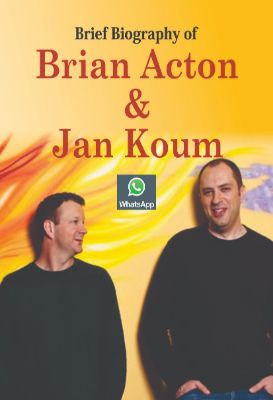
Brian Acton and Jan Koum by Kalyani Mookherji
Brian Acton was born on February 24, 1972 in Michigan but as his family moved to Central Florida, he grew up in the balmy environs of the Sunshine state. His mother was an entrepreneur herself and used to run a successful freight-shipping firm which in turn gave young Acton valuable insight into running a business and meeting payroll.
Unlike Acton, Jan Koum saw tough days in early childhood. Koum was born in Kyiv, Ukraine February 24, 1976. He arrived in the US when his mother and grandmother immigrated to Mountain View, California in 1992. Initially the family had to take recourse to a social support program to get a small two-bedroom apartment.

Bridging Global Indian Diaspora by Dr. Bhishma Agnihotri
In 2001, Indian Prime Minister Atal Bihari Vajpayee asked Bhishma Agnihotri to serve as the nation’s first Ambassador-at-Large for the Indian diaspora. Agnihotri, a non-resident Indian (NRI), had been serving as the chancellor of Southern University’s Law Center, but he readily agreed to accept the position. Although he faced opposition in India to his appointment as ambassador, he was officially appointed in 2001 and moved from Baton Rouge, Louisiana to New York just days after the September 11th terrorist attacks. His mandate from Prime Minister Vajpayee was simple. He was charged with strengthening the relationship between the nation of India and the Indian diaspora and, at the same time, with helping to elevate India’s position in the world. Agnihotri travelled the world and met with NRIs and people of Indian origin (PIO). He worked with NRIs and PIOs from all backgrounds, genders, and religions in an attempt to strengthen their ties to their mother country. This book highlights
Dr. Agnihotri’s accomplishments as Ambassador-at-Large. It also touches on his journey from India to America to pursue higher education, becoming a chancellor of a law center, volunteering his time to many organisations, and moving on to the worthy task of Bridging Global Indian Diaspora.

Brief History of English and American Literature by Henry A. Beers
At the request of the publishers the undersigned has prepared this Introduction and two Supplementary Chapters on the Religious and Theological Literature of Great Britain and the United States. To the preacher in his preparation for the pulpit, and also to the general reader and student of religious history, the pursuit of the study of literature is a necessity. The sermon itself is a part of literature, must have its literary finish and proportions, and should give ample proof of a familiarity with the masterpieces of the English tongue.

British Museum (Natural History) General Guide by British Museum
This Guide is intended for the use of those visitors who wish merely to get a general idea of the arrangements and contents of the Natural History Museum.
Special Guides have been published for the use of visitors who wish to make a closer study of the collections; a list of them is given on pages 116–18.

Broken Brains by Arun K. Tiwari
This is a book about broken brains. The break between what is perceived, what is believed, and what is objectively real. Ultimate breaking away of the personality from the reality is called schizophrenia in the medical jargon. But there are many other dislocations, slips and cracks. These are called personality and mental disorders. Most of these destabilize young people in their prime almost derailing the journey of their destinies. Very sensitive minds of young children get burdened with terrible stress. They just act crazy in an effort to adapt to the reality around them. Is it not really a healthy response to an insane world? A brave act of survival!

Bronson Alcott’s Fruitlands by Louisa May Alcott and Clara Endicott Sears
For many years articles have appeared from time to time in magazines and books regarding the Community at Fruitlands, but it has remained for Miss Sears to gather them together with infinite patience for publication, and this little book is the result, the first connected story of the life and beliefs of that little Community which tried so hard to live according to its ideals in spite of criticism and censure and whose members nearly starved as a result of their devotion. -John S. P. Alcott.
Brood of the Witch-Queen by Sax Rohmer
Robert Cairn looked out across the quadrangle. The moon had just arisen, and it softened the beauty of the old college buildings, mellowed the harshness of time, casting shadow pools beneath the cloisteresque arches to the west and setting out the ivy in stronger relief upon the ancient walls. The barred shadow on the lichened stones beyond the elm was cast by the hidden gate; and straight ahead, where, between a quaint chimney-stack and a bartizan, a triangular patch of blue showed like spangled velvet, lay the Thames. It was from there the cooling breeze came.
But Cairn’s gaze was set upon a window almost directly ahead, and west below the chimneys. Within the room to which it belonged a lambent light played.

Brother Jacob by George Eliot
Among the many fatalities attending the bloom of young desire, that of blindly taking to the confectionery line has not, perhaps, been sufficiently considered. How is the son of a British yeoman, who has been fed principally on salt pork and yeast dumplings, to know that there is satiety for the human stomach even in a paradise of glass jars full of sugared almonds and pink lozenges, and that the tedium of life can reach a pitch where plum-buns at discretion cease to offer the slightest excitement?

Buddha’s Way of Virtue by W. D. C. Wagiswara And K. J. Saunders
Part of the Wisdom of the East series, The Buddha’s Way Of Virtue is a translation of the Dhammapada, which is a collection, in verse form, of the sayings of Buddha.

Buddhism and Buddhists in China by Lewis Hodus
From the Preface: ‘Buddhism is a religion which must be viewed from many angles. Its original form, as preached by Gautama in India and developed in the early years succeeding, and as embodied in the sacred literature of early Buddhism, is not representative of the actual Buddhism of any land today. The faithful student of Buddhist literature would be as far removed from understanding the working activities of a busy center of Buddhism in Burmah, Tibet or China today as a student of patristic literature would be from appreciating the Christian life of London or New York City.’
Buddhist Birth Stories: or, Jataka Tales, Vol – 1 by V. Fausboll
It is well known that amongst theBuddhist Scriptures there is one book in which a large number of old stories, fables, and fairy tales, lie enshrined in an edifying commentary; and have thus been preserved for the study and amusement of later times. How this came about is not at present quite certain. The belief of orthodox Buddhists on the subject is this. The Buddha, as occasion arose, was accustomed throughout his long career to explain and comment on the events happening around him, by telling of similar events that had occurred in his own previous births. The experience, not of one lifetime only, but of many lives, was always present to his mind; and it was this experience he so often used to point a moral, or adorn a tale.

Bullets & Billets by Bruce Bairnsfather
“Down South, in the Valley of the Somme, far from the spots recorded in this book, I began to write this story.
“In billets it was. I strolled across the old farmyard and into the wood beyond. Sitting by a gurgling little stream, I began, with the aid of a notebook and a pencil, to record the joys and sorrows of my first six months in France.” -Preface

Bunner Sisters by Edith Wharton
“In the days when New York’s traffic moved at the pace of the drooping horse-car, when society applauded Christine Nilsson at the Academy of Music and basked in the sunsets of the Hudson River School on the walls of the National Academy of Design, an inconspicuous shop with a single show-window was intimately and favourably known to the feminine population of the quarter bordering on Stuyvesant Square.” -an excerpt
Bureaucracy by Honoré de Balzac
In Paris, where men of thought and study bear a certain likeness to one another, living as they do in a common centre, you must have met with several resembling Monsieur Rabourdin, whose acquaintance we are about to make at a moment when he is head of a bureau in one of our most important ministries. At this period he was forty years old, with gray hair of so pleasing a shade that women might at a pinch fall in love with it for it softened a somewhat melancholy countenance, blue eyes full of fire, a skin that was still fair, though rather ruddy and touched here and there with strong red marks; a forehead and nose a la Louis XV., a serious mouth, a tall figure, thin, or perhaps wasted, like that of a man just recovering from illness, and finally, a bearing that was midway between the indolence of a mere idler and the thoughtfulness of a busy man

Buried Alive: A Tale of These Days by Arnold Bennett
The famous British author Arnold Bennett’s one of the wittiest and most charming novel ‘Buried Alive: A Tale of These Days’ was first published in the year 1950. The story is about Priam Faril who is an extremely famous but shy painter in the Europe. In order to get rid of excessive media attention, he assumes the identity of his valet Henry Leek, who has already died. Read this fascinating novel to know his adventures and tragedies on living an assumed identity.
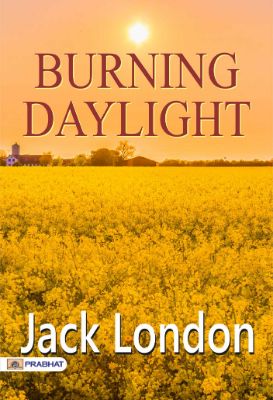
Burning Daylight by Jack London
First published in the year 1910, the present novel ‘Burning Daylight’ by Jack London takes place in the Yukon Territory in 1893. The main character, nicknamed “Burning Daylight” was the most successful entrepreneur of the Alaskan Gold Rush. The story of the main character was partially based upon the life of Oakland entrepreneur “Borax” Smith.
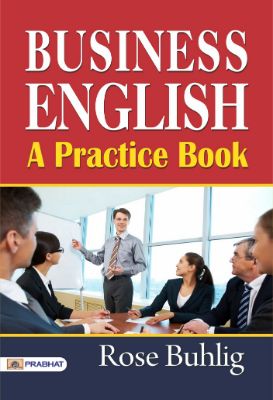
Business English: A Practice Book by Rose Buhlig
“To use our language effectively it is necessary to have an understanding of its elements. Thus the author has very wisely devoted much space to word-study and English grammar. This is a field commonly neglected in books on the subject. The people engaged in business are, on the whole, woefully weak in the grammar of our language. It is believed that the treatment herein will be a great aid in correcting this deficiency. If we have ideas, we must express them in words, and our words should be so chosen and arranged as not to offend, but to please and interest. This result can be secured by a systematic study of Part I.
“Part II deals with oral and written composition. Here the author has arranged her subjects in such a way as to give the whole a cumulative effect. The method throughout is inductive, and sufficient examples are always given to warrant the conclusions drawn. Most textbooks on Business English neglect the subject of oral English. This book regards the spoken word as important as the written word.” -Preface

Business Kohinoor Ratan Tata by B.C. Pandey
Gone are the days when India was seen as a country of snake charmers. The second most Progressive economy of the world, India is also home of world class Industrialist like Ratan Tata. Today Ratan Tata is one of the world’s top-most industrialists who took some far- reaching decisions in the fast changing Indian economic scenario. Tata is a household name in India. From salt to heavy military trucks are the products of Tata. You name one and Tata must be there. Ratan Tata has all what a man desire in his life Name, Fame and Riches. He is Chairman of the India’s most prestigious industrial house. The voyage of jamsetji to Ratan Tata has been presented in a reader’s friendly was This book is a sincere attempt to help you know more about Ratan Tam.

Buttered Side Down: Stories by Edna Ferber
Any one who has ever written for the magazines (nobody could devise a more sweeping opening; it includes the iceman who does a humorous article on the subject of his troubles, and the neglected wife next door, who journalizes) knows that a story the scene of which is not New York is merely junk. Take Fifth Avenue as a framework, pad it out to five thousand words, and there you have the ideal short story.
Consequently I feel a certain timidity in confessing that I do not know Fifth Avenue from Hester Street when I see it, because I’ve never seen it. It has been said that from the latter to the former is a ten-year journey, from which I have gathered that they lie some miles apart. As for Forty-second Street, of which musical comedians carol, I know not if it be a fashionable shopping thoroughfare or a factory district.

By the Way by R.K. Sinha
This book is a collection of well researched 66 articles of R.K. Sinha. The writer has taken special care to see to it that there is no deviation from the theme of the subject written about.
This is not the only introduction of the book. I would like to narrate a short story to unfold R.K. Sinha’s background as a journalist. I was in Patna some time back. I rang up my old friend and colleague Surendra Kishore and visited his new house. Rather calling him to meet me at some central place in Patna, I preferred to visit him at his new house. The reason was, Surendra Kishore is one of few journalists who has his ‘reference library’ built over decades with great care and interest. I wanted to see it.
When we were in conversation, it was difficult to miss reference of ‘Yathavat’, a fortnightly magazine in Hindi published from Delhi which I edit and R.K. Sinha is its Chairman. When Sinha’s name cropped up in discussion, Surendra Kishore recalled an incident, some 50 years ago which proved a turning point in the life of Suendraji.
In 1960s, R.K. Sinha, who wrote with his full name in credit line as ‘Ravindra Kishore Sinha’ was an icon for journalists then. There was flow and consistency in R.K. Sinha’s writings. Impressed by Sinha’s style of journalism, Surendraji added Kishore in his surname and from ‘Surendra Akela’ he became Surendra Kishore.
—Rambahadur Rai

Cabbages and Kings by O. Henry
They will tell you in Anchuria, that President Miraflores, of that volatile republic, died by his own hand in the coast town of Coralio; that he had reached thus far in flight from the inconveniences of an imminent revolution; and that one hundred thousand dollars, government funds, which he carried with him in an American leather valise as a souvenir of his tempestuous administration, was never afterward recovered.
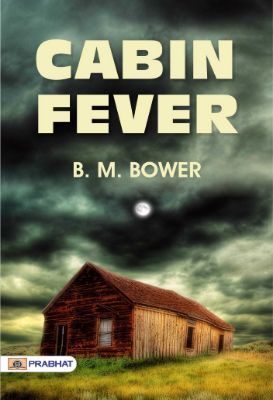
Cabin Fever by B. M. Bower
First published in the year 1918, the present book ‘Cabin Fever’ is a fictional novel by the famous American writer B. M. Bower.

Cædwalla by Frank Cowper
Frank Cowper is known for his writing of historical stories in a style of fictional narrative. ‘Caedwalla’ is a story of the Saxon Outlaw King Cædwalla and his conquest of the Isle of Wight in the 7th century.

Calculus Made Easy by Silvanus P. Thompson
Calculus Made Easy
Being myself a remarkably stupid fellow, I have had to unteach myself the difficulties, and now beg to present to my fellow fools the parts that are not hard. Master these thoroughly, and the rest will follow. What one fool can do, another can.
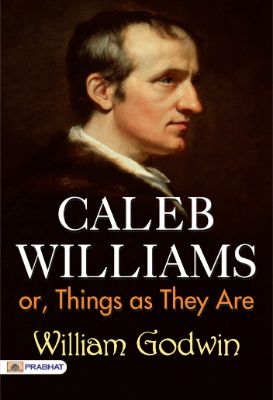
Caleb Williams; or, Things as They Are by William Godwin
The reputation of WILLIAM GODWIN as a social philosopher, and the merits of his famous novel, “Caleb Williams,” have been for more than a century the subject of extreme divergencies of judgment among critics.

Calvert and Penn by Brantz Mayer
t is a venerable and beautiful rite which commands the Chinese not only to establish in their dwellings a Hall of Ancestors, devoted to memorials of kindred who are dead, but which obliges them, on a certain day of every year, to quit the ordinary toils of life and hasten to the tombs of their Forefathers, where, with mingled services of festivity and worship, they pass the hours in honoring the manes of those whom they have either loved or been taught to respect for their virtues.

Camilla by Fanny Burney
In those to whom Your Majesty is known but by exaltation of Rank, it may raise, perhaps, some surprise, that scenes, characters, and incidents, which have reference only to common life, should be brought into so august a presence; but the inhabitant of a retired cottage, who there receives the benign permission which at Your Majesty’s feet casts this humble offering, bears in mind recollections which must live there while ‘memory holds its seat,’ of a benevolence withheld from no condition, and delighting in all ways to speed the progress of Morality, through whatever channel it could flow, to whatever port it might steer. I blush at the inference I seem here to leave open of annexing undue importance to a production of apparently so light a kind—yet if my hope, my view—however fallacious they may eventually prove, extended not beyond whiling away an idle hour, should I dare seek such patronage?
Camille by Alexandre Dumas
In my opinion, it is impossible to create characters until one has spent a long time in studying men, as it is impossible to speak a language until it has been seriously acquired. Not being old enough to invent, I content myself with narrating, and I beg the reader to assure himself of the truth of a story in which all the characters, with the exception of the heroine, are still alive.

Can Such Things Be? by Ambrose Bierce
A collection of speculative short stories by the renowned American writer Ambrose Bierce, ‘Can Such Things Be?’ was first published in 1890s. An interesting and engaging collection for those who like detective and mysterious literature.

Can You Forgive Her? by Anthony Trollope
First published in the year 1864, the present novel ‘Can You Forgive Her?’ by Anthony Trollope follows three parallel stories of courtship and marriage and the decisions of three strong women: Alice Vavasor, her cousin Glencora Palliser, and her aunt Arabella Greenow. Early on, Alice asks the question “What should a woman do with her life?” This theme repeats itself in the dilemmas faced by the other women in the novel. Lady Glencora and her husband Plantagenet Palliser recur in the remainder of the Palliser series.

Cancer—Its Cause and Treatment, Volume 1 (of 2) by Lucius Duncan Bulkley
Cancer has hitherto been regarded almost wholly from its histological and surgical aspects. The investigators and practitioners along these lines have been innumerable, the work done prodigious, and the literature relating thereto enormous.
Candida by George Bernard Shaw
This desert of unattractiveness has its oasis. Near the outer end of the Hackney Road is a park of 217 acres, fenced in, not by railings, but by a wooden paling, and containing plenty of greensward, trees, a lake for bathers, flower beds with the flowers arranged carefully in patterns by the admired cockney art of carpet gardening and a sandpit, imported from the seaside for the delight of the children, but speedily deserted on its becoming a natural vermin preserve for all the petty fauna of Kingsland, Hackney and Hoxton. A bandstand, an unfinished forum for religious, anti-religious and political orators, cricket pitches, a gymnasium, and an old fashioned stone kiosk are among its attractions. Wherever the prospect is bounded by trees or rising green grounds, it is a pleasant place. Where the ground stretches far to the grey palings, with bricks and mortar, sky signs, crowded chimneys and smoke beyond, the prospect makes it desolate and sordid.