
Smart Premium Books
Showing 901–950 of 10122 results
An Account of the Growth of Deism in England by William Stephens
First published in the year 1696, the present book ‘An Account of the Growth of Deism in England’ by the famous anthropologist, historian William Stephens gives a concise religious history of the spread of deism in England.

An Address to a Wealthy Libertine by James Parkerson
Believe me, Sir; I do these lines impart
With every pang that can corrode the heart;
Bring to your mind a dismal scene late past,
And let that guilty Amour be your last.
Think of my friend that was of late so gay,
By your vile arts dishonour’d and away;
From every joy that animates this life,
The tender mother and the happy wife.
A husband’s frowns, a father’s burning tears,
For Stella’s folly much increase their cares.

An Address to Free Colored Americans
The first Anti-Slavery Convention of American Women met in New York City in May, 1837. Members at the Convention came from all walks of life and included such prominent women as Mary Parker, Lucretia Mott, the Grimke sisters, and Lydia Maria Child. One outcome of this important event was a statement of the organization?s role in the abolitionist movement as expressed in AN ADDRESS TO FREE COLORED AMERICANS, which begins: ?The sympathy we feel for our oppressed fellow-citizens who are enslaved in these United States, has called us together, to devise by mutual conference the best means for bringing our guilty country to a sense of her transgressions; and to implore the God of the oppressed to guide and bless our labors on behalf of our “countrymen in chains.” This significant event was a precursor to the growing women?s rights movement of the time and to greater female involvement in other political reform movements. (Summary by lubee930)
An Advanced English Grammar with Exercises by Farley and Kittredge
This grammar is intended for students who have already received instruction in the rudiments. Still, every such textbook must begin at the beginning. gives a succinct treatment of the Parts of Speech in the Sentence and of their substitutes, the Phrase and the Clause, concluding with a Summary of Definitions. Thus it clears the way for what follows, and may be utilized as a review, if the student needs to refresh his memory.
—From this Book
An African Millionaire: Episodes in the Life of the Illustrious Colonel Clay
“My name is Seymour Wilbraham Wentworth. I am brother-in-law and secretary to Sir Charles Vandrift, the South African millionaire and famous financier. Many years ago, when Charlie Vandrift was a small lawyer in Cape Town, I had the (qualified) good fortune to marry his sister. Much later, when the Vandrift estate and farm near Kimberley developed by degrees into the Cloetedorp Golcondas, Limited, my brother-in-law offered me the not unremunerative post of secretary; in which capacity I have ever since been his constant and attached companion.” An illustrious scientist, Allen came to fiction as a more lucrative avenue than more serious writing. As well as writing ghost and detective stories, he introduced us to the illustrious Colonel Clay, a precursor of other gentleman rogue characters; he notably bears a strong resemblance to Maurice Leblanc’s Ars?ne Lupin, introduced some years later. – Summary by Lynne Thompson, quote from the first chapter
An Afternoon in July
LibriVox volunteers bring you 14 recordings of An Afternoon in July by Rosanna Eleanor Leprohon. This was the Fortnightly Poetry project for July 7, 2013. Rosanna Eleanor Leprohon, born Rosanna Eleanor Mullins, was a Canadian writer and poet. She was “one of the first English-Canadian writers to depict French Canada in a way that earned the praise of, and resulted in her novels being read by, both anglophone and francophone Canadians.” Leprohon’s novels were popular in both English and French Canada in the late 19th-century, and were still being reprinted in French in the mid-1920s. They gradually went out of fashion in the early 20th-century, as literary styles changed. “Since 1970, however,”says the Dictionary of Literary Biography, “the life and works of Rosanna Eleanor Mullins Leprohon have been frequently noted and increasingly praised by critics and scholars of both English-and French-Canadian literature, and new editions of her works have been published.” (Summary by Wikipedia)

An Agricultural by SIR ALBERT HOWARD, C.l.E., M.A.
“Since the Industrial Revolution the processes of growth have been speeded up to produce the food and raw materials needed by the population and the factory. Nothing effective has been done to replace the loss of fertility involved in this vast increase in crop and animal production. The consequences have been disastrous. Agriculture has become unbalanced: the land is in revolt: diseases of all kinds are on the increase: in many parts of the world Nature is removing the worn-out soil by means of erosion.” -Preface
An Alabama Student And Other Biographical Essays
Here are thirteen biographical sketches of physicians penned by one of the founders of modern medicine, William Osler, published in 1908. “Sir William Osler, one of the best-loved and most influential teachers of his time, was born in Canada in 1849?. Wherever he worked his gifted and unique personality was a center of inspiration? one would like to see his honorable place as a man of letters more generally understood. His generous wisdom and infectious enthusiasm are delightfully expressed in his collected writings?. His lucid and exquisite prose, with its extraordinary wealth of quotation from the literature of all ages, and his unfailing humor and tenderness, put him in the first rank of didactic essayists?. Rich in every gentle quality that makes life endeared, his books are the most sagacious and helpful of modern writings?” – Summary by Christopher Morley, Modern Essays, 1921, and David Wales
An Alphabet of History
An alphabet of historical characters presented in poetical form! In their original form, the contents of this book appeared in the Chicago Sunday Tribune, which newspaper is hereby thanked for the privilege of reproducing this Alphabet (Summary from the Acknowledgment and Ann Boulais) Who frets about the mystery Enshrouding all of history On reading this will, maybe, see We’ve made it plain as A, B, C.

An Ambitious Man by Wilcox, Ella Wheeler
When Miss Lawrence’s mother, a nervous invalid, was informed of her daughter’s engagement, she burst into tears, as over a lamb offered on the altar of sacrifice; and Judge Lawrence pressed a kiss on the lobe of Mabel’s left ear which she offered him, and told her she had won a prize in the market. But as he sat alone over his cigar that night, he sighed heavily, and said to himself, “Poor fellow, I wish Mabel were not so much like her mother.”—from book

An American Idyll: The Life of Carlton H. Parker
In a memoir marked by joy, love, and an unbending sense of adventure, Cornelia Stratton Parker reveals the heart of a unique man and their life together. As a member of California’s turn-of-the-20th-century Immigration and Housing Commission, Carlton H. Parker came to understand the problems surrounding migrant camps and the labor movement in general. In this volume she recounts his undertakings in that regard and their family life. – Summary by Mary Schneider
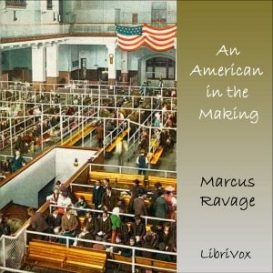
An American in the Making, the Life Story of an Immigrant
?The sweat-shop was for me the cradle of liberty. . . It was my first university.? Attending lectures and the New York theatre at night; by day sewing sleeves into shirts in a ghetto shop, Marcus Eli Ravage (1884-1965) began his transformation from ?alien? to American. His 1917 autobiography is a paean to the transformative power of education. Ravage emigrated from Rumania in 1900, at the age of 16. After working for several years as a ?sleever? to save money, he enrolls in the University of Missouri (the least expensive school he can find), where culture shock overwhelms him at first. ?I was not sure whether it was a pig or a sheep that bleated, whether clover was a plant and plover a bird, or the other way around.? But he adapts, and eventually embraces ?the bigger and freer world? outside the immigrant ghetto. He writes that, because of his university experience, he was no longer ?a man without a country.? He had become an American. – Summary by Sue Anderson
An American Politician
In 1880?s Boston, Mass. the good life is lead according to all the Victorian era societal rules of the New World. Political ambitions and the business of making money go hand in hand. A Senate seat suddenly opens up due to the current junior senator?s unexpected death, and the political machinations to fill the seat begin. Senatorial candidate John Harrington is a young idealist who thinks that fighting for truth and justice, regardless of political affiliation, is the way. But he is told he can?t possibly win because he isn?t partisan enough. His opponents in the iron mine, railroad and shipping business sabotage his first bid for office, because he wants to do away with protectionism in trade to open up global competition. He eventually succeeds in winning a Senate seat. He gives a rousing speech to Congress as they gather to elect a President in a race which has ended in a three way tie. His message is that blindly following a party?s positions and principles is not being free and independent, and will not always lead to the best person being elected, or to the best decisions being made for the country as a whole. (Summary written by Maire Rhode)
An American Robinson Crusoe
An American Robinson Crusoe is a short version of the original story. An indolent, rebellious teen goes on a marine voyage against his parents’ wishes. The ship (and all of its crew) is lost in a storm, but Robinson makes it to a deserted island. He has no tools, no weapons, but he lives for over 28 years on the island. He befriends many animals on the island and after over 20 years living solo, he is joined by a young “savage” who becomes his constant companion. The transformation from the young, lazy teen to a self-sustaining, incredibly knowledgeable adult is one of the major themes in the story. (Summary by: Allyson Hester)
An American Tragedy, Volume 1
Loosely based on a true story, this is the tale of Clyde Griffiths. At a young age, Clyde realizes that money and influence can get him the finer things in life. As a young man, he finds himself torn between the poor but virtuous Roberta, and Sondra the wealthy socialite. Can there be a happy resolution to this love triangle? Follow Clyde throughout his young life as he struggles to figure out whether he can truly have everything he wants. This is volume 1 of 2. – Summary by Tatiana Chichilla
An American Tragedy, Volume 2
The saga of Clyde, Roberta, and Sondra continues in volume 2 of 2. Social-climbing Clyde Griffiths wants nothing more than to marry the wealthy Sondra Finchley and ascend to the highest levels of Upstate New York society. However, there is a glaring obstacle in his way: Roberta’s pregnancy. Both had hoped to keep their illicit relationship a secret, but if Clyde can’t find a doctor willing to help them, something must be done. Perhaps something drastic . . . The tense and thrilling conclusion to Dreiser’s genre-defining novel of love, pain, the law, and the spirit. – Summary by Tatiana Chichilla

An American Vendetta: A Story of Barbarism in the United States
The phrase “The Hatfields and McCoys” conjures up images of feudal warfare and Appalachian backwardness even to this day. This is a sensationalized account of the feud between the Hatfields and McCoys along the mountainous border of Kentucky and West Virginia in the late 1800s. At the height of the feud in 1888, yellow journalist T. C. Crawford interviewed Anderson “Devil Anse” Hatfield in person at his headquarters in West Virginia. Crawford’s stories were serialized in a New York newspaper and later published in book form. The accounts of the Hatfields and McCoys led to the still-common, unfair stereotype of the ignorant, backward, trigger-happy mountaineer. While the violence in the Wild West was romanticized, the violence in the Appalachians was vilified and exaggerated. The resulting sentiment was that the mountain folk needed civilizing, which the railroad and coal mining capitalists were eager to provide . . . in exchange for their land, autonomy, and generally happy way of life. (Summary by TriciaG) NOTE: There are two chapters named “Chapter III” and no Chapter V in this book. The two chapter 3s have been labeled as Chapter IIIa and IIIb.
An Amiable Charlatan
An Englishman is enjoying his dinner at Stephano’s, at which he is a regular diner. A man enters quickly, sits at his table, starts eating his food, and hands him a packet underneath the table! So begins Paul Walmsley’s acquaintance – and adventures – with American adventurer Joseph H. Parker and his lovely daughter, Eve. (Intro by TriciaG) Note that there is an alternate reading of section 8. Both are excellent renditions, so enjoy either or both of them.
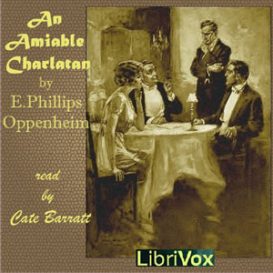
An Amiable Charlatan (version 2)
A lively adventure of a father-daughter con team enjoying themselves in Edwardian London. – Summary by Cate Barratt
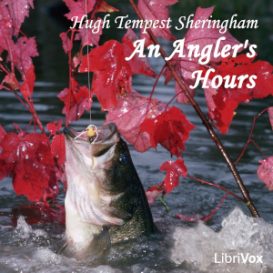
An Angler’s Hours
One of the classic British books about angling. The author?s love was fly fishing???while there are trout, life is worth living?? but he was no snob. An Angler?s Hours includes several chapters about coarse fishing (grayling, dace, chub, etc.) as well as a surprising account of the Japanese tenkara method as used in England. Sheringham’s style is similar to that of the much-loved B.B. (Denys Watkins-Pitchford) with a dash of P.G. Wodehouse. He doesn?t bore us with technical details but writes of the simple joys of angling?”a man who gazes at the wares in a tackle-shop on a sunny day in April has certainly a fishing expedition in prospect??not forgetting the pleasure of a nice pot of tea at the end of the day. Hugh Tempest Sheringham (1876 – 1930) was angling editor of The Field (London) and considered one of the premier British authors on freshwater angling both for his knowledge of the subject and readable style. – Summary by Adrian Praetzellis
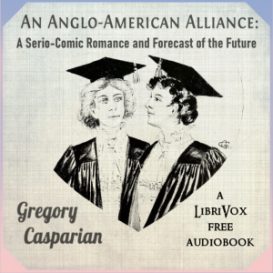
An Anglo-American Alliance: A Serio-Comic Romance and Forecast of the Future
Described by io9 as ?the first lesbian science fiction novel,? An Anglo-American Alliance is a quasi-farcical tale of love, transformation, and geopolitics set in the far-flung futuristic year of 1960. In it, the titular Anglo-American Alliance has established itself as the world government, ushering in new age of technological and social revolution. However, even in this halcyon period, the ?love that dare not speak its name? remains an anathema. The novel?s central narrative follows the long-burgeoning but secret romance between two women at a ladies? seminary school in Cornwall: Margaret MacDonald and Aurora Cunningham. Throughout this tale, we follow their trials and tribulations as they grapple with secret longings and learn how to harness the powers of science and technology to make their dreams come true. Note: Despite its fairly progressive views on sexuality and gender identity, this novel is nevertheless a byproduct of the period in which it was written. It contains unfortunate moments of ethnocentrism, antisemitism, and casual racism that might offend certain listeners. – Summary by ChuckW
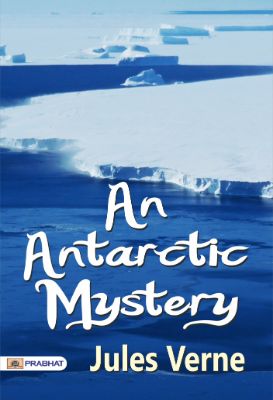
An Antarctic Mystery by Jules Verne
No doubt the following narrative will be received with entire incredulity, but I think it well that the public should be put in possession of the facts narrated in “An Antarctic Mystery.” The public is free to believe them or not, at its good pleasure.

An Apache Princess: A Tale of the Indian Frontier by Charles King
Under the willows at the edge of the pool a young girl sat daydreaming, though the day was nearly done. All in the valley was wrapped in shadow, though the cliffs and turrets across the stream were resplendent in a radiance of slanting sunshine. Not a cloud tempered the fierce glare of the arching heavens or softened the sharp outline of neighboring peak or distant mountain chain. Not a whisper of breeze stirred the drooping foliage along the sandy shores or ruffled the liquid mirror surface. Not a sound, save drowsy hum of beetle or soft murmur of rippling waters, among the pebbly shallows below, broke the vast silence of the scene. The snow cap, gleaming at the northern horizon, lay one hundred miles away and looked but an easy one-day march. The black upheavals of the Matitzal, barring the southward valley, stood sullen and frowning along the Verde, jealous of the westward range that threw their rugged gorges into early shade.
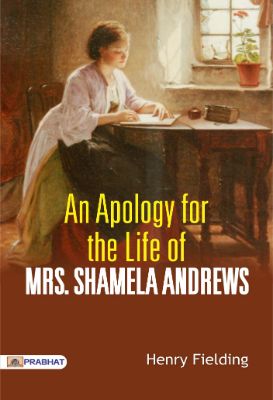
An Apology for the Life of Mrs. Shamela Andrews by Henry Fielding
The present novel by Henry Fielding, ‘An Apology for the Life of Mrs. Shamela Andrews’ is a work of satire. It is a direct attack on the then-popular novel Pamela (1740) by Fielding’s contemporary and rival Samuel Richardson and is composed, like Pamela, in epistolary form.


An Autobiography of Buffalo Bill by Buffalo Bill
William Frederick “Buffalo Bill” Cody was one of the most colorful figures of the American Old West. He received the nickname “Buffalo Bill” after the American Civil War, when he had a contract to supply Kansas Pacific Railroad workers with buffalo (American bison) meat. Cody killed 4,282 buffalo in eighteen months in 1867 and 1868. As a frontier scout, Cody respected Native Americans and supported their civil rights, as well as supporting the rights of women. He was also known as a conservationist who advocated the establishment of a hunting season.
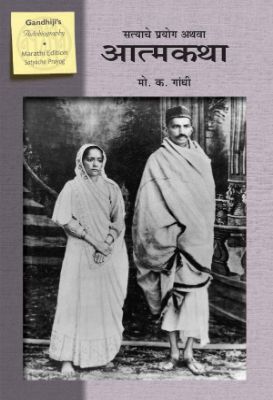

An Autobiography or the Story of My Experiments with Truth by M. K. Gandhi
First published in the year 1927, the present book ‘AN AUTOBIOGRAPHY OR The story of my experiments with truth’ by one of the most influencial mass leaders in the world history, M. K. Gandhi is his autobiography in which he has shared those real life incidents and thoughts that led to his belief in truth. This book is a historical document as well as a motivating philosophy which would inspire all to take the path of truth in life.
An Autumn Sowing by E.F. Benson
This is a reproduction of a book published before 1923. This book may have occasional imperfections such as missing or blurred pages, poor pictures, errant marks, etc.
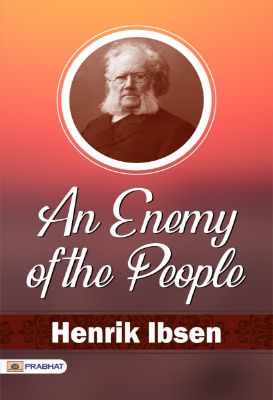
An Enemy of the People by Henrik Ibsen
An Enemy of the People is an 1882 play by Norwegian playwright Henrik Ibsen.

An English Grammar by W. M. Baskervill and J. W. Sewell
It has been our aim to make a grammar of as wide a scope as is consistent with the proper definition of the word. Therefore, in addition to recording and classifying the facts of language, we have endeavored to attain two other objects,—to cultivate mental skill and power, and to induce the student to prosecute further studies in this field. It is not supposable that in so delicate and difficult an undertaking there should be an entire freedom from errors and oversights. We shall gratefully accept any assistance in helping to correct mistakes.

An Enquiry Concerning Human Understanding by David Hume
Written by famous writer David Hume, the present book titled ‘An Enquiry Concerning Human Understanding’ was first published in the year 1748. This was appreeciated by famous socio-economic thinker Immanuel Kant and has been regarded as a classic in modern philosophical literature.

An Entertaining History of Tom Thumb by Unknown
Great Stories and poems for children is a collection of most delightful childrens stories.
An Essay on Criticism by Alexander Pope
This eminent English poet was born in London, May 21, 1688. His parents were Roman Catholics, and to this faith the poet adhered, thus debarring himself from public office and employment. His father, a linen merchant, having saved a moderate competency, withdrew from business, and settled on a small estate he had purchased in Windsor Forest. He died at Chiswick, in 1717. His son shortly afterwards took a long lease of a house and five acres of land at Twickenham, on the banks of the Thames, whither he retired with his widowed mother, to whom he was tenderly attached and where he resided till death, cultivating his little domain with exquisite taste and skill, and embellishing it with a grotto, temple, wilderness, and other adjuncts poetical and picturesque. In this famous villa Pope was visited by the most celebrated wits, statesmen and beauties of the day, himself being the most popular and successful poet of his age. His early years were spent at Binfield, within the range of the Royal Forest. He received some education at little Catholic schools, but was his own instructor after his twelfth year. He never was a profound or accurate scholar, but he read Latin poets with ease and delight, and acquired some Greek, French, and Italian. He was a poet almost from infancy, he “lisped in numbers,” and when a mere youth surpassed all his contemporaries in metrical harmony and correctness. His pastorals and some translations appeared in 1709, but were written three or four years earlier. These were followed by the Essay on Criticism, 1711; Rape of the Lock (when completed, the most graceful, airy, and imaginative of his works), 1712-1714; Windsor Forest, 1713; Temple of Fame, 1715. In a collection of his works printed in 1717 he included the Epistle of Eloisa and Elegy on an Unfortunate Lady, two poems inimitable for pathetic beauty and finished melodious versification.
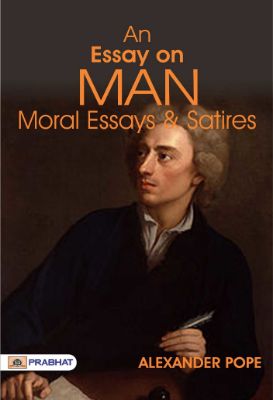
An Essay on Man Moral Essays and Satires by Alexander Pope
First published in the year 1734, Alexander Pope’s poem ‘An Essay on Man Moral Essays and Satires’ is concerned with the natural order God has decreed for man.
An Essay on the Foundations of Geometry by Bertrand Russell
My thanks are due to Mr G. F. Stout and Mr A. N. Whitehead for kindly reading my proofs, and helping me by many useful criticisms. To Mr Whitehead I owe, also, the inestimable assistance of constant criticism and suggestion throughout the course of construction, especially as regards the philosophical importance of projective Geometry.—from this book

An Eternal Career by Frank L. Hammer and Lydia Hammer
The purpose of this book is to acquaint readers with the fact that they are immortal souls embarked upon an eternal career.
The great masses of humanity have not commenced to live, are hardly aware of their possibilities. They express chiefly on the physical plane and, through ignorance of Life’s laws, frequently attract the undesirable and destructive. Conscious of only the material, they overdevelop it to the exclusion of the spiritual, becoming lopsided. They become great in one direction and remain small in all the others. A millionaire is usually regarded as a criterion of success. If his intellectual and spiritual development were as great as his material, he would be a composite of Croesus, Socrates and Christ—a Colossus.
An Examination of Weismannism by George John Romanes
As already stated in the Preface to the second edition of Darwin and after Darwin, Part I, severe and protracted illness has hitherto prevented me from proceeding to the publication of Part II. It is now more than a year since I had to suspend work of every kind, and therefore, although at that time Part II was almost ready for press, I have not yet been able to write its concluding chapters. Shortly before and during this interval Professor Weismann has produced his essays on Amphimixis and The Germ-plasm. These works present extensive additions to, and considerable modifications of, his previous theories as collected together in the English translation, under the title Essays on Heredity, Vol. I. Consequently, it has become necessary for me either to re-write the examination of his system which I had prepared for Part II of my own treatise, or else to leave that examination as it stood, and to add a further chapter dealing with those later developments of his system to which I have just alluded. After due reflection I have decided upon the latter course, because in this way we are most likely to obtain a clear view of the growth of Weismann’s elaborate structure of theories—a view which it is almost necessary, for the purposes of criticism, that we should obtain.

An Exhortation to Peace and Unity by John Bunyan
“Beloved, religion is the great bond of human society; and it were well if itself were kept within the bond of unity; and that it may so be, let us, according to the text, use our utmost endeavours “to keep the unity of the Spirit in the bond of peace.”
“These words contain a counsel and a caution: the counsel is, That we endeavour the unity of the Spirit; the caution is, That we do it in the bond of peace; as if I should say, I would have you live in unity, but yet I would have you to be careful that you do not purchase unity with the breach of charity.” -an excerpt
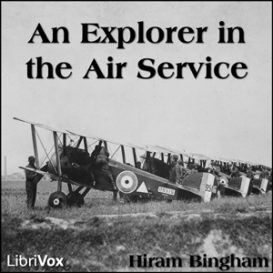
An Explorer in the Air Service
Explorer Hiram Bingham discovered Machu Picchu in 1911, as recounted in his book Inca Lands, now released on LibriVox at http://librivox.org/inca-lands-by-hiram-bingham/. In 1917, he became an aviator and organized the United States Schools of Military Aeronautics at eight universities to provide ground school training for aviation cadets, and then in Issoudun, France, Bingham commanded the primary Air Service flying school. He became a supporter of the Air Service in their post-war quest for independence from the Army and supported that effort, in part, with the publication of this book of his wartime experiences published in 1920 by Yale University Press. (Summary by Wikipedia and ToddHW)

An Exposition upon the Song of the Blessed Virgin Mary called Magnificat
Luther’s 1521 exposition of the Magnificat was written for John Frederick I, Elector of Saxony (1503-1554), at that time a teenager. It was written in two parts, being interrupted by Luther’s appearance at the Diet of Worms. It is sermonic in form but written to be read rather than heard. – Summary by InTheDesert
An Eye For An Eye
Frank Urwin and Richard Cleugh are two bachelor journalists sharing a flat in London. One evening while chatting, Urwin receives a telegram from a police acquaintance to come to the local police station at once. Urwin visits Inspector Patterson who is greatly agitated. Patterson invites Urwin for a drink and tells him of a strange occurrence at a local house. The two visit the house where they discover a dead young male and attractive young female. For some reason, Patterson is reluctant to report the apparent murders. While at the house, the telephone rings and Urwin answers it. A strange voice asks if the deed has been done? Urwin indicates it has and agrees to meet the caller at St. James?s Park. Urwin finally convinces Patterson to report the crime and a second visit occurs with additional police. This time however, the dead female is not the same person. (Summary by Tom Weiss)
An Eye for an Eye
A short but typical Trollope romance in which a young nobleman is torn between love for an impoverished Irish girl and the expectations of his family that he will marry someone suitable for inheriting an Earldom – Summary by Anthony Ogus
An Ideal Husband by Oscar Wilde
An Ideal Husband’ is an 1895 comedy stage play by Oscar Wilde. It revolves around blackmail and political corruption, and touches on the themes of public and private honour. The action is set in London, and takes place over the course of twenty-four hours.

An Ideal Kitchen by Maria Parloa
An Ideal Kitchen’ is a self-help book by Maria Parloa. This book is a guide for all the homemakers interested in bringing some interesting twists and atiquettes to their kitchen. It was first published in the year 1887.
An Inquiry into the Causes and Effects of the Variolae Vaccinae
This collection of three publications details Edward Jenner’s investigations into the connection between smallpox and coxpox, and the creation of the smallpox vaccine, the world’s first vaccine. – Summary by Jordan

An Inquiry into the Nature and Causes of the Wealth of Nations by Adam Smith
An Inquiry into the Nature and Causes of the Wealth of Nations’ is the magnum opus of the Scottish economist and moral philosopher Adam Smith. First published in 1776, the book offers one of the world’s first collected descriptions of what builds nations’ wealth, and is today a fundamental work in classical economics. By reflecting upon the economics at the beginning of the Industrial Revolution, the book touches upon such broad topics as the division of labour, productivity, and free markets.

An Inquiry Into Vigilance and Corruption by Barun Kumar Sahu (Ias)
This book is a treatise on vigilance, compliance and anti-corruption. It is based on empirical and realistic approach to the subject, with some interpretations from ancient wisdoms. The book will be of interest to bureaucrats and senior managers in government, public and private sectors, and to political practitioners and policy-makers.
Vigilance is founded on the premise that honesty is the best policy. But, at times, it appears counter intuitive and not borne out from the real-life experiences. If vigilance were so easy to comprehend and unconditionally acceptable, then perhaps there would have been no need to teach vigilance, or write any book on it. It would have been instinctive. All of us would have just followed the dogma.
There are four types of corruption:
1. Tribute
2. Coercive corruption
3. Collusive corruption
4. Mass indoctrination
Vigilance authorities concentrate on curbing tributes and coercive corruptions, but collusive corruptions and mass indoctrinations are far more lethal and damaging. The book emphasizes on these two later forms of corruption.
An Interpretation of Keats’s Endymion
Endymion is the largest work by John Keats and was composed between April and November 1817. When it was published in April 1818 the critical reception was almost universally hostile. Since that time, many readers have found the poem dense and inaccessible, and have preferred to focus on the occasional gems of poetic commentary for which it has become famous. Feeling that the poem was both undervalued and misunderstood, in 1919 Professor Clement Notcutt published a lengthy essay, which could be considered a ?user?s guide? to Endymion. He sums up his intent in the introduction: A careful study of Endymion made some ten years ago led to the conclusion that there was more of allegorical significance in the poem than had hitherto been recognised, but the effort to trace that significance was only partially successful. Further study since that time has gradually opened up the way to the interpretation that is worked out in the following pages. It is probable that there are details in the story the meaning of which still lies hidden, but it may at least be hoped that enough has been discovered to win for the poem its rightful place among the not very numerous examples in English poetry of well-wrought allegory. In 1921 Notcutt published a further essay entitled: The Story of Glaucus in Keat?s Endymion. – Summary by Algy Pug