
Smart Premium Books
Showing 9301–9350 of 10122 results
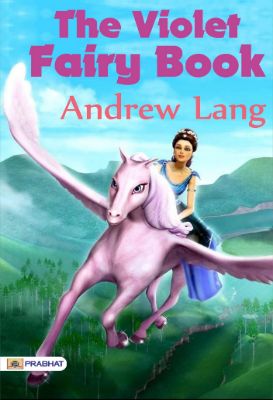
The Violet Fairy Book by Andrew Lang
A collection of several short fairy tales by the noted Scottish poet, novelist, literary critic, and anthropologist Andrew Lang. These tales are first English translations of fairy tales from many different languages. This volume was published in a colour-coded manner with violet at the background of each of the pages. He published around 25 such volumes with different colour codes for each. These volumes got immensely popular at that pont of time.
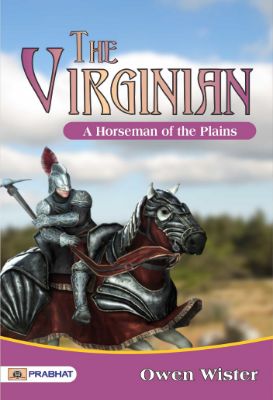
The Virginian: A Horseman of the Plains by Owen Wister
First published in the year 1902, famous American writer Owen Wister’s present fictional novel ‘The Virginian: A Horseman of the Plains’ describes the life of a cowboy on a cattle ranch in Wyoming. It is known as the first true western fiction ever written.
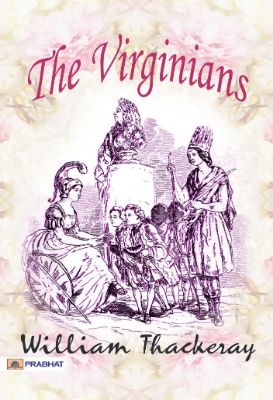
The Virginians by William Thackeray
First published in the year 1859, the present historical novel ‘The Virginians’ by William Thackeray tells the story of Henry Esmond’s twin grandsons, George and Henry Warrington. Henry’s romantic entanglements with an older woman lead up to his taking a commission in the British army and fighting under the command of General Wolfe at the capture of Quebec. On the outbreak of the American War of Independence he takes the revolutionary side. George, who is also a British officer, thereupon resigns his commission rather than take up arms against his brother. (courtesy: wikipedia)
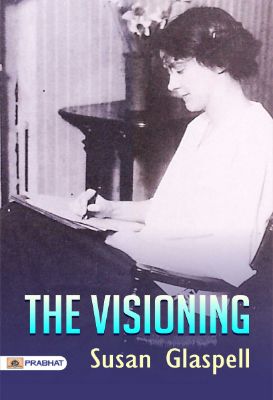
The Visioning by Susan Glaspell
The Visioning, Susan Glaspell’s second novel, tells about Katie Jones, a young woman who lives in the comfortable world she knows with a charming circle of friends.

The Vital Message by Arthur Conan Doyle
In “The New Revelation” the first dawn of the coming change has been described. In “The Vital Message” the sun has risen higher, and one sees more clearly and broadly what our new relations with the Unseen may be. As I look into the future of the human race I am reminded of how once, from amid the bleak chaos of rock and snow at the head of an Alpine pass, I looked down upon the far stretching view of Lombardy, shimmering in the sunshine and extending in one splendid panorama of blue lakes and green rolling hills until it melted into the golden haze which draped the far horizon. Such a promised land is at our very feet which, when we attain it, will make our present civilisation seem barren and uncouth. Already our vanguard is well over the pass. Nothing can now prevent us from reaching that wonderful land which stretches so clearly before those eyes which are opened to see it.
The Vitality of ‘Mormonism’ An Address by James E. Talmage
This work has been selected by scholars as being culturally important, and is part of the knowledge base of civilization as we know it. Quality assurance was conducted on each of these books in an attempt to remove books with imperfections introduced by the digitization process. We believe this work is culturally important and have elected to bring the book back into print as part of our continuing commitment to the preservation of printed works worldwide. We appreciate your understanding of the imperfections in the preservation process, and hope you enjoy this valuable book.
The Voice of the City: Further Stories of the Four Million by O. Henry
Twenty-five years ago the school children used to chant their lessons. The manner of their delivery was a singsong recitative between the utterance of an Episcopal minister and the drone of a tired sawmill. I mean no disrespect. We must have lumber and sawdust.
I remember one beautiful and instructive little lyric that emanated from the physiology class. The most striking line of it was this:
“The shin-bone is the long-est bone in the hu-man bod-y.”

THE VOICE OF TRUTH by M. K. GANDHI
In this volume, we have tried to select Gandhiji’s choicest writings and speeches on a variety of topics. The first part of the Volume contains some of the important speeches delivered by Mahatma Gandhi on historic occasions. The second part includes selections of his thoughts on philosophy, religion, culture, art, literature, science, economics, politics, sociology and education. An attempt has been made to present Gandhiji’s views on different subjects under suitable chapters for the convenience of the reader. To maintain uniformity, indirect narration has been changed to direct speech at a few places. But for slight editing, the original texts have been faithfully adhered to.


The Voyage of the Beagle by Charles Darwin
The Voyage of the Beagle is the title most commonly given to the book written by Charles Darwin and published in 1839 as his Journal and Remarks, bringing him considerable fame and respect.

The Voyage Out by Virginia Woolf
First published in the year 1915, famous English Modern novelist Virginia Woolf’s novel ‘The Voyage Out’ introduces Clarissa Dalloway, the central character of Woolf’s later novel, ‘Mrs Dalloway’. Through this novel, Woolf has satirized the ways of Edwardian life in England.

The Voyages and Adventures of Captain Hatteras by Jules Verne
The sailing of a brig is not a matter of great importance for the chief commercial city of England. Who would take notice of it in so great a throng of ships of all sizes and of every country, that dry-docks covering two leagues scarcely contain them?

The Voyages of Doctor Dolittle by Hugh Lofting
The Voyages of Doctor Dolittle was the second of Hugh Lofting’s Doctor Dolittle books to be published, coming out in 1922. It is nearly five times as long as its predecessor and the writing style is pitched at a more mature audience.

The Wanderings of a Spiritualist by Arthur Conan Doyle
The Wanderings of a Spiritualist’ is an intensely personal account of spiritualism by the famous British author Sir Arthur Conan Doyle. He wrote it soon after announcing his belief in communication with the dead. It was first published in the year 1921.

The War in South Africa, Its Cause and Conduct by Arthur Conan Doyle
For some reason, which may be either arrogance or apathy, the British are very slow to state their case to the world. At present the reasons for our actions and the methods which we have used are set forth in many Blue-books, tracts, and leaflets, but have never, so far as I know, been collected into one small volume. In view of the persistent slanders to which our politicians and our soldiers have been equally exposed, it becomes a duty which we owe to our national honour to lay the facts before the world. I wish someone more competent, and with some official authority, had undertaken the task, which I have tried to do as best I might from an independent standpoint.

The War in the Air by H.G. Wells
The War in the Air, a military science fiction novel by H. G. Wells, written in four months in 1907 and serialised and published in 1908 in The Pall Mall Magazine, is like many of Wells’s works notable.

The War of the Worlds by H. G. Wells
The War of the Worlds’ is a science fiction novel by English author H. G. Wells. It was first published in 1897. It is one of the earliest stories that detail a conflict between mankind and an extraterrestrial race. The novel is the first-person narrative of both an unnamed protagonist in Surrey and of his younger brother in London as southern England is invaded by Martians.

The War That Will End War by H.G. Wells
H.G. Wells was one of the greatest writers of the 20th century. Wells was a prolific author in many genres including history, politics, and social commentary.

The Warden by Anthony Trollope
“Early in life Mr Harding found himself located at Barchester. A fine voice and a taste for sacred music had decided the position in which he was to exercise his calling, and for many years he performed the easy but not highly paid duties of a minor canon. At the age of forty a small living in the close vicinity of the town increased both his work and his income, and at the age of fifty he became precentor of the cathedral.” -an excerpt
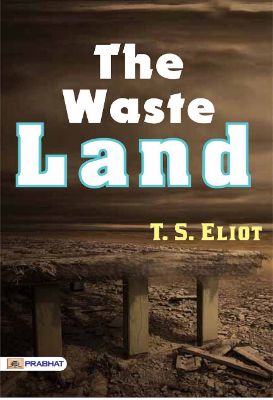
The Waste Land by T. S. Eliot
The Waste Land’ is a long poem by T. S. Eliot. It is widely regarded as one of the most important poems of the 20th century and a central work of modernist poetry. Eliot’s poem loosely follows the legend of the Holy Grail and the Fisher King combined with vignettes of contemporary British society. Eliot employs many literary and cultural allusions from the Western canon, Buddhism and the Hindu Upanishads. Because of this, critics and scholars regard the poem as obscure. The poem shifts between voices of satire and prophecy featuring abrupt and unannounced changes of speaker, location, and time and conjuring of a vast and dissonant range of cultures and literatures.
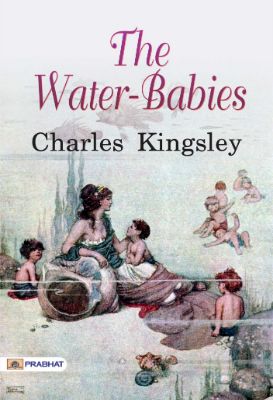
The Water-Babies by Charles Kingsley
Tom, a poor orphan, is employed by the villainous chimney-sweep, Grimes, to climb up inside flues to clear away the soot. While engaged in this dreadful task, he loses his way and emerges in the bedroom of Ellie, the young daughter of the house who mistakes him for a thief. He runs away, and, hot and bothered, he slips into a cooling stream, falls fast asleep, and becomes a water baby. In this new life, he meets all sorts of aquatic creatures, including an engaging old lobster, other water babies.

The Way of All Flesh by Butler, Samuel
First published in the year 1903, the present novel ‘The Way of All Flesh’ by noted writer Samuel Butler is a semi-autobiographical fictional work which attacks the hipocrisy of the Victorian era.

The Way of the World by William Congreve
The Way of the World’ is a play written by the English playwright William Congreve. It is widely regarded as one of the best Restoration comedies and is still occasionally performed. At that time, however, the play struck many audience members as continuing the immorality of the previous decades, and it was not well received.

The Way to Wealth by Benjamin Franklin
If you were a servant, would you not be ashamed that a good master should catch you idle? Are you then your own master? be ashamed to catch yourself idle, when there is so much to be done for yourself, your famiy, your coutry, and your king. Handle your tools without mittens, remember, that the cat in gloves catches no mice as poor Richard says.

The Way We Live Now by Anthony Trollope
When the Melmottes arrive in London everyone agrees their manners are wanting, their taste is excerable and their lineage and background decidedly shadowy. But their money is far from revolting, and city society quickly makes allowances for the mysterious financier and his family. Soon hearts, minds and family savings are swept into the whirl of Augustus Melmotte’s lavish parties and exciting investment plans – but is it all an elaborate swindle?

The Wealth of Echindul by Noel M. Loomis
He raised his heat-gun, fired once, saw the feathers burst into blue flame, saw it falling; then he rolled over and went back to sleep. Not even the thud of its heavy body on the sand disturbed him, but an hour later he heard another warning—a rasping sound—and through the stench of the ancient swamp he smelled a fetidness that meant danger.
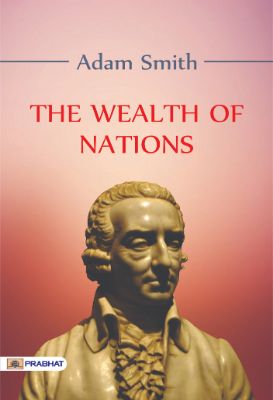
The Wealth of Nations by Adam Smith
An Inquiry into the Nature and Causes of the Wealth of Nations, generally referred to by its shortened title The Wealth of Nations, is the magnum opus of the Scottish economist and moral philosopher Adam Smith.
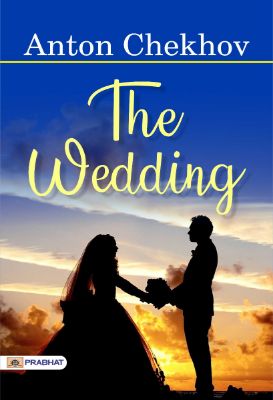
The Wedding by Anton Chekhov
The Wedding is an 1889 Russian one-act play by Anton Chekhov.

The Well in the Desert by Emily Sarah Holt
Emily Sarah Holt was an English novelist who wrote about 50 books, mainly for children. This is a pre-1923 historical reproduction that was curated for quality. Quality assurance was conducted on each of these books in an attempt to remove books with imperfections introduced by the digitization process.We have made best efforts that do not impede the reading experience. We believe this work is culturally important and have elected to bring the book back into print.

The Well-Beloved: A Sketch of a Temperament by Thomas Hardy
One of the best known Victorian English novelist Thomas Hardy’s novel ‘The Well-Beloved: A Sketch of a Temperament’ was written and first serialized in the year 1892, but was published in a complete book form after his last novel was published.

The Wendigo by Algernon Blackwood
First published in 1910, ‘The Wendigo’ is a horror short story by English author Algernon Blackwood. “A considerable number of hunting parties were out that year without finding so much as a fresh trail; for the moose were uncommonly shy, and the various Nimrods returned to the bosoms of their respective families with the best excuses the facts of their imaginations could suggest. Dr. Cathcart, among others, came back without a trophy; but he brought instead the memory of an experience which he declares was worth all the bull moose that had ever been shot. But then Cathcart, of Aberdeen, was interested in other things besides moose—amongst them the vagaries of the human mind. This particular story, however, found no mention in his book on Collective Hallucination for the simple reason (so he confided once to a fellow colleague) that he himself played too intimate a part in it to form a competent judgment of the affair as a whole…” -Preface
The Were-Wolf by Clemence Housman
The first novel of Clemence Annie Housman, who was an author, illustrator and activist in the women’s suffrage movement, ‘The Were-wolf’ was an allegorical erotic fantasy. Some critics said that it achieves a high degree of guesome tension and gives the zist and feel of authentic folklore.

The Western Echo by George W. Romspert
It is the object of the author, by this volume, to place before the people a brief history of the western states and territories through which he traveled in a late long overland tour, together with a sketch of the customs and occupations of the people in all the parts described. A journey by wagon through so much territory, by so many unknown, has furnished the author with knowledge that will be of so much value to persons who think of going West, and more especially to those who intend trying their fortunes in the regions of the setting sun, that he feels himself somewhat in duty bound to reduce it to print. Many fabulous and speculative histories have been written of the same country; and, with prejudiced pens, they have been deceitful records.

The Western World by William Henry Giles Kingston
I have first described the features of the country; then its vegetation; and next the wild men and the brute creatures which inhabit it. However, I have not been bound by any strict rule in that respect, as my object has been to produce a work calculated to interest the family circle rather than one of scientific pretensions. I have endeavoured to impart, in an attractive manner, information about its physical geography, mineral riches, vegetable productions, and the appearance and customs of the human beings inhabiting it.
The Wheel of Fortune by Mahatma Gandhi
Many critics and some friends of Mahatma Gandhi have found fault with his desire to introduce simpler methods of spinning and weaving and to do away with much of the complicated machinery of Modern Civilisation. The reason why they object is that they fear such methods mean not progress towards a higher state but relapse into a primitive condition of civilisation or even of barbarism. His denunciation of the age of machinery and of the Industrial System has been criticised by many as the ravings of a visionary and of one who is merely an impracticable idealist. This is a strange criticism to come from those who give their allegiance to a form of civilisation or ‘Culture’ which has led to the unprecedented horrors of the late European War and the century-old disgraces [pg x] of the Industrial System. Is this present modern civilisation so very desirable that we should wish it to continue in perpetuity?

The Wheels of Chance by H.G. Wells
The Wheels of Chance is an early comic novel by H. G. Wells about an August 1895 cycling holiday, somewhat in the style of Three Men in a Boat. In 1922 it was adapted into a silent film The Wheels of Chance directed by Harold M. Shaw.

The Whisperer in Darkness by H. P. Lovecraft
The Whisperer in Darkness is a 26,000-word novella by American writer H. P. Lovecraft. Written February–September 1930, it was first published in Weird Tales, August 1931.
The White Company by Arthur Conan Doyle
A novel that was very popular from the time of its publication uup till the Second World War, ‘The White Company’ was written by the author of the famous detective series of Sherlock Holmes – Arthur Conan Doyal. This novel is an evidence of Doyle’s passion and his literary beauty as a historian.
The White Feather by P. G. Wodehouse
The time of this story is a year and a term later than that of The Gold Bat. The history of Wrykyn in between these two books is dealt with in a number of short stories, some of them brainy in the extreme, which have appeared in various magazines. I wanted Messrs Black to publish these, but they were light on their feet and kept away—a painful exhibition of the White Feather.
P. G. Wodehouse

The White Flag by Gene Stratton-Porter
Elizabeth Spellman opened her eyes, turned on her pillow, and minutely studied the face of her sleeping husband. To her, Mahlon Spellman was not a vain, pompous, erratic little man of fifty. When she looked at him she saw the man who had courted her, of whose moral and mental attainments she had been so sure.

The White Heart of Mojave: An Adventure with the Outdoors of the Desert by Perkins
Beyond the walls and solid roofs of houses is the outdoors. It is always on the doorstep. The sky, serene, or piled with white, slow-moving clouds, or full of wind and purple storm, is always overhead. But walls have an engrossing quality.

The White People by Arthur Machen
The White People is a horror short story by Welsh author Arthur Machen. Written in the late 1890s.

The Widowing of Mrs. Holroyd: A Drama in Three Acts by D. H. Lawrence
The Widowing of Mrs. Holroyd is a play by the English writer D. H. Lawrence. It was written in 1911 and the revised version was published in 1914 by Duckworth & Co. in London and Mitchell Kennerley in New York.

The Wife by Anton Chekhov
In this classic short story, Chekhov takes a snapshot of the Russian life, illuminating the harsh complexities and yet subtle simplicities that interact seamlessly together.

The Wife of his Youth and Other Stories of the Color Line, and Selected Essays by Charles Waddell Chesnutt
The Wife of His Youth (1899) was Chesnutt’s second collection of short stories, drawing upon his mixed race heritage. These deal largely with race relations, the far-reaching effects of Jim Crow laws, and color prejudice among African Americans toward darker-skinned blacks. Eric J. Sundquist wrote: “Chesnutt’s color-line stories, like his conjure tales, are at their best haunting, psychologically and philosophically astute studies of the nation’s betrayal of the promise of racial equality and its descent into a brutal world of segregation. [He] made the family a means of delineating America’s racial crisis, during slavery and afterward.” For our PG edition, I have added three of Chesnutt’s essays on the “color line” in an Appendix to this collection.
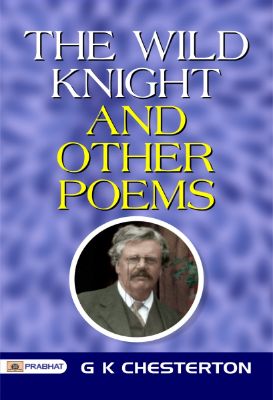
The Wild Knight and Other Poems by G K Chesterton
Gilbert Keith Chesterton was an English writer, philosopher, lay theologian, and literary and art critic.
The Wild Olive: A Novel by Basil King
Finding himself in the level wood-road, whose open aisle drew a long, straight streak across the sky, still luminous with the late-lingering Adirondack twilight, the tall young fugitive, hatless, coatless and barefooted, a minute for reflection. As he paused, he listened; but all distinctiveness of sound was lost in the play of the wind, up hill and down dale, through chasm and over crag, in those uncounted leagues of forest.