
Smart Premium Books
Showing 9151–9200 of 10122 results

The Story of Gandhi by Rajkumari Shankar
Mohandas was the youngest of the six children of Kaba Gandhi. He was the favourite child of the family and was called ‘Moniya’ by his fond parents and their friends. Moniya adored his mother. He loved his father too, but he was a little afraid of him.
As a child, Moniya seldom liked to stay at home. He would go home for his meals and then run away again to play outside. If one of his brothers teased him or playfully pulled his ears he would run home to complain to his mother. ‘Why didn’t you hit him? She would ask.

The Story of Great Inventions by Elmer Ellsworth Burns
“The purpose of this book is to tell in simple language how our great inventions came into being, to depict the life-struggles of the men who made them, and, in the telling of the story, to explain the working of the inventions in a way the boy can understand. The stories which are here woven together present the great epochs in the history of physics, and are intended to give to the young reader a connected view of the way in which our great inventions have arisen out of scientific discovery on the one hand, and conditions which we may call social and economic on the other hand. If the book shall appeal to young readers, and lead them to an appreciation of the meaning of a great invention, the author will feel that his purpose has been achieved.” -Introduction

The Story of Mankind by Hendrik Willem Van Loon
The Story of Mankind” follows the history of western civilization from prehistoric times to the early 20th century. Van Loon both wrote and illustrated this book, which he wrote for his grandchildren, in such a way that children would be learning in an entertaining way. From the development of writing and art to the formation of religion and politics, Van Loon emphasizes the people and events central to the changes and achievements of human history. A remarkable, accurate, and enduring work of children’s literature, “The Story of Mankind” is an engaging narration of the procession of events in world history.
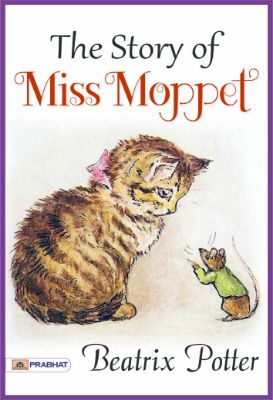
The Story of Miss Moppet by Beatrix Potter
This is a Pussy called Miss Moppet, she thinks she has heard a mouse!
This is the Mouse peeping out behind the cupboard, and making fun of Miss Moppet. He is not afraid of a kitten.

The Story of My Life by Bhai Parmanand
“Excepting Lala Lajpat Raiji, the land of the five rivers has not produced in modern history a nobler Indian Patriot, a more devoted worker in the cause of the political freedom of Hindusthan, our Father Land and our Holy Land, while in suffering and sacrifice none who could be compared with him.
“Many there be who join a great cause when it is victorious and paying; a few there are who join in the fight for it when chances of ultimate victory are not out of sight; but scarcely one in a million is found who refuses to budge an inch and continues the fight for an ideal single-handed and alone even when all is lost and all have either forsaken or betrayed. A Rana Pratap at Chittore, a Bhau Sahab Peshwa at Panipat! It is they who are the standard-bearers of a Nation, a Race, a Religion and it is when drenched in their blood that the Despair of a people is reborn as a Hope in the next generation. Their immediate defeat and death assure the life and victory of a Race. Of such a mettle as that is Bhai Parmananda fashioned.”
—Swatantryavir Vinayak D. Savarkar

The Story of My Life by Clarence Darrow
The Story of My Life’ is a novel by Clarence Darrow, which is narrated in first-person from the point of view of Alison Poole, “an ostensibly jaded, cocaine-addled, sexually voracious 20-year-old.” Alison is originally from Virginia and lives in Manhattan, where she is involved in several sexual relationships and is aspiring to become an actress.

The Story of My Life by Keller, Helen
The name of Helen Keller is known around the world as a symbol of courage in the face of overwhelming odds, yet she was much more than a symbol. She was a woman of luminous intelligence, high ambition and great accomplishment who devoted her life to helping others. Although Helen Keller was blind and deaf, she knew several languages. Helen Keller learned to read and communicate by touch. She used these skills to study English, French, German, Greek, and Latin. Late in her life, she said she wanted to learn even more languages. During her lifetime, Helen Keller was consistently ranked near the top of ‘most admired’ lists. She died in 1968, leaving a legacy that Helen Keller International is proud to carry on in her name and memory. This book is a authorized autobiography of ‘Helen Keller’.
The Story of My Life, Part 2 (Letters 1887 – 1901)
When Helen Keller’s autobiography was first published in 1903, Part 1 of this 3 part book, she was just a young woman studying at Radcliffe College. In it, she shares memories of her childhood, describes how Miss Sullivan rescued her from complete darkness, and reflects on her experiences as a college student. Part 2 is a collection of Helen’s letters from age 8 through 1901, addressed to various teachers, friends and mentors. This is interspersed with introductory commentary by her editor John Albert Macy. It is fascinating to see how her awareness of the world expanded as she matured, how much she relied on “teacher” (Anne Sullivan) to be her eyes ears, and interpreter of life, and displays her extraordinary graciousness, and ability to paint word pictures from an early age. Part 3 of this book includes in-depth writings by her teacher, Anne Mansfield Sullivan, on her teaching methods, their experiences learning together; and additional insightful commentary by editor John Albert Macy on Helen?s extraordinary education, personality, giftedness, and literary style. The 1962 hit movie “The Miracle Worker” (nominated for 5 academy awards), starring Anne Bancroft (won Best Actress) and Patty Duke (won Best Supporting Actress), was based upon information in this book. (Summary by Michele Fry)

The Story of My Misfortunes by Peter Abelard
The Story of My Misfortunes, also known as Historia Calamitatum (A history of my calamities), is an autobiographical work by Peter Abelard, one of medieval France’s most important intellectuals and a pioneer of scholastic philosophy. The Story of My Misfortunes is one of the first autobiographical works in medieval Western Europe, written in the form of a letter.


The Story of Nelson by William Henry Giles Kingston
My great ambition as a boy was to be a sailor; the idea of becoming one occupied my thoughts by day and influenced my dreams by night. I delighted in reading naval histories and exploits and tales of the sea, and I looked upon Rodney, Howe, Nelson, and Saint Vincent, as well as Duncan, Collingwood, Exmouth, and Sir Sidney Smith, as far greater men, and more worthy of admiration, than all the heroes of antiquity put together—an opinion which I hold even to the present day, and which, I hope, all my readers will maintain with me.

The Story of Perugia by Lina Duff Gordon and Margaret Symonds
The “story” of Perugia is, like the story of nearly all Italian towns, as full and varied as the story of a nation. Every side-light of history is cast upon it, and nearly every phase of man’s policy and art reflected on its monuments. To do justice to so grand a pageant in a narrow space of time and binding was, we may fairly plead, no easy task; and now that the work is done, and the proofs returned to the printer, we are left with an inevitable regret; for it has been impossible for us to retain in shortened sentences and cramped description the charm of all the tales and chronicles which we ourselves found necessary reading for a full knowledge of so wide a subject.
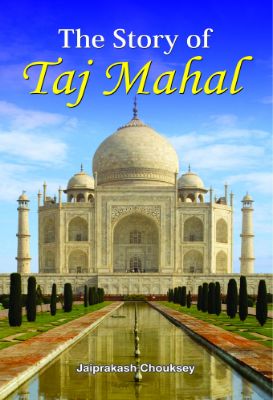
The Story of Taj Mahal by Jayprakash Chowksey
Last year Chowksey wrote Mahatma Gandhi and Cinema, now his fictional account of how the TAJ was created is being published. It is a historical fact that the Moghuls brought with them the Persian culture when they came to India. At that time Indian culture was a bit worn-out because of continuous foreign attacks for centuries. Moghuls were different from other invaders in the sense that they wanted to settle down here and the founder of the Moghul Empire Babur made it clear before entering Agra that the soldiers should not indulge in any atrocities.
Chowksey’s Aurangzeb disapproved the wave of romanticism unleashed by Shahjahan and restored discipline and values in the life of the nation. He did not approve of huge sums of money being spent on the creation of the TAJ.
However, this book has interesting character sketches and excellent dramatic scenes. A couple of years ago the TAJ MAHAL was voted as the number one wonder of the worldby an international survey. It has withstood the test of time and its classic beauty is of universal appeal therefore the story of its creation is worth reading. My friend Chowksey has done justice to the great subject. It is an ode to the synthesis of two great cultures.
—Salim Khan
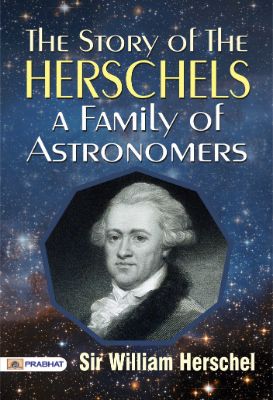
The Story of the Herschels, a Family of Astronomers by Sir William Herschel
“From the best available sources have been gathered the following biographical particulars of a remarkable family of astronomers—the Herschels.
“They will serve to show the young reader how great a pleasure may be found in the acquisition of knowledge, and how solid a happiness in quietly pursuing the path of duty.
“On the value of biography it is unnecessary to insist. It is now well understood that we may learn to make our own lives good and honest and true, by carefully and diligently following the example of the good and honest and true who have gone before us. and certain it is that the lessons taught by the lives of the Herschels are such as young readers will do well to lay to heart.” -Preface

The Story of the Invention of Steel Pens by Henry Bore
In these days of Public Schools and extended facilities for popular education it would be difficult to find many people unaccustomed to the use of steel pens, but although the manufacture of this article by presses and tools must have been introduced during the first quarter of the present century, the inquirer after knowledge would scarcely find a dozen persons who could give any definite information as to when, where, and by whom this invention was made. Less than two decades ago there were three men living who could have answered this question, but two of them passed away without making any sign, and the third—Sir Josiah Mason—has left on record that his friend and patron—Mr. Samuel Harrison—about the year 1780, made a steel pen for Dr. Priestley.

The Story of the Malakand Field Force: An Episode of Frontier War by Churchill
On general grounds I deprecate prefaces. I have always thought that if an author cannot make friends with the reader, and explain his objects, in two or three hundred pages, he is not likely to do so in fifty lines. And yet the temptation of speaking a few words behind the scenes, as it were, is so strong that few writers are able to resist it. I shall not try.

The Story of the Mind by James Mark Baldwin
In this little book, author has endeavoured to maintain the simplicity which is the ideal of this series. Author persuaded that the attempt to make the matter of psychology more elementary than is here done, would only result in making it untrue and so in defeating its own object.
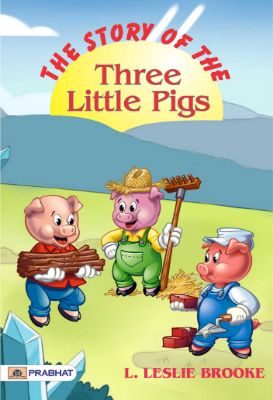
The Story of the Three Little Pigs by L. Leslie Brooke
First published in the year 1905, the present book is a fictional fable for young children, written by L. Leslie Brooke. This story is about three little pigs which has been much adored by children all over the world since its inception.
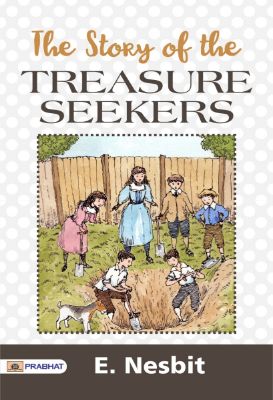
The Story of the Treasure Seekers by E. Nesbit
The Story of the Treasure Seekers is a novel by E. Nesbit. First published in 1899, it tells the story of Dora, Oswald, Dicky, Alice,
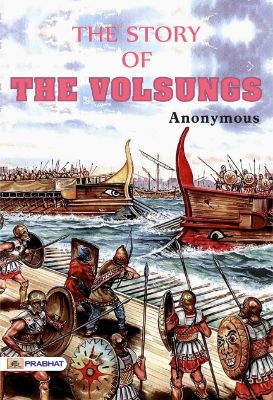
The Story of the Volsungs by Anonymous
I HAVE endeavoured in this Ghostly little book, to raise the Ghost of an Idea, which shall not put my readers out of humour with themselves, with each other, with the season, or with me. May it haunt their houses pleasantly, and no one wish to lay it.’ -Preface by Charles Dickens

The Story of Young Abraham Lincoln by Wayne Whipple
The boy or girl who reads to-day may know about the real Lincoln, than his own children knew. The greatest President’s son, Robert Lincoln, discussing a certain incident in their life in the White House, remarked to the writer, with a smile full of meaning; ” I believe you know more about our family matters that I do!”
The Story Without an End by Friedrich Wilhelm Carové
THERE was once a Child who lived in a little hut, and in the hut there was nothing but a little bed and a looking-glass which hung in a dark corner. Now the Child cared nothing at all about the looking-glass; but as soon as the first sunbeam glided softly through the casement and kissed his sweet eyelids, and the finch and the linnet waked him merrily with their morning songs, he arose, and went out into the green meadow. And he begged flour of the primrose, and sugar of the violet, and butter of the butter-cup; he shook dew-drops from the cowslip into the cup of a harebell; spread out a large lime leaf, set his little breakfast upon it, and feasted daintily. Sometimes he invited a humming bee, oftener a gay butterfly, to partake his feast; but his favourite guest was the blue dragonfly. The bee murmured a great deal, in a solemn tone, about his riches: but the Child thought that if he were a bee heaps of treasure would not make him gay and happy; and that it must be much more delightful and glorious to float about in the free and fresh breezes of spring, and to hum joyously in the web of the sunbeams, than, with heavy feet and heavy heart, to stow the silver wax and the golden honey into cells.

The Strange Adventures of Mr. Middleton by Wardon Allan Curtis
The present book ‘The Strange Adventures of Mr. Middleton’ is a fictional novel written by the famous writer Wardon Allan Curtis. It is a novel which revolves around a man Mr. Middleton and records the mysteries and adventures that he experience.
THE STRANGE CASE of DR JEKYLL and HYDE by R L STEVENSON
Scottish author Robert Louis Stevenson’s 1886 novel, ‘Strange Case of Dr Jekyll and Mr Hyde’ is about a London lawyer named Gabriel John Utterson, who investigates strange occurrences between his old friend, Dr Henry Jekyll, and the evil Edward Hyde. The novel’s impact is such that it has become a part of the language, with the very phrase “Jekyll and Hyde” coming to mean a person who is vastly different in moral character from one situation to the next.

The Strange Case of Dr. Jekyll and Mr. Hyde by Robert Louis Stevenson
Mr. Utterson the lawyer was a man of a rugged countenance that was never lighted by a smile; cold, scanty and embarrassed in discourse; backward in sentiment; lean, long, dusty, dreary and yet somehow lovable. At friendly meetings, and when the wine was to his taste, something eminently human beaconed from his eye; something indeed which never found its way into his talk, but which spoke not only in these silent symbols of the after-dinner face, but more often and loudly in the acts of his life. He was austere with himself; drank gin when he was alone, to mortify a taste for vintages; and though he enjoyed the theatre, had not crossed the doors of one for twenty years. But he had an approved tolerance for others; sometimes wondering, almost with envy, at the high pressure of spirits involved in their misdeeds; and in any extremity inclined to help rather than to reprove. “I incline to Cain’s heresy,” he used to say quaintly: “I let my brother go to the devil in his own way.” In this character, it was frequently his fortune to be the last reputable acquaintance and the last good influence in the lives of downgoing men. And to such as these, so long as they came about his chambers, he never marked a shade of change in his demeanour.

The Strange Story Book by Mrs. Lang
The time has come to say good-bye; and good-byes are always so sad that it is much better when we do not know that we have got to say them. It is so long since Beauty and the Beast and Cinderella and Little Red Riding Hood came out to greet you in the ‘Blue Fairy Book,’ that some of you who wore pigtails or sailor suits in those days have little boys and girls of your own to read the stories to now, and a few may even have little baby grandchildren.
The Straw by Eugene O’Neill
The Straw is a three act play written by American playwright Eugene O’Neill in 1922. The play follows lead characters Eileen Carmody and Stephen Murray during their time at Hill Farm Sanatorium.
The Street of Seven Stars by Mary Roberts Rinehart
The present book ‘The Street of Seven Stars’ written by the famous English novelist Mary Roberts Rinehart was first published in the year 1914. This is one of her pre-World War I romance novels.
The Strollers by Frederic S Isham
Frederic Stewart Isham (March 29, 1865 – September 6, 1922) was an American novelist and playwright who wrote mainly historical romances and adventure novels.

The Student’s Elements of Geology by Sir Charles Lyell
Of what materials is the earth composed, and in what manner are these materials arranged? These are the first inquiries with which Geology is occupied, a science which derives its name from the Greek ge, the earth, and logos, a discourse. Previously to experience we might have imagined that investigations of this kind would relate exclusively to the mineral kingdom, and to the various rocks, soils, and metals, which occur upon the surface of the earth, or at various depths beneath it. But, in pursuing such researches, we soon find ourselves led on to consider the successive changes which have taken place in the former state of the earth’s surface and interior, and the causes which have given rise to these changes; and, what is still more singular and unexpected, we soon become engaged in researches into the history of the animate creation, or of the various tribes of animals and plants which have, at different periods of the past, inhabited the globe. -an excerpt
The Study of Astronomy by John Gabriel Stedman
It has long been a matter of surprize to those who are interested in the education of youth, that, among the numerous publications intended for their improvement, so few attempts have been made to facilitate the study of Astronomy.
Many excellent treatises have been written on this important and useful science; but if it be considered that they abound with technical terms, unintelligible to juvenile minds, it cannot be expected that they should derive any great advantage from the perusal of them.
The Subjection of Women by John Stuart Mill
The object of this Essay is to explain as clearly as I am able, the grounds of an opinion which I have held from the very earliest period when I had formed any opinions at all on social or political matters, and which, instead of being weakened or modified, has been constantly growing stronger by the progress of reflection and the experience of life: That the principle which regulates the existing social relations between the two sexes—the legal subordination of one sex to the other—is wrong in itself, and now one of the chief hindrances to human improvement; and that it ought to be replaced by a principle of perfect equality, admitting no power or privilege on the one side, nor disability on the other.
The Subterranean Brotherhood by Julian Hawthorne
In the cell over mine at night
A step goes to and fro
From barred door to iron wall—
From wall to door I hear it go,
Four paces, heavy and slow,
In the heart of the sleeping jail:
And the goad that drives, I know!
I never saw his face or heard him speak;
He may be Dutchman, Dago, Yankee, Greek;
But the language of that prisoned step
Too well I know!
Unknown brother of the remorseless bars,
Pent in your cage from earth and sky and stars,
The hunger for lost life that goads you so,
I also know!

The Success Machine by Henry Slesar
Mechanical brains are all the rage these days, so general products just had to have one. But the blamed thing almost put them out of business. Why? It had no tact. It insisted upon telling the truth! –An excerpt from the book

The Survivors of the Chancellor by Jules Verne
The book is about the last voyage of a British crusing ship, the Chancellor, advised from the point of view of one of its passengers (in the shape of a diary). At the establishing of its voyage, the Chancellor carried 28 people, however via the end, solely eleven human beings remain.
The Sweet Cheat Gone by Marcel Proust
Albertine disparue is the title of the sixth volume of Marcel Proust’s seven part novel, À la recherche du temps perdu. It is also known as La Fugitive and The Sweet Cheat Gone.
The Swiss Family Robinson by J.D. Wyss
The Swiss Family Robinson is a novel by Johann David Wyss, first published in 1812, about a Swiss family of immigrants whose ship en route to Port Jackson, Australia, goes off course and is shipwrecked in the East Indies.
The Sword of Antietam by Joseph A. Altsheler
Historical novel from the Civil War series. “The Sword of Antietam” tells a complete story,
The Sword of the King by Ronald MacDonald
It is matter of no small difficulty and hesitation for a woman to tell a story—in especial, her own story—from the beginning of it even to the end, and to hold, as it were, a straight course throughout. The perplexities, I say, are many, and among them not the least is found in these same words, beginning and end. For where truly his story has its inception, and what will be its ultimate word, might well puzzle the wisest man of this age, or any other.
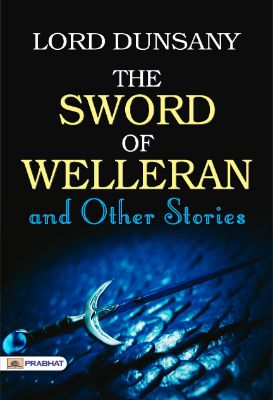
The Sword of Welleran and Other Stories by Lord Dunsany
Where the great plain of Tarphet runs up, as the sea in estuaries, among the Cyresian mountains, there stood long since the city of Merimna well-nigh among the shadows of the crags. I have never seen a city in the world so beautiful as Merimna seemed to me when first I dreamed of it. It was a marvel of spires and figures of bronze, and marble fountains, and trophies of fabulous wars, and broad streets given over wholly to the Beautiful. Right through the centre of the city there went an avenue fifty strides in width, and along each side of it stood likenesses in bronze of the Kings of all the countries that the people of Merimna had ever known. At the end of that avenue was a colossal chariot with three bronze horses driven by the winged figure of Fame, and behind her in the chariot the huge form of Welleran, Merimna’s ancient hero, standing with extended sword. So urgent was the mien and attitude of Fame, and so swift the pose of the horses, that you had sworn that the chariot was instantly upon you, and that its dust already veiled the faces of the Kings. And in the city was a mighty hall wherein were stored the trophies of Merimna’s heroes. Sculptured it was and domed, the glory of the art of masons a long while dead, and on the summit of the dome the image of Rollory sat gazing across the Cyresian mountains towards the wide lands beyond, the lands that knew his sword. And beside Rollory, like an old nurse, the figure of Victory sat, hammering into a golden wreath of laurels for his head the crowns of fallen Kings.
The Symbolist Movement in Literature by Arthur Symons
The Symbolist Movement in Literature’ by Arthur Symons was a noted work that brought French Revolution to the attention of Anglo-American literary circles. Its first two editions were vital influences on W. B. Yeats and T. S. Eliot—a note that, for nothing else, would assure its historical place with the most important early Modernist criticism.

The Tailor of Gloucester by Beatrix Potter
In the time of swords and periwigs and full-skirted coats with flowered lappets—when gentlemen wore ruffles, and gold-laced waistcoats of paduasoy and taffeta—there lived a tailor in Gloucester.
He sat in the window of a little shop in Westgate Street, cross-legged on a table, from morning till dark.
All day long while the light lasted he sewed and snippeted, piecing out his satin and pompadour, and lutestring; stuffs had strange names, and were very expensive in the days of the Tailor of Gloucester.
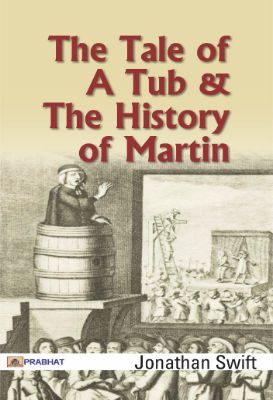
The Tale of a Tub and The History of Martin by Jonathan Swift
Jonathan Swift’s first major work, ‘A Tale of a Tub’ was arguably his most difficult satire and perhaps his most masterly. The tale is a prose parody divided into sections each delving into the morals and ethics of English. It was first published in the year 1704.
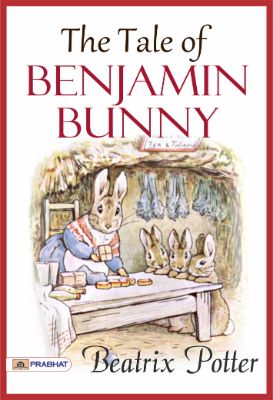
The Tale of Benjamin Bunny by Beatrix Potter
One morning a little rabbit sat on a bank.
He pricked his ears and listened to the trit-trot, trit-trot of a pony.
A gig was coming along the road; it was driven by Mr. McGregor, and beside him sat Mrs. McGregor in her best bonnet.

The Tale of Ginger and Pickles by Beatrix Potter
Once upon a time there was a village shop. The name over the window was “Ginger and Pickles.”
It was a little small shop just the right size for Dolls—Lucinda and Jane Doll-cook always bought their groceries at Ginger and Pickles.
The counter inside was a convenient height for rabbits. Ginger and Pickles sold red spotty pocket-handkerchiefs at a penny three farthings.
They also sold sugar, and snuff and galoshes.
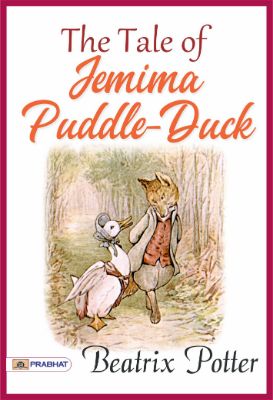
The Tale of Jemima Puddle-Duck by Beatrix Potter
Her sister-in-law, Mrs. Rebeccah Puddle-duck, was perfectly willing to leave the hatching to some one else—”I have not the patience to sit on a nest for twenty-eight days; and no more have you, Jemima. You would let them go cold; you know you would!”
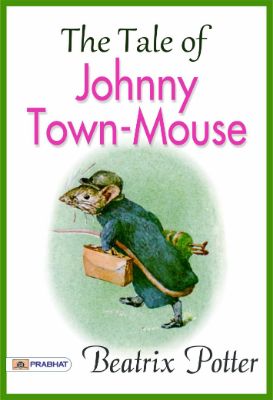
The Tale of Johnny Town-Mouse by Beatrix Potter
Johnny Town-mouse was born in a cupboard. Timmy Willie was born in a garden. Timmy Willie was a little country mouse who went to town by mistake in a hamper. The gardener sent vegetables to town once a week by carrier; he packed them in a big hamper.
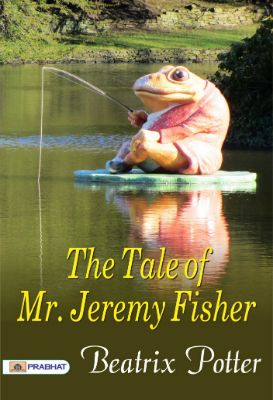
The Tale of Mr. Jeremy Fisher by Beatrix Potter
Once upon a time there was a frog called Mr. Jeremy Fisher; he lived in a little damp house amongst the buttercups at the edge of a pond.
The water was all slippy-sloppy in the larder and in the back passage.
But Mr. Jeremy liked getting his feet wet; nobody ever scolded him, and he never caught a cold!
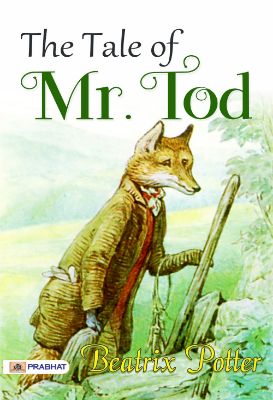
The Tale of Mr. Tod by Beatrix Potter
I have made many books about well-behaved people. Now, for a change, I am going to make a story about two disagreeable people, called Tommy Brock and Mr. Tod.