
Premium Books
Showing 2001–2050 of 3787 results
Sorrell and Son by Warwick Deeping
Sorrell and Son’ is a popular culture novel by Warwick Deeping. The story is set in England. It is about a man who devotes his life to making his son’s life a success. As the story proceeds, many themes are explored including life, love, career and familial and marital relationships.

Sound by John Tyndall
The cases are few in which I have been content to reproduce what I have read of the works of acousticians. I have sought to make myself experimentally familiar with the ground occupied; trying, in all cases, to present the illustrations in the form and connection most suitable for educational purposes. -Preface
Sound Mind by John Haslam
The indulgence of the public has been already extended to several works which I have submitted to its decision on the subject of Insanity; and the same favourable interpretation is now solicited for the present performance,—which attempts the more difficult investigation of Sound Mind.
South-African Folk-Tales by James A. Honey
In presenting these stories, which are of deep interest and value to South Africans, I hope they may prove of some value to those Americans who have either an interest in animals or who appreciate the folklore of other countries.
Many of these tales have appeared among English collections previous to 1880, others have been translated from the Dutch, and a few have been written from childhood remembrance. Consequently they do not pretend to be original or unique. Care has been taken not to spoil the ethnological value for the sake of form or structure; and in all cases they are as nearly like the original as a translation from one tongue to another will allow. They are all South-African folklore tales and mainly from the Bushmen.
Southern Horrors: Lynch Law in All Its Phases by Ida B. Wells-Barnett
The greater part of what is contained in these pages was published in the New York Age June 25, 1892, in explanation of the editorial which the Memphis whites considered sufficiently infamous to justify the destruction of my paper, the Free Speech.
Since the appearance of that statement, requests have come from all parts of the country that “Exiled” (the name under which it then appeared) be issued in pamphlet form. Some donations were made, but not enough for that purpose. The noble effort of the ladies of New York and Brooklyn Oct. 5 have enabled me to comply with this request and give the world a true, unvarnished account of the causes of lynch law in the South.

Southey by Edward Dowden
No one of his generation lived so completely in and for literature as did Southey. “He is,” said Byron, “the only existing entire man of letters.” With him literature served the needs both of the material life and of the life of the intellect and imagination; it was his means of earning daily bread, and also the means of satisfying his highest ambitions and desires. This, which was true of Southey at five-and-twenty years of age, was equally true at forty, fifty, sixty.
Spanish Papers by Washington Irving
Washington Irving (1783-1859) was an American author of the early nineteenth century. Best known for his short stories The Legend of Sleepy Hollow and Rip van Winkle, he was also a prolific essayist, biographer and historian. This book is a reproduction of an important historical work. We believe this work is culturally important. We appreciate your understanding and hope you enjoy this valuable book. Edited by Pierre Irving, and includes chronicles from the unpublished manuscripts of Washington Irving.
Speeches and Letters of Abraham Lincoln, 1832-1865 by Abraham Lincoln
This work has been selected by scholars as being culturally important, and is part of the knowledge base of civilization as we know it. This work was reproduced from the original artifact, and remains as true to the original work as possible.
Speeches of Mark Twain by Mark Twain
Mark Twain was one of the most popular public speakers of his day. This collection brings together in a single volume the complete collected speeches of Mark Twain which was first published in 1871.

Spirits in Bondage by C.S. Lewis
Spirits in Bondage was C. S. Lewis’s first published work. Lewis was twenty years old and had just returned from military service in the First World War.

Spitting at the Sun by Spitting at the Sun
If I die of a lingering illness, nay even by as much as a boil or a pimple, it will be your duty to proclaim to the world, even at the risk of making people angry with you, that I was not the man that I claimed to be. If you do that it will give my spirit peace. Note down this also that if some one were to end my life by putting a bullet through me as someone tried to do with a bomb the other day and I met his bullet without a groan, and breathed my last taking God’s name, then alone would I have made good my claim.
—Gandhi
Spoilt Child by Oswell, G. D., Tr
His life was devoted to the good of his fellow-country- men, and he was especially eager in the cause of female education. In the preface to one of his works, written with that object in view, ho writes : — “ I was born in the year 1814.

Spons’ Household Manual by E. Spon and F. N. Spon
Time was when the foremost aim and ambition of the English housewife was to gain a full knowledge of her own duties and of the duties of her servants. In those days, bread was home-baked, butter home-made, beer home-brewed, gowns home-sewn, to a far greater extent than now.
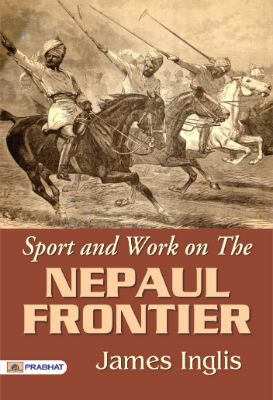
Sport and Work on the Nepaul Frontier by James Inglis
I went home in 1875 for a few months, after some twelve years’ residence in India. What first suggested the writing of such a book as this, was the amazing ignorance of ordinary Indian life betrayed by people at home. The questions asked me about India, and our daily life there, showed in many cases such an utter want of knowledge, that I thought, surely there is room here for a chatty, familiar, unpretentious book for friends at home, giving an account of our every-day life in India, our labours and amusements, our toils and relaxations, and a few pictures of our ordinary daily surroundings in the far, far East.

Square Deal Sanderson by Charles Alden Seltzer
First published in the year 1922, the present book ‘Square Deal Sanderson’ was written by one of twentieth century’s most prolific authors Charles Alden Seltzer. This novel was written in the Western genre of writing and marks the latter’s mastery in the genre.
St. Leon by William Godwin
St. Leon’ is the tale of a French aristocrat, Count Reginald de St. Leon, who loses his wealth gambling and experiences guilt that drives him almost to madness. He accepts, from a dying stranger, the gift of the secret of the elixir of life and of the power of multiplying wealth, and consequently is forced to wander separated from humankind.
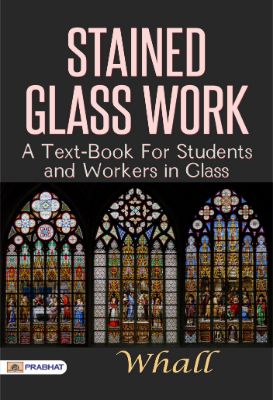
Stained Glass Work: A text-book for students and workers in glass by Whall
You are to know that stained glass means pieces of coloured glasses put together with strips of lead into the form of windows; not a picture painted on glass with coloured paints.
You know that a beer bottle is blackish, a hock bottle orange-brown, a soda-water bottle greenish-white—these are the colours of the whole substance of which they are respectively made.

Standard Catholic Readers by Grades: Fifth Year by Various
A collection of classic short stories written by many eminent writers of early 20th century. This anthology is an attempt to build and rear a qualitative literary taste in children.

Standard Selections by Fulton, Trueblood, and Trueblood
The purpose of the compilers of this volume is:—
First, to provide some new material in poetry and eloquence that has never before appeared in books of this character, in addition to many standard selections familiar to the general public;
Second, to furnish selections that will stand the test of literary criticism and at the same time prove to be popular and successful for public entertainment;
Third, to offer for the use of classes in public speaking such carefully selected literature of varied scope as will be helpful and stimulating in the practice of reading aloud and profitable in acquiring power of vocal interpretation;
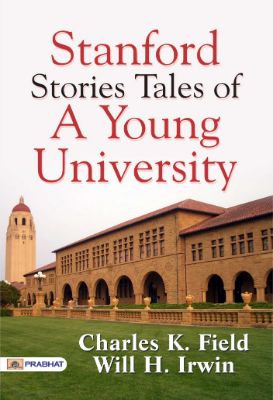
Stanford Stories Tales of a Young University by Charles K. Field Will H. Irwin
When a college man’s good fairy makes her first call at his cradle, she may bestow upon him the football instinct, with muscles to match; no fairy could do more. But if she bumps up against Heredity, and is powerless to give him the supreme gift, she may compensate for it in a degree by leaving the kind of larynx and tympanum used in the Glee Club. Failing this, she may render next best service by throwing a mandolin in his way and bewitching his parents into paying for lessons. Some twenty years later, behind the enchanted scenes of a specially hired theater, or on the polished floor of society’s inner temple, he may think of the fairy kindly.

Statesman by Plato
The Statesman, also known by its Latin title, Politicus, is a Socratic dialogue written by Plato. The text depicts a conversation among Socrates,
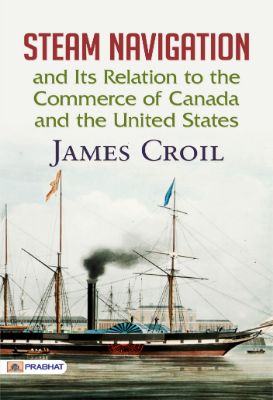
Steam Navigation and Its Relation to the Commerce of Canada and the United States by James Croil
During the past few years several important contributions to this class of literature have issued from the metropolitan press. Three of these deserve special mention: (1) “The Atlantic Ferry; its Ships, Men, and Working,” by Arthur J. Maginnis, gold medallist and member of the Institution of Naval Architects, 1892; (2) “Our Ocean Railways, or the Rise, Progress, and Development of Ocean Steam Navigation,” by A. Fraser-Macdonald, 1893; (3) “The History of North Atlantic Steam Navigation, with Some Account of Early Ships and Shipowners,” by Henry Fry, ex-President of Dominion Board of Trade of Canada and Lloyd’s Agent at Quebec, 1896. Each of these writers, in his own way, has treated the subject so thoroughly and satisfactorily, the author feels as though the wind had been taken out of his sails somewhat, and it is not without hesitation that he has yielded to the advice of friends in whose judgment he has implicit confidence, and ventured to follow in the wake of such accomplished writers.

Stephen H Branch’s Alligator by Stephen H Branch
James Gordon Bennett: We left New York amid the huzzas of friends, who bade us a most affectionate adieu. The passengers are from every section of the Union. There are men of talent and high integrity among us. The emigrants in the Crescent City have never been excelled, always excepting the Pilgrim Fathers. On leaving the Pier, I noticed but two females, who waved their handkerchiefs most gracefully, and imparted their sweetest smiles. -an excerpt


Stories by American Authors, Volume 5 by Various
April 4, 1857.—I have changed my sky without changing my mind. I resume these old notes in a new world. I hardly know of what use they are; but it’s easier to stick to the habit than to drop it. I have been at home now a week—at home, forsooth! And yet, after all, it is home. I am dejected, I am bored, I am blue. How can a man be more at home than that? Nevertheless, I am the citizen of a great country, and for that matter, of a great city. I walked to-day some ten miles or so along Broadway, and on the whole I don’t blush for my native land. We are a capable race and a good-looking withal; and I don’t see why we shouldn’t prosper as well as another. This, by the way, ought to be a very encouraging reflection.

STORIES BY ENGLISH AUTHORS SCOTLAND by Various
For two years it had been notorious in the square that Sam’l Dickie was thinking of courting T’nowhead’s Bell, and that if Little Sanders Elshioner (which is the Thrums pronunciation of Alexander Alexander) went in for her, he might prove a formidable rival. Sam’l was a weaver in the tenements, and Sanders a coal-carter, whose trade-mark was a bell on his horse’s neck that told when coal was coming. Being something of a public man, Sanders had not, perhaps, so high a social position as Sam’l, but he had succeeded his father on the coal-cart, while the weaver had already tried several trades. It had always been against Sam’l, too, that once when the kirk was vacant he had advised the selection of the third minister who preached for it on the ground that it became expensive to pay a large number of candidates.

Stories by English Authors: Africa by Various
Do I know why Tom Donahue is called “Lucky Tom”? Yes, I do; and that is more than one in ten of those who call him so can say. I have knocked about a deal in my time, and seen some strange sights, but none stranger than the way in which Tom gained that sobriquet, and his fortune with it. For I was with him at the time. Tell it? Oh, certainly; but it is a longish story and a very strange one; so fill up your glass again, and light another cigar, while I try to reel it off. Yes, a very strange one; beats some fairy stories I have heard; but it’s true, sir, every word of it. There are men alive at Cape Colony now who’ll remember it and confirm what I say. Many a time has the tale been told round the fire in Boers’ cabins from Orange state to Griqualand; yes, and out in the bush and at the diamond-fields too.

Stories by English Authors: England by Wilkie Collins et al.
The 10:15 train glided from Paddington May 7, 1847. In the left compartment of a certain first-class carriage were four passengers; of these two were worth description. The lady had a smooth, white, delicate brow, strongly marked eyebrows, long lashes, eyes that seemed to change colour, and a good-sized, delicious mouth, with teeth as white as milk. A man could not see her nose for her eyes and mouth; her own sex could, and would have told us some nonsense about it. She wore an unpretending grayish dress, buttoned to the throat with lozenge-shaped buttons, and a Scottish shawl that agreeably evaded colour.
Stories By English Authors: France (Selected by Scribners) by Wilkie Collins et al.
The cemetery of St. John had taken its own share of the snow. All the graves were decently covered; tall white housetops stood around in grave array; worthy burghers were long ago in bed, be-nightcapped like their domiciles; there was no light in all the neighbourhood but a little peep from a lamp that hung swinging in the church choir, and tossed the shadows to and fro in time to its oscillations. The clock was hard on ten when the patrol went by with halberds and a lantern, beating their hands; and they saw nothing suspicious about the cemetery of St. John.

Stories by English Authors: Germany (Selected by Scribners) by William Black et al.
It was about four in the afternoon when a young girl came into the salon of the little hotel at C—— in Switzerland, and drew her chair up to the fire.
“You are soaked through,” said an elderly lady, who was herself trying to get roasted. “You ought to lose no time in changing your clothes.”
“I have not anything to change,” said the young girl, laughing. “Oh, I shall soon be dry!”
“Have you lost all your luggage?” asked the lady, sympathetically.

Stories By English Authors: London by Various
Frequently I have to ask myself in the street for the name of the man I bowed to just now, and then, before I can answer, the wind of the first corner blows him from my memory. I have a theory, however, that those puzzling faces, which pass before I can see who cut the coat, all belong to club waiters.
Stories by English Authors: The Orient by Various
The present book ‘Stories by English Authors: The Orient’ is a compandium of six best works of six of the most famous and critically acclaimed writers in the English language, including Rudyard Kipling, Miss Mitford, RK Douglas, Mary Beaumont, Morley Roberts and Netta Syrett.

Stories by Foreign Authors: Scandinavian by Juhani Aho et al.
The man whose story is here to be told was the wealthiest and most influential person in his parish; his name was Thord Overaas. He appeared in the priest’s study one day, tall and earnest.
“I have gotten a son,” said he, “and I wish to present him for baptism.”
“What shall his name be?”
“Finn,—after my father.”
“And the sponsors?”

Stories by Foreign Authors: Spanish by Alarcón, Bécquer, Caballero, and Selgas
The speaker was Gabriel, a distinguished civil engineer of the mountain corps. He was seated under a pine tree, near a spring, on the crest of the Guadarrama. It was only about a league and a half distant from the palace of the Escurial, on the boundary line of the provinces of Madrid and Segovia. I know the place, spring, pine tree and all, but I have forgotten its name.
Stories from Everybody’s Magazine by Various
“No doubt you have heard the age-old legend of the Mother Vein of Gold, which appears and vanishes, now and again, in this corner of the world. Superstition regarding this great original vein of gold is found wherever men seek the precious metal. The feverish Spaniards called this phantom lode the Madre d’Oro, or “Mother of Gold.” Now it is located in Mexico, now in India or Peru, California or Australia. Tradition says that Montezuma got his gold from this great vein, which lay in a secret valley whose where-abouts was jealously guarded by three priests of the war tribe, sole possessors of the knowledge. Any intruder who by chance or design looked down into this valley was smitten absolutely blind. Tradition among the successors of the Aztecs says that when Montezuma passed, the Madre d’Oro sank back again into the earth, and has been seen no more. Men still follow the phantom vein. Those who see it, even in their dreams, still are smitten blind.” -Preface

Stories from Hans Andersen by H. C. Andersen
Now we are about to begin, and you must attend; and when we get to the end of the story, you will know more than you do now about a very wicked hobgoblin. He was one of the worst kind; in fact he was a real demon. One day he was in a high state of delight because he had invented a mirror with this peculiarity, that every good and pretty thing reflected in it shrank away to almost nothing. On the other hand, every bad and good-for-nothing thing stood out and looked its worst. The most beautiful landscapes reflected in it looked like boiled spinach, and the best people became hideous, or else they were upside down and had no bodies.

Stories from Tagore by Rabindranath Tagore
The present book ‘Stories from Tagore’ is a collection of celebrated classic Indian writer, poet, philosopher Rabindranath Tagore, translated in English to introduce children to best of the Indian literature. this volume was first produced and published in the year 1918.
Stories of Courage and Heroism by William Patten
This collection, carefully used by parents and teachers with due reference to individual tastes and needs, will make many children enjoy good literature. It will inspire them with a love of good reading, which is the best possible result of any elementary education. The Junior Classics constitute a set of books whose contents will delight children and at the same time satisfy the legitimate ethical requirements of those who have the children’s best interests at heart.
Stories of Great Inventors by Hattie E. Macomber
This book is a great collection of stories of great inventors of the world: Robert Fulton, Eli Whitney, Samuel Morse, Peter Cooper, Thomas A. Edison
Stories of Later American History by Wilbur F. Gordy
First published in the year 1915, the present book ‘Stories of Later American History’ was written by Wilbur F. Gordy. This book was written purposely to provide a compendium of the later history of America for the students of Grade V as per the material provided by the concerned governmental authorities.
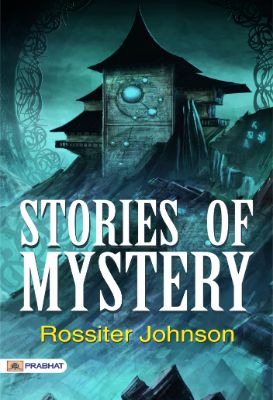
Stories of Mystery by Rossiter Johnson
Included in this collection are The Ghost – William D. O’Connor, The Four-Fifteen Express – Amelia B. Edwards, The Signal-Man – Charles Dickens, The Haunted Ships – Allan Cunningham, A Raft That No Man Made – Robert T.S. Lowell, The Invisible Princess – Francis O’Connor, The Advocate’s Wedding-Day – Catherine Crowe, and The Birthmark -Nathaniel Hawthorne.

Stories of Robin Hood by Bertha E. Bush
stories of Robin Hood in a lively retelling that chronicles the events of the time in which Robin Hood lived. Describes how and why he came to live in the Green Wood, and the adventures he had there with Little John, Maid Marian, and the Sheriff of Nottingham. Selections from the original ballads are woven into the story. A delightful introduction to these stories for children ages 8 and up
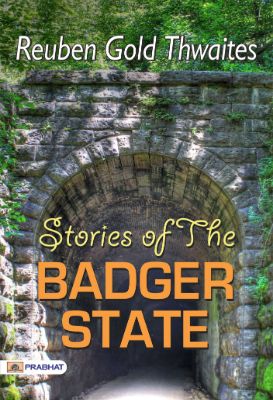
Stories of the Badger State by Reuben Gold Thwaites
In recognition of this fact, these true stories, selected from Wisconsin’s history, have been written as a means to the cultivation of civic patriotism among the youth of our commonwealth. It is not the purpose of the book to present a continuous account of the development of the State; for this, the author begs to refer to his larger work, “The Story of Wisconsin” (in the Story of the States Series). Rather is it desired to give selections from the interesting and often stirring incidents with which our history is so richly stored, in the hope that the reader may acquire a taste for delving more deeply into the annals of the Badger State.
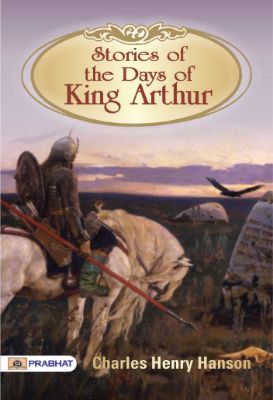
Stories of the Days of King Arthur by Charles Henry Hanson
First published in the year 1882, the present book ‘Stories of the Days of King Arthur’ is a collection of historical fictional tales based on the adventures and life of King Arthur from the medieval history written by famous writer Charles Henry Hanson.
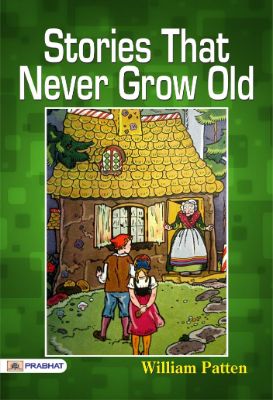
Stories that never grow old by William Patten
Stories that never grow old. The Junior Classics constitute a set of books whose contents will delight children and at the same time satisfy the legitimate ethical requirements of those who have the children’s best interests at heart. Beautifully illustrated.

Stories the Iroquois Tell Their Children by Mabel Powers
Now we have little left but stories of our fathers. They, too, will soon be lost and forgotten, but a voice has come to speak for us. Yeh sen noh wehs—the one who tells the stories—will carry these stories of our fathers to Paleface. She will help White man to understand Indian, Indian to be understood. She will have all men brothers.
Indian’s heart is glad that Yeh sen noh wehs, our white friend, has come to us. She have good eyes. She see right. She like things Indian. She try to preserve them. Our old men and women tell her the stories told them, many, many moons ago, when little children.
Strange Interlude by Eugene O’Neill
The present work, ‘Strange Interlude’, is an experimental play by American playwright Eugene O’Neill. It is written in nine acts. Written in 1923, it won the Pulitzer Prize for Drama for its 1928 Broadway production. The play’s subject matter, very controversial for the 1920s, led to it being censored or banned in many cities outside New York. ‘Strange Interlude’ makes extensive use of a soliloquy technique, in which the characters speak their inner thoughts to the audience.
Streets, and Other Verses by Douglas Goldring
This great grey city that bred me and mine—
Supreme, mysterious, dirty and divine—
Is made up all of contrast, light and gloom.
It has green hills and parks where flowers bloom;
And shadowed pathways where young lips are shy
And warm hands tangle while the night slips by;
Deserts of humble brick, resigned and drear;
And crowded taverns, full of noise and beer;
Thronged streets where jostle theatre and hotel,
And stately terraces where rich folk dwell….
It has black alleys, and most dismal plains
Crossed by long, steady, fire-emitting trains;
Foul slums and palaces, prisons and spires
And suburbs where the jaundiced clerk expires.

Struwwelpeter: Merry Stories and Funny Pictures by Heinrich Hoffmann
Struwwelpeter: Merry Stories and Funny Pictures’ is a German children’s book by Heinrich Hoffmann. It was first published in the year 1845. It comprises ten illustrated and rhymed stories, mostly about children. Each has a clear moral that demonstrates the disastrous consequences of misbehavior in an exaggerated way. The title of the first story provides the title of the whole book. It is one of the earliest books for children that combines visual and verbal narratives in a book format, and is considered a precursor to comic books.