
Classic Books
Showing 3251–3300 of 4246 results
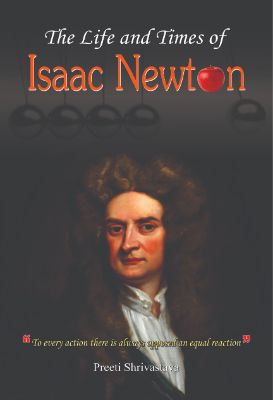
The Life and Times of Issac Newton by Preeti Srivastava
Newton is widely considered in history as the most influential scientist. He is best known for his discovery of gravity and the subsequent laws of motion that he meticulously theorized. School children around the world are acquainted with the popular legend about an apple falling on Newton’s head which led to the famous discovery of gravity. However that colourful story and the preoccupation with Newton’s work in physics tends to make people forget Newton’s work in other fields. This biography captures both the personal life as well as the career of Isaac Newton devoted entirely to scientific pursuit. It presents a complete picture of Newton the man, the scientist, the philosopher, the theologian and the public figure. Newton was very religious, and intently studied the Bible and even occult practices and theories. Newton wrote at length on these subjects, which fascinated him so much that he spent more time writing about them than he did science and mathematics. This biography is an interesting journey through his life shedding light on a personality which towers the scientific world to this day.

The Life and Times of Jaipal Singh Munda by Santosh Kiro
The Life and Times of Jaipal Singh Munda’ is a biography of the legendary leader, hockey genius—who as the Captain, led India Hockey Team to Gold at Amsterdam Summer Olympics, 1928, a voice of the voiceless Adivasis, a Member of the Constituent Assembly and a brain to Fifth Schedule and Sixth Schedule of the Constitution, an excellent orator and man who conceived to rescue ‘Jharkhand’ from the womb of history.
An M.A. (Economics) from Oxford and an Oxford Hockey Blue, Jaipal quit coveted ICS career to lead Indian team at Olympics—only Olympics in history where the Gold medalist team did not concede a single goal to rivals in the entire tournament. Legendary Major Dhyan Chand was a member of this team.
Though married into the family of Indian National Congress President W.C. Bonnerjee, Jaipal dared to go against his own in-laws and formed ‘Jharkhand Party’ in order to lead his ‘Adivasi’ people to statehood by literally becoming a thorn in the Congress politics.
Jaipal was the President of Oxford Indian Majlis, a debating society. As the Principal of Rajkumar College, Raipur, Jaipal organised a football match in Calcutta, at which the school commoners played football with the royal princes of India.
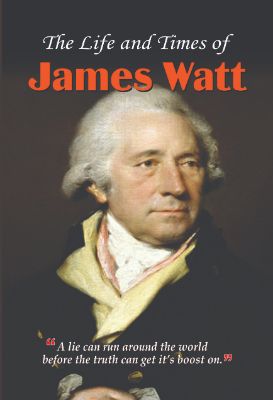
The Life and Times of James Watt by Nandini Saraf
James Watt, (30 January 1736 – 25 August 1819) was a Scottish inventor and mechanical engineer whose improvements to the Newcomen steam engine were fundamental to the changes brought by the Industrial Revolution in both his native Great Britain and the rest of the world.
Watt was much honoured in his own time. In 1784 he was made a fellow of the Royal Society of Edinburgh, and was elected as a member of the Batavian Society for Experimental Philosophy, of Rotterdam in 1787. In 1789 he was elected to the elite group, the Smeatonian Society of Civil Engineers. In 1806 he was conferred the honorary Doctor of Laws by the University of Glasgow. The French Academy elected him a Corresponding Member and he was made a Foreign Associate in 1814.
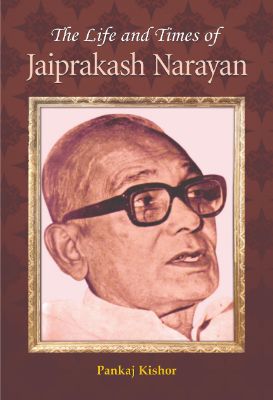
The Life and Times of Jayaprakash Narayan by Kishore, Pankaj
Among some of the most amazingly inspiring personality is India’s great freedom fighter, Loknayak Jayaprakash Narayan. He is someone who will continue to inspire generations to come as a man who wielded no power or authority, but made the most powerful people bow before him. In fact, the whole world saluted him for his honesty, integrity, compassion and frankness.
This biography of Loknayak Jayaprakash Narayan makes interesting reading for the young and the old alike as it awakens our conscience, forcing us into soul-searching as citizens of the world’s most vibrant democracy.
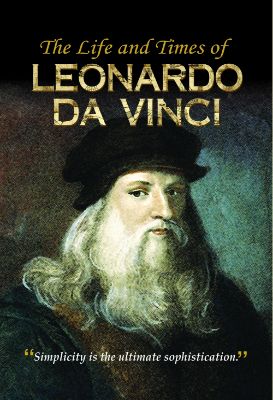
The Life and Times of Leonardo Da Vinci by Vinod Kumar Mishra
Any person can be a good artist. There are many painters who have made excellent paintings in their lifetime. Similarly, a person can be a good scientist, an engineer or a mathematician. He can design wonderful things and also have them constructed. A person can be a good thinker.
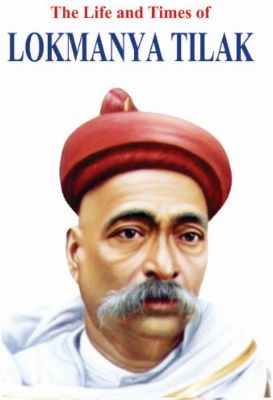
The Life and Times of Lokmanya Tilak by Nandini Saraf
The word ‘lok’ means public and ‘manya’ means accepted. Thus lokmanya means a person who has been accepted by people. In his context it means accepted by people as their leader. ‘Lokmanya’ Keshav Bal Gangadhar Tilak was recognized by the British as the Father of the Indian National Movement because of activities that stirred feelings of nationalism in the hearts of every Indian. Though his ideals often differed from Mahatma Gandhi, his views regarding crucial matters were sometimes accepted many times by Gandhiji.
A revolutionary and social reformer in the true sense of the word, he was a freedom fighter who elicited esteem from all, even his enemies. His indomitable spirit was appreciated by people. He voiced his opinions in speeches and through the newspaper, and everyone especially the British feared his speeches as well as editorials for they provoked Indians to fight for freedom. The British tried to put a ban on them, but did they succeed?
The book observes Tilak’s multifaceted personality through the eyes of people. It is a beneficial book for students, scholars and historians alike.

The Life and Times of M.C. Mary Kom by Anita Gaur
World famous boxer Mary Kom needs no introduction. Her life and her struggle to reach to her present position is an inspiration for all young enthusiasts, who would like to follow her footsteps. This biography highlights all the events of her life – the good and the bad, the defeats and successes that she underwent to reach where she is now. Her life is an inspiration for all young girls. It shows that nothing can deter a person if one has made one’s mind. The book gives a true picture of this undefeatable person’s life and times.
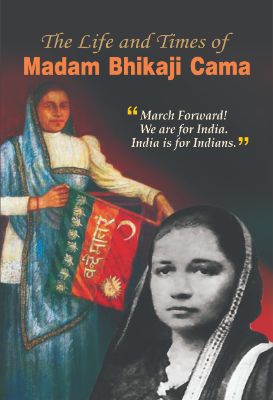
The Life and Times of Madam Bhikaji Cama by Rachna Bhola
Madam Bhikaji Cama, a prominent personality of the Indian Nationalist Movement, was born on 24th September, 1861 in Bombay. She is known for her venture to hoist the Indian flag in a foreign land and announced it as ‘A flag of Independence’. She helped revolutionaries in every way whether with money, material or ideas.
Madam Cama played a major role during Bombay Presidency famine and plague in 1896. She selflessly served the people who were affected and in distress. Together with Dadabhai Naoroji and Singh Rewabhai Rana. She was instrumental in establishing ‘Indian Home Rule Society’ with Shyamji Krishna Verma in February 1905.
Madam Cama relocated to Paris in 1905 where she wrote, published and distributed revolutionary literature for the movement. When she attended the Socialist Conference at Stuttgart, she unfurled the first Indian National Flag. Cama remained in exile in Europe till 1935. Seriously ill and paralyzed by a stroke, Madam Cama returned to India and at the age of 74, she breathed her last.
A philanthropist, considerate yet determined woman that Bhikaji Cama has been well portrayed in this inspiring biography.
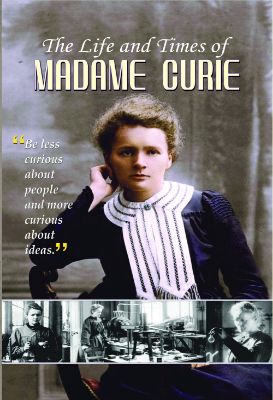
The Life and Times of Madame Curie by Vinod Kumar Mishra
Madame Curie, considered to be one amongst the world’s best scientists, was no less talented and courageous than Newton, Einstein and Galileo. She was born in an extremely ordinary Polish family. Her childhood name was ‘Maria’ or ‘Manya’ which was later changed to ‘Marie’.
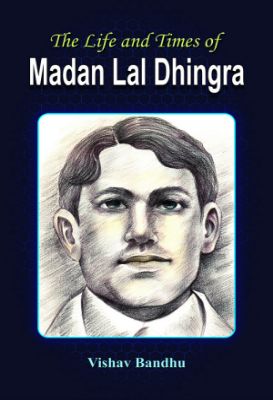
The Life and Times of Madan Lal Dhingra by Vishav Bandhu
The Challenge
“I attempted to shed English blood intentionally and of purpose, as a humble protest against the inhuman transportations and hangings of Indian youth.
In this attempt I consulted none but my own conscience; conspired with none but my own duty. I believe that a nation unwillingly held down by foreign bayonets is in a perpetual state of war. Since open battle is rendered impossible I attacked by surprise – since canon could not be had I drew forth and fired a revolver.
As a Hindu I feel that the slavery of my nation is an insult to my God. Her cause is the cause of freedom. Her service is the service of Sri Krishna. Neither rich nor able, a poor son like myself can offer nothing but his blood on the altar of Mother’s deliverance and so I rejoice at the prospect of my martyrdom.
The only lesson required in India is to learn how to die and the only way to teach it is by dying alone.
The soul is immortal and if everyone of my countrymen takes at least two lives of Englishmen before his body falls the Mother’s salvation is a day’s work.
This war ceases not only with the independence of India alone, it shall continue as long as the English and Hindu races exists in this world.
Until our country is free Sri Krishna stands exhorting, if you are killed you, attain heaven; if successful you win the earth.
It is my fervent prayer, may I be reborn of the same mother, and may I re-die in the same sacred cause, till my mission is done and She stands free for the good of humanity and to the glory of God.”
—Madan Lal Dhingra

The Life and Times of Major Dhyanchand by Rachna Bhola ‘Yamini’
Major Dhyanchand’s name is synonymous with Indian hockey. The great hockey player was born on 29th August, 1905 in Allahabad. His father was serving in the British Indian Army and played hockey. The life of Dhyanchand was full of achievements. He not only played hockey but excelled in it and won many medals for himself and India. His fame grew in the World of Hockey to the extent that once Adolf Hitler offered him citizenship of Germany and post of Colonel in his army. Even today, Dhyanchand remains a legendary figure in the Indian and world hockey. The country celebrates his birthday as National Sports Day to honour his services to the nation. The life and times of the legendary Hockey player of India, who endorsed Hockey as India’s National Game.
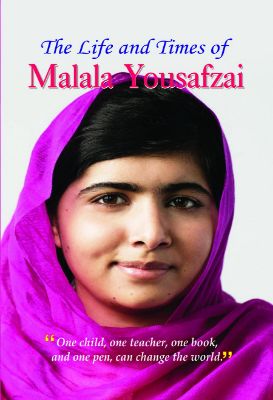
The Life and Times of Malala Yousafzai by Anita Gaur
Malala Yousafzai is a very young, she has gone on to attain the zeniths that few are fortunate to scale at such a young age. Generally, common women, like you and me, are scared of the goons and loafers on the roads and suffer their uncivilized behaviour thinking that they are destined to suffer.

The Life and Times of Martin Luther King (Jr) by Dinkar Kumar
Martin Luther King Jr. is a name with which everyone in the USA is very familiar. “I have a Dream”, is the famous speech he rendered before thousands of people in Birmingham, Albania. His dream was to get Civil Rights for the African-American people, who were until then treated as unequal. He had the courage to stand up to his conviction that people should not be discriminated because of the colour of their skin. He was a very religious man; a true man of God. Inspired by Mahatma Gandhi’s activism, he fought for the Civil Rights of the people through non-violence. Through his Civil Rights activism, he helped pass the Civil Rights Act of 1964 and the same year he received the Nobel Peace Prize.
An inspiring real life story of the great man.

The Life and Times of Napoleon by Hareld F.B. Wheeler
The present book is a collected history of the life and times of the French Emperor Napoleon Bonaparte. He has been one of those extremely famous characters of the world history about whom the historians and writers never stopped writing. His genius for war and conquest had upset many a throne while he secured the lordship of Europe for himself to eventually consign to an island prison. His fame began from when the giant upheaval known as the French Revolution had thrown the Great Britain out of gear. As the proverb rightly says, he was ‘born to rule men’; he showed his brilliance not just as a conqueror but as an organiser too by bringing the scattered masses together, ‘recreated Government and the armies, made laws, and re-established religion’ to lead people to civilized order.
The author has put in lots of efforts to research and gather information in creating this volume which would be of much use and importance to those whose keen interest lies in studying the brilliance of warship and rule of one of the greatest rulers of the world’s history – Napoleon Bonaparte.
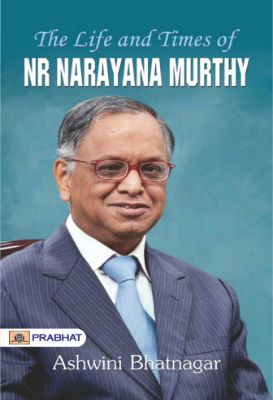
The Life and Times of Narayana Murthy by Ashwini Bhatnagar
NR Narayana Murthy; a biography Listed as one of the “12 greatest entrepreneurs of our time; by Fortune magazine in 2012, Nagavara Ramarao Narayana Murthy, or NR Narayana Murthy as he is better known, is probably the most recognized and respected face of Indian industry.
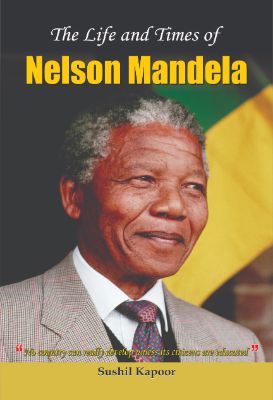
The Life and Times of Nelson Mandela by Susheel Kapoor
Nelson Mandela remains an iconic politician who led the struggle to replace an apartheid regime in South Africa with a multi-racial democracy. He is remembered not so much for being the country’s first black President, but for being the first to have galvanized an entire country against colonial oppression.
Mandela’s life is a lesson to those who fear hardship. He showed nothing worthwhile can be achieved without facing and indeed, surmounting hardships in life. He himself took all the hardship in his stride and saw the struggle through untill the oppressive forces were forced to bend. His charisma, self-deprecating sense of humour and above all, lack of bitterness over the harsh treatment are testimony to his towering global appeal. He never tried to take revenge, not even against those who tortured him.
This book is a humble effort to trace Nelson Mandela’s life, from his childhood and years in jail to his rise as President. It will inspire readers to follow the ideals and values of life cherished by this icon.
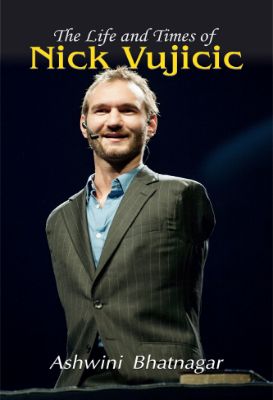
The Life and Times of Nick Vujicic by Ashwini Bhatnagar
The present book ‘The Life and Times of Nick Vujicic’ by Ashwini Bhatnagar is an incredible story of an incredible man with a tongue-twister of a name who is leading a life which, to all of us, is simply mindboggling. Nick Vujicic is a thirty year old man who was born without any limbs – no hands and no feet. Despite all the negative reactions from people around with depression and physical difficulties, Nick is today an Evangelist, an international motivational speaker and New York Times best-selling author.
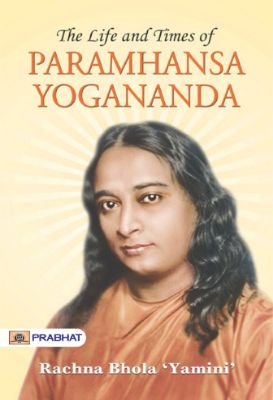
The Life and Times of Paramhansa Yogananda by Rachna Bhola ‘Yamini’
Paramhansa Yogananda was an Indian yogi and guru who introduced millions of westerners to the teachings of meditation and Kriya Yoga through his book.
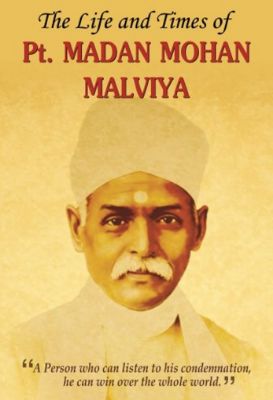
The Life and Times of Pt. Madan Mohan Malviya by Manju ‘Mann’
“Electricity can do away with some dark of the night, but it cannot replace the sun. In the same way, we cannot illuminate ourselves with a foreign language. Literature and country can be progressed by a native language alone.”
—Pt. Madan Mohan Malviya
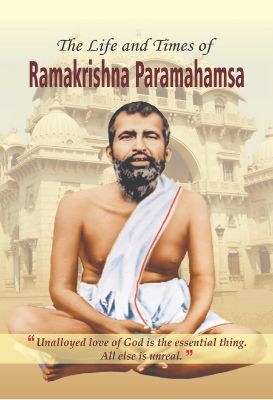
The Life and Times of Ramakrishna Parmahamsa by Pradeep Pandit
Ramakrishna Paramhansa, a famous saint of nineteenth century India was the guru of Swami Vivekanand. He was born in a poor Brahmin family in 1836, in a small town near Calcutta, West Bengal. His life was devoted to mysticism and religious pursuit. A great believer in goddess Kali he often lost consciousness while praying to her.
Many disciples were attracted to him. His main disciple was Swami Vivekananda. Ramakrishna started a mission – Ramakrishna Mission which was very influential during the nineteenth and the twentieth centuries and even now.
The mission that was founded by Ramakrishna was universally spread by Swami Vivekananda. His promotion of Hinduism started with his keynote address at the world Parliament of Religious meeting in Chicago. It won accolades and people were mesmerised by the speaker and his message.
In his last days he gave Vivekananda the responsibility of looking after the disciples and running the mission. He left for his heavenly abode on August 16, 1886 and till the last moment the name of his Goddess was on his lips.
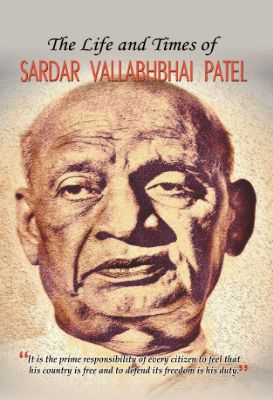
The Life and Times of Sardar Vallabhbhai Patel by Sushil Kapoor
“We should remove the dirt of slavery that pervades around us . If the stink of slavery persists even after gaining freedom, the fragrance of freedom would not pervade.”
—Sardar Patel

The Life and Times of Sri Aurobindo Ghosh by Kaushal Kishore
Aurobindo’s ideology and principles embody divinity, ethics, spontaneity and knowledge. He was an accomplished teacher, a profound scholar, writer and a spiritual Guru. For him nationalism was a holy offering to the motherland when viewed from the divine perspective.
Aurobindo also played a very prominent role as a revolutionary. His contribution to politics cannot be ignored. Although his writings are philosophical in nature they also provide valuable social and cultural analysis. He was the one who suggested that ‘Poorna Swaraj’, should the main aim behind the revolutionary movement against the British. Nationalists were aroused with the inspiration to seize power from the foreign masters.
Aurobindo was an eminent educationist also. He valued greatly the inherent qualities and talents in each child. He felt that the role of education should be to nurture and enhance these God-given qualities.
This book throws light on Sri Aurobindo Ghosh Life. This is a biographical sketch for readers.
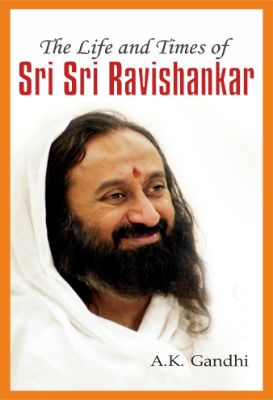
The Life and Times of Sri Sri Ravi Shankar by A.K. Gandhi
The present book by AK Gandhi is based on the life of one of the most popular spiritual leaders of the present time in India and abroad – Sri Sri Ravishankar. He is the founder of Art of Living Foundation. He started this foundation in year 1981 with an aim to relieve individual stress; social problems and violence. In order to help people get rid of their anxieties and establish world peace; he has been initiating several spiritual and charity programmes in different countries of the world. One of such initiatives taken by Guruji was Geneva based NGO; International Association for Human Values; that engages in relief work and rural development; and aims to foster shared global values. He has been the recipient of some of the highest honors and awards of several countries including the Padma Vibhushan from the Government of India which he received in January 2016.
To know more closely about this great spiritual leader and peace-maker; who was born on 13th May 1956 in Tamilnadu; read this story of his life and times from the pen of one of his followers – AK Gandhi.
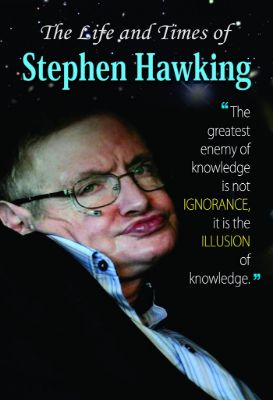
The Life and Times of Stephen Hawkings by Mahesh Sharma
Stephen Hawking is one of the greatest geniuses of our time. After Albert Einstein, he is one of the most brilliant theoretical physicists in history. Though this great cosmologist is afflicted with ALS (Lou Gehrig’s disease), it did not deter him from pursuing Physics.
This book is an unbeatable person’s biography in an engaging manner. It sketches a candid portrait of this one of a kind personality giving insight into his personal and professional life. In a simple language, the complex and confuing world of science have been explained that Hawking as a scientist has traversed through his life. Thus it is comprehensible to even a lay person.
The book unravels the life of Hawking’s from the time he was a college student, to becoming a great cosmologist. An inspiring book which will help the reader know one of the greatest minds of the present age.

The Life and Times of Steve Jobs by Mahesh Sharma
Sometimes, when you innovate, you make mistakes. It is best to admit them quickly, and get on with improving your other innovations.”
These words are of Steve Paul Jobs, who revolutionized the world through computer technology. One of the co-founders of Apple, he took the industry towards new heights and changed the computing industry.
Right from the beginning he had a passion for electronics and was mostly engrossed in making small gadgets in the garage. With his friend Wozniak he launched Apple and made computers a common word in the world. It is due to his untiring efforts that the world has come closer and people are connected with each other.
This book is the story of an extraordinary genius Steve Jobs whose innovative acumen has made the computers and other electronic gadgets available to common man.
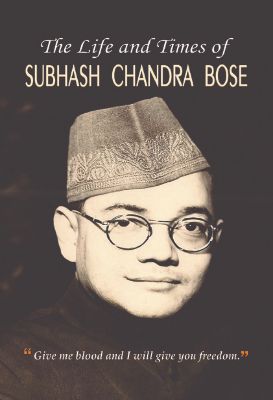
The Life and Times of Subhash Chandra Bose by Praveen Bhalla
Give me blood and I’ll give you freedom’, declared Subhash Chandra Bose. This was exactly what he believed in. The moderate ways of the Congress were not for him. Therefore, he formed the Azad Hind Fauj to overthrow the British. Burning with patriotic zeal, he tried his best to oust the British from his motherland. He was respectfully addressed as ‘Netaji’ and he dedicated his entire life for the freedom of his country.The annals of history have not done justice to this great patriot. It is time that he should be known by the people of India and given his due recognition. This book attempts to bring his life into spotlight and illuminate it so that the reader is conversant with it and appreciates his efforts.
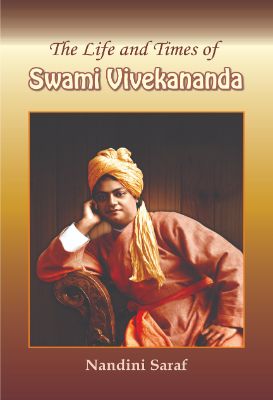
The Life and Times of Swami Vivekananda by Nandini Saraf
Swami Vivekananda philosophy was a blend of the traditional values and modern thoughts, as well as human values and superhuman thoughts. Although he lived only for thirty-nine years, he influenced the thinking of multitudes around the world. His charismatic personality and intellectual speeches made an impact that altered people’s concept of Hinduism and India globally. Even today, his teachings are capable of transforming all who are keen to imbibe them.
Vivekananda was born when Calcutta was India’s capital under the British Raj. It was a time when the British Raj sought to change the governing system of India after the Mutiny of 1857. Swami Vivekananda preferred a modern approach to deal with the existing social problems and favoured Western ideas. This book tries to cover the life and philosophy of Swami Vivekananda comprehensively and give an insight about his personality.
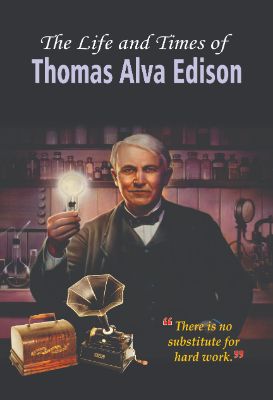
The Life and Times of Thomas Alva Edison by Vinod Kumar Mishra
Thomas Alva Edison, who transformed his childhood problem of deafness into an exemplary quality of concentration, did not get tired till his last. Despite being deprived of formal education, this great scientist studied literature and science with immense interest, acquired new patents on an average in every 15 days of his active life. Through him, the world entered into the modern era and it led to an onset of consumerism.
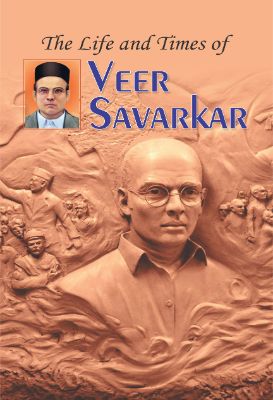
The Life and Times of Veer Savarkar by A.K. Gandhi
Vinayak Damodar Sarvarkar popularly known as Veer Sarvarkar has a unique place in the annals of history. Controversy surrounds his name. Some consider him to be one of the greatest revolutionaries in the freedom struggle of India while others think of him to be a communalist. However, there is no doubt that he was a freedom fighter, who not only fought for his country but also evoked feelings of patriotism in fellow citizens through his writings.
His biography is an eye-opener for it depicts the trials and tribulations of a person, who was sentenced to 50 years of hard imprisonment in the Cellular Jail of Andaman and Nicobar Islands, also called the ‘Kala Pani’. From his prison cell, he sent his poems to the mainland, memorized by the prisoners who were released.
An inspiring biography of a true nationalist.

The Life and Times of Warren Buffett by Dinkar Kumar
Warren Buffett is most successful and followed investor of the world. He has always been one of the wealthiest people in the world. Besides being richest, he is one of the most known people for donating personal wealth.
Buffett was born in 1930 in Omaha, Nebraska of distant French Huguenot descent. Buffett graduated from Woodrow Wilson High School in 1947.
Buffett displayed an interest in business and investing at a young age. While still in high school, he made money delivering newspapers, selling golf balls and stamps, and detailing cars, among other means. He formed Buffett Partnership Ltd. In 1956, and by 1965 he has assumed control of Berkshire Hathaway.
In 2008, Buffett became the richest person in the world, with a total net worth of estimated at $ 62 billion by Forbes and at $ 58 billion by Yahoo, overtaking Bill Gates, who had been number one on the Forbes list for 13 consecutive years. Buffett is renowned for his wit and wisdom.
He has set various standards of simple living despite being wealthy men on earth. Even though he is recognized as the world’s third richest man with a fortune of $ 46 billion, investor Warren Buffett, the ‘Wizard of Omaha’, still lives in the same modest home he bought in 1958 for $ 31,500 only.

The Life and Voyages of Christopher Columbus (Vol. II) by Washington Irving
American writer Washington Irving set about, in the 1820s, to create the complete account of the great explorer and his journeys. This is that account, sweeping in its scope, as intimate as a novel, as thrilling as a grand adventure story. In this, the second of two volumes, Irving begins with Columbus’s establishment of a chain of military posts in the New World and continues through his final journeys; this volume also includes extensive appendices. With a dedication to historical accuracy combined with a flair for engaging storytelling, Irving bestows upon us one of the classic works of history of the Age of Exploration.
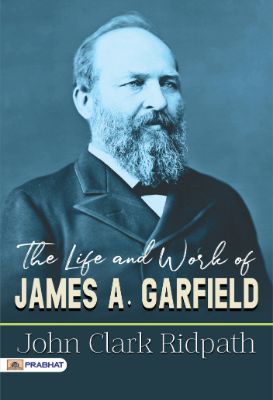
The Life and Work of James A. Garfield by John Clark Ridpath
Dean Swift describes the tomb as a place where savage enmity can rend the heart no more. Here, in the ominous shadow of the cypress, the faults and foibles of life are forgotten, and the imagination builds a shining pathway to the stars. Ascending this with rapid flight, the great dead is transfigured as he rises; the clouds close around him, and, in the twinkling of an eye, he is set afar on the heights with Miltiades and Alexander.
The tendency to the deification of men is strongest when a sudden eclipse falls athwart the disk of a great life at noontide. The pall of gloom sweeps swiftly across the landscape, and the beholder, feeling the chill of the darkness, mistakes it for the death of nature. So it was three hundred years ago when the silent Prince of Orange, the founder of Dutch independence, was smitten down in Delft. So it was when the peerless Lincoln fell. So it is when Garfield dies by the bullet of an assassin.

The Life of a Fossil Hunter by Charles H. Sternberg
I wish to call the attention of the reader of my story “The Life of a Fossil Hunter” to the fact that I am under obligations especially to Prof. Henry Fairfield Osborn, President and Curator of Paleontology of the American Museum of Natural History in New York. He has supplied me with many of the most beautiful of the illustrations that illumine these pages and has assisted the work in many ways.

The Life of Buddha and Its Lessons by H.S. Olcott
What are the lessons to be derived from the life and teachings of this heroic prince of Kapilavasṭu? Lessons of gratitude and benevolence. Lessons of tolerance for the clashing opinions of men who live, move and have their being, think and aspire, only in the material world. Lessons of manly self-reliance, of equanimity in breasting whatsoever of good or ill may happen. Lessons of the meanness of the rewards. Lessons of the necessity for avoiding every species of evil thought and word, and for doing, speaking and thinking everything that is good, and for the bringing of the mind into subjection so that these may be accomplished without selfish motive or vanity.
—From this Book

The Life of Buddha by Andre Ferdinand Herold
A very readable book about the life Of Siddhartha Gautama and his journey from birth to Buddha to death. Contains stories about his disciples, his parents and his wife and son.
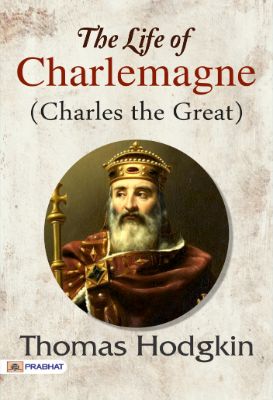
The Life of Charlemagne (Charles the Great) by Thomas Hodgkin
In attempting to compress the history of the great Emperor Charles within the narrow limits of the present volume, I have undertaken a difficult task, and I trust that my fellow-historians will consider, not how much has been omitted, but how much, or rather how little, it was possible to insert.
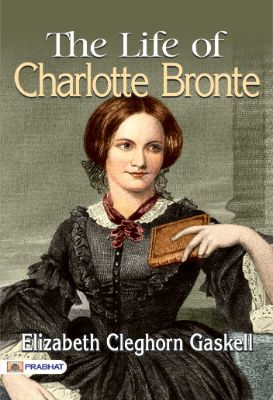
The Life of Charlotte Bronte by Elizabeth Cleghorn Gaskell
The Life of Charlotte Brontë is the posthumous biography of Charlotte Brontë by fellow novelist Elizabeth Gaskell. The first edition was published in 1857. A major source was the hundreds of letters sent by Brontë to her lifelong friend Ellen Nussey. Gaskell had to deal with some sensitive issues. She toned down some of her material: in the case of her description of the Clergy Daughters’ School this was to avoid legal action from the Rev. William Carus Wilson. The published text does not go so far as to blame the school’s founder for the deaths of two Brontë sisters, but even so Wilson published a short “refutation” of the biography. Although quite frank in many places, Gaskell suppressed details of Charlotte’s love for Constantin Héger, a married man, on the grounds that it would be too great an affront to contemporary morals and a possible source of distress to Charlotte’s still-living friends, father Patrick Brontë and husband. She also suppressed any reference to Charlotte’s romance with George Smith, her publisher, who was also publishing the biography.
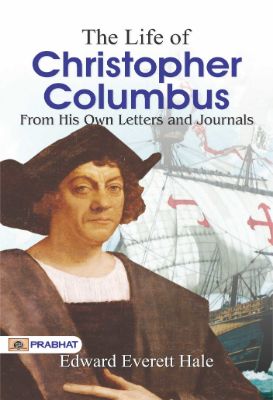
The Life of Christopher Columbus by Edward Everett Hale
Classic biography from the late 19th century American author, Unitarian clergyman and Anti-slavery activist. The best known of his tales was The Man Without a Country (1863), which did much to strengthen the Union cause in the North.
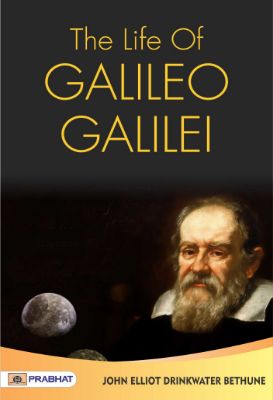
The Life of Galileo Galilei, with Illustrations of the Advancement of Experimental Philosophy Life of Kepler by John Elliot Drinkwater Bethune
First published in the year 1830, the present book ‘The Life of Galileo Galilei, with Illustrations of the Advancement of Experimental Philosophy Life of Kepler’ by John Elliot Drinkwater Bethune is a biography of the renown3ed scientist or revolutionary inventor Galilio Galilei.

The Life of George Washington by John Marshall
America’s first president has captivated our interest for more than two centuries, but no biographer of George Washington knew him with the authenticity, intimacy, and depth of understanding as John Marshall exhibited in his book The Life of George Washington.
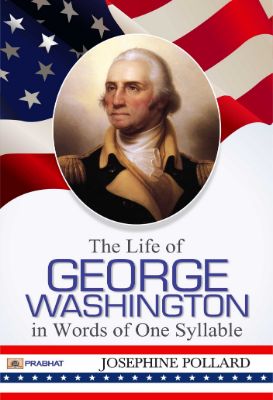
The Life of George Washington in Words of One Syllable by Josephine Pollard
The Life story of a public man cannot help being to some extent the same thing as a history of the times in which he lived, and to the case of none does this remark apply with more force than to that of the “Father of his Country;” which very title shows the degree to which the personality of its bearer became identified with the public life of the nation. While a great deal of the space in this book, consequently, has had to be devoted to American Revolutionary History, it is hoped that excess in this direction has been avoided, and that the main purpose of the work will be attained, i.e. to give its young readers a distinct and vivid idea of the exalted character and priceless services of Washington, so far as these can be brought within the understanding of a child.
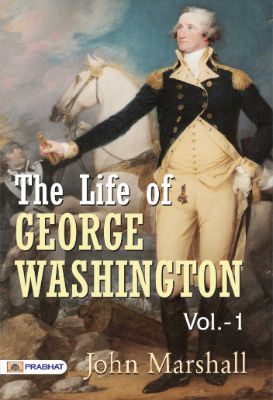
The Life of George Washington, Vol. 1 by John Marshall
Illustrated. This is Volume 1 of 5. The Life Of George Washington; From original papers bequeathed to him by his deceased relative, and now in possession of the author. To which is prefixed, an introduction, containing a compendious view of the colonies planted by the English on the continent of north America, from their settlement to the commencement of that war which terminated in their independence.

The Life of Henry VIII by William Shakespeare
This is a reproduction of a book published before 1923. We believe this work is culturally important, and despite the imperfections, have elected to bring it back into print as part of our continuing commitment to the preservation of printed works worldwide. We appreciate your understanding of the imperfections in the preservation process, and hope you enjoy this valuable book.

The Life of Reason: The Phases of Human Progress by George Santayana
First published between 1905-06, ‘The Life of Reason: The Phases of Human Progress’ by Spanish-born American philosopher George Santayana is written in five volumes: Reason in Common Sense, Reason in Society, Reason in Religion, Reason in Art, and Reason in Science.
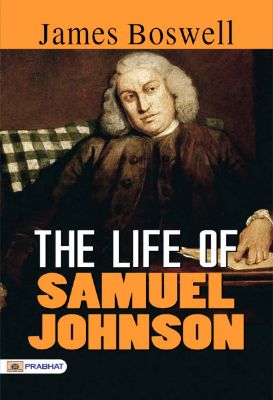
The Life of Samuel Johnson by James Boswell
In making this abridgement of Boswell’s Life of Johnson I have omitted most of Boswell’s criticisms, comments, and notes, all of Johnson’s opinions in legal cases, most of the letters, and parts of the conversation dealing with matters which were of greater importance in Boswell’s day than now. I have kept in mind an old habit, common enough, I dare say, among its devotees, of opening the book of random, and reading wherever the eye falls upon a passage of especial interest. All such passages, I hope, have been retained, and enough of the whole book to illustrate all the phases of Johnson’s mind and of his time which Boswell observed.
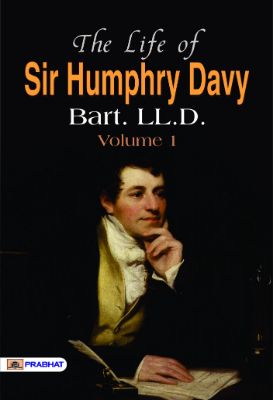
The Life of Sir Humphrey Davy, Bart. LL.D., Volume 1 by Sir Humphry Davy
The reflecting portion of mankind has ever felt desirous of becoming acquainted with the origin, progress, habits, and peculiarities of those whom the powers of genius may have raised above the plane of intellectual equality; but neither the nature of the information, nor the extent of the detail that may be necessary to satisfy so laudable a curiosity, can ever be estimated by any common standard, since it is not in our nature to contemplate an object of admiration, but with reference to our own predilections and sympathies; and hence every reader will form a scale for himself, according to the degree of interest he may feel for the particular character under review. -Preface
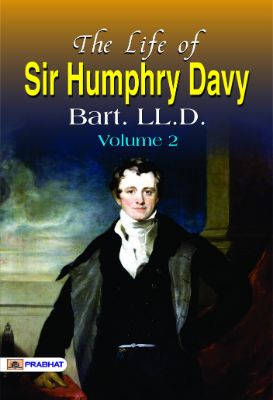
The Life of Sir Humphrey Davy, Bart. LL.D., Volume 2 by Sir Humphry Davy
The reflecting portion of mankind has ever felt desirous of becoming acquainted with the origin, progress, habits, and peculiarities of those whom the powers of genius may have raised above the plane of intellectual equality; but neither the nature of the information, nor the extent of the detail that may be necessary to satisfy so laudable a curiosity, can ever be estimated by any common standard, since it is not in our nature to contemplate an object of admiration, but with reference to our own predilections and sympathies; and hence every reader will form a scale for himself, according to the degree of interest he may feel for the particular character under review. -Preface

The Life of Sir Isaac Newton by Sir David Brewster
Many books have been written on life of the legendary scientist Sir Isaac Newton. The present book by David Brewster is a detailed account of the Nobel Prize winner genius’ life and achievements. A must read for students and research scholars in the feilds of science and philosophy.
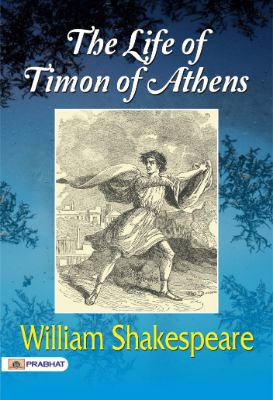
The Life of Timon of Athens by William Shakespeare
Timon of Athens is a bitterly intriguing study of a fabulously rich man who wastes his wealth on his friends, and, when he is finally impoverished, learns to despise humanity with a hatred that drives him to his grave. The play’s plot structure is schematically clear, and the poetry of Timon’s rage is arresting in its savage intensity. Yet readers have often detected loose ends, and the tone of writing is uneven.
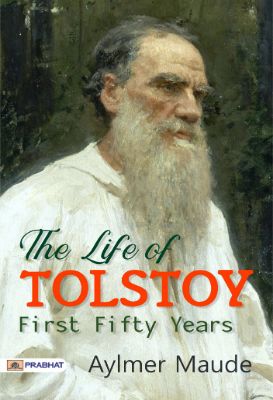
The Life of Tolstoy: First Fifty Years by Aylmer Maude
The reason I have written this work is because so many among us are interested in Tolstoy and so few seem to understand him. It would seem therefore that an English Life of Tolstoy is needed, and having lived in Russia for twenty-three years, known Tolstoy well for several years, visited him frequently in Moscow, and stayed with him repeatedly at Yásnaya Polyána, I am perhaps as well qualified as any one to write it, especially as I have long made a careful study of his views. My wife and I have translated several of his works, have known people closely connected with him, and some ten years ago we took part in an unsuccessful ‘Tolstoy’ Colony; besides which I went to Canada at his wish to make arrangements for the Doukhobór migration, of which I subsequently wrote the history.