
Classic Books
Showing 901–950 of 4246 results
Essays by Clarence Darrow
Hardy himself had received the censure of all the good people of England and the world, who, in spite of that, bought his books. They all condemned him when he wrote his ‘Tess;’ so he determined not to write any more prose. He thought that people probably were not intelligent enough to appreciate him; certainly not his viewpoint, and he didn’t wish to waste his time on them. —From the Book
Essays by Ralph Waldo Emerson
A new, wide-ranging selection of Ralph Waldo Emerson’s most influential writings, this edition captures the essence of American Transcendentalism and illustrates the breadth of one of America’s greatest philosophers and poets.
Essays for Civil Services Examination by Dr. B. Ramaswamy
This book on essay writing, is one of the most useful books ever produced for students who are taking up UPSC examinations, particularly IAS. This publication orients readers towards a better essay writing in the most systematic and convincing way. The vast experience of the author in training potential IAS candidates in essay writing is unparalleled. Such a publication, from the leading teacher and trainer of essay writing, is definitely going to help students in the best possible way till date.

Essays in Little by Andrew Lang
In the following essays, five are new, and this volume was written for. He is the author of “Letter for a young journalist”, Mr. Kipling’s study, Homer notes and “The Last Festive Novell” article on Mr. R. L. Stevenson. “Oh, no article on the author of. We never mention him,” appeared in New York Sun, and Mr. Dana had suggested that the journal Thakre and Dickens’s papers were published in Good Word, Which was published in Scriptor’s magazine on Dumus, which was written in The New Quarterly Review in New Theodore de Bevan.
—From this Book
Essays In Pastoral Medicine by Austin O’Malley and James J. Walsh
The material of pastoral medicine requires constantly renewed discussion, because medicine in general is progressive enough frequently to devise better methods of diagnosis and treatment, and thus the postulates of the moral questions involved are changed. This discussion, however, is not easily made. The facts upon which the ethical part of pastoral medicine rests are furnished by the physician for the consideration and judgment of the moralist—the physician educated after modern methods knows little or nothing of ethics and can not himself make accurate moral decisions. The moralist, on the other hand, is commonly a poor counsellor to the physician, because long training in medicine is needed before the physical data of the moral decisions is comprehended. The physician, therefore, is at a loss to determine what he may or may not do in {vi} cases that involve the greatest moral responsibility, and the priest is a hesitating guide because the moral theologies do not convincingly present the doctrine in these cases.
—From this book
Essays in Radical Empiricism by William James
The present volume is an attempt to carry out a plan which William James is known to have formed several years before his death. In 1907 he collected reprints in an envelope which he inscribed with the title ‘Essays in Radical Empiricism’; and he also had duplicate sets of these reprints bound, under the same title, and deposited for the use of students in the general Harvard Library, and in the Philosophical Library in Emerson Hall.
Essays in Rationalism by Charles Robert Newman
In my proof of the invalidity of that argument—it being indeed what is called “the Argument from Design”—I point out that our experience simultaneously informs us of two modes of producing order, otherwise called arrangement, relation of parts to each other and to the whole direction of means towards some recognisable end; or, to describe the phenomenon in the most summary, as well as the most practical, way—two modes of producing effects identical with those that proceed from design. I explain that, of these two principles of order, the one is Design itself, a modus operandi of intelligence (such as we find it here below, of which the human mind affords the best examples), while the other is something to which no name has been assigned, and which, consequently, we can only shortly describe by saying that it is not design.
—From this book
Essays in the Art of Writing by Robert Louis Stevenson
Many of the earliest books, particularly those dating back to the 1900s and before, are now extremely scarce and increasingly expensive. We are republishing these classic works in affordable, high quality, modern editions, using the original text and artwork. We appreciate your understanding of the imperfections in the preservation process, and hope you enjoy this valuable book.

Essays of Michel de Montaigne — Complete by Michel de Montaigne
The present publication is intended to supply a recognised deficiency in our literature—a library edition of the Essays of Montaigne. This great French writer deserves to be regarded as a classic, not only in the land of his birth, but in all countries and in all literatures. His Essays, which are at once the most celebrated and the most permanent of his productions, form a magazine out of which such minds as those of Bacon and Shakespeare did not disdain to help themselves; and, indeed, as Hallam observes, the Frenchman’s literary importance largely results from the share which his mind had in influencing other minds, coeval and subsequent. But, at the same time, estimating the value and rank of the essayist, we are not to leave out of the account the drawbacks and the circumstances of the period: the imperfect state of education, the comparative scarcity of books, and the limited opportunities of intellectual intercourse. Montaigne freely borrowed of others, and he has found men willing to borrow of him as freely. From this Book
Essays of Michel de Montaigne by Michel de Montaigne
The Essays of Michel de Montaigne are contained in three books and 107 chapters of varying length. Montaigne’s stated design in writing
Essays of Travel by Robert Louis Stevenson
I first encountered my fellow-passengers on the Broomielaw in Glasgow. Thence we descended the Clyde in no familiar spirit, but looking askance on each other as on possible enemies. A few Scandinavians, who had already grown acquainted on the North Sea, were friendly and voluble over their long pipes; but among English speakers distance and suspicion reigned supreme. The sun was soon overclouded, the wind freshened and grew sharp as we continued to descend the widening estuary; and with the falling temperature the gloom among the passengers increased. Two of the women wept. Any one who had come aboard might have supposed we were all absconding from the law. There was scarce a word interchanged, and no common sentiment but that of cold united us, until at length, having touched at Greenock, a pointing arm and a rush to the starboard now announced that our ocean steamer was in sight. There she lay in mid-river, at the Tail of the Bank, her sea-signal flying: a wall of bulwark, a street of white deck-houses, an aspiring forest of spars, larger than a church, and soon to be as populous as many an incorporated town in the land to which she was to bear us.
Essays on Paul Bourget by Mark Twain
These well-considered and important verdicts were of a nature to restore public confidence, which had been disquieted by questionings as to whether so young a teacher would be qualified to take so large a class as 70,000,000, distributed over so extensive a schoolhouse as America, and pull it through without assistance.—form this book

Essays on the Greek Romances by Elizabeth Hazelton Haight
My writing has been greatly facilitated by the cooperation of the staff of the Vassar Library, especially of Miss Fanny Borden, Librarian, who has provided me with a study in the Library, patiently borrowed many books from other libraries for me and shown unfailing interest in my work.—From this book

Essentials of Economic Theory by John Bates Clark
In a work on the “Distribution of Wealth,” which was published in 1899, I expressed an intention of offering later to my readers a volume on “Economic Dynamics, or The Laws of Industrial Progress.” Though eight years have since passed, that purpose is still unexecuted, and it has become apparent that any adequate treatment of Economic Dynamics will require more than one volume of the size of the present one. In the meanwhile it is possible to offer a brief and provisional statement of the more general laws of progress.

Ethan Frome by Edith Wharton
First published in the year 1911, the present novel ‘Ethan Frome’ was written by the Pulitzer Prize-winning American author Edith Wharton. It is set in the fictitious town of Starkfield, Massachusetts. The novel is framed by the literary device of an extended flashback. The prologue opens with an unnamed male narrator spending a winter in Starkfield, a fictional town in New England, while in the area on business. He spots a limping, quiet man around the village, who is somehow compelling in his demeanor and carriage.
Etheldreda the Ready: A School Story by Mrs. George de Horne Vaizey
The first part of the Christmas holidays had gone with a roar. The Saxon family in conclave agreed that never before had they had so good a time. Invitations poured in; amusement after amusement filled up afternoon and evening; parents and friends alike seemed imbued with a wholly admirable desire to make the season one gay whirl of enjoyment, and then, suddenly, just after the beginning of the New Year, the atmosphere became mysteriously clouded.
Ethics by Aristotle
Aristotle’s ethics, or study of character, is built around the premise that people should achieve an excellent character (a virtuous character, “ethikē aretē” in Greek) as a pre-condition for attaining happiness or well-being (eudaimonia).
Ethics, Integrity and Aptitude by Dr. B. Ramaswamy And Dr. Sasikala Pushpa
This book boasts of presenting IAS aspirants with maximum number of case studies presented at one place in this Paper till date. The right way to answer case-study questions are also given so as to facilitate the UPSC candidates to the maximum for scoring best possible marks in this rather difficult paper. Various appendices are given to acquaint UPSC candidates with primary sources of information on this theme, such as, Right to Public Services Legislation in India; The Right of Citizens for Time Bound Delivery of Goods and Services and Redressal of Their Grievances Bill, 2011; India’s Citizen’s Charter and Grievance Redressal Bill, 2011; Official Secrets Act of India, 1923; and the International NGO Accountability Charter. Previous years’ questions of IAS GS Mains Paper IV on “Ethics, Integrity & Aptitude” are given with focus on model questions of IAS GS Mains Paper IV: Ethics, Integrity & Aptitude for 2018.
Ethics, Integrity and Aptitude by R.K. Gupta, Irs
The present edition is the result of combined efforts of a retired senior civil servant having vast experience of working in different capacities with Union Government, a serving tax administrator and a serious Civil Services aspirant who secured AIR 92 in his first attempt while graduating from the elite National Law University, Delhi. This edition contains/Explains- Tips for securing maximum marks in Ethics/Polity Mechanism of an Act/Legislation Lokpal and Lokayukta Act, 2013 International approach to fight corruption Seven Principles of Public Life as laid down by Nolan Committee History, summary and relevant provisions of Central Civil Services (Conduct) Rules Summary of offences by or relating to Public Servants under IPC The summary of Prevention of Corruption Act, 1988 Tips for developing basic attitude excepted from a Civil Servant Fully explained model answers of past 3 years question papers 22 case studies A must read for every serving as well as future aspirant of Public Services under the Union/ State Governments, PSUs etc. as it is basically aimed at developing right attitude for answering real life questions/dilemmas.
Etiquette by Emily Post
Many who scoff at a book of etiquette would be shocked to hear the least expression of levity touching the Ten Commandments. But the Commandments do not always prevent such virtuous scoffers from dealings with their neighbor of which no gentleman could be capable and retain his claim to the title. Though it may require ingenuity to reconcile their actions with the Decalogue—the ingenuity is always forthcoming. There is no intention in this remark to intimate that there is any higher rule of life than the Ten Commandments; only it is illuminating as showing the relationship between manners and morals, which is too often overlooked. The polished gentleman of sentimental fiction has so long served as the type of smooth and conscienceless depravity that urbanity of demeanor inspires distrust in ruder minds. On the other hand, the blunt, unpolished hero of melodrama and romantic fiction has lifted brusqueness and pushfulness to a pedestal not wholly merited. Consequently, the kinship between conduct that keeps us within the law and conduct that makes civilized life worthy to be called such, deserves to be noted with emphasis. The Chinese sage, Confucius, could not tolerate the suggestion that virtue is in itself enough without politeness, for he viewed them as inseparable and “saw courtesies as coming from the heart,” maintaining that “when they are practised with all the heart, a moral elevation ensues.”
Euthenics, the science of controllable environment by Ellen H. Richards
This new science seeks to emphasize the immediate duty of man to better his conditions by availing himself of knowledge already at hand. As far as in him lies he must make application of this knowledge to secure his greatest efficiency under conditions which he can create or under such existing conditions as he may not be able wholly to control, but such as he may modify. The[ix] knowledge of the causes of disease tends only to depress the average citizen rather than to arouse him to combat it. Hope of success will urge him forward, and it is the duty of lovers of mankind to show all possible ways of attaining the goal. The tendency to hopelessness retards reformation and regeneration, and the lack of belief in success holds back the wheels of progress.
Euthyphro by Plato
Euthyphro book;Best book of Plato; FICTION / General book;Classics Book
Eva’s Adventures in Shadow-Land by Mary D. Nauman
Mary D. Nauman’s short story ‘Eva’s Adventures in Shadow-Land’ was first published in the year 1874. “She had been reading fairy-tales, after her lessons were done, all the morning; and now that dinner was over, her father gone to his office, the baby asleep, and her mother sitting quietly sewing in the cool parlor, Eva thought that she would go down across the field to the old mill-pond; and sit in the grass, and make a fairy-tale for herself.” -an excerpt
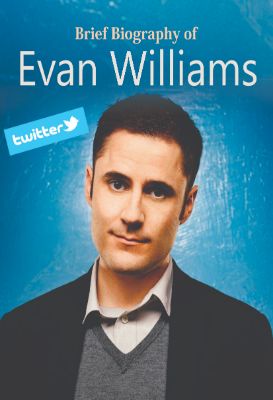
Evan Williams by Kalyani Mookherji
Born Evan Clark Williams on March 31, 1972 in the small town of Clarks, Nebraska, the future internet sensation actually grew up in a farming family. Evan was the third child of Monte Williams and Laurie Howe Williams and like other members of his family, grew up working on their corn and soybean farm.
Eve and David by Honoré de Balzac
This is a pre-1923 historical reproduction that was curated for quality. Quality assurance was conducted on each of these books in an attempt to remove books with imperfections introduced by the digitization process. We believe this work is culturally important and have elected to bring the book back into print as part of our continuing commitment to the preservation of printed works worldwide.
Eve’s Diary, Complete by Mark Twain
First published in the year 1906, the present book ‘Eve’s Diary, Complete’ was written by famous American writer, humorist, entrepreneur, publisher, and lecturer – Mark Twain. It is written in the style of a diary kept by the first woman in the biblical creation story, Eve. The plot of this story is the first-person account of Eve from her creation up to her burial by her mate Adam, including meeting and getting to know him, and exploring the world around her, Eden. The story then jumps 40 years into the future after the Fall and expulsion from Eden.
Everglades Wildguide by Jean Craighead George
Here is the story of the plants and animals of the Everglades, this country’s subtropical kingdom. Plants and animals found nowhere else in the 50 states are found here in abundance, though in an increasingly perilous state. In this handbook, first published in 1972, author and researcher Jean Craighead George brings to the telling of this story long years of study and understanding. Checklists and glossaries at the back buttress her account of the natural history of this national park. -from the book
Every Man a King by Orison Swett Marden
CERTAIN man of no great learning, so runs an old leg- end, fell heir to a ship. He knew nothing of the sea, nothing of navigation or en- gineering, but the notion seized him to take a voyage and command his own ship. The ship was got- ten under way, the self-appointed captain al- lowing the crew to go ahead with their usual duties, as the multiplicity of operations con- fused the amateur navigator. Once headed out to sea, however, the work grew simpler, and the captain had time to observe what was going on. As he strolled on the forward deck, he saw a man turning a big wheel, now this way, now that.
Everybody’s Guide to Money Matters by William Cotton, F.S.A
THE Author, emboldened by a Banking experience of over forty years, offers this little work to the public in the hope that, elementary though it be, it may prove acceptable to many persons of both genders.
Evolution in Modern Thought by William Bateson
The first naturalist to give a broad and concrete expression to the evolutionist doctrine of descent was Buffon (1707-1788), but it is interesting to recall the fact that his contemporary Linnæus (1707-1778), protagonist of the counter-doctrine of the fixity of species, went the length of admitting (in 1762) that new species might arise by inter-crossing. Buffon’s position among the pioneers of the evolution-doctrine is weakened by his habit of vacillating between his own conclusions and the orthodoxy of the Sorbonne, but there is no doubt that he had firm grasp of the general idea of l’enchaînment des êtres.” -An excerpt
Evolution of Indian Judiciary by Dr Lm Singhvi
Judicial institutions evolved in India in the context of India’s social, economic and political conditions and because of the reception of legal concepts and institutions known to English and Scottish judges, lawyers and administrators. Modern Indian judiciary bears the hallmarks of its genesis and evolution during the British rule but it has progressively gone for beyond the colonial confines after the republican Constitution came into force.
The theme of fundamental Rights and the role of the Supreme Court and the High Courts as vigilant custodians of fundamental rights are at the heart of India’s constitutional democracy. We owe a deep debt of gratitude to our apex judicature, the higher judiciary and the country’s bar in the evolution of the common law of the Constitution. It constitutes by common consent a remarkable chapter in our national life.
H v H
The Constitution of India is not the last word in human wisdom, but it was certainly a glorious achievement of national consensus and national commitment. The higher Indian judiciary can be said to have broadly fulfilled its constitutional ethos. There have been aberrations, notably during the Emergency and in some cases, of overstating and unduly enlarging the scope of judicial power. More seriously, there are grave and growing problems of inefficient case management, arrears, delays, corruption and incompetence. Those issues have to be addressed urgently, effectively and comprehensively if the Indian judiciary is to emerge as a fit instrument for Rule of Law for the teeming millions in the largest democracy in the world and if the Indian judiciary is to flourish in the twenty-first century holding its head high as an institution of freedom, liberty and balance, with a commitment to the constitutional goals and aspirations of We the People of India.

Excursions and Poems by Henry David Thoreau
The present book ‘Excursions and Poems’ was written by famous American essayist, poet, philosopher, abolitionist, naturalist, tax resister, development critic, surveyor, and historian – Henry David Thoreau. It was first published in the year 1906.
Excursions by Henry David Thoreau
Written by famous American essayist, poet, philosopher, abolitionist, naturalist, tax resister, development critic, surveyor, and historian – Henry David Thoreau, the present book ‘Excursions’ was first published in the year 1863.
Exiles by James Joyce
The drawingroom in Richard Rowan’s house at Merrion, a suburb of Dublin. On the right, forward, a fireplace, before which stands a low screen. Over the mantelpiece a giltframed glass. Further back in the right wall, folding doors leading to the parlour and kitchen. In the wall at the back to the right a small door leading to a study.

Experiments and Considerations Touching Colours by Robert Boyle
First published in the year 1664, the present book ‘Experiments and Considerations Touching Colours’ by Robert Boyle is his first occasionally written essay among others that he wrote to a friend. This essays formed the beginning of an experimental history of colours.

Experiments on Animals by Stephen Paget
First published in the year 1900, the present book ‘Experiments on Animals’ by Stephen Paget “is entirely a labour of love. Not being himself engaged in researches involving experiments upon the lower animals, he is not directly interested in the subject. But, in his official capacity as Secretary (1887-1899) to the Association for the Advancement of Medicine by Research, he has become widely conversant with such investigations, and has been deeply impressed with the greatness of the benefits which they have conferred upon mankind, and the grievous mistake that is made by those who desire to suppress them.” -Introduction

Experiments with Alternate Currents of High Potential and High Frequency by Nikola Tesla
Experiments with Alternate Currents of High Potential and High Frequency’ is a book comprising the revolutionary scientist Nicola Tesla’s experiments with alternate currents of high potential and high frequency. This book was first published in the year 1892.

Explorers and Travellers by A. W. Greely
Explorations and journeys of such an extent as in other and older lands would have excited praise and merited reward have been so frequent in this continent as to pass almost unnoticed. Hence the scope of this modest volume is necessarily confined to explorations of great importance or peculiar interest, and when made by men of American birth who are no longer living.
Extraordinary Desire to Win by Zeenat Ara
This book is an autobiography of a young bubbling girl who was diagnosed with a rare disease of SMA (Spinal Muscular Atrophy) at very early age.
The book travels through the toughness of her mind and body which helped her to carry her journey despite all odds.
She was going through a life which was totally different from others—very challenging and full of obstacles. In spite of all these hurdles, she had to continue living. She never took her life so hard, instead she would say, “If Allah (God) had not chosen me to take birth with this problem, life would not have been so interesting.”
An inspiring & motivating story for the readers, especially youngsters.
Facing the Flag by Jules Verne
The capital of North Carolina—one of the forty-four states of the Union at this epoch—is the rather important town of Raleigh, which is about one hundred and fifty miles in the interior of the province. It is owing to its central position that this city has become the seat of the State legislature, for there are others that equal and even surpass it in industrial and commercial importance, such as Wilmington, Charlotte, Fayetteville, Edenton, Washington, Salisbury, Tarborough, Halifax, and New-Berne. The latter town is situated on estuary of the Neuse River, which empties itself into Pamlico Sound, a sort of vast maritime lake protected by a natural dyke formed by the isles and islets of the Carolina coast.

Facino Cane by Honoré de Balzac
I once used to live in a little street which probably is not known to you the Rue de Lesdiguieres. It is a turning out of the Rue Saint Antoine, beginning just opposite a fountain near the Place de la Bastille, and ending in the Rue de la Cerisaie. Love of knowledge stranded me in a garret; my nights I spent in work, my days in reading at the Bibliotheque d’Orleans, close by. I lived frugally; I had accepted the conditions of the monastic life, necessary conditions for every worker, scarcely permitting myself a walk along the Boulevard Bourdon when the weather was fine.

Facts and Law on Article 370 & 35a by Monika Arora
The beautiful scenic land that was named after the venerable Rishi Kashyap, the land that was once considered as the ultimate place of attaining enlightenment, the land that housed innumerable temples and a variety of customs, lies in disarray. Who is to blame? Political compulsions of Nehru? Or the dynastic parties of the Valley? Is it the local people who are unwilling to stay? Or is it the much infamous article 370 and 35A of the Indian Constitution? This book will take you on a roller coaster ride about Kashmir, Kashmiris and Kashmiriyat. From the history of the state, to the current political scenario; from the constituent assembly debates, to the current division of ideologies, this book revolves around the political and legal problem of the state of J&K. We also provide solutions to each of the problems. We aim to clear your Concepts about the state and break many myths and beliefs that have been a part of discussion since ages. In the service of the country. Jai Hind!.

Fairy Tales Every Child Should Know by Hamilton Wright Mabie
The fairy tale is a poetic recording of the facts of life, an interpretation by the imagination of its hard conditions, an effort to reconcile the spirit which loves freedom and goodness and beauty with its harsh, bare and disappointing conditions. It is, in its earliest form, a spontaneous and instinctive endeavor to shape the facts of the world to meet the needs of the imagination, the cravings of the heart.
Fairy Tales From all Nations by Anthony R. Montalba
on the contrary, a spurious utilitarianism reigned supreme in literature, and fancy and imagination were told to fold their wings, and travel only in the dusty paths of every-day life. Fairy tales, and all such flights into the region of the supernatural, were then condemned as merely idle things, or as pernicious occupations for faculties that should be always directed to serious and profitable concerns. But now we have cast off that pedantic folly, let us hope for ever. We now acknowledge that innocent amusement is good for its own sake, and we do not affect to prove our advance in civilisation by our incapacity to relish those sportive creations of unrestricted fancy that have been the delight of every generation in every land from times beyond the reach of history.
Fairy Tales of Hans Christian Andersen by H. C. Andersen
Hans Christian Andersen was born in Odense, the son of a shoemaker. His early life was wretched, but he was adopted by a patron and became a short-story writer, novelist and playwright, though he remains best-known for his magical fairy tales which were published between 1835 and 1872.For 150 years his stories have been delighting both adults and children. Packed with a light-hearted whimsy combined with a mature wisdom they are as entrancing as ever. Here are all of Andersen’s 154 tales, and among the favourites are The Red Shoes, The Mermaid, The Real Princess, The Emperor’s New Clothes, The Tinder Box and of course The Ugly Duckling.

Fairy tales of Hans Christian Anderson by H C Anderson
Hans Christian Andersen (1805-1875) was born in Odense, the son of a shoemaker. His early life was wretched, but he was adopted by a patron and became a short-story writer, novelist and playwright, though he remains best-known for his magical fairy tales which were published between 1835 and 1872.
For 150 years his stories have been delighting both adults and children. Packed with a light-hearted whimsy combined with a mature wisdom they are as entrancing as ever. Here are all of Andersen’s magical tales for you to enjoy!

Famous Assassinations of History by Francis Johnson
The thirty-one assassinations, famous in history, which are narrated in this volume, have never before had their stories told in a collected form in any language. The accounts of them were scattered through the historical works of all nations, and through many volumes of private memoirs, which had to be scanned for proper and trustworthy material. It is hoped that their presentation in this form will make an interesting volume, not only for the student of history, but also for the general reader, on account of the historical and psychological interest which attaches to them.
Famous Authors (Men) by E. F. Harkins
First published in the year 1906, the present book ‘Famous Authors (Men)’ by E. F. Harkins is aimed at providing the readers sketches of some of its American literary heroes. A part of the aim has been to present the social or personal as well as the professional side of the authors. Many of the anecdotes commonly told of well-known novelists are apocryphal or imaginary.
Famous Discoverers and Explorers of America by Charles L. Johnston
On the shore of a great fiord, or estuary of the sea, in the far northern country of Greenland, stood a little boy. He was sturdy-limbed, blue-eyed, flaxen-haired, and he was looking out across the water at a great high-prowed Viking ship which lay bobbing upon the waves.