
Audio Books
Showing 1651–1700 of 2033 results
The Birth of Tragedy
In this famous early work of German philosopher Friedrich Nietzsche, he investigates the artistic characteristics of Apollonian (reason) and Dionysian (passion) characteristics in Greek art, specifically in Greek tragedy as it evolved. Then he applies his conclusions about Greek tragedy to the state of modern art, especially modern German art and specifically to the operas of Richard Wagner.
The Birth of Tragedy; or, Hellenism and Pessimism (Version 2)
This is one of Nietzsche’s early academic writings – a scholarly theory about Ancient Greek theatre, specifically tragedies. In a nutshell, this work theorizes about why (Greek) spectators enjoy watching actors in a long series of scenes that depict human suffering (i.e., tragedy). It is a curious question, especially at the time since scholars generally thought of the Greeks as “A race of men, well-fashioned, beautiful, envied, life-inspiring, like no other race hitherto” (per Nietzsche’s introduction). What did they need tragedy for? The question itself, and the path Nietzsche takes to answer this question, outraged the academic world. Later, an older Nietzsche criticizes this book himself and warns the reader that this text “should be treated with some consideration and reserve; yet I shall not altogether conceal how disagreeable it now appears to me, how after sixteen years it stands a total stranger before me.” – Summary by jvanstan
The Birthday Party, A Story for Little Folks
Flora Lee’s birthday came in July. Her mother wished very much to celebrate the occasion in a proper manner. Flora was a good girl, and her parents were always glad to do any thing they could to please her, and to increase her happiness. This story was written by Adams under the pseudonym of Oliver Optic.
The Birthplace
Neither the name of Shakespeare nor that of Stratford appears directly in this short piece by James, and yet both are absolutely central to his plot. The story has to do with Mr. and Mrs. Gedge, tempted away from a dreary northern town library, which he runs, to become the wardens ? caretakers and tour guides ? of the house where the greatest writer of the English language was born, and in which he grew up. Or did he? There is, after all, a paucity of facts about His life (in James’s text, that pronoun is always capitalized, as befits a deity) and only the slenderest of historical evidence about the existence of such a man. No matter; what is important is the myth of his life, and the myth needs to be cared for and fostered so that crowds upon crowds of tourists may come, and, with a proper reverence, worship at His Birthplace. And yet it is only myth, and the more he thinks of it, the unhappier poor honest Gedge becomes (to Mrs. Gedge, however, a job is a job, and too much speculation on reality might perhaps lead to dismissal). James himself was high skeptical about the Shakespeare question (who actually did write all those plays?) But that’s not the point here. Rather the story has to do with the making of a shrine, the selling of its wares (commodification, to use a fancy word) and the priesthood needed to protect the myths necessary to its existence. What should the skeptical Gedge do about it? What, if anything, will he do? (Introduction by Nicholas Clifford)
The Bishop’s Apron
“Canon Spratte saw himself as he thought others might see him: mediocre, pompous, self-assertive, verbose.” Maugham could have added ambitious, hypocritical, and vain. In this engrossing social satire, Theodore Spratte, a cleric, motivated by an obsessive desire to be elevated to bishop, embellishes his family history and intrudes upon his son’s and daughter’s courtships. A reviewer in 1906 wrote, “The whole book is an admirable blend of cynical gaiety and broadly farcical comedy; it is the smartest and most genuinely humorous novel that the season has yet given us.” — Lee Smalley
The Bishop’s Secret
Bishop Pendle is the Church of England bishop in a small fictitious English cathedral town. Several years into his work, he receives a visit from a disreputable-looking visitor. The bishop is much upset. What transpired between them that has so upset the good churchman? And then there is the murder. Fergus Hume was one of the most prolific and most popular of 19th century novelists. “Mr. Hume won a reputation second to none for plot of the stirring, ingenious, misleading, and finally surprising kind, and for working out his plot in vigorous and picturesque English. In “The Bishop’s Secret,” while there is no falling off in plot and style, there is a welcome and marvelous broadening out as to the cast of characters, representing an unusually wide range of typical men and women. These are not laboriously described by the author, but are made to reveal themselves in action and speech in a way that has, for the reader, all the charm of personal intercourse with living people….” (Book Preface and david wales)

The Biter Bit
“The Biter Bit” is a humorous short story by British writer Wilkie Collins. Originally published as “Who is the Thief?” in the April 1858 issue of The Atlantic Monthly, it was retitled and published with nine other short stories in the 1859 book, The Queen of Hearts. The tale is told in epistolary form, recounting a comedy of errors involving a young wannabe police detective — with an exaggerated sense of his own investigatory skills — and a minor theft of banknotes. Can you spot the guilty party before the rookie figures it out? – Summary by Louise J. Belle
The Black Arrow
In the unsettled years of England’s War of the Roses, where a man stood on the issue of kingship could make his fortune… or end his life. Dick Shelton, a nobly-born lad, is on the cusp of manhood, and he is thrust bodily into this stew where allegiances shift under one’s feet. Circumstances cause him to fall in with a gentlemaiden in boy’s disguise. Until he learns of the deception, Dick is unaware that the young lady is an heiress whom his guardian Sir Daniel had kidnapped. And the introduction of an outlaw with a penchant for putting black arrows into the bodies of the men who had wronged him affords Dick a worrying hint – that Sir Daniel might have been the man that had murdered Dick’s father! – Summary by Mark F. Smith
The Black Arrow – A Tale of the Two Roses
The Black Arrow tells the story of Richard (Dick) Shelton during the Wars of the Roses: how he becomes a knight, rescues his lady Joanna Sedley, and obtains justice for the murder of his father, Sir Harry Shelton. Outlaws in Tunstall Forest organized by Ellis Duckworth, whose weapon and calling card is a black arrow, cause Dick to suspect that his guardian Sir Daniel Brackley and his retainers are responsible for his father’s murder. Dick’s suspicions are enough to turn Sir Daniel against him, so he has no recourse but to escape from Sir Daniel and join the outlaws of the Black Arrow against him. This struggle sweeps him up into the greater conflict surrounding them all. The story of the Wars of the Roses is told in miniature by The Black Arrow. (Summary from Wikipedia)
The Black Bag
Mr. Philip Kirkwood, a not so successful painter, receives a visitor from his home town in America, who wants him to do him an unspecified favor, but Kirkwood doesn”t trust him and sends him away. That night, he sees the stranger dine with his beautiful daughter. In order to protect the girl, the stranger confesses to Kirkwood, that he will be arrested upon leaving the restaurant. Kirkwood agrees to take care of the girl, but when he brings her home, he knows that she is in danger and that there is a mystery attached. He decides to protect the girl? (Summary by Carolin)
The Black Box
Sanford Quest, the master criminologist of the world, attempts to bring to justice the murderer of Lord Ashleigh’s daughter. But he soon discovers that he has just entered a life-and-death struggle with a mysterious master criminal. (Summary by Richard Kilmer)
The Black Cat Vol. 01 No. 01 October 1895
The Black Cat (1895-1922) was a monthly literary magazine, publishing original short stories, often about uncanny or fantastical topics. Many writers were largely unknown, but some famous authors also wrote original material for this magazine. This is the very first issue, offering the following 7 stories: “In gold time”, by Roberta Littlehale: in wild-west days, when two rivals love the same woman, tragedy ensues “The unturned trump”, by Barnes MacGreggor, pseudonym of H. D. Umbstaetter (1851-1913): to while away the time, a simple card game gets spiced up by a traveller’s horrifying story “The secret of the white castle”, by Julia Magruder (1854-1907): what is the mystery behind the uncanny life-like stare of the portrait hanging on the wall ? “Miss Wood,–stenographer”, by Granville Sharpe: a young stenographer is called in to witness a deaf-mute’s final revelations on his death-bed “Her hoodoo”, by Harold Kinsabby, pseudonym of H. D. Umbstaetter (1851-1913): a pet-calf, even if brought up with love and care, may still turn wild and dangerous “In a tiger trap”, by Charles Edward Barns (1862-1937): a breath-taking encounter of a young girl with the king of the jungle “The red-hot dollar”, by H. D. Umbstaetter (1851-1913): find out why a seemingly ordinary silver dollar sets a newly-married man on a quest to find the original owner – Summary by Sonia
The Black Cat Vol. 01 No. 02 November 1895
The Black Cat (1895-1922) was a monthly literary magazine, publishing original short stories, often about uncanny or fantastical topics. Many writers were largely unknown, but some famous authors also wrote original material for this magazine. In this second issue are included the following 8 stories: “A Calaveras hold-up”, by Roberta Littlehale: can love make a man mend his ways or are some relationships doomed from the start ? “From a trolley post”, by Margaret Dodge: a boring bus-stop wait is interrupted by a young boy’s favourite pastime of hunting animals “An andenken”, by Julia Magruder (1854-1907): the story of a young artist’s budding love in the romantic, yet wild landscape of the Tyrolian Alps “The man from Maine”, by J. D. Ellsworth: a chance encounter in a train shows the resourcefulness of some people to get what they most want “A wedding tombstone”, by Clarice Irene Clinghan: wouldn’t a tombstone be a macabre wedding gift from a husband to his newly-wed bride ? “The other one”, by A. H. Gibson (1858-1929): in his dark wine-cellar, an old man makes a chilling confession to his bank-clerk “Stateroom six”, by William Albert Lewis (1856-??): the bad luck of a gambler proves the good fortune of a young girl “Her eyes, your honor”, by H. D. Umbstaetter (1851-1913): a resourceful lawyer stops at nothing to save a woman from the gallows – Summary by Sonia
The Black Cat Vol. 01 No. 03 December 1895
The Black Cat (1895-1922) was a monthly literary magazine, publishing original short stories, often about uncanny or fantastical topics. Many writers were largely unknown, but some famous authors also wrote original material for this magazine. The following 6 stories are included in this third issue: “The great star ruby”, by Barnes MacGreggor, pseud. of H. D. Umbstaetter (1851-1913): a man tells the thrilling story of the theft of a very valuable ruby “The interrupted banquet”, by Ren? Bache (1861-1933): at this strange dinner party, a young man is told some shocking news by the other guests “The archangel”, by James Q. Hyatt: brides from organized wedding agencies sometimes don’t turn out what the groom expects “Asleep at Lone Mountain”, by H. D. Umbstaetter (1851-1913): a toddler wins the hearts of his fellow passengers during a long train journey cross-country “Kootchie”, by Harold Kinsabby, pseud. of H. D. Umbstaetter (1851-1913): a mean-spirited dog finally finds its match in fierceness “Frazer’s find”, by Roberta Littlehale: the life of a gold-digger changes unexpectedly the day he rescues a young boy – Summary by Sonia
The Black Cat Vol. 01 No. 04 January 1896
The Black Cat (1895-1922) was a monthly literary magazine, publishing original short stories, often about uncanny or fantastical topics. Many writers were largely unknown, but some famous authors also wrote original material for this magazine. This is the fourth issue, containing the following 7 stories: “In Solomon’s Caverns”, by Charles Edward Barns: lost in a huge cavern, a man struggles to survive and find his way back to civilization “An angel of Tenderfoot Hill”, by Frederick Bradford: can two years of absence make a man worthy of the woman he loves ? “In Miggles’ Alley”, by Herman Brownson: how can a baby dangling by a rope from a rooftop be saved from falling to his death ? “The missing link”, by James Buckham (1858-1908): a man is torn between cowardice and duty after witnessing a violent murder “Unchallenged”, by Katherine Morrow: a thrilling dare has been set and two girls try to accomplish the challenge “Aidu”, by Hero Despard: a man seeks to know the secret of his beloved woman, at a terrible cost “Mrs Emory’s boarder”, by C. Marie Mott: the neighbour’s young lodger becomes the best companion of a lonely woman – Summary by Sonia
The Black Cat Vol. 01 No. 05 February 1896
The Black Cat (1895-1922) was a monthly literary magazine, publishing original short stories, often about uncanny or fantastical topics. Many writers were largely unknown, but some famous authors also wrote original material for this magazine. The fifth issue has the following 6 stories: “The mysterious card”, by Cleveland Moffet (1863-1926): a man desperately tries to understand the horrible message which utterly destroyed his life “Tang-u”, by Lawrence E. Adams: through excellent eyesight, a young boy saves the lives of a battleship-crew “The little brown mole”, by Clarice Irene Clinghan: after several years of separation, a man comes home and finds his wife quite a changed person “A telepathic wooing”, by James Buckham (1858-1908): too shy to approach the woman he loves, a young doctor tries out an unusual method to propose to her “The Prince ward”, by Claude M. Girardeau: a dead woman’s ghost takes revenge on the woman who took away her husband “A meeting of royalty”, by Margaret Dodge: a chance encounter with a young girl sets a man down memory lane – Summary by Sonia
The Black Cat Vol. 01 No. 06 March 1896
The Black Cat (1895-1922) was a monthly literary magazine, publishing original short stories, often about uncanny or fantastical topics. Many writers were largely unknown, but some famous authors also wrote original material for this magazine. This is the sixth issue, offering the following 5 stories: “Eleanor Stevens’ will”, by Isabel Scott Stone: a rich woman’s final will creates a stir among fortune hunters ”To let”, by Alice Turner Curtis: midnight screams scare away new residents in a cottage with a terrible history “Of course – Of course not”, by Harry M. Peck: sometimes an unexpected visit on a quiet evening at home can turn out life-changing “The Marchburn mystery”, by A. Maurice Low: was the mysterious stranger in the elevator really the killer of Mr Marchburn ? “Their colonial villa”, by Charles Barnard (1838-1920): a young wife thinks she is losing her mind after her husband made new housing arrangements – Summary by Sonia
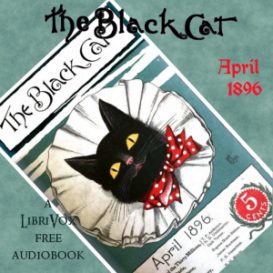
The Black Cat Vol. 01 No. 07 April 1896
The Black Cat (1895-1922) was a monthly literary magazine, publishing original short stories, often about uncanny or fantastical topics. Many writers were largely unknown, but some famous authors also wrote original material for this magazine. The seventh issue, offers the following 6 stories: “The mystery of the thirty millions”, by T. F. Anderson and H. D. Umbstaetter (1851-1913): what happened to the large ocean-steamer that inexplicably vanished in mid-Atlantic ? “The man at Solitaria”, by Geik Turner: after 15 years of solitary work, a man is finally going postal “The compass of Fortune”, by Eugene Shade Bisbee (1864-1933): the eyes of a mysterious skull seem to be looking into one specific direction “A surgical love-cure”, by James Buckham (1858-1908): a patient asks his doctor to have love surgically removed from him “The Williamson safe mystery”, by F. S. Hesseltine: what horrible discovery did the men make on opening the safe ? “How small the World”, by E. H. Mayde: an exchange of a series of letters finally leads to two people finding together – Summary by Sonia
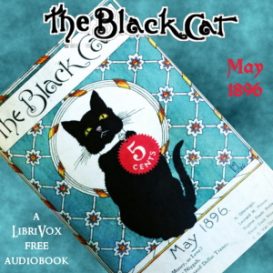
The Black Cat Vol. 01 No. 08 May 1896
The Black Cat (1895-1922) was a monthly literary magazine, publishing original short stories, often about uncanny or fantastical topics. Many writers were largely unknown, but some famous authors also wrote original material for this magazine. This is the eighth issue with the following 5 stories: “For fame, money, or love ?” by Rodrigues Ottolengui (1861-1937): a piano composition reveals the final thoughts of a musician ”A No Account Niggah”, by Leonard M. Prince: a clumsy new recruit proves his worth when it matters most “A hundred thousand dollar trance”, by Eugene Shade Bisbee (1864-1933): a renowned hypnotist proposes a rather shocking experiment at a club meeting “The misfit gown”, by Elmer Cook Rice: witness the heated voting campaign for the presidency of a woman’s charity club “The shifting sand”, by C. C. van Orsdall: the tragic story of man’s life-long obsession to find back a treasure chamber – Summary by Sonia

The Black Cat Vol. 01 No. 09 June 1896
The Black Cat (1895-1922) was a monthly literary magazine, publishing original short stories, often about uncanny or fantastical topics. Many writers were largely unknown, but some famous authors also wrote original material for this magazine. The ninth issue offers the following 5 stories: “The House across the Way”, by Leo Gale: after measuring the length of two adjacent rooms, the horrible mystery of a walled-up space is revealed “Mrs Sloan’s Curiosity”, by Mabell Shippie Clarke: what unusual name is hidden behind the initials G. F. S. ? “The Seaweed Room”, by Clarice Irene Clinghan: a night-time vision of two lovers united in death “The Second Edition”, by Geik Turner: a newspaper editor receives a late-night visit from a very desperate man with a mission “The Luck of Killing Day”, by McPherson Fraser: two men make a daring bet to win the girl they love – Summary by Sonia
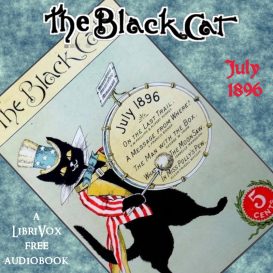
The Black Cat Vol. 01 No. 10 July 1896
The Black Cat (1895-1922) was a monthly literary magazine, publishing original short stories, often about uncanny or fantastical topics. Many writers were largely unknown, but some famous authors also wrote original material for this magazine. This is the tenth issue, offering 5 more stories: “On the last trail”, by H. W. Phillips and Rupert Hughes: witness the final showdown between the marshall and his friend ”A message from where ?”, by L. Francis Bishop: a boy’s imagination is kindled by a mysterious beautiful woman in an old picture “The man with the box”, by George W. Tripp: find out what happens when you don’t heed the warning and press the “snake” button “What the moon saw”, by Isabelle Meredith: a careless young man finds out why one should not disturb the rest of the dead “In Miss Polly’s pew”, by Ellen Frizzell Wycoff: it is never too late to claim your true love – Summary by Sonia
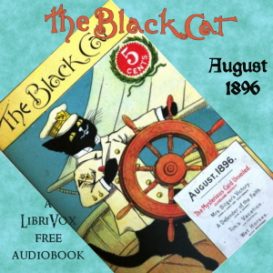
The Black Cat Vol. 01 No. 11 August 1896
The Black Cat (1895-1922) was a monthly literary magazine, publishing original short stories, often about uncanny or fantastical topics. Many writers were largely unknown, but some famous authors also wrote original material for this magazine. The eleventh issue offers the following 5 stories: “The Mysterious Card Unveiled”, by Cleveland Moffett: the long-awaited sequel has arrived and a man’s dark soul is finally revealed “Mrs. Bilger’s Victory”, by Emma S. Jones and Geik Turner: a woman fights for justice against a big corporation “A Defender of the Faith”, by John D. Barry: witness how standing up against injustice wins a man the respect of the girl he loves “Tim’s Vacation”, by L. E. Shattuck: tragically, the young man’s first vacation does not turn out as expected “Wet Horses”, by Alice MacGowan: in jail, a smuggler realizes that the most important thing in life is freedom – Summary by Sonia
The Black Cat Vol. 01 No. 12 September 1896
The Black Cat (1895-1922) was a monthly literary magazine, publishing original short stories, often about uncanny or fantastical topics. Many writers were largely unknown, but some famous authors also wrote original material for this magazine. The twelfth issue offers the following 6 stories: “The Reapers”, by Ly Batterman Lindsay: eager to start a new life, a young couple learns that they cannot run from their past “A Kindergarten Hold-Up”, by Mabell Shippie Clarke: a good-for-nothing tramp finds empathy while watching the innocent play of children “The Guardian of Mystery Island”, by Dr. Edmond Nolcini: while trying to disprove a superstition, an adventurer encounters a strange old woman and some very dangerous plants “A Mental Mischance”, by Thomas F. Anderson: reading people’s minds is not always a blessing “The Barber of the Alpena”, by J. Harwood: a suggestible man has a horrible experience at a barber-shop “Which was like a Woman”, by William Albert Lewis: a woman is confronted by a man from her past she did not expect to ever see again – Summary by Sonia
The Black Cat Vol. 02 No. 01 October 1896
The Black Cat (1895-1922) was a monthly literary magazine, publishing original short stories, often about uncanny or fantastical topics. Many writers were largely unknown, but some famous authors also wrote original material for this magazine. Volume 2 starts off with the following 6 stories in the first issue: “The house that Jack built”, by Harold Donovan Hilton: a young man learns the intriguing story of an uncanny old house “In the garden of a villa”, by R. George Smith Jr.: a female lark sees her tragic love life reflected in the life of a duchess “A peg-leg ghost”, by Wellington Vandiver: strange events finally make a sceptical man believe in the supernatural “How the run was stopped”, by Richard Stillman Powell: to save the bank from bankruptcy, a clerk resorts to an ingenious ruse “My friend, Walker”, by Geraldine Meyrick: a man achieves the impossible of communicating with horses, but at an awful price “In an hour”, by Warwick James Price: in his last hour, a dying scholar muses about his life – Summary by Sonia
The Black Cat Vol. 02 No. 02 November 1896
The Black Cat (1895-1922) was a monthly literary magazine, publishing original short stories, often about uncanny or fantastical topics. Many writers were largely unknown, but some famous authors also wrote original material for this magazine. This is the second issue of volume 2 with the following five short stories: “Silas F. Quigley – To Arrive”, by Lewis Hopkins Rogers: a puzzling letter incites Mr Quigley to explore an unusual way to secure a job “The Polar Magnet”, by Philip Verrill Mighels: discover the terrible technique a sculptor uses to create very life-like casts for his art “Fitzhugh”, by W. MacPherson Wiltbank: an untalented man tries his utmost to have his five minutes of fame, with an unexpected outcome “The Passionate Snake”, by Ella Higginson: how a snake learnt about the treachery of man “Professor Whirlwind”, by Allen Quinan: the shocking account of a man’s experience inside a tornado – Summary by Sonia
The Black Cat Vol. 02 No. 03 December 1896
The Black Cat (1895-1922) was a monthly literary magazine, publishing original short stories, often about uncanny or fantastical topics. Many writers were largely unknown, but some famous authors also wrote original material for this magazine. This is the third issue of volume 2 with the following six short stories: “The Lost Brook Trail”, by Bert Leston Taylor: a man recruits a guide to a fishing expedition for an unusual catch “A modern de Pompadour”, by Jennie Bullard Waterbury: a talented and creative wigmaker finally meets his rival “The Parchment Diary”, by Willis B. Lloyd: a traveller writes down a hermit’s story of atonement “A Honeymoon Eclipse”, by George C. Gardner: the odyssee of a newly-wed man who forgot the address of their honeymoon lodgings “The Captain’s Last Cruise”, by Stanley Edwards Johnson: find out what the old captain planned to do with the mysterious mahogany lumber “The Blow-Out at Jenkins’s Grocery”, by Ella Higginson: unfortunately, Christmas is not a time of happiness for all alike – Summary by Sonia
The Black Cat Vol. 02 No. 04 January 1897
The Black Cat (1895-1922) was a monthly literary magazine, publishing original short stories, often about uncanny or fantastical topics. Many writers were largely unknown, but some famous authors also wrote original material for this magazine. This is the fourth issue of volume 2 with the following five short stories: “The purloining of Ruth Allen”, by Elizabeth Flint Wade: an old spinster realizes that it’s never too late for true love “The scoop of the scarlet tanager”, by Edward B. Clark: find out how a birdwatcher makes his fortune with a gruesome discovery “The honeymoon at Candlestand Mountain”, by Grace MacGowan Cooke: a ranch-aid hatches an ingenious plot to marry the girl he loves “The man without a name”, by Frances M. Butler: a man is desperately trying to recover his memory and life “Denny”, by Landis Mills: poor Denny’s Saint-Patrick’s-celebration had a tragic outcome – Summary by Sonia
The Black Cat Vol. 02 No. 05 February 1897
The Black Cat (1895-1922) was a monthly literary magazine, publishing original short stories, often about uncanny or fantastical topics. Many writers were largely unknown, but some famous authors also wrote original material for this magazine. This fifth issue of volume 2 presents the following six short stories: “The Lost Paradise”, by Geik Turner and T. F. Anderson: a floating island gets its owner into political troubles “My Invisible Friend”, by Katharine Kip: witness the tragic outcome of an ingenious invention “Pendarvis, the Cracker”, by Allen Chamberlain: some people go to great lengths to avoid their daily work “Le Bretagne”, by W. A. Fraser: will the drowned sailor keep his promise to return to his wife by Christmas ? “Carmen Gutierrez”, by Edward Sylvestre: a tragic love in the times of the Cuban war for independance “Regina”, by Grace Frances Bird: the young seeds of budding love still bloom after many long years – Summary by Sonia
The Black Cat Vol. 02 No. 06 March 1897
The Black Cat (1895-1922) was a monthly literary magazine, publishing original short stories, often about uncanny or fantastical topics. Many writers were largely unknown, but some famous authors also wrote original material for this magazine. This sixth issue of volume 2 presents the following five short stories: “The Stolen Melody”, by Constance Fauntleroy Runcie: a ruthless pianist tries to win the music award through evil manipulation “The Bramble Gift Trust”, by Zollie Luther Jones: Nannie Burns has assembled a very unusual collection of souvenirs “The Parchment Slave”, by A. M. Barnes: find out what really happened to the last will of Mr Boise “Monsieur Angot”, by Charles F. Bourke: let yourself be instructed by the musings and philosophies of a French parrot “The Ivory Bells”, by James Buckham: a young woman hopes to find out that Love is not only attracted by lovely baubles – Summary by Sonia
The Black Cat Vol. 02 No. 07 April 1897
The Black Cat (1895-1922) was a monthly literary magazine, publishing original short stories, often about uncanny or fantastical topics. Many writers were largely unknown, but some famous authors also wrote original material for this magazine. This seventh issue of volume 2 presents the following five short stories: “The Peacock and the Copper Moon”, by Frances Aymar Mathews: a sculptor’s plan to save her lover suddenly receives a dramatic twist “Westward Ho !”, by J. Wesley Glover: don’t launch the party before the guests arrive ! “The Captain’s Gray”, by Ella F. Mosby: a war-horse and its dead master save the day in a battle “M’Goulighan”, by Frances Lynde: a sheriff’s deputy finds out that there’s some good even in the most hardened prisoner “The Man with the Iron Arm”, by Geik Turner: watch a weak-looking runt win against the best fighters in a wrestling match – Summary by Sonia
The Black Cat Vol. 02 No. 08 May 1897
The Black Cat (1895-1922) was a monthly literary magazine, publishing original short stories, often about uncanny or fantastical topics. Many writers were largely unknown, but some famous authors also wrote original material for this magazine. This is the eighth issue of volume 2 with the following five short stories: “The Passing of the Polly Ann”, by Collins Shackelford: the survivor of a drifting ship testifies to a startling revelation “The Obsequies of Ole Miss Jug”, by Jean Ross Irvine: these children know how to bury a faithful dog in style “A Modern Goliath”, by J. C. W. Brooks, U.S.A.: witness a spectacular court-martial trial, trying to prove a soldier’s innocence “The Colby Girls”, by Charles Bryant Howard: two sturdy spinsters battle through a storm at sea “Trans-Saharan Station 15-M”, by J. E. Pember: three men are struggling to stay alive in the stifling heat of the Sahara Summary by Sonia
The Black Cat Vol. 02 No. 09 June 1897
The Black Cat (1895-1922) was a monthly literary magazine, publishing original short stories, often about uncanny or fantastical topics. Many writers were largely unknown, but some famous authors also wrote original material for this magazine. This is the ninth issue of volume 2 with the following five short stories: “The Man-Hunt of Mendocino”, by Frank Bailey Millard: no one can stop the revenge of a mother for the murder of her son “Silas Bartle’s Snake-Bite Cure”, by Winthrop Packard: witness young Norris’ dramatic struggle to survive a deadly snake bite “Tunnel Number Six”, by Eugene C. Derby: learn all about the startling explanation of a seemingly haunted mine-tunnel “An Old Maid’s Wedding Trip”, by Juliet Wilbor Tompkins: let’s join a spinster’s honeymoon with an unexpected outcome “The Official Report”, by Thaddeus M. Lakewood: love sometimes can ruin even a brilliant officer’s career – Summary by Sonia
The Black Cat Vol. 02 No. 10 July 1897
The Black Cat (1895-1922) was a monthly literary magazine, publishing original short stories, often about uncanny or fantastical topics. Many writers were largely unknown, but some famous authors also wrote original material for this magazine. This is the tenth issue of volume 2 with the following five short stories: > For Dear Old Yale, by James Langston: a game of cards will decide the fate of these six men > The Casket of Pandora, by Margaret Dodge: a young woman is tempted to choose between her family and her career > A Romance of the Palisades, by E. O. Weeks: what is the secret behind the scared expression in a young girl’s portrait ? > A Postponed Arrest, by Leland Ingersoll: the sheriff takes a merciful decision to ease a dying man’s final hours > A Geometrical Design, by Mary Foote Arnold: a mysterious will starts three sisters off on a treasure hunt – Summary by Sonia
The Black Dog and Other Stories
Coppard was renowned for his influence on the English short story and here we present a collection, first published in 1923, featuring 18 of his best known works, including Simple Simon, the Wife of Ted Wickham and The Devil in the Churchyard.
The Black Dwarf
The Black Dwarf is the first of the ?Tales of My Landlord? series, which also includes The Bride of Lammermoor and The Heart of Midlothian. The third preliminary chapter depicts two horsemen arriving at the Wallace Inn in Gandercleugh, where one of the horsemen relates the tale. The story proper is set on the Scottish borders during the reign of Queen Anne. The Jacobite movement is in its infancy, but the inhabitants of this part of the country have enough to quarrel about without politics inciting them to it. Several families of high and low birth bear no good intentions to each other, and a weird, brooding dwarf, who wishes ill on all of humanity, seems to direct and perpetuate the mayhem from his lonely cottage on Mucklestane Moor. (tbragg)
The Black Eagle Mystery
A New York corporate lawyer falls eighteen stories from the Black Eagle Building. Suicide, cops say. That Hollings Harland was part of a black organization, cornering the market on copper, and about to be exposed to the world. He had just excused himself from an acrimonious meeting with the wealthy Johnston Barker, perhaps another agent of the organization. Could Harland have defected? Spunky part-time snoop Molly Morgenthau Babbits thinks something fishy is going on. She’s opening her own informal investigation into the facts with the help of a connection on the Black Eagle’s staff and suspects the worst: murder most foul! – Summary by Mike Overby
The Black Experience in America, 18th-20th Century, Vol. 1
This is not the copyrighted work by Norman Coombs currently on Project Gutenberg but a collection of non-fiction, fiction, poetry, drama, and speeches found on Project Gutenberg that are by or about African Americans. Subjects range from late 18th Century epistolary conversations between black Baptist preachers to 1930s testimony by ex-slaves. (Summary by BellonaTimes)

The Black Fawn
Bud Sloan was an orphan who had been ‘sold out’ of the orphanage to work on a farm once he’d been old enough to labor. The farm where he was to work was owned by an aging farmer and his wife who had raised a large family and were now left alone. One day, after his chores were done, Bud wandered into the woods nearby and with mouth agape, he noticed a newborn jet black fawn all alone and apparently confused in his new surroundings. Bud resolved that day that this baby fawn was just like himself, an orphan, and would be bound to him in spirit. But many obstacles would keep the two separated, and the black fawn would eventually become the target of the local hunters. (Introduction by Roger Melin)

The Black Monk
Aspiring academic Andrei Kovrin, while summering in the countryside per the advice of a physician, is haunted by the apparition of a black monk that appears only to him and encourages him in his intellectual pursuits. Although Kovrin is the only one who can see the apparition, the monk assures him that, even if he were a creation of the imagination, he would still be a thing of nature and consequently real. Chekhov uses this vehicle for a gothic exploration into scholarly obsession and madness. – Summary by Daniel Davison
The Black Moth
The year is 1752. Devil, the Duke of Andover, and highwayman Jack, the Earl of Wyncham are at odds over a country squire’s beautiful daughter. Cheating at cards, the marital problems of the younger sister of the Duke and the younger brother of the Earl, and debts beyond imagination form the backdrop for this romance, Heyer’s first work and the only one in the public domain. (Summary by Sibella Denton)
The Black Moth (version 2)
Jack Carstares, oldest son of the Earl Wyncham, has been disgraced by his brother. Gone for six years, living the life a highwayman he meets the woman he will fall in love with. Saving her from being kidnapped by a dastardly blackguard he is injured and must stay with her family until he is able to return to his life…will she discovery his true identity? Will he be able to leave her when the time comes? Mystery and humor follow this intriguing cast of characters until the very end. (Summary by Terra Mendoza

The Black Motor Car
Head over heels in love with the amazingly beautiful Mrs. de la Mothe, Jack Portheous is led to embezzle a large sum of money from the bank at which he works, and plans to elope with her to South America. On the eve of their planned departure, however, Jack finds his wife dead in their house, and as he blames himself for her death, he decides to cancel everything. Marie de la Mothe is not a woman to be trifled with, however, and she immediately gives him away to his employer, sending Jack off to prison for years. After finishing his prison term and spending several years abroad, Jack returns to England, with nothing on his mind but the thought of revenge.. – Summary by Carolin

The Black Panther
John Hall Wheelock is an American poet who during his student years at Harvard University was editor-in-chief of The Harvard Monthly, and began to publish his first poems. He later worked for publisher Charles Sribner and Sons finally becoming senior editor. He received many awards for his poetry including the Golden Rose in 1936 for the most distinguished contribution to American poetry of that year. The poems in The Black Panther reveal a deep spirituality but also a strong humanistic reach, sometimes dark and sometimes celebratory and full of joy. The collection begins with the powerful title poem and consists of three sections: Dim Wisdoms, Space and Solitude, The Lost Traveller?s Dream, and The Divine Fantasy. – Summary by Larry Wilson
The Black Poodle and Other Tales
This is a collection of ten humorous short stories (Summary by Carolin)
The Black Prophet: A Tale of Irish Famine
A story about the Irish, just before the onset of the famine of 1847, with all the color and dialogue of a man who lived it. (Summary by JCarson)
The Black Riders and Other Lines (Version 2)
Written in a purgative frenzy of pure imagination (?They came, and I wrote them, that?s all?), Stephen Crane?s The Black Riders and Other Lines is a strange, enigmatic, and sparsely-written collection of free verse that bristles with Old Testament fury, seethes with cosmic cynicism, and touches on themes of lost faith and existential terror. – Summary by ChuckW
The Black Robe
The church has lost out on a valuable piece of land through wars and transfers. Father Benwell is determined to reclaim that property by the conversion of the owner, Lewis Romayne. Enter beautiful Stella, who captures the heart of Romayne. Should Stella capture the love and devotion of Romayne, Father Benwell’s scheme would fail, and that is something that he can not allow. Complicating things is the fact that both Romayne and Stella are hiding their own terrible secrets. The Black Robe is an 1881 epistolary novel by famed English writer, Wilkie Collins. The book centers around the misadventures of Lewis Romayne, and is also noted for a perceived anti-Catholic bias (Summary by Mike Zane and Wikipedia)
The Black Star
The Black Star was a master criminal who took great care to never be identifiable, always wore a mask so nobody knew what he looked like, rarely spoke to keep his voice from being recognized, and the only mark left at the scenes of the crimes which he and his gang committed were small black stars which were tacked as a sign of their presence, and an occasional sarcastic note to signify his presence and responsibility. Even those who worked for him knew nothing of him, all of which were making his crimes virtually unsolvable. The police were at a complete loss as to his identity and at a method of stopping his criminal activities. He seemed to have the perfect strategic setup and all advantages were in his favor. He even somehow knew where the wealthy kept their jewels and money, and knew when they would remove valuable items from their safes and deposit boxes. Thus Roger Verbeck decided to take on the case of the Black Star using his own methodology. The Black Star will keep you guessing from beginning to end, just as he kept the police and Verbeck guessing. Johnston McCulley was a prolific writer in the pulp fiction vein, and his Zorro series would become immensely popular. However, prior to Zorro, the Black Star was among his first repeating characters which kept readers of the day in continual suspense until his next appearance. McCulley also wrote mysteries and detective stories using various pseudonyms, including Harrison Strong. (Introduction by Roger Melin)
The Birth, Baptism, Temptation, and Early Ministry of Jesus Christ – Commentary on the Gospel of St Matthew
Homilies 1 – 14 of Saint John Chrysostom’s commentary on the Gospel according to Saint Matthew, which include the wondrous birth, baptism, temptation, and early ministry of the Lord Jesus Christ. – Summary by The Reader