
Audio Books
Showing 701–750 of 2033 results
Dramatic Reading Scene and Story Collection, Volume 001
LibriVox readers present a collection of their favorite chapters and short stories, with the original author?s words all brought to life with different reader voices for each character in our popular Dramatic Reading style. This volume includes Anne’s Confession from Anne of Green Gables by Lucy Maud Montgomery, Coming Home from Mates of Billabong by Mary Grant Bruce [not PD in Australia or Europe], Scandal in Bohemia from The Adventures of Sherlock Holmes by Sir Arthur Conan Doyle, The Tunnel Under the World by Frederik Pohl [only PD in the US], The Valley of the Shadow of Death from For the Term of His Natural Life by Marcus Clarke, Five Stories from the Chronicles of Clovis by Saki, The Proof of the Pudding from The Story Girl by Lucy Maud Montgomery, The Garden Party and A Dill Pickle by Katherine Mansfield, and The Tale of Samuel Whisker or The Roly Poly Pudding by Beatrix Potter. Cast lists: Chapter XIV, Anne’s Confession, from Anne of Green Gables BC: Beth Thomas Edited By: Maria Kasper Anne Shirley: Rachel Marilla Cuthbert: Saskatoonie Matthew Cuthbert: Norman Elfer Narrator for Anne’s Confession: Kristin Gjerl?w Chapter VI, Coming Home, from Mates at Billabong Edited By: Maria Kasper Nora: Beth Thomas Jim: ToddHW Mrs. Brown: Kristin Gjerl?w Wally: Larry Wilson Mr. Linton: Algy Pug Dr. Anderson: Larry Wilson Cecil: Esther ben Simonides Billy: Rosslyn Carlyle Narrator for Coming Home: Teresa Bauman Scandal in Bohemia, from The Adventures of Sherlock Holmes Edited By: Maria Kasper Dr John Watson (who is the Narrator): Algy Pug Sherlock Holmes: Beth Thomas The King of Bohemia: azureblue Irene Adler: Sarah Terry Godfrey Norton: Eden Rea-Hedrick Bystander: Willy Irene?s Maid: Etel Buss The Tunnel Under the World Edited By: Maria Kasper Narrated By: SionedV Guy Burckhardt: Beth Thomas April Horn/Janet: Kristin Gjerl?w Swanson: Larry Wilson Mary Burckhardt: Elizabeth Klett Cigarette seller/Advertiser: Norman Elfer Miss Mitkin: Rosslyn Carlyle Narrator: SionedV Mr. Dorchin: Bruce Pirie Chapter 27, The Valley of the Shadow of Death, from For the Term of His Natural Life Edited by: TimoleonWash Narrator: Beth Thomas Jemmy Vetch ?The Crow?: Ali Kazerani Gabbett: Truman Thames Alick Sanders ?The Moocher?: Mark Chulsky Greenhill: TimoleonWash Tom Bodenham: Glenn O’Brien 5 Stories from The Chronicals of Clovis Read and edited by: : Peter Yearsley : Philippa : Lucy Perry Chapter 17, The Proof of the Pudding, from The Story Girl Editor: Rachel Beverly/Narrator: Savannah Felicity: Rachel Dan: Glenn O’Brien Peter: Willy Cecily: Lydia Sara (The Story Girl): Beth Thomas Uncle Roger: David Lawrence The Garden Party Edited by: Ernst Pattynama Narrator: Elizabeth Klett Meg: Kristin Gjerl?w Mother: Beth Thomas Laura: thestorygirl Tall Man: Truman Thames Pale Man: Zames Curran Workman: Zames Curran Sadie: Lydia Jose: Esther ben Simonides Godber’s Man: ToddHW Kitty Maitland: Jessie Yun Lady 1: Elizabeth Klett Lady 2: Newgatenovelist Lady 3: Anna Simon Mr Sheridan: Ray Kasper Cook: MaryAnn Laurie, Hans: Amy Gramour Woman 1: Rapunzelina Woman 2: Vanessa Cooley A Dill Pickle Edited by : Rapunzelina Narrator: Larry Wilson Vera: Savannah Thomas: ToddHW The Tale of Samuel Whiskers, or, The Roly Poly Pudding Edited by: Rachel Narrator: Rachel Tabitha Twitchit (a mother cat): Beth Thomas Ribby (Tabitha’s cousin): Bria Snow Moppett (a mischievous female kitten): Kristin Gjerl?w Mittens: SuperCoconut Tom Kitten (a mischievous male kitten): Jessie Yun Samuel Whiskers: Willy Anna Maria (The wife of Samuel, a villainous rat): Vanessa Cooley
Dramatic Reading Scene and Story Collection, Volume 002
Librivox readers present a collection of their favorite chapters and short stories, with the original author?s words all brought to life with different reader voices for each character in our popular Dramatic Reading style. This volume includes Various Detectives, Cute Animals, Talking Fireworks, and Interesting People and Situations: See cast list for authors and book/story names. – Summary by ToddHW Cast list: 01. Adventure of the Dying Detective by Sir Arthur Conan Doyle; Run by:: Beth Thomas (1974-2020) Sherlock Holmes: Peter Yearsley Mr Culverton-Smith: TJ Burns Butler (to Mr Smith): Leanne Yau Mrs Hudson: Foon Inspector Morton: Beth Thomas (1974-2020) Dr John Watson: johnnyenglish : 02. An Unexpected Result by Edward P. Roe; Run by:: LikeManyWaters Narrator: LikeManyWaters Jack Ackland: johnnyenglish Will Munson: Chuck Williamson Eva van Tyne: thestorygirl Mrs Alston: Availle Eva?s Aunt: Foon ?Half a dozen voices?: Larry Wilson A friend: Sonia : 03. The Purloined Letter by Edgar Allan Poe; Run by:: Chuck Williamson Mr C Dupin: Seamus Dobbin Prefect G: Joe Bly Narrator: Chuck Williamson : 04. The Stolen Bacillus by H. G. Wells; Run by:: Sonia Narrator: Availle Bacteriologist: johnnyenglish Anarchist: ToddHW Minnie: Beth Thomas (1974-2020) Old Tootles: Rob Marland Ostler Boy: Eitel Tommy Biles: Adrian Stephens Cabman: Scott Caulkins Another Cabman: Sonia : 05. The Wind in the Willows, Chapters 3 and 4, by Kenneth Grahame; Run by:: Peter Yearsley Narrator: thestorygirl Rat: TJ Burns Mole: Beth Thomas (1974-2020) Badger: johnnyenglish Otter: Foon Hedgehog: Jasmin Salma Rabbit: Peter Yearsley : 06. The Remarkable Rocket by Oscar Wilde; Run by:: Rob Marland Narrator: Rob Marland Rocket: Joe Bly Prince and Dragon-fly: lorda Page, Squib, and The People: Jasmin Salma Princess, Catherine Wheel, and Goose: Beth Thomas (1974-2020) King and Frog: Adrian Stephens Roman Candle, Workman, and The People: Lynette Caulkins Cracker: Hannoria Bengal Light, Duck, and The People: TJ Burns First Boy: ToddHW Second Boy: Grace Buchanan Fire-balloon: Grace Buchanan : 07. The Diamond Necklace by Guy De Maupassant; Run by:: Campbell Schelp Narrator: Betsy Walker Mathilde Loisel: Sonia Monsieur Loisel: Larry Wilson Jeanne Forestier: Beth Thomas (1974-2020) Jeweler: Foon : 08. The Curious Case of Benjamin Button by F. Scott Fitzgerald; Run by:: Lynette Caulkins Narrator: James K. White Roger Button: Rob Marland Doctor Keene: Larry Wilson First Nurse: Lynette Caulkins Second Nurse: Beth Thomas (1974-2020) Benjamin Button: Adrian Stephens Store Clerk: Grace Buchanan Mr. Hart: KevinS First Undergraduate: lorda Second Undergraduate: Patrick Glenn Hildegarde: Availle Townspeople: ToddHW Roscoe Button: Chuck Williamson Sentry: lorda Colonel: Scott Caulkins : 09. The Tale of the Pie and the Patty-Pan by Beatrix Potter; Run by:: Beth Thomas (1974-2020) Narrator: johnnyenglish Ribby (a cat): Beth Thomas (1974-2020) Duchess (a dog): Betsy Walker Dr Maggotty (a magpie): Larry Wilson Cousin Tabitha Twitchit (a cat): Devorah Allen : 10. A Retrieved Reformation by O. Henry; Run by:: Larry Wilson Narrator: Sarah Hite Jimmy Valentine: Adrian Stephens Warden: Availle Mike Dolan: Rob Marland Ben Pierce: Joe Bly Mr Adams: ToddHW Annabelle: TJ Burns Mother: Beth Thomas (1974-2020)
Dramatic Reading Scene and Story Collection, Volume 003
Librivox readers present a collection of their favorite chapters and short stories, with the original author?s words all brought to life with different reader voices for each character in our popular Dramatic Reading style. This volume includes readings from Louisa May Alcott, two by L M Montgomery, Lewis Carroll, Victor Hugo, Kate Chopin, C K Chesterton, Jack London, and A A Milne. NOTE that Milne died in 1956 and this story is not PD in for listeners in Europe and/or Australia, and other countries which observe copyright of author’s death +70 years. – Summary by ToddHW Cast lists: 1. The Masked Marriage from Little Women by Louisa May Alcott. BC for this DR is Salvationist Sam Pickwick: Joanna Michal Hoyt Ferdinand Deveraux: Pelham Flowerdew Count de Avalon: Wayne Cooke Fairy Queen: MaybeCordelia Troubadour: David Purdy 2. Barriers Swept Away from Anne’s House of Dreams by L. M. Montgomery. BC for this DR is Bookworm360 Anne Blythe-Shirley: Michele Eaton Leslie Moore: MaybeCordelia Narrator: Joanna Michal Hoyt 3. A Mad Tea Party from Alice’s Adventures in Wonderland by Lewis Carroll . BC for this DR is jennlea Narrator: Peter Yearsley Alice: Bookwork360 Hatter: Wayne Cooke March Hare: Eitel Dormouse: Jenn Broda 4. By Courier by O. Henry, from his collection The Four Million. BC for this DR is JoannaHoyt Young Man: ToddHW Boy: Greg Giordano Young Lady: MaybeCordelia Robert Ashburton: Wayne Cooke Narrator: Joanna Michal Hoyt 05. The Bishop Works and Little Gervais, from Les Miserables by Victor Hugo and translated by Isabel F. Hapgood. BC for this DR is ElizaZ Narrator: Joanna Michal Hoyt Madame Magloire: TJ Burns Monseigneur Bienvenue: ToddHW Jean Valjean: Wayne Cooke Little Gervais: Jasmin Salma Priest: Larry Wilson 6. The Kiss by Kate Chopin. BC for this DR is wib66 Brantain: ToddHW Harvy: Greg Giordano Natalie: Matea Bracic Narrator: Michele Eaton 7. The Eye of Apollo, by G.K. Chesterton, from The Innocence of Father Brown. BC for this DR is Mozartjr Narrator: Mozartjr Father Brown: Kalamareader Kalon the Prophet: GregGiordano Flambeau: Kalamareader Ms. Joan Stacey: Aligator Ms. Pauline Stacey: LCaulkins 8. The Quarantine at Alexander Abraham’s by L.M. Montgomery, from The Chronicles of Avonlea. Bookwork360 is the BC for this DR Narrator/Peter-Angelina MacPherson:Bookworm360 Rev. Allan:Kalamareader Mrs. Allan:WendyKatzHiller Alexander Abraham Bennett:ToddHW Dr. Blair:GregGiordano 9. Chapter 5 of Hearts of Three by Jack London. SCaulkins is the BC for this DR Narrator: Lynette Caulkins Francis Morgan: Greg Giordano Pedro Zurita: Scott Caulkins Rafael: Wayne Cooke Gendarme: ToddHW Ignacio: Larry Wilson Augustino: Jim Locke Henry Morgan: Ben Tucker 10. The Making Of A Christmas Story, from Happy Days by A. A. Milne ( – 1956). ElizaZ is BC for this DR NOTE: Milne died in 1956. This story is not PD for readers in Europe and/or Australia, and other countries which observe copyright of author’s death +70 years. Author: Wayne Cooke Editor: Greg Giordano Alice: Lynette Caulkins Robert Hardrow: Mozartjr Elsie: Eliza
Dreams Collection 1 – Stories and Poems
This is a collection of 20 stories and/or poems, contributed by Librivox volunteers, pertaining to dreams. ( ~ Michele Fry)
Dreams Collection 2 – Stories and Poems
This is a collection of 20 stories and/or poems, contributed by Librivox volunteers, pertaining to dreams. ( ~ Michele Fry)
Eighteenth Century Poetry and Prose
A collection of prose and poetry written principally in the 18th Century. These works of world literature are written in the English language or are in English translation. (Summary by Alan Davis Drake) NOTE: Poem 35, ?Hills of Home,? was written around 1922 and is therefore not an 18th Century poem.
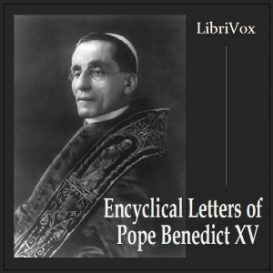
Encyclical Letters of Pope Benedict XV
A collection of 10 out of the 12 Encyclicals written by Pope Benedict XV, who was Pope from 1914-1922. Public domain English translations of ‘In Hac Tanta’ and ‘Principi Apostolorum Petro’ were not able to be located for this collection. (Summary by Maria Therese)
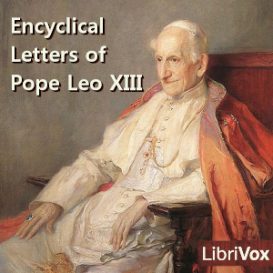
Encyclical Letters of Pope Leo XIII
Pope Leo XIII (1810-1903) wrote eighty-eight Encyclicals during his twenty-five year pontificate (1878-1903). Fifty-six of those are included in this collection. Among the topics covered are the Rosary, socialism, Christian marriage, labour, freemasonry, Church and state, human liberty, dueling, the Holy Eucharist, and more. (Summary by Maria Therese)
Encyclical Letters of Pope St. Pius X
During his eleven year pontificate (1903-1914) Pope St. Pius X wrote 16 encyclicals. The subjects ranged from saints, The Immaculate Conception, The Restoration of All Things in Christ, Catholic Social Action, and more. This is collection of 14 out of the 16 encyclicals that he authored. His most well known encyclical, Pascendi, has been recorded separately, and can be found at this link here: Pascendi Dominici Gregis (Summary by Maria Therese)
Essays on Prohibition
A collection of essays regarding the pros and cons of prohibition of alcoholic beverages, principally in the United States. – Summary by KevinS
Exotics and Retrospectives
Lafcadio Hearn, born 1850 in Greece, went to Japan when he was 40 years old and became a Japanese citizen only 6 years later. His writings about Japan from the beginning of the Meiji era, when the country was just opening to the West, remain among the most important explanations of Japanese culture. This book contains in the first part, “Exotics”, his observations of and personal insights into Japan. For example, Fuji no Yama tells about him climbing the highest mountain in Japan; and A Question in the Zen Texts, Literature of the Dead, and Of Moon Desire try to explain Buddhist teachings. In the second part, “Retrospectives”, Hearn leaves both Japan and his vantage point as impartial observer behind and delves into personal experiences and musings that occurred to him in the numerous countries he visited. The main topic of these very personal pieces is beauty in all its forms. (Summary by Availle)

Experiments and Observations on Different Kinds of Air
Joseph Priestley, FRS was an 18th-century English theologian, Dissenting clergyman, natural philosopher, chemist, educator, and political theorist who published over 150 works. In ?Experiments and Observations on Different Kinds of Air,? he reviews experiments with gases. A common theme in this work is measuring the volumes of gases held in glass tubes, and their increase or decrease when exposed to other substances. He also tests the effects of gases on mice, plants and insects. Priestley demonstrated that fixed air (now known as CO2) can be produced from several reactions including alcoholic fermentation, combustion and a mixture of oil of vitriol and chalk (sulfuric acid and calcium oxide). He also showed that it is soluble in water, and that its toxic effects can be reduced when agitated in water. In other experiments, he showed that combinations of gases can mix to form a smaller volume than the sum of both separate gases, as when he combined common air (atmospheric air) with nitrous air (nitric oxide, NO). For some experiments, Priestley tests whether the properties of gases change when stored. He finds that inflammable air (hydrogen, H2 or a mixture of hydrocarbons) becomes less flammable but retains its toxic properties. Also interested in electricity, Priestley tests the effects of gases on sparks. While he finds that gases are generally good insulators, he also finds that some gases change the colors of electric sparks. He also discovers that some mixtures of air explode in their entirety, while others must be combined with common air in order to burn. Priestley uses several terms common to the study of natural philosophy, or chemical experiments as known today. Some of the terms are parts of obsolete theories or are old names for chemicals now given standard names. To better understand Priestley’s observations, the following terms are defined according to their present names. here

Experiments in Plant Hybridisation
Gregor Mendel was an Augustinian monk in the St. Thomas monastery in Brno. His seminal paper “Experiments in Plant Hybridization” presents his results of studying genetic traits in pea plants. It is the ground breaking work on inheritance, being the first to differentiate between dominant and recessive genetic traits. His work was long ignored and deemed controversial, however, at its rediscovery at the turn to the 20th century, it earned Gregor Mendel the title “father of modern genetics”. (Summary by Availle)
Explanation of Catholic Morals
A Concise, Reasoned, and Popular Exposition of Catholic Morals. The ten commandments, vice and virtue from the Catholic perspective. The contents of this volume appeared originally in The Catholic Transcript, of Hartford, Connecticut, in weekly installments, from February, 1901, to February, 1903.
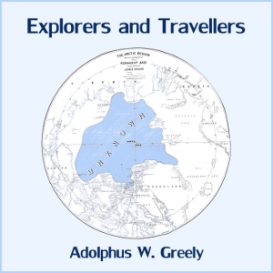
Explorers and Travellers
?Explorers and Travellers? is a collection of short biographies of some of America?s intrepid explorers. Adolphus W. Greely writes brief but very complete histories of men who risked life and fortune to discover more of our world. A thoroughly enjoyable work if you enjoy exploration and adventure. – summary by William Tomcho
Exposition of the Apostles’ Creed
Rev. James Dodds, D.D. was a noted religious writer, educated in Edinburgh, joining the Free Church, serving in Dunbar for most of his career. In this exposition, he writes primarily to a lay audience to make the fundamental beliefs of the Apostles’ Creed more accessible. Although he does not delve into the history of the development of the Creed, he draws from a wide body of reading, especially that of Martin Luther. – Summary by Larry Wilson
Expositions on the Book of Psalms Vol. 2 – Psalms 37-52
These sermons on the Psalms of the Holy Prophet and King David are as poetic as the Psalms themselves. They are well-suited for inspirational and devotional listening. – Summary by The Reader
Expositions on the Book of Psalms Vol. 3 – Psalms 53-75
These sermons on the Psalms of the Holy Prophet and King David are as poetic as the Psalms themselves. They are well-suited for inspirational and devotional listening. – Summary by The Reader
Expository Thoughts on the Gospels – St. John Vol. 1
I send forth the volume now in the reader’s hands, with much diffidence, and a very deep sense of responsibility. It is a peculiarly serious undertaking to attempt a Commentary on the Gospel of St. John. This “Commentary” is so extensive that it occupies far more space than the “Expository Thoughts,” and is, I must honestly confess, the principal part of the work. To some it may appear far too long and full. But the circumstances of the times are mu justification. We live in a day of abounding vagueness and indistinctness on doctrinal subjects in religion. Now, if ever, it is the duty of all advocates of clear, well-defined, sharply-cut theology, to supply proof that their views are thoroughly borne out by Scripture. I have endeavoured to do so in this Commentary. I hold that the Gospel of St. John, rightly interpreted, is the best and simplest answer to those who profess to admire a vague and indistinct Christianity. (From the Preface) Books in this series: Expository Thoughts on the Gospel of St. Matthew Expository Thoughts on the Gospel of St. Mark Expository Thoughts on the Gospel of St. Luke, Vol. 1 Expository Thoughts on the Gospel of St. Luke, Vol. 2 Expository Thoughts on the Gospel of St. John, Vol. 1 Expository Thoughts on the Gospel of St. John, Vol. 2 Expository Thoughts on the Gospel of St. John, Vol. 3
Expository Thoughts on the Gospels – St. John Vol. 2
The fourteen years which have “passed over” me since I first began writing on the Gospels, I humbly hope have not been thrown away. They have been to me years of many trials, and I may add of much work, much reading, much reflection, and not a little prayer. At the end of these fourteen years, I feel more than ever convinced that what are called “Evangelical” views of Christian truth are thoroughly Scriptural views, and will bear the test of any fair investigation. The longer I live the more firmly I am persuaded that no system of divinity is so entirely in harmony with the Bible, as the system which rightly or wrongly is called “Evangelical.” I now send forth this volume with an earnest prayer that God may bless it and make it useful. Ignorance of Scripture, I feel more than ever, is the curse of these latter days. Men read many books, and yet neglect “the one Book.” If I can help to make the Bible more plain and interesting to any man’s soul, I shall be abundantly content. (From the Preface) Books in this series: Expository Thoughts on the Gospel of St. Matthew Expository Thoughts on the Gospel of St. Mark Expository Thoughts on the Gospel of St. Luke, Vol. 1 Expository Thoughts on the Gospel of St. Luke, Vol. 2 Expository Thoughts on the Gospel of St. John, Vol. 1 Expository Thoughts on the Gospel of St. John, Vol. 2 Expository Thoughts on the Gospel of St. John, Vol. 3
Expository Thoughts on the Gospels – St. John Vol. 3
The volume now in the reader’s hands completes a work which I began sixteen years ago, entitled “Expository Thoughts on the Gospels.” By the good hand of God that work is now finished. For this I desire to be deeply thankful. “Better the end of a thing than the beginning of it.” (Eccles. vii. 8.) I have now only to commend to my gracious God and Father this feeble attempt to explain a most glorious portion of His revealed Scripture. I do it with humble thankfulness, but with a sense of utter weakness before the power of His word, and of inability to sound the depth even of its simplest sentence. May he spare the hand which has been put forward to touch the ark! May He, for Christ’s sake, forgive all rashness, all perverseness, all uncharitableness, which may be found in this book! And may He sanctify it to the use of His Church: its truth, if any for teaching; its manifold defects for warning.” (From the Preface) Books in this series: Expository Thoughts on the Gospel of St. Matthew Expository Thoughts on the Gospel of St. Mark Expository Thoughts on the Gospel of St. Luke, Vol. 1 Expository Thoughts on the Gospel of St. Luke, Vol. 2 Expository Thoughts on the Gospel of St. John, Vol. 1 Expository Thoughts on the Gospel of St. John, Vol. 2 Expository Thoughts on the Gospel of St. John, Vol. 3
Expository Thoughts on the Gospels – St. Luke Vol. 1
?Expository Thoughts? divides the Gospels into sections of about twelve verses each, from which J. C. Ryle selects two or three prominent points to dwell on and bring to the reader?s attention. In Ryle?s day, there were many detailed commentaries and expositions on scripture. In writing these ?Expository Thoughts?, Ryle aimed to offer a resource to the laity for use in family prayers, as an aid to those who visit the sick and desire a proper book to read on such occasions, and for private devotions for those whose callings and engagements make it impossible for them to read large commentaries. This is the first of two volumes on St. Luke. As with the previous volumes on the Gospels of St. Matthew and St. Mark, Rev. Ryle offered this book ?with an earnest prayer, that it may tend to the promotion of pure and undefiled religion, help to extend the knowledge of Christ, and be a humble instrument in aid of the glorious work of converting and edifying immortal souls.? (Introduction by MaryAnn) Books in this series: Expository Thoughts on the Gospel of St. Matthew Expository Thoughts on the Gospel of St. Mark Expository Thoughts on the Gospel of St. Luke, Vol. 1 Expository Thoughts on the Gospel of St. Luke, Vol. 2 Expository Thoughts on the Gospel of St. John, Vol. 1 Expository Thoughts on the Gospel of St. John, Vol. 2 Expository Thoughts on the Gospel of St. John, Vol. 3
Expository Thoughts on the Gospels – St. Luke Vol. 2
?Expository Thoughts? divides the Gospels into sections of about twelve verses each, from which J. C. Ryle selects two or three prominent points to dwell on and bring to the reader?s attention. In Ryle?s day, there were many detailed commentaries and expositions on scripture. In writing these ?Expository Thoughts?, Ryle aimed to offer a resource to the laity for use in family prayers, as an aid to those who visit the sick and desire a proper book to read on such occasions, and for private devotions for those whose callings and engagements make it impossible for them to read large commentaries. This is the second of two volumes on St. Luke. As with the previous volumes on the Gospels of St. Matthew and St. Mark, Rev. Ryle offered this book ?with an earnest prayer, that it may tend to the promotion of pure and undefiled religion, help to extend the knowledge of Christ, and be a humble instrument in aid of the glorious work of converting and edifying immortal souls.? (Introduction by MaryAnn) Books in this series: Expository Thoughts on the Gospel of St. Matthew Expository Thoughts on the Gospel of St. Mark Expository Thoughts on the Gospel of St. Luke, Vol. 1 Expository Thoughts on the Gospel of St. Luke, Vol. 2 Expository Thoughts on the Gospel of St. John, Vol. 1 Expository Thoughts on the Gospel of St. John, Vol. 2 Expository Thoughts on the Gospel of St. John, Vol. 3
Expository Thoughts on the Gospels – St. Mark
?Expository Thoughts? divides the Gospels into sections of about twelve verses each, from which J. C. Ryle selects two or three prominent points to dwell on and bring to the reader?s attention. In Ryle?s day, there were many detailed commentaries and expositions on scripture. In writing these ?Expository Thoughts?, Ryle aimed to offer a resource to the laity for use in family prayers, as an aid to those who visit the sick and desire a proper book to read on such occasions, and for private devotions for those whose callings and engagements make it impossible for them to read large commentaries. This second volume of the work presents Rev. Ryle’s meditations on St. Mark. As with the first volume on the Gospel of St. Matthew, Rev. Ryle offered this book ?with an earnest prayer, that it may tend to the promotion of pure and undefiled religion, help to extend the knowledge of Christ, and be a humble instrument in aid of the glorious work of converting and edifying immortal souls.? (Introduction by MaryAnn) Books in this series: Expository Thoughts on the Gospel of St. Matthew Expository Thoughts on the Gospel of St. Mark Expository Thoughts on the Gospel of St. Luke, Vol. 1 Expository Thoughts on the Gospel of St. Luke, Vol. 2 Expository Thoughts on the Gospel of St. John, Vol. 1 Expository Thoughts on the Gospel of St. John, Vol. 2 Expository Thoughts on the Gospel of St. John, Vol. 3
Expository Thoughts on the Gospels – St. Matthew
?Expository Thoughts? divides the Gospels into sections of about twelve verses each, from which J. C. Ryle selects two or three prominent points to dwell on and bring to the reader?s attention. In Ryle?s day, there were many detailed commentaries and expositions on scripture. In writing these ?Expository Thoughts?, Ryle aimed to offer a resource to the laity for use in family prayers, as an aid to those who visit the sick and desire a proper book to read on such occasions, and for private devotions for those whose callings and engagements make it impossible for them to read large commentaries. Rev. Ryle offered this first volume on the Gospel of St. Matthew ?with an earnest prayer, that it may tend to the promotion of pure and undefiled religion, help to extend the knowledge of Christ, and be a humble instrument in aid of the glorious work of converting and edifying immortal souls.? (Introduction by MaryAnn) Books in this series: Expository Thoughts on the Gospel of St. Matthew Expository Thoughts on the Gospel of St. Mark Expository Thoughts on the Gospel of St. Luke, Vol. 1 Expository Thoughts on the Gospel of St. Luke, Vol. 2 Expository Thoughts on the Gospel of St. John, Vol. 1 Expository Thoughts on the Gospel of St. John, Vol. 2 Expository Thoughts on the Gospel of St. John, Vol. 3
Extract from Captain Stormfield?s Visit to Heaven (version 4)
Mark Twain pokes a little good natured fun at the usual concept of heaven. The story follows Captain Elias Stormfield on his extremely long cosmic journey to heaven; his accidental misplacement; his short-lived interest in singing and playing the harp (generated by his preconceptions of heaven); and the obsession of souls with the “celebrities” of heaven, like Adam and Moses, who according to Twain become as distant to most people in heaven as living celebrities are on Earth. Twain uses this story to show his view that the common conception of heaven is ludicrous and points out the incongruities of such beliefs.Lots of his usual barbed humor here. – Summary by phil chenevert and wikipedia
Extract from Captain Stormfield’s Visit to Heaven
“Captain Stormfield’s Visit to Heaven” is a short-story written by American writer Mark Twain and published in 1909. The story follows Captain Stormfield on his extremely long cosmic journey to heaven, his accidental misplacement, his short-lived interest in singing and playing the harp, and the obsession of souls with the “celebrities” of heaven, like Adam and Moses, whom, according to Twain, become as distant to most people in heaven as living celebrities are on Earth. Twain uses this story to show his view that the common conception of heaven is ludicrous and points out the incongruities of such beliefs. (from Wikipedia)
Extract from Captain Stormfield’s Visit To Heaven (version 2)
In the afterlife grizzled sea captain Eli Stormfield finds himself piloting a ship to heaven. Despite a detour and some navigation errors he arrives but finds the transition to heavenly bliss a little disconcerting. ? Although first drafted in the late 1870?s this story did not see print until the December 1907 and January 1908 issues of ?Harper?s Magazine?. The next year it was made available as a Christmas gift book and represents the last volume Mark Twain published in his lifetime. (Summary by Gregg Margarite)
Extract from Captain Stormfield’s Visit to Heaven (version 3)
This was the last story published by Twain, a few months before he died. The story follows Captain Elias Stormfield on his extremely long cosmic journey to heaven. It deals with the obsession of souls with the “celebrities” of heaven, like Adam and Moses, who according to Twain become as distant to most people in heaven as living celebrities are on Earth. Twain uses this story to show his view that the common conception of heaven is ludicrous and points out the incongruities of such beliefs. A lot of the description of Heaven is given by the character Sandy McWilliams, a cranberry farmer who is very experienced in the ways of heaven. The heaven described by him is similar to the conventional Christian heaven, but includes a larger version of all the locations on Earth, as well as of everywhere in the universe. Once in heaven, the person spends eternity living as he thinks best, usually according to his true (sometimes undiscovered) talent. According to one of the characters, a cobbler who “has the soul of a poet in him won’t have to make shoes here”, implying that he would instead turn to poetry and achieve perfection in it. As Stormfield proceeds through heaven, he learns that his pre-conceptions of “heaven” are all wrong and a good part of the fun of the tale comes from Twain’s revealing the “true facts” about what heaven is and how it works. (Introduction by Wikipedia and John Greenman)
Extracts from ‘The New and Complete Newgate Calendar’, Vol. 1
Volume One of the New and Complete Newgate Calendar, covering the years 1700 through 1723, relates stories of British trials, the persons accused and the crimes committed. It is primarily based upon contemporary newspaper and pamphlet accounts of these trials. Where the criminal is particularly well known, such as the highwayman, burglar and escape artist Jack Sheppard, other sources were used as well. The readings used here are selected to illustrate different aspects of the eighteenth century criminal world and the British legal system.(Summary by Roy Shreiber)

Extracts from a Diary Kept by the Rev. R. Burrows during Heke’s War in the North, in 1845
An eye-witness account of the so-called Flagstaff War, fought between Maori warriors, led by Hone Heke, and British troops between March 1845 and January 1846 in and around the Bay of Islands. Ostensibly triggered by the cutting down of the flagstaff above Kororareka (now Russell), Heke’s attack on the town was a consequence of festering grievances following the signing of the Treaty of Waitangi and annexation of New Zealand by the British Crown in 1840. The Reverend Robert Burrows had charge of the mission station and school at Waimate, inland from the Bay of Islands. His day-by-day account paints a vivid picture of the conflict, in which his chosen role was to mediate between the two sides. – Summary by Phil Benson
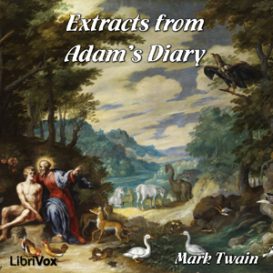
Extracts from Adam’s Diary
Get the true story of Adam and Eve, straight from the source. This humorous text is a day-to-day account of Adam?s life from happiness in the ?GARDEN-OF-EDEN? to their fall from grace and the events thereafter. Learn how Eve caught the infant Cain, and Adam takes some time to learn exactly what it is.
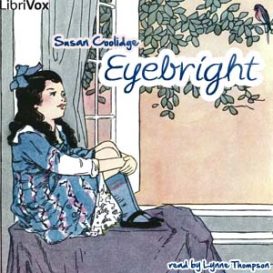
Eyebright
“Imagination is like a sail, as Mr. Joyce had said that evening; but sails are good and useful things sometimes, and carry their owners over deep waters and dark waves, which else might dampen, and drench, and drown.” Twelve year old Isabella Bright is endowed with just such an imagination and spends her time amusing herself and her friends with stories. Will her imagination be called upon to help her navigate tempestuous seas? – Summary by Lynne Thompson
Eyes Like the Sea
He was a painter, a poet, a novelist. He lived during the Hungarian revolution and his love of freedom meant his life was often in peril. She was his first love, this girl with the eyes like the sea. She was at heart noble, good and loving. What an excellent lady might have been made out of this woman, if she had only met with a husband who, in the most ordinary acceptance of the word, had been a good fellow, as is really the case with about nine men out of every ten. But she always managed to draw the unlucky tenth out of the urn of destiny. And so she spurned his true love in favor of a high-flying dandy. He went on to pursue a life of politics and she to follow her capricious heart. But yet, throughout her life, she kept returning to him and to the end, of all men, she loved him perhaps best of all. (Eyes Like the Sea won the Hungarian Academy of Sciences prize for literature in 1890.) (Summary by MaryAnn)
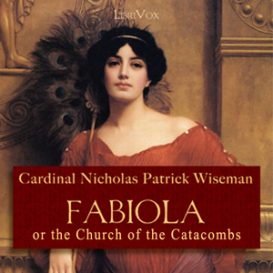
Fabiola or The Church of the Catacombs
This historical novel is set in Rome in the early 4th century AD, during the time of the cruel persecution of Christians under the Emperor Diocletian. The heroine of the book is Fabiola, a young pagan beauty from a noble Roman family. Fabiola seems to have everything, including a superior education in the philosophers, yet under the surface, she is not content with her life. One day, in a fit of rage, she attacks and wounds her slave girl Syra, who is a secret Christian. The proud, spoiled Roman girl is humbled by Syra’s humility, maturity and devotion to her in this situation, and a slow transformation begins. Woven into this fictitious story are a number of martyrdom accounts of real-life Christian saints, including Saint Agnes, Saint Tarcisius and Saint Sebastian. Cardinal Wiseman wrote Fabiola in part as an answer to the vigorously anti-Catholic book Hypatia by Charles Kingsley. The novel was mainly aimed at the embattled Catholic minority in England, who had recently emerged from a half-illegal status. (Summary adapted from Wikipedia)
Fables for the Frivolous
One of the earliest works by the American parodist, Guy Wetmore Carryl, these fables are adapted from Jean de La Fontaine?s original writings. The fables are written in verse, and are light-hearted re-tellings of fables from two centuries before, each ending with a moral and a pun. Among the more celebrated of the fables are The Persevering Tortoise and the Pretentious Hare, The Arrogant Frog and the Superior Bull, and The Sycophantic Fox and the Gullible Raven. (Summary written by Chriss)
Fables for the Frivolous (Version 2)
Fables for the Frivolous is one of the earliest works by the American parodist Guy Wetmore Carryl. These fables are adapted from Jean de La Fontaine’s original writings. The Aesop-style fables are written in verse, and are light-hearted re-tellings of fables from two centuries before, each ending with a moral and a pun. Among the more celebrated of the fables are The Persevering Tortoise and the Pretentious Hare, The Arrogant Frog and the Superior Bull, and The Sycophantic Fox and the Gullible Raven. (from Wikipedia)
Fables in Rhyme for Little Folks
Several of La Fontaine’s fables, translated into English by W. T. Larned. (Summary by bge1234)
Fables in Rhyme for Little Folks (version 2)
This is a short book which collects together 18 charming fables, written in rhyme and intended to be enjoyed by children. Based on stories which were originally written in French by Jean de la Fontaine, these quirky fables are sure to entertain people of all ages. – Summary by Rosslyn Carlyle
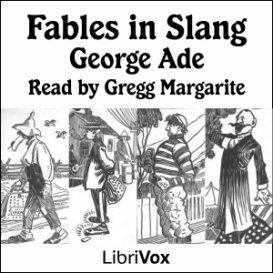
Fables in Slang
While a columnist for The Chicago Record humorist George Ade penned numerous ?fables? which were subsequently collected into books. Fables in Slang is the first of these collections. It contains 26 satirical stories that lampoon phrenologists, idealists, snobs, fanatics and other ignorant fools of the day, most of which still wander through our modern lives. Jean Shepherd considered Ade a predecessor who made writers like James Thurber, Mike Royko, and himself possible. Fables in Slang was first published in 1899 by Herbert S. Stone and Company. (Summary by Gregg Margarite)
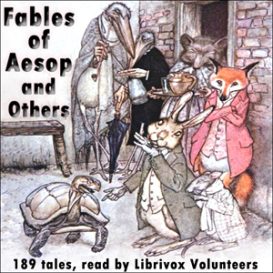
Fables of Aesop and Others
The origins of these fables are perhaps lost in obscurity, but they are so closely identified with the Greek writer Aesop, that we may regard them as such. Most of these tales involve interactions among animals, and to each is appended a moral. This edition was edited and illustrated by Thomas Bewick a well-known British engraver and illustrator. The book begins with an excellent introduction – Larry Wilson
Faces and Places
Faces and Places is a collection of articles on nineteenth century travel, events and personalities by the British journalist Henry Lucy, who wrote for the Daily News, a London newspaper. His open letter To Those About to Become Journalists rings as true today as when it was written. The first article, “Fred” Burnaby, includes a lively account of a balloon trip, while Night and Day on the Cars in Canada and Easter on Les Avants relate Lucy’s experiences of rail travel at that time. Other travel tales (A Night on a Mountain, Mosquitoes and Monaco, and Oysters and Arcachon) provide an insight into the Victorian Englishman’s attitude to Europe. Three of the pieces, With Peggotty and Ham, A Cinque Port and Christmas Eve at Watts’s, concern the county of Kent, where Lucy had a country house. Christmas Eve at Watts’s contains an interesting expos? of Dickens’ short story The Seven Poor Travellers. Other articles are of historical interest: A Wreck in the North Sea is an account of the wreck of the ship “Deutschland” in 1875; A Historic Crowd describes the massive popular interest in the 1871 trial of the Tichborne Claimant; The Battle of Merthyr contains an eye-witness account of the Merthyr Riots of 1831; The Prince of Wales paints a portrait of the future King Edward VII. Lucy, who also wrote as “Toby, M.P.” for the satirical magazine Punch, loved to poke gentle fun, particularly at the establishment, and this is especially evident in A Peep at an Old House of Commons and Some Preachers I Have Known. This eclectic collection, mostly affectionately humorous, but with moments of great pathos, was originally published in 1892 in The Whitefriars Library of Wit & Humour.(Summary by Ruth Golding)
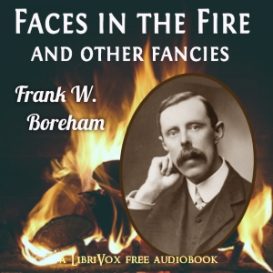
Faces in the Fire, and Other Fancies
In this collection of essays, Frank Boreham shares with us his musings on how everyday items such as boots and linoleum, or a cozy fire, or even Nothing at all, can enrich our spiritual lives and draw us closer to our Heavenly Father. Summary by Devorah Allen.
Facing the Flag
Like The Begum’s Millions, which Verne published in 1879, it has the theme of France and the entire world threatened by a super-weapon (what would now be called a weapon of mass destruction) with the threat finally overcome through the force of French patriotism. (Summary by Wikipedia)
Facts and Fancies
A group of poems about life centered around a southbound train ride to Cincinnati. ( Lynda Marie Neilson)
Faded Pictures
LibriVox volunteers bring you 18 recordings of Faded Pictures by William Vaughn Moody. This was the Weekly Poetry project for September 2, 2012. “I really liked this one. It reminded me of Browning’s monologues. Absolutely lovely…and dark at the same time.” (Caprisha Page) William Vaughn Moody was a United States dramatist and poet. Author of The Great Divide, first presented under the title of The Sabine Woman at the Garrick Theatre in Chicago on April 12, 1906. Moody’s poetic dramas included The Masque of Judgment (1900), The Fire Bringer (1904), and The Death of Eve (left undone at his death). (Summary by Wikipedia)
Faery Lands of the South Seas
Returning from the horrors of World War I James Hall and Charles Nordhoff follow a dream to tour the South Pacific. They later co authored ?Mutiny on the Bounty?. This is a love story. A travelogue and an adventure rolled into one. This book just went into the public domain, so enjoy an early 20th Century look at paradise. (Summary by Mike Vendetti)

Faery Tales from Hans Christian Andersen
This is a 1910 edition of the Fairy Tales of Hans Christian Andersen. This volume is nicely mixed, containing both the most famous tales as well as some which are not quite as well-known. The translation is adapted for American readership and in some ways brings a new facet to some of the stories. Listeners may want to have a look at the online text for its beautiful colour illustrations. – Summary by Carolin
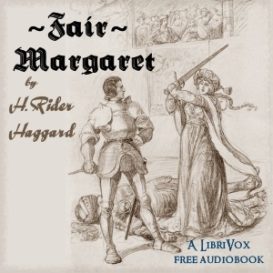
Fair Margaret
This story is set during the reign of King Henry VII. Peter Brome is a poor man and without a father, and is in love with Margaret the dark-eyed daughter of John Castell, the kindly and wealthy merchant who has taken care of him and raised him. Through a series of unfortunate events Peter has just killed a soldier, through self defense it is true, however, the blood of the Spanish ambassador’s men demands to be repaid. Now another man pursues fair Margaret the all powerful Marquis d’Aguilar of Spain, who is traveling in England upon a secret mission for the Inquisition. Much more than love hangs in the balance. (Summary by fiddlesticks)
Expositions on the Book of Psalms Vol. 1
The Book of Psalms is commonly known as the Psalms or the Psalter, and is divided into five sections, each closing with a doxology. The title is derived from the Greek translation, ?????? (psalmoi) meaning “instrumental music” and, by extension, “the words accompanying the music”. Most if not all are thought be composed by King David. The Psalms have always been an integral part of the prayers of the Christian church and especially among monks, who would generally chant all psalms in a week-long cycle. There have been many commentaries on the Psalms, but none perhaps more famous and widely used than St. Augustine’s. This first volume covers the first section of Psalms (1 – 36). – Summary by ancientchristian